×

Papua New Guinea🇵🇬 | national parksMount Gahavisuka Provincial ParkOrchid collection, moss forest, rhododendrons, Goroka ridge | things to do and best time to go

Explore Mount WilhelmExplore Mount Giluwe

Backpacking in Mount Gahavisuka Provincial Park
👌 Worth visitingnational park ranked #7
By Johan Kruseman 🇳🇱 | Updated October 15, 2026

Gahavisuka is best known for its cloud forest, where orchids, tree ferns and rhododendrons crowd a ridge above the Eastern Highlands. The park sits in the hills just outside Goroka, in Papua New Guinea’s highlands. The upside is real: cool air, mossy trails, birdsong, and a summit walk that puts the valley below you. The downside is logistics. Fog can erase the view by mid-morning, so start at first light. Paths turn greasy after rain, so wear boots with grip. Road access is rough and local transport thins out late, so arrange a ride back before you set off. Crowds are rare, which means you are exploring on your own. Bring layers, because mornings here carry a proper chill, and the orchids hang right beside the trail.

Discover everything you want to know in the 📖 Papua New Guinea Travel Guide.


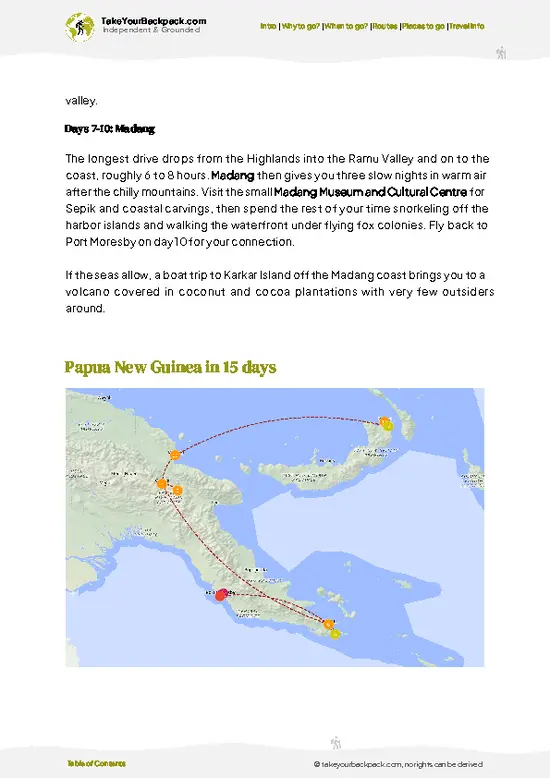
example page 0 from our offline Travel Guide for Papua New Guinea
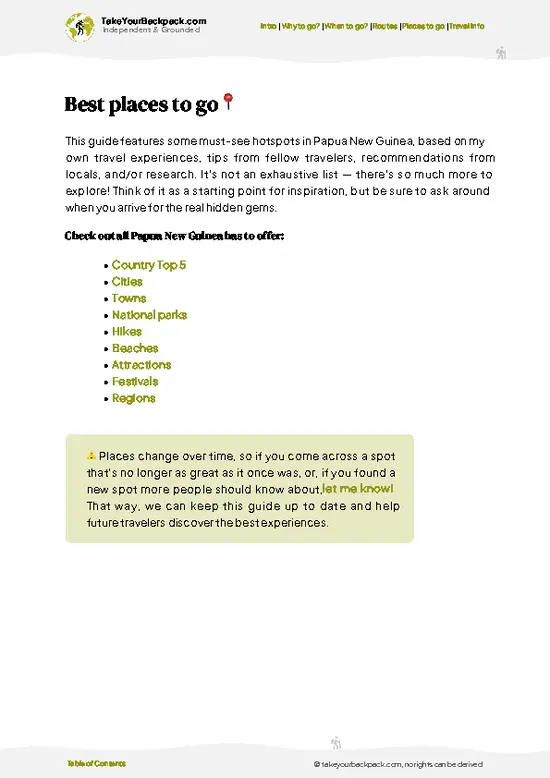
example page 1 from our offline Travel Guide for Papua New Guinea
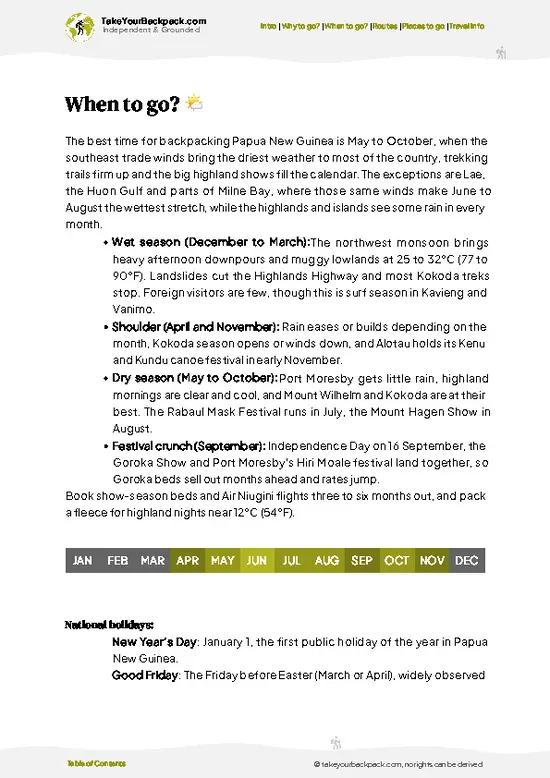
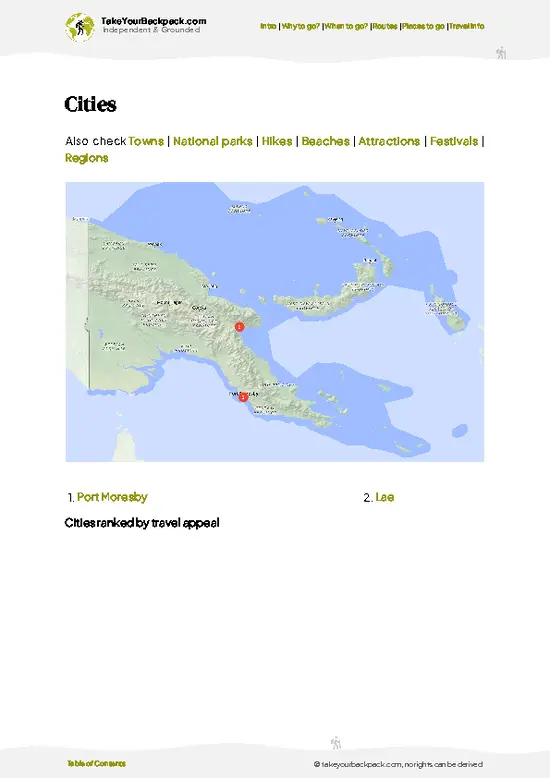
example page 2 from our offline Travel Guide for Papua New Guinea
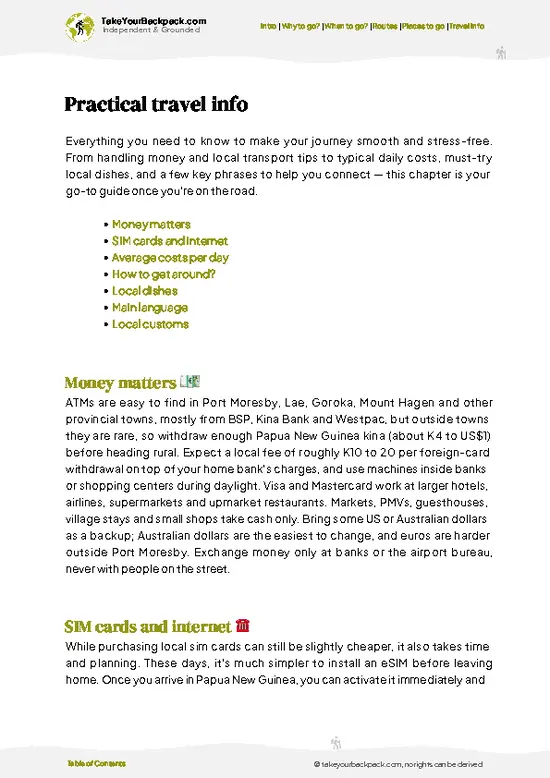
example page 3 from our offline Travel Guide for Papua New Guinea
example page 4 from our offline Travel Guide for Papua New Guinea
example page 5 from our offline Travel Guide for Papua New Guinea
example page 6 from our offline Travel Guide for Papua New Guinea
example page 7 from our offline Travel Guide for Papua New Guinea
Loading the map 🌍
CLICK TO FILTER
cities
towns
national parks
hikes
beaches
attractions
festivals
regions
SHOW COUNTRY’S BESTSHOW ALL

✨ Why go?
Ranked #7 national park in Papua New Guinea
The unique appeal for travelers

Gahavisuka suits backpackers who want a highland day without a tour operator. The park lies within easy reach of Goroka, so you can walk to the summit ridge on your own and still be back for a hot meal in town. Trails are short enough to improvise, and the forest changes as you climb, from garden plots and open grass into thick moss forest full of orchids and tree ferns. Birders get the best deal. Highland species flit through the canopy, and early starts give you a real shot at bird of paradise calls. Landowners and park staff know the paths, so a local guide for the upper sections is cheap and adds plenty, especially for spotting birds. You carry the pack, set the pace and stop wherever the light is good. The cool altitude around 2,300 meters also makes climbing far more pleasant than in the humid lowlands.

💡 HighlightsThe experiences that define the visit

  1. Orchid collection: Near the entrance, native highland orchids are grown and displayed, many blooming at different times of year. It is the park’s signature draw and takes about an hour to enjoy properly.
  2. Summit ridge viewpoint: The climb ends on a high ridge with views over the Goroka valley when the cloud lifts. Go early for the best chance of a clear horizon.
  3. Moss forest: Higher up, trunks wear thick cushions of moss, and tree ferns arch over the path. The air is damp, quiet and noticeably cooler.
  4. Rhododendron stands: Several highland rhododendron species flower along the upper trails, adding splashes of red and orange against the green.
  5. Birdwatching on the ridge: Dawn brings honeyeaters, parrots and the chance of hearing a bird of paradise. A local guide helps with finding the calls.
  6. Forest
… read more 👉
  1. Orchid collection: Near the entrance, native highland orchids are grown and displayed, many blooming at different times of year. It is the park’s signature draw and takes about an hour to enjoy properly.
  2. Summit ridge viewpoint: The climb ends on a high ridge with views over the Goroka valley when the cloud lifts. Go early for the best chance of a clear horizon.
  3. Moss forest: Higher up, trunks wear thick cushions of moss, and tree ferns arch over the path. The air is damp, quiet and noticeably cooler.
  4. Rhododendron stands: Several highland rhododendron species flower along the upper trails, adding splashes of red and orange against the green.
  5. Birdwatching on the ridge: Dawn brings honeyeaters, parrots and the chance of hearing a bird of paradise. A local guide helps with finding the calls.
  6. Forest wildlife: Cuscus, possums and other small marsupials live here, though they are mostly nocturnal. Walking quietly at dawn or dusk gives the best odds.
  7. Garden and lower trails: Gentle paths near the base wander past cultivated beds and giant ferns, suiting a short, easy stroll before or after the climb.
The orchid collection and the lower garden trails pair well on one slow morning, leaving the summit for another early start.
Spotted a mistake or missing something? Contact us.

🌤️ When to go?Seasonal considerations and timing

May to October is the best window for Gahavisuka, when trails above Goroka are driest and mountain views clear in the morning.
  • Dry Season (May to October): Days reach 22 to 26°C (72 to 79°F) in Goroka and 14 to 20°C (57 to 68°F) in the park, with nights near 8 to 12°C (46 to 54°F). Mornings are clearest, and clouds often build by early afternoon. Daylight runs roughly 6am to 6pm.
  • Wet Season (November to April): Afternoon downpours turn the clay trails slick, and cloud often hides the summit. Temperatures stay similar, but fewer visitors and easier guesthouse bookings come with muddy going.
  • Goroka Show (mid-September): Singsing groups pour into town, rooms fill, and prices climb. Book weeks ahead.
  • Orchid and Bird Watching: Birdlife is most active at dawn all year, and orchids flower across both
… read more 👉
May to October is the best window for Gahavisuka, when trails above Goroka are driest and mountain views clear in the morning.
  • Dry Season (May to October): Days reach 22 to 26°C (72 to 79°F) in Goroka and 14 to 20°C (57 to 68°F) in the park, with nights near 8 to 12°C (46 to 54°F). Mornings are clearest, and clouds often build by early afternoon. Daylight runs roughly 6am to 6pm.
  • Wet Season (November to April): Afternoon downpours turn the clay trails slick, and cloud often hides the summit. Temperatures stay similar, but fewer visitors and easier guesthouse bookings come with muddy going.
  • Goroka Show (mid-September): Singsing groups pour into town, rooms fill, and prices climb. Book weeks ahead.
  • Orchid and Bird Watching: Birdlife is most active at dawn all year, and orchids flower across both seasons.
Start walking by 7am whatever the season, since the cloud usually closes in after midday.


source: climatestotravel.comJANJanuary: below average for travelingFEBFebruary: below average for travelingMARMarch: below average for travelingAPRApril: fair for travelingMAYMay: excellent for travelingJUNJune: excellent for travelingJULJuly: excellent for travelingAUGAugust: excellent for travelingSEPSeptember: excellent for travelingOCTOctober: highly recommended for travelingNOVNovember: fair for travelingDECDecember: below average for traveling
when-to-go

✈️ The backpacker research shortcutPapua New Guinea Travel Guide

An offline-friendly backpacking guide with optimized travel routes, ranked highlights, transport advice, and the best areas to stay.
example page 0 from our offline Travel Guide for Papua New Guinea
example page 1 from our offline Travel Guide for Papua New Guinea
example page 2 from our offline Travel Guide for Papua New Guinea
example page 3 from our offline Travel Guide for Papua New Guinea
example page 4 from our offline Travel Guide for Papua New Guinea
example page 5 from our offline Travel Guide for Papua New Guinea
example page 6 from our offline Travel Guide for Papua New Guinea
example page 7 from our offline Travel Guide for Papua New Guinea
The digital guide (251 pages) contains:
✅ 81 highlights, ranked by travel appeal
✅ Optimized 5, 10 & 15-day travel routes
✅ Cities, national parks, landmarks, beaches
✅ How to get around
✅ Offline-friendly for travel without Wi-Fi
👉 Click to see all 30+ guide features

📅 Plan smarter in minutes, not weeks
✅ Month by month travel advice
✅ Festivals & national holidays
✅ Budget expectations

🗺️ Go to the right places, skip the overrated ones
✅ Honest pros & cons of destinations
✅ Top hikes, parks & viewpoints
✅ Lesser-known places most travelers miss
✅ Clear “worth it vs skip it” guidance

🛏️ Travel smoothly without rookie mistakes
✅ Best areas to stay
✅ Transport systems explained simply
✅ Common scams & safety advice
✅ SIM cards, money & practical tips

🌍 Understand the country, not just visit it
✅ Culture & traditions
✅ 52 Essential phrases & customs
✅ Festivals worth planning around
✅ Traveler-friendly historical context
✅ Insights that make places more meaningful

📱 Built for real travel conditions
✅ Fully downloadable PDF
✅ Works completely offline
✅ Optimized for phone use
✅ Useful in remote areas & buses
✅ Everything in one place
Stop searching, start planning
Get instant access to your full guide. 30‑day money-back guarantee.
+ Add another guide for just

By proceeding you agree to our terms.
Sent to your inbox immediately after payment • 100% Secure Checkout
Best Backpacking Travel Advisor 2025 tourism awardBest Backpacking
Travel Advisor
2025
What others say about Take Your Backpack Guides:
⭐⭐⭐⭐⭐
Fantastic, amazing amount of information!
⭐⭐⭐⭐⭐
My goodness this is amazing, it's what I've been looking for hats off too you!
⭐⭐⭐⭐⭐
I think this is absolutely BRILLIANT
⭐⭐⭐⭐
Very complete and informative. It's still missing places, but I gotta to commend you
⭐⭐⭐⭐⭐
This is truly amazing, thank you, can't wait to explore it with my kids!
⭐⭐⭐⭐⭐
Awesome resource, thank you!
⭐⭐⭐⭐⭐
This is amazing! Can't wait to explore the ones I haven't seen
⭐⭐⭐⭐
I love this! Well done, great idea.
⭐⭐⭐⭐⭐
Thanks for taking the time to make this gem!
⭐⭐⭐⭐⭐
This might be the best website I've ever seen.
⭐⭐⭐⭐⭐
Congratulations, and thank you so much for your work; it's incredibly valuable.
⭐⭐⭐⭐
In all seriousness I think you did a great job pointing out the important spots
⭐⭐⭐⭐⭐
10/10 very good
⭐⭐⭐⭐⭐
As someone who's only just starting to visit regularly this is awesome, thank you.
⭐⭐⭐⭐
Thank you very much! I'm going to visit my dad, it's going to be very useful!
⭐⭐⭐⭐⭐
This is really cool! We'll be travelling for the first time and this definitely come in handy.
⭐⭐⭐⭐⭐
You are now our minister of culture, congratulations 👨‍💼
⭐⭐⭐⭐⭐
Just wanted to tell you that this is a pearl! Going to follow your recommendations.
⭐⭐⭐⭐⭐
This is so cool. I'll definitely be using the resource for my travels soon.
⭐⭐⭐⭐⭐
This is very impressive! Good work.
⭐⭐⭐⭐⭐
This is an amazing and informative site. Very well done!

🛏️ Where to stay?Best areas to stay in Papua New Guinea

Goroka, about 20 to 30 minutes by road from the park gate, is where nearly every backpacker sleeps. The town has the widest choice of beds, ATMs, a market and PMV buses back to Lae and Mount Hagen. Mid-range hotels such as the Bird of Paradise Hotel suit those wanting hot water and a restaurant, and church-run and private guesthouses in town cost less, typically K150 to 300 (US$40 to 80) a night. Book ahead, especially in September around the Goroka Show. Inside the park there are simple bush huts and a small lodge area where you can sleep close to the forest, which makes sense if you want dawn … read more 👉
Goroka, about 20 to 30 minutes by road from the park gate, is where nearly every backpacker sleeps. The town has the widest choice of beds, ATMs, a market and PMV buses back to Lae and Mount Hagen. Mid-range hotels such as the Bird of Paradise Hotel suit those wanting hot water and a restaurant, and church-run and private guesthouses in town cost less, typically K150 to 300 (US$40 to 80) a night. Book ahead, especially in September around the Goroka Show. Inside the park there are simple bush huts and a small lodge area where you can sleep close to the forest, which makes sense if you want dawn birdwatching without a morning drive. Bring a sleeping bag, warm layers, a headlamp and your own food, because supplies are limited and nights are cold at altitude. Ask your Goroka accommodation to arrange a driver, since public transport to the gate is irregular. Other towns nearby, like Kainantu to the east, are far less convenient for this trip.

👛 Costs (as of 15 October 2026)Typical daily expenses

A realistic budget for Mount Gahavisuka Provincial Park is about US$60 to 75 per day, with a guesthouse bed in Goroka and a hired vehicle driving most of the total.
CategoryBudget RangeLocal Reality
Entrance and guide feesUS$5 to 15Access is arranged through the local landowners and park caretakers at the gate. Expect a small entry payment plus a guide fee; pay in kina.
Accommodation (high season)US$25 to 35Basic guesthouses and lodges in Goroka. Camping at the park is possible by arrangement with landowners, and usually costs little.
Accommodation (low season)US$20 to 30Rates in Goroka barely move, though rooms are easier to find in the wetter months.
Local transportUS$10 to 20PMV minibuses run from Goroka toward Kainantu and Daulo Pass for under US$2 a hop. Reaching the park gate itself usually
… read more 👉
A realistic budget for Mount Gahavisuka Provincial Park is about US$60 to 75 per day, with a guesthouse bed in Goroka and a hired vehicle driving most of the total.
CategoryBudget RangeLocal Reality
Entrance and guide feesUS$5 to 15Access is arranged through the local landowners and park caretakers at the gate. Expect a small entry payment plus a guide fee; pay in kina.
Accommodation (high season)US$25 to 35Basic guesthouses and lodges in Goroka. Camping at the park is possible by arrangement with landowners, and usually costs little.
Accommodation (low season)US$20 to 30Rates in Goroka barely move, though rooms are easier to find in the wetter months.
Local transportUS$10 to 20PMV minibuses run from Goroka toward Kainantu and Daulo Pass for under US$2 a hop. Reaching the park gate itself usually needs a hired vehicle, roughly US$10 to 20 for a round trip.
Food and suppliesUS$10 to 15Goroka market sells sweet potato, greens and fruit very cheaply. Bring trail snacks and water treatment from town, as nothing is sold on the mountain.
Total Daily BudgetUS$60 to 75Based on high-season accommodation, one hired transfer and a guided day hike.
⚠️ Prices can change and everyone travels differently, so take this as a rough guide. Hope it helps you plan your adventure!

🥾 TrailsPlan your hike in Mount Gahavisuka Provincial Park: routes, terrain, and sights

Gahavisuka rewards walkers with steady climbing through changing forest rather than one single showpiece trail.
  • Orchid garden loop: A flat, easy stroll of about 30 to 60 minutes around the display beds near the entrance, suitable for any fitness level.
  • Summit ridge walk: The main hike climbs from the lower garden through grassland and into cloud forest, taking roughly 2 to 3 hours up and a little under that down. It is moderate, with muddy, root-laced steps that turn slick after rain.
  • Upper forest paths: Narrower tracks wander through moss forest and rhododendron stands near the top. Footing is
… read more 👉
Gahavisuka rewards walkers with steady climbing through changing forest rather than one single showpiece trail.
  • Orchid garden loop: A flat, easy stroll of about 30 to 60 minutes around the display beds near the entrance, suitable for any fitness level.
  • Summit ridge walk: The main hike climbs from the lower garden through grassland and into cloud forest, taking roughly 2 to 3 hours up and a little under that down. It is moderate, with muddy, root-laced steps that turn slick after rain.
  • Upper forest paths: Narrower tracks wander through moss forest and rhododendron stands near the top. Footing is uneven, so go slowly and keep an eye out for birds.
  • Wildlife: Expect honeyeaters, parrots and possible bird of paradise calls at dawn. Small marsupials such as cuscus are rarely seen in daylight.
Start by 7 a.m. if you want views, since cloud typically rolls in later in the morning. Pack a rain jacket, a warm layer, water and a snack, as nothing is sold on the trail. Goroka is the nearest base, and the park is reached by a short road trip, with local PMV minibuses covering part of the way and a chartered ride or taxi the easiest option for the last stretch. A small entrance fee is collected at the gate, and a local guide is easily arranged on the spot. Crowds are almost nonexistent on weekdays, and weekends bring only a handful of local families. Respect landowners, ask before photographing people and stay on marked paths.
⚠️ Hiking info can sometimes be outdated or inaccurate. Before you hit the trail, check the latest conditions with locals. If you do spot anything that's off, I'd love to hear from you, so I can update it for fellow travelers.

🛡️ SafetyStaying Safe: What Travelers Should Know

Gahavisuka is a small, well-used forest reserve with manageable terrain, and the main issues are weather, mud and personal security rather than wildlife. Trails climb steeply through moss forest, and wet clay makes footing slippery, so wear boots with grip and carry a rain jacket even in the dry season. Cold, damp mornings at around 2,000 to 2,400 m catch people out, so pack a fleece. Hire a local guide or park caretaker for the summit track, as junctions are unsigned and cloud can cut visibility fast. Wildlife is mostly birds, tree kangaroos and small marsh dwellers, and none pose a real threat. Keep your distance, stay quiet and carry out rubbish. In Goroka, avoid walking after dark, arrange a trusted driver, and keep valuables out of sight. Tell your guesthouse when you expect to return.

FAQFrequently asked questions about Mount Gahavisuka Provincial Park

One full day is enough for the main walk, and two days lets you add dawn birdwatching. The summit track takes about 3 to 5 hours return from the gate, and staying overnight in the park huts or in Goroka, roughly 20 to 30 minutes away, makes an early start easy.
Yes, but it takes planning, since no regular public bus runs to the gate. Take a PMV to Goroka, then hire a driver or taxi for the 20 to 30 minute ride, which usually costs K60 to 120 (US$15 to 30) round trip including waiting time. Your guesthouse can arrange this.
Yes, a small entrance fee is charged at the park gate, typically around K20 to 30 (US$5 to 8) per person. No formal hiking permit is normally needed, but you should arrange a local guide, who usually expects a tip or fee of a few dozen kina. Carry cash, since there are no card facilities at the gate.
⚠️ Things can change over time, so always validate details locally before you go.

Other Papua New Guinean national parks near Mount Gahavisuka Provincial Park

Explore more nearby:


💡 Not sure where to go next?
Create a personalized itinerary for Papua New Guinea including Mount Gahavisuka Provincial Park and the places that fit your trip.

Generate my itinerary

👉 Discover all national parks

Or checkout all Papua New Guinea has to offer (think cities, towns, villages, national parks, hikes, beaches, festivals)
Country photo of Papua New Guinea

We 💚 feedbackFinal thoughts on exploring Mount Gahavisuka Provincial Park

Most people rush straight for the summit and walk past the orchid beds near the gate. Do the opposite. Spend your cleanest early light among the blooms, when the petals are wet and bright, then head up if the cloud stays away. Bring a warm layer, because that ridge gets cold.

✍️ Help improve this page!
The information on this page is based on in-depth research, insights shared by experienced travelers, and feedback from the local travel community in Papua New Guinea. While every effort is made to keep the information accurate and current, conditions can change — so if you spot anything incorrect or outdated, please get in touch.


🙋‍♂️ Give feedback

👋 Meet the founderWho’s Behind Take Your Backpack?

Johan, backpacker and founder of TakeYourBackpackHi, I’m Johan (Netherlands 🇳🇱), the creator of TakeYourBackpack. Over the past 3 decades, I’ve backpacked through 90+ countries across six continents, gaining extensive experience with independent travel, long-term trips, and overland routes.

This site is built on a combination of firsthand travel experience and carefully curated insights from other backpackers. Many guides are based on places I’ve personally visited, while others bring together tips, observations, and practical advice shared by trusted travelers I’ve met along the way.

The goal is to provide realistic, experience-driven guidance — not generic itineraries — so you can explore destinations with better context, clearer expectations, and more confidence.