×

Papua New Guinea🇵🇬 | townsKikoriKikori delta, mangrove channels, river-edge stilts, Gulf Province | things to do and best time to go

Explore KaviengExplore Kokopo

Backpacking in Kikori
👀 For curious travelerstown ranked #20
By Johan Kruseman 🇳🇱 | Updated October 16, 2026

Kikori suits travelers who love river life and don’t mind improvising, and it will frustrate anyone who wants hostels, menus and fixed schedules. You’ll find it on the Kikori River in Gulf Province, in the south of Papua New Guinea, where the delta spreads into mangrove channels. Walk the waterfront, hop a dugout, and trade stories with local guides and conservation workers. Evenings are quiet, and backpackers are rare. Unlike Kerema, the provincial capital, Kikori puts you right at the water’s edge.

Discover everything you want to know in the 📖 Papua New Guinea Travel Guide.


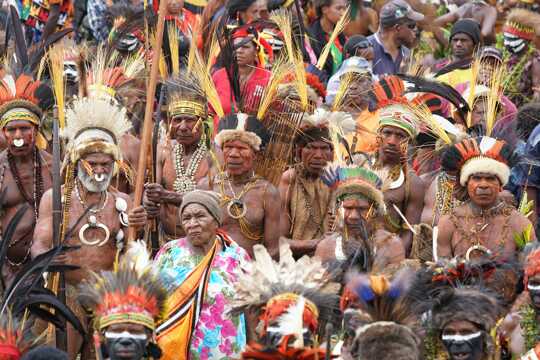
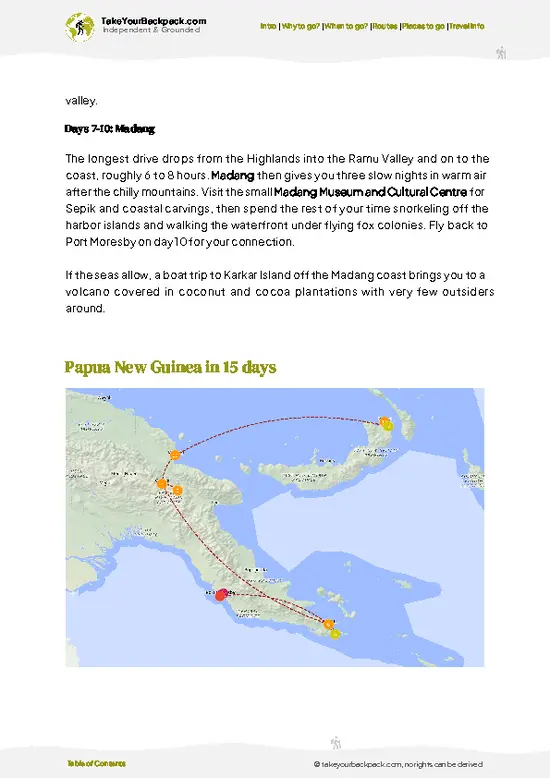
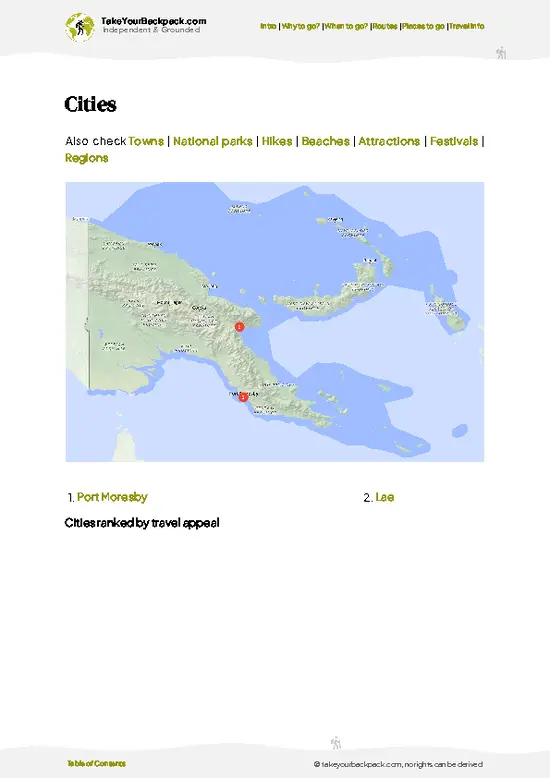
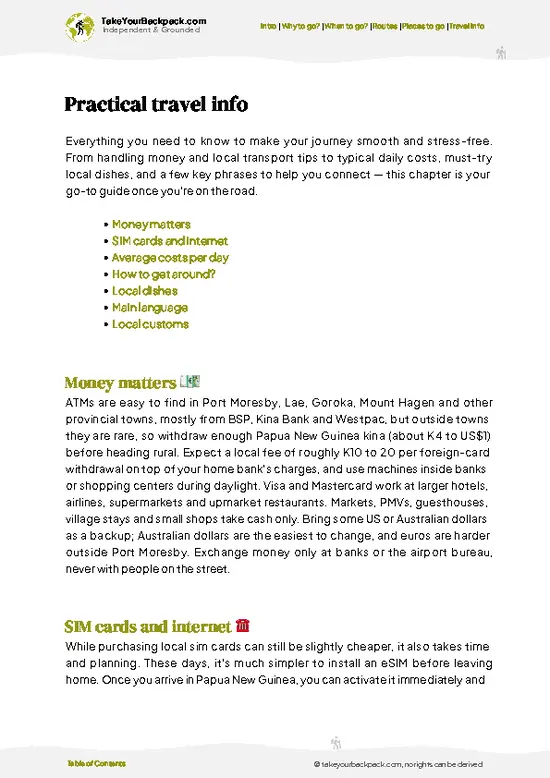
example page 0 from our offline Travel Guide for Papua New Guinea
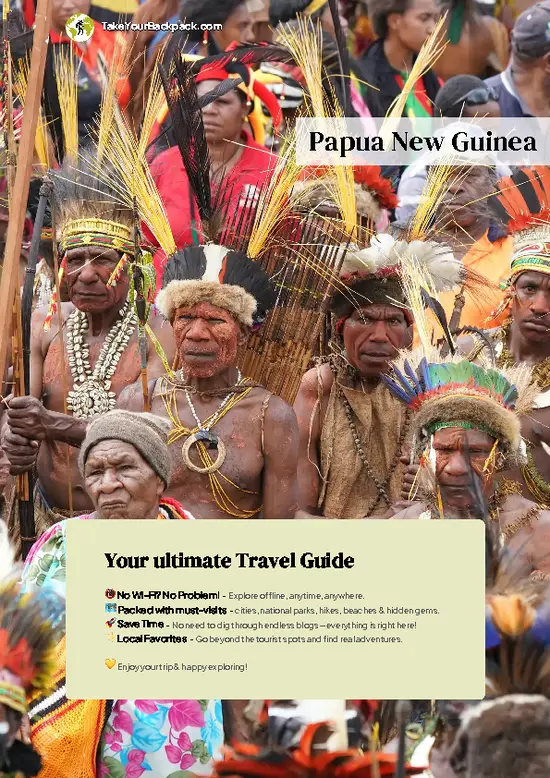
example page 1 from our offline Travel Guide for Papua New Guinea
example page 2 from our offline Travel Guide for Papua New Guinea
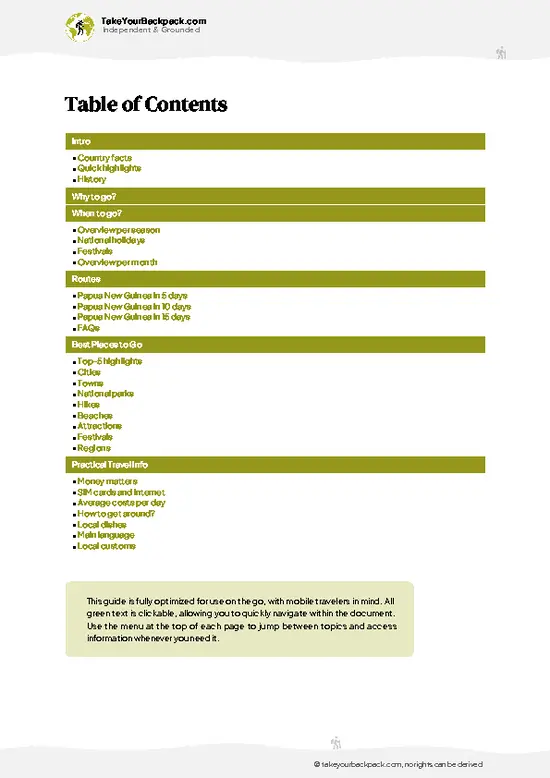
example page 3 from our offline Travel Guide for Papua New Guinea
example page 4 from our offline Travel Guide for Papua New Guinea
example page 5 from our offline Travel Guide for Papua New Guinea
example page 6 from our offline Travel Guide for Papua New Guinea
example page 7 from our offline Travel Guide for Papua New Guinea
Loading the map 🌍
CLICK TO FILTER
cities
towns
national parks
hikes
beaches
attractions
festivals
regions
SHOW COUNTRY’S BESTSHOW ALL

✨ Why go?
Ranked #20 town in Papua New Guinea
Reasons people choose to visit here

Go for the delta itself. Kikori is the launch point for boat trips through the Kikori River delta, a maze of mangroves, sago swamps and stilt villages that almost no one reaches. Guesthouses are few and small, so you meet whoever is in town, usually field researchers and workers. Most travelers stay two or three days, enough to arrange a canoe and see village life. It rewards self-reliant solo travelers and slow travelers with patience. If you need nightlife or easy logistics, make it a short stop or skip it.

💡 HighlightsPlaces and moments you shouldn't skip

  1. Kikori River waterfront: Dugouts, longboats and fishing families work this muddy stretch all day. Come at dawn or late afternoon for cooler air and the best light. Free, about an hour.
  2. Kikori Market: Sago, bananas, smoked fish, mud crab and betel nut change hands here, and it is the easiest place to start conversations. Mornings are best. Buying a snack costs a few kina, and an hour is plenty.
  3. Delta boat trip from town: Hire a local boatman to run the mangrove channels and visit riverside villages. Early morning gives calm water and birdlife. Expect roughly K300 to 800 (US$75 to 200) per boat for fuel and guide, and a half to full day.
  4. Village stroll along the river edge: The stilt houses and gardens close to town show how people live between tide and forest. Ask before photographing. Free, one
… read more 👉
  1. Kikori River waterfront: Dugouts, longboats and fishing families work this muddy stretch all day. Come at dawn or late afternoon for cooler air and the best light. Free, about an hour.
  2. Kikori Market: Sago, bananas, smoked fish, mud crab and betel nut change hands here, and it is the easiest place to start conversations. Mornings are best. Buying a snack costs a few kina, and an hour is plenty.
  3. Delta boat trip from town: Hire a local boatman to run the mangrove channels and visit riverside villages. Early morning gives calm water and birdlife. Expect roughly K300 to 800 (US$75 to 200) per boat for fuel and guide, and a half to full day.
  4. Village stroll along the river edge: The stilt houses and gardens close to town show how people live between tide and forest. Ask before photographing. Free, one to two hours in the cooler morning.
If you only have one visit, take the delta boat trip, because it shows what makes Kikori worth reaching. For day trips, the outer delta villages and mangrove channels around the river mouth are the best bets.
Spotted a mistake or missing something? Contact us.

🏘️ NeighborhoodsUnderstanding the local layout

Kikori is a small river-delta station town, and you can walk all of it in under an hour. Head out and cover these pockets.
  • Station and Wharf Area: Boats, dinghies and canoes jostle along the Kikori River bank, and fuel drums and cargo pile up on the landing. Wander the waterfront at dawn and watch the river traffic push off, with mist still on the water.
  • Main Street and Market: A short strip of trade stores and a produce market selling sago, bananas, mud crab and river fish. Elbow in, buy fruit and smoked fish, and chat with villagers who came in by boat.
  • Airstrip and Hospital Side: Flat, open grassy paths run toward the airstrip and clinic. Stride out in the cool evening, with rainforest walls on the horizon and kids playing football on the grass.

⌛️ 1 daySeeing the highlights in 24 hours

7:00 AM, Kikori River waterfront: Start where the day starts. Watch canoes load and fishermen return, then arrange a boatman for later with whoever looks most reliable.
8:30 AM, Kikori Market: Eat fruit, roasted sago or smoked fish, and chat with sellers. Walk back toward the river when the stalls thin out.
10:00 AM, Delta boat trip: Head into the mangroves, stop at a stilt village, and ask permission before landing. Carry water and sun protection.
1:30 PM, Riverside village lane: Away from the usual stops, walk the edge of a neighborhood with gardens and fishing nets. Sit with a local family if invited.
4:30 PM, Back on the waterfront: Finish with the late light on the river and a cold drink, then rest.

🌤️ When to go?Seasonal considerations and timing

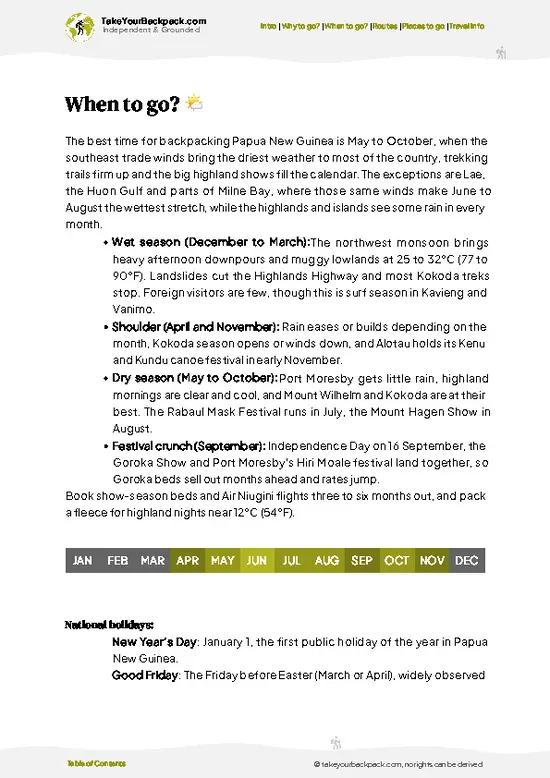
Kikori sits in one of the wettest corners of Papua New Guinea, so the less rainy months of November and December are the easiest for boat trips and flights. Days run around 30°C (86°F) and nights near 23°C (73°F) all year. Daylight stays close to 12 hours. Heavy rain can hit any month, and the wettest spell runs roughly May to September, when rivers run high and planes get delayed. Crowds are never an issue, and prices stay steady. Pad your schedule with spare days in case flights are canceled.

source: climatestotravel.comJANJanuary: fair for travelingFEBFebruary: fair for travelingMARMarch: fair for travelingAPRApril: good for travelingMAYMay: good for travelingJUNJune: highly recommended for travelingJULJuly: excellent for travelingAUGAugust: excellent for travelingSEPSeptember: highly recommended for travelingOCTOctober: good for travelingNOVNovember: good for travelingDECDecember: fair for traveling
when-to-go

✈️ The backpacker research shortcutPapua New Guinea Travel Guide

An offline-friendly backpacking guide with optimized travel routes, ranked highlights, transport advice, and the best areas to stay.
example page 0 from our offline Travel Guide for Papua New Guinea
example page 1 from our offline Travel Guide for Papua New Guinea
example page 2 from our offline Travel Guide for Papua New Guinea
example page 3 from our offline Travel Guide for Papua New Guinea
example page 4 from our offline Travel Guide for Papua New Guinea
example page 5 from our offline Travel Guide for Papua New Guinea
example page 6 from our offline Travel Guide for Papua New Guinea
example page 7 from our offline Travel Guide for Papua New Guinea
The digital guide (251 pages) contains:
✅ 81 highlights, ranked by travel appeal
✅ Optimized 5, 10 & 15-day travel routes
✅ Cities, national parks, landmarks, beaches
✅ How to get around
✅ Offline-friendly for travel without Wi-Fi
👉 Click to see all 30+ guide features

📅 Plan smarter in minutes, not weeks
✅ Month by month travel advice
✅ Festivals & national holidays
✅ Budget expectations

🗺️ Go to the right places, skip the overrated ones
✅ Honest pros & cons of destinations
✅ Top hikes, parks & viewpoints
✅ Lesser-known places most travelers miss
✅ Clear “worth it vs skip it” guidance

🛏️ Travel smoothly without rookie mistakes
✅ Best areas to stay
✅ Transport systems explained simply
✅ Common scams & safety advice
✅ SIM cards, money & practical tips

🌍 Understand the country, not just visit it
✅ Culture & traditions
✅ 52 Essential phrases & customs
✅ Festivals worth planning around
✅ Traveler-friendly historical context
✅ Insights that make places more meaningful

📱 Built for real travel conditions
✅ Fully downloadable PDF
✅ Works completely offline
✅ Optimized for phone use
✅ Useful in remote areas & buses
✅ Everything in one place
Stop searching, start planning
Get instant access to your full guide. 30‑day money-back guarantee.
+ Add another guide for just

By proceeding you agree to our terms.
Sent to your inbox immediately after payment • 100% Secure Checkout
Best Backpacking Travel Advisor 2025 tourism awardBest Backpacking
Travel Advisor
2025
What others say about Take Your Backpack Guides:
⭐⭐⭐⭐⭐
Fantastic, amazing amount of information!
⭐⭐⭐⭐⭐
My goodness this is amazing, it's what I've been looking for hats off too you!
⭐⭐⭐⭐⭐
I think this is absolutely BRILLIANT
⭐⭐⭐⭐
Very complete and informative. It's still missing places, but I gotta to commend you
⭐⭐⭐⭐⭐
This is truly amazing, thank you, can't wait to explore it with my kids!
⭐⭐⭐⭐⭐
Awesome resource, thank you!
⭐⭐⭐⭐⭐
This is amazing! Can't wait to explore the ones I haven't seen
⭐⭐⭐⭐
I love this! Well done, great idea.
⭐⭐⭐⭐⭐
Thanks for taking the time to make this gem!
⭐⭐⭐⭐⭐
This might be the best website I've ever seen.
⭐⭐⭐⭐⭐
Congratulations, and thank you so much for your work; it's incredibly valuable.
⭐⭐⭐⭐
In all seriousness I think you did a great job pointing out the important spots
⭐⭐⭐⭐⭐
10/10 very good
⭐⭐⭐⭐⭐
As someone who's only just starting to visit regularly this is awesome, thank you.
⭐⭐⭐⭐
Thank you very much! I'm going to visit my dad, it's going to be very useful!
⭐⭐⭐⭐⭐
This is really cool! We'll be travelling for the first time and this definitely come in handy.
⭐⭐⭐⭐⭐
You are now our minister of culture, congratulations 👨‍💼
⭐⭐⭐⭐⭐
Just wanted to tell you that this is a pearl! Going to follow your recommendations.
⭐⭐⭐⭐⭐
This is so cool. I'll definitely be using the resource for my travels soon.
⭐⭐⭐⭐⭐
This is very impressive! Good work.
⭐⭐⭐⭐⭐
This is an amazing and informative site. Very well done!

🛏️ Where to stay?Choosing the right base

Stay in the compact town center near the main street and wharf, since that is where the few guesthouses and basic lodgings sit. Beds are limited and there are no true hostels, so book ahead by phone and expect simple rooms for roughly K150 to 350 (US$40 to 90), often with shared bathrooms. It is quiet at night, with little traffic, and you are a short walk from boats and the market. The airstrip side is calm too, but more spread out and darker after sunset.

🚌 Getting aroundHow to get around Kikori

Your feet and a hired boat cover almost everything in Kikori, because the town is tiny and the real roads are rivers. Walk the main strip in minutes and soak up the smell of wood smoke and river mud as you go.
  • Walking: Free, flat and quick, with the whole town within about 20 minutes. You pass the market and wharf and meet half the locals on the way.
  • Dinghy and banana boat: The way to reach riverside villages and the delta. Expect roughly K100 to 500 (US$25 to 125) per trip, mostly driven by fuel, which is costly here. Share with locals to cut the bill, and watch mangrove walls slide past.
  • PMV trucks: A few trucks run short local roads for about K2 to 10. Hop on the open back for the breeze and the chat.
  • Flights: Small planes link Kikori to Port Moresby, usually 45 to 60 minutes, with fares often
… read more 👉
Your feet and a hired boat cover almost everything in Kikori, because the town is tiny and the real roads are rivers. Walk the main strip in minutes and soak up the smell of wood smoke and river mud as you go.
  • Walking: Free, flat and quick, with the whole town within about 20 minutes. You pass the market and wharf and meet half the locals on the way.
  • Dinghy and banana boat: The way to reach riverside villages and the delta. Expect roughly K100 to 500 (US$25 to 125) per trip, mostly driven by fuel, which is costly here. Share with locals to cut the bill, and watch mangrove walls slide past.
  • PMV trucks: A few trucks run short local roads for about K2 to 10. Hop on the open back for the breeze and the chat.
  • Flights: Small planes link Kikori to Port Moresby, usually 45 to 60 minutes, with fares often US$120 to 250 one way. Book early, and expect weather delays. You get a jungle-and-river view for a window seat.

👛 Costs (as of 16 October 2026)Typical daily expenses

Expect to spend about US$85 to 150 a day in Kikori, mostly because lodging and fuel are expensive in this remote spot.
CategoryBudget RangeLocal Reality
Dorm accommodationUS$40 to 70Basic guesthouse room, no dorms, limited options
MealsUS$15 to 30Rice, tinned fish, market produce, stores or guesthouse meals
Local transportUS$10 to 25Walking is free; boats are the main cost
Basic activities/entry feesUS$10 to 15Village visit fees or small community payments
MiscellaneousUS$10Water, phone credit, snacks
Total Daily BudgetUS$85 to 150Excludes flights
Share boat hire with other travelers or villagers to cut your biggest expense.
⚠️ Prices can change and everyone travels differently, so take this as a rough guide. Hope it helps you plan your adventure!

🚌 Day tripsShort trips worth adding

Kikori works as a base for river trips, though everything depends on boat availability and fuel costs.Kikori River Villages: Hire a dinghy to visit stilt villages along the river, about 1 to 3 hours each way. Budget K200 to 600 (US$50 to 150) per boat, and split it. Bring gifts like rice or tobacco only if your host suggests it, and always ask before photographing. Go in the drier months.
Kikori Delta Mangroves: The delta spreads into mangrove channels, with crocodiles, birds and fishing camps. Allow a full day by boat, roughly 2 to 4 hours out, and pay US$100 to 200 for hire. First-timers often leave too late; start at dawn so you can ride the tide back.
Kerewo Area Coastline: Longer boat runs reach coastal communities, best on calm mornings. Expect a long day and high fuel costs, so find other travelers to share.

🛡️ SafetySafety Tips and Common Scams in Kikori

Kikori is generally calm, but you are in a remote town with limited police and medical help, so low-level theft and drunken fights after dark are the main worries. Walk with a local after sunset, keep cash and phones out of sight, and skip the riverbank at night. Agree boat prices before leaving. Crocodiles live in the delta, so never swim in rivers or mangroves. Carry malaria protection and a basic medical kit.

FAQFrequently asked questions about Kikori

Kikori is worth visiting if you want river-delta wilderness and village life, but it suits travelers with flexible time and money. Stilt villages, mangrove channels and crocodile country sit within a day by boat. Flights from Port Moresby take roughly 45 to 60 minutes, and guesthouses cost around US$40 to 90 a night.
Plan three to five days in Kikori so you can fit one or two boat trips and allow for weather delays. A single river-village excursion takes most of a day and costs about US$50 to 150 per boat. Spare days help because flights are often canceled in heavy rain.
A day trip from Port Moresby is technically possible by small plane, but it is rarely practical. Flights take about 45 to 60 minutes each way and cost around US$120 to 250 one way, with schedules that can strand you overnight. Stay at least two nights so a boat trip into the delta fits.
⚠️ Things can change over time, so always validate details locally before you go.

Other Papua New Guinean towns near Kikori

Explore more nearby:

  • Mount Hagen—Kagamuga showground, headdress sing-sings, Wahgi Valley, bilum stalls| 173 km away
  • Goroka—Highlands museum, Gahavisuka cloud forest, coffee estates, September show| 195 km away
  • Daru—Roadless island, Fly delta canoes, mud crab, stilt-house lanes| 217 km away

💡 Not sure where to go next?
Create a personalized itinerary for Papua New Guinea including Kikori and the places that fit your trip.

Generate my itinerary

👉 Discover all towns

Or checkout all Papua New Guinea has to offer (think cities, towns, villages, national parks, hikes, beaches, festivals)
Country photo of Papua New Guinea

We 💚 feedbackWhat to keep in mind

Most travelers arrive expecting to arrange everything on the spot, then lose a day waiting. Ask about a boatman and guesthouse before you land, carry cash in small kina notes, and bring enough water for the delta.

✍️ Help improve this page!
The information on this page is based on in-depth research, insights shared by experienced travelers, and feedback from the local travel community in Papua New Guinea. While every effort is made to keep the information accurate and current, conditions can change — so if you spot anything incorrect or outdated, please get in touch.


🙋‍♂️ Give feedback

👋 Meet the founderWho’s Behind Take Your Backpack?

Johan, backpacker and founder of TakeYourBackpackHi, I’m Johan (Netherlands 🇳🇱), the creator of TakeYourBackpack. Over the past 3 decades, I’ve backpacked through 90+ countries across six continents, gaining extensive experience with independent travel, long-term trips, and overland routes.

This site is built on a combination of firsthand travel experience and carefully curated insights from other backpackers. Many guides are based on places I’ve personally visited, while others bring together tips, observations, and practical advice shared by trusted travelers I’ve met along the way.

The goal is to provide realistic, experience-driven guidance — not generic itineraries — so you can explore destinations with better context, clearer expectations, and more confidence.