×

Papua New Guinea🇵🇬 | attractionsNew Guinea Club and Rabaul MuseumPre-eruption photos, 1994 ash, wartime relics, barge tunnels | things to do and best time to go

Explore J.K. McCarthy MuseumExplore Kokopo War Museum

Backpacking in New Guinea Club and Rabaul Museum
👀 For curious travelersattraction ranked #11
By Johan Kruseman 🇳🇱 | Updated October 15, 2026

The museum sits in a town that was partly buried in ash in 1994, so what you see on the shelves has survived both a world war and a volcanic eruption. You’ll find it in Rabaul, on the Gazelle Peninsula in the north-east of Papua New Guinea. Don’t treat it as a stand-alone stop. It makes sense of everything outside, so go first, then hire a local driver for the tunnels and volcano lookouts, because the sights are spread out and public vehicles rarely reach them. It’s small, quiet and rarely crowded. Look for the wartime relics and the photographs of the old pre-eruption streets.

Discover everything you want to know in the 📖 Papua New Guinea Travel Guide.


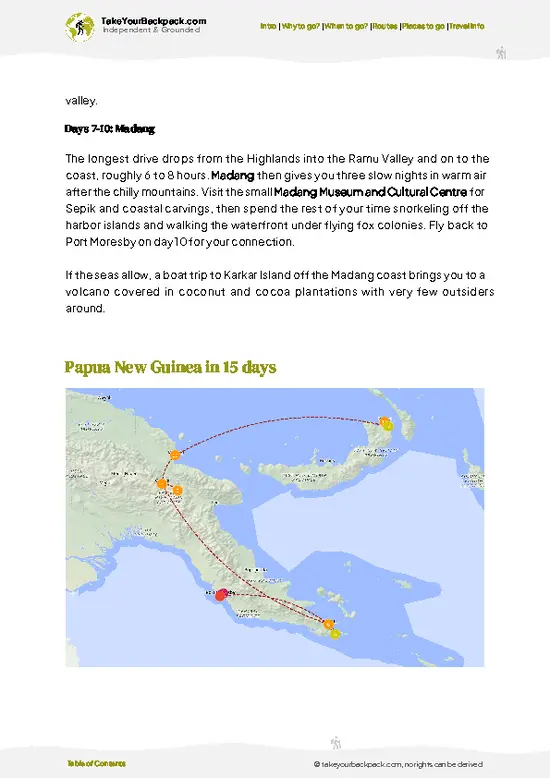
example page 0 from our offline Travel Guide for Papua New Guinea
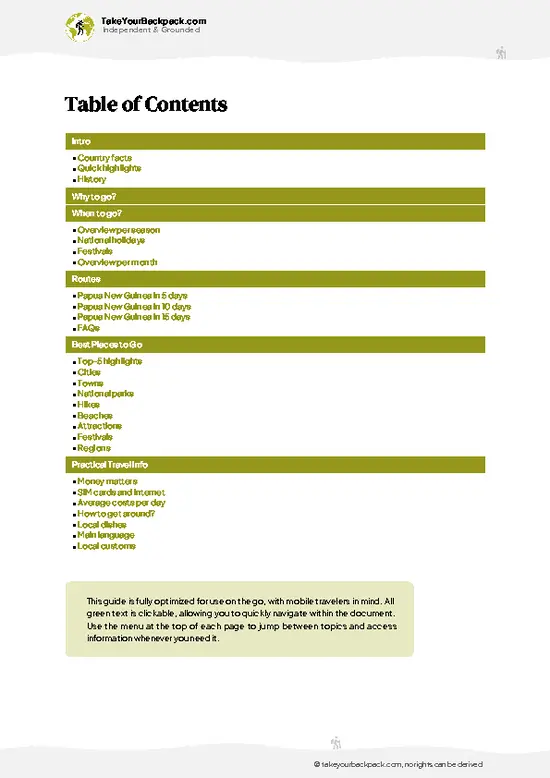
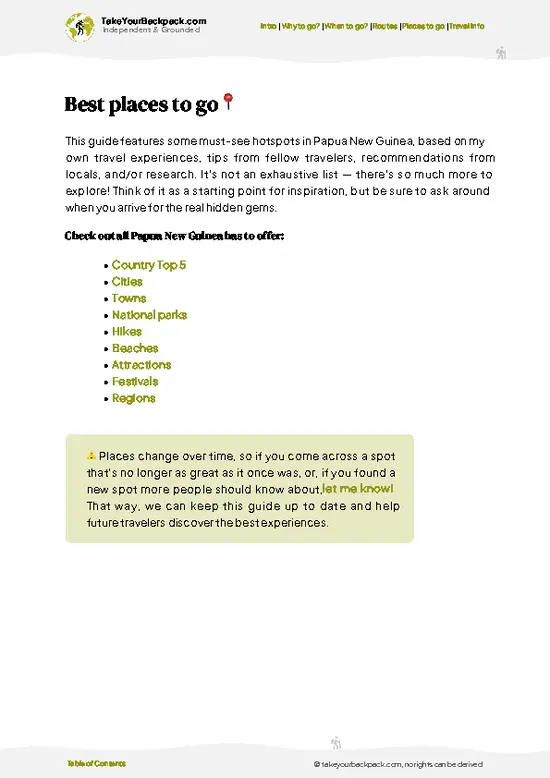
example page 1 from our offline Travel Guide for Papua New Guinea
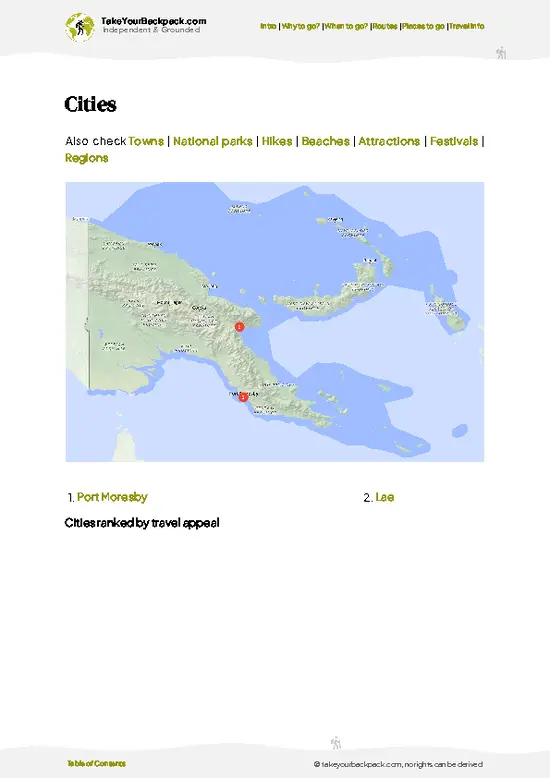
example page 2 from our offline Travel Guide for Papua New Guinea
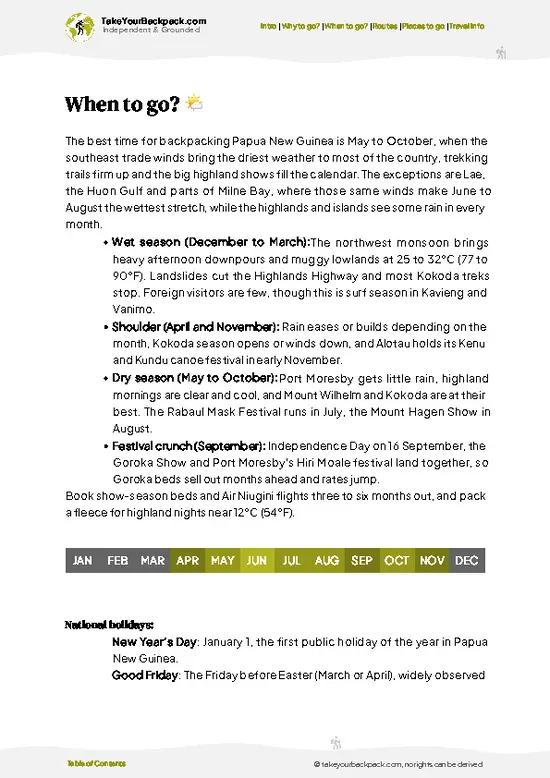
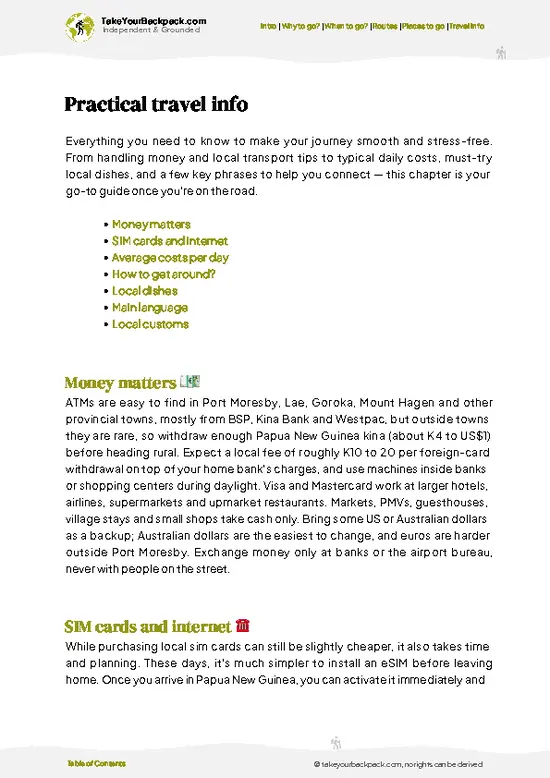
example page 3 from our offline Travel Guide for Papua New Guinea
example page 4 from our offline Travel Guide for Papua New Guinea
example page 5 from our offline Travel Guide for Papua New Guinea
example page 6 from our offline Travel Guide for Papua New Guinea
example page 7 from our offline Travel Guide for Papua New Guinea
Loading the map 🌍
CLICK TO FILTER
cities
towns
national parks
hikes
beaches
attractions
festivals
regions
SHOW COUNTRY’S BESTSHOW ALL

✨ Why go?
Ranked #11 attraction in Papua New Guinea
The unique appeal for travelers

Rabaul was the biggest Japanese base in the South Pacific in World War II, and the museum is the quickest way to grasp why. Rusty hardware and old photographs give names and dates to the tunnels, bunkers and wrecks you’ll visit afterward, and a guide’s stories land harder once you’ve seen them.

The town also carries a second story. The 1994 eruption of Tavurvur and Vulcan flattened the old center, and the museum shows what stood here before. If you’re working through East New Britain, this is the stop that turns scattered ruins into a coherent picture, and it costs you only an hour or so.

💡 HighlightsWhat this place is best known for

  1. Wartime relic collection: Japanese and Allied hardware, helmets and fragments recovered from the surrounding hills and harbor, displayed so you can see the scale of the occupation.
  2. Pre-eruption town photographs: Images of Rabaul’s old streets and harbor front before ash covered them, handy for comparing with what you walk through now.
  3. Eruption displays: Material on the 1994 twin eruption, which explains why the town center moved and why the airport and old buildings were abandoned.
  4. Japanese barge tunnels: Nearby hillside tunnels where landing craft were hidden. Go after the museum so the context is fresh.
  5. Tavurvur volcano: The active cone across the harbor, steaming and rumbling. Climbs and viewpoints are best arranged with a local guide.
  6. Volcano Observatory lookout: A hilltop view over the caldera
… read more 👉
  1. Wartime relic collection: Japanese and Allied hardware, helmets and fragments recovered from the surrounding hills and harbor, displayed so you can see the scale of the occupation.
  2. Pre-eruption town photographs: Images of Rabaul’s old streets and harbor front before ash covered them, handy for comparing with what you walk through now.
  3. Eruption displays: Material on the 1994 twin eruption, which explains why the town center moved and why the airport and old buildings were abandoned.
  4. Japanese barge tunnels: Nearby hillside tunnels where landing craft were hidden. Go after the museum so the context is fresh.
  5. Tavurvur volcano: The active cone across the harbor, steaming and rumbling. Climbs and viewpoints are best arranged with a local guide.
  6. Volcano Observatory lookout: A hilltop view over the caldera and both craters, which lays the whole geography out at once.
  7. Rabaul market: A stroll through stalls of fish, produce and betel nut, where locals will happily talk about the eruption years.
Allow about an hour for the museum itself, or a full day if you add the tunnels and viewpoints.
Spotted a mistake or missing something? Contact us.

🌤️ When to go?Choosing the right time of year

  • Drier Months (May to October): Southeast trade winds bring the lowest rainfall around Kokopo and the Gazelle Peninsula. Days run 28 to 32°C (82 to 90°F), nights 22 to 24°C (72 to 75°F). Roads and the museum grounds stay firm underfoot.
  • Wet Months (December to March): Northwest monsoon squalls bring heavy afternoon downpours and humidity near 85 percent. Temperatures barely shift, but tracks turn muddy and ferries can be bumpy.
  • Crowds and Prices: Visitors are few all year. Cruise ships docking at Rabaul bring brief surges, and guesthouse rates barely move with the season.
  • Daylight: Sunrise is near 6 am and sunset near 6 pm all year, so plan to be back before dark.
  • Events: The Warwagira festival in July draws the biggest crowd to the area.
Visit in the morning, when it is cooler and before the afternoon clouds build.

source: climatestotravel.comJANJanuary: fair for travelingFEBFebruary: fair for travelingMARMarch: fair for travelingAPRApril: good for travelingMAYMay: excellent for travelingJUNJune: excellent for travelingJULJuly: highly recommended for travelingAUGAugust: highly recommended for travelingSEPSeptember: excellent for travelingOCTOctober: excellent for travelingNOVNovember: good for travelingDECDecember: fair for traveling
when-to-go

✈️ The backpacker research shortcutPapua New Guinea Travel Guide

An offline-friendly backpacking guide with optimized travel routes, ranked highlights, transport advice, and the best areas to stay.
example page 0 from our offline Travel Guide for Papua New Guinea
example page 1 from our offline Travel Guide for Papua New Guinea
example page 2 from our offline Travel Guide for Papua New Guinea
example page 3 from our offline Travel Guide for Papua New Guinea
example page 4 from our offline Travel Guide for Papua New Guinea
example page 5 from our offline Travel Guide for Papua New Guinea
example page 6 from our offline Travel Guide for Papua New Guinea
example page 7 from our offline Travel Guide for Papua New Guinea
The digital guide (251 pages) contains:
✅ 81 highlights, ranked by travel appeal
✅ Optimized 5, 10 & 15-day travel routes
✅ Cities, national parks, landmarks, beaches
✅ How to get around
✅ Offline-friendly for travel without Wi-Fi
👉 Click to see all 30+ guide features

📅 Plan smarter in minutes, not weeks
✅ Month by month travel advice
✅ Festivals & national holidays
✅ Budget expectations

🗺️ Go to the right places, skip the overrated ones
✅ Honest pros & cons of destinations
✅ Top hikes, parks & viewpoints
✅ Lesser-known places most travelers miss
✅ Clear “worth it vs skip it” guidance

🛏️ Travel smoothly without rookie mistakes
✅ Best areas to stay
✅ Transport systems explained simply
✅ Common scams & safety advice
✅ SIM cards, money & practical tips

🌍 Understand the country, not just visit it
✅ Culture & traditions
✅ 52 Essential phrases & customs
✅ Festivals worth planning around
✅ Traveler-friendly historical context
✅ Insights that make places more meaningful

📱 Built for real travel conditions
✅ Fully downloadable PDF
✅ Works completely offline
✅ Optimized for phone use
✅ Useful in remote areas & buses
✅ Everything in one place
Stop searching, start planning
Get instant access to your full guide. 30‑day money-back guarantee.
+ Add another guide for just

By proceeding you agree to our terms.
Sent to your inbox immediately after payment • 100% Secure Checkout
Best Backpacking Travel Advisor 2025 tourism awardBest Backpacking
Travel Advisor
2025
What others say about Take Your Backpack Guides:
⭐⭐⭐⭐⭐
Fantastic, amazing amount of information!
⭐⭐⭐⭐⭐
My goodness this is amazing, it's what I've been looking for hats off too you!
⭐⭐⭐⭐⭐
I think this is absolutely BRILLIANT
⭐⭐⭐⭐
Very complete and informative. It's still missing places, but I gotta to commend you
⭐⭐⭐⭐⭐
This is truly amazing, thank you, can't wait to explore it with my kids!
⭐⭐⭐⭐⭐
Awesome resource, thank you!
⭐⭐⭐⭐⭐
This is amazing! Can't wait to explore the ones I haven't seen
⭐⭐⭐⭐
I love this! Well done, great idea.
⭐⭐⭐⭐⭐
Thanks for taking the time to make this gem!
⭐⭐⭐⭐⭐
This might be the best website I've ever seen.
⭐⭐⭐⭐⭐
Congratulations, and thank you so much for your work; it's incredibly valuable.
⭐⭐⭐⭐
In all seriousness I think you did a great job pointing out the important spots
⭐⭐⭐⭐⭐
10/10 very good
⭐⭐⭐⭐⭐
As someone who's only just starting to visit regularly this is awesome, thank you.
⭐⭐⭐⭐
Thank you very much! I'm going to visit my dad, it's going to be very useful!
⭐⭐⭐⭐⭐
This is really cool! We'll be travelling for the first time and this definitely come in handy.
⭐⭐⭐⭐⭐
You are now our minister of culture, congratulations 👨‍💼
⭐⭐⭐⭐⭐
Just wanted to tell you that this is a pearl! Going to follow your recommendations.
⭐⭐⭐⭐⭐
This is so cool. I'll definitely be using the resource for my travels soon.
⭐⭐⭐⭐⭐
This is very impressive! Good work.
⭐⭐⭐⭐⭐
This is an amazing and informative site. Very well done!

🛏️ Where to stay?Best areas and accommodation options

Kokopo town is the best base, about 30 minutes by road from the museum, and it is where nearly every backpacker ends up. It has the most guesthouses and budget lodges, a daily market for cheap fruit and cooked food, supermarkets, ATMs and PMV minibuses that run along the main road. Other travelers gather in the evenings at the waterfront and in the cafes near the market, so solo visitors rarely stay lonely. Rabaul, about 30 minutes by road, suits you if you want to be near the volcanoes and WWII sites, and its lodging is quieter and more basic. Stick to areas with walled compounds and lit streets. … read more 👉
Kokopo town is the best base, about 30 minutes by road from the museum, and it is where nearly every backpacker ends up. It has the most guesthouses and budget lodges, a daily market for cheap fruit and cooked food, supermarkets, ATMs and PMV minibuses that run along the main road. Other travelers gather in the evenings at the waterfront and in the cafes near the market, so solo visitors rarely stay lonely. Rabaul, about 30 minutes by road, suits you if you want to be near the volcanoes and WWII sites, and its lodging is quieter and more basic. Stick to areas with walled compounds and lit streets. Arrange transport back before dark, and ask your host which stretches to avoid walking after sunset. Book ahead during the Warwagira festival, when beds in Kokopo fill up.

👛 Costs (as of 15 October 2026)How expensive it really is

Expect to spend about US$57 to 122 a day in this part of Papua New Guinea, with the museum itself being a small line in the budget. Costs run high by regional standards because accommodation and imported food are pricey. Figures are in kina (PGK) with US$ equivalents.
CategoryBudget RangeLocal Reality
Museum EntryUS$2 to 5Small fee or donation, paid at the door.
Accommodation (high season)US$30 to 60Basic guesthouse or lodge room in Kokopo, often with fan or air conditioning.
FoodUS$12 to 25Market produce and cooked meals are cheapest; restaurant dishes cost more.
Local TransportUS$3 to 12PMV minibuses cost under US$1 per ride; a hired car or taxi to the museum costs more.
ExtrasUS$10 to 20Water, tips for guides, snacks and phone data.
Total Daily BudgetUS$57 to 122Per person, per day, in high season.
⚠️ Prices can change and everyone travels differently, so take this as a rough guide. Hope it helps you plan your adventure!

FAQTraveler FAQ

Plan one to two hours at the museum, which is small and quick to see. Combine it with other Kokopo area sites such as the Bita Paka War Cemetery and local markets for a half-day or full-day outing. Most visitors fit it in between a morning start and an early afternoon lunch in town.
For most backpackers with an interest in the history of East New Britain and WWII, yes, since the fee is only about US$2 to 5. The exhibits cover local culture and wartime relics, which gives context to sites you see elsewhere in the region. If you only have a day, pair it with other nearby sights to get more from the trip.
Fly to Tokua Airport near Kokopo from Port Moresby, about 1.5 hours, then drive 20 to 30 minutes into town. From Kokopo, a taxi or hired car takes roughly 20 to 30 minutes, and a PMV minibus costs under US$1 along the main road. Ask your guesthouse to arrange the return before dark.
⚠️ Things can change over time, so always validate details locally before you go.

Other Papua New Guinean attractions near New Guinea Club and Rabaul Museum

Explore more nearby:

  • Kokopo War Museum—Rusting weapons, Japanese tanks, anti-aircraft gun, Blanche Bay| 19 km away
  • Kokopo Cultural Centre—Tolai masks, shell money, local crafts, community events| 19 km away
  • Rainforest Habitat—Birds of paradise, campus orchids, walk-through aviary, student guides| 636 km away

💡 Not sure where to go next?
Create a personalized itinerary for Papua New Guinea including New Guinea Club and Rabaul Museum and the places that fit your trip.

Generate my itinerary

👉 Discover all attractions

Or checkout all Papua New Guinea has to offer (think cities, towns, villages, national parks, hikes, beaches, festivals)
Country photo of Papua New Guinea

We 💚 feedbackKey takeaways before you go

Spend time with the old photographs of the pre-eruption waterfront, because most visitors rush straight to the wartime hardware. Those images make the present-day town, with its ash-stained ground and rebuilt corners, read like a before-and-after. I’d bring small cash for a guide and ask about local stories in the museum first.

✍️ Help improve this page!
The information on this page is based on in-depth research, insights shared by experienced travelers, and feedback from the local travel community in Papua New Guinea. While every effort is made to keep the information accurate and current, conditions can change — so if you spot anything incorrect or outdated, please get in touch.


🙋‍♂️ Give feedback

👋 Meet the founderWho’s Behind Take Your Backpack?

Johan, backpacker and founder of TakeYourBackpackHi, I’m Johan (Netherlands 🇳🇱), the creator of TakeYourBackpack. Over the past 3 decades, I’ve backpacked through 90+ countries across six continents, gaining extensive experience with independent travel, long-term trips, and overland routes.

This site is built on a combination of firsthand travel experience and carefully curated insights from other backpackers. Many guides are based on places I’ve personally visited, while others bring together tips, observations, and practical advice shared by trusted travelers I’ve met along the way.

The goal is to provide realistic, experience-driven guidance — not generic itineraries — so you can explore destinations with better context, clearer expectations, and more confidence.