×

Peru🇵🇪 | hikesVilcabamba TrekLast Inca capital, jungle ruins, river crossings, homestays | things to do and best time to go

Explore Cordillera Huayhuash CircuitExplore Marcahuasi

Backpacking in Vilcabamba Trek
👀 For curious travelershike ranked #12
By Johan Kruseman 🇳🇱 | Updated October 18, 2026

Trekkers cross the Apurímac and Concevayoc valleys to reach Vilcabamba, the jungle-wrapped Inca refuge where Manco Inca held out against the Spanish. The Vilcabamba Trek runs through Peru’s Cusco region, northwest of Cusco city, and it is a rough, remote slog. Expect big ridges, cloud forest and ruins with almost no crowds, but also steep mud, long days and patchy transport. Book a licensed operator early, because independent access is awkward. At the trailhead I filled my bottle at a village tap and bought extra coca candies and bread from the last shop, and you can too. Carry cash in soles, since villages have no ATMs. Adventurers who love solitude will like it most; anyone wanting comfort or fixed timetables won’t.

Discover everything you want to know in the 📖 Peru Travel Guide.
Best time to go: May - September
Duration: 8 days
Distance: 110 kilometers
Total ascent: 5000 meters


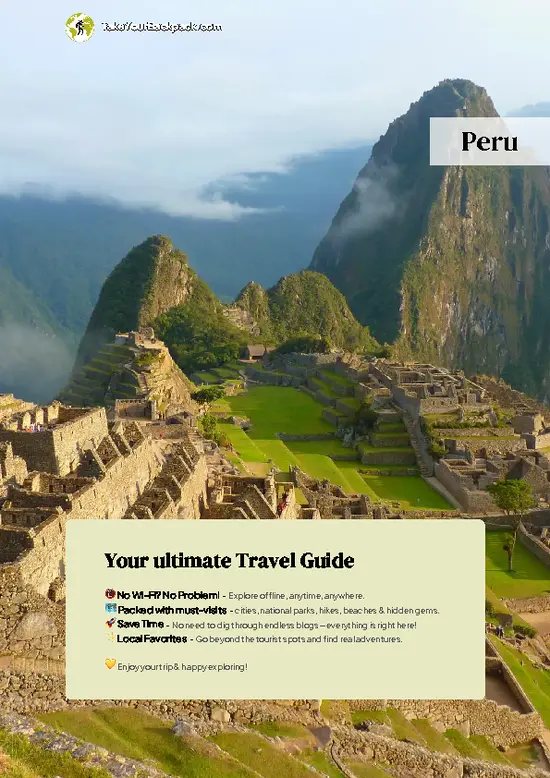
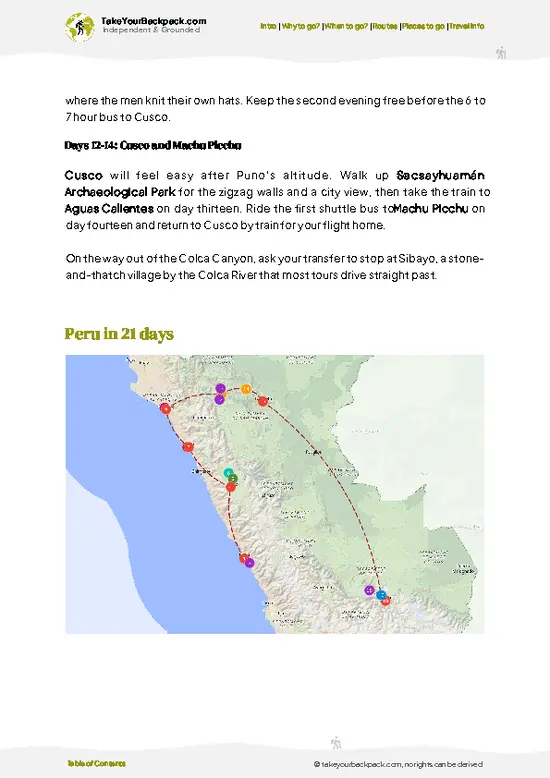
example page 0 from our offline Travel Guide for Peru
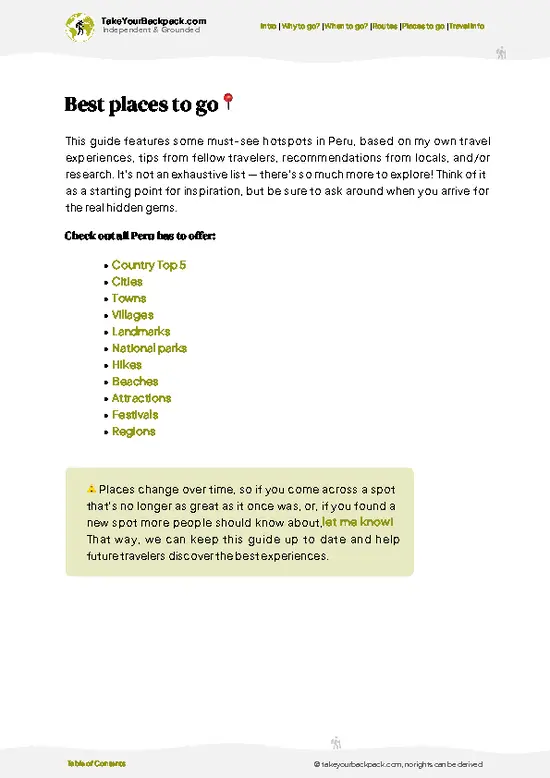
example page 1 from our offline Travel Guide for Peru
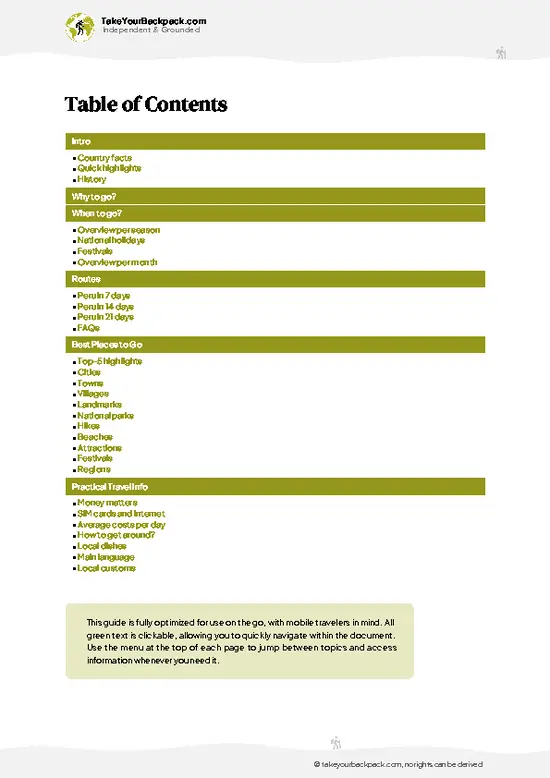
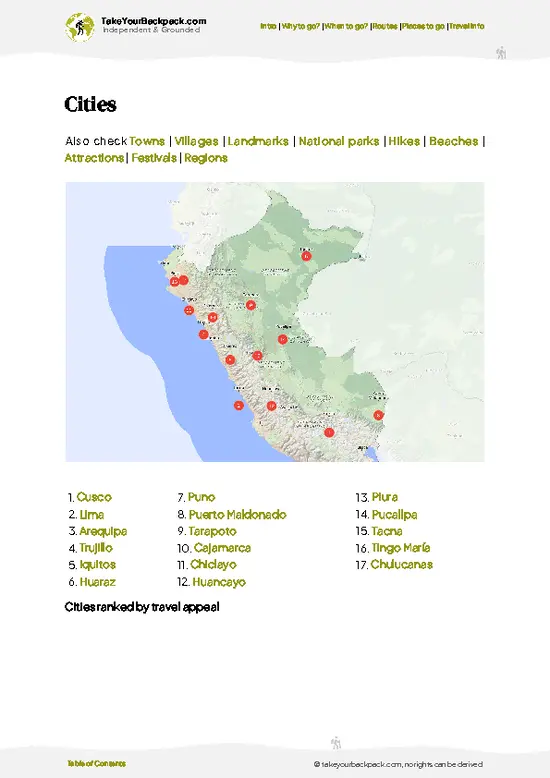
example page 2 from our offline Travel Guide for Peru
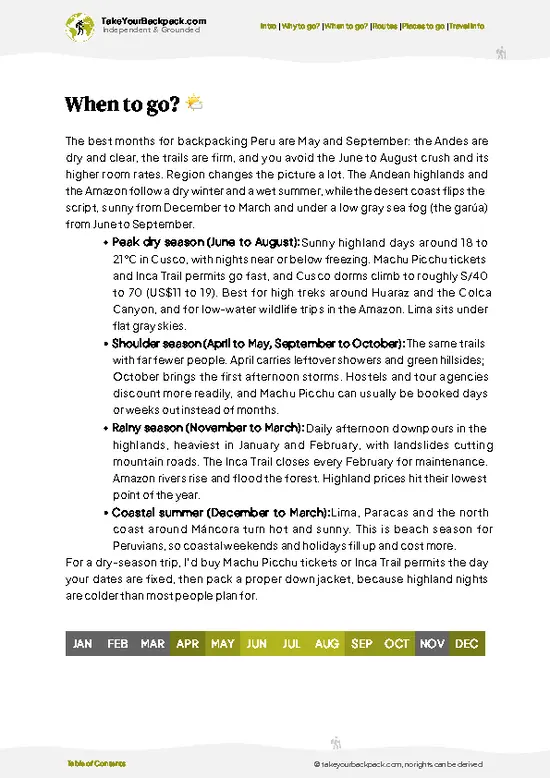
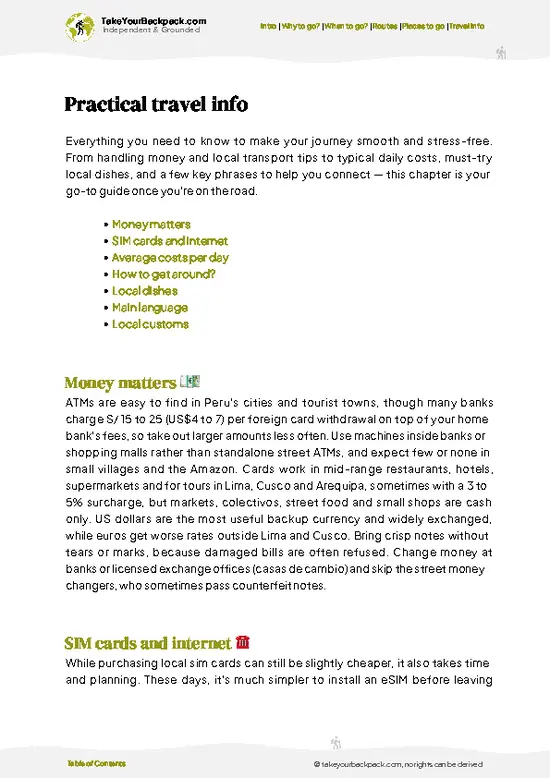
example page 3 from our offline Travel Guide for Peru
example page 4 from our offline Travel Guide for Peru
example page 5 from our offline Travel Guide for Peru
example page 6 from our offline Travel Guide for Peru
example page 7 from our offline Travel Guide for Peru
Loading the map 🌍
CLICK TO FILTER
cities
towns
villages
landmarks
national parks
hikes
beaches
attractions
festivals
regions
SHOW COUNTRY’S BESTSHOW ALL

✨ Why go?
Ranked #12 hike in Peru
Why visitors keep coming back

Vilcabamba Trek draws backpackers who have already done Machu Picchu and want the Inca story without the lines. The big draw is the Espíritu Pampa end of the story, the last Inca capital swallowed by jungle, which few people ever see. You also get long stretches where the only company is muleteers and condors. The route links into a wider Cusco loop, so it fits as a week-long detour before or after the classic sites. Nights in simple villages keep costs modest, and the thin crowds mean you can walk at your own pace and talk to families who farm these slopes. If you want effort, quiet and real history together, this trek delivers more than most Andean walks.

💡 HighlightsWhat this place is best known for

  1. Espíritu Pampa ruins: The remains of the last Inca capital sit in dense jungle, with stone buildings and plazas half hidden by vines. Reaching them feels like real discovery.
  2. Choquequirao link ridges: Sections of the route offer wide views across the Apurímac canyon toward snow peaks, with huge drops below your boots.
  3. Cloud forest descent: Moss-draped trees, orchids and birdsong close in as the trail drops into humid green, a sharp contrast to the high passes.
  4. Rio Concevidayoc crossings: Log and cable crossings over fast jungle rivers add adventure and cool, loud water after sweaty climbs.
  5. Village homestay stops: Small farming hamlets offer simple meals, coffee and conversation with locals who rarely see trekkers.
Start with Espíritu Pampa, because it is the reason to come and everything else builds toward it.
Spotted a mistake or missing something? Contact us.

Things to do near Vilcabamba Trek

Ratings based on Tripadvisor reviews. When you book through this link, you support our work at no extra cost to you.

🌤️ When to go?Seasonal considerations and timing

  • Dry Season (May to September): June to August is the prime window for the Vilcabamba Trek. Days run 18 to 24°C (64 to 75°F), nights at the high passes drop to -5 to 2°C (23 to 36°F), and daylight lasts roughly 11 to 12 hours.
  • Wet Season (December to March): Rain turns the trail to mud, rivers rise and cloud hides the Choquequirao-side views. Expect 8 to 18°C (46 to 64°F). Few trekkers, lower prices, but the trek is best skipped.
  • Shoulder Months (April, October, November): Showers are patchy, trails are quiet and greens are lush. Operators sometimes discount 10 to 15%.
  • Crowds and Prices: July and August fill guide and mule availability and push rates up, so book weeks ahead.
Aim for late May or September for dry trails with fewer people.

source: climatestotravel.comJANJanuary: fair for travelingFEBFebruary: fair for travelingMARMarch: fair for travelingAPRApril: fair for travelingMAYMay: highly recommended for travelingJUNJune: excellent for travelingJULJuly: excellent for travelingAUGAugust: excellent for travelingSEPSeptember: highly recommended for travelingOCTOctober: fair for travelingNOVNovember: fair for travelingDECDecember: fair for traveling
when-to-go

✈️ The backpacker research shortcutPeru Travel Guide

An offline-friendly backpacking guide with optimized travel routes, ranked highlights, transport advice, and the best areas to stay.
example page 0 from our offline Travel Guide for Peru
example page 1 from our offline Travel Guide for Peru
example page 2 from our offline Travel Guide for Peru
example page 3 from our offline Travel Guide for Peru
example page 4 from our offline Travel Guide for Peru
example page 5 from our offline Travel Guide for Peru
example page 6 from our offline Travel Guide for Peru
example page 7 from our offline Travel Guide for Peru
The digital guide (310 pages) contains:
✅ 102 highlights, ranked by travel appeal
✅ Optimized 7, 14 & 21-day travel routes
✅ Cities, national parks, landmarks, beaches
✅ How to get around
✅ Offline-friendly for travel without Wi-Fi
👉 Click to see all 30+ guide features

📅 Plan smarter in minutes, not weeks
✅ Month by month travel advice
✅ Festivals & national holidays
✅ Budget expectations

🗺️ Go to the right places, skip the overrated ones
✅ Honest pros & cons of destinations
✅ Top hikes, parks & viewpoints
✅ Lesser-known places most travelers miss
✅ Clear “worth it vs skip it” guidance

🛏️ Travel smoothly without rookie mistakes
✅ Best areas to stay
✅ Transport systems explained simply
✅ Common scams & safety advice
✅ SIM cards, money & practical tips

🌍 Understand the country, not just visit it
✅ Culture & traditions
✅ 52 Essential phrases & customs
✅ Festivals worth planning around
✅ Traveler-friendly historical context
✅ Insights that make places more meaningful

📱 Built for real travel conditions
✅ Fully downloadable PDF
✅ Works completely offline
✅ Optimized for phone use
✅ Useful in remote areas & buses
✅ Everything in one place
Stop searching, start planning
Get instant access to your full guide. 30‑day money-back guarantee.
+ Add another guide for just

By proceeding you agree to our terms.
Sent to your inbox immediately after payment • 100% Secure Checkout
Best Backpacking Travel Advisor 2025 tourism awardBest Backpacking
Travel Advisor
2025
What others say about Take Your Backpack Guides:
⭐⭐⭐⭐⭐
Fantastic, amazing amount of information!
⭐⭐⭐⭐⭐
My goodness this is amazing, it's what I've been looking for hats off too you!
⭐⭐⭐⭐⭐
I think this is absolutely BRILLIANT
⭐⭐⭐⭐
Very complete and informative. It's still missing places, but I gotta to commend you
⭐⭐⭐⭐⭐
This is truly amazing, thank you, can't wait to explore it with my kids!
⭐⭐⭐⭐⭐
Awesome resource, thank you!
⭐⭐⭐⭐⭐
This is amazing! Can't wait to explore the ones I haven't seen
⭐⭐⭐⭐
I love this! Well done, great idea.
⭐⭐⭐⭐⭐
Thanks for taking the time to make this gem!
⭐⭐⭐⭐⭐
This might be the best website I've ever seen.
⭐⭐⭐⭐⭐
Congratulations, and thank you so much for your work; it's incredibly valuable.
⭐⭐⭐⭐
In all seriousness I think you did a great job pointing out the important spots
⭐⭐⭐⭐⭐
10/10 very good
⭐⭐⭐⭐⭐
As someone who's only just starting to visit regularly this is awesome, thank you.
⭐⭐⭐⭐
Thank you very much! I'm going to visit my dad, it's going to be very useful!
⭐⭐⭐⭐⭐
This is really cool! We'll be travelling for the first time and this definitely come in handy.
⭐⭐⭐⭐⭐
You are now our minister of culture, congratulations 👨‍💼
⭐⭐⭐⭐⭐
Just wanted to tell you that this is a pearl! Going to follow your recommendations.
⭐⭐⭐⭐⭐
This is so cool. I'll definitely be using the resource for my travels soon.
⭐⭐⭐⭐⭐
This is very impressive! Good work.
⭐⭐⭐⭐⭐
This is an amazing and informative site. Very well done!

🛏️ Where to stay?Where staying makes the most sense

If you enjoy meeting fellow travelers, consider choosing hostels with high ratings for atmosphere. On the other hand, if you prefer having your own space, a hotel might be a better option.

🥾 Hike detailsHike details: route, duration, and difficulty of Vilcabamba Trek

Total Distance: Vilcabamba Trek covers roughly 100 to 120 kilometers depending on the route variant.
Duration: Most groups need 7 to 9 days.
Difficulty: Demanding, with steep climbs, river crossings and muddy sections.
Starting Point: Trips usually begin near Huancacalle or villages in the Vilcabamba area, reached from Cusco by a long road journey on shared vans or a hired vehicle.
Major Landmarks:
  • Espíritu Pampa: Remote Inca site and the trek’s goal.
  • High passes: Cold, windy crossings with long views.
  • River valleys: Deep jungle drainages with simple bridges.
Terrain and Scenery: Rocky mountain paths,
… read more 👉
Total Distance: Vilcabamba Trek covers roughly 100 to 120 kilometers depending on the route variant.
Duration: Most groups need 7 to 9 days.
Difficulty: Demanding, with steep climbs, river crossings and muddy sections.
Starting Point: Trips usually begin near Huancacalle or villages in the Vilcabamba area, reached from Cusco by a long road journey on shared vans or a hired vehicle.
Major Landmarks:
  • Espíritu Pampa: Remote Inca site and the trek’s goal.
  • High passes: Cold, windy crossings with long views.
  • River valleys: Deep jungle drainages with simple bridges.
Terrain and Scenery: Rocky mountain paths, jungle tracks and exposed ridgelines, with rivers and snowy peaks in view.
Vegetation: Open high grassland gives way to cloud forest, bamboo and dense tropical growth.
Wildlife: Condors, parrots, hummingbirds, and with luck spectacled bears or monkeys in the lower forest.
⚠️ Hiking info can sometimes be outdated or inaccurate. Before you hit the trail, check the latest conditions with locals. If you do spot anything that's off, I'd love to hear from you, so I can update it for fellow travelers.

🛡️ SafetyScams, Hazards, and Annoyances

The Vilcabamba Trek is remote and demanding, so the main risks are weather and isolation rather than crime. Passes sit above 4,000 meters (13,100 feet), so spend two or three days in Cusco first and climb slowly. Afternoon rain and cold nights can arrive fast even in the dry season, so pack a proper rain shell and a warm sleeping bag rated to around -5°C (23°F). Trails are steep, with loose rock and sometimes slick stream crossings, and signs are scarce, so a local guide is the sensible choice. Mosquitoes and sandflies thrive in lower valleys, so bring repellent. Carry a first-aid kit and water purification, and tell someone your route.

FAQCommon questions from travelers

Vilcabamba Trek usually takes 5 to 7 days, depending on the route and how far you extend toward Choquequirao or the Espíritu Pampa area. Most itineraries start from the Cusco region, with a drive of about 4 to 6 hours to trailheads. Expect 10 to 20 kilometers (6 to 12 miles) of walking per day, with long ups and downs between valleys.
Vilcabamba Trek is hard, rated challenging to strenuous. Daily elevation changes of 1,000 meters (3,300 feet) or more are common, and passes top 4,000 meters (13,100 feet). You need good fitness, prior multi-day hiking experience and a few days of acclimatization in Cusco.
Vilcabamba Trek is best done with a licensed local guide, since the trail is remote, poorly signed and crosses several communities. Guided trips usually cost around US$600 to 1,200 for 5 to 7 days, including cook, muleteers and camping gear. Specific archaeological entry fees apply for sites like Choquequirao (around US$15 to 20), and you should confirm any other permits with your operator.
⚠️ Things can change over time, so always validate details locally before you go.

Other Peruvian hikes near Vilcabamba Trek

Explore more nearby:

  • Choquequirao Trek—Canyon descent, Inca ridge ruins, llama terraces, few crowds| 65 km away
  • Huayna Picchu—Cabled stone stairs, rock tunnel, summit terraces, citadel overlook| 76 km away
  • Salkantay Trek—Savage Mountain, Humantay Lake, 4,630 m pass, coffee-country descent| 85 km away

💡 Not sure where to go next?
Create a personalized itinerary for Peru including Vilcabamba Trek and the places that fit your trip.

Generate my itinerary

👉 Discover all hikes

Or checkout all Peru has to offer (think cities, towns, villages, national parks, hikes, beaches, festivals)
Country photo of Peru

We 💚 feedbackKey takeaways before you go

Vilcabamba Trek is best in the dry months from May to September, when trails firm up and the river crossings calm down. Start early each morning to beat afternoon cloud, and pack insect repellent for the jungle stretch. I would not attempt it in the rainy season; the mud turns slow days into miserable ones.

✈️ When did I visit Peru?
Peru I visited during my half year trip through South and Central America back in 2003

✍️ Help improve this page!
The information on this page is based on my own backpacking experience in Peru, supplemented with up-to-date research and feedback from other travelers. Travel details can change, so if you notice anything outdated or incomplete, feel free to let me know.


🙋‍♂️ Give feedback

👋 Meet the founderWho’s Behind Take Your Backpack?

Johan, backpacker and founder of TakeYourBackpackHi, I’m Johan (Netherlands 🇳🇱), the creator of TakeYourBackpack. Over the past 3 decades, I’ve backpacked through 90+ countries across six continents, gaining extensive experience with independent travel, long-term trips, and overland routes.

This site is built on a combination of firsthand travel experience and carefully curated insights from other backpackers. Many guides are based on places I’ve personally visited, while others bring together tips, observations, and practical advice shared by trusted travelers I’ve met along the way.

The goal is to provide realistic, experience-driven guidance — not generic itineraries — so you can explore destinations with better context, clearer expectations, and more confidence.