×
Amazon Rainforest

Peru🇵🇪 | national parksAmazon Rainforestdense canopy, river labyrinth, endemic wildlife | things to do and best time to go

Explore Huchuy Qosqo TrekExplore Bahuaja-Sonene National Park

Backpacking in Amazon Rainforest
🏆 Top picknational park ranked #3
By Johan Kruseman 🇳🇱 | Updated June 1, 2026

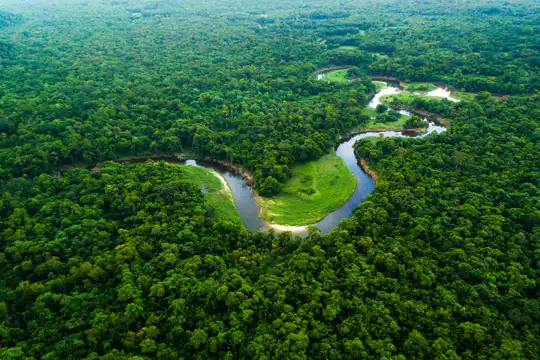
Most people imagine the Peruvian Amazon as endless deep jungle, but the surprise for backpackers is how much of it is actually edge-of-forest farmland and river towns before you hit real primary rainforest. In Peru, the Amazon basin sprawls across the east of the country, with classic access hubs like Iquitos in the north and Puerto Maldonado for the southern lowlands. As a backpacker destination, it’s equal parts magic and logistics test: river hikes and short jungle trails instead of big mountain treks, dense canopy, loud insect nights, and wildlife that’s incredible when it shows up and underwhelming when it doesn’t. It’s pricier and less DIY than the Andes; boats, guides, and park fees add up, and cheap lodges can be rough. Compared with Manu or Tambopata, the broader “Amazon Rainforest” experience is less controlled, more chaotic, and better if you enjoy improvising more than ticking off species.

Discover everything you want to know in the 📖 Peru Travel Guide.


Get your Peru guide
118 ranked highlights, routes & tips, works offline (444 pages)
Loading the map 🌍
CLICK TO FILTER
cities
towns
villages
landmarks
national parks
hikes
beaches
attractions
festivals
regions
SHOW COUNTRY’S BESTSHOW ALL

✨ Why go?
Ranked #3 national park in Peru
What makes this national park worth exploring

Backpackers flock to the Amazon Rainforest in Peru for a mix of independent exploration and budget-friendly options. The park offers a range of camping and hostel choices that keep costs low while providing a base for adventure. You can pitch your tent under the canopy or find a cozy spot in a local hostel, both of which let you soak in the jungle atmosphere without breaking the bank.

The trail variety is another draw. From easy walks to challenging treks, there’s something for everyone. You can choose your own path, making it ideal for self-guided travelers. This freedom allows you to set your own pace and discover the rainforest on your terms.

However, be aware of the hidden costs. Some trails may require permits, and local guides can enhance your experience, especially if you want to … read more 👉
Backpackers flock to the Amazon Rainforest in Peru for a mix of independent exploration and budget-friendly options. The park offers a range of camping and hostel choices that keep costs low while providing a base for adventure. You can pitch your tent under the canopy or find a cozy spot in a local hostel, both of which let you soak in the jungle atmosphere without breaking the bank.

The trail variety is another draw. From easy walks to challenging treks, there’s something for everyone. You can choose your own path, making it ideal for self-guided travelers. This freedom allows you to set your own pace and discover the rainforest on your terms.

However, be aware of the hidden costs. Some trails may require permits, and local guides can enhance your experience, especially if you want to spot wildlife or learn about the ecosystem. Skipping these can lead to missed opportunities. By planning wisely, you can preserve your energy and budget for the moments that truly matter in this vibrant ecosystem.
Want to include Amazon Rainforest in your Peru route?
Create a personalized Peru itinerary that includes Amazon Rainforest and the places that fit your trip — based on your travel style, budget, and available time. Get your route in seconds.

Generate my trip

💡 HighlightsDon't-miss highlights and experiences

  • Manu National Park — An insane biodiversity hotspot where the Andes drop into the Amazon: cloud forest trails, lowland rainforest, and famous macaw clay licks. Hike a few hours or stay at a research lodge to see tapirs, jaguar sign (rarely), dozens of monkey species and an enormous variety of birds. (Personal favorite — the gradient from mountain to jungle is unbeatable for seeing different habitats in one place.)
  • Tambopata’s Macaw Collpas — Huge clay-licks (collpas) where dozens — sometimes hundreds — of macaws, parrots and parakeets gather to ingest minerals. Late-morning hides and dawn stakeouts give unforgettable photo ops and bird noise that will stick in your head for days.
  • Pacaya-Samiria National Reserve — The flooded varzea landscape: river channels, oxbow lakes and seasonally
read more 👉
  • Manu National Park — An insane biodiversity hotspot where the Andes drop into the Amazon: cloud forest trails, lowland rainforest, and famous macaw clay licks. Hike a few hours or stay at a research lodge to see tapirs, jaguar sign (rarely), dozens of monkey species and an enormous variety of birds. (Personal favorite — the gradient from mountain to jungle is unbeatable for seeing different habitats in one place.)
  • Tambopata’s Macaw Collpas — Huge clay-licks (collpas) where dozens — sometimes hundreds — of macaws, parrots and parakeets gather to ingest minerals. Late-morning hides and dawn stakeouts give unforgettable photo ops and bird noise that will stick in your head for days.
  • Pacaya-Samiria National Reserve — The flooded varzea landscape: river channels, oxbow lakes and seasonally submerged forest. Boat trips are the main way to explore; look for pink river dolphins, giant otters, caimans and an absolute abundance of waterbirds.
  • Canopy Towers and Walkways — Places like the canopy towers around Tambopata and the Inkaterra walkways let you spend hours in the forest upper story watching trogons, tanagers and monkeys at eye level. Best for birdwatchers and anyone who wants a different perspective than muddy understory trails.
  • Oxbow Lakes and Paddling Trips — Calm backwaters cut off from the main river host concentrated wildlife: herons, sloths on the banks, caimans at dusk and often solitary river turtles. Quiet canoe trips at sunrise or sunset are low-effort but high-reward.
  • Allpahuayo-Mishana White-Sand Forests — Near Iquitos, these unique white-sand ecosystems host endemic plants and specialized birds you won’t find in the richer terra-firme forests. Short trails and local guides make this a compact, rewarding stop if your route includes Loreto.
  • Night Walks for Frogs, Insects and Nocturnal Mammals — The jungle truly comes alive after dark: tree frogs glowing in the headlamp beam, katydids and beetles, and occasional night monkeys or kinkajous. Guides are essential; they know the microhabitats where everything hides.
Spotted a mistake or missing something? Contact us.

Things to do near Amazon Rainforest

Ratings based on Tripadvisor reviews. When you book through this link, you support our work at no extra cost to you.

🌤️ When to go?Best time to explore Amazon Rainforest


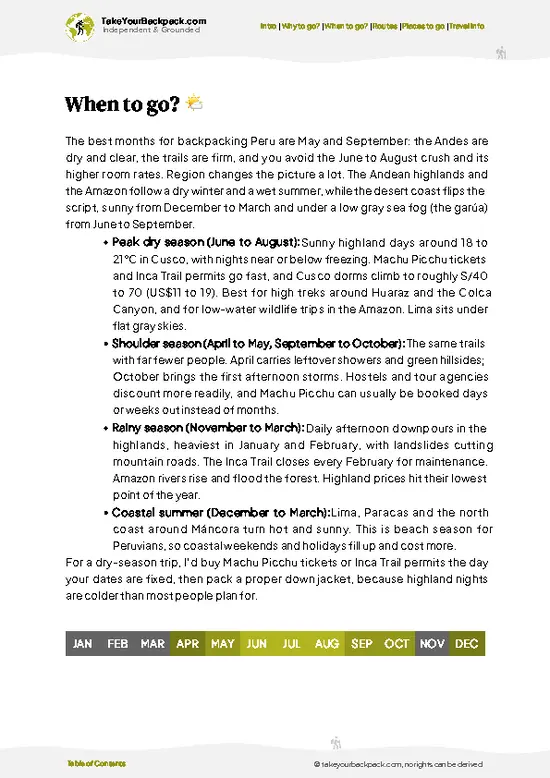
  • Weather: The dry season from May to September is your best bet. Rainfall drops significantly, making trails less muddy and river crossings safer. The wet season, October to April, floods many areas and can limit access.

  • Temperature: Expect highs around 30–32°C (86–90°F) year-round, with nights cooling to 20–22°C (68–72°F). Humidity is high, but the dry season feels less oppressive.

  • Daylight Hours: Daylight is fairly consistent, roughly 11 to 12 hours daily. Early mornings and late afternoons are prime for wildlife spotting.

  • Crowds: The dry season attracts more tourists, especially July and August. If you want fewer people, shoulder months like May or September work well.

  • Seasonal Activities: Dry months are ideal for hiking and canopy tours. Wet season opens up river travel but expect
read more 👉

  • Weather: The dry season from May to September is your best bet. Rainfall drops significantly, making trails less muddy and river crossings safer. The wet season, October to April, floods many areas and can limit access.

  • Temperature: Expect highs around 30–32°C (86–90°F) year-round, with nights cooling to 20–22°C (68–72°F). Humidity is high, but the dry season feels less oppressive.

  • Daylight Hours: Daylight is fairly consistent, roughly 11 to 12 hours daily. Early mornings and late afternoons are prime for wildlife spotting.

  • Crowds: The dry season attracts more tourists, especially July and August. If you want fewer people, shoulder months like May or September work well.

  • Seasonal Activities: Dry months are ideal for hiking and canopy tours. Wet season opens up river travel but expect limited trekking options.

  • Price Fluctuations: Prices for lodges and tours spike in peak dry months. Booking in shoulder seasons can save you 20–30% without sacrificing much on conditions.


Pro-tip: Aim for late May or early September—good weather, fewer crowds, and better rates. You’ll keep your energy for the real adventure, not battling mud or inflated prices.


source: climatestotravel.comJANJanuary: fair for travelingFEBFebruary: fair for travelingMARMarch: fair for travelingAPRApril: fair for travelingMAYMay: highly recommended for travelingJUNJune: excellent for travelingJULJuly: excellent for travelingAUGAugust: excellent for travelingSEPSeptember: highly recommended for travelingOCTOctober: fair for travelingNOVNovember: fair for travelingDECDecember: fair for traveling
Brazil&Ecuador&Peru&Bolivia - Amazon Rainforest

✈️ The backpacker research shortcutPeru Travel Guide

An offline-friendly backpacking guide with optimized travel routes, ranked highlights, transport advice, and the best areas to stay.
example page 0 from our offline Travel Guide for Peru
example page 1 from our offline Travel Guide for Peru
example page 2 from our offline Travel Guide for Peru
example page 3 from our offline Travel Guide for Peru
example page 4 from our offline Travel Guide for Peru
example page 5 from our offline Travel Guide for Peru
example page 6 from our offline Travel Guide for Peru
example page 7 from our offline Travel Guide for Peru
The digital guide (444 pages) contains:
118 highlights, ranked by travel appeal
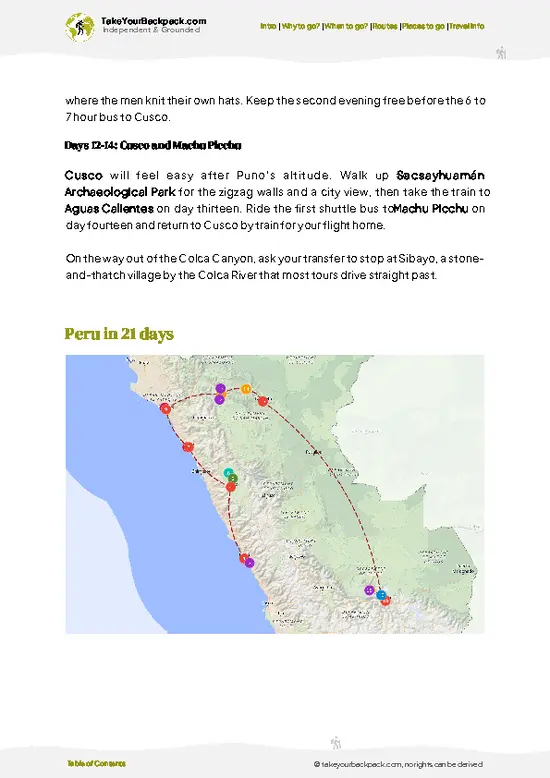
Optimized 7, 14 & 21-day travel routes
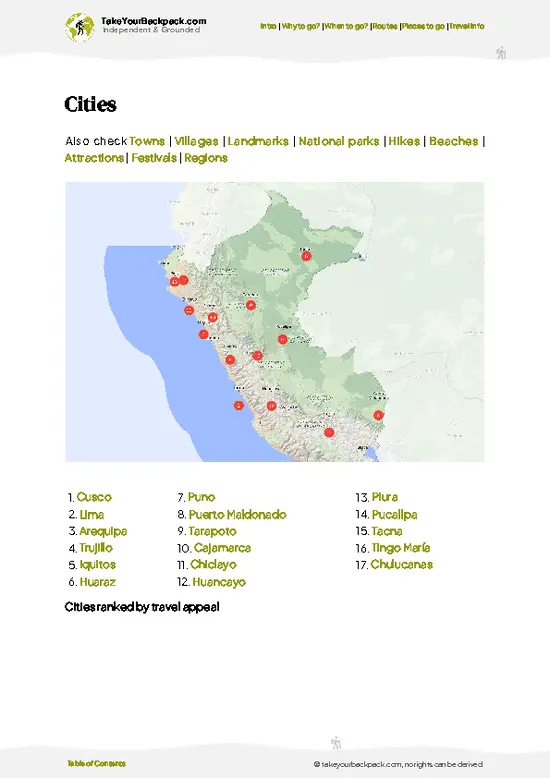
Cities, national parks, landmarks, beaches
How to get around
Offline-friendly for travel without Wi-Fi
👉 Click to see all 30+ guide features

📅 Plan smarter in minutes, not weeks
Month by month travel advice
Festivals & national holidays
Budget expectations

🗺️ Go to the right places, skip the overrated ones
Honest pros & cons of destinations
Top hikes, parks & viewpoints
Lesser-known places most travelers miss
Clear “worth it vs skip it” guidance

🛏️ Travel smoothly without rookie mistakes
Best areas to stay
Transport systems explained simply
Common scams & safety advice
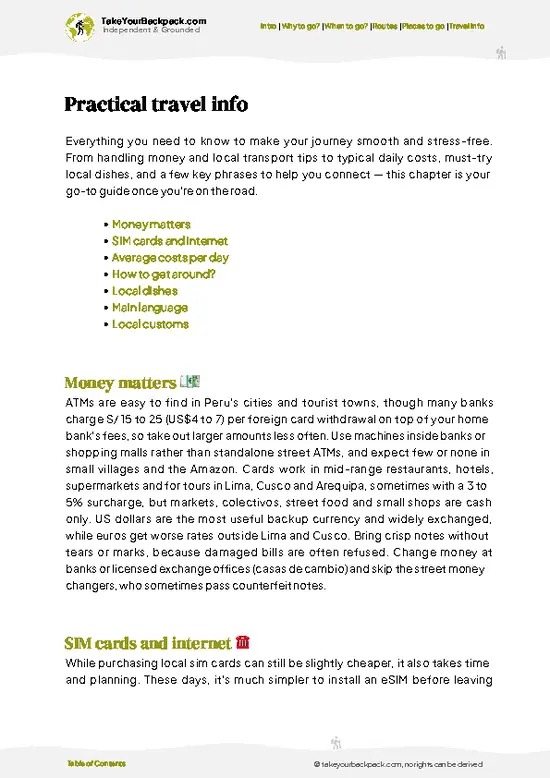
SIM cards, money & practical tips

🌍 Understand the country, not just visit it
Culture & traditions
52 Essential phrases & customs
Festivals worth planning around
Traveler-friendly historical context
Insights that make places more meaningful

📱 Built for real travel conditions
Fully downloadable PDF
Works completely offline
Optimized for phone use
Useful in remote areas & buses
Everything in one place
Save weeks of stressful planning
Get instant access to your full guide. 30‑day money-back guarantee.


By proceeding you agree to our terms.
Sent to your inbox immediately after payment • 100% Secure Checkout
Best Backpacking Travel Advisor 2025 tourism awardBest Backpacking
Travel Advisor
2025
What others say about Take Your Backpack Guides:
⭐⭐⭐⭐⭐
Fantastic, amazing amount of information!
⭐⭐⭐⭐⭐
My goodness this is amazing, it's what I've been looking for hats off too you!
⭐⭐⭐⭐⭐
I think this is absolutely BRILLIANT
⭐⭐⭐⭐
Very complete and informative. It's still missing places, but I gotta to commend you
⭐⭐⭐⭐⭐
This is truly amazing, thank you, can't wait to explore it with my kids!
⭐⭐⭐⭐⭐
Awesome resource, thank you!
⭐⭐⭐⭐⭐
This is amazing! Can't wait to explore the ones I haven't seen
⭐⭐⭐⭐
I love this! Well done, great idea.
⭐⭐⭐⭐⭐
Thanks for taking the time to make this gem!
⭐⭐⭐⭐⭐
This might be the best website I've ever seen.
⭐⭐⭐⭐⭐
Congratulations, and thank you so much for your work; it's incredibly valuable.
⭐⭐⭐⭐
In all seriousness I think you did a great job pointing out the important spots
⭐⭐⭐⭐⭐
10/10 very good
⭐⭐⭐⭐⭐
As someone who's only just starting to visit regularly this is awesome, thank you.
⭐⭐⭐⭐
Thank you very much! I'm going to visit my dad, it's going to be very useful!
⭐⭐⭐⭐⭐
This is really cool! We'll be travelling for the first time and this definitely come in handy.
⭐⭐⭐⭐⭐
You are now our minister of culture, congratulations 👨‍💼
⭐⭐⭐⭐⭐
Just wanted to tell you that this is a pearl! Going to follow your recommendations.
⭐⭐⭐⭐⭐
This is so cool. I'll definitely be using the resource for my travels soon.
⭐⭐⭐⭐⭐
This is very impressive! Good work.
⭐⭐⭐⭐⭐
This is an amazing and informative site. Very well done!

🛏️ Where to stay?Where staying makes the most sense

When it comes to staying in the Amazon Rainforest in Peru, your options can be as diverse as the wildlife. Inside the national park, accommodations are limited but unique. Look for eco-lodges like Inkaterra Reserva Amazonica or Tambopata Research Center. These places offer a blend of comfort and immersion in nature, but expect to pay a premium for the experience.

If you’re on a tighter budget, consider staying in Puerto Maldonado, the gateway town. It’s a bustling hub where you can find hostels and budget hotels. Places like Hostal Don Carlos or Casa de la Selva provide basic amenities and are … read more 👉
When it comes to staying in the Amazon Rainforest in Peru, your options can be as diverse as the wildlife. Inside the national park, accommodations are limited but unique. Look for eco-lodges like Inkaterra Reserva Amazonica or Tambopata Research Center. These places offer a blend of comfort and immersion in nature, but expect to pay a premium for the experience.

If you’re on a tighter budget, consider staying in Puerto Maldonado, the gateway town. It’s a bustling hub where you can find hostels and budget hotels. Places like Hostal Don Carlos or Casa de la Selva provide basic amenities and are a good base for day trips into the park.

Be aware of the hidden costs. Many lodges require packages that include meals and tours, which can add up quickly. Always clarify what’s included before booking.

Transportation can also be a surprise. Expect to pay for boat transfers to reach lodges, which can be a significant part of your budget. Plan ahead to preserve your energy and funds for the experiences that truly matter—like spotting a sloth or listening to the symphony of the jungle at dawn.

👛 Costs (as of 29 April 2025)Travel costs and budget guide for Amazon Rainforest

Visiting the Amazon Rainforest in Peru can be a rewarding experience, but it’s essential to be aware of the costs involved to avoid surprises.

Entry fees to the national park typically range from $10 to $25 USD. This fee grants you access to various trails and viewpoints. However, some areas may require additional permits, which can add another $5 to $15 USD.

Accommodation options vary widely. Basic lodges start around $30 USD per night, while more comfortable eco-lodges can run from $100 to $300 USD. If you’re looking for a guided tour, expect to pay between $50 and $150 USD per day, depending on the level of service and inclusions.

Food costs can also add up. Meals at local eateries might cost around $5 to $15 USD, while dining at higher-end lodges can push that to $20 to $50 USD per … read more 👉
Visiting the Amazon Rainforest in Peru can be a rewarding experience, but it’s essential to be aware of the costs involved to avoid surprises.

Entry fees to the national park typically range from $10 to $25 USD. This fee grants you access to various trails and viewpoints. However, some areas may require additional permits, which can add another $5 to $15 USD.

Accommodation options vary widely. Basic lodges start around $30 USD per night, while more comfortable eco-lodges can run from $100 to $300 USD. If you’re looking for a guided tour, expect to pay between $50 and $150 USD per day, depending on the level of service and inclusions.

Food costs can also add up. Meals at local eateries might cost around $5 to $15 USD, while dining at higher-end lodges can push that to $20 to $50 USD per meal.

Transportation is another factor. If you’re flying into Puerto Maldonado, flights from Lima can range from $50 to $150 USD. Once there, boat transfers to lodges can cost anywhere from $20 to $100 USD, depending on the distance and type of boat.

Plan for additional expenses like tips, souvenirs, and any optional activities, such as canopy walks or night safaris, which can range from $10 to $50 USD each.

Being aware of these costs will help you budget effectively and ensure you have the energy and funds for the experiences that truly matter in this incredible ecosystem.


source: peru.travel
⚠️ Prices can change and everyone travels differently, so take this as a rough guide. Hope it helps you plan your adventure!

🥾 TrailsExploring Amazon Rainforest: trails, terrain, and views

The Amazon Rainforest in Peru is a treasure trove for hikers, with its dense foliage, vibrant wildlife, and stunning landscapes. The terrain can range from muddy paths to elevated boardwalks, making for a true jungle adventure. Expect to see everything from colorful birds to monkeys swinging through the trees, and don’t be surprised if a curious sloth decides to take a peek at you.

One of the standout trails is Tambopata National Reserve Trail, which gives you a real taste of the Amazon’s beauty. Here are the details:
  • Length: 15 km
  • Estimated Duration: 5-7 hours
  • Difficulty Level: Moderate
  • Key Features:
read more 👉
The Amazon Rainforest in Peru is a treasure trove for hikers, with its dense foliage, vibrant wildlife, and stunning landscapes. The terrain can range from muddy paths to elevated boardwalks, making for a true jungle adventure. Expect to see everything from colorful birds to monkeys swinging through the trees, and don’t be surprised if a curious sloth decides to take a peek at you.

One of the standout trails is Tambopata National Reserve Trail, which gives you a real taste of the Amazon’s beauty. Here are the details:
  • Length: 15 km
  • Estimated Duration: 5-7 hours
  • Difficulty Level: Moderate
  • Key Features: Stunning river views, diverse flora, and chances to spot wildlife like caimans and capybaras
  • Terrain: A mix of dirt paths and boardwalks, with some muddy sections

Getting to the park isn’t too tricky. You can hop on a bus from Cusco or Puerto Maldonado, and the journey usually takes around 10 hours, depending on where you start. Just be ready for a bit of a bumpy ride. As for crowds, it can get busy, especially during peak tourist season from June to August, so if you prefer a quieter experience, consider going in the shoulder months. Entrance fees can vary, but you’re looking at around $10 to $20, which helps with park maintenance and conservation efforts. Just make sure to check ahead, as fees can change.
⚠️ Hiking info can sometimes be outdated or inaccurate. Before you hit the trail, check the latest conditions with locals. If you do spot anything that's off, I'd love to hear from you, so I can update it for fellow travelers.

🛡️ SafetyScams, Hazards, and Annoyances

The Amazon Rainforest in Peru is a remarkable place, but it comes with its own set of realities. Weather can shift quickly; expect rain at any time, so pack a reliable waterproof jacket and quick-dry gear. The trails vary from well-trodden paths to muddy, uneven ground. Good footwear is essential—opt for sturdy, waterproof hiking boots with good grip.

Wildlife encounters are part of the experience, but keep a respectful distance. Avoid feeding animals; it disrupts their natural behavior. When navigating, be mindful of your surroundings. Some trails can lead to river crossings, which may require careful footing.

Altitude isn’t a major concern here, but humidity can sap your energy. Stay hydrated and pace yourself. Many first-timers underestimate the toll of the heat and humidity, so take … read more 👉
The Amazon Rainforest in Peru is a remarkable place, but it comes with its own set of realities. Weather can shift quickly; expect rain at any time, so pack a reliable waterproof jacket and quick-dry gear. The trails vary from well-trodden paths to muddy, uneven ground. Good footwear is essential—opt for sturdy, waterproof hiking boots with good grip.

Wildlife encounters are part of the experience, but keep a respectful distance. Avoid feeding animals; it disrupts their natural behavior. When navigating, be mindful of your surroundings. Some trails can lead to river crossings, which may require careful footing.

Altitude isn’t a major concern here, but humidity can sap your energy. Stay hydrated and pace yourself. Many first-timers underestimate the toll of the heat and humidity, so take breaks as needed. With the right preparation and respect for the environment, you’ll preserve your energy for the moments that truly matter.

Other Peruvian national parks near Amazon Rainforest

Explore more nearby:


💡 Not sure where to go next?
Create a personalized itinerary for Peru including Amazon Rainforest and the places that fit your trip.

Generate my itinerary

👉 Discover all national parks

Or checkout all Peru has to offer (think cities, towns, villages, national parks, hikes, beaches, festivals)
Country photo of Peru

We 💚 feedbackParting advice and final tips

The Amazon Rainforest is a living, breathing entity that pulses with life. You’ll find yourself in a world where every sound and scent tells a story. But be prepared for the humidity—it’s relentless. It can drain your energy faster than you think. Embrace the sweat; it’s part of the experience. Focus on the moments that matter, like spotting a sloth or listening to the symphony of wildlife. That’s where the magic lies.

✈️ When did I visit Peru?
Peru I visited during my half year trip through South and Central America back in 2003

✍️ Help improve this page!
The information on this page is based on my own backpacking experience in Peru, supplemented with up-to-date research and feedback from other travelers. Travel details can change, so if you notice anything outdated or incomplete, feel free to let me know.


🙋‍♂️ Give feedback

👋 Meet the founderWho’s Behind Take Your Backpack?

Johan, backpacker and founder of TakeYourBackpackHi, I’m Johan (Netherlands 🇳🇱), the creator of TakeYourBackpack. Over the past decade, I’ve backpacked through 80+ countries across six continents, gaining extensive experience with independent travel, long-term trips, and overland routes.

This site is built on a combination of firsthand travel experience and carefully curated insights from other backpackers. Many guides are based on places I’ve personally visited, while others bring together tips, observations, and practical advice shared by trusted travelers I’ve met along the way.

The goal is to provide realistic, experience-driven guidance — not generic itineraries — so you can explore destinations with better context, clearer expectations, and more confidence.

Get full Peru guide •
Instant download • 118 highlights • Full Offline guide