

×

Peru🇵🇪 | citiesCajamarcathermal baths, Inca heritage, dairy markets | things to do and best time to go

Explore ArequipaExplore Chiclayo

Backpacking in Cajamarca
👍 Recommendedcity ranked #10
By Johan Kruseman 🇳🇱 | Updated September 4, 2026

Cajamarca is not for you if you need beach bars, big-party hostels, or a tight checklist of “Top 10 Must-Sees.” It’s slow, inland, and a little out of the way. But that’s exactly why it works for backpackers who like to feel ahead of the curve. Up in Peru’s northern highlands, between the coast and the Amazon, Cajamarca gives you a compact colonial center, the Inca Baths, and the Ventanillas de Otuzco tombs without Lima-level chaos or Cusco-level prices. It’s cheap, walkable, and generally safe if you use normal city sense. Nightlife is low-key, and you’ll meet fewer travelers than in Trujillo or Chachapoyas, but the ones you do meet tend to be curious, patient people who actually want to talk, not just tick boxes.

Discover everything you want to know in the 📖 Peru Travel Guide.


Get your Peru guide
113 ranked highlights, routes & tips, works offline (416 pages)
Loading the map 🌍
CLICK TO FILTER
cities
towns
villages
landmarks
national parks
hikes
beaches
attractions
festivals
regions
SHOW COUNTRY’S BESTSHOW ALL

✨ Why go?
Ranked #10 city in Peru
Why Cajamarca should be on your travel list

Cajamarca is a strategic stop for backpackers weaving through Peru. It offers a mix of affordable hostels and local eateries that won’t break the bank, making it easy to stretch your budget. The city is walkable, allowing you to soak in its charm without the hassle of transport. With a vibrant nightlife, you can unwind after a day of exploration. Plus, it serves as a basecamp for day trips to stunning sites nearby, maximizing your experience without sacrificing comfort. If you’re looking for a place that balances highlights with a laid-back vibe, Cajamarca is worth your time.
Want to include Cajamarca in your Peru route?
Create a personalized Peru itinerary that includes Cajamarca and the places that fit your trip — based on your travel style, budget, and available time. Get your route in seconds.

Generate my trip

💡 HighlightsWhat this place is best known for

  • Plaza de Armas — The heart of Cajamarca: wide arcades, colonial façades and people-watching that tells you more about the city than any guidebook. Great starting point for wandering and catching local life (and the occasional brass band).
  • Catedral de Cajamarca — A striking colonial cathedral on the Plaza with gilded altars and ornate woodwork; the interior gives a clear sense of the city’s Spanish-era religious power and craftsmanship.
  • Cuarto del Rescate (Ransom Room) — The very room where Atahualpa was held and the famed ransom was negotiated; small, evocative and one of the rare sites where a single space so directly links you to a pivotal historical moment.
  • Iglesia y Convento de San Francisco — Beautiful cloisters, carved altars and a museum of religious art; the complex mixes quiet
read more 👉
  • Plaza de Armas — The heart of Cajamarca: wide arcades, colonial façades and people-watching that tells you more about the city than any guidebook. Great starting point for wandering and catching local life (and the occasional brass band).
  • Catedral de Cajamarca — A striking colonial cathedral on the Plaza with gilded altars and ornate woodwork; the interior gives a clear sense of the city’s Spanish-era religious power and craftsmanship.
  • Cuarto del Rescate (Ransom Room) — The very room where Atahualpa was held and the famed ransom was negotiated; small, evocative and one of the rare sites where a single space so directly links you to a pivotal historical moment.
  • Iglesia y Convento de San Francisco — Beautiful cloisters, carved altars and a museum of religious art; the complex mixes quiet monastic spaces with visible colonial-era wealth and local devotion.
  • Barrio y Mercado de Belén — A lively neighborhood-market combo where you’ll see everything from fresh Andean produce to live animals and traditional crafts; noisy, chaotic and absolutely essential for understanding everyday Cajamarca.
  • Mirador Santa Apolonia — A short climb inside the city to a hilltop chapel and panoramic viewpoints; perfect at sunrise or sunset for broad views over red-tiled roofs and the surrounding valley.
  • La Recoleta — A hilltop monastery area with quiet gardens, a small church and good views; less crowded than Santa Apolonia and great for a relaxed afternoon coffee and photos.
  • Museo Regional de Cajamarca — Compact but rich: pre-Columbian pottery, Inca artifacts and local history exhibits that give context to the ruins and colonial sites you’ll see around town.
  • Mercado Central (Central Market) — A working-market experience where you can sample local cheeses, chicha, fresh fruits and the raw ingredients behind Cajamarca’s famed picantería cuisine; sensory, cheap and real.
  • The Picanterías (traditional lunchhouses) — Not a single building but a living tradition—sit-down meals in places that still follow the old daily menus (ajíes, stews and desserts); eating in a picantería is one of the truest ways to taste the region.
A few excellent day trips just outside Cajamarca: the thermal baths at Baños del Inca, the pre-Inca rock works and aqueduct at Cumbemayo, and the funerary Ventanillas de Otuzco — my personal favorite for a day trip is Cumbemayo.
Spotted a mistake or missing something? Contact us.

Things to do in Cajamarca

Ratings based on Tripadvisor reviews. When you book through this link, you support our work at no extra cost to you.

🏘️ NeighborhoodsWhere things are and how it's laid out

Cajamarca offers a rich blend of history and culture, perfect for backpackers seeking both adventure and relaxation. Here’s how the neighborhoods stack up:

Centro Histórico: The heart of Cajamarca, this area buzzes with colonial architecture and local markets. It’s walkable, with plenty of affordable eateries. Ideal for short stays, you’ll find vibrant nightlife but also quiet corners for reflection.

San Sebastián: A bit more laid-back, this neighborhood is perfect for longer stays. It’s slightly cheaper, with cozy hostels and local cafes. The vibe is relaxed, making it easy to unwind after a day of exploring.

Baños del Inca: Known for its hot springs, this area is a short bus ride from the center. It’s quieter, perfect for those seeking comfort and relaxation. Great for a day trip or a … read more 👉
Cajamarca offers a rich blend of history and culture, perfect for backpackers seeking both adventure and relaxation. Here’s how the neighborhoods stack up:

Centro Histórico: The heart of Cajamarca, this area buzzes with colonial architecture and local markets. It’s walkable, with plenty of affordable eateries. Ideal for short stays, you’ll find vibrant nightlife but also quiet corners for reflection.

San Sebastián: A bit more laid-back, this neighborhood is perfect for longer stays. It’s slightly cheaper, with cozy hostels and local cafes. The vibe is relaxed, making it easy to unwind after a day of exploring.

Baños del Inca: Known for its hot springs, this area is a short bus ride from the center. It’s quieter, perfect for those seeking comfort and relaxation. Great for a day trip or a rejuvenating stay, but nightlife options are limited.

⌛️ 1 dayHow to make the most of one day

Cajamarca, Peru, is a treasure trove of history and culture, known for its stunning colonial architecture and rich Incan heritage. Start your day in the bustling Plaza de Armas, where you can sip on a hot cup of local coffee while soaking in the vibrant atmosphere. The nearby Cathedral, with its intricate woodwork, is a must-see.

In the afternoon, wander over to the Ransom Room, a historical site that tells the story of Atahualpa’s capture. It’s often overlooked, but the tales woven into its walls are captivating. Afterward, stroll through the San Sebastián neighborhood, where you can find charming artisan shops and perhaps pick up a unique souvenir.

As evening approaches, head to the Baños del Inca, a short drive from the city center. Soak in the natural hot springs as the sun sets, a perfect … read more 👉
Cajamarca, Peru, is a treasure trove of history and culture, known for its stunning colonial architecture and rich Incan heritage. Start your day in the bustling Plaza de Armas, where you can sip on a hot cup of local coffee while soaking in the vibrant atmosphere. The nearby Cathedral, with its intricate woodwork, is a must-see.

In the afternoon, wander over to the Ransom Room, a historical site that tells the story of Atahualpa’s capture. It’s often overlooked, but the tales woven into its walls are captivating. Afterward, stroll through the San Sebastián neighborhood, where you can find charming artisan shops and perhaps pick up a unique souvenir.

As evening approaches, head to the Baños del Inca, a short drive from the city center. Soak in the natural hot springs as the sun sets, a perfect way to unwind after a day of exploration. Cajamarca’s blend of history, culture, and relaxation makes it a day well spent.
Turn your Cajamarca visit into an Peru adventure
Build a complete Peru route with Cajamarca, hidden gems, must-see destinations, and realistic travel times included.

Generate my trip

🌤️ When to go?Weather, crowds, and seasonal trade-offs


  • Weather: The dry season from May to September is your best bet. Expect clear skies and minimal rain, perfect for trekking and exploring ruins without mud or soggy gear.

  • Temperature: Daytime highs hover around 18-22°C (64-72°F), while nights dip to 5-8°C (41-46°F). Layering is key—warm mornings and evenings, mild afternoons.

  • Daylight Hours: Roughly 11 to 12 hours of daylight year-round, but the dry season offers more consistent sunny mornings, giving you a full day to roam.

  • Crowds: Peak tourist season aligns with the dry months, especially June and July. Expect more visitors at key sites, but the atmosphere buzzes with energy and local festivals.

  • Seasonal Activities: June’s Fiesta de San Juan is a cultural highlight, blending tradition with lively street celebrations—worth timing
read more 👉

  • Weather: The dry season from May to September is your best bet. Expect clear skies and minimal rain, perfect for trekking and exploring ruins without mud or soggy gear.

  • Temperature: Daytime highs hover around 18-22°C (64-72°F), while nights dip to 5-8°C (41-46°F). Layering is key—warm mornings and evenings, mild afternoons.

  • Daylight Hours: Roughly 11 to 12 hours of daylight year-round, but the dry season offers more consistent sunny mornings, giving you a full day to roam.

  • Crowds: Peak tourist season aligns with the dry months, especially June and July. Expect more visitors at key sites, but the atmosphere buzzes with energy and local festivals.

  • Seasonal Activities: June’s Fiesta de San Juan is a cultural highlight, blending tradition with lively street celebrations—worth timing your trip for this.

  • Price Fluctuations: Accommodation and tours spike during dry season and festivals. Shoulder months like May and September offer better deals without sacrificing weather quality.


Pro-tip: Aim for late May or early September to dodge the crowds and high prices while still enjoying near-perfect weather and local festivities.


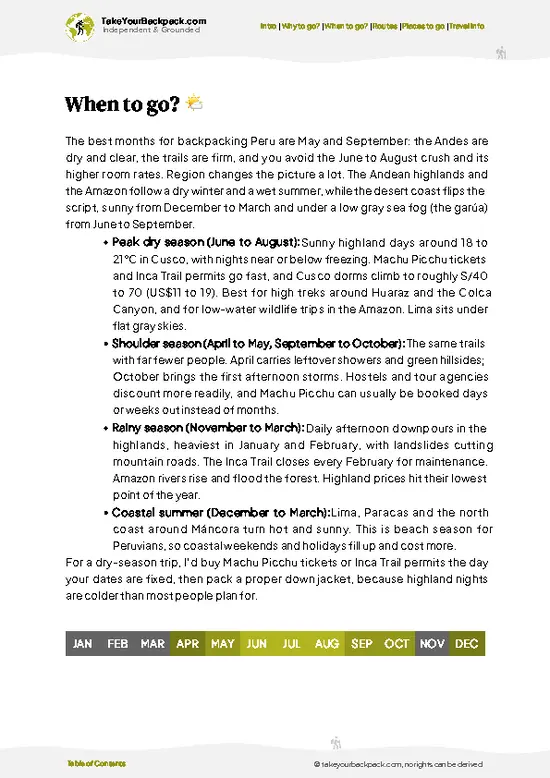
source: climatestotravel.comJANJanuary: fair for travelingFEBFebruary: fair for travelingMARMarch: fair for travelingAPRApril: good for travelingMAYMay: highly recommended for travelingJUNJune: excellent for travelingJULJuly: excellent for travelingAUGAugust: excellent for travelingSEPSeptember: highly recommended for travelingOCTOctober: good for travelingNOVNovember: fair for travelingDECDecember: fair for traveling

✈️ The backpacker research shortcutPeru Travel Guide

An offline-friendly backpacking guide with optimized travel routes, ranked highlights, transport advice, and the best areas to stay.
example page 0 from our offline Travel Guide for Peru
example page 1 from our offline Travel Guide for Peru
example page 2 from our offline Travel Guide for Peru
example page 3 from our offline Travel Guide for Peru
example page 4 from our offline Travel Guide for Peru
example page 5 from our offline Travel Guide for Peru
example page 6 from our offline Travel Guide for Peru
example page 7 from our offline Travel Guide for Peru
The digital guide (416 pages) contains:
113 highlights, ranked by travel appeal
Optimized 7, 14 & 21-day travel routes
Cities, national parks, landmarks, beaches
How to get around
Offline-friendly for travel without Wi-Fi
👉 Click to see all 30+ guide features

📅 Plan smarter in minutes, not weeks
Month by month travel advice
Festivals & national holidays
Budget expectations

🗺️ Go to the right places, skip the overrated ones
Honest pros & cons of destinations
Top hikes, parks & viewpoints
Lesser-known places most travelers miss
Clear “worth it vs skip it” guidance

🛏️ Travel smoothly without rookie mistakes
Best areas to stay
Transport systems explained simply
Common scams & safety advice
SIM cards, money & practical tips

🌍 Understand the country, not just visit it
Culture & traditions
52 Essential phrases & customs
Festivals worth planning around
Traveler-friendly historical context
Insights that make places more meaningful

📱 Built for real travel conditions
Fully downloadable PDF
Works completely offline
Optimized for phone use
Useful in remote areas & buses
Everything in one place
Save weeks of stressful planning
Get instant access to your full guide. 30‑day money-back guarantee.
+ Add another guide for just US$7.80

By proceeding you agree to our terms.
Sent to your inbox immediately after payment • 100% Secure Checkout
Best Backpacking Travel Advisor 2025 tourism awardBest Backpacking
Travel Advisor
2025
What others say about Take Your Backpack Guides:
⭐⭐⭐⭐⭐
Fantastic, amazing amount of information!
⭐⭐⭐⭐⭐
My goodness this is amazing, it's what I've been looking for hats off too you!
⭐⭐⭐⭐⭐
I think this is absolutely BRILLIANT
⭐⭐⭐⭐
Very complete and informative. It's still missing places, but I gotta to commend you
⭐⭐⭐⭐⭐
This is truly amazing, thank you, can't wait to explore it with my kids!
⭐⭐⭐⭐⭐
Awesome resource, thank you!
⭐⭐⭐⭐⭐
This is amazing! Can't wait to explore the ones I haven't seen
⭐⭐⭐⭐
I love this! Well done, great idea.
⭐⭐⭐⭐⭐
Thanks for taking the time to make this gem!
⭐⭐⭐⭐⭐
This might be the best website I've ever seen.
⭐⭐⭐⭐⭐
Congratulations, and thank you so much for your work; it's incredibly valuable.
⭐⭐⭐⭐
In all seriousness I think you did a great job pointing out the important spots
⭐⭐⭐⭐⭐
10/10 very good
⭐⭐⭐⭐⭐
As someone who's only just starting to visit regularly this is awesome, thank you.
⭐⭐⭐⭐
Thank you very much! I'm going to visit my dad, it's going to be very useful!
⭐⭐⭐⭐⭐
This is really cool! We'll be travelling for the first time and this definitely come in handy.
⭐⭐⭐⭐⭐
You are now our minister of culture, congratulations 👨‍💼
⭐⭐⭐⭐⭐
Just wanted to tell you that this is a pearl! Going to follow your recommendations.
⭐⭐⭐⭐⭐
This is so cool. I'll definitely be using the resource for my travels soon.
⭐⭐⭐⭐⭐
This is very impressive! Good work.
⭐⭐⭐⭐⭐
This is an amazing and informative site. Very well done!

🛏️ Where to stay?Best areas and accommodation options

In Cajamarca, the best spot for backpackers is the area around the Plaza de Armas. It’s the city’s heartbeat—safe, walkable, and packed with budget-friendly hostels that cater to solo travelers and groups alike. Staying here means you’re never far from lively markets, street food stalls, and the pulse of local life, which is crucial when you want to soak in authentic vibes without wasting time or money on taxis. The social scene is naturally built-in; hostels cluster here, making it easy to meet other backpackers over a shared meal or a quick chat about the next day’s adventure.

Compared to neighborhoods … read more 👉
In Cajamarca, the best spot for backpackers is the area around the Plaza de Armas. It’s the city’s heartbeat—safe, walkable, and packed with budget-friendly hostels that cater to solo travelers and groups alike. Staying here means you’re never far from lively markets, street food stalls, and the pulse of local life, which is crucial when you want to soak in authentic vibes without wasting time or money on taxis. The social scene is naturally built-in; hostels cluster here, making it easy to meet other backpackers over a shared meal or a quick chat about the next day’s adventure.

Compared to neighborhoods farther out, which might offer quieter streets but require more transport hassle, the Plaza de Armas area trades a bit of calm for convenience and connection. It’s a classic backpacker trade-off: you sacrifice some peace for a richer, more interactive experience that’s easier on your wallet and your schedule. This zone nails the balance between comfort, cost, and time—exactly what you want when you’re navigating a new city with limited resources.

🚌 Getting aroundHow to get from A to B

Cajamarca moves at its own rhythm—neither a frantic rush nor a lazy drift. The city’s pulse is a blend of old-school routine and spontaneous detours, where schedules exist but bend under the weight of local habits. You’ll find buses and colectivos that stick to rough timetables but often wait for a full load before rolling out, and street vendors who set up shop with no official clock. This mix means your travel choices here are a dance between patience, budget, and comfort. Knowing the trade-offs lets you play the system smartly, turning what might feel like chaos into a strategic advantage.


  • Walking: The ultimate zero-cost option. Cajamarca’s historic center is compact, making walking the fastest way to soak in the city’s character. No schedules, no fares, just your pace. Ideal for short
read more 👉
Cajamarca moves at its own rhythm—neither a frantic rush nor a lazy drift. The city’s pulse is a blend of old-school routine and spontaneous detours, where schedules exist but bend under the weight of local habits. You’ll find buses and colectivos that stick to rough timetables but often wait for a full load before rolling out, and street vendors who set up shop with no official clock. This mix means your travel choices here are a dance between patience, budget, and comfort. Knowing the trade-offs lets you play the system smartly, turning what might feel like chaos into a strategic advantage.


  • Walking: The ultimate zero-cost option. Cajamarca’s historic center is compact, making walking the fastest way to soak in the city’s character. No schedules, no fares, just your pace. Ideal for short hops and spontaneous detours, but tiring if you’re hauling gear or covering long distances.


  • Local Buses: These run roughly from 6 a.m. to 9 p.m., with fares around 1-2 PEN (about $0.25-$0.50). They’re slow, often stopping every few blocks, but dirt-cheap and a window into daily life. Expect crowded rides and minimal comfort—bring patience, not luggage.


  • Colectivos (Shared Taxis): Depart when full, usually between 7 a.m. and 8 p.m. Prices hover around 3-5 PEN ($0.75-$1.25). Faster than buses and more direct routes, but less predictable timing. Comfort is basic, and you’ll share the ride with locals who know the shortcuts.


  • Mototaxis: Available 24/7, these three-wheeled bikes are quick and nimble for short distances, costing about 2-4 PEN ($0.50-$1). They’re noisy and exposed to the elements, so not for long hauls or bad weather, but unbeatable for squeezing through traffic and saving time.


  • Taxi Services (App-Based or Street Hail): Running anytime, fares start around 10 PEN ($2.50) within the city. More comfortable and private, with air conditioning in some cases, but a clear jump in cost. Best when you’re carrying heavy gear or traveling late at night.

👛 Costs (as of 4 September 2026)What things cost and how to budget

Backpacking in Cajamarca, Peru, offers a clear trade-off between cost and comfort, with prices that reward those who know where to look and how to balance their spending.
  • Dorm Accommodation (High Season): Expect to pay around $8 to $12 per night. High season pushes prices up slightly due to demand, but dorms remain basic and clean, often with shared bathrooms and simple amenities.
  • Dorm Accommodation (Off-Season): Prices drop to about $5 to $8 per night. This is when you can snag a quieter, more relaxed stay without sacrificing safety or cleanliness.
  • Meals: Street food and local markets dominate here. Budget around $3 to $6 per day if you stick to traditional dishes like ceviche or tamales. Eating at small local restaurants can push this to $7 to $10, but it’s still very affordable and authentic.
read more 👉
Backpacking in Cajamarca, Peru, offers a clear trade-off between cost and comfort, with prices that reward those who know where to look and how to balance their spending.
  • Dorm Accommodation (High Season): Expect to pay around $8 to $12 per night. High season pushes prices up slightly due to demand, but dorms remain basic and clean, often with shared bathrooms and simple amenities.
  • Dorm Accommodation (Off-Season): Prices drop to about $5 to $8 per night. This is when you can snag a quieter, more relaxed stay without sacrificing safety or cleanliness.
  • Meals: Street food and local markets dominate here. Budget around $3 to $6 per day if you stick to traditional dishes like ceviche or tamales. Eating at small local restaurants can push this to $7 to $10, but it’s still very affordable and authentic.
  • Local Transport: Short rides on colectivos or mototaxis cost roughly $0.50 to $1.50. It’s a cheap way to get around, but expect a bit of a bumpy, lively ride.
  • City Transport Pass: Cajamarca doesn’t have a formal city transport pass system like bigger cities. Budgeting for individual rides is the way to go.
  • Basic Activities/Entry Fees: Entrance to key sites like the Ventanillas de Otuzco or Baños del Inca runs about $2 to $5. Guided tours or more involved activities can push this to $10 to $15, but you can skip the pricey extras and still get a solid experience.
  • Miscellaneous Expenses: Think snacks, bottled water, occasional coffee, or small souvenirs. Around $2 to $5 daily covers these without fuss.

Total daily costs for backpackers in Cajamarca typically range from $15 to $30, depending on how much you lean into comfort or convenience. This city rewards those who embrace its local rhythm—simple dorms, street eats, and short, lively rides—turning every dollar saved into more time exploring its unique culture.


source: peru.travel
⚠️ Prices can change and everyone travels differently, so take this as a rough guide. Hope it helps you plan your adventure!

🚌 Day tripsWhere to go beyond the main area

Cajamarca is a fantastic launchpad for day trips that blend culture, history, and stunning landscapes. Here’s how to make the most of your time without breaking the bank.

Cumbemayo
Just a short bus ride from Cajamarca, Cumbemayo is a mesmerizing archaeological site featuring ancient aqueducts carved into volcanic rock. The hike to the site is about 10 kilometers, offering breathtaking views of the surrounding mountains. Expect to spend around $5 for transport and entrance fees. The best time to visit is during the dry season, from May to September, when the trails are clear. First-timers often underestimate the altitude; take it slow to avoid altitude sickness.


Baños del Inca
Only 15 minutes from Cajamarca, Baños del Inca is a hot spring complex that’s perfect for relaxation after … read more 👉
Cajamarca is a fantastic launchpad for day trips that blend culture, history, and stunning landscapes. Here’s how to make the most of your time without breaking the bank.

Cumbemayo
Just a short bus ride from Cajamarca, Cumbemayo is a mesmerizing archaeological site featuring ancient aqueducts carved into volcanic rock. The hike to the site is about 10 kilometers, offering breathtaking views of the surrounding mountains. Expect to spend around $5 for transport and entrance fees. The best time to visit is during the dry season, from May to September, when the trails are clear. First-timers often underestimate the altitude; take it slow to avoid altitude sickness.


Baños del Inca
Only 15 minutes from Cajamarca, Baños del Inca is a hot spring complex that’s perfect for relaxation after a day of exploration. Entry costs about $3, and you can soak in thermal pools while enjoying views of the lush valley. The best time to go is early morning to beat the crowds. A common mistake is to skip the nearby Inca ruins; they’re just a short walk away and add a historical twist to your visit.


Granja Porcón
This sustainable farm and community project is about an hour from Cajamarca. You can explore the farm, enjoy local food, and even participate in workshops. The round trip will set you back around $10, including transport. Visit during the harvest season from June to August for the freshest experience. Many travelers miss the chance to interact with locals; don’t hesitate to ask questions and learn about their way of life.


Laguna San Nicolás
A bit further afield, Laguna San Nicolás is a serene lake surrounded by mountains, perfect for a day of hiking and picnicking. It takes about two hours to reach by bus, costing around $7. The best time to go is during the dry season, but be prepared for chilly winds. First-timers often overlook the need for warm layers; the weather can change quickly at higher elevations.
Want to know what more Peru offers?
The Peru Travel Guide describes 113 highlights, from cities to national parks, from beaches to hikes

Get the Travel Guide -

🍲 FoodLocal Cuisine & Drinks

In Cajamarca, food is a celebration of local flavors. Dive into cuy chactado, a crispy fried guinea pig, often served with potatoes and a tangy salsa. Don’t miss pachamanca, where meats and vegetables are slow-cooked underground, infusing them with earthy flavors.

Street vendors line the bustling markets, offering empanadas and anticuchos (grilled heart skewers) that are perfect for a quick bite. Cafés buzz with locals sipping chicha morada, a sweet purple corn drink that’s both refreshing and rich in history.

When dining, expect a communal vibe. Sharing dishes is common, and it’s polite to try a bit of everything. Embrace the warmth of Cajamarca’s culinary culture; it’s all about connection and flavor.

🛡️ SafetySafety Tips and Common Scams in Cajamarca

Cajamarca is generally safe, but like any city, it has its quirks. Stay alert in crowded markets and bus stations, where pickpockets might lurk. If you’re solo, avoid wandering too far from the main square after dark; stick to well-lit areas.

Common scams include overly friendly locals offering unsolicited help, which can lead to inflated prices. Politely decline and trust your instincts. Carry your belongings close and keep your phone handy for navigation. A confident demeanor goes a long way in blending in and enjoying your adventure.

FAQFrequently asked questions about Cajamarca

3 to 4 days are sufficient to explore Cajamarca thoroughly. This allows time to visit key sites like the Ventanillas de Otuzco, the Baños del Inca hot springs, and the historic city center. Additional days can be spent on nearby hikes or cultural tours.
Yes, Cajamarca is generally safe for solo backpackers. Basic precautions like avoiding poorly lit areas at night and keeping valuables secure are advised. The city has a friendly local population and a moderate tourist presence.
Cajamarca is known for its rich history, particularly the Battle of Cajamarca where the Spanish captured the Inca emperor Atahualpa. It is also famous for its thermal baths, colonial architecture, and vibrant local markets.
⚠️ Things can change over time, so always validate details locally before you go.

Other Peruvian cities near Cajamarca

Explore more nearby:

  • Trujillo—Moche ruins, adobe temples, surf beaches| 120 km away
  • Chiclayo—archaeological museums, coastal markets, dry forests| 153 km away
  • Tarapoto—jungle waterfalls, Amazon foothills, cacao farms| 248 km away

💡 Not sure where to go next?
Create a personalized itinerary for Peru including Cajamarca and the places that fit your trip.

Generate my itinerary

👉 Discover all cities

Or checkout all Peru has to offer (think cities, towns, villages, national parks, hikes, beaches, festivals)
Country photo of Peru

We 💚 feedbackWhat to keep in mind

Cajamarca’s hot springs are a blissful escape after a day of exploring. Soak in the mineral-rich waters while soaking up the local vibe. Just be ready for some altitude adjustment; it can hit hard. Embrace it, and you’ll find the rewards are well worth the effort.

✈️ When did I visit Peru?
Peru I visited during my half year trip through South and Central America back in 2003

✍️ Help improve this page!
The information on this page is based on my own backpacking experience in Peru, supplemented with up-to-date research and feedback from other travelers. Travel details can change, so if you notice anything outdated or incomplete, feel free to let me know.


🙋‍♂️ Give feedback

👋 Meet the founderWho’s Behind Take Your Backpack?

Johan, backpacker and founder of TakeYourBackpackHi, I’m Johan (Netherlands 🇳🇱), the creator of TakeYourBackpack. Over the past decade, I’ve backpacked through 80+ countries across six continents, gaining extensive experience with independent travel, long-term trips, and overland routes.

This site is built on a combination of firsthand travel experience and carefully curated insights from other backpackers. Many guides are based on places I’ve personally visited, while others bring together tips, observations, and practical advice shared by trusted travelers I’ve met along the way.

The goal is to provide realistic, experience-driven guidance — not generic itineraries — so you can explore destinations with better context, clearer expectations, and more confidence.

Get full Peru guide •
Instant download • 113 highlights • Full Offline guide