×

Peru🇵🇪 | townsCerro de Pascohigh-altitude mining, cold climate, rugged streets | things to do and best time to go

Explore AyacuhoExplore Chachapoyas

Backpacking in Cerro de Pasco
👌 Worth visitingtown ranked #10
By Johan Kruseman 🇳🇱 | Updated June 11, 2026

Cerro de Pasco is not for anyone chasing cute plazas, craft beer bars, or easy Instagram wins. It’s a hard mining town at 4,300+ meters, windy, gray, and visibly scarred by open-pit extraction. But that’s exactly why it matters for backpackers: you feel the Andes as a workplace, not a postcard. High on the central plateau of Peru, north of Huancayo and on the road toward Huánuco and the jungle, it works best as a practical stopover and acclimatization point rather than a “must-see” destination. The center is compact and walkable, with basic markets and cheap menus, but nightlife is low-key and hostels are functional, not social hubs. Buses connect easily, costs are low, and safety is mostly about altitude and street smarts, not tourism scams. Compared with Huancayo or Tarma, Cerro de Pasco feels rougher, less scenic, but more honest—and that contrast can sharpen how you see the rest of your Peru route.

Discover everything you want to know in the 📖 Peru Travel Guide.


Get your Peru guide
118 ranked highlights, routes & tips, works offline (442 pages)
Loading the map 🌍
CLICK TO FILTER
cities
towns
villages
landmarks
national parks
hikes
beaches
attractions
festivals
regions
SHOW COUNTRY’S BESTSHOW ALL

✨ Why go?
Ranked #10 town in Peru
Reasons people choose to visit here

Cerro de Pasco is a gateway for backpackers seeking the rugged beauty of the Andes. Its high-altitude location makes it a strategic stop for those heading to hikes like Huayhuash or exploring the nearby cultural sites of ancient Peru. The town itself is a mosaic of vibrant street life, where you can grab a hearty meal of local fare at small eateries that serve up steaming bowls of sopa and cuy.

The walkable streets invite you to wander, making it easy to connect with fellow travelers in cozy hostels or guesthouses that feel like home. Expect a mix of solo adventurers and small groups, all drawn by the friendly atmosphere. Most backpackers stay a few days, soaking in the authentic vibe before moving on. While Cerro de Pasco isn’t a party hub, it offers a calm retreat for those who appreciate … read more 👉
Cerro de Pasco is a gateway for backpackers seeking the rugged beauty of the Andes. Its high-altitude location makes it a strategic stop for those heading to hikes like Huayhuash or exploring the nearby cultural sites of ancient Peru. The town itself is a mosaic of vibrant street life, where you can grab a hearty meal of local fare at small eateries that serve up steaming bowls of sopa and cuy.

The walkable streets invite you to wander, making it easy to connect with fellow travelers in cozy hostels or guesthouses that feel like home. Expect a mix of solo adventurers and small groups, all drawn by the friendly atmosphere. Most backpackers stay a few days, soaking in the authentic vibe before moving on. While Cerro de Pasco isn’t a party hub, it offers a calm retreat for those who appreciate the journey as much as the destination. If you’re into slow travel and want to immerse yourself in local culture, this town is worth your time.
Want to include Cerro de Pasco in your Peru route?
Create a personalized Peru itinerary that includes Cerro de Pasco and the places that fit your trip — based on your travel style, budget, and available time. Get your route in seconds.

Generate my trip

💡 HighlightsMust-see experiences and standout moments

  • Plaza de Armas — The nervous center of town: municipal buildings, vendors, and daily highland life unfolding at 4,300+ m. Good for people-watching and orienting yourself before poking around other streets.
  • Iglesia Matriz / Parroquia local — The main parish church beside the plaza. Even if the architecture is modest, it’s a real local gathering place and gives you a sense of Cerro de Pasco’s religious traditions and festivals.
  • Laguna Patarcocha — A scenic urban lake right on the edge of town where locals walk, fish, and take in reflections of the surrounding hills and mining terraces. At sunset the light over the water tells you more about daily life here than any brochure.
  • Mirador sobre el Tajo (viewpoint of the open-pit mine) — A short walk/drive to a lookout giving an up-close sense
read more 👉
  • Plaza de Armas — The nervous center of town: municipal buildings, vendors, and daily highland life unfolding at 4,300+ m. Good for people-watching and orienting yourself before poking around other streets.
  • Iglesia Matriz / Parroquia local — The main parish church beside the plaza. Even if the architecture is modest, it’s a real local gathering place and gives you a sense of Cerro de Pasco’s religious traditions and festivals.
  • Laguna Patarcocha — A scenic urban lake right on the edge of town where locals walk, fish, and take in reflections of the surrounding hills and mining terraces. At sunset the light over the water tells you more about daily life here than any brochure.
  • Mirador sobre el Tajo (viewpoint of the open-pit mine) — A short walk/drive to a lookout giving an up-close sense of the massive scale of Cerro de Pasco’s mining operations. Harsh, impressive, and essential for understanding the town’s economy and landscape.
  • Mercado Central (Municipal Market) — Bursting with highland produce, herbs, dried meat, and simple food stalls. Great for trying local soups, buying snacks for altitude, and seeing trade that supports mountain communities.
  • Cementerio General — A surprisingly evocative place where ornate mausoleums, miner memorials, and local grave customs show the social history of the town and its ties to mining families.
  • Antigua estación del ferrocarril — The old railway station and adjacent tracks speak to Cerro de Pasco’s transport and mining past; it’s a tactile way to connect with the industrial history that shaped the town.
  • Monumento al Minero / Plazas conmemorativas — Small monuments, plaques and memorial plazas around town honoring miners. They’re short visits but pack a lot of local feeling and are places where families come to remember.
  • Casa de la Cultura / Museo local — The municipal cultural center or small regional museum that typically houses mining artifacts, oral-history snippets, and local crafts. Limited scale but rich context for what shaped the city.
  • Barrios altos (Yanacancha / Simón Bolívar neighborhoods) — Walkable neighborhoods up from the central plateau with narrow streets, everyday markets and simple cafés; you’ll find unvarnished local life, small viewpoints, and craftspeople working in plain sight.
A few easy day trips from Cerro de Pasco: the Bosque de Piedras de Huayllay (the Huayllay Stone Forest — personal favorite), the industrial town of La Oroya for railway/mining history, and Laguna de Junín (Chinchaycocha) for wildlife and highland wetlands.
Spotted a mistake or missing something? Contact us.

🏘️ NeighborhoodsWhere things are and how it's laid out

Cerro de Pasco is a unique high-altitude town that offers a blend of culture, history, and rugged beauty. Here’s how to navigate its neighborhoods for an optimal backpacking experience.

Centro Histórico: This is the heartbeat of Cerro de Pasco. You’ll find colonial architecture and local markets buzzing with life. The vibe is energetic, perfect for soaking in the culture. It’s walkable, with plenty of affordable eateries. Nightlife is low-key, but you can find a few bars to unwind. Ideal for short stays, as you can easily explore the main attractions on foot.

La Libertad: A quieter area, La Libertad is where you’ll find a more residential feel. It’s less touristy, which means lower prices on accommodations and food. The streets are safe for wandering, and you can enjoy the local atmosphere. … read more 👉
Cerro de Pasco is a unique high-altitude town that offers a blend of culture, history, and rugged beauty. Here’s how to navigate its neighborhoods for an optimal backpacking experience.

Centro Histórico: This is the heartbeat of Cerro de Pasco. You’ll find colonial architecture and local markets buzzing with life. The vibe is energetic, perfect for soaking in the culture. It’s walkable, with plenty of affordable eateries. Nightlife is low-key, but you can find a few bars to unwind. Ideal for short stays, as you can easily explore the main attractions on foot.

La Libertad: A quieter area, La Libertad is where you’ll find a more residential feel. It’s less touristy, which means lower prices on accommodations and food. The streets are safe for wandering, and you can enjoy the local atmosphere. This neighborhood is better for longer stays, allowing you to immerse yourself in daily life.

San Juan: Known for its vibrant street art and community spirit, San Juan is a great spot for those looking to connect with locals. The vibe is creative and welcoming, with a few cafés and artisan shops. While it’s a bit further from the main attractions, public transport is accessible. Perfect for backpackers who want to experience a different side of the town.

El Molino: This area is more industrial, but it offers a glimpse into the town’s mining history. It’s less walkable, so be prepared for some transport challenges. However, it’s a fascinating place for those interested in the local economy. Suitable for short visits, especially if you’re keen on exploring the mining heritage.

⌛️ 1 dayA smart one-day plan

Cerro de Pasco, perched at over 14,000 feet, is a town that wears its mining history like a badge of honor. The air is crisp, and the landscape is a rugged blend of mountains and sky, with a unique charm that comes from its raw, industrial roots. This isn’t your typical tourist stop, but that’s what makes it special.

Start your morning at the bustling Plaza Daniel Alcides Carrión, where the locals gather. Grab a breakfast of *pan con chicharrón* from a nearby vendor. The savory scent of fried pork mingles with the cool mountain air, waking up your senses. After fueling up, take a stroll through the streets of the San Juan neighborhood. Here, the colorful murals tell stories of the town’s rich culture and history, a visual feast that’s often overlooked by visitors.

In the afternoon, head … read more 👉
Cerro de Pasco, perched at over 14,000 feet, is a town that wears its mining history like a badge of honor. The air is crisp, and the landscape is a rugged blend of mountains and sky, with a unique charm that comes from its raw, industrial roots. This isn’t your typical tourist stop, but that’s what makes it special.

Start your morning at the bustling Plaza Daniel Alcides Carrión, where the locals gather. Grab a breakfast of *pan con chicharrón* from a nearby vendor. The savory scent of fried pork mingles with the cool mountain air, waking up your senses. After fueling up, take a stroll through the streets of the San Juan neighborhood. Here, the colorful murals tell stories of the town’s rich culture and history, a visual feast that’s often overlooked by visitors.

In the afternoon, head to the *Cerro de Pasco Mining Museum*. It’s not on every tourist’s radar, but it offers a deep dive into the town’s mining legacy. The exhibits are raw and real, showcasing the grit and determination of the people who call this place home. Afterward, take a short hike to the *Laguna de Patarcocha*. The shimmering lake, surrounded by mountains, is a perfect spot for reflection. The tranquility here is a stark contrast to the town’s industrial vibe.

As evening falls, wander back to the plaza. The sun dips behind the mountains, casting a golden hue over the town. Find a local eatery for dinner; try the *pachamanca*, a traditional dish cooked underground. The warmth of the food and the laughter of the locals create an inviting atmosphere.

Cerro de Pasco isn’t just a stop on a map; it’s a place that reveals the heart of Peru, where every moment feels earned and every experience is a story waiting to be told.
Turn your Cerro de Pasco visit into an Peru adventure
Build a complete Peru route with Cerro de Pasco, hidden gems, must-see destinations, and realistic travel times included.

Generate my trip

🌤️ When to go?Choosing the right time of year


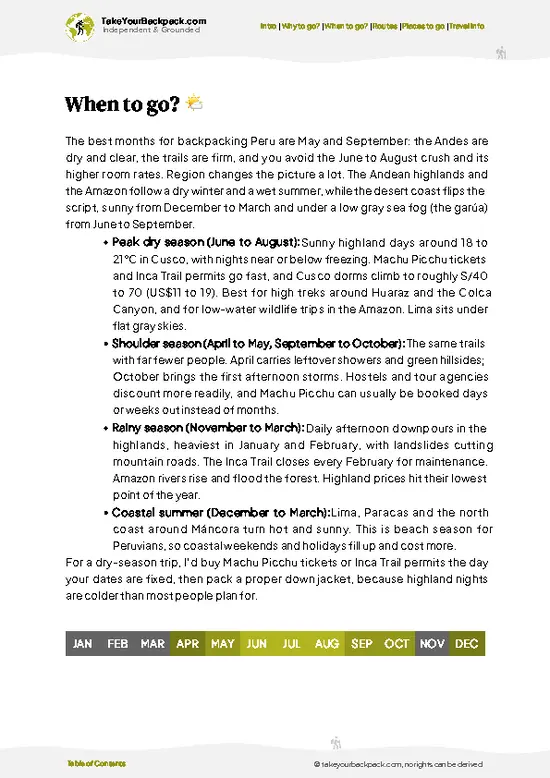
  • Weather: Cerro de Pasco sits at 4,330 meters (14,210 feet), so expect thin air and chilly conditions year-round. The dry season from May to September offers crisp, clear skies with daytime highs around 10-15°C (50-59°F), perfect for hiking without the damp cold that dominates the wet season.

  • Temperature: Nights plunge below freezing even in the dry season, often hitting -5°C (23°F). Layering is non-negotiable. The wet season (October to April) brings more clouds and rain, dropping daytime temps to 5-10°C (41-50°F) and making trails slippery.

  • Daylight Hours: Near the equator, daylight stays steady around 11-12 hours year-round. This consistency means you can plan hikes without worrying about early nightfall, but the high altitude sun can be intense midday.

  • Crowds: Cerro de Pasco is
read more 👉

  • Weather: Cerro de Pasco sits at 4,330 meters (14,210 feet), so expect thin air and chilly conditions year-round. The dry season from May to September offers crisp, clear skies with daytime highs around 10-15°C (50-59°F), perfect for hiking without the damp cold that dominates the wet season.

  • Temperature: Nights plunge below freezing even in the dry season, often hitting -5°C (23°F). Layering is non-negotiable. The wet season (October to April) brings more clouds and rain, dropping daytime temps to 5-10°C (41-50°F) and making trails slippery.

  • Daylight Hours: Near the equator, daylight stays steady around 11-12 hours year-round. This consistency means you can plan hikes without worrying about early nightfall, but the high altitude sun can be intense midday.

  • Crowds: Cerro de Pasco is off the beaten path, so crowds are minimal year-round. The dry season sees a slight uptick in adventurous backpackers, but you’ll still find plenty of solitude.

  • Seasonal Activities: Dry months favor trekking and exploring the mining history without mud slowing you down. The wet season is better for cultural immersion indoors, as outdoor activities become less reliable.

  • Price Fluctuations: Prices for lodging and local transport remain stable year-round due to low tourist volume. However, expect slightly higher rates during the dry season when demand peaks.


Pro-tip: Aim for late May or early September—when the air is sharp, the skies are clear, and the town’s quiet pulse feels like your own secret rhythm.


source: climatestotravel.comJANJanuary: fair for travelingFEBFebruary: fair for travelingMARMarch: fair for travelingAPRApril: fair for travelingMAYMay: highly recommended for travelingJUNJune: excellent for travelingJULJuly: excellent for travelingAUGAugust: excellent for travelingSEPSeptember: highly recommended for travelingOCTOctober: fair for travelingNOVNovember: fair for travelingDECDecember: fair for traveling
when-to-go

✈️ The backpacker research shortcutPeru Travel Guide

An offline-friendly backpacking guide with optimized travel routes, ranked highlights, transport advice, and the best areas to stay.
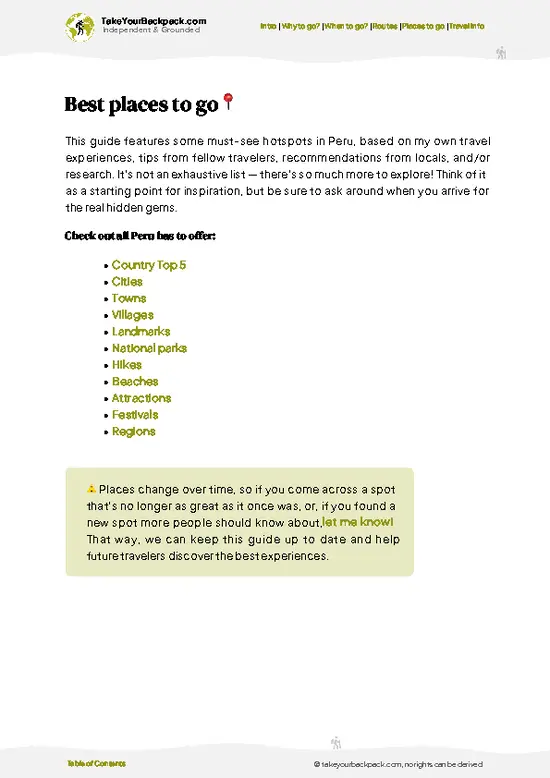
example page 0 from our offline Travel Guide for Peru
example page 1 from our offline Travel Guide for Peru
example page 2 from our offline Travel Guide for Peru
example page 3 from our offline Travel Guide for Peru
example page 4 from our offline Travel Guide for Peru
example page 5 from our offline Travel Guide for Peru
example page 6 from our offline Travel Guide for Peru
example page 7 from our offline Travel Guide for Peru
The digital guide (442 pages) contains:
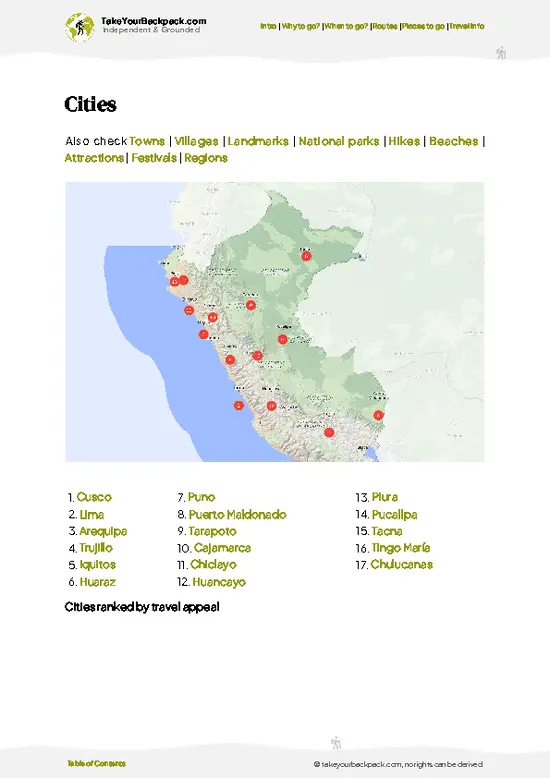
118 highlights, ranked by travel appeal
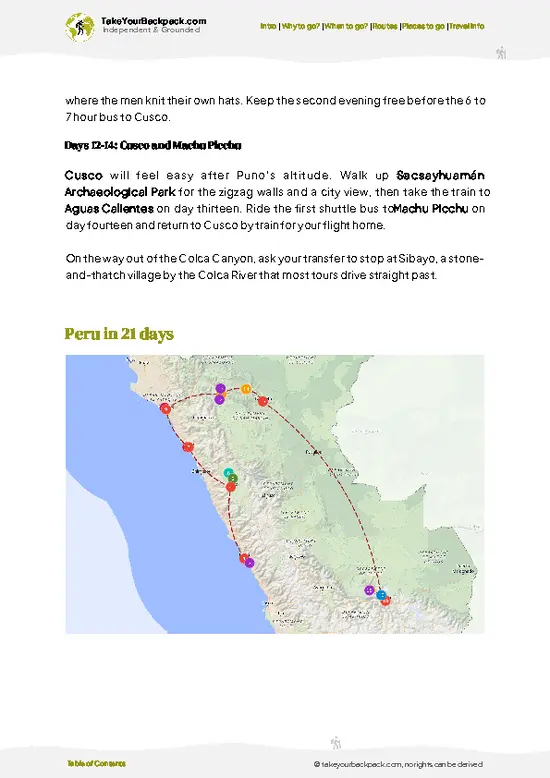
Optimized 7, 14 & 21-day travel routes
Cities, national parks, landmarks, beaches
How to get around
Offline-friendly for travel without Wi-Fi
👉 Click to see all 30+ guide features

📅 Plan smarter in minutes, not weeks
Month by month travel advice
Festivals & national holidays
Budget expectations

🗺️ Go to the right places, skip the overrated ones
Honest pros & cons of destinations
Top hikes, parks & viewpoints
Lesser-known places most travelers miss
Clear “worth it vs skip it” guidance

🛏️ Travel smoothly without rookie mistakes
Best areas to stay
Transport systems explained simply
Common scams & safety advice
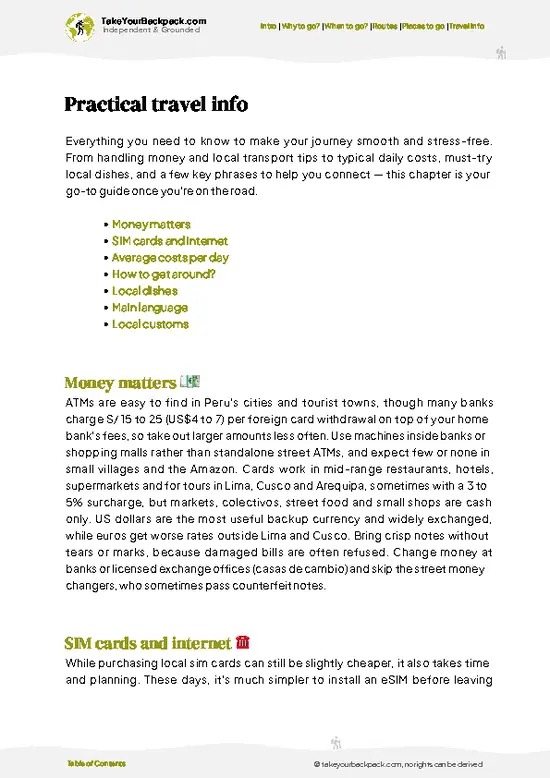
SIM cards, money & practical tips

🌍 Understand the country, not just visit it
Culture & traditions
52 Essential phrases & customs
Festivals worth planning around
Traveler-friendly historical context
Insights that make places more meaningful

📱 Built for real travel conditions
Fully downloadable PDF
Works completely offline
Optimized for phone use
Useful in remote areas & buses
Everything in one place
Save weeks of stressful planning
Get instant access to your full guide. 30‑day money-back guarantee.


By proceeding you agree to our terms.
Sent to your inbox immediately after payment • 100% Secure Checkout
Best Backpacking Travel Advisor 2025 tourism awardBest Backpacking
Travel Advisor
2025
What others say about Take Your Backpack Guides:
⭐⭐⭐⭐⭐
Fantastic, amazing amount of information!
⭐⭐⭐⭐⭐
My goodness this is amazing, it's what I've been looking for hats off too you!
⭐⭐⭐⭐⭐
I think this is absolutely BRILLIANT
⭐⭐⭐⭐
Very complete and informative. It's still missing places, but I gotta to commend you
⭐⭐⭐⭐⭐
This is truly amazing, thank you, can't wait to explore it with my kids!
⭐⭐⭐⭐⭐
Awesome resource, thank you!
⭐⭐⭐⭐⭐
This is amazing! Can't wait to explore the ones I haven't seen
⭐⭐⭐⭐
I love this! Well done, great idea.
⭐⭐⭐⭐⭐
Thanks for taking the time to make this gem!
⭐⭐⭐⭐⭐
This might be the best website I've ever seen.
⭐⭐⭐⭐⭐
Congratulations, and thank you so much for your work; it's incredibly valuable.
⭐⭐⭐⭐
In all seriousness I think you did a great job pointing out the important spots
⭐⭐⭐⭐⭐
10/10 very good
⭐⭐⭐⭐⭐
As someone who's only just starting to visit regularly this is awesome, thank you.
⭐⭐⭐⭐
Thank you very much! I'm going to visit my dad, it's going to be very useful!
⭐⭐⭐⭐⭐
This is really cool! We'll be travelling for the first time and this definitely come in handy.
⭐⭐⭐⭐⭐
You are now our minister of culture, congratulations 👨‍💼
⭐⭐⭐⭐⭐
Just wanted to tell you that this is a pearl! Going to follow your recommendations.
⭐⭐⭐⭐⭐
This is so cool. I'll definitely be using the resource for my travels soon.
⭐⭐⭐⭐⭐
This is very impressive! Good work.
⭐⭐⭐⭐⭐
This is an amazing and informative site. Very well done!

🛏️ Where to stay?Choosing the right base

In Cerro de Pasco, the heart of the action for backpackers pulses around the city center, especially near the Plaza de Armas. This area is your best bet for safety and social energy. Streets here hum with local vendors and the scent of fresh bread from nearby bakeries, making it easy to blend into daily life without feeling like a tourist. Hostels cluster around this zone, offering budget-friendly beds and a chance to meet fellow travelers swapping stories over shared meals or steaming cups of coca tea.

Venture beyond the plaza, and the vibe shifts—less foot traffic, fewer conveniences, and a … read more 👉
In Cerro de Pasco, the heart of the action for backpackers pulses around the city center, especially near the Plaza de Armas. This area is your best bet for safety and social energy. Streets here hum with local vendors and the scent of fresh bread from nearby bakeries, making it easy to blend into daily life without feeling like a tourist. Hostels cluster around this zone, offering budget-friendly beds and a chance to meet fellow travelers swapping stories over shared meals or steaming cups of coca tea.

Venture beyond the plaza, and the vibe shifts—less foot traffic, fewer conveniences, and a heavier industrial feel that can feel isolating after dark. Staying central means you’re steps away from markets, eateries, and the bus station, which is crucial since Cerro de Pasco’s altitude and weather can make long walks taxing. The city’s high elevation hits you with a crisp, thin air that’s easier to manage when you’re not trekking across distant neighborhoods. In short, the city center isn’t just a place to crash—it’s your launchpad for a smoother, more connected experience in this high-altitude mining town.

🚌 Getting aroundHow to get from A to B

Cerro de Pasco moves at a pace that feels carved from the mountain itself—slow, deliberate, and a bit stubborn. This isn’t a place where you’ll find shiny transit apps or punctual buses rolling in on the dot. Instead, expect a rhythm shaped by altitude, weather, and local intuition. The air is thin and crisp, carrying the scent of wet stone and diesel, while the streets pulse with a mix of miners, vendors, and locals who know every shortcut and waiting game. Your best bet is to embrace this flow rather than fight it—plan for some waiting, but also for moments when everything clicks and you’re whisked through the town like a local.


  • Walking: The most reliable and immersive way to get around. Cerro de Pasco’s compact center means you can cover key spots on foot in 20-30 minutes. The altitude
read more 👉
Cerro de Pasco moves at a pace that feels carved from the mountain itself—slow, deliberate, and a bit stubborn. This isn’t a place where you’ll find shiny transit apps or punctual buses rolling in on the dot. Instead, expect a rhythm shaped by altitude, weather, and local intuition. The air is thin and crisp, carrying the scent of wet stone and diesel, while the streets pulse with a mix of miners, vendors, and locals who know every shortcut and waiting game. Your best bet is to embrace this flow rather than fight it—plan for some waiting, but also for moments when everything clicks and you’re whisked through the town like a local.


  • Walking: The most reliable and immersive way to get around. Cerro de Pasco’s compact center means you can cover key spots on foot in 20-30 minutes. The altitude makes it slow going, so pace yourself and take in the sharp mountain air and the patchwork of colonial and mining-era buildings.


  • Colectivos (Shared Taxis): These minibuses or vans run on flexible schedules, often leaving when full. Fares hover around 1-2 PEN (about $0.25-$0.50). They’re faster than walking but expect stops and starts as locals hop on and off. They mostly operate from early morning (around 6 AM) until early evening (6-7 PM).


  • Local Buses: Larger than colectivos, these buses follow rough routes through the city and outskirts. They’re cheap (under 2 PEN) but can be crowded and noisy, with no fixed timetable—buses leave when packed. They’re a good option if you’re heading to neighborhoods beyond the center.


  • Motorcycle Taxis: A quick, if slightly wild, way to cover short distances. Prices vary but expect about 2-5 PEN. They’re nimble on Cerro de Pasco’s narrow, uneven streets but always negotiate the fare upfront. Not for the faint-hearted, but a local favorite for speed.


  • Intercity Buses: For trips outside town, buses depart from the main terminal with schedules that can be erratic but generally start around 5 AM and run until early evening. Tickets cost 10-20 PEN depending on the destination. Booking in person is best to avoid surprises.

👛 Costs (as of 2 May 2025)Typical daily expenses

Backpacking in Cerro de Pasco, Peru, means bracing for high-altitude air and a gritty mining town vibe, but it’s also a chance to experience a raw slice of Andean life without breaking the bank.
  • Dorm Accommodation: Expect to pay around $8 to $15 USD per night for a bed in a basic hostel dorm. Options are limited and often simple, with shared bathrooms and minimal heating, so pack a warm sleeping bag or layers to stay comfortable in the chilly mountain nights.
  • Meals: Local eateries serve hearty, no-frills meals for about $2 to $5 USD. Think steaming bowls of sopa or rice and beans with a side of fresh vegetables. Street food is cheap and filling, but don’t expect gourmet—this is sustenance for miners and travelers alike.
  • Local Transport: Getting around Cerro de Pasco is inexpensive but slow.
read more 👉
Backpacking in Cerro de Pasco, Peru, means bracing for high-altitude air and a gritty mining town vibe, but it’s also a chance to experience a raw slice of Andean life without breaking the bank.
  • Dorm Accommodation: Expect to pay around $8 to $15 USD per night for a bed in a basic hostel dorm. Options are limited and often simple, with shared bathrooms and minimal heating, so pack a warm sleeping bag or layers to stay comfortable in the chilly mountain nights.
  • Meals: Local eateries serve hearty, no-frills meals for about $2 to $5 USD. Think steaming bowls of sopa or rice and beans with a side of fresh vegetables. Street food is cheap and filling, but don’t expect gourmet—this is sustenance for miners and travelers alike.
  • Local Transport: Getting around Cerro de Pasco is inexpensive but slow. Shared minibuses or colectivos cost roughly $0.50 to $1 USD per ride. Walking is often the best way to soak in the town’s industrial atmosphere, but be ready for steep climbs and thin air.
  • Basic Activities/Entry Fees: There aren’t many tourist attractions with entry fees here. Visiting local markets or the mining sites is mostly free, though guided tours, if you find one, might run around $10 to $15 USD. The real draw is the experience itself, not polished tourist spots.
  • Miscellaneous Expenses: Budget $2 to $5 USD for essentials like bottled water, snacks, or occasional internet access. Cerro de Pasco’s altitude means you’ll want to stay hydrated and keep some basic meds handy for altitude sickness symptoms.

Altogether, you’re looking at roughly $15 to $35 USD per day to cover the essentials in Cerro de Pasco. It’s not a place for luxury, but the low costs reflect its raw, working-class character. The payoff is in the gritty authenticity and the chance to witness a high-altitude mining town that few travelers linger in.


source: peru.travel
⚠️ Prices can change and everyone travels differently, so take this as a rough guide. Hope it helps you plan your adventure!

🚌 Day tripsWhere to go beyond the main area

Cerro de Pasco is a rugged, high-altitude town that serves as a perfect launchpad for unforgettable day trips. The surrounding landscapes are raw and beautiful, and the adventures are as diverse as the terrain.

1. Huayllay National Sanctuary
Just a short bus ride away, Huayllay is a surreal landscape of rock formations that look like they were sculpted by a wild artist. The trip takes about an hour, and the entrance fee is minimal, around 10 soles. You’ll wander through bizarre stone structures, some resembling animals or ancient ruins, while the crisp air fills your lungs with a refreshing chill. The best time to visit is during the dry season from May to September when the skies are clear. A common mistake? Underestimating the altitude; take it slow and hydrate.


2. Lake Junin
This … read more 👉
Cerro de Pasco is a rugged, high-altitude town that serves as a perfect launchpad for unforgettable day trips. The surrounding landscapes are raw and beautiful, and the adventures are as diverse as the terrain.

1. Huayllay National Sanctuary
Just a short bus ride away, Huayllay is a surreal landscape of rock formations that look like they were sculpted by a wild artist. The trip takes about an hour, and the entrance fee is minimal, around 10 soles. You’ll wander through bizarre stone structures, some resembling animals or ancient ruins, while the crisp air fills your lungs with a refreshing chill. The best time to visit is during the dry season from May to September when the skies are clear. A common mistake? Underestimating the altitude; take it slow and hydrate.


2. Lake Junin
This stunning lake, about two hours from Cerro de Pasco, is a tranquil escape. The journey costs around 15 soles, and the views are worth every penny. You can rent a small boat or simply stroll along the shore, soaking in the serene atmosphere. The best time to go is early morning when the mist dances over the water. Many first-timers miss the local market in the nearby town, where you can grab a hearty meal of fresh trout.


3. Morococha
A quick 30-minute ride lands you in Morococha, a town that feels like stepping back in time. The cost is negligible, making it a budget-friendly option. Here, you can explore traditional Andean culture and visit the nearby ruins of an ancient settlement. The best time to visit is during local festivals, which are vibrant and full of life. A common pitfall is not engaging with locals; their stories add depth to your experience.


4. The Mining Town of La Oroya
About an hour away, La Oroya is a fascinating look at Peru’s mining history. The bus fare is around 10 soles. While the town itself has a gritty charm, the real draw is the surrounding mountains, perfect for a day hike. Aim for the dry season for the best visibility. Many travelers overlook the historical significance of the area, so take time to learn about its mining heritage.


Each of these trips offers a unique slice of Peruvian life, making Cerro de Pasco not just a stop, but a gateway to adventure.
Want to know what more Peru offers?
The Peru Travel Guide describes 118 highlights, from cities to national parks, from beaches to hikes

Get the Travel Guide -

🛡️ SafetyTraveler Safety Guide

Cerro de Pasco is generally safe, but a few practical tips can enhance your experience. The altitude can be a challenge; take it slow and stay hydrated. In the bustling market areas, keep your belongings close. Pickpocketing isn’t rampant, but it can happen in crowded spots.

If you’re solo, avoid wandering too far after dark. The streets can feel deserted, and it’s best to stick to well-lit areas. Trust your instincts; if something feels off, it probably is.

Watch for common scams, like overly friendly locals offering unsolicited help. Politely decline and keep moving. Street vendors can be persistent, but a firm “no, gracias” usually does the trick.

Embrace the local vibe, but stay aware. A little caution goes a long way in making your adventure smooth and enjoyable.

Other Peruvian towns near Cerro de Pasco

Explore more nearby:

  • Oxa Pampa—Austro-German heritage, dairy farms, pine forests| 94 km away
  • Huancavelica—colonial churches, mountain valleys, thermal baths| 274 km away
  • Paracas—coastal reserve, desert cliffs, marine wildlife| 353 km away

💡 Not sure where to go next?
Create a personalized itinerary for Peru including Cerro de Pasco and the places that fit your trip.

Generate my itinerary

👉 Discover all towns

Or checkout all Peru has to offer (think cities, towns, villages, national parks, hikes, beaches, festivals)
Country photo of Peru

We 💚 feedbackWhat to keep in mind

Cerro de Pasco offers a raw glimpse into life at high altitude, where the air is thin and the mining history is palpable. You’ll feel the grit of the town as you wander its streets, absorbing the vibrant local culture. But be ready for the altitude sickness; it hits hard. Take it slow, hydrate, and embrace the struggle. The payoff? A unique connection to a place that few travelers dare to explore.

✈️ When did I visit Peru?
Peru I visited during my half year trip through South and Central America back in 2003

✍️ Help improve this page!
The information on this page is based on my own backpacking experience in Peru, supplemented with up-to-date research and feedback from other travelers. Travel details can change, so if you notice anything outdated or incomplete, feel free to let me know.


🙋‍♂️ Give feedback

👋 Meet the founderWho’s Behind Take Your Backpack?

Johan, backpacker and founder of TakeYourBackpackHi, I’m Johan (Netherlands 🇳🇱), the creator of TakeYourBackpack. Over the past decade, I’ve backpacked through 80+ countries across six continents, gaining extensive experience with independent travel, long-term trips, and overland routes.

This site is built on a combination of firsthand travel experience and carefully curated insights from other backpackers. Many guides are based on places I’ve personally visited, while others bring together tips, observations, and practical advice shared by trusted travelers I’ve met along the way.

The goal is to provide realistic, experience-driven guidance — not generic itineraries — so you can explore destinations with better context, clearer expectations, and more confidence.

Get full Peru guide •
Instant download • 118 highlights • Full Offline guide