
×

Peru🇵🇪 | townsAyacuhoAndean plazas, colonial churches, artisan workshops | things to do and best time to go

Explore Aguas CalientesExplore Cerro de Pasco

Backpacking in Ayacuho
By Johan Kruseman 🇳🇱 | Updated September 4, 2026

Everyone talks about Ayacucho for its Holy Week processions, but if you’re backpacking, the real value is in the slow-burn mix of Andean town life, history, and low costs. Sitting in Peru’s south-central highlands between Lima and Cusco, Ayacucho feels calmer and more conservative than Huancayo, less touristy than Cusco, and cheaper than both. You get gorgeous colonial churches, a relaxed plaza, the Wari ruins, and nearby canyon hikes, but nightlife and hostels are limited, so meeting other travelers takes effort. It’s generally safe, walkable, and rewards patient, curious travelers more than checklist hunters.

Discover everything you want to know in the 📖 Peru Travel Guide.


Get your Peru guide
113 ranked highlights, routes & tips, works offline (416 pages)
Loading the map 🌍
CLICK TO FILTER
cities
towns
villages
landmarks
national parks
hikes
beaches
attractions
festivals
regions
SHOW COUNTRY’S BESTSHOW ALL

✨ Why go?
Ranked #99 town in Peru
What makes this town worth visiting

Ayacucho is a strategic stop for backpackers weaving through Peru. It’s not just about the highlights; it’s about the basecamp value. From here, you can launch into day trips that showcase the region’s rich culture and stunning landscapes. The hostels are budget-friendly and often buzzing with fellow travelers, making it easy to swap stories and tips.

The food scene is a delightful mix of local flavors, and you can grab a hearty meal without breaking the bank. Plus, the city is walkable, allowing you to explore its charming streets and vibrant markets at your own pace. When the sun sets, the nightlife offers a laid-back vibe, perfect for unwinding after a day of adventure.

As for onward travel, Ayacucho connects smoothly to other destinations, making it a practical choice for those on … read more 👉
Ayacucho is a strategic stop for backpackers weaving through Peru. It’s not just about the highlights; it’s about the basecamp value. From here, you can launch into day trips that showcase the region’s rich culture and stunning landscapes. The hostels are budget-friendly and often buzzing with fellow travelers, making it easy to swap stories and tips.

The food scene is a delightful mix of local flavors, and you can grab a hearty meal without breaking the bank. Plus, the city is walkable, allowing you to explore its charming streets and vibrant markets at your own pace. When the sun sets, the nightlife offers a laid-back vibe, perfect for unwinding after a day of adventure.

As for onward travel, Ayacucho connects smoothly to other destinations, making it a practical choice for those on the move. If you’re looking for a place that balances comfort and value, Ayacucho fits the bill perfectly.
Want to include Ayacuho in your Peru route?
Create a personalized Peru itinerary that includes Ayacuho and the places that fit your trip — based on your travel style, budget, and available time. Get your route in seconds.

Generate my trip

💡 HighlightsEssential experiences to have while visiting Ayacuho

  1. Plaza de Armas (Plaza Mayor) — The heart of Ayacucho: a wide colonial square ringed by arcades, restaurants and colonial balconies. Great for people-watching, photographing the city’s architecture and catching the vibe that makes Ayacucho special.
  2. Basílica Catedral de Ayacucho — The striking cathedral that faces the main square, with an ornate façade and richly decorated interior altarpieces. It’s the spiritual and architectural centerpiece of the city and a must-see up close.
  3. The 33 Churches walking circuit — Ayacucho is famous for its many colonial churches; stepping through a few (they’re dense inside the city) gives you real sense of local religious art, baroque altars and the role of faith in civic life—especially powerful around Holy Week.
  4. Centro de la Memoria, la Paz y los Derechos
read more 👉
  1. Plaza de Armas (Plaza Mayor) — The heart of Ayacucho: a wide colonial square ringed by arcades, restaurants and colonial balconies. Great for people-watching, photographing the city’s architecture and catching the vibe that makes Ayacucho special.
  2. Basílica Catedral de Ayacucho — The striking cathedral that faces the main square, with an ornate façade and richly decorated interior altarpieces. It’s the spiritual and architectural centerpiece of the city and a must-see up close.
  3. The 33 Churches walking circuit — Ayacucho is famous for its many colonial churches; stepping through a few (they’re dense inside the city) gives you real sense of local religious art, baroque altars and the role of faith in civic life—especially powerful around Holy Week.
  4. Centro de la Memoria, la Paz y los Derechos Humanos (Museum/Memory Center) — A focused, visitable museum in the city that documents the region’s recent history and the impact of internal conflict. It offers important context to Ayacucho’s present-day culture and resilience.
  5. Mercado Central (Central Market of Huamanga) — A lively, authentic market where you can taste local Andean food, buy fresh produce and watch daily life unfold. It’s the best place to try local dishes and observe traditional ingredients and cooking methods.
  6. Artisan markets and retablo workshops — Ayacucho is a center for Andean crafts: fine woven textiles, silverwork and especially the painted wooden retablos. Walk the stalls and small workshops in town to see craftsmen at work and pick up authentic pieces.
A few real, visitable highlights just outside the city that make perfect day trips are the Wari archaeological site, the town of Quinua with the Battle of Ayacucho monument and craft shops, and the colonial ruins at Vilcashuamán — Quinua is my personal favorite.
Spotted a mistake or missing something? Contact us.

Things to do around Ayacuho

Ratings based on Tripadvisor reviews. When you book through this link, you support our work at no extra cost to you.

🏘️ NeighborhoodsKey areas and districts to know

Ayacucho is a captivating blend of history, culture, and vibrant local life, making it a strategic stop for backpackers. Here’s how the neighborhoods stack up:

Centro Histórico: This is the heart of Ayacucho. You’ll find colonial architecture, bustling markets, and a lively atmosphere. It’s walkable, with plenty of affordable eateries. Nightlife is decent, with bars and cafes buzzing until late. Perfect for short stays, as you can soak in the local culture quickly.

Santa Ana: A quieter area, ideal for those seeking a more relaxed vibe. It’s a bit further from the main attractions, but the trade-off is peace and lower accommodation costs. Great for longer stays if you want to immerse yourself in local life. Transport options are available, but you might need to walk a bit more.

San Juan read more 👉
Ayacucho is a captivating blend of history, culture, and vibrant local life, making it a strategic stop for backpackers. Here’s how the neighborhoods stack up:

Centro Histórico: This is the heart of Ayacucho. You’ll find colonial architecture, bustling markets, and a lively atmosphere. It’s walkable, with plenty of affordable eateries. Nightlife is decent, with bars and cafes buzzing until late. Perfect for short stays, as you can soak in the local culture quickly.

Santa Ana: A quieter area, ideal for those seeking a more relaxed vibe. It’s a bit further from the main attractions, but the trade-off is peace and lower accommodation costs. Great for longer stays if you want to immerse yourself in local life. Transport options are available, but you might need to walk a bit more.

San Juan Bautista: This neighborhood offers a mix of local charm and accessibility. It’s slightly more upscale, with a range of dining options. Walkability is good, but it’s less vibrant at night. Suitable for both short and longer stays, especially if you want a balance of comfort and local experience.

La Esperanza: A residential area that’s off the tourist radar. It’s quiet and budget-friendly, but you’ll need to rely on public transport to reach the main sights. Ideal for longer stays if you want to live like a local, but nightlife options are limited.

⌛️ 1 dayHow to make the most of one day

Ayacucho, Peru, is a city steeped in history and culture, known for its vibrant festivals and stunning colonial architecture. Nestled in the Andes, it offers a unique blend of indigenous traditions and Spanish influence, making it a fascinating stop for any traveler.

Start your morning at the Plaza de Armas, the heart of the city. Grab a coffee at a nearby café and soak in the atmosphere. The colonial buildings surrounding the square are a feast for the eyes, especially the stunning Cathedral of Ayacucho. Afterward, take a stroll to the nearby Mercado de Ayacucho. This bustling market is a sensory overload—colorful textiles, fresh produce, and the aroma of local street food. Try a hearty breakfast of “pachamanca,” a traditional dish cooked underground, for a true taste of the region.

In … read more 👉
Ayacucho, Peru, is a city steeped in history and culture, known for its vibrant festivals and stunning colonial architecture. Nestled in the Andes, it offers a unique blend of indigenous traditions and Spanish influence, making it a fascinating stop for any traveler.

Start your morning at the Plaza de Armas, the heart of the city. Grab a coffee at a nearby café and soak in the atmosphere. The colonial buildings surrounding the square are a feast for the eyes, especially the stunning Cathedral of Ayacucho. Afterward, take a stroll to the nearby Mercado de Ayacucho. This bustling market is a sensory overload—colorful textiles, fresh produce, and the aroma of local street food. Try a hearty breakfast of “pachamanca,” a traditional dish cooked underground, for a true taste of the region.

In the afternoon, head to the neighborhood of Santa Ana. Here, you’ll find the impressive Museo de la Memoria, which offers a poignant look at the city’s recent history. It’s not on every tourist’s radar, but it’s a powerful experience that adds depth to your visit. Afterward, wander through the cobblestone streets and pop into artisan shops for unique handicrafts.

As evening falls, make your way to the Mirador de los Cóndores. This viewpoint offers a breathtaking panorama of the city and surrounding mountains, perfect for sunset. Grab dinner at a local eatery, where you can savor “cuy chactado,” a local delicacy.

In just one day, you’ve tasted the essence of Ayacucho, balancing time, money, and comfort for a rich experience.
Turn your Ayacuho visit into an Peru adventure
Build a complete Peru route with Ayacuho, hidden gems, must-see destinations, and realistic travel times included.

Generate my trip

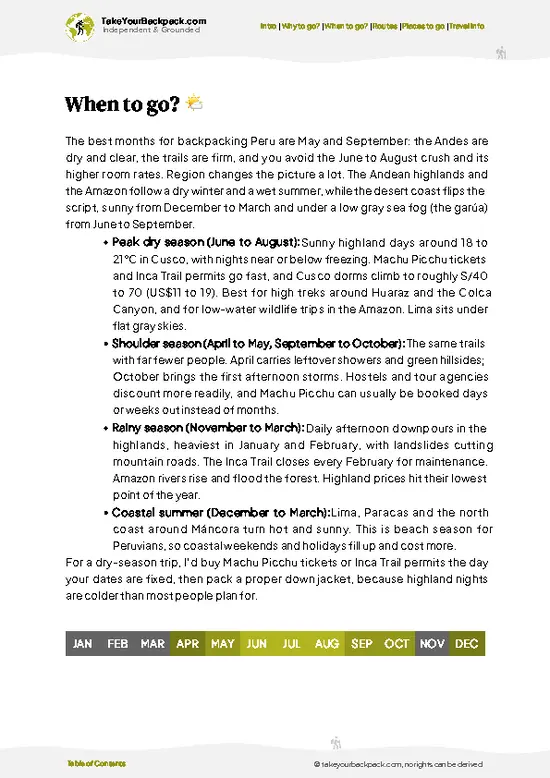
🌤️ When to go?Best time to visit Ayacuho


  • Weather: The dry season from May to September offers clear skies and minimal rain, perfect for trekking and exploring without soggy boots or muddy trails.

  • Temperature: Daytime highs hover around 18-22°C (64-72°F), while nights dip to 2-6°C (36-43°F), so pack layers for chilly evenings.

  • Daylight Hours: Roughly 11-12 hours of daylight year-round, but the dry season’s consistent weather means more reliable daylight for outdoor plans.

  • Crowds: Peak tourist months are June and July, coinciding with Inti Raymi and other festivals, so expect more visitors and higher prices.

  • Seasonal Activities: The June festival season is a cultural jackpot, but off-peak months offer quieter trails and more authentic local interactions.

  • Price Fluctuations: Accommodation and transport costs spike during
read more 👉

  • Weather: The dry season from May to September offers clear skies and minimal rain, perfect for trekking and exploring without soggy boots or muddy trails.

  • Temperature: Daytime highs hover around 18-22°C (64-72°F), while nights dip to 2-6°C (36-43°F), so pack layers for chilly evenings.

  • Daylight Hours: Roughly 11-12 hours of daylight year-round, but the dry season’s consistent weather means more reliable daylight for outdoor plans.

  • Crowds: Peak tourist months are June and July, coinciding with Inti Raymi and other festivals, so expect more visitors and higher prices.

  • Seasonal Activities: The June festival season is a cultural jackpot, but off-peak months offer quieter trails and more authentic local interactions.

  • Price Fluctuations: Accommodation and transport costs spike during festival season; traveling just before or after can save you serious cash without losing the vibe.


Pro-tip: Aim for late May or early September—dry trails, fewer crowds, and better deals. You get the best of both worlds without the festival frenzy.


source: climatestotravel.comJANJanuary: fair for travelingFEBFebruary: fair for travelingMARMarch: fair for travelingAPRApril: good for travelingMAYMay: excellent for travelingJUNJune: highly recommended for travelingJULJuly: highly recommended for travelingAUGAugust: excellent for travelingSEPSeptember: excellent for travelingOCTOctober: good for travelingNOVNovember: fair for travelingDECDecember: fair for traveling
when-to-go

✈️ The backpacker research shortcutPeru Travel Guide

An offline-friendly backpacking guide with optimized travel routes, ranked highlights, transport advice, and the best areas to stay.
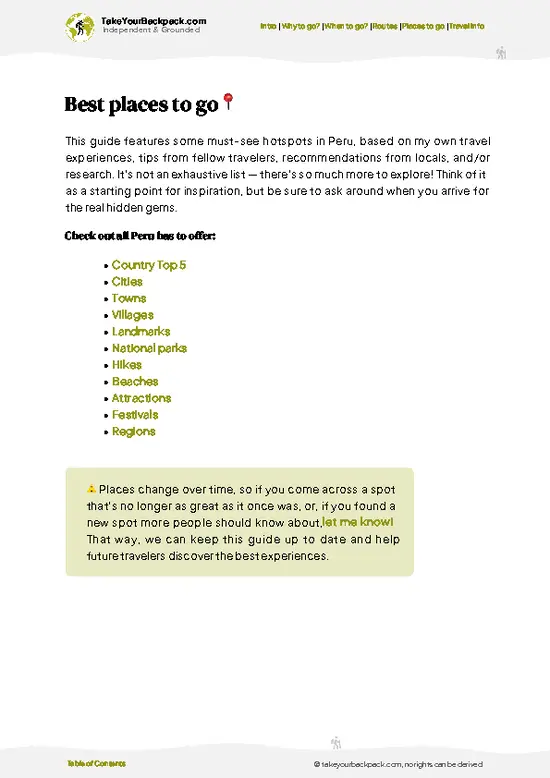
example page 0 from our offline Travel Guide for Peru
example page 1 from our offline Travel Guide for Peru
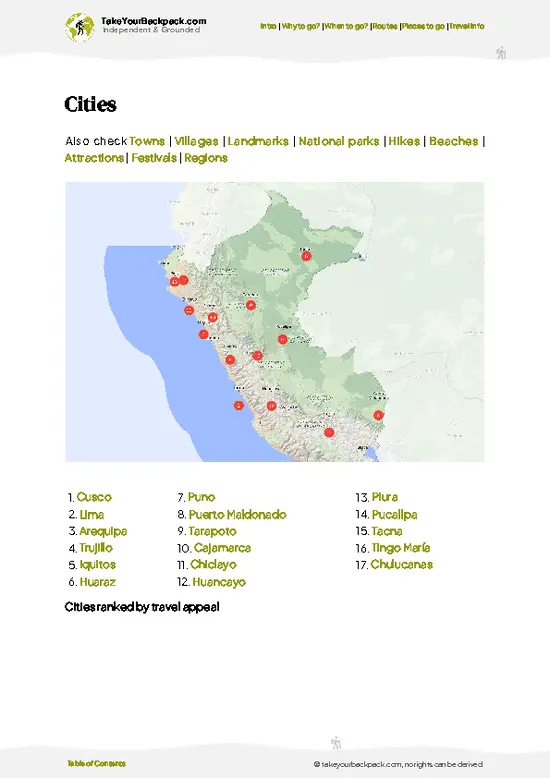
example page 2 from our offline Travel Guide for Peru
example page 3 from our offline Travel Guide for Peru
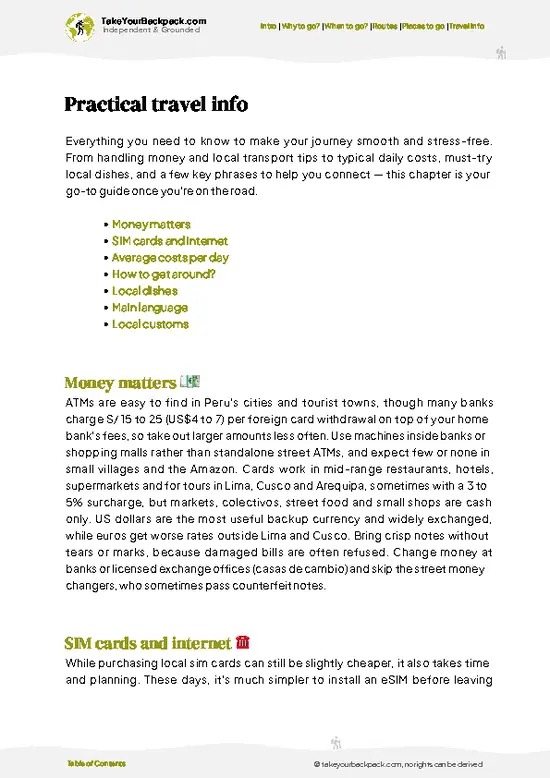
example page 4 from our offline Travel Guide for Peru
example page 5 from our offline Travel Guide for Peru
example page 6 from our offline Travel Guide for Peru
example page 7 from our offline Travel Guide for Peru
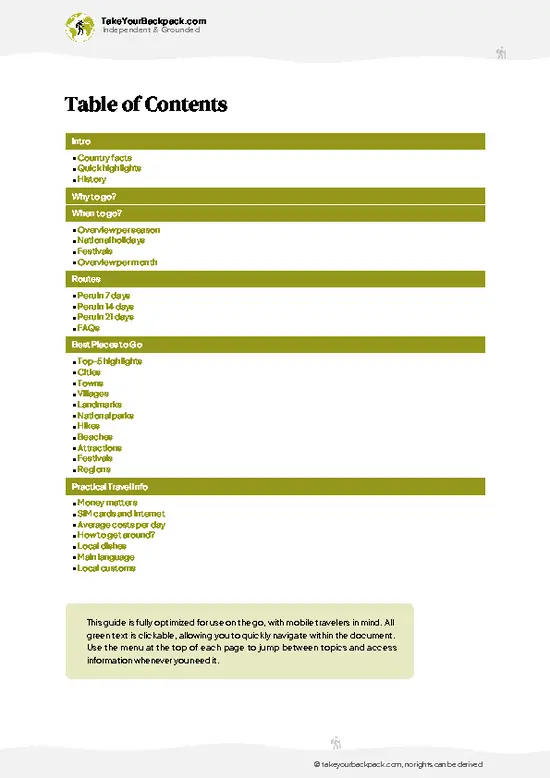
The digital guide (416 pages) contains:
113 highlights, ranked by travel appeal
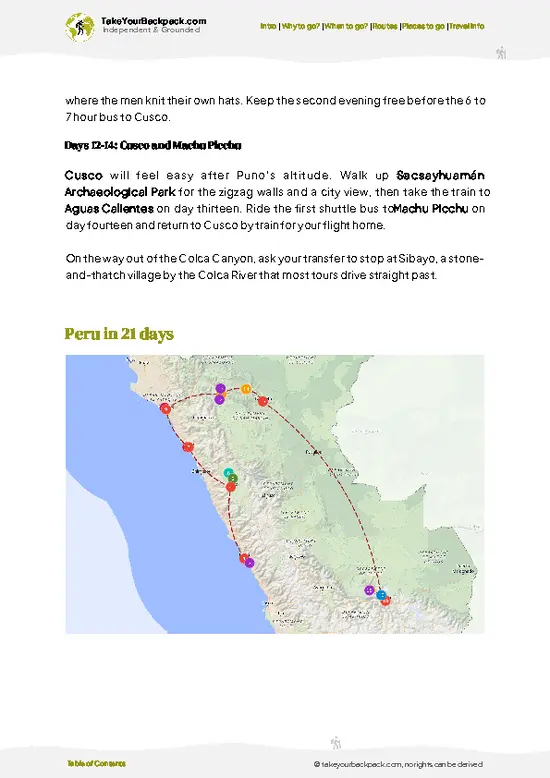
Optimized 7, 14 & 21-day travel routes
Cities, national parks, landmarks, beaches
How to get around
Offline-friendly for travel without Wi-Fi
👉 Click to see all 30+ guide features

📅 Plan smarter in minutes, not weeks
Month by month travel advice
Festivals & national holidays
Budget expectations

🗺️ Go to the right places, skip the overrated ones
Honest pros & cons of destinations
Top hikes, parks & viewpoints
Lesser-known places most travelers miss
Clear “worth it vs skip it” guidance

🛏️ Travel smoothly without rookie mistakes
Best areas to stay
Transport systems explained simply
Common scams & safety advice
SIM cards, money & practical tips

🌍 Understand the country, not just visit it
Culture & traditions
52 Essential phrases & customs
Festivals worth planning around
Traveler-friendly historical context
Insights that make places more meaningful

📱 Built for real travel conditions
Fully downloadable PDF
Works completely offline
Optimized for phone use
Useful in remote areas & buses
Everything in one place
Save weeks of stressful planning
Get instant access to your full guide. 30‑day money-back guarantee.
+ Add another guide for just US$7.80

By proceeding you agree to our terms.
Sent to your inbox immediately after payment • 100% Secure Checkout
Best Backpacking Travel Advisor 2025 tourism awardBest Backpacking
Travel Advisor
2025
What others say about Take Your Backpack Guides:
⭐⭐⭐⭐⭐
Fantastic, amazing amount of information!
⭐⭐⭐⭐⭐
My goodness this is amazing, it's what I've been looking for hats off too you!
⭐⭐⭐⭐⭐
I think this is absolutely BRILLIANT
⭐⭐⭐⭐
Very complete and informative. It's still missing places, but I gotta to commend you
⭐⭐⭐⭐⭐
This is truly amazing, thank you, can't wait to explore it with my kids!
⭐⭐⭐⭐⭐
Awesome resource, thank you!
⭐⭐⭐⭐⭐
This is amazing! Can't wait to explore the ones I haven't seen
⭐⭐⭐⭐
I love this! Well done, great idea.
⭐⭐⭐⭐⭐
Thanks for taking the time to make this gem!
⭐⭐⭐⭐⭐
This might be the best website I've ever seen.
⭐⭐⭐⭐⭐
Congratulations, and thank you so much for your work; it's incredibly valuable.
⭐⭐⭐⭐
In all seriousness I think you did a great job pointing out the important spots
⭐⭐⭐⭐⭐
10/10 very good
⭐⭐⭐⭐⭐
As someone who's only just starting to visit regularly this is awesome, thank you.
⭐⭐⭐⭐
Thank you very much! I'm going to visit my dad, it's going to be very useful!
⭐⭐⭐⭐⭐
This is really cool! We'll be travelling for the first time and this definitely come in handy.
⭐⭐⭐⭐⭐
You are now our minister of culture, congratulations 👨‍💼
⭐⭐⭐⭐⭐
Just wanted to tell you that this is a pearl! Going to follow your recommendations.
⭐⭐⭐⭐⭐
This is so cool. I'll definitely be using the resource for my travels soon.
⭐⭐⭐⭐⭐
This is very impressive! Good work.
⭐⭐⭐⭐⭐
This is an amazing and informative site. Very well done!

🛏️ Where to stay?Best areas and accommodation options

In Ayacucho, the best spot for backpackers is the historic center. It’s where the pulse of the city beats strongest—safe streets, plenty of budget hostels, and a social vibe that naturally draws solo travelers. You’re close to plazas, markets, and cafes, which means you can walk everywhere without worrying about taxis or sketchy neighborhoods. Compared to the outskirts or newer districts, the historic center offers a compact, walkable experience that maximizes your time and comfort without inflating costs. The trade-off here is clear: you sacrifice flashy modern amenities for authentic local energy … read more 👉
In Ayacucho, the best spot for backpackers is the historic center. It’s where the pulse of the city beats strongest—safe streets, plenty of budget hostels, and a social vibe that naturally draws solo travelers. You’re close to plazas, markets, and cafes, which means you can walk everywhere without worrying about taxis or sketchy neighborhoods. Compared to the outskirts or newer districts, the historic center offers a compact, walkable experience that maximizes your time and comfort without inflating costs. The trade-off here is clear: you sacrifice flashy modern amenities for authentic local energy and easy access to cultural hotspots. For backpackers who want to connect, explore, and keep expenses lean, this area is the strategic choice that turns logistics into a winning game.

🚌 Getting aroundMoving around without the hassle

Ayacucho moves at a rhythm that’s part old-school routine, part spontaneous pulse. The city’s heart beats through its plazas and markets, where schedules are guidelines, not laws. You’ll find buses and colectivos darting off when they’re full, not on a clock, and locals who know the best routes by instinct rather than timetables. This blend of predictability and improvisation means your travel choices here are a balancing act between saving time, spending less, and grabbing comfort when you can. Understanding this flow lets you play the system smartly—turning what could be frustrating into a strategic win.


  • Walking: The most reliable and free way to explore Ayacucho’s compact center. Streets are hilly but manageable, and walking lets you soak in the city’s colonial architecture and street
read more 👉
Ayacucho moves at a rhythm that’s part old-school routine, part spontaneous pulse. The city’s heart beats through its plazas and markets, where schedules are guidelines, not laws. You’ll find buses and colectivos darting off when they’re full, not on a clock, and locals who know the best routes by instinct rather than timetables. This blend of predictability and improvisation means your travel choices here are a balancing act between saving time, spending less, and grabbing comfort when you can. Understanding this flow lets you play the system smartly—turning what could be frustrating into a strategic win.


  • Walking: The most reliable and free way to explore Ayacucho’s compact center. Streets are hilly but manageable, and walking lets you soak in the city’s colonial architecture and street life at your own pace.

  • Colectivos: Shared minibuses running from early morning (around 6:00 AM) until dusk (about 7:00 PM). They cost roughly 1-2 PEN, are quick on main routes but can get cramped, and leave when full, so timing is flexible but unpredictable.

  • Local Buses: Larger buses cover longer distances and outskirts, operating roughly 5:30 AM to 8:00 PM. Tickets are cheap (2-3 PEN), slower due to frequent stops, but more comfortable than colectivos, with some seating guaranteed.

  • Taxis: Available 24/7, taxis offer door-to-door comfort and speed but at a higher price (10-20 PEN within the city). Negotiate fares upfront to avoid surprises; best for late-night or luggage-heavy trips.

👛 Costs (as of 4 September 2026)Travel costs and budget guide for Ayacuho

Backpacking in Ayacucho, Peru, offers a clear trade-off between cost and comfort, with prices reflecting its status as a less touristy but culturally rich destination. Here’s how your daily expenses typically break down:
  • Dorm Accommodation (High Season): Expect to pay around $8 to $12 USD per night in shared dorms during peak tourist months (June to August). These are basic but clean, often with communal bathrooms and simple amenities.
  • Dorm Accommodation (Off-Season): Prices drop to about $5 to $8 USD per night. Fewer travelers mean better bargaining power, and you might score a quieter dorm or even a private room at a discount.
  • Meals: Street food and local markets dominate here. Budget $3 to $6 USD per day if you stick to traditional dishes like tamales, empanadas, or a hearty plate of
read more 👉
Backpacking in Ayacucho, Peru, offers a clear trade-off between cost and comfort, with prices reflecting its status as a less touristy but culturally rich destination. Here’s how your daily expenses typically break down:
  • Dorm Accommodation (High Season): Expect to pay around $8 to $12 USD per night in shared dorms during peak tourist months (June to August). These are basic but clean, often with communal bathrooms and simple amenities.
  • Dorm Accommodation (Off-Season): Prices drop to about $5 to $8 USD per night. Fewer travelers mean better bargaining power, and you might score a quieter dorm or even a private room at a discount.
  • Meals: Street food and local markets dominate here. Budget $3 to $6 USD per day if you stick to traditional dishes like tamales, empanadas, or a hearty plate of sopa. Eating at small local eateries (comedores) keeps costs low and flavors authentic.
  • Local Transport: Getting around Ayacucho by colectivo (shared minivan) or moto-taxi usually costs between $0.30 and $0.70 USD per ride. Budget around $1.50 to $3 USD daily if you move around frequently.
  • City Transport Pass: Ayacucho doesn’t have a formal city transport pass system. Instead, individual rides are cheap enough that passes aren’t necessary or common.
  • Basic Activities/Entry Fees: Museums and cultural sites charge modest fees, typically $1 to $3 USD. Visiting the Wari ruins or local markets might be free or have a small entrance fee, so budget around $2 to $5 USD daily if you plan to explore.
  • Miscellaneous Expenses: This covers bottled water, occasional snacks, or small souvenirs. Around $1 to $3 USD daily is a safe estimate.

Altogether, you’re looking at a daily budget roughly between $12 and $25 USD, depending on season and how much you move around or splurge on extras. Ayacucho rewards those who embrace simplicity and local flavor, so spending less often means experiencing more of the city’s authentic rhythm.


source: peru.travel
⚠️ Prices can change and everyone travels differently, so take this as a rough guide. Hope it helps you plan your adventure!

🚌 Day tripsEasy escapes and nearby places

Ayacucho, Peru, is a backpacker’s dream base for day trips, offering a rich tapestry of culture, history, and stunning landscapes. Here’s how to make the most of your time without breaking the bank.

Wari Ruins
Just a 30-minute bus ride from Ayacucho, the Wari Ruins are a must-see for history buffs. This ancient site, once the capital of a pre-Incan civilization, offers a fascinating glimpse into Peru’s past. You can wander through the remnants of temples and plazas, all while enjoying panoramic views of the surrounding mountains. The entrance fee is minimal, around 10 soles, making it a budget-friendly adventure. Aim for the dry season (May to October) to avoid muddy trails. A common mistake is underestimating the sun; bring water and sunscreen.


Quinua
About 45 minutes from Ayacucho, … read more 👉
Ayacucho, Peru, is a backpacker’s dream base for day trips, offering a rich tapestry of culture, history, and stunning landscapes. Here’s how to make the most of your time without breaking the bank.

Wari Ruins
Just a 30-minute bus ride from Ayacucho, the Wari Ruins are a must-see for history buffs. This ancient site, once the capital of a pre-Incan civilization, offers a fascinating glimpse into Peru’s past. You can wander through the remnants of temples and plazas, all while enjoying panoramic views of the surrounding mountains. The entrance fee is minimal, around 10 soles, making it a budget-friendly adventure. Aim for the dry season (May to October) to avoid muddy trails. A common mistake is underestimating the sun; bring water and sunscreen.


Quinua
About 45 minutes from Ayacucho, Quinua is a charming village known for its vibrant market and the stunning “Pampa de Ayacucho” battlefield. You can explore local crafts, sample traditional food, and soak in the historical significance of the area. The round-trip bus fare is around 5 soles, and you can easily spend a few hours here without feeling rushed. The best time to visit is during the market days, especially Sundays. First-timers often miss the battlefield; don’t skip the short hike to the memorial for a deeper connection to the history.


Sarhua
A little over an hour away, Sarhua is famous for its unique painted boards, which tell the stories of the local community. This day trip is a cultural immersion, where you can meet artisans and learn about their craft. The bus ride costs about 10 soles, and you can spend the day exploring the village and its surroundings. The best time to visit is during the dry season when the colors of the boards are most vibrant. Many overlook the chance to engage with locals; don’t just take photos—ask questions and share stories.


Pampa Galeras
For nature lovers, Pampa Galeras is a stunning national reserve about two hours from Ayacucho. Home to the endangered vicuña, this area offers breathtaking landscapes and excellent hiking opportunities. The entrance fee is around 20 soles, and you can easily spend a full day here. Visit during the dry season for the best views and wildlife sightings. A common mistake is not dressing in layers; temperatures can shift dramatically throughout the day.


Each of these trips offers a unique slice of Peruvian life, making Ayacucho a perfect launchpad for your adventures.
Want to know what more Peru offers?
The Peru Travel Guide describes 113 highlights, from cities to national parks, from beaches to hikes

Get the Travel Guide -

🍲 FoodEating & Drinking in Ayacuho

In Ayacucho, food is a celebration of local culture. Dive into pachamanca, a traditional dish where meats and vegetables are slow-cooked underground, infusing them with earthy flavors. Pair it with aji de gallina, a creamy chicken dish that’s rich and comforting. Don’t skip the humitas, sweet corn cakes wrapped in leaves, perfect for a quick snack.

Backpackers will find their culinary adventures in markets and on bustling street corners. The Mercado de Ayacucho is a sensory overload, with vendors shouting about their fresh produce and sizzling street food. Grab a plate of anticuchos, skewered beef heart, grilled to perfection, and wash it down with a refreshing chicha morada, a sweet purple corn drink that’s as vibrant as the city itself.

Eating here is communal. Expect to share tables and … read more 👉
In Ayacucho, food is a celebration of local culture. Dive into pachamanca, a traditional dish where meats and vegetables are slow-cooked underground, infusing them with earthy flavors. Pair it with aji de gallina, a creamy chicken dish that’s rich and comforting. Don’t skip the humitas, sweet corn cakes wrapped in leaves, perfect for a quick snack.

Backpackers will find their culinary adventures in markets and on bustling street corners. The Mercado de Ayacucho is a sensory overload, with vendors shouting about their fresh produce and sizzling street food. Grab a plate of anticuchos, skewered beef heart, grilled to perfection, and wash it down with a refreshing chicha morada, a sweet purple corn drink that’s as vibrant as the city itself.

Eating here is communal. Expect to share tables and engage in lively conversations. It’s customary to greet vendors with a smile and a friendly “buen provecho” as you dig into your meal. This isn’t just food; it’s a taste of Ayacucho’s heart and soul.

🛡️ SafetyScams, Hazards, and Annoyances

Ayacucho is generally safe, but like any city, it has its quirks. Stay alert in crowded markets, especially around Plaza de Armas, where pickpockets may lurk. If you’re solo, avoid wandering too far from the center after dark; stick to well-lit streets and populated areas.

Common scams include overly friendly locals offering unsolicited help or guiding you to shops where they earn a commission. Politely decline and trust your instincts.

Annoyances can pop up, like aggressive street vendors or taxi drivers who may try to negotiate inflated fares. Use registered taxis or ride-sharing apps to sidestep this. Carry your belongings close and maintain a confident demeanor; it signals that you know what you’re doing. With these strategies, you’ll navigate Ayacucho smoothly and enjoy its rich culture.

FAQCommon questions from travelers

Ayacucho is worth visiting for its rich colonial architecture, vibrant local markets, and significant historical sites related to the Peruvian War of Independence. It offers a unique cultural experience with its Semana Santa celebrations in April, which attract many visitors. It is more than just a stopover if you are interested in history and traditional Andean culture.
You need at least 2 to 3 days in Ayacucho to explore the main attractions such as the 33 churches, the Wari archaeological site nearby, and the local artisan markets. This allows enough time to experience the city’s colonial charm and sample local cuisine without rushing.
Ayacucho can be visited as a day trip from nearby cities like Huamanga, but it is not ideal due to travel times. The closest major city is Huamanga, about 10 km away, but spending a night in Ayacucho is recommended to fully appreciate its cultural and historical offerings.
⚠️ Things can change over time, so always validate details locally before you go.

Other Peruvian towns near Ayacuho

Explore more nearby:

  • Huancavelica—colonial churches, mountain valleys, thermal baths| 92 km away
  • Aguas Calientes—thermal springs, cloud forest, rail gateway| 184 km away
  • Nazca—ancient geoglyphs, arid plains, desert airstrips| 201 km away

💡 Not sure where to go next?
Create a personalized itinerary for Peru including Ayacuho and the places that fit your trip.

Generate my itinerary

👉 Discover all towns

Or checkout all Peru has to offer (think cities, towns, villages, national parks, hikes, beaches, festivals)
Country photo of Peru

We 💚 feedbackParting advice and final tips

Ayacucho’s vibrant local culture is a treasure. The markets buzz with life, and the food—oh, the food! You’ll savor authentic Peruvian dishes that are hard to find elsewhere. But be prepared: the altitude can hit hard. If you’re not acclimated, you might feel sluggish. Embrace the challenge, and the rewards will be worth it. Just take it slow, and let Ayacucho work its magic on you.

✈️ When did I visit Peru?
Peru I visited during my half year trip through South and Central America back in 2003

✍️ Help improve this page!
The information on this page is based on my own backpacking experience in Peru, supplemented with up-to-date research and feedback from other travelers. Travel details can change, so if you notice anything outdated or incomplete, feel free to let me know.


🙋‍♂️ Give feedback

👋 Meet the founderWho’s Behind Take Your Backpack?

Johan, backpacker and founder of TakeYourBackpackHi, I’m Johan (Netherlands 🇳🇱), the creator of TakeYourBackpack. Over the past decade, I’ve backpacked through 80+ countries across six continents, gaining extensive experience with independent travel, long-term trips, and overland routes.

This site is built on a combination of firsthand travel experience and carefully curated insights from other backpackers. Many guides are based on places I’ve personally visited, while others bring together tips, observations, and practical advice shared by trusted travelers I’ve met along the way.

The goal is to provide realistic, experience-driven guidance — not generic itineraries — so you can explore destinations with better context, clearer expectations, and more confidence.

Get full Peru guide •
Instant download • 113 highlights • Full Offline guide