×

Peru🇵🇪 | townsHuancavelicaCobbled lanes, ram’s-head broth, narrow-gauge station, cold nights | things to do and best time to go

Explore MoyobambaExplore Cerro Blanco

Backpacking in Huancavelica
👌 Worth visitingtown ranked #6
By Johan Kruseman 🇳🇱 | Updated October 19, 2026

A bowl of caldo de cabeza de carnero steams in front of you at the Mercado Central, and the whole thing costs about US$2. You slurp, you sweat, you grin. Huancavelica sits in the central Andes of Peru, a high colonial town of stone churches and steep cobbled lanes that most travelers rush past. Getting here means a long, twisting mountain ride, and the town is small, cold at night and short on nightlife. Still, you can cover the plazas, hot springs and the narrow-gauge railway station on foot, and the few hostels make it easy to swap stories with other travelers over breakfast. Compared with busier Ayacucho, Huancavelica feels rawer, quieter and far less polished.

Discover everything you want to know in the 📖 Peru Travel Guide.


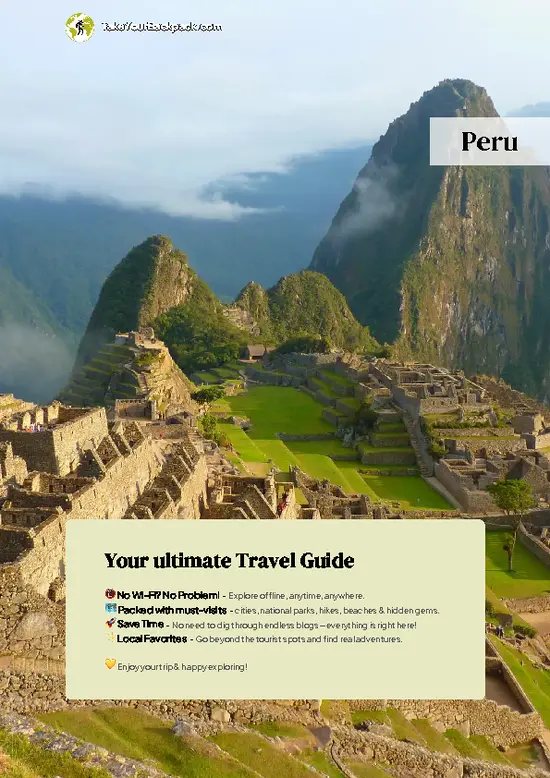
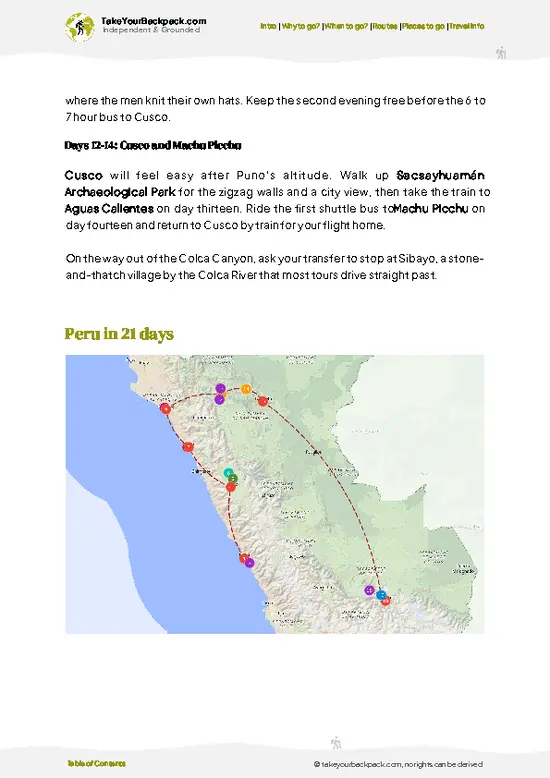
example page 0 from our offline Travel Guide for Peru
example page 1 from our offline Travel Guide for Peru
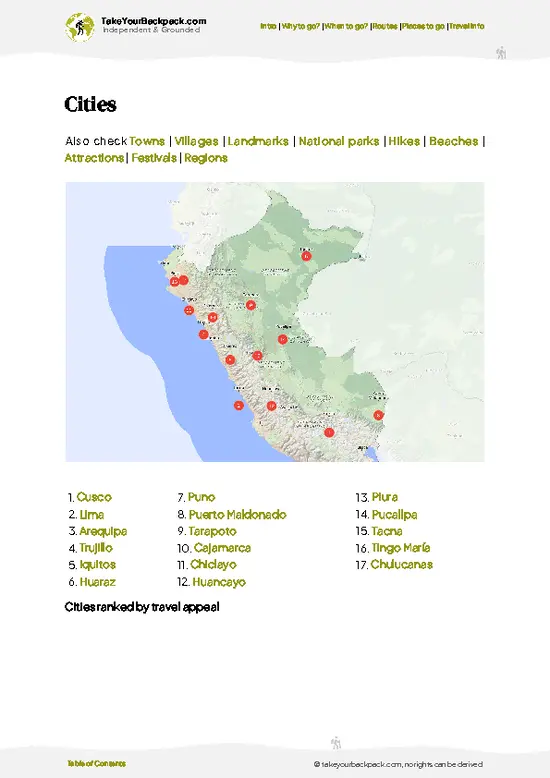
example page 2 from our offline Travel Guide for Peru
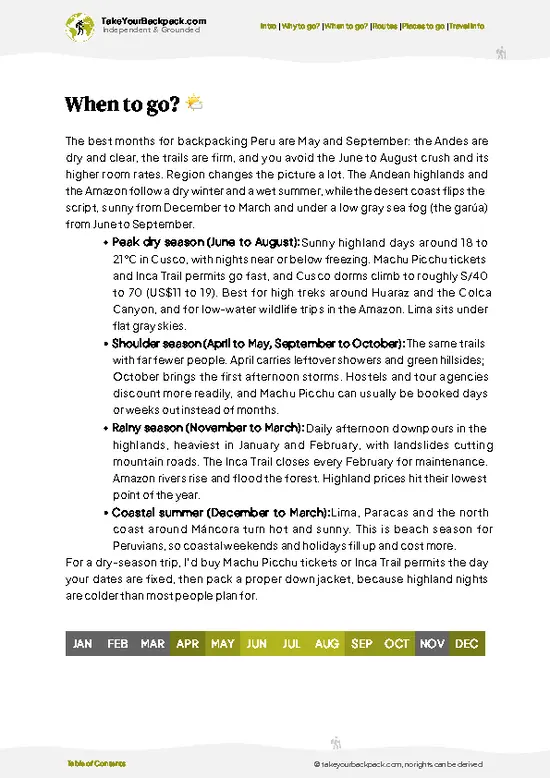
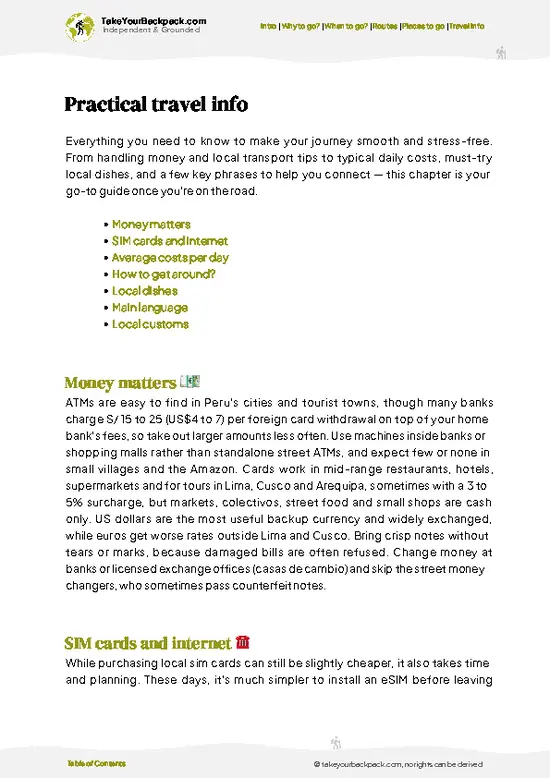
example page 3 from our offline Travel Guide for Peru
example page 4 from our offline Travel Guide for Peru
example page 5 from our offline Travel Guide for Peru
example page 6 from our offline Travel Guide for Peru
example page 7 from our offline Travel Guide for Peru
Loading the map 🌍
CLICK TO FILTER
cities
towns
villages
landmarks
national parks
hikes
beaches
attractions
festivals
regions
SHOW COUNTRY’S BESTSHOW ALL

✨ Why go?
Ranked #6 town in Peru
What makes it a must-see town

Huancavelica gives you the Andes without the tour buses. The draw is a compact colonial center where around eight old stone churches sit within a few blocks, plus a hilltop lookout for a view over red-tiled roofs and the valley beyond. Markets fill with Quechua-speaking families in layered skirts and felt hats, and a day of wandering them is a lesson in highland life. The San Cristóbal hot springs on the edge of town are a cheap way to thaw after a cold morning. Most people stay two nights, one to see the town and one to soak and rest. It suits slow travelers, solo backpackers who like talking with locals, and anyone building a route between Huancayo and Ayacucho. If you need lively bars and big hostel crowds, make it a short stop.

💡 HighlightsPlaces and moments you shouldn't skip

  1. Plaza de Armas and the Cathedral: The main square holds a stone pila fountain and the 17th-century cathedral with a gilded wooden altarpiece. Go in the morning when the doors are open. Entry is free to the plaza and a small donation inside. Allow 45 minutes.
  2. Hilltop viewpoint: A steep climb of 20 to 30 minutes leads to a hilltop viewpoint over the whole town. Late afternoon is best for the light on the rooftops. Free, and about an hour with the descent.
  3. San Cristóbal Hot Springs (Baños Termales): Public pools fed by mineral water near the center, with private tubs available. Evenings are best when the air is cold. Roughly US$0.50 to 1.50, and an hour or two is plenty.
  4. Mercado Central and the Sunday market: Stalls sell woven textiles, potatoes in many colors and hot soups. Go early for the best
… read more 👉
  1. Plaza de Armas and the Cathedral: The main square holds a stone pila fountain and the 17th-century cathedral with a gilded wooden altarpiece. Go in the morning when the doors are open. Entry is free to the plaza and a small donation inside. Allow 45 minutes.
  2. Hilltop viewpoint: A steep climb of 20 to 30 minutes leads to a hilltop viewpoint over the whole town. Late afternoon is best for the light on the rooftops. Free, and about an hour with the descent.
  3. San Cristóbal Hot Springs (Baños Termales): Public pools fed by mineral water near the center, with private tubs available. Evenings are best when the air is cold. Roughly US$0.50 to 1.50, and an hour or two is plenty.
  4. Mercado Central and the Sunday market: Stalls sell woven textiles, potatoes in many colors and hot soups. Go early for the best produce. Browsing is free, and a meal costs US$1.50 to 3. Plan one to two hours.
  5. Huancavelica Train Station: The old station of the narrow-gauge line to Huancayo is a small slice of railway history. Visit by day to see the platform and the tracks. Free to look around, about 20 minutes.
For day trips, consider the Santa Bárbara mining ruins, the Laguna de Choclococha and the Astobamba area for highland landscapes. If time is short, skip the railway station and spend those minutes at the hot springs.
Spotted a mistake or missing something? Contact us.

Things to do near Huancavelica

Ratings based on Tripadvisor reviews. When you book through this link, you support our work at no extra cost to you.

🏘️ NeighborhoodsHow different areas shape the experience

Huancavelica is compact, steep and best explored on foot, so lace up and start climbing. Altitude sits near 3,680 meters, so go slowly on day one.
  • Plaza de Armas: The colonial heart, with a stone fountain, the cathedral and cafes serving hot quinoa soup and strong coffee. Everything is flat and walkable here, and you get an easy first orientation over breakfast.
  • Churches circuit: Five colonial churches (San Francisco, Santo Domingo, San Sebastián, La Ascensión, San Cristóbal) sit on cobbled lanes within a few blocks, their carved altars gilded. Dip into each in an hour or two and you get a crash course in Andean baroque.
  • Hillside above the center: Hike the stairs from the old district to the hilltop for a sweeping view over red roofs and the Ichu River valley. The climb is short but breathless,
… read more 👉
Huancavelica is compact, steep and best explored on foot, so lace up and start climbing. Altitude sits near 3,680 meters, so go slowly on day one.
  • Plaza de Armas: The colonial heart, with a stone fountain, the cathedral and cafes serving hot quinoa soup and strong coffee. Everything is flat and walkable here, and you get an easy first orientation over breakfast.
  • Churches circuit: Five colonial churches (San Francisco, Santo Domingo, San Sebastián, La Ascensión, San Cristóbal) sit on cobbled lanes within a few blocks, their carved altars gilded. Dip into each in an hour or two and you get a crash course in Andean baroque.
  • Hillside above the center: Hike the stairs from the old district to the hilltop for a sweeping view over red roofs and the Ichu River valley. The climb is short but breathless, and the view at golden hour is yours for free.
  • Market district: Stalls near the train station and Mercado Central sell fresh bread, fruit, cheese and trout, plus alpaca woolens. Come hungry for a cheap lunch of caldo de cabeza or pachamanca on weekends, and you eat where locals eat.
  • Hot springs, San Cristóbal side: Public thermal baths on the edge of town offer a steaming soak after cold-weather walking. Evenings are quiet everywhere, so a hot pool is your nightlife.

⌛️ 1 daySeeing the highlights in 24 hours

A slow market-and-churches day, with thermal baths to finish.
7:30 AM, Plaza de Armas: Start with coffee or a hot quinoa drink from a stall near the square, and look at the Cathedral’s carved altar while the streets are still calm. Then walk five minutes to the market.
9:00 AM, Central Market: Browse piles of potatoes, fava beans and herbs, and eat a plate of fresh cheese with boiled potatoes at one of the counters. Women in tall hats sell handwoven items nearby. It is the best place to hear Quechua spoken everyday.
11:00 AM, Colonial churches: Stroll uphill past San Francisco, Santo Domingo and San Cristóbal, each with a distinct facade. Doors open irregularly, so peek in wherever you find one unlocked.
1:00 PM, Lunch: Order a set menu (menú) at a local restaurant near the plaza, usually soup … read more 👉
A slow market-and-churches day, with thermal baths to finish.
7:30 AM, Plaza de Armas: Start with coffee or a hot quinoa drink from a stall near the square, and look at the Cathedral’s carved altar while the streets are still calm. Then walk five minutes to the market.
9:00 AM, Central Market: Browse piles of potatoes, fava beans and herbs, and eat a plate of fresh cheese with boiled potatoes at one of the counters. Women in tall hats sell handwoven items nearby. It is the best place to hear Quechua spoken everyday.
11:00 AM, Colonial churches: Stroll uphill past San Francisco, Santo Domingo and San Cristóbal, each with a distinct facade. Doors open irregularly, so peek in wherever you find one unlocked.
1:00 PM, Lunch: Order a set menu (menú) at a local restaurant near the plaza, usually soup followed by trout or stew.
2:30 PM, Hilltop viewpoint: Climb the steps up the hill above town for a wide view of red roofs and the surrounding mountains. Go slowly, because the altitude is over 3,600 meters.
4:30 PM, Ascensión neighborhood and San Cristóbal baths: Wander the quieter back lanes where residents herd animals home, and then soak in the public hot spring baths on the edge of town. Hot water after a day of climbing is the right ending.
7:00 PM, Dinner: Try a bowl of caldo de cabeza or a simple grilled trout, then head to bed early, since the evenings are cold and quiet.

🌤️ When to go?Seasonal considerations and timing

May to September is the dry season, with sunny days around 15 to 19°C (59 to 66°F) but freezing nights that can fall to -5°C (23°F) or lower. Skies are crisp and trails are easy, and daylight lasts roughly 11 to 12 hours.
  • Dry Season (May to September): Best for hiking and photography, plus the busiest period, though still quiet by Peruvian standards. Prices barely change.
  • Wet Season (December to March): Afternoon downpours and muddy roads, with highs near 14 to 17°C (57 to 63°F). Landslides can slow buses, but the hills turn green.
  • Festivals: Carnival in February and Semana Santa in March or April bring parades, dancing and full rooms. Book ahead then.
Pack a warm sleeping layer whenever you come, since heating in budget rooms is rare.

source: climatestotravel.comJANJanuary: fair for travelingFEBFebruary: fair for travelingMARMarch: good for travelingAPRApril: good for travelingMAYMay: excellent for travelingJUNJune: excellent for travelingJULJuly: excellent for travelingAUGAugust: excellent for travelingSEPSeptember: highly recommended for travelingOCTOctober: good for travelingNOVNovember: fair for travelingDECDecember: fair for traveling
when-to-go

✈️ The backpacker research shortcutPeru Travel Guide

An offline-friendly backpacking guide with optimized travel routes, ranked highlights, transport advice, and the best areas to stay.
example page 0 from our offline Travel Guide for Peru
example page 1 from our offline Travel Guide for Peru
example page 2 from our offline Travel Guide for Peru
example page 3 from our offline Travel Guide for Peru
example page 4 from our offline Travel Guide for Peru
example page 5 from our offline Travel Guide for Peru
example page 6 from our offline Travel Guide for Peru
example page 7 from our offline Travel Guide for Peru
The digital guide (310 pages) contains:
✅ 102 highlights, ranked by travel appeal
✅ Optimized 7, 14 & 21-day travel routes
✅ Cities, national parks, landmarks, beaches
✅ How to get around
✅ Offline-friendly for travel without Wi-Fi
👉 Click to see all 30+ guide features

📅 Plan smarter in minutes, not weeks
✅ Month by month travel advice
✅ Festivals & national holidays
✅ Budget expectations

🗺️ Go to the right places, skip the overrated ones
✅ Honest pros & cons of destinations
✅ Top hikes, parks & viewpoints
✅ Lesser-known places most travelers miss
✅ Clear “worth it vs skip it” guidance

🛏️ Travel smoothly without rookie mistakes
✅ Best areas to stay
✅ Transport systems explained simply
✅ Common scams & safety advice
✅ SIM cards, money & practical tips

🌍 Understand the country, not just visit it
✅ Culture & traditions
✅ 52 Essential phrases & customs
✅ Festivals worth planning around
✅ Traveler-friendly historical context
✅ Insights that make places more meaningful

📱 Built for real travel conditions
✅ Fully downloadable PDF
✅ Works completely offline
✅ Optimized for phone use
✅ Useful in remote areas & buses
✅ Everything in one place
Stop searching, start planning
Get instant access to your full guide. 30‑day money-back guarantee.
+ Add another guide for just

By proceeding you agree to our terms.
Sent to your inbox immediately after payment • 100% Secure Checkout
Best Backpacking Travel Advisor 2025 tourism awardBest Backpacking
Travel Advisor
2025
What others say about Take Your Backpack Guides:
⭐⭐⭐⭐⭐
Fantastic, amazing amount of information!
⭐⭐⭐⭐⭐
My goodness this is amazing, it's what I've been looking for hats off too you!
⭐⭐⭐⭐⭐
I think this is absolutely BRILLIANT
⭐⭐⭐⭐
Very complete and informative. It's still missing places, but I gotta to commend you
⭐⭐⭐⭐⭐
This is truly amazing, thank you, can't wait to explore it with my kids!
⭐⭐⭐⭐⭐
Awesome resource, thank you!
⭐⭐⭐⭐⭐
This is amazing! Can't wait to explore the ones I haven't seen
⭐⭐⭐⭐
I love this! Well done, great idea.
⭐⭐⭐⭐⭐
Thanks for taking the time to make this gem!
⭐⭐⭐⭐⭐
This might be the best website I've ever seen.
⭐⭐⭐⭐⭐
Congratulations, and thank you so much for your work; it's incredibly valuable.
⭐⭐⭐⭐
In all seriousness I think you did a great job pointing out the important spots
⭐⭐⭐⭐⭐
10/10 very good
⭐⭐⭐⭐⭐
As someone who's only just starting to visit regularly this is awesome, thank you.
⭐⭐⭐⭐
Thank you very much! I'm going to visit my dad, it's going to be very useful!
⭐⭐⭐⭐⭐
This is really cool! We'll be travelling for the first time and this definitely come in handy.
⭐⭐⭐⭐⭐
You are now our minister of culture, congratulations 👨‍💼
⭐⭐⭐⭐⭐
Just wanted to tell you that this is a pearl! Going to follow your recommendations.
⭐⭐⭐⭐⭐
This is so cool. I'll definitely be using the resource for my travels soon.
⭐⭐⭐⭐⭐
This is very impressive! Good work.
⭐⭐⭐⭐⭐
This is an amazing and informative site. Very well done!

🛏️ Where to stay?Best areas to stay in Peru

The streets around the Plaza de Armas are the best place to sleep, with the highest concentration of budget guesthouses and a few hostels. Expect simple rooms with shared or private bathrooms, and hot water that comes on at set hours, so ask. Single beds or private rooms run roughly US$8 to 20.
The plaza area is flat, lit at night and a five-minute walk from restaurants, cash machines and the church circuit, which keeps evening walks short. Noise is mostly limited to church bells, early market sellers and the occasional festival band, so bring earplugs in carnival season.
The zone near the bus terminal … read more 👉
The streets around the Plaza de Armas are the best place to sleep, with the highest concentration of budget guesthouses and a few hostels. Expect simple rooms with shared or private bathrooms, and hot water that comes on at set hours, so ask. Single beds or private rooms run roughly US$8 to 20.
The plaza area is flat, lit at night and a five-minute walk from restaurants, cash machines and the church circuit, which keeps evening walks short. Noise is mostly limited to church bells, early market sellers and the occasional festival band, so bring earplugs in carnival season.
The zone near the bus terminal and market is the second option. It suits early departures and is cheaper, but it gets loud from before dawn with trucks and vendors, and the streets are quieter and less welcoming after dark. Use it only if you leave at first light. Cold nights are the main discomfort in either area, so check for extra blankets before paying.

🚌 Getting aroundHow to get around Huancavelica

Showing up at the bus terminal on the day you want to leave toward Huancayo or Lima, without checking the schedule or the train, wastes hours when the seats are full. Buy tickets a day before if you can. Within town, everything fits on foot, and traffic is light even if the roads are steep, so you rarely need wheels.
  • Walking: The historic center is a few blocks wide and takes 15 minutes to cross. Hills and 3,680 meters of altitude mean you slow down, and you pass alleys of adobe houses and women in bright skirts selling wool.
  • Mototaxi and taxi: Rides across town cost US$0.75 to 1.50 and the airport-free town has no ride apps. Hop on for the climb to the hilltop viewpoint or the hot springs, and your lungs thank you.
  • Colectivos and minibuses: Vans to nearby villages and Huancayo leave from the
… read more 👉
Showing up at the bus terminal on the day you want to leave toward Huancayo or Lima, without checking the schedule or the train, wastes hours when the seats are full. Buy tickets a day before if you can. Within town, everything fits on foot, and traffic is light even if the roads are steep, so you rarely need wheels.
  • Walking: The historic center is a few blocks wide and takes 15 minutes to cross. Hills and 3,680 meters of altitude mean you slow down, and you pass alleys of adobe houses and women in bright skirts selling wool.
  • Mototaxi and taxi: Rides across town cost US$0.75 to 1.50 and the airport-free town has no ride apps. Hop on for the climb to the hilltop viewpoint or the hot springs, and your lungs thank you.
  • Colectivos and minibuses: Vans to nearby villages and Huancayo leave from the terminal area when they fill, with fares around US$1 to 6 and rides of 30 minutes to 5 hours. You sit shoulder to shoulder with farmers hauling potatoes and get views of terraced valleys.
  • Tren Macho (Huancayo to Huancavelica): The narrow-gauge line runs a few times a week, around US$4 to 8 for the 6 to 7 hour trip, and schedules shift. Book at the station and enjoy slow bridges, tunnels and condor-high passes.
  • Long-distance buses: Overnight services to Lima take about 10 to 12 hours for roughly US$12 to 22. Pick cama seats and bring a jacket, and you wake to the coast.

👛 Costs (as of 19 October 2026)Travel costs and budget guide for Huancavelica

Backpacking in Huancavelica costs about US$24 to 48 per day, with a total of US$35 once you add everything together at high-season rates.
CategoryBudget RangeLocal Reality
Dorm or basic roomUS$8 to 14Few true dorms exist, so a simple room with shared bath is typical, around US$10 in high season.
MealsUS$9 to 14Set lunch menus cost US$2 to 3, trout or pachamanca dinners US$4 to 6, and breakfast US$2.
Local transportUS$1 to 4Mototaxis cost US$0.75 to 1.50 and the center is walkable, so budget about US$3.
Activities and entry feesUS$3 to 10Churches are mostly free or by donation, and hot springs cost about US$1 to 2. Guides add more, so figure on US$6.
MiscellaneousUS$3 to 6Snacks, water, coca tea and laundry, about US$4 on average.
Total Daily BudgetUS$24 to 48About US$35 per day
Eat the fixed-price … read more 👉
Backpacking in Huancavelica costs about US$24 to 48 per day, with a total of US$35 once you add everything together at high-season rates.
CategoryBudget RangeLocal Reality
Dorm or basic roomUS$8 to 14Few true dorms exist, so a simple room with shared bath is typical, around US$10 in high season.
MealsUS$9 to 14Set lunch menus cost US$2 to 3, trout or pachamanca dinners US$4 to 6, and breakfast US$2.
Local transportUS$1 to 4Mototaxis cost US$0.75 to 1.50 and the center is walkable, so budget about US$3.
Activities and entry feesUS$3 to 10Churches are mostly free or by donation, and hot springs cost about US$1 to 2. Guides add more, so figure on US$6.
MiscellaneousUS$3 to 6Snacks, water, coca tea and laundry, about US$4 on average.
Total Daily BudgetUS$24 to 48About US$35 per day
Eat the fixed-price menu at the market at lunchtime, when portions are largest and prices lowest.


source: peru.travel
⚠️ Prices can change and everyone travels differently, so take this as a rough guide. Hope it helps you plan your adventure!

🚌 Day tripsExploring the surroundings

Huancavelica works well as a base for short rural outings, though transport leaves mostly in the morning and returns by mid-afternoon.
Laguna de Choclococha:
A high Andean lake at about 4,600 meters with alpacas, flamingos and wind. Colectivos or hired cars take roughly 3 to 4 hours each way on rough roads, and budget US$20 to 45 including a driver. Go in the dry season and bring layers and altitude pills, because first-timers underestimate the cold.

Izcuchaca and the Mantaro valley:
A village with a colonial stone bridge over the Mantaro River, reached in about 2 hours by van for US$3 to 5. Combine it with the train route views and a cheap trout lunch. Leave early, since afternoon returns thin out.

Huancavelica mine of Santa Bárbara:
The former mercury mine at Santa Bárbara sits above town … read more 👉
Huancavelica works well as a base for short rural outings, though transport leaves mostly in the morning and returns by mid-afternoon.
Laguna de Choclococha:
A high Andean lake at about 4,600 meters with alpacas, flamingos and wind. Colectivos or hired cars take roughly 3 to 4 hours each way on rough roads, and budget US$20 to 45 including a driver. Go in the dry season and bring layers and altitude pills, because first-timers underestimate the cold.

Izcuchaca and the Mantaro valley:
A village with a colonial stone bridge over the Mantaro River, reached in about 2 hours by van for US$3 to 5. Combine it with the train route views and a cheap trout lunch. Leave early, since afternoon returns thin out.

Huancavelica mine of Santa Bárbara:
The former mercury mine at Santa Bárbara sits above town and shows ruined shafts and the story of colonial forced labor. Mototaxi plus a guide costs US$5 to 15, and the trip takes half a day. Wear sturdy shoes and do not enter old tunnels.

Huaytará:
The Inca-built Church of San Juan Bautista combines fitted stone walls with a colonial church and nearby hot springs. The ride is about 3 hours each way by minibus for US$4 to 8, with an overnight needed only if you linger. Stay on the main road and confirm return times before you set out.

🛡️ SafetySafety Tips and Common Scams in Huancavelica

Huancavelica is calm and low in violent crime, and most problems are petty. Keep phones and cameras out of sight in the market and at the bus terminal, where pickpockets work crowds, especially around festival days. After dark the plaza is fine, but side streets climbing the hills are poorly lit, so stick to main lanes or take a mototaxi. Solo travelers, including women, usually meet curiosity and kindness, though a firm no and steady walking handle unwanted attention. The bigger daily risks are altitude and cold: rest on arrival, drink water, and carry warm layers. Mountain roads can close during the wet season, so keep your onward plans flexible. Confirm the mototaxi fare before you get in.

FAQTraveler FAQ

Huancavelica is worth visiting if you want colonial churches, hot springs and highland villages without tour crowds. It is more than a stopover for travelers heading between Huancayo and Ayacucho. The churches near the plaza take half a day, and the Tren Macho journey from Huancayo takes 6 to 7 hours.
Two to three days suit Huancavelica well. Day one covers the plaza, churches and the hilltop viewpoint while you adjust to 3,680 meters, and day two works for a trip like Laguna de Choclococha or the Santa Bárbara mine. A third day adds the hot springs or Huaytará, and budget about US$35 per day.
Huancavelica is possible as a long day trip from Huancayo, but it is tiring and leaves little time to see anything. The road takes about 4 to 5 hours each way, and the train takes 6 to 7 hours on limited days. Staying at least one night, at roughly US$10 to 20, lets you see the churches and enjoy the evening hot springs.
⚠️ Things can change over time, so always validate details locally before you go.

Other Peruvian towns near Huancavelica

Explore more nearby:

  • Ayacuho—Andean plazas, colonial churches, artisan workshops| 92 km away
  • Paracas—Island boats, sea lions, pier grills, red-sand cliffs| 181 km away
  • Nazca—Desert flights, line figures, flat grid streets, night sky talks| 227 km away

💡 Not sure where to go next?
Create a personalized itinerary for Peru including Huancavelica and the places that fit your trip.

Generate my itinerary

👉 Discover all towns

Or checkout all Peru has to offer (think cities, towns, villages, national parks, hikes, beaches, festivals)
Country photo of Peru

We 💚 feedbackKey takeaways before you go

Huancavelica deserves two nights, not one. The first day goes to adjusting to the altitude and the churches; the second is for the hot springs and a lazy market breakfast. I would bring a warm jacket and book ahead if you plan to arrive on a weekend.

✈️ When did I visit Peru?
Peru I visited during my half year trip through South and Central America back in 2003

✍️ Help improve this page!
The information on this page is based on my own backpacking experience in Peru, supplemented with up-to-date research and feedback from other travelers. Travel details can change, so if you notice anything outdated or incomplete, feel free to let me know.


🙋‍♂️ Give feedback

👋 Meet the founderWho’s Behind Take Your Backpack?

Johan, backpacker and founder of TakeYourBackpackHi, I’m Johan (Netherlands 🇳🇱), the creator of TakeYourBackpack. Over the past 3 decades, I’ve backpacked through 90+ countries across six continents, gaining extensive experience with independent travel, long-term trips, and overland routes.

This site is built on a combination of firsthand travel experience and carefully curated insights from other backpackers. Many guides are based on places I’ve personally visited, while others bring together tips, observations, and practical advice shared by trusted travelers I’ve met along the way.

The goal is to provide realistic, experience-driven guidance — not generic itineraries — so you can explore destinations with better context, clearer expectations, and more confidence.