

×

Peru🇵🇪 | townsParacascoastal reserve, desert cliffs, marine wildlife | things to do and best time to go

Explore Oxa PampaExplore Nazca

Backpacking in Paracas
🏆 Top picktown ranked #1
By Johan Kruseman 🇳🇱 | Updated June 17, 2026

Your first real fork in Paracas is simple but important: do you treat it as a quick launchpad for the Ballestas Islands and Paracas National Reserve, or slow down and give the desert-meets-sea vibe a full day or two. That choice shapes your whole rhythm on Peru’s coast. Paracas sits on a calm bay south of Lima, just off the Panamericana, a short hop from Pisco and a bus ride from Huacachina and Ica, so it slots neatly into the classic coastal backpacking line.

The town itself is small, low-rise, and a bit purpose-built for tourism: sandy streets, salty air, tour kiosks, ceviche joints, and hostels clustered near the malecón. It’s relaxed and more scenic than Pisco, but less atmospheric than a true old colonial center. You come here for nature, not nightlife. Buses drop you close enough to walk most places, and you only really need a tuk-tuk or tour transport for the reserve. Hostels are social without being wild, prices are mid-range for Peru’s coast, and safety feels manageable if you stick to the waterfront core and standard street sense.

Discover everything you want to know in the 📖 Peru Travel Guide.


Get your Peru guide
118 ranked highlights, routes & tips, works offline (442 pages)
Loading the map 🌍
CLICK TO FILTER
cities
towns
villages
landmarks
national parks
hikes
beaches
attractions
festivals
regions
SHOW COUNTRY’S BESTSHOW ALL

✨ Why go?
Ranked #1 town in Peru
What makes it a must-see town

Backpackers flock to Paracas for its strategic position along the Peruvian coast, serving as a gateway to both natural wonders and cultural experiences. The town is compact and walkable, making it easy to explore local eateries that serve up fresh ceviche, often with the scent of the ocean wafting through the streets. Many travelers use Paracas as a base for day trips to the Ballestas Islands or the Paracas National Reserve, where the landscapes shift from rugged cliffs to sweeping beaches.

Accommodations range from small-scale hostels to cozy guesthouses, fostering a friendly atmosphere that appeals to solo travelers and small groups alike. You’ll find a mix of slow travelers who linger for a few days, soaking in the laid-back vibe, and those who pop in for a quick stop before heading to … read more 👉
Backpackers flock to Paracas for its strategic position along the Peruvian coast, serving as a gateway to both natural wonders and cultural experiences. The town is compact and walkable, making it easy to explore local eateries that serve up fresh ceviche, often with the scent of the ocean wafting through the streets. Many travelers use Paracas as a base for day trips to the Ballestas Islands or the Paracas National Reserve, where the landscapes shift from rugged cliffs to sweeping beaches.

Accommodations range from small-scale hostels to cozy guesthouses, fostering a friendly atmosphere that appeals to solo travelers and small groups alike. You’ll find a mix of slow travelers who linger for a few days, soaking in the laid-back vibe, and those who pop in for a quick stop before heading to Ica or Nazca. The social scene is relaxed, with opportunities to meet fellow adventurers without the overwhelming nightlife of bigger cities. Paracas is perfect for those seeking a blend of tranquility and adventure, making it a worthwhile pause on your journey.
Want to include Paracas in your Peru route?
Create a personalized Peru itinerary that includes Paracas and the places that fit your trip — based on your travel style, budget, and available time. Get your route in seconds.

Generate my trip

💡 HighlightsThe experiences that define the visit

  • Museo de Sitio Julio C. Tello — The little museum in town houses real Paracas-period textiles, pottery and burials; it’s the best place to see the famous embroidered fabrics and learn how the desert cultures lived before Spanish contact.
  • Plaza de Armas (Main Square) — Small, shady and very local: vendors, a parish church on the edge, and plenty of benches to watch fishermen and buses come and go. Great for people-watching and gauging local rhythm.
  • Muelle de Paracas (the Pier / Harbour) — Where boats and fishermen bustle; you can board Ballestas boats here, photograph working skiffs up close, and feel the sea wind—an honest slice of coastal life.
  • Paracas Malecon & Mirador — A compact promenade with viewpoints over the bay. Perfect for short walks, sunsets, spotting cormorants and kitesurfers,
read more 👉
  • Museo de Sitio Julio C. Tello — The little museum in town houses real Paracas-period textiles, pottery and burials; it’s the best place to see the famous embroidered fabrics and learn how the desert cultures lived before Spanish contact.
  • Plaza de Armas (Main Square) — Small, shady and very local: vendors, a parish church on the edge, and plenty of benches to watch fishermen and buses come and go. Great for people-watching and gauging local rhythm.
  • Muelle de Paracas (the Pier / Harbour) — Where boats and fishermen bustle; you can board Ballestas boats here, photograph working skiffs up close, and feel the sea wind—an honest slice of coastal life.
  • Paracas Malecon & Mirador — A compact promenade with viewpoints over the bay. Perfect for short walks, sunsets, spotting cormorants and kitesurfers, and finding a café with sea views without leaving town.
  • Playa El Chaco — The main sandy beach beside town: calm swimming, casual seafood joints on the sand, and easy access for an afternoon of sun without a long drive.
  • Playa La Mina — A smaller, sheltered bay a short stroll from the center. Shallow waters, local boat activity and a handful of restaurants where fresh ceviche is literally moments from the fishermen’s catch.
  • Paracas Fish Market (Mercado de Pescado) — Early mornings are best: auctions, fish cleaning, and inexpensive snacks. It’s a raw, real encounter with the town’s fishing economy and the base for many cevicherías.
  • Seafront Cevicherías and Seafood Row — Not a single landmark but a concentrated stretch of eateries serving fresh seafood and causa. Eating here is as much cultural as culinary—watching the fishermen unload while you dig into a jalea is its own experience.
  • Paracas Marina / Club Nautico area — Small yachts, charter desks and sunset promenades. Handy for booking private boat trips, taking photos of the bay, or just seeing a different, quieter side of the port.
  • Handicraft stalls near the Plaza — A compact cluster of stalls and small shops selling local-style textiles, marine-themed crafts and travel essentials. Good for quick souvenirs made or sold by local vendors—support the people who live here.
A few great day trips just outside Paracas are the Ballestas Islands (wildlife cruises), the Paracas National Reserve (dramatic coastline and viewpoints) and the Huacachina oasis/dune buggy area near Ica — the Ballestas Islands are my personal favorite.
Spotted a mistake or missing something? Contact us.

Things to do around Paracas

Ratings based on Tripadvisor reviews. When you book through this link, you support our work at no extra cost to you.

🏘️ NeighborhoodsNeighborhood guide to Paracas

Paracas is a small coastal town that serves as a gateway to the stunning Ballestas Islands and the otherworldly landscapes of the Paracas National Reserve. Each neighborhood offers a unique flavor, making it easier to find your perfect base.

El Chaco: This is the heart of Paracas, where most backpackers congregate. It’s lively, with a mix of budget hostels and local eateries. The waterfront promenade is perfect for sunset strolls, and you can easily hop on a boat tour to the islands from here. Expect a vibrant atmosphere, especially in the evenings, but it quiets down by midnight. Ideal for short stays, as everything is within walking distance.

Paracas Centro: A bit more laid-back, this area offers a blend of local life and tourist amenities. It’s less crowded than El Chaco, making it suitable … read more 👉
Paracas is a small coastal town that serves as a gateway to the stunning Ballestas Islands and the otherworldly landscapes of the Paracas National Reserve. Each neighborhood offers a unique flavor, making it easier to find your perfect base.

El Chaco: This is the heart of Paracas, where most backpackers congregate. It’s lively, with a mix of budget hostels and local eateries. The waterfront promenade is perfect for sunset strolls, and you can easily hop on a boat tour to the islands from here. Expect a vibrant atmosphere, especially in the evenings, but it quiets down by midnight. Ideal for short stays, as everything is within walking distance.

Paracas Centro: A bit more laid-back, this area offers a blend of local life and tourist amenities. It’s less crowded than El Chaco, making it suitable for those who want a quieter experience. You’ll find charming cafes and small shops, plus easy access to transport options for day trips. Perfect for longer stays if you prefer a slower pace.

Las Palmas: This neighborhood is a hidden treasure for those seeking tranquility. It’s a bit farther from the main action, but the trade-off is peace and quiet. The beach here is less frequented, offering a more authentic vibe. It’s a great spot for longer stays if you’re looking to unwind and soak in the natural beauty without the hustle.

Choose wisely, and let the atmosphere guide your adventure!

⌛️ 1 dayA smart one-day plan

Paracas, Peru, is a coastal town that feels like a breath of fresh air. With its stunning desert landscapes meeting the Pacific Ocean, it’s a place where the sun paints the sky in hues of orange and pink, and the salty breeze carries whispers of adventure. This town is a gateway to the Ballestas Islands and the Paracas National Reserve, but it also has its own charm worth exploring.

Start your morning with a stroll along the waterfront. The early light glimmers on the water, and the scent of fresh ceviche wafts from nearby stalls. Grab breakfast at a local café, like El Piloto, where the coffee is strong and the pastries are flaky. After fueling up, head to the Paracas National Reserve. Rent a bike to explore the rugged coastline. The ride is invigorating, with the sound of waves crashing … read more 👉
Paracas, Peru, is a coastal town that feels like a breath of fresh air. With its stunning desert landscapes meeting the Pacific Ocean, it’s a place where the sun paints the sky in hues of orange and pink, and the salty breeze carries whispers of adventure. This town is a gateway to the Ballestas Islands and the Paracas National Reserve, but it also has its own charm worth exploring.

Start your morning with a stroll along the waterfront. The early light glimmers on the water, and the scent of fresh ceviche wafts from nearby stalls. Grab breakfast at a local café, like El Piloto, where the coffee is strong and the pastries are flaky. After fueling up, head to the Paracas National Reserve. Rent a bike to explore the rugged coastline. The ride is invigorating, with the sound of waves crashing against the cliffs and the occasional sighting of sea lions basking in the sun.

In the afternoon, make your way to the Ballestas Islands. The boat ride is a thrill, with seabirds diving and the occasional dolphin leaping alongside. Keep your camera ready for the famous Candelabra geoglyph etched into the hillside. After returning, visit the lesser-known Museo Julio C. Tello, where you can dive into the region’s rich history without the crowds. The artifacts tell stories of ancient cultures, and the quiet atmosphere allows for reflection.

As the sun begins to dip, find a spot at the beach to watch the sunset. The sky transforms into a canvas of colors, and you can feel the day’s adventures settling in. For dinner, head to a local eatery like La Casa de la Cerveza, where you can savor fresh seafood and enjoy the laid-back vibe.

In Paracas, every moment is a blend of nature and culture, making your day feel both fulfilling and effortless.
Turn your Paracas visit into an Peru adventure
Build a complete Peru route with Paracas, hidden gems, must-see destinations, and realistic travel times included.

Generate my trip

🌤️ When to go?Weather, crowds, and seasonal trade-offs


  • Topic: Weather – Paracas basks in a desert climate, so rain is rare year-round. The best weather hits between December and March, when the sun is strong, skies are clear, and the air feels warm but not stifling. Outside these months, expect a persistent coastal fog called “garúa” that softens the light and cools the air, sometimes down to a damp chill.

  • Topic: Temperature – Daytime highs hover around 22–28°C (72–82°F) in summer, perfect for beach and boat trips. Winter months drop to 15–20°C (59–68°F), which can feel brisk, especially with the ocean breeze. Nights can dip to 12°C (54°F) or lower, so pack layers if you visit off-season.

  • Topic: Daylight Hours – Near the equator, daylight stays fairly steady year-round, about 11 to 13 hours. This means you get ample time for early morning
read more 👉

  • Topic: Weather – Paracas basks in a desert climate, so rain is rare year-round. The best weather hits between December and March, when the sun is strong, skies are clear, and the air feels warm but not stifling. Outside these months, expect a persistent coastal fog called “garúa” that softens the light and cools the air, sometimes down to a damp chill.

  • Topic: Temperature – Daytime highs hover around 22–28°C (72–82°F) in summer, perfect for beach and boat trips. Winter months drop to 15–20°C (59–68°F), which can feel brisk, especially with the ocean breeze. Nights can dip to 12°C (54°F) or lower, so pack layers if you visit off-season.

  • Topic: Daylight Hours – Near the equator, daylight stays fairly steady year-round, about 11 to 13 hours. This means you get ample time for early morning wildlife tours or late afternoon strolls without worrying about losing light too soon.

  • Topic: Crowds – Peak season (December to March) draws more tourists, especially around holidays. This means busier boat tours to Ballestas Islands and crowded eateries. Off-season offers quiet beaches and more personal space but with cooler, grayer days.

  • Topic: Seasonal Activities – Summer is prime for water sports, wildlife spotting, and beach lounging. Winter months bring calmer seas but less sun, shifting the vibe toward birdwatching and exploring the Paracas National Reserve’s stark landscapes.

  • Topic: Price Fluctuations – Expect higher prices for lodging and tours during the summer and holiday periods. Booking ahead can save money. Off-season rates drop noticeably, rewarding those willing to trade some sunshine for solitude and savings.


Pro-tip: Aim for late spring or early fall—when the sun is out, the crowds thin, and prices soften—so you get the best of Paracas without the hassle or chill.


source: climatestotravel.comJANJanuary: excellent for travelingFEBFebruary: excellent for travelingMARMarch: excellent for travelingAPRApril: highly recommended for travelingMAYMay: highly recommended for travelingJUNJune: good for travelingJULJuly: good for travelingAUGAugust: good for travelingSEPSeptember: highly recommended for travelingOCTOctober: highly recommended for travelingNOVNovember: highly recommended for travelingDECDecember: excellent for traveling
when-to-go

✈️ The backpacker research shortcutPeru Travel Guide

An offline-friendly backpacking guide with optimized travel routes, ranked highlights, transport advice, and the best areas to stay.
example page 0 from our offline Travel Guide for Peru
example page 1 from our offline Travel Guide for Peru
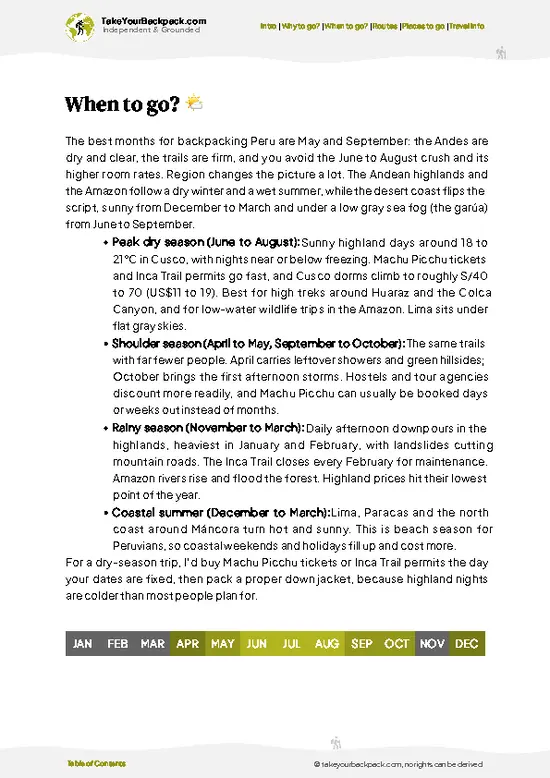
example page 2 from our offline Travel Guide for Peru
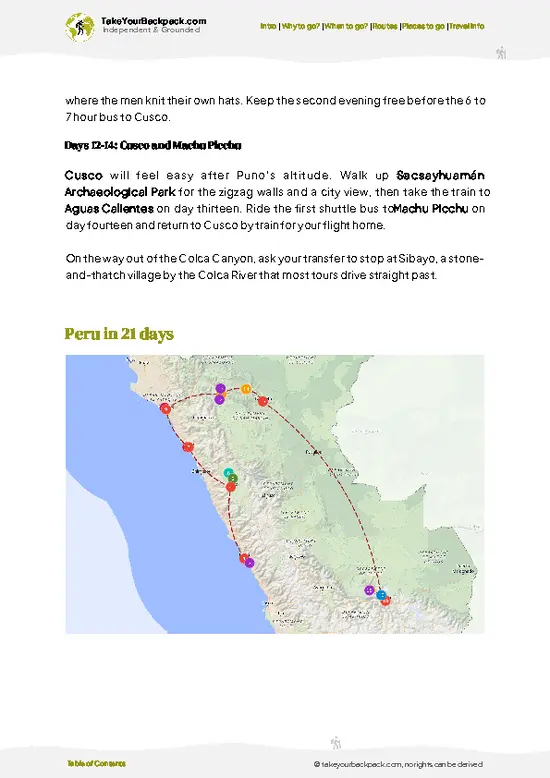
example page 3 from our offline Travel Guide for Peru
example page 4 from our offline Travel Guide for Peru
example page 5 from our offline Travel Guide for Peru
example page 6 from our offline Travel Guide for Peru
example page 7 from our offline Travel Guide for Peru
The digital guide (442 pages) contains:
118 highlights, ranked by travel appeal
Optimized 7, 14 & 21-day travel routes
Cities, national parks, landmarks, beaches
How to get around
Offline-friendly for travel without Wi-Fi
👉 Click to see all 30+ guide features

📅 Plan smarter in minutes, not weeks
Month by month travel advice
Festivals & national holidays
Budget expectations

🗺️ Go to the right places, skip the overrated ones
Honest pros & cons of destinations
Top hikes, parks & viewpoints
Lesser-known places most travelers miss
Clear “worth it vs skip it” guidance

🛏️ Travel smoothly without rookie mistakes
Best areas to stay
Transport systems explained simply
Common scams & safety advice
SIM cards, money & practical tips

🌍 Understand the country, not just visit it
Culture & traditions
52 Essential phrases & customs
Festivals worth planning around
Traveler-friendly historical context
Insights that make places more meaningful

📱 Built for real travel conditions
Fully downloadable PDF
Works completely offline
Optimized for phone use
Useful in remote areas & buses
Everything in one place
Save weeks of stressful planning
Get instant access to your full guide. 30‑day money-back guarantee.


By proceeding you agree to our terms.
Sent to your inbox immediately after payment • 100% Secure Checkout
Best Backpacking Travel Advisor 2025 tourism awardBest Backpacking
Travel Advisor
2025
What others say about Take Your Backpack Guides:
⭐⭐⭐⭐⭐
Fantastic, amazing amount of information!
⭐⭐⭐⭐⭐
My goodness this is amazing, it's what I've been looking for hats off too you!
⭐⭐⭐⭐⭐
I think this is absolutely BRILLIANT
⭐⭐⭐⭐
Very complete and informative. It's still missing places, but I gotta to commend you
⭐⭐⭐⭐⭐
This is truly amazing, thank you, can't wait to explore it with my kids!
⭐⭐⭐⭐⭐
Awesome resource, thank you!
⭐⭐⭐⭐⭐
This is amazing! Can't wait to explore the ones I haven't seen
⭐⭐⭐⭐
I love this! Well done, great idea.
⭐⭐⭐⭐⭐
Thanks for taking the time to make this gem!
⭐⭐⭐⭐⭐
This might be the best website I've ever seen.
⭐⭐⭐⭐⭐
Congratulations, and thank you so much for your work; it's incredibly valuable.
⭐⭐⭐⭐
In all seriousness I think you did a great job pointing out the important spots
⭐⭐⭐⭐⭐
10/10 very good
⭐⭐⭐⭐⭐
As someone who's only just starting to visit regularly this is awesome, thank you.
⭐⭐⭐⭐
Thank you very much! I'm going to visit my dad, it's going to be very useful!
⭐⭐⭐⭐⭐
This is really cool! We'll be travelling for the first time and this definitely come in handy.
⭐⭐⭐⭐⭐
You are now our minister of culture, congratulations 👨‍💼
⭐⭐⭐⭐⭐
Just wanted to tell you that this is a pearl! Going to follow your recommendations.
⭐⭐⭐⭐⭐
This is so cool. I'll definitely be using the resource for my travels soon.
⭐⭐⭐⭐⭐
This is very impressive! Good work.
⭐⭐⭐⭐⭐
This is an amazing and informative site. Very well done!

🛏️ Where to stay?Where staying makes the most sense

In Paracas, the best spot for backpackers is the small stretch along the main avenue, Avenida Paracas. This area pulses with the right mix of local life and traveler energy. It’s where you’ll find the bulk of hostels, small eateries, and tour agencies all within easy walking distance. The vibe here is relaxed but social—perfect for solo travelers looking to swap stories over a cold drink after a dusty day exploring the nearby desert or islands.

Why this area? Safety is a big factor. Paracas is generally calm, but sticking close to the main drag means well-lit streets and a steady flow of people, … read more 👉
In Paracas, the best spot for backpackers is the small stretch along the main avenue, Avenida Paracas. This area pulses with the right mix of local life and traveler energy. It’s where you’ll find the bulk of hostels, small eateries, and tour agencies all within easy walking distance. The vibe here is relaxed but social—perfect for solo travelers looking to swap stories over a cold drink after a dusty day exploring the nearby desert or islands.

Why this area? Safety is a big factor. Paracas is generally calm, but sticking close to the main drag means well-lit streets and a steady flow of people, which naturally keeps things secure. Plus, you’re close to the waterfront, where the salty breeze cuts through the afternoon heat, and the light shifts beautifully as the sun dips behind the bay. It’s a sensory anchor after a day of sun and sand.

Compared to the quieter residential zones or the more isolated beach edges, this neighborhood offers a practical balance. You’re not stuck in a tourist bubble, but you’re also not wandering into empty streets after dark. Hostels here tend to be budget-friendly and geared toward community—think shared kitchens, common rooms buzzing with plans for the next day’s boat trip to the Ballestas Islands. Staying here means you’re plugged into the pulse of Paracas, not just passing through it.

🚌 Getting aroundHow to get around Paracas

Paracas moves at the pace of the ocean tides—unhurried but deliberate. The sun casts a sharp, dry light that bounces off the sand and salt air, making everything feel crisp and immediate. This isn’t a place where you’ll find strict timetables or polished transit hubs. Instead, it’s a town where intuition and local rhythm guide your steps. The streets hum with the occasional honk of a mototaxi or the shuffle of boots on dusty paths. Here, the flow is loose but reliable if you know where to look. The key to moving around Paracas is embracing its laid-back vibe while tapping into the practical transit veins that locals use daily. Master these, and you’ll glide through the town like a pro, saving time and money without sacrificing comfort.


  • Walking: Paracas is compact, and walking is often
read more 👉
Paracas moves at the pace of the ocean tides—unhurried but deliberate. The sun casts a sharp, dry light that bounces off the sand and salt air, making everything feel crisp and immediate. This isn’t a place where you’ll find strict timetables or polished transit hubs. Instead, it’s a town where intuition and local rhythm guide your steps. The streets hum with the occasional honk of a mototaxi or the shuffle of boots on dusty paths. Here, the flow is loose but reliable if you know where to look. The key to moving around Paracas is embracing its laid-back vibe while tapping into the practical transit veins that locals use daily. Master these, and you’ll glide through the town like a pro, saving time and money without sacrificing comfort.


  • Walking: Paracas is compact, and walking is often the best way to soak in the salty breeze and the sun-warmed streets. Most guesthouses, restaurants, and the waterfront are within a 10-20 minute stroll. It’s free, flexible, and lets you catch the subtle details—the smell of grilled seafood, the chatter of fishermen prepping boats, the gritty texture of sand underfoot.


  • Mototaxis: These three-wheeled speedsters are the town’s unofficial taxis. They run all day, roughly from 6 a.m. to 9 p.m., and cost around 2-3 soles per short trip. They’re perfect for quick hops when the sun is high and walking feels like a chore. Be ready to negotiate fares upfront—drivers expect it, and it’s part of the rhythm here. Mototaxis dart through narrow streets and dusty alleys faster than cars, but hold on tight; the ride can be bumpy.


  • Colectivos (Shared Minivans): For trips to nearby spots like the Paracas National Reserve or the bus terminal, colectivos are your budget-friendly option. They leave when full, so timing is flexible but unpredictable—expect waits of 10 to 30 minutes. The fare is about 5-7 soles. These vans are basic but get you where you need to go without fuss. They’re a great way to meet locals and get a feel for daily life beyond the tourist trail.


  • Intercity Buses: If you’re arriving or leaving Paracas, buses to and from Ica or Lima are your main arteries. They typically run from early morning (around 6 a.m.) until late afternoon (around 5 p.m.). Tickets cost between 15-25 soles depending on the company and comfort level. These buses are more spacious than colectivos and offer a smoother ride for longer distances. Booking a seat in advance during high season is smart to avoid standing room only.


  • Bicycle Rentals: For the adventurous, renting a bike is a fantastic way to explore the coastline and the reserve at your own pace. Rentals cost about 20-30 soles per day. The dry air and flat terrain make cycling pleasant, but bring sunscreen and water—the sun is relentless, and shade is scarce. This option blends exercise with exploration, giving you control over your schedule and the freedom to stop wherever the landscape catches your eye.

👛 Costs (as of 9 May 2025)What things cost and how to budget

Backpacking in Paracas, Peru, offers a mix of desert air, ocean breeze, and a laid-back vibe, but knowing the daily costs helps you plan without surprises.
  • Dorm Accommodation: Expect to pay around $8 to $15 per night for a bed in a basic hostel dorm. These places are simple but clean, often with shared bathrooms and a communal kitchen. The price reflects the town’s small size and steady tourist flow.
  • Meals: Local eateries serve up fresh seafood and Peruvian staples for $3 to $7 per meal. Street food and small markets offer cheaper options like empanadas or fruit for under $2. If you want a sit-down dinner with a view, budget closer to $10 to $15.
  • Local Transport: Getting around Paracas is straightforward. Shared taxis and colectivos cost about $1 to $2 per trip within town or to nearby
read more 👉
Backpacking in Paracas, Peru, offers a mix of desert air, ocean breeze, and a laid-back vibe, but knowing the daily costs helps you plan without surprises.
  • Dorm Accommodation: Expect to pay around $8 to $15 per night for a bed in a basic hostel dorm. These places are simple but clean, often with shared bathrooms and a communal kitchen. The price reflects the town’s small size and steady tourist flow.
  • Meals: Local eateries serve up fresh seafood and Peruvian staples for $3 to $7 per meal. Street food and small markets offer cheaper options like empanadas or fruit for under $2. If you want a sit-down dinner with a view, budget closer to $10 to $15.
  • Local Transport: Getting around Paracas is straightforward. Shared taxis and colectivos cost about $1 to $2 per trip within town or to nearby beaches. Renting a bike for the day runs around $5 to $8, which is a great way to explore at your own pace.
  • Basic Activities/Entry Fees: The main draw is the Paracas National Reserve, with an entry fee around $5. Boat tours to the Ballestas Islands, a must-see for wildlife, typically cost $15 to $20. These prices are reasonable for the unique desert-meets-ocean scenery and wildlife encounters.
  • Miscellaneous Expenses: Budget $2 to $5 daily for bottled water, snacks, or small souvenirs. Wi-Fi is often included in hostels, but if you need a local SIM card, it’s about $10 to $15 with some data.

All told, you’re looking at roughly $30 to $50 per day to cover the essentials without cutting corners. Paracas isn’t a place to splurge wildly, but the costs reflect its charm and the natural wonders on your doorstep. Planning ahead for tours and transport can smooth out your experience and keep your budget steady.


source: peru.travel
⚠️ Prices can change and everyone travels differently, so take this as a rough guide. Hope it helps you plan your adventure!

🚌 Day tripsShort trips worth adding

Paracas is a backpacker’s dream base, offering easy access to stunning landscapes and wildlife. The town itself is a laid-back spot with a salty breeze and the scent of fresh ceviche wafting through the air. Here are some day trips that will elevate your experience.

Ballestas Islands
This trip is a must for wildlife enthusiasts. A quick boat ride—about 30 minutes—takes you to a rocky archipelago teeming with sea lions, penguins, and a chorus of seabirds. The best time to go is early morning when the light dances on the water, and the animals are most active. Expect to pay around $15 for the boat tour. A common mistake? Skipping the early departure; the later tours can be crowded and less vibrant.


Paracas National Reserve
A short drive from town, this reserve is a stunning contrast … read more 👉
Paracas is a backpacker’s dream base, offering easy access to stunning landscapes and wildlife. The town itself is a laid-back spot with a salty breeze and the scent of fresh ceviche wafting through the air. Here are some day trips that will elevate your experience.

Ballestas Islands
This trip is a must for wildlife enthusiasts. A quick boat ride—about 30 minutes—takes you to a rocky archipelago teeming with sea lions, penguins, and a chorus of seabirds. The best time to go is early morning when the light dances on the water, and the animals are most active. Expect to pay around $15 for the boat tour. A common mistake? Skipping the early departure; the later tours can be crowded and less vibrant.


Paracas National Reserve
A short drive from town, this reserve is a stunning contrast of desert and ocean. Rent a bike or hop on a guided tour to explore the rugged coastline and unique geological formations. The ride can take a few hours, and you’ll want to budget about $10 for bike rental. The best months are from June to September when the weather is cooler. Many first-timers miss the hidden coves; don’t rush—take your time to soak in the views.
👉 Explore Paracas National Reserve

Huacachina Oasis
Just an hour away, this desert oasis is a playground for adventure seekers. You can try sandboarding or take a thrilling dune buggy ride. The trip usually costs around $25, including transport and activities. The late afternoon is the perfect time to visit, as the sun sets over the dunes, casting golden hues. A rookie error? Forgetting sunscreen; the desert sun is relentless.


Islas Ballestas and Paracas National Reserve Combo
For those who want it all, consider a combo tour that covers both the islands and the reserve in one day. This usually takes about 6-7 hours and costs around $40. You’ll get a full spectrum of Paracas’s beauty—from marine life to breathtaking landscapes. Many backpackers overlook this option, thinking it’s too rushed, but it’s a fantastic way to maximize your time.
Want to know what more Peru offers?
The Peru Travel Guide describes 118 highlights, from cities to national parks, from beaches to hikes

Get the Travel Guide -

🛡️ SafetyScams, Hazards, and Annoyances

Paracas is generally safe, but a few practical tips can enhance your experience. The waterfront area is lively, especially during the day, but as night falls, it’s wise to stick to well-lit streets. If you’re solo, avoid wandering too far from the main drag after dark; the atmosphere shifts, and it’s easy to feel isolated.

Be aware of common scams, like overly aggressive vendors trying to sell you boat tours or souvenirs. A polite but firm “no gracias” usually suffices. When booking tours, use reputable agencies; ask fellow travelers for recommendations.

Keep your belongings close, especially in crowded areas. A crossbody bag can be a lifesaver, allowing you to navigate the bustling markets without worry.

Overall, embrace the local vibe, but stay alert. The beauty of Paracas is in its … read more 👉
Paracas is generally safe, but a few practical tips can enhance your experience. The waterfront area is lively, especially during the day, but as night falls, it’s wise to stick to well-lit streets. If you’re solo, avoid wandering too far from the main drag after dark; the atmosphere shifts, and it’s easy to feel isolated.

Be aware of common scams, like overly aggressive vendors trying to sell you boat tours or souvenirs. A polite but firm “no gracias” usually suffices. When booking tours, use reputable agencies; ask fellow travelers for recommendations.

Keep your belongings close, especially in crowded areas. A crossbody bag can be a lifesaver, allowing you to navigate the bustling markets without worry.

Overall, embrace the local vibe, but stay alert. The beauty of Paracas is in its raw landscapes and vibrant culture, and a little awareness will help you soak it all in without a hitch.

Other Peruvian towns near Paracas

Explore more nearby:

  • Nazca—ancient geoglyphs, arid plains, desert airstrips| 179 km away
  • Huancavelica—colonial churches, mountain valleys, thermal baths| 181 km away
  • Ayacuho—Andean plazas, colonial churches, artisan workshops| 232 km away

💡 Not sure where to go next?
Create a personalized itinerary for Peru including Paracas and the places that fit your trip.

Generate my itinerary

👉 Discover all towns

Or checkout all Peru has to offer (think cities, towns, villages, national parks, hikes, beaches, festivals)
Country photo of Peru

We 💚 feedbackWhat to keep in mind

Paracas is a treasure trove for wildlife lovers. Picture yourself on a boat, the salty breeze in your hair, as sea lions bark and pelicans dive around you. It’s a sensory overload that makes every moment worth it. But be ready for the wind; it can whip through the town like a freight train, making your beach day less than idyllic. Embrace it, though—it’s part of the raw beauty that defines this place.

✈️ When did I visit Peru?
Peru I visited during my half year trip through South and Central America back in 2003

✍️ Help improve this page!
The information on this page is based on my own backpacking experience in Peru, supplemented with up-to-date research and feedback from other travelers. Travel details can change, so if you notice anything outdated or incomplete, feel free to let me know.


🙋‍♂️ Give feedback

👋 Meet the founderWho’s Behind Take Your Backpack?

Johan, backpacker and founder of TakeYourBackpackHi, I’m Johan (Netherlands 🇳🇱), the creator of TakeYourBackpack. Over the past decade, I’ve backpacked through 80+ countries across six continents, gaining extensive experience with independent travel, long-term trips, and overland routes.

This site is built on a combination of firsthand travel experience and carefully curated insights from other backpackers. Many guides are based on places I’ve personally visited, while others bring together tips, observations, and practical advice shared by trusted travelers I’ve met along the way.

The goal is to provide realistic, experience-driven guidance — not generic itineraries — so you can explore destinations with better context, clearer expectations, and more confidence.

Get full Peru guide •
Instant download • 118 highlights • Full Offline guide