×

Peru🇵🇪 | landmarksKuélapCable car approach, 20-meter walls, round houses, El Tintero | things to do and best time to go

Explore Gocta WaterfallExplore Machu Picchu

Backpacking in Kuélap
🏆 Top pickunique site ranked #3
By Johan Kruseman 🇳🇱 | Updated October 19, 2026

Kuélap sits at roughly 3,000 meters, and the cable car that now lifts you to the fortress cuts what used to be a long, grinding drive on a narrow dirt road. You'll find it in the north of Peru, in the Amazonas region, a few hours by road from Chachapoyas. Skip the Machu Picchu comparisons. Crowds are thin, and the fortress walls, up to 20 meters high, rise over a ridge with the cloud forest dropping away on both sides. You pay for the cable car and the entrance ticket, and the total feels steep for a day, but you get roughly 400 circular stone houses almost to yourself. Access takes planning, since you need a base in Chachapoyas first. On my visit I photographed the ticket office's posted entry schedule before heading up, and it saved me a wasted hour later. Do the same, and book the earliest cable car slot you can.

Discover everything you want to know in the 📖 Peru Travel Guide.


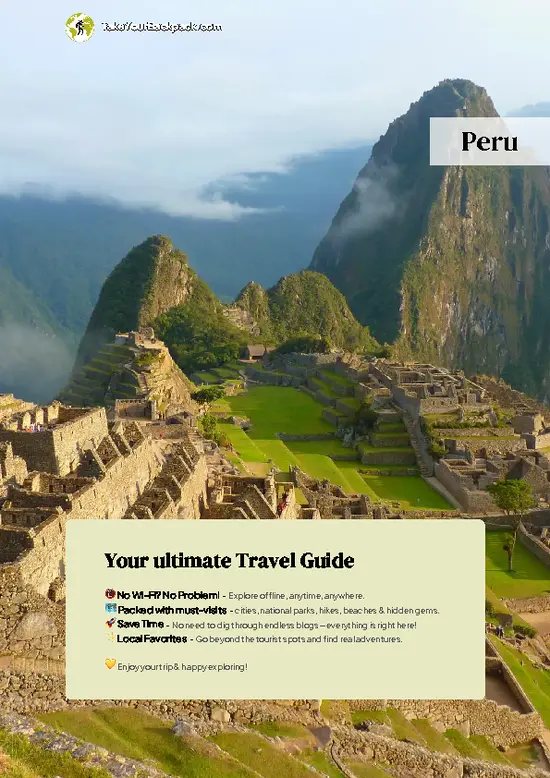
example page 0 from our offline Travel Guide for Peru
example page 1 from our offline Travel Guide for Peru
example page 2 from our offline Travel Guide for Peru
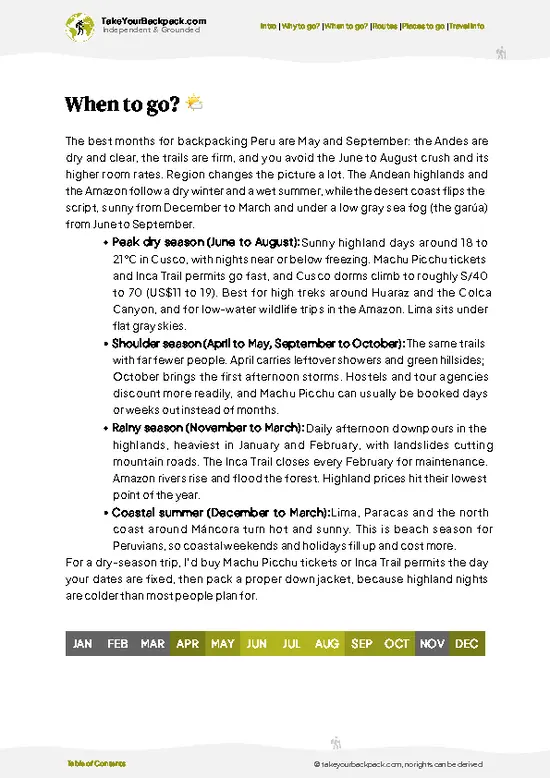
example page 3 from our offline Travel Guide for Peru
example page 4 from our offline Travel Guide for Peru
example page 5 from our offline Travel Guide for Peru
example page 6 from our offline Travel Guide for Peru
example page 7 from our offline Travel Guide for Peru
Loading the map 🌍
CLICK TO FILTER
cities
towns
villages
landmarks
national parks
hikes
beaches
attractions
festivals
regions
SHOW COUNTRY’S BESTSHOW ALL

✨ Why go?
Ranked #3 unique site in Peru
What makes it a must-see unique site

Kuélap earns the detour because nothing else in Peru looks or feels like it. Instead of Inca stonework, you get a fortified city of the Chachapoya with a massive limestone wall rising up to about 19 meters, perched at roughly 3,000 meters on a ridge above the Utcubamba valley. Inside, more than 400 circular stone houses sit under cloud forest, with moss and bromeliads growing from the masonry. You can wander most of it without a rope or a guard shouting at you, and on a weekday you may share the ruins with only a handful of people.

Getting there is part of the appeal. Since the Kuélap cable car opened from Nuevo Tingo, the old white-knuckle road is optional, though the ride itself gives you a long look at the valley below. Chachapoyas, the nearest base, is a relaxed colonial town where you … read more 👉
Kuélap earns the detour because nothing else in Peru looks or feels like it. Instead of Inca stonework, you get a fortified city of the Chachapoya with a massive limestone wall rising up to about 19 meters, perched at roughly 3,000 meters on a ridge above the Utcubamba valley. Inside, more than 400 circular stone houses sit under cloud forest, with moss and bromeliads growing from the masonry. You can wander most of it without a rope or a guard shouting at you, and on a weekday you may share the ruins with only a handful of people.

Getting there is part of the appeal. Since the Kuélap cable car opened from Nuevo Tingo, the old white-knuckle road is optional, though the ride itself gives you a long look at the valley below. Chachapoyas, the nearest base, is a relaxed colonial town where you can line up other stops.

That is where Kuélap fits a bigger route. Pair it with the Gocta waterfall, the Karajía sarcophagi and the Revash tombs, then continue toward Cajamarca or the jungle at Tarapoto. It makes a northern loop that most Cusco-bound travelers never see, and the quiet is the biggest draw.

💡 HighlightsPlaces and moments you shouldn't skip

  1. The Main Entrance: A tall, funnel-shaped passage cut through the outer wall, narrowing as you climb. Walking it feels like being filtered into the fortress, and it was clearly meant to control who got in.
  2. The Outer Walls: Limestone blocks stacked up to about 20 meters high, running for roughly 600 meters along the ridge. Walk the base for the best sense of scale.
  3. The Circular Houses: Hundreds of round stone foundations, some restored with conical thatched roofs. Their shape is the clearest sign this is Chachapoya and not Inca work.
  4. El Tintero: An inverted-cone-shaped tower in the upper part of the site, with a dark, narrow interior. It is often interpreted as a ceremonial space, and sometimes linked to burials.
  5. The Upper Platform: The highest tier, with views over the valley and surrounding cloud
… read more 👉
  1. The Main Entrance: A tall, funnel-shaped passage cut through the outer wall, narrowing as you climb. Walking it feels like being filtered into the fortress, and it was clearly meant to control who got in.
  2. The Outer Walls: Limestone blocks stacked up to about 20 meters high, running for roughly 600 meters along the ridge. Walk the base for the best sense of scale.
  3. The Circular Houses: Hundreds of round stone foundations, some restored with conical thatched roofs. Their shape is the clearest sign this is Chachapoya and not Inca work.
  4. El Tintero: An inverted-cone-shaped tower in the upper part of the site, with a dark, narrow interior. It is often interpreted as a ceremonial space, and sometimes linked to burials.
  5. The Upper Platform: The highest tier, with views over the valley and surrounding cloud forest. A fine place to pause once the groups have moved on.
  6. Decorative Friezes: Zigzag and rhombus patterns on some house walls. Look closely, because they are small and easy to walk past.
  7. The Cable Car Ride: The gondola to the fortress glides over the Utcubamba valley. It makes a ridge-top arrival quick and gives you a view of the whole landscape before you start walking.
For a first visit, start with the Main Entrance and let it set the tone before you wander on to the houses.
Spotted a mistake or missing something? Contact us.

Things to do around Kuélap

Ratings based on Tripadvisor reviews. When you book through this link, you support our work at no extra cost to you.

🌤️ When to go?Best time to visit Kuélap

May to September is the window for Kuélap, with mostly dry days and the clearest views over the Utcubamba valley from the fortress walls at about 3,000 meters.
  • Dry Season (May to September): Days run 15 to 22°C (59 to 72°F), nights drop to 6 to 9°C (43 to 48°F). Paths stay firm, the cable car runs reliably, and daylight lasts roughly 12 hours. July and August bring Peruvian holiday crowds and slightly higher room rates in Chachapoyas.
  • Wet Season (November to April): Afternoon downpours are routine, trails turn to mud, and clouds swallow the views. Highs stay near 18 to 20°C (64 to 68°F). Rooms are cheapest and the ruins nearly empty, but the road and cable car can be disrupted by landslides.
  • Shoulder Months (April, October): Showers are lighter and greenery is lush. Crowds are thin and prices
… read more 👉
May to September is the window for Kuélap, with mostly dry days and the clearest views over the Utcubamba valley from the fortress walls at about 3,000 meters.
  • Dry Season (May to September): Days run 15 to 22°C (59 to 72°F), nights drop to 6 to 9°C (43 to 48°F). Paths stay firm, the cable car runs reliably, and daylight lasts roughly 12 hours. July and August bring Peruvian holiday crowds and slightly higher room rates in Chachapoyas.
  • Wet Season (November to April): Afternoon downpours are routine, trails turn to mud, and clouds swallow the views. Highs stay near 18 to 20°C (64 to 68°F). Rooms are cheapest and the ruins nearly empty, but the road and cable car can be disrupted by landslides.
  • Shoulder Months (April, October): Showers are lighter and greenery is lush. Crowds are thin and prices low.
Arrive when the site opens in the morning, before cloud rolls up the valley and tour groups arrive.


source: climatestotravel.comJANJanuary: fair for travelingFEBFebruary: fair for travelingMARMarch: fair for travelingAPRApril: fair for travelingMAYMay: highly recommended for travelingJUNJune: excellent for travelingJULJuly: excellent for travelingAUGAugust: excellent for travelingSEPSeptember: highly recommended for travelingOCTOctober: fair for travelingNOVNovember: fair for travelingDECDecember: fair for traveling

✈️ The backpacker research shortcutPeru Travel Guide

An offline-friendly backpacking guide with optimized travel routes, ranked highlights, transport advice, and the best areas to stay.
example page 0 from our offline Travel Guide for Peru
example page 1 from our offline Travel Guide for Peru
example page 2 from our offline Travel Guide for Peru
example page 3 from our offline Travel Guide for Peru
example page 4 from our offline Travel Guide for Peru
example page 5 from our offline Travel Guide for Peru
example page 6 from our offline Travel Guide for Peru
example page 7 from our offline Travel Guide for Peru
The digital guide (310 pages) contains:
✅ 102 highlights, ranked by travel appeal
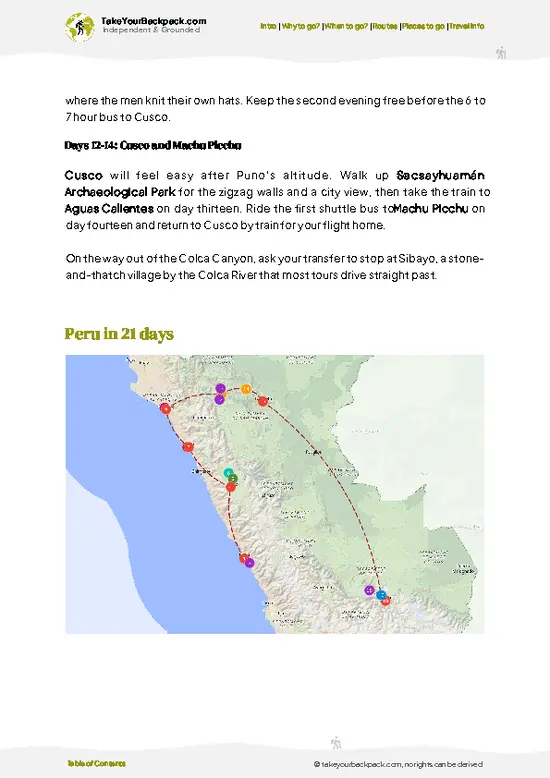
✅ Optimized 7, 14 & 21-day travel routes
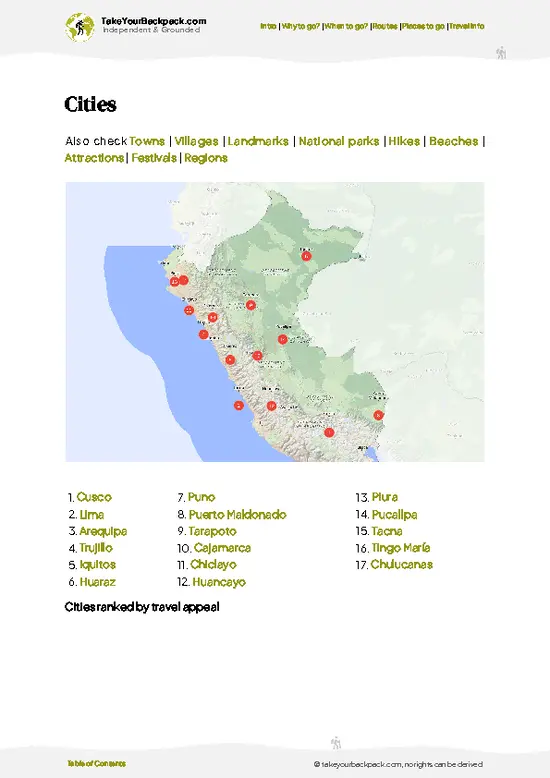
✅ Cities, national parks, landmarks, beaches
✅ How to get around
✅ Offline-friendly for travel without Wi-Fi
👉 Click to see all 30+ guide features

📅 Plan smarter in minutes, not weeks
✅ Month by month travel advice
✅ Festivals & national holidays
✅ Budget expectations

🗺️ Go to the right places, skip the overrated ones
✅ Honest pros & cons of destinations
✅ Top hikes, parks & viewpoints
✅ Lesser-known places most travelers miss
✅ Clear “worth it vs skip it” guidance

🛏️ Travel smoothly without rookie mistakes
✅ Best areas to stay
✅ Transport systems explained simply
✅ Common scams & safety advice
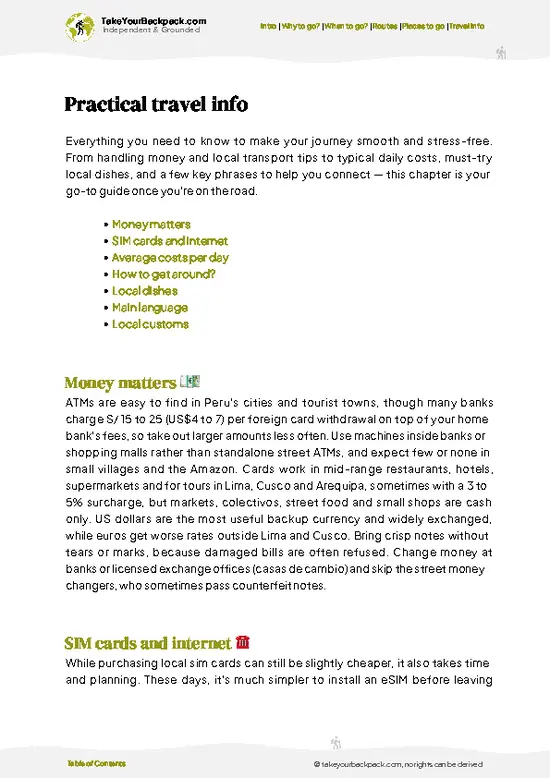
✅ SIM cards, money & practical tips

🌍 Understand the country, not just visit it
✅ Culture & traditions
✅ 52 Essential phrases & customs
✅ Festivals worth planning around
✅ Traveler-friendly historical context
✅ Insights that make places more meaningful

📱 Built for real travel conditions
✅ Fully downloadable PDF
✅ Works completely offline
✅ Optimized for phone use
✅ Useful in remote areas & buses
✅ Everything in one place
Stop searching, start planning
Get instant access to your full guide. 30‑day money-back guarantee.
+ Add another guide for just

By proceeding you agree to our terms.
Sent to your inbox immediately after payment • 100% Secure Checkout
Best Backpacking Travel Advisor 2025 tourism awardBest Backpacking
Travel Advisor
2025
What others say about Take Your Backpack Guides:
⭐⭐⭐⭐⭐
Fantastic, amazing amount of information!
⭐⭐⭐⭐⭐
My goodness this is amazing, it's what I've been looking for hats off too you!
⭐⭐⭐⭐⭐
I think this is absolutely BRILLIANT
⭐⭐⭐⭐
Very complete and informative. It's still missing places, but I gotta to commend you
⭐⭐⭐⭐⭐
This is truly amazing, thank you, can't wait to explore it with my kids!
⭐⭐⭐⭐⭐
Awesome resource, thank you!
⭐⭐⭐⭐⭐
This is amazing! Can't wait to explore the ones I haven't seen
⭐⭐⭐⭐
I love this! Well done, great idea.
⭐⭐⭐⭐⭐
Thanks for taking the time to make this gem!
⭐⭐⭐⭐⭐
This might be the best website I've ever seen.
⭐⭐⭐⭐⭐
Congratulations, and thank you so much for your work; it's incredibly valuable.
⭐⭐⭐⭐
In all seriousness I think you did a great job pointing out the important spots
⭐⭐⭐⭐⭐
10/10 very good
⭐⭐⭐⭐⭐
As someone who's only just starting to visit regularly this is awesome, thank you.
⭐⭐⭐⭐
Thank you very much! I'm going to visit my dad, it's going to be very useful!
⭐⭐⭐⭐⭐
This is really cool! We'll be travelling for the first time and this definitely come in handy.
⭐⭐⭐⭐⭐
You are now our minister of culture, congratulations 👨‍💼
⭐⭐⭐⭐⭐
Just wanted to tell you that this is a pearl! Going to follow your recommendations.
⭐⭐⭐⭐⭐
This is so cool. I'll definitely be using the resource for my travels soon.
⭐⭐⭐⭐⭐
This is very impressive! Good work.
⭐⭐⭐⭐⭐
This is an amazing and informative site. Very well done!

🛏️ Where to stay?Best areas and accommodation options

Chachapoyas, the departmental capital about 1.5 to 2 hours by road from the Kuélap cable car at Nuevo Tingo, is where nearly every backpacker sleeps. Beds run roughly US$8 to 15 in dorms and US$20 to 35 for private rooms. The compact grid around the Plaza de Armas is the best base, because hostels, tour agencies, cheap menú restaurants and the collectivo offices all sit within a few blocks. It is flat, walkable and safe after dark, and the social scene is easy: travelers swap plans for Gocta Falls, the Karajía sarcophagi and the Revash tombs over breakfast, and agencies there can pool riders to … read more 👉
Chachapoyas, the departmental capital about 1.5 to 2 hours by road from the Kuélap cable car at Nuevo Tingo, is where nearly every backpacker sleeps. Beds run roughly US$8 to 15 in dorms and US$20 to 35 for private rooms. The compact grid around the Plaza de Armas is the best base, because hostels, tour agencies, cheap menú restaurants and the collectivo offices all sit within a few blocks. It is flat, walkable and safe after dark, and the social scene is easy: travelers swap plans for Gocta Falls, the Karajía sarcophagi and the Revash tombs over breakfast, and agencies there can pool riders to split tour costs.
The streets just uphill from the plaza are quieter for sleeping while staying a five-minute walk from everything. Rooms near the market area on Jirón Ortiz Arce work for early starts, since colectivos and vans leave from nearby.
For a calmer night closer to the ruins, the village of Choctámal and the small town of Tingo have simple family guesthouses and homestays at around US$10 to 20. Tingo suits hikers tackling the long climb on foot, but options are few, nights are quiet, and you will eat where the owners cook. Most solo travelers still choose Chachapoyas for company and choice.

👛 Costs (as of 19 October 2026)How expensive it really is

A realistic backpacker budget for Kuélap is about US$44 to 90 per day, including the cable car and entry.
CategoryBudget RangeLocal Reality
Site EntryUS$4 to 6Tickets are sold at the Nuevo Tingo ticket office; foreign adults pay a modest fee, and a guide is optional.
Cable CarUS$8 to 12The return ride from Nuevo Tingo takes about 20 minutes each way and replaces the old long uphill drive.
Transport to Nuevo TingoUS$6 to 12Shared colectivos and vans leave Chachapoyas when full; a round trip takes the better part of a morning.
Local GuideUS$10 to 20Site guides wait at the entrance and lead groups through the ruins in about 2 hours; fees are per group, so splitting helps.
FoodUS$8 to 15Fixed-price lunch menús in Chachapoyas cost US$3 to 5; snacks at the site are pricier.
Accommodation (High Season)US$8
… read more 👉
A realistic backpacker budget for Kuélap is about US$44 to 90 per day, including the cable car and entry.
CategoryBudget RangeLocal Reality
Site EntryUS$4 to 6Tickets are sold at the Nuevo Tingo ticket office; foreign adults pay a modest fee, and a guide is optional.
Cable CarUS$8 to 12The return ride from Nuevo Tingo takes about 20 minutes each way and replaces the old long uphill drive.
Transport to Nuevo TingoUS$6 to 12Shared colectivos and vans leave Chachapoyas when full; a round trip takes the better part of a morning.
Local GuideUS$10 to 20Site guides wait at the entrance and lead groups through the ruins in about 2 hours; fees are per group, so splitting helps.
FoodUS$8 to 15Fixed-price lunch menús in Chachapoyas cost US$3 to 5; snacks at the site are pricier.
Accommodation (High Season)US$8 to 25Dorms and basic private rooms in Chachapoyas; low season is about 20 percent cheaper.
Total Daily BudgetUS$44 to 90Roughly US$55 to 65 for a typical traveler who shares a guide and eats set menus.


source: peru.travel
⚠️ Prices can change and everyone travels differently, so take this as a rough guide. Hope it helps you plan your adventure!

FAQCommon questions from travelers

Kuélap is a walled pre-Inca citadel built by the Chachapoya (Cloud Forest) culture on a ridge above the Utcubamba valley in Amazonas, at roughly 3,000 meters. Its limestone walls reach up to 19 meters high, and about 400 circular stone houses sit inside. Most of it dates from around the 6th century onward, and it is often compared with Machu Picchu for its scale.
Plan a full day, about 6 to 8 hours, starting from Chachapoyas. The ruins themselves take 2 to 3 hours with a guide, and the rest goes on the 1.5 to 2 hour transfer to Nuevo Tingo and the 20 minute cable car each way. Combining Kuélap with the nearby Revash tombs or Gocta Falls needs another day or two.
From Chachapoyas, take a shared van or colectivo to Nuevo Tingo (around 1.5 to 2 hours, US$6 to 12 return), then ride the cable car up to the fortress. Tours from Chachapoyas cost roughly US$20 to 35 and bundle transport. Chachapoyas is reached by overnight bus from Chiclayo (about 10 to 11 hours) or by a flight to nearby airports plus road transfer.
⚠️ Things can change over time, so always validate details locally before you go.

Other Peruvian landmarks near Kuélap

Explore more nearby:

  • Gocta Waterfall—Two-tier falls, cloud forest trail, cock-of-the-rock, Cocachimba start| 44 km away
  • Kotosh—Crossed Hands relief, sunken chamber, stone platforms, Río Higueras| 431 km away
  • Pachacamac—Lurín valley, oracle shrine, pilgrim plaza, Pacific summit| 655 km away

💡 Not sure where to go next?
Create a personalized itinerary for Peru including Kuélap and the places that fit your trip.

Generate my itinerary

👉 Discover all landmarks

Or checkout all Peru has to offer (think cities, towns, villages, national parks, hikes, beaches, festivals)
Country photo of Peru

We 💚 feedbackWhat to keep in mind

Kuélap's best detail is on the ground: the round house foundations, each with its own doorway and often a small interior bench. Slow down at a few and read how families once lived. I'd bring a light rain layer and arrive early, so the walk through the entrance passage is yours alone.

✈️ When did I visit Peru?
Peru I visited during my half year trip through South and Central America back in 2003

✍️ Help improve this page!
The information on this page is based on my own backpacking experience in Peru, supplemented with up-to-date research and feedback from other travelers. Travel details can change, so if you notice anything outdated or incomplete, feel free to let me know.


🙋‍♂️ Give feedback

👋 Meet the founderWho’s Behind Take Your Backpack?

Johan, backpacker and founder of TakeYourBackpackHi, I’m Johan (Netherlands 🇳🇱), the creator of TakeYourBackpack. Over the past 3 decades, I’ve backpacked through 90+ countries across six continents, gaining extensive experience with independent travel, long-term trips, and overland routes.

This site is built on a combination of firsthand travel experience and carefully curated insights from other backpackers. Many guides are based on places I’ve personally visited, while others bring together tips, observations, and practical advice shared by trusted travelers I’ve met along the way.

The goal is to provide realistic, experience-driven guidance — not generic itineraries — so you can explore destinations with better context, clearer expectations, and more confidence.