×
Machu Picchu

Peru🇵🇪 | landmarksMachu PicchuInca citadel, Huayna Picchu, Intihuatana, Sun Gate, timed tickets | things to do and best time to go

Explore KuélapExplore Nazca Lines

Backpacking in Machu Picchu
UNESCO World Heritage site
🏆 Top pickunique site ranked #1
By Johan Kruseman 🇳🇱 | Updated October 19, 2026

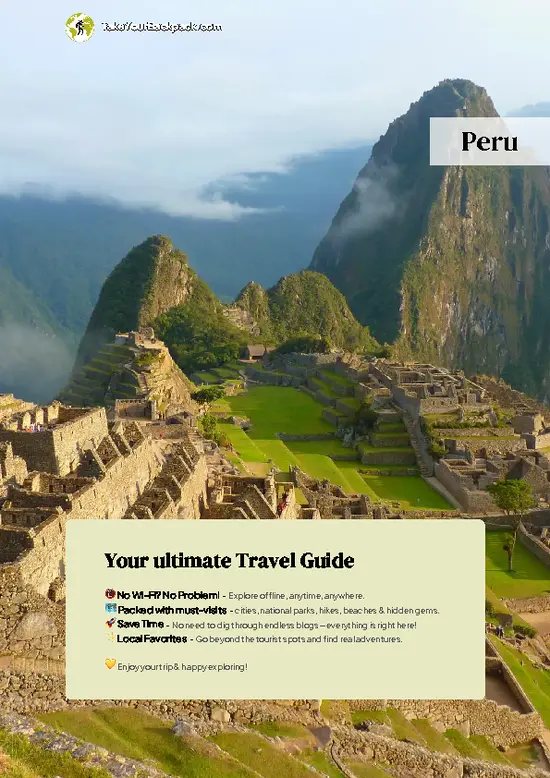
Machu Picchu is the Inca citadel you have seen on a thousand screens, and the real thing still lands like a punch: granite terraces draped over a green ridge, peaks dropping away on every side. What matters just as much is the approach. Timed tickets, fixed circuits and a train or trek booked well ahead decide how your day goes, so lock them in early and the morning feels effortless. The site sits in the Cusco region of southern Peru, northwest of Cusco, high above the Urubamba River. Crowds are real and the price is steep, yet the paths are easy to walk and every corner frames a photo. On my way up, the shuttle crawled the switchbacks while a kid in Inca dress popped out at every hairpin, sprinting down the shortcuts to wave again, and he was waiting at the top for applause. A first day can start at the classic terrace viewpoint, drop through the temples, and finish with dinner in Aguas Calientes.

Discover everything you want to know in the 📖 Peru Travel Guide.


example page 0 from our offline Travel Guide for Peru
example page 1 from our offline Travel Guide for Peru
example page 2 from our offline Travel Guide for Peru
example page 3 from our offline Travel Guide for Peru
example page 4 from our offline Travel Guide for Peru
example page 5 from our offline Travel Guide for Peru
example page 6 from our offline Travel Guide for Peru
example page 7 from our offline Travel Guide for Peru
Loading the map 🌍
CLICK TO FILTER
cities
towns
villages
landmarks
national parks
hikes
beaches
attractions
festivals
regions
SHOW COUNTRY’S BESTSHOW ALL

✨ Why go?
Ranked #1 unique site in Peru
Reasons people choose to visit here

Machu Picchu earns the effort because nothing else in South America pairs this level of Inca stonework with a setting this dramatic. The citadel is carved into a ridge where cloud forest meets sheer peaks, and the walls fit together without mortar so tightly that a blade will not slide between them. You can walk those terraces, duck through doorways and stand where priests tracked the sun.

The journey is part of the draw. You can arrive by the rail line from Ollantaytambo or earn it on foot via the Inca Trail, with the Salkantay and Lares treks as alternatives, each one turning a sightseeing stop into a multi-day adventure.

It also anchors a bigger route. Machu Picchu fits neatly between Cusco, the villages of the Sacred Valley and the high-altitude markets, so a loop through the region … read more 👉
Machu Picchu earns the effort because nothing else in South America pairs this level of Inca stonework with a setting this dramatic. The citadel is carved into a ridge where cloud forest meets sheer peaks, and the walls fit together without mortar so tightly that a blade will not slide between them. You can walk those terraces, duck through doorways and stand where priests tracked the sun.

The journey is part of the draw. You can arrive by the rail line from Ollantaytambo or earn it on foot via the Inca Trail, with the Salkantay and Lares treks as alternatives, each one turning a sightseeing stop into a multi-day adventure.

It also anchors a bigger route. Machu Picchu fits neatly between Cusco, the villages of the Sacred Valley and the high-altitude markets, so a loop through the region gives context: the terraces at Moray, the fortress at Ollantaytambo, the salt pans at Maras. Seen after those, the citadel makes more sense. It is pricey and tightly managed, but it is the one site on the continent where the postcard is not an exaggeration.

💡 HighlightsPlaces and moments you shouldn't skip

  1. The Classic Terrace Viewpoint: Climb the stairs to the Guardhouse above the ruins for the view everyone wants. The whole citadel spreads below with Huayna Picchu rising behind, and the angle makes the layout of urban and farming sectors suddenly clear.
  2. Huayna Picchu: The steep peak behind the ruins is a stair-and-ledge climb with cables in places and a limited daily permit. The summit looks straight down on the citadel and the river curling around the base.
  3. Temple of the Sun: A curved tower of finely cut granite built over a natural rock. Its windows catch the solstice sun, which shows how seriously the Inca treated astronomy. The Royal Tomb sits in a cave below.
  4. Intihuatana Stone: A carved granite pillar on a stepped platform, often described as a sundial or astronomical marker. It is the ritual
… read more 👉
  1. The Classic Terrace Viewpoint: Climb the stairs to the Guardhouse above the ruins for the view everyone wants. The whole citadel spreads below with Huayna Picchu rising behind, and the angle makes the layout of urban and farming sectors suddenly clear.
  2. Huayna Picchu: The steep peak behind the ruins is a stair-and-ledge climb with cables in places and a limited daily permit. The summit looks straight down on the citadel and the river curling around the base.
  3. Temple of the Sun: A curved tower of finely cut granite built over a natural rock. Its windows catch the solstice sun, which shows how seriously the Inca treated astronomy. The Royal Tomb sits in a cave below.
  4. Intihuatana Stone: A carved granite pillar on a stepped platform, often described as a sundial or astronomical marker. It is the ritual heart of the upper sector and one of the best-known objects on the site.
  5. Temple of the Three Windows: Three trapezoidal openings of huge, precisely shaped blocks frame the mountains beyond. It is among the finest examples of Inca masonry here, and the view through the windows is a natural photo frame.
  6. Machu Picchu Mountain: The longer, higher climb on the opposite side, with a separate ticket. Its steady stone steps lead to a wide summit that gives a broader perspective on the ridge and valley, and it is generally less crowded than its neighbor.
  7. Inti Punku (Sun Gate): The mountain pass where Inca Trail hikers first see the citadel. You can walk to it from the ruins along a well-made path, and the gateway frames the city from above.
  8. Inca Bridge: A short trail along a cliff edge leads to a narrow wooden span over a sheer drop, part of a defensive back entrance. Stone walls hold the path against the mountain.
The Temple of the Sun and the Intihuatana Stone sit close together in the upper sector, so one slow loop covers both.
Spotted a mistake or missing something? Contact us.

Things to do around Machu Picchu

Ratings based on Tripadvisor reviews. When you book through this link, you support our work at no extra cost to you.

🌤️ When to go?Choosing the right time of year

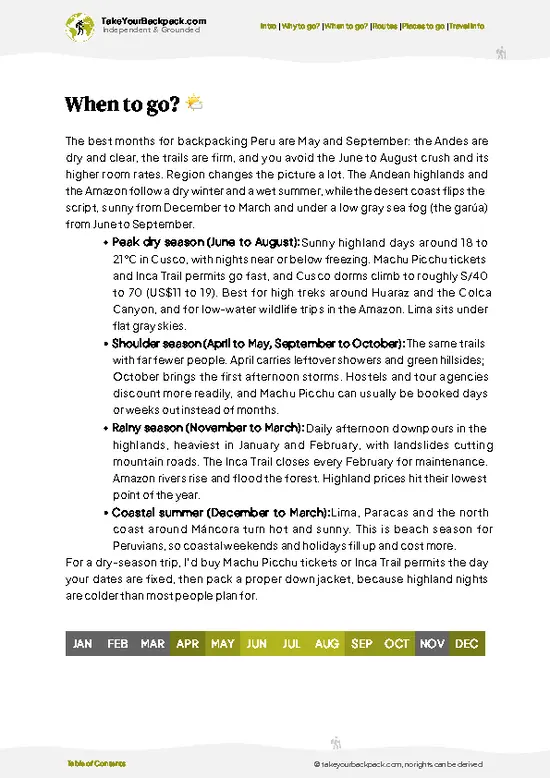
May through September is the dry season at Machu Picchu, and it is the most dependable window for clear views and dry stone steps.
  • Dry Season (May to September): Days run roughly 19 to 24°C (66 to 75°F), nights in Aguas Calientes drop to 8 to 10°C (46 to 50°F). Rain is rare. This is peak crowd time, and entry slots and Inca Trail permits sell out months ahead. Daylight lasts about 11 to 12 hours.
  • Shoulder Months (April and October): Expect 18 to 24°C (64 to 75°F), some afternoon showers, thinner crowds and easier ticket availability. Green slopes are at their best in April.
  • Wet Season (November to March): Rain falls most afternoons, mist hides the citadel for hours, and landslides can disrupt the train. Temperatures sit around 17 to 22°C (63 to 72°F). Crowds shrink and lodging gets cheaper.
  • February:
… read more 👉
May through September is the dry season at Machu Picchu, and it is the most dependable window for clear views and dry stone steps.
  • Dry Season (May to September): Days run roughly 19 to 24°C (66 to 75°F), nights in Aguas Calientes drop to 8 to 10°C (46 to 50°F). Rain is rare. This is peak crowd time, and entry slots and Inca Trail permits sell out months ahead. Daylight lasts about 11 to 12 hours.
  • Shoulder Months (April and October): Expect 18 to 24°C (64 to 75°F), some afternoon showers, thinner crowds and easier ticket availability. Green slopes are at their best in April.
  • Wet Season (November to March): Rain falls most afternoons, mist hides the citadel for hours, and landslides can disrupt the train. Temperatures sit around 17 to 22°C (63 to 72°F). Crowds shrink and lodging gets cheaper.
  • February: The Inca Trail closes for maintenance, though the citadel stays open.
Book your ticket and train at least two to three months ahead for June through August, and aim for the earliest entry slot to get ahead of the tour groups.


source: climatestotravel.comJANJanuary: fair for travelingFEBFebruary: below average for travelingMARMarch: fair for travelingAPRApril: highly recommended for travelingMAYMay: highly recommended for travelingJUNJune: excellent for travelingJULJuly: excellent for travelingAUGAugust: excellent for travelingSEPSeptember: highly recommended for travelingOCTOctober: highly recommended for travelingNOVNovember: fair for travelingDECDecember: fair for traveling
Peru - Machu Picchu

✈️ The backpacker research shortcutPeru Travel Guide

An offline-friendly backpacking guide with optimized travel routes, ranked highlights, transport advice, and the best areas to stay.
example page 0 from our offline Travel Guide for Peru
example page 1 from our offline Travel Guide for Peru
example page 2 from our offline Travel Guide for Peru
example page 3 from our offline Travel Guide for Peru
example page 4 from our offline Travel Guide for Peru
example page 5 from our offline Travel Guide for Peru
example page 6 from our offline Travel Guide for Peru
example page 7 from our offline Travel Guide for Peru
The digital guide (310 pages) contains:
✅ 102 highlights, ranked by travel appeal
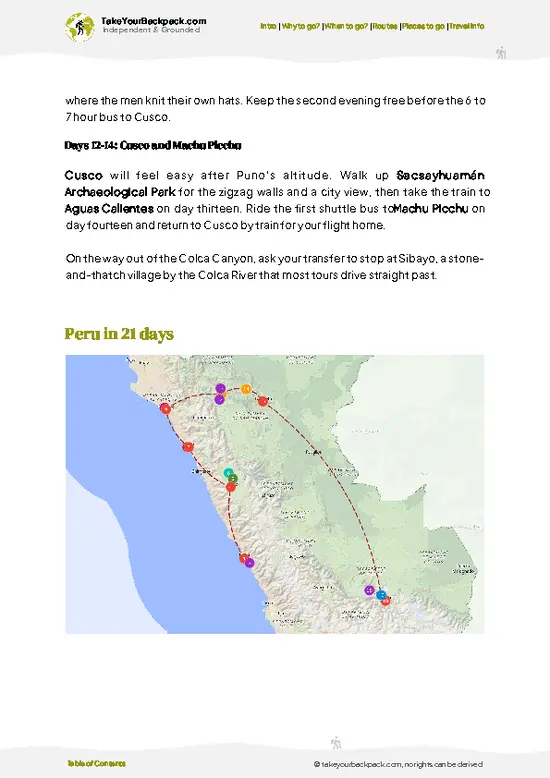
✅ Optimized 7, 14 & 21-day travel routes
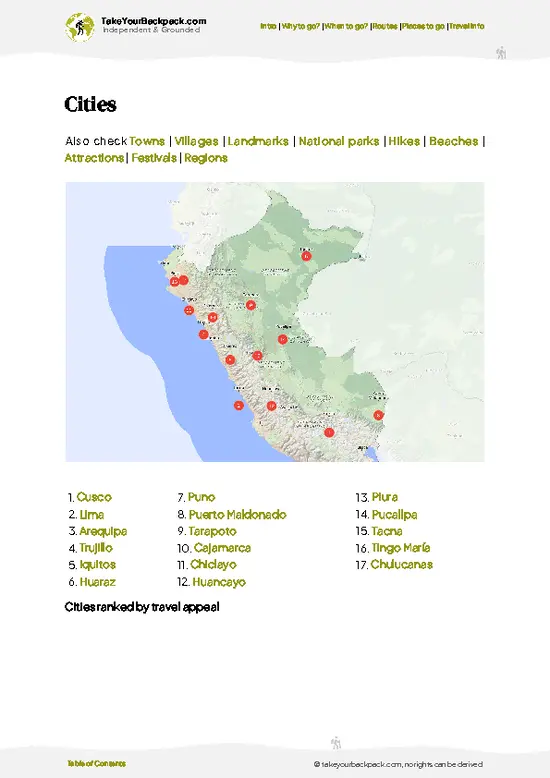
✅ Cities, national parks, landmarks, beaches
✅ How to get around
✅ Offline-friendly for travel without Wi-Fi
👉 Click to see all 30+ guide features

📅 Plan smarter in minutes, not weeks
✅ Month by month travel advice
✅ Festivals & national holidays
✅ Budget expectations

🗺️ Go to the right places, skip the overrated ones
✅ Honest pros & cons of destinations
✅ Top hikes, parks & viewpoints
✅ Lesser-known places most travelers miss
✅ Clear “worth it vs skip it” guidance

🛏️ Travel smoothly without rookie mistakes
✅ Best areas to stay
✅ Transport systems explained simply
✅ Common scams & safety advice
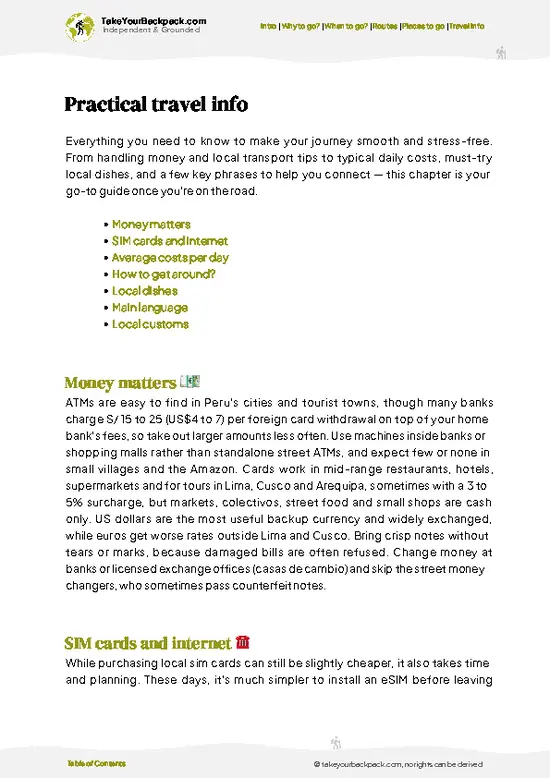
✅ SIM cards, money & practical tips

🌍 Understand the country, not just visit it
✅ Culture & traditions
✅ 52 Essential phrases & customs
✅ Festivals worth planning around
✅ Traveler-friendly historical context
✅ Insights that make places more meaningful

📱 Built for real travel conditions
✅ Fully downloadable PDF
✅ Works completely offline
✅ Optimized for phone use
✅ Useful in remote areas & buses
✅ Everything in one place
Stop searching, start planning
Get instant access to your full guide. 30‑day money-back guarantee.
+ Add another guide for just

By proceeding you agree to our terms.
Sent to your inbox immediately after payment • 100% Secure Checkout
Best Backpacking Travel Advisor 2025 tourism awardBest Backpacking
Travel Advisor
2025
What others say about Take Your Backpack Guides:
⭐⭐⭐⭐⭐
Fantastic, amazing amount of information!
⭐⭐⭐⭐⭐
My goodness this is amazing, it's what I've been looking for hats off too you!
⭐⭐⭐⭐⭐
I think this is absolutely BRILLIANT
⭐⭐⭐⭐
Very complete and informative. It's still missing places, but I gotta to commend you
⭐⭐⭐⭐⭐
This is truly amazing, thank you, can't wait to explore it with my kids!
⭐⭐⭐⭐⭐
Awesome resource, thank you!
⭐⭐⭐⭐⭐
This is amazing! Can't wait to explore the ones I haven't seen
⭐⭐⭐⭐
I love this! Well done, great idea.
⭐⭐⭐⭐⭐
Thanks for taking the time to make this gem!
⭐⭐⭐⭐⭐
This might be the best website I've ever seen.
⭐⭐⭐⭐⭐
Congratulations, and thank you so much for your work; it's incredibly valuable.
⭐⭐⭐⭐
In all seriousness I think you did a great job pointing out the important spots
⭐⭐⭐⭐⭐
10/10 very good
⭐⭐⭐⭐⭐
As someone who's only just starting to visit regularly this is awesome, thank you.
⭐⭐⭐⭐
Thank you very much! I'm going to visit my dad, it's going to be very useful!
⭐⭐⭐⭐⭐
This is really cool! We'll be travelling for the first time and this definitely come in handy.
⭐⭐⭐⭐⭐
You are now our minister of culture, congratulations 👨‍💼
⭐⭐⭐⭐⭐
Just wanted to tell you that this is a pearl! Going to follow your recommendations.
⭐⭐⭐⭐⭐
This is so cool. I'll definitely be using the resource for my travels soon.
⭐⭐⭐⭐⭐
This is very impressive! Good work.
⭐⭐⭐⭐⭐
This is an amazing and informative site. Very well done!

🛏️ Where to stay?Choosing the right base

Aguas Calientes, the town directly below the ruins, is where most backpackers sleep, and it is the only place from which you can walk to the gate or catch the first bus up.
The town sits in a narrow river gorge, so everything is within a 10 minute stroll. Dorms and budget guesthouses cluster near the train tracks and the main plaza, where you will meet other travelers over cheap set menus and pisco sours. The mood is social and the area is well lit and busy with tourists into the evening. Light sleepers should avoid rooms facing the tracks, as trains and early departures start before dawn. Staying … read more 👉
Aguas Calientes, the town directly below the ruins, is where most backpackers sleep, and it is the only place from which you can walk to the gate or catch the first bus up.
The town sits in a narrow river gorge, so everything is within a 10 minute stroll. Dorms and budget guesthouses cluster near the train tracks and the main plaza, where you will meet other travelers over cheap set menus and pisco sours. The mood is social and the area is well lit and busy with tourists into the evening. Light sleepers should avoid rooms facing the tracks, as trains and early departures start before dawn. Staying here lets you catch the first buses up, usually from 5:30 a.m., or hike the steep stairs in about an hour. Prices are higher than elsewhere in the Sacred Valley, so book ahead in high season.
Ollantaytambo is the smart alternative. This Sacred Valley town has Inca ruins of its own, cobbled lanes, a relaxed hostel scene and a train station with departures to Aguas Calientes. It is cheaper and quieter, and a good place to acclimatize before the trip. You will need an early train and a night plan, though.
Cusco suits those who want nightlife and the widest choice of hostels, but it means an early morning transfer to the train, often by road to Ollantaytambo first. Santa Teresa, reached by the hydroelectric route, appeals to those who want hot springs and a rugged, rural base.

👛 Costs (as of 19 October 2026)Travel costs and budget guide for Machu Picchu

A realistic backpacker budget for visiting Machu Picchu is about US$157 to 294 per day, with the ticket, train and bus accounting for most of that.
CategoryBudget RangeLocal Reality
Entry TicketUS$50 to 65Circuit-based ticket, foreign adult price. Add roughly US$15 to 25 for Huayna Picchu or Machu Picchu Mountain. Student discounts exist with a valid ISIC card.
TrainUS$60 to 110Cheapest one-way Expedition or Vistadome service from Ollantaytambo. Round trip costs roughly double.
Bus to RuinsUS$12 to 24Round trip from Aguas Calientes. Walking up the steps is free and takes about an hour.
Accommodation (High Season)US$20 to 45Dorm bed or basic private room in Aguas Calientes. Low season drops to US$12 to 30.
FoodUS$15 to 30Set menus run US$6 to 10, while tourist restaurants cost more. Snacks and water
… read more 👉
A realistic backpacker budget for visiting Machu Picchu is about US$157 to 294 per day, with the ticket, train and bus accounting for most of that.
CategoryBudget RangeLocal Reality
Entry TicketUS$50 to 65Circuit-based ticket, foreign adult price. Add roughly US$15 to 25 for Huayna Picchu or Machu Picchu Mountain. Student discounts exist with a valid ISIC card.
TrainUS$60 to 110Cheapest one-way Expedition or Vistadome service from Ollantaytambo. Round trip costs roughly double.
Bus to RuinsUS$12 to 24Round trip from Aguas Calientes. Walking up the steps is free and takes about an hour.
Accommodation (High Season)US$20 to 45Dorm bed or basic private room in Aguas Calientes. Low season drops to US$12 to 30.
FoodUS$15 to 30Set menus run US$6 to 10, while tourist restaurants cost more. Snacks and water are pricey.
Guide (Optional)US$0 to 20Licensed guides at the gate charge per group, so splitting the fee helps. Skipping one is fine.
Total Daily BudgetUS$157 to 294Per person, per day, in high season.
⚠️ Prices can change and everyone travels differently, so take this as a rough guide. Hope it helps you plan your adventure!

FAQFrequently asked questions about Machu Picchu

Machu Picchu is a 15th-century Inca citadel set on a ridge about 2,430 meters (7,970 feet) above sea level, above the Urubamba River. It is a UNESCO World Heritage site and one of the New Seven Wonders of the World. Highlights include the Temple of the Sun, the Intihuatana stone and terraces that cover the hillside. Foreign adults pay roughly US$40 to 60 for entry.
Plan on 3 to 4 hours inside Machu Picchu for the standard circuits, and a full day if you add Huayna Picchu or Machu Picchu Mountain. Most backpackers spend one night in Aguas Calientes so they can enter early. Allow 2 to 3 days in total from Cusco, including train time and a recovery buffer. Entry uses timed slots, so your window sets the pace of the visit.
Take a train from Ollantaytambo or Cusco area stations to Aguas Calientes, about 1.5 to 2 hours from Ollantaytambo, with one-way tickets from roughly US$60. From Aguas Calientes, a bus climbs to the Machu Picchu gate in about 25 minutes for US$12 each way, or you can walk up the steps in about an hour. Cusco to Ollantaytambo takes around 2 hours by colectivo or bus for a few dollars. Cheaper routes go by road to Hidroeléctrica, then a 10 to 12 km walk along the tracks to Aguas Calientes, around 3 hours.
⚠️ Things can change over time, so always validate details locally before you go.

Other Peruvian landmarks near Machu Picchu

Explore more nearby:

  • Cerro Blanco—Sand ridge climb, sandboarding run, Nasca Valley view, desert pampa| 313 km away
  • Nazca Lines—geoglyphs, arid plateau, aerial perspective| 329 km away
  • Sillustani—Funerary towers, Lake Umayo, lizard carving, Colla masonry| 383 km away

💡 Not sure where to go next?
Create a personalized itinerary for Peru including Machu Picchu and the places that fit your trip.

Generate my itinerary

👉 Discover all landmarks

Or checkout all Peru has to offer (think cities, towns, villages, national parks, hikes, beaches, festivals)
Country photo of Peru

We 💚 feedbackKey takeaways before you go

Machu Picchu suits travelers who love photography, history or a good climb, and who are happy to plan around timed entry. If you prefer quiet, it can feel crowded in the middle of the day. I would book the earliest entry slot and add a mountain ticket, so you leave the busiest terraces for later.

✈️ When did I visit Peru?
Peru I visited during my half year trip through South and Central America back in 2003

✍️ Help improve this page!
The information on this page is based on my own backpacking experience in Peru, supplemented with up-to-date research and feedback from other travelers. Travel details can change, so if you notice anything outdated or incomplete, feel free to let me know.


🙋‍♂️ Give feedback

👋 Meet the founderWho’s Behind Take Your Backpack?

Johan, backpacker and founder of TakeYourBackpackHi, I’m Johan (Netherlands 🇳🇱), the creator of TakeYourBackpack. Over the past 3 decades, I’ve backpacked through 90+ countries across six continents, gaining extensive experience with independent travel, long-term trips, and overland routes.

This site is built on a combination of firsthand travel experience and carefully curated insights from other backpackers. Many guides are based on places I’ve personally visited, while others bring together tips, observations, and practical advice shared by trusted travelers I’ve met along the way.

The goal is to provide realistic, experience-driven guidance — not generic itineraries — so you can explore destinations with better context, clearer expectations, and more confidence.