×

Peru🇵🇪 | attractionsMachu Picchu Sanctuary archaeological complexInca citadel, mountain terraces, cloud forest views | things to do and best time to go

Explore Larco MuseumExplore Sacsayhuamán

Backpacking in Machu Picchu Sanctuary archaeological complex
By Johan Kruseman 🇳🇱 | Updated October 15, 2026

Here’s what nobody tells you until you’re already sweating on the Inca Trail: Machu Picchu’s best moments happen before 9 a.m. or after 3 p.m., when the tour groups vanish and the mist lifts just enough to make the ruins feel like a secret. The sanctuary itself sits high in the Andes, above the town of Aguas Calientes in southern Peru’s Cusco region—remote enough to feel earned, but not so far-flung that you need to be an ultramarathoner to get there. Let’s be real: Machu Picchu is Peru’s superstar, and it knows it. The crowds can be thick, the entry fees are steep, and the logistics—permits, trains, buses—are a puzzle. But the first time you stand above those terraces, with the Urubamba River looping below and the mountains crowding in, it’s a gut-punch of awe that no photo can fake. Yes, it’s busy and yes, it’s pricey, but the sheer scale and mystery of the place still outclass almost every other site in the country. If you want solitude, look elsewhere. If you want to feel the pulse of history under your boots, this is the real deal.

Discover everything you want to know in the 📖 Peru Travel Guide.


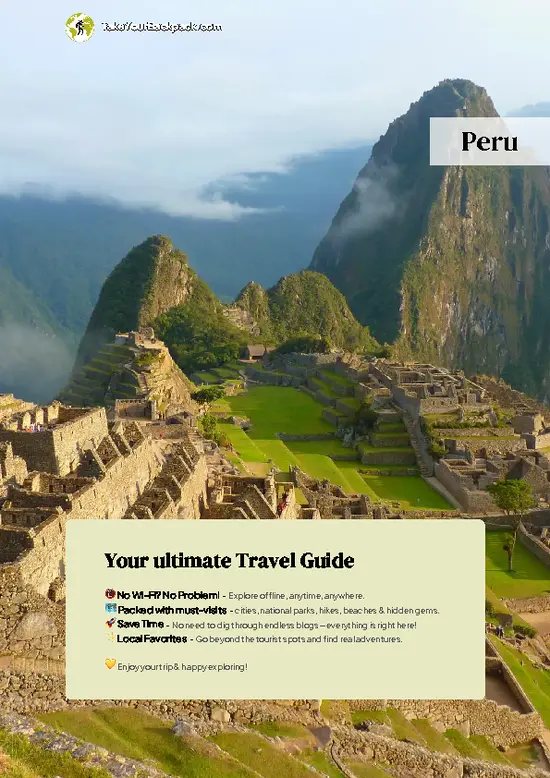
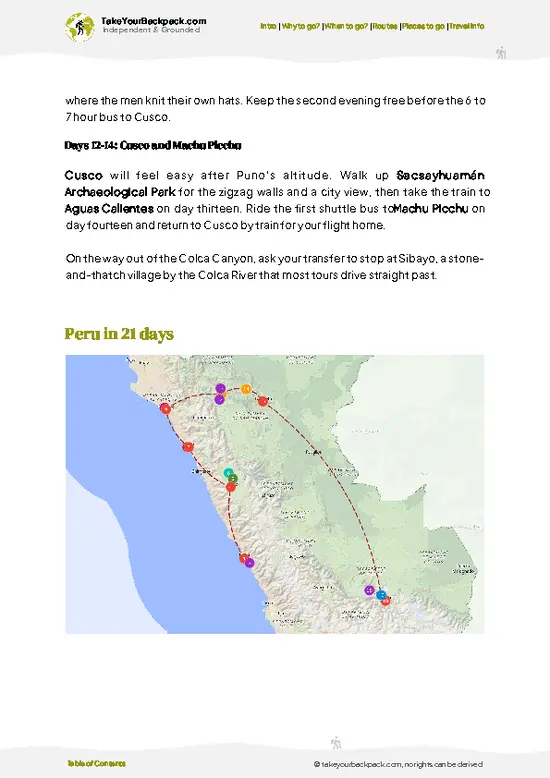
example page 0 from our offline Travel Guide for Peru
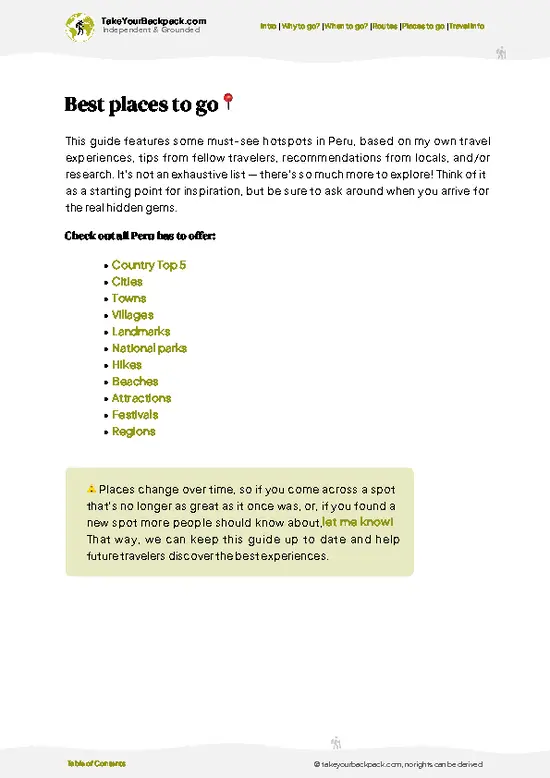
example page 1 from our offline Travel Guide for Peru
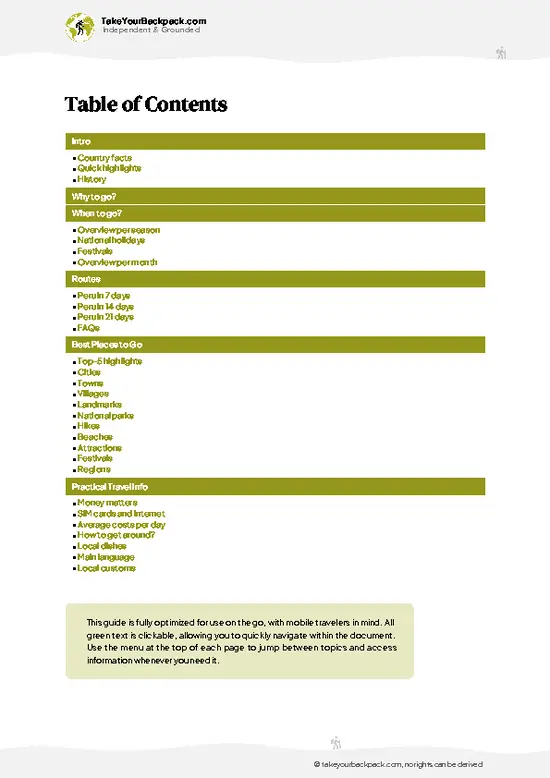
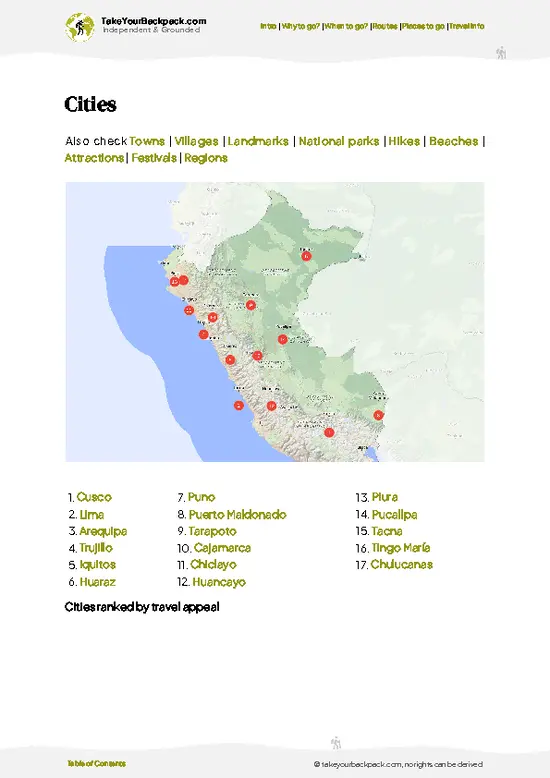
example page 2 from our offline Travel Guide for Peru
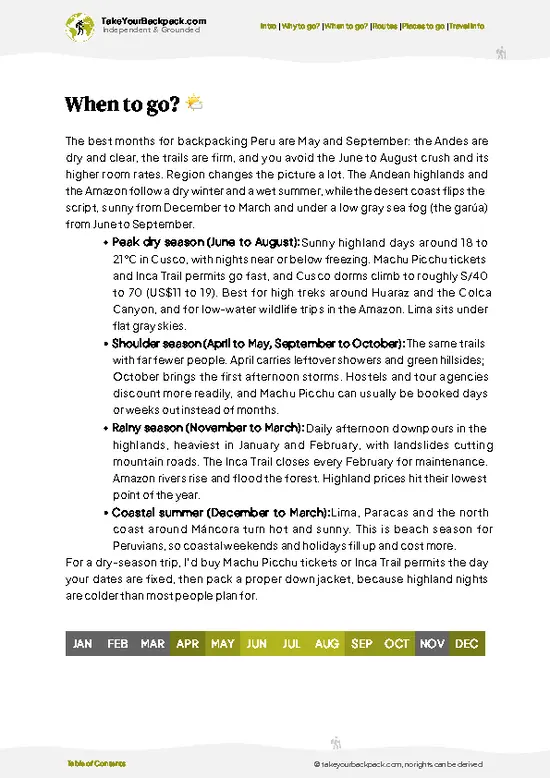
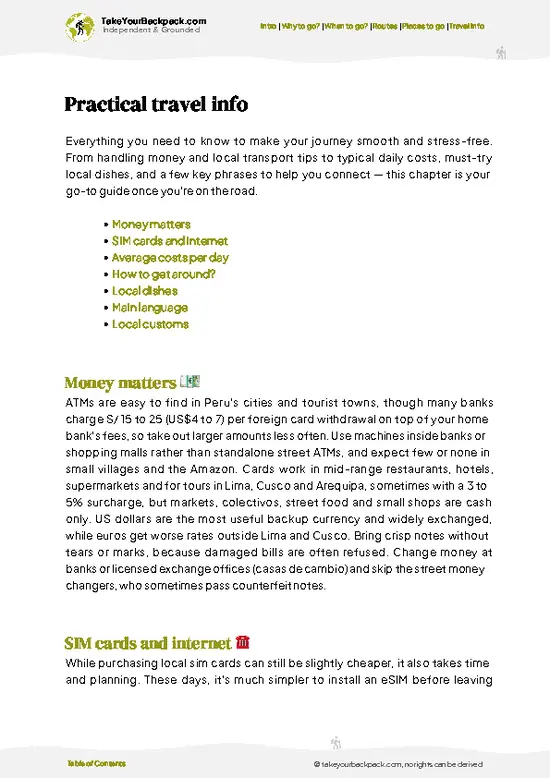
example page 3 from our offline Travel Guide for Peru
example page 4 from our offline Travel Guide for Peru
example page 5 from our offline Travel Guide for Peru
example page 6 from our offline Travel Guide for Peru
example page 7 from our offline Travel Guide for Peru
Loading the map 🌍
CLICK TO FILTER
cities
towns
villages
landmarks
national parks
hikes
beaches
attractions
festivals
regions
SHOW COUNTRY’S BESTSHOW ALL

✨ Why go?
Ranked #99 attraction in Peru
Why visitors keep coming back

Machu Picchu is not just another stop on the Peru itinerary; it’s the heavyweight champion of backpacker destinations for a reason. Sure, it’s crowded—expect throngs of tourists snapping selfies and the occasional line to get in. The entrance fee isn’t pocket change either, and the trek up can be a grind if you’re not prepared. But here’s the kicker: this place is a raw, unfiltered slice of history that punches way above its weight.

You’re standing in a 15th-century Incan citadel perched high in the Andes, where every stone whispers stories of an empire that mastered engineering and spirituality long before modern maps existed. The cultural significance is off the charts—Machu Picchu isn’t just ruins; it’s a testament to human ingenuity and resilience. The adrenaline rush from the climb, … read more 👉
Machu Picchu is not just another stop on the Peru itinerary; it’s the heavyweight champion of backpacker destinations for a reason. Sure, it’s crowded—expect throngs of tourists snapping selfies and the occasional line to get in. The entrance fee isn’t pocket change either, and the trek up can be a grind if you’re not prepared. But here’s the kicker: this place is a raw, unfiltered slice of history that punches way above its weight.

You’re standing in a 15th-century Incan citadel perched high in the Andes, where every stone whispers stories of an empire that mastered engineering and spirituality long before modern maps existed. The cultural significance is off the charts—Machu Picchu isn’t just ruins; it’s a testament to human ingenuity and resilience. The adrenaline rush from the climb, whether you take the classic Inca Trail or the train-plus-hike combo, rewards you with views and vibes that no Instagram filter can capture.

For many backpackers, reaching Machu Picchu is a milestone, a rite of passage that marks the transition from tourist to traveler. It’s a place that demands effort but pays back with a deep, almost spiritual connection to Peru’s soul. That’s why it’s worth every sweaty step and every sol spent.

💡 HighlightsThe experiences that define the visit

The Classic View from the Guardhouse
Let’s get real: this is the shot you’ve seen a thousand times, and yes, it’s crawling with selfie sticks by 8 a.m. But there’s a reason everyone scrambles up here. The Guardhouse terrace is the only place where the full drama of Machu Picchu’s layout—terraces, temples, and that absurdly cinematic backdrop of Huayna Picchu—hits you all at once. It’s not just a photo op; it’s the moment you realize the Incas built a city in a place that looks like it should only exist in a fever dream. Arrive early, breathe through the crowds, and let your jaw drop. This is the real deal.


The Intihuatana Stone
Forget the “mystical energy vortex” nonsense. The Intihuatana is a carved stone pillar that’s as close as you’ll get to the Inca mind at work. This was their solar clock, … read more 👉
The Classic View from the Guardhouse
Let’s get real: this is the shot you’ve seen a thousand times, and yes, it’s crawling with selfie sticks by 8 a.m. But there’s a reason everyone scrambles up here. The Guardhouse terrace is the only place where the full drama of Machu Picchu’s layout—terraces, temples, and that absurdly cinematic backdrop of Huayna Picchu—hits you all at once. It’s not just a photo op; it’s the moment you realize the Incas built a city in a place that looks like it should only exist in a fever dream. Arrive early, breathe through the crowds, and let your jaw drop. This is the real deal.


The Intihuatana Stone
Forget the “mystical energy vortex” nonsense. The Intihuatana is a carved stone pillar that’s as close as you’ll get to the Inca mind at work. This was their solar clock, astronomically aligned, and it’s one of the few that the Spanish never smashed. Stand here and you’re literally touching a piece of pre-Columbian science. It’s roped off, but you can get close enough to see the precision. No magic required—just awe for the engineering.


The Temple of the Sun
This is where the Incas flexed their architectural muscles. The Temple of the Sun’s curved stonework is so tight you can’t wedge a credit card between the blocks. On the solstice, sunlight pours through a window to hit the altar dead-on. It’s not just a ruin; it’s a working calendar, a spiritual observatory, and a masterclass in stonework. If you want to feel the pulse of Inca cosmology, this is the spot.


The Sacred Plaza
Three major temples, one compact space. The Sacred Plaza is Machu Picchu’s spiritual heart, and it’s where you can actually feel the gravity of the place—if you can tune out the tour groups. The acoustics are wild; stand in the middle and clap, and you’ll hear echoes bounce off the stone. This is where ceremonies happened, and you can almost sense the crowd from centuries ago.


Climbing Huayna Picchu(Personal Favorite)
If you want to earn your lunch, this is the climb. The trail up Huayna Picchu is steep, narrow, and not for anyone with a fear of heights. But the payoff? You’re perched above Machu Picchu, looking down on the whole sanctuary like a condor. The crowds thin out, the air gets thinner, and the sense of accomplishment is real. The view is so wild it almost feels illegal. If you’re fit and snag a permit, do not skip this.


The Inca Bridge
Skip the overhyped Sun Gate and walk the quieter path to the Inca Bridge. It’s a plank-and-stone trail blasted into a sheer cliff, with a drop that’ll make your palms sweat. The bridge itself is a marvel of defensive design—pull the planks, and invaders are toast. It’s less crowded, more nerve-wracking, and gives you a taste of how the Incas controlled access to their mountain fortress.
Spotted a mistake or missing something? Contact us.

Things to do near Machu Picchu Sanctuary archaeological complex

Ratings based on Tripadvisor reviews. When you book through this link, you support our work at no extra cost to you.

🌤️ When to go?Choosing the right time of year

  • Weather: The dry season from May to September offers the clearest skies and least mud, but expect colder mornings, especially June to August, with temperatures dipping to 5°C (41°F). The wet season, November to March, brings heavy rains and slippery trails, but the landscape bursts with lush greenery and fewer tourists.
  • Temperature: Daytime highs hover around 20°C to 24°C (68°F to 75°F) year-round, but nights can plunge to near freezing in the dry season. Layering is non-negotiable—sunny days can quickly turn into chilly evenings.
  • Daylight Hours: From May to August, daylight is shorter, roughly 11 hours, meaning earlier sunsets around 6 pm. In contrast, November to February stretches daylight to nearly 13 hours, giving you more time to explore.
  • Crowds: Peak season (June to August) means
… read more 👉
  • Weather: The dry season from May to September offers the clearest skies and least mud, but expect colder mornings, especially June to August, with temperatures dipping to 5°C (41°F). The wet season, November to March, brings heavy rains and slippery trails, but the landscape bursts with lush greenery and fewer tourists.
  • Temperature: Daytime highs hover around 20°C to 24°C (68°F to 75°F) year-round, but nights can plunge to near freezing in the dry season. Layering is non-negotiable—sunny days can quickly turn into chilly evenings.
  • Daylight Hours: From May to August, daylight is shorter, roughly 11 hours, meaning earlier sunsets around 6 pm. In contrast, November to February stretches daylight to nearly 13 hours, giving you more time to explore.
  • Crowds: Peak season (June to August) means shoulder-to-shoulder tourists, long lines, and higher prices. Shoulder months like April, May, and September offer a better balance—fewer crowds but still decent weather.
  • Seasonal Activities: The dry season is prime for trekking the Inca Trail, while the wet season reveals vibrant flora and fewer hikers on alternative routes like Salkantay. Festivals like Inti Raymi in June add cultural depth but also spike visitor numbers.
  • Price Fluctuations: Expect higher accommodation and tour prices during the dry season and major festivals. The wet season slashes costs but demands flexibility with weather delays and trail conditions.
Pro-tip: Aim for late April or early September—weather’s still solid, crowds thin, and prices dip. You’ll dodge the Instagram crush and see Machu Picchu on your own terms.


source: climatestotravel.comJANJanuary: fair for travelingFEBFebruary: fair for travelingMARMarch: fair for travelingAPRApril: highly recommended for travelingMAYMay: highly recommended for travelingJUNJune: good for travelingJULJuly: good for travelingAUGAugust: good for travelingSEPSeptember: highly recommended for travelingOCTOctober: good for travelingNOVNovember: fair for travelingDECDecember: fair for traveling
peru-attraction-machu-picchu-sanctuary-archaeological-complex
© Google |

✈️ The backpacker research shortcutPeru Travel Guide

An offline-friendly backpacking guide with optimized travel routes, ranked highlights, transport advice, and the best areas to stay.
example page 0 from our offline Travel Guide for Peru
example page 1 from our offline Travel Guide for Peru
example page 2 from our offline Travel Guide for Peru
example page 3 from our offline Travel Guide for Peru
example page 4 from our offline Travel Guide for Peru
example page 5 from our offline Travel Guide for Peru
example page 6 from our offline Travel Guide for Peru
example page 7 from our offline Travel Guide for Peru
The digital guide (310 pages) contains:
✅ 102 highlights, ranked by travel appeal
✅ Optimized 7, 14 & 21-day travel routes
✅ Cities, national parks, landmarks, beaches
✅ How to get around
✅ Offline-friendly for travel without Wi-Fi
👉 Click to see all 30+ guide features

📅 Plan smarter in minutes, not weeks
✅ Month by month travel advice
✅ Festivals & national holidays
✅ Budget expectations

🗺️ Go to the right places, skip the overrated ones
✅ Honest pros & cons of destinations
✅ Top hikes, parks & viewpoints
✅ Lesser-known places most travelers miss
✅ Clear “worth it vs skip it” guidance

🛏️ Travel smoothly without rookie mistakes
✅ Best areas to stay
✅ Transport systems explained simply
✅ Common scams & safety advice
✅ SIM cards, money & practical tips

🌍 Understand the country, not just visit it
✅ Culture & traditions
✅ 52 Essential phrases & customs
✅ Festivals worth planning around
✅ Traveler-friendly historical context
✅ Insights that make places more meaningful

📱 Built for real travel conditions
✅ Fully downloadable PDF
✅ Works completely offline
✅ Optimized for phone use
✅ Useful in remote areas & buses
✅ Everything in one place
Stop searching, start planning
Get instant access to your full guide. 30‑day money-back guarantee.
+ Add another guide for just

By proceeding you agree to our terms.
Sent to your inbox immediately after payment • 100% Secure Checkout
Best Backpacking Travel Advisor 2025 tourism awardBest Backpacking
Travel Advisor
2025
What others say about Take Your Backpack Guides:
⭐⭐⭐⭐⭐
Fantastic, amazing amount of information!
⭐⭐⭐⭐⭐
My goodness this is amazing, it's what I've been looking for hats off too you!
⭐⭐⭐⭐⭐
I think this is absolutely BRILLIANT
⭐⭐⭐⭐
Very complete and informative. It's still missing places, but I gotta to commend you
⭐⭐⭐⭐⭐
This is truly amazing, thank you, can't wait to explore it with my kids!
⭐⭐⭐⭐⭐
Awesome resource, thank you!
⭐⭐⭐⭐⭐
This is amazing! Can't wait to explore the ones I haven't seen
⭐⭐⭐⭐
I love this! Well done, great idea.
⭐⭐⭐⭐⭐
Thanks for taking the time to make this gem!
⭐⭐⭐⭐⭐
This might be the best website I've ever seen.
⭐⭐⭐⭐⭐
Congratulations, and thank you so much for your work; it's incredibly valuable.
⭐⭐⭐⭐
In all seriousness I think you did a great job pointing out the important spots
⭐⭐⭐⭐⭐
10/10 very good
⭐⭐⭐⭐⭐
As someone who's only just starting to visit regularly this is awesome, thank you.
⭐⭐⭐⭐
Thank you very much! I'm going to visit my dad, it's going to be very useful!
⭐⭐⭐⭐⭐
This is really cool! We'll be travelling for the first time and this definitely come in handy.
⭐⭐⭐⭐⭐
You are now our minister of culture, congratulations 👨‍💼
⭐⭐⭐⭐⭐
Just wanted to tell you that this is a pearl! Going to follow your recommendations.
⭐⭐⭐⭐⭐
This is so cool. I'll definitely be using the resource for my travels soon.
⭐⭐⭐⭐⭐
This is very impressive! Good work.
⭐⭐⭐⭐⭐
This is an amazing and informative site. Very well done!

🛏️ Where to stay?Where staying makes the most sense

Let’s cut through the hype: Machu Picchu is packed. The crowds are relentless, especially in the high season. You’ll find throngs of tourists elbowing for the perfect selfie, and prices that spike like they’re mining gold, not just ruins. If you’re chasing solitude or a bargain, forget staying right at the entrance to the site itself—there’s no village there, just the archaeological complex.

Your best bet is Aguas Calientes, the small town at the base of Machu Picchu. It’s the launchpad for most visitors, and yes, it’s touristy, but it’s also where you’ll find the backpacker vibe alive and kicking. … read more 👉
Let’s cut through the hype: Machu Picchu is packed. The crowds are relentless, especially in the high season. You’ll find throngs of tourists elbowing for the perfect selfie, and prices that spike like they’re mining gold, not just ruins. If you’re chasing solitude or a bargain, forget staying right at the entrance to the site itself—there’s no village there, just the archaeological complex.

Your best bet is Aguas Calientes, the small town at the base of Machu Picchu. It’s the launchpad for most visitors, and yes, it’s touristy, but it’s also where you’ll find the backpacker vibe alive and kicking. The town is compact, safe enough if you stick to the main streets, and loaded with budget hostels and guesthouses that cater to solo travelers. You’ll meet people from all over, swapping stories over cheap beers or instant noodles, which is part of the charm.

Staying here means you can catch the early buses to Machu Picchu before the crowds flood in, and retreat back to a social, lively atmosphere at night. Plus, the hot springs nearby offer a surprisingly affordable way to soak your tired legs after a day on the trails. It’s not glamorous, but it’s real, it’s raw, and it’s where the true backpacker experience happens.

👛 Costs (as of 15 October 2026)How expensive it really is

As of 2026, the standard adult ticket for Machu Picchu costs 152 Peruvian Soles (approximately €40). Tickets that include access to Huayna Picchu or Machu Picchu Mountain are priced at 200 Soles (around €53). Additional costs include a round-trip bus from Aguas Calientes to the site, which is 78 Soles (about €20). Train tickets from Cusco to Aguas Calientes vary, with prices ranging from $50 to $90 USD per leg, depending on the service chosen. Note that these prices are subject to change, and it's advisable to check the official website for the most current information.
⚠️ Prices can change and everyone travels differently, so take this as a rough guide. Hope it helps you plan your adventure!

FAQTraveler FAQ

You need about 3 to 4 hours to visit Machu Picchu Sanctuary archaeological complex thoroughly. This allows time to explore the main ruins, take photos, and enjoy the viewpoints. Many travelers combine this with a half-day hike to Huayna Picchu or Machu Picchu Mountain for panoramic views.
Yes, Machu Picchu Sanctuary archaeological complex is worth the entrance fee, which is around $45 to $70 USD depending on the ticket type and nationality. It is one of the most iconic and well-preserved Inca sites in the world, offering unique historical and cultural insights. The experience is unmatched for those interested in archaeology and ancient civilizations.
You get to Machu Picchu by first traveling to Cusco, then taking a train to Aguas Calientes, the town at the base of the site. From Aguas Calientes, a 20-minute bus ride or a 1.5 to 2-hour hike leads up to the archaeological complex. The train journey from Cusco takes about 3.5 to 4 hours.
⚠️ Things can change over time, so always validate details locally before you go.

Other Peruvian attractions near Machu Picchu Sanctuary archaeological complex

Explore more nearby:

  • Sacsayhuamán—Zigzag terrace walls, Inti Raymi esplanade, Rodadero rock, Chincana tunnels| 72 km away
  • Museo Inka—Kero cups, Inca mummies, tocapu textiles, Admiral’s House| 73 km away
  • Museo de la Coca—Sacred coca leaf, Andean ritual, cocaine history, drug policy, tea tasting| 73 km away

💡 Not sure where to go next?
Create a personalized itinerary for Peru including Machu Picchu Sanctuary archaeological complex and the places that fit your trip.

Generate my itinerary

👉 Discover all attractions

Or checkout all Peru has to offer (think cities, towns, villages, national parks, hikes, beaches, festivals)
Country photo of Peru

We 💚 feedbackWhat to keep in mind

Machu Picchu is not just a photo op; it’s a raw pulse of history carved into the Andes that hits you in the gut. Yes, the crowds can feel like a herd, especially mid-morning, and the ticket prices aren’t cheap. But once you push past the tourist shuffle and catch that early morning mist lifting off the ruins, you tap into something ancient and alive—an experience that’s worth every sweaty step and sol-packed sol.

✈️ When did I visit Peru?
Peru I visited during my half year trip through South and Central America back in 2003

✍️ Help improve this page!
The information on this page is based on my own backpacking experience in Peru, supplemented with up-to-date research and feedback from other travelers. Travel details can change, so if you notice anything outdated or incomplete, feel free to let me know.


🙋‍♂️ Give feedback

👋 Meet the founderWho’s Behind Take Your Backpack?

Johan, backpacker and founder of TakeYourBackpackHi, I’m Johan (Netherlands 🇳🇱), the creator of TakeYourBackpack. Over the past 3 decades, I’ve backpacked through 90+ countries across six continents, gaining extensive experience with independent travel, long-term trips, and overland routes.

This site is built on a combination of firsthand travel experience and carefully curated insights from other backpackers. Many guides are based on places I’ve personally visited, while others bring together tips, observations, and practical advice shared by trusted travelers I’ve met along the way.

The goal is to provide realistic, experience-driven guidance — not generic itineraries — so you can explore destinations with better context, clearer expectations, and more confidence.