×

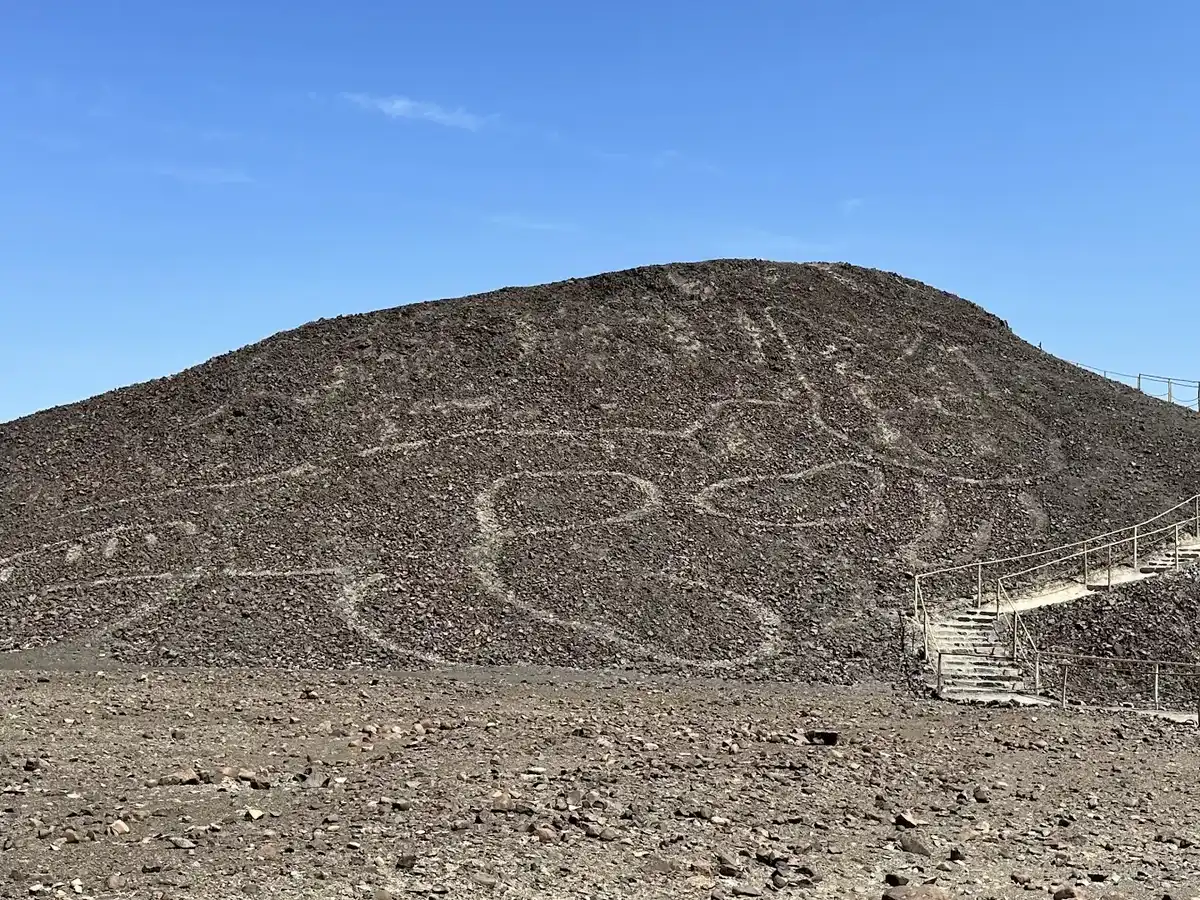
Peru🇵🇪 | landmarksNazca Linesgeoglyphs, arid plateau, aerial perspective | things to do and best time to go

Explore Machu PicchuExplore Pachacamac

Backpacking in Nazca Lines
By Johan Kruseman 🇳🇱 | Updated October 15, 2026

Your tiny plane shudders in the desert thermals, headset buzzing, fuel smell sharp in your nose. The pilot yanks the wing down and suddenly the sand below isn’t random anymore - a perfect hummingbird carved into the earth, so clean it looks fake, your stomach dropping as you lean over the scratched window to see it.

The Nazca Lines sit in the bone-dry desert of southern Peru, a few hours inland from the coast between Ica and Arequipa. For backpackers, they’re a weird mix of goosebumps and “is that it?” The flights are pricey for a tight budget, the airstrip is chaotic, and motion sickness is very real. On the ground, the viewing towers are underwhelming. But if you care about ancient cultures, this is wild: people etched these massive figures 1,500+ years ago with no drones, no GPS, just obsession and ritual. The photos are cool, but the real hit is that eerie, quiet feeling that humans have been leaving messages in the sand long before Instagram existed.

Discover everything you want to know in the 📖 Peru Travel Guide.


example page 0 from our offline Travel Guide for Peru
example page 1 from our offline Travel Guide for Peru
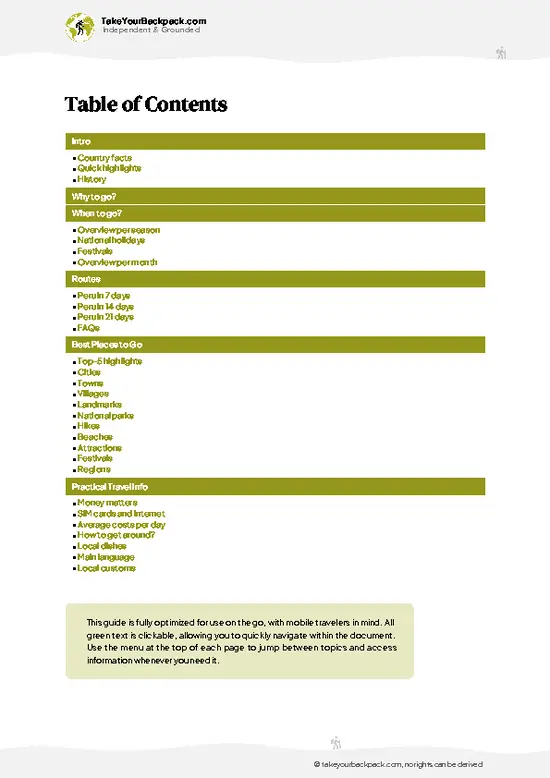
example page 2 from our offline Travel Guide for Peru
example page 3 from our offline Travel Guide for Peru
example page 4 from our offline Travel Guide for Peru
example page 5 from our offline Travel Guide for Peru
example page 6 from our offline Travel Guide for Peru
example page 7 from our offline Travel Guide for Peru
Loading the map 🌍
CLICK TO FILTER
cities
towns
villages
landmarks
national parks
hikes
beaches
attractions
festivals
regions
SHOW COUNTRY’S BESTSHOW ALL

✨ Why go?
Ranked #99 unique site in Peru
Why Nazca Lines should be on your travel list

The Nazca Lines are a must-see for backpackers, but let’s cut through the hype. Yes, they’re iconic, but they’re also surrounded by crowds and costs that can feel overwhelming. You’ll likely share a small plane with a dozen other tourists, and the price tag for a flight can hit your wallet hard. But here’s the kicker: the uniqueness of these ancient geoglyphs is worth the effort.

These massive designs etched into the desert floor are a mystery that sparks curiosity. Standing above them in a plane, you’ll see shapes that stretch over 1,000 feet, and that perspective is something you won’t find on Instagram.

Plus, the Nazca Lines fit seamlessly into a broader route through Peru. After exploring Lima or Cusco, a detour to Nazca is a natural next step. You can easily combine it with a visit … read more 👉
The Nazca Lines are a must-see for backpackers, but let’s cut through the hype. Yes, they’re iconic, but they’re also surrounded by crowds and costs that can feel overwhelming. You’ll likely share a small plane with a dozen other tourists, and the price tag for a flight can hit your wallet hard. But here’s the kicker: the uniqueness of these ancient geoglyphs is worth the effort.

These massive designs etched into the desert floor are a mystery that sparks curiosity. Standing above them in a plane, you’ll see shapes that stretch over 1,000 feet, and that perspective is something you won’t find on Instagram.

Plus, the Nazca Lines fit seamlessly into a broader route through Peru. After exploring Lima or Cusco, a detour to Nazca is a natural next step. You can easily combine it with a visit to the Ballestas Islands or the Inca Trail.

So, while the experience might not be cheap, the reward of witnessing these ancient wonders firsthand makes it a worthwhile stop on your journey.

💡 HighlightsPlaces and moments you shouldn't skip

  1. Overflight (small-plane tour) — The classic way to feel the scale: from the air the figures resolve into crisp shapes instead of mysterious scratches. It’s the only way to see most of the big geoglyphs at once; expect a bumpy ride, pay a bit more, and go early for the best light.
  2. María Reiche Viewing Tower — A cheap, grounded alternative to a flight. The tiny tower gives good close views of a couple of lines and carries the history of María Reiche’s obsessive work to map and protect the site, which helps you appreciate the human side of the archaeology.
  3. Hummingbird — One of the most elegant and perfectly proportioned figures, with a long beak and clean lines that show the planning skill behind these huge drawings. It’s visually striking and often the first image people think of.
  4. Condor
… read more 👉
  1. Overflight (small-plane tour) — The classic way to feel the scale: from the air the figures resolve into crisp shapes instead of mysterious scratches. It’s the only way to see most of the big geoglyphs at once; expect a bumpy ride, pay a bit more, and go early for the best light.
  2. María Reiche Viewing Tower — A cheap, grounded alternative to a flight. The tiny tower gives good close views of a couple of lines and carries the history of María Reiche’s obsessive work to map and protect the site, which helps you appreciate the human side of the archaeology.
  3. Hummingbird — One of the most elegant and perfectly proportioned figures, with a long beak and clean lines that show the planning skill behind these huge drawings. It’s visually striking and often the first image people think of.
  4. Condor — A dramatic, spread-winged figure that seems to be taking flight; great example of how the Nazca artists used simple lines to convey motion and symbolism. Personal favorite — it looks like the desert itself is trying to lift off.
  5. Spider — Weird and slightly eerie, with long, spidery legs radiating from a compact body. It’s often cited in discussions about astronomical or ritual functions, so it’s as thought-provoking as it is graphic.
  6. Monkey — Notable for its spiral tail and geometric complexity; this one shows how the designers combined natural forms with abstract patterns. It’s a good reminder these were planned compositions, not random scratches.
  7. “Astronaut” (anthropomorphic figure) — An odd human-like outline that fuels the more sensational theories about the lines. Whether you read it as ritual, a priest, or just a cool human shape, it’s great for sparking imagination and debate.
Spotted a mistake or missing something? Contact us.

Things to do around Nazca Lines

Ratings based on Tripadvisor reviews. When you book through this link, you support our work at no extra cost to you.

🌤️ When to go?Weather, crowds, and seasonal trade-offs

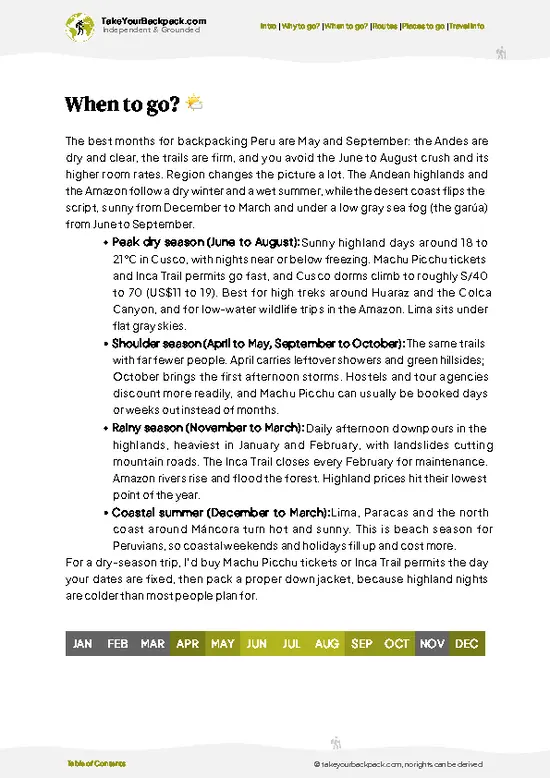
  • Weather: The dry season from May to October is your best bet. Skies are clearer, which means better visibility of the lines. The wet season (November to April) brings heavy rains that can obscure the view and make the ground muddy and slippery.
  • Temperature: Daytime temps hover around 20-25°C (68-77°F) year-round, but nights can dip to 10°C (50°F) or lower during the dry season. Dress in layers—mornings and evenings can surprise you with a chill.
  • Daylight Hours: Expect roughly 11 to 12 hours of daylight throughout the year. Sunrise is around 6 am, sunset near 6 pm, giving you a solid window for exploration without rushing.
  • Crowds: Peak tourist season aligns with the dry months, especially July and August. Expect busier tours and higher prices. The shoulder months of May and September offer
… read more 👉
  • Weather: The dry season from May to October is your best bet. Skies are clearer, which means better visibility of the lines. The wet season (November to April) brings heavy rains that can obscure the view and make the ground muddy and slippery.
  • Temperature: Daytime temps hover around 20-25°C (68-77°F) year-round, but nights can dip to 10°C (50°F) or lower during the dry season. Dress in layers—mornings and evenings can surprise you with a chill.
  • Daylight Hours: Expect roughly 11 to 12 hours of daylight throughout the year. Sunrise is around 6 am, sunset near 6 pm, giving you a solid window for exploration without rushing.
  • Crowds: Peak tourist season aligns with the dry months, especially July and August. Expect busier tours and higher prices. The shoulder months of May and September offer a quieter experience without sacrificing weather quality.
  • Seasonal Activities: There’s no flashy festival tied to the lines, but local markets and nearby archaeological sites are livelier during the dry season. This is when you’ll find more guided tours and cultural events.
  • Price Fluctuations: Flights over the lines and local accommodations spike in the dry season. Booking early can save you a chunk, but last-minute deals are rare during peak months.
Pro-tip: Visit in late May or early September—weather is solid, crowds thin, and prices are friendlier. You get the magic without the madness.


source: climatestotravel.comJANJanuary: fair for travelingFEBFebruary: fair for travelingMARMarch: fair for travelingAPRApril: fair for travelingMAYMay: highly recommended for travelingJUNJune: excellent for travelingJULJuly: excellent for travelingAUGAugust: excellent for travelingSEPSeptember: highly recommended for travelingOCTOctober: excellent for travelingNOVNovember: fair for travelingDECDecember: fair for traveling
peru-unique-site-nazca-lines
© Google | Aurelio Gianoglio

✈️ The backpacker research shortcutPeru Travel Guide

An offline-friendly backpacking guide with optimized travel routes, ranked highlights, transport advice, and the best areas to stay.
example page 0 from our offline Travel Guide for Peru
example page 1 from our offline Travel Guide for Peru
example page 2 from our offline Travel Guide for Peru
example page 3 from our offline Travel Guide for Peru
example page 4 from our offline Travel Guide for Peru
example page 5 from our offline Travel Guide for Peru
example page 6 from our offline Travel Guide for Peru
example page 7 from our offline Travel Guide for Peru
The digital guide (310 pages) contains:
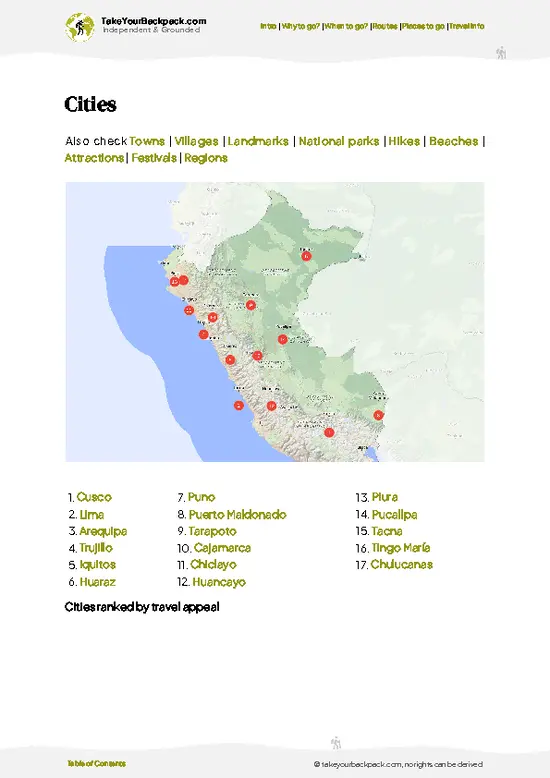
✅ 102 highlights, ranked by travel appeal
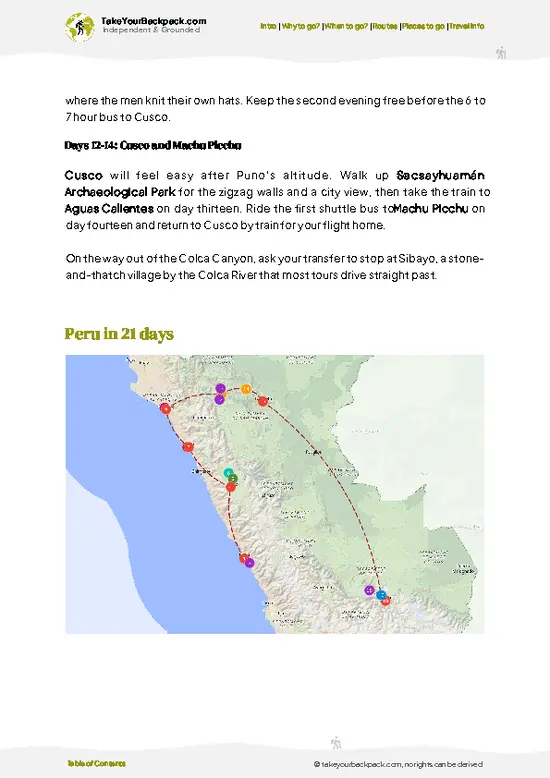
✅ Optimized 7, 14 & 21-day travel routes
✅ Cities, national parks, landmarks, beaches
✅ How to get around
✅ Offline-friendly for travel without Wi-Fi
👉 Click to see all 30+ guide features

📅 Plan smarter in minutes, not weeks
✅ Month by month travel advice
✅ Festivals & national holidays
✅ Budget expectations

🗺️ Go to the right places, skip the overrated ones
✅ Honest pros & cons of destinations
✅ Top hikes, parks & viewpoints
✅ Lesser-known places most travelers miss
✅ Clear “worth it vs skip it” guidance

🛏️ Travel smoothly without rookie mistakes
✅ Best areas to stay
✅ Transport systems explained simply
✅ Common scams & safety advice
✅ SIM cards, money & practical tips

🌍 Understand the country, not just visit it
✅ Culture & traditions
✅ 52 Essential phrases & customs
✅ Festivals worth planning around
✅ Traveler-friendly historical context
✅ Insights that make places more meaningful

📱 Built for real travel conditions
✅ Fully downloadable PDF
✅ Works completely offline
✅ Optimized for phone use
✅ Useful in remote areas & buses
✅ Everything in one place
Stop searching, start planning
Get instant access to your full guide. 30‑day money-back guarantee.
+ Add another guide for just

By proceeding you agree to our terms.
Sent to your inbox immediately after payment • 100% Secure Checkout
Best Backpacking Travel Advisor 2025 tourism awardBest Backpacking
Travel Advisor
2025
What others say about Take Your Backpack Guides:
⭐⭐⭐⭐⭐
Fantastic, amazing amount of information!
⭐⭐⭐⭐⭐
My goodness this is amazing, it's what I've been looking for hats off too you!
⭐⭐⭐⭐⭐
I think this is absolutely BRILLIANT
⭐⭐⭐⭐
Very complete and informative. It's still missing places, but I gotta to commend you
⭐⭐⭐⭐⭐
This is truly amazing, thank you, can't wait to explore it with my kids!
⭐⭐⭐⭐⭐
Awesome resource, thank you!
⭐⭐⭐⭐⭐
This is amazing! Can't wait to explore the ones I haven't seen
⭐⭐⭐⭐
I love this! Well done, great idea.
⭐⭐⭐⭐⭐
Thanks for taking the time to make this gem!
⭐⭐⭐⭐⭐
This might be the best website I've ever seen.
⭐⭐⭐⭐⭐
Congratulations, and thank you so much for your work; it's incredibly valuable.
⭐⭐⭐⭐
In all seriousness I think you did a great job pointing out the important spots
⭐⭐⭐⭐⭐
10/10 very good
⭐⭐⭐⭐⭐
As someone who's only just starting to visit regularly this is awesome, thank you.
⭐⭐⭐⭐
Thank you very much! I'm going to visit my dad, it's going to be very useful!
⭐⭐⭐⭐⭐
This is really cool! We'll be travelling for the first time and this definitely come in handy.
⭐⭐⭐⭐⭐
You are now our minister of culture, congratulations 👨‍💼
⭐⭐⭐⭐⭐
Just wanted to tell you that this is a pearl! Going to follow your recommendations.
⭐⭐⭐⭐⭐
This is so cool. I'll definitely be using the resource for my travels soon.
⭐⭐⭐⭐⭐
This is very impressive! Good work.
⭐⭐⭐⭐⭐
This is an amazing and informative site. Very well done!

🛏️ Where to stay?Choosing the right base

When you’re heading to see the Nazca Lines, the last thing you want is to be stuck in a tourist trap. The town of Nazca itself is your best bet. It’s a small, bustling hub that caters to backpackers and offers a range of budget accommodations. You’ll find hostels that are not just cheap but also buzzing with fellow travelers. This is where you can swap stories, share tips, and maybe even find a buddy for that flight over the lines.

Stay close to the Plaza de Armas. It’s the heart of the town, surrounded by local eateries and shops. You’ll get a taste of everyday life here, away from the glossy … read more 👉
When you’re heading to see the Nazca Lines, the last thing you want is to be stuck in a tourist trap. The town of Nazca itself is your best bet. It’s a small, bustling hub that caters to backpackers and offers a range of budget accommodations. You’ll find hostels that are not just cheap but also buzzing with fellow travelers. This is where you can swap stories, share tips, and maybe even find a buddy for that flight over the lines.

Stay close to the Plaza de Armas. It’s the heart of the town, surrounded by local eateries and shops. You’ll get a taste of everyday life here, away from the glossy Instagram shots. The vibe is relaxed, and you can easily walk to the tour agencies that offer flights over the lines.

Another option is to look for places near the bus terminal. It’s convenient for arriving and departing, and you’ll find a mix of locals and travelers. Just keep your wits about you, as with any place.

Nazca isn’t just about the lines; it’s about the people and the stories you’ll collect along the way. Embrace the chaos, and you’ll find the real magic.

👛 Costs (as of 15 October 2026)Money, prices, and spending tips

Visiting the Nazca Lines is a unique experience, but it comes with its own set of costs that you should be aware of.
  • Flight Over the Lines: Expect to pay between $80 and $200 for a 30-minute flight. Prices vary based on the season and the operator. Booking in advance can sometimes snag you a better deal, but don’t be surprised if you find yourself paying a premium during peak tourist months.
  • Transportation: Getting to Nazca from Lima will set you back around $20 to $40 for a bus ticket. The journey takes about 7 to 8 hours. If you prefer a quicker option, a domestic flight from Lima to Nazca can cost around $100 to $150, but that’s not always the most budget-friendly choice.
  • Accommodation: Options range from budget hostels at about $10 to $30 per night to mid-range hotels costing $50 to $100.
… read more 👉
Visiting the Nazca Lines is a unique experience, but it comes with its own set of costs that you should be aware of.
  • Flight Over the Lines: Expect to pay between $80 and $200 for a 30-minute flight. Prices vary based on the season and the operator. Booking in advance can sometimes snag you a better deal, but don’t be surprised if you find yourself paying a premium during peak tourist months.
  • Transportation: Getting to Nazca from Lima will set you back around $20 to $40 for a bus ticket. The journey takes about 7 to 8 hours. If you prefer a quicker option, a domestic flight from Lima to Nazca can cost around $100 to $150, but that’s not always the most budget-friendly choice.
  • Accommodation: Options range from budget hostels at about $10 to $30 per night to mid-range hotels costing $50 to $100. If you’re looking for something more upscale, expect to pay upwards of $100. Prices can fluctuate based on the season and availability.
  • Food: Meals can be quite affordable. Street food or local eateries might cost you around $5 to $10 per meal. If you opt for a sit-down restaurant, budget around $15 to $30 for a decent meal. Don’t skip trying the local cuisine; it’s part of the experience.
  • Entrance Fees: There’s no official entrance fee for viewing the Nazca Lines, but the cost of the flight is essentially your ticket in. Some tours may include additional costs for guides or viewing platforms, which can add another $10 to $30.

Be prepared for the crowds, especially during peak season. The lines themselves are awe-inspiring, but the experience can feel commercialized. Focus on the history and the mystery behind these ancient geoglyphs; that’s where the real magic lies.


source: peru.travel
⚠️ Prices can change and everyone travels differently, so take this as a rough guide. Hope it helps you plan your adventure!

FAQFrequently asked questions about Nazca Lines

The Nazca Lines are a series of large ancient geoglyphs in the Nazca Desert of southern Peru, created by the Nazca culture between 500 BCE and 500 CE. They depict various figures such as animals, plants, and geometric shapes, best viewed from the air due to their size.
Visiting the Nazca Lines typically requires about half a day, including travel and a flight over the lines, which lasts around 30 minutes. Ground viewing options are limited and less comprehensive, so plan for a morning or afternoon trip from Nazca town.
To get to the Nazca Lines, most travelers arrive in the town of Nazca by bus from Lima, which takes about 6-7 hours. From Nazca, you can book a small plane tour for aerial views or visit nearby observation towers for limited ground views.
⚠️ Things can change over time, so always validate details locally before you go.

Other Peruvian landmarks near Nazca Lines

Explore more nearby:

  • Cerro Blanco—Sand ridge climb, sandboarding run, Nasca Valley view, desert pampa| 34 km away
  • Machu Picchu—Inca citadel, Huayna Picchu, Intihuatana, Sun Gate, timed tickets| 329 km away
  • Pachacamac—Lurín valley, oracle shrine, pilgrim plaza, Pacific summit| 337 km away

💡 Not sure where to go next?
Create a personalized itinerary for Peru including Nazca Lines and the places that fit your trip.

Generate my itinerary

👉 Discover all landmarks

Or checkout all Peru has to offer (think cities, towns, villages, national parks, hikes, beaches, festivals)
Country photo of Peru

We 💚 feedbackSumming up the experience

The Nazca Lines are a wild experience, no doubt. Seeing those massive geoglyphs from above is like stepping into a living history book. But let’s be real: the crowds can be overwhelming, and the flights aren’t cheap. You’re paying for the view, and it’s not always a smooth ride. Still, if you can embrace the chaos, the sheer scale and mystery of these ancient designs will stick with you long after you leave.

✈️ When did I visit Peru?
Peru I visited during my half year trip through South and Central America back in 2003

✍️ Help improve this page!
The information on this page is based on my own backpacking experience in Peru, supplemented with up-to-date research and feedback from other travelers. Travel details can change, so if you notice anything outdated or incomplete, feel free to let me know.


🙋‍♂️ Give feedback

👋 Meet the founderWho’s Behind Take Your Backpack?

Johan, backpacker and founder of TakeYourBackpackHi, I’m Johan (Netherlands 🇳🇱), the creator of TakeYourBackpack. Over the past 3 decades, I’ve backpacked through 90+ countries across six continents, gaining extensive experience with independent travel, long-term trips, and overland routes.

This site is built on a combination of firsthand travel experience and carefully curated insights from other backpackers. Many guides are based on places I’ve personally visited, while others bring together tips, observations, and practical advice shared by trusted travelers I’ve met along the way.

The goal is to provide realistic, experience-driven guidance — not generic itineraries — so you can explore destinations with better context, clearer expectations, and more confidence.