×

Peru🇵🇪 | townsNazcaancient geoglyphs, arid plains, desert airstrips | things to do and best time to go

Explore ParacasExplore Moyobamba

Backpacking in Nazca
🌟 Highlighttown ranked #2
By Johan Kruseman 🇳🇱 | Updated June 20, 2026

Everyone comes to Nazca for the lines. The flight, the mystery, the “what if aliens” chat. But what actually matters more for you as a traveler is how Nazca fits into your route and your energy: it’s a pause in the desert, not a destination you linger in for days. Nazca sits in southern Peru, on the Panamericana between Ica/Huacachina and Arequipa, a dusty bowl of low buildings, dry heat, and long, bright afternoons that feel almost bleached.

For backpackers, it’s a functional stop with a couple of strong cards: easy bus access, walkable center, cheap menus, and simple hostels where you’ll meet other people doing the same overnight hit-and-run. Evenings are quiet, more plastic chairs and street chicken than cool bars, and the town itself is less charming than Arequipa and less playful than Huacachina. Safety is mostly about standard caution after dark. Come for one night, maybe two, use it as a launchpad for flights and desert outings, then keep rolling.

Discover everything you want to know in the 📖 Peru Travel Guide.


Get your Peru guide
118 ranked highlights, routes & tips, works offline (442 pages)
Loading the map 🌍
CLICK TO FILTER
cities
towns
villages
landmarks
national parks
hikes
beaches
attractions
festivals
regions
SHOW COUNTRY’S BESTSHOW ALL

✨ Why go?
Ranked #2 town in Peru
What makes it a must-see town

Nazca, Peru, is a strategic waypoint for backpackers weaving through the Andes and the coast. It’s not just about the famous Nazca Lines; it’s the town’s convenience that draws travelers. You can easily access nearby hikes like the Cerro Blanco, where the sand dunes offer a surreal backdrop for sunset views. The beaches of the Pacific are a short bus ride away, perfect for a refreshing dip after a day of exploration.

The streets are walkable, lined with small-scale hostels and guesthouses that foster a friendly atmosphere. You’ll find travelers swapping stories over local food—think hearty ceviche or pachamanca—in cozy eateries. This isn’t a party town; it’s more of a quiet retreat where solo travelers and small groups can connect without the chaos of nightlife.

Most backpackers tend to … read more 👉
Nazca, Peru, is a strategic waypoint for backpackers weaving through the Andes and the coast. It’s not just about the famous Nazca Lines; it’s the town’s convenience that draws travelers. You can easily access nearby hikes like the Cerro Blanco, where the sand dunes offer a surreal backdrop for sunset views. The beaches of the Pacific are a short bus ride away, perfect for a refreshing dip after a day of exploration.

The streets are walkable, lined with small-scale hostels and guesthouses that foster a friendly atmosphere. You’ll find travelers swapping stories over local food—think hearty ceviche or pachamanca—in cozy eateries. This isn’t a party town; it’s more of a quiet retreat where solo travelers and small groups can connect without the chaos of nightlife.

Most backpackers tend to stay briefly, often just a couple of nights, but those who linger appreciate the slow pace and the chance to soak in the local culture. If you’re a hiker or a curious explorer, Nazca offers a perfect balance of adventure and relaxation—a genuine pit stop on your journey.
Want to include Nazca in your Peru route?
Create a personalized Peru itinerary that includes Nazca and the places that fit your trip — based on your travel style, budget, and available time. Get your route in seconds.

Generate my trip

💡 HighlightsThe experiences that define the visit

  • Plaza de Armas — The social heart of Nazca: leafy benches, colonial facades, and the best spot to watch town life unfold while plotting where to eat next.
  • Iglesia Matriz (Parroquia San Pedro) — The main church on the plaza; solid colonial-era architecture and local religious art, useful for a quiet, culturally grounded stop.
  • Museo Antonini (Museo Arqueológico Antonini) — Small but well-curated collection of Nazca pottery, textiles and funerary pieces that actually help you understand the people behind the lines.
  • Centro/Museo María Reiche — A compact interpretive spot dedicated to Maria Reiche’s research and the Lines; it gives context to the flights and makes the geoglyphs feel less mysterious and more human.
  • Aeródromo (Nazca Airstrip / flight operators) — The practical hub for scenic
read more 👉
  • Plaza de Armas — The social heart of Nazca: leafy benches, colonial facades, and the best spot to watch town life unfold while plotting where to eat next.
  • Iglesia Matriz (Parroquia San Pedro) — The main church on the plaza; solid colonial-era architecture and local religious art, useful for a quiet, culturally grounded stop.
  • Museo Antonini (Museo Arqueológico Antonini) — Small but well-curated collection of Nazca pottery, textiles and funerary pieces that actually help you understand the people behind the lines.
  • Centro/Museo María Reiche — A compact interpretive spot dedicated to Maria Reiche’s research and the Lines; it gives context to the flights and makes the geoglyphs feel less mysterious and more human.
  • Aeródromo (Nazca Airstrip / flight operators) — The practical hub for scenic flights over the Nazca Lines; even if you don’t fly, it’s worth visiting to see the small planes, meet pilots, and learn how tours run.
  • Torre de Observación de las Líneas (Mirador on the Panamericana) — Quick, cheap view of a section of geoglyphs (the hummingbird and nearby markings) from a raised tower — imperfect but direct and accessible.
  • Mercado Central de Nazca — Loud, colorful, and deliciously real: fresh produce, picanterías, street snacks and a chance to eat with locals for a fraction of restaurant prices.
  • Casa de la Cultura / Centro Cultural local — Rotating local exhibitions, occasional performances and handicraft stalls; good for catching community art and events that don’t make guidebooks.
  • Antigua Estación de Ferrocarril (old train station area) — A small historical corner of town with old rail buildings and photo ops; evocative of the town’s link to regional trade and travel.
  • Talleres y tiendas de artesanía local — Small workshops and stalls around town where potters, weavers and artisans sell and demonstrate work — the best place to buy something genuine and chat with makers.
A few great day trips outside Nazca: the Cantalloc aqueducts, the Chauchilla cemetery, the Cahuachi ceremonial site and Cerro Blanco dune — my personal favorite for atmosphere and raw history is Chauchilla.
Spotted a mistake or missing something? Contact us.

Things to do around Nazca

Ratings based on Tripadvisor reviews. When you book through this link, you support our work at no extra cost to you.

🏘️ NeighborhoodsNeighborhood guide to Nazca

Nazca is a small town with a big reputation, famous for its ancient geoglyphs and rich history. Here’s how to navigate its neighborhoods like a pro.

Centro Histórico: This is the heart of Nazca. You’ll find budget hostels, local eateries, and shops selling artisan crafts. The vibe is lively, especially during the day when the streets buzz with vendors. It’s walkable, making it easy to explore on foot. Perfect for short stays, but if you linger, you might miss the quieter charm of other areas.

Los Angeles: A bit more residential, this neighborhood offers a laid-back atmosphere. It’s less touristy, so you can experience daily life in Nazca. Accommodations here are affordable, and you’ll find some great local restaurants. It’s a short walk to the main square, but you’ll need to rely on taxis … read more 👉
Nazca is a small town with a big reputation, famous for its ancient geoglyphs and rich history. Here’s how to navigate its neighborhoods like a pro.

Centro Histórico: This is the heart of Nazca. You’ll find budget hostels, local eateries, and shops selling artisan crafts. The vibe is lively, especially during the day when the streets buzz with vendors. It’s walkable, making it easy to explore on foot. Perfect for short stays, but if you linger, you might miss the quieter charm of other areas.

Los Angeles: A bit more residential, this neighborhood offers a laid-back atmosphere. It’s less touristy, so you can experience daily life in Nazca. Accommodations here are affordable, and you’ll find some great local restaurants. It’s a short walk to the main square, but you’ll need to rely on taxis for longer trips. Ideal for longer stays if you want a more authentic feel.

La Palpa: Located on the outskirts, this area is quieter and surrounded by nature. It’s perfect for those looking to escape the hustle and bustle. While it’s a bit farther from the main attractions, the peace is worth it. Transport options are limited, so consider renting a bike or arranging a shuttle. Great for longer stays if you want to immerse yourself in the landscape.

San José: This neighborhood is where you’ll find some of the best nightlife in Nazca. Bars and clubs come alive after dark, making it a fun spot for socializing. It’s walkable, but be cautious at night. Perfect for short stays if you’re looking to experience the local scene.

⌛️ 1 dayHow to make the most of one day

Nazca, Peru, is a town that hums with history and mystery, famous for its ancient geoglyphs etched into the desert floor. The air here is dry, and the sun casts a golden hue over the landscape, making it feel like a canvas waiting for your footsteps. Spend a day here, and you’ll find that every moment is a brushstroke in your travel story.

Start your morning at the bustling Mercado de Nazca. The scent of fresh bread mingles with the earthy aroma of local produce. Grab a hearty breakfast of tamales and a cup of aromatic Peruvian coffee. This is where you can feel the pulse of local life, surrounded by vendors selling everything from vibrant textiles to handmade crafts.

After fueling up, head to the Nazca Lines viewing tower. It’s a short taxi ride away, and climbing the tower gives you a … read more 👉
Nazca, Peru, is a town that hums with history and mystery, famous for its ancient geoglyphs etched into the desert floor. The air here is dry, and the sun casts a golden hue over the landscape, making it feel like a canvas waiting for your footsteps. Spend a day here, and you’ll find that every moment is a brushstroke in your travel story.

Start your morning at the bustling Mercado de Nazca. The scent of fresh bread mingles with the earthy aroma of local produce. Grab a hearty breakfast of tamales and a cup of aromatic Peruvian coffee. This is where you can feel the pulse of local life, surrounded by vendors selling everything from vibrant textiles to handmade crafts.

After fueling up, head to the Nazca Lines viewing tower. It’s a short taxi ride away, and climbing the tower gives you a panoramic view of the famous geoglyphs. The thrill of spotting the hummingbird or the monkey from above is palpable. But don’t rush; take a moment to soak in the vastness of the desert.

In the afternoon, make your way to the quieter neighborhood of San José, where you’ll find the Chauchilla Cemetery. This site is often overlooked by tourists, but it’s a hauntingly beautiful glimpse into Nazca’s ancient past. The mummies, preserved in the arid climate, tell stories of a civilization long gone. The atmosphere is serene, almost reverent, and you can almost hear the whispers of history.

As the sun begins to set, return to the town center and stroll along the Plaza de Armas. The golden light casts long shadows, and the locals gather to chat and enjoy the evening. Treat yourself to dinner at a local eatery, where you can savor a plate of lomo saltado, a dish that bursts with flavor and warmth.

Nazca isn’t just about the lines; it’s about the connections you make and the stories you gather. Each moment here is a step deeper into a world that feels both ancient and alive.
Turn your Nazca visit into an Peru adventure
Build a complete Peru route with Nazca, hidden gems, must-see destinations, and realistic travel times included.

Generate my trip

🌤️ When to go?Seasonal considerations and timing


  • Topic: Weather — Nazca is a desert town, so expect dry conditions year-round. The best time to visit is during the Southern Hemisphere winter, from May to October, when the skies are clearest. This means less haze and dust, which is crucial for seeing the Nazca Lines from the air.

  • Topic: Temperature — Daytime temps hover around 20-25°C (68-77°F) in winter, making it comfortable for hiking and exploring. Summers (November to April) can push 30°C (86°F) or higher, with nights cooling down sharply, so pack layers if you go then.

  • Topic: Daylight Hours — Around 11 to 12 hours of daylight year-round, but winter days are slightly shorter. This means you get enough daylight for morning flights over the lines and afternoon walks without rushing.

  • Topic: Crowds — Peak tourist season aligns with
read more 👉

  • Topic: Weather — Nazca is a desert town, so expect dry conditions year-round. The best time to visit is during the Southern Hemisphere winter, from May to October, when the skies are clearest. This means less haze and dust, which is crucial for seeing the Nazca Lines from the air.

  • Topic: Temperature — Daytime temps hover around 20-25°C (68-77°F) in winter, making it comfortable for hiking and exploring. Summers (November to April) can push 30°C (86°F) or higher, with nights cooling down sharply, so pack layers if you go then.

  • Topic: Daylight Hours — Around 11 to 12 hours of daylight year-round, but winter days are slightly shorter. This means you get enough daylight for morning flights over the lines and afternoon walks without rushing.

  • Topic: Crowds — Peak tourist season aligns with the dry months. Expect more visitors from June to August, especially on weekends. Visiting in shoulder months like May or September offers a quieter experience without sacrificing weather quality.

  • Topic: Seasonal Activities — The dry season is prime for aerial tours of the Nazca Lines, as pilots prefer clear skies. Rain is rare but can ground flights in summer, so winter is your safest bet for this iconic experience.

  • Topic: Price Fluctuations — Prices for flights and accommodations spike during peak months (June-August). Booking in shoulder seasons can save you money and secure better seats on small planes.


Pro-tip: Aim for early morning flights in the dry season—when the light hits the lines just right and the air is still, you’ll see the etchings pop against the desert floor like nowhere else.


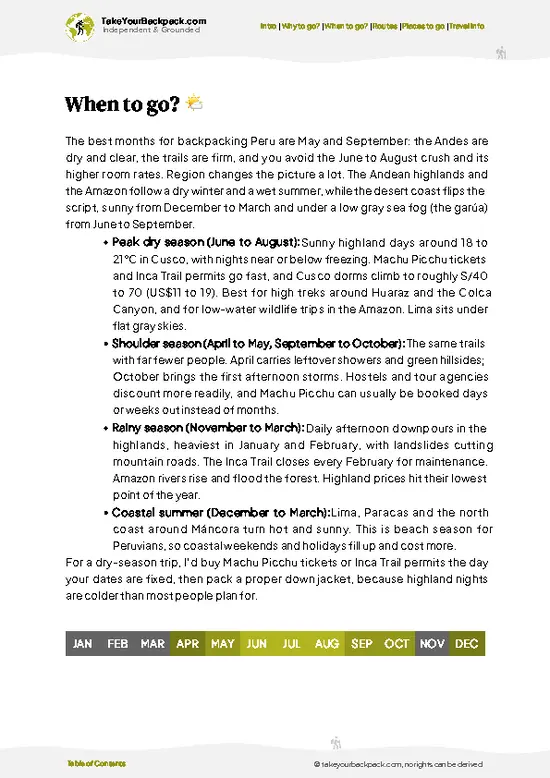
source: climatestotravel.comJANJanuary: fair for travelingFEBFebruary: fair for travelingMARMarch: fair for travelingAPRApril: good for travelingMAYMay: highly recommended for travelingJUNJune: excellent for travelingJULJuly: excellent for travelingAUGAugust: excellent for travelingSEPSeptember: highly recommended for travelingOCTOctober: highly recommended for travelingNOVNovember: good for travelingDECDecember: fair for traveling
peru-city-nazca
© Google |

✈️ The backpacker research shortcutPeru Travel Guide

An offline-friendly backpacking guide with optimized travel routes, ranked highlights, transport advice, and the best areas to stay.
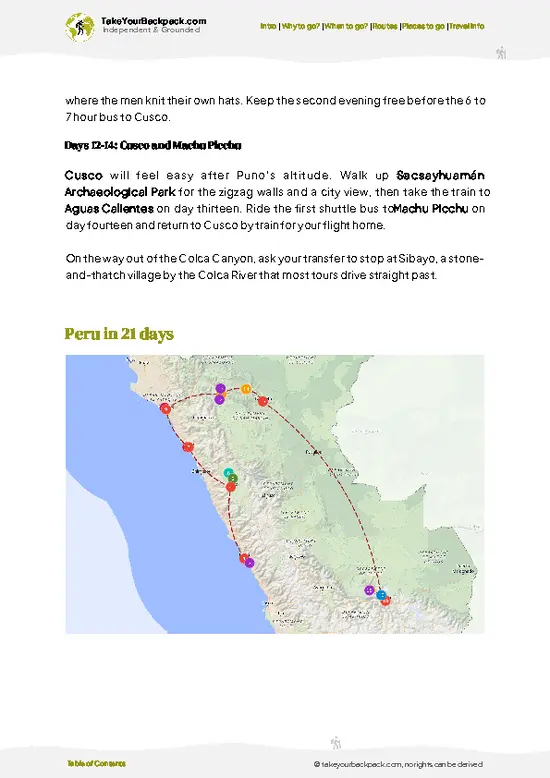
example page 0 from our offline Travel Guide for Peru
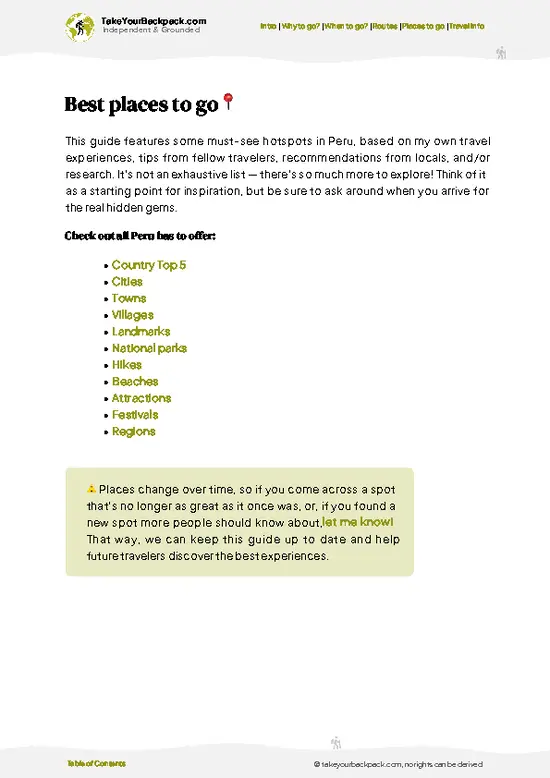
example page 1 from our offline Travel Guide for Peru
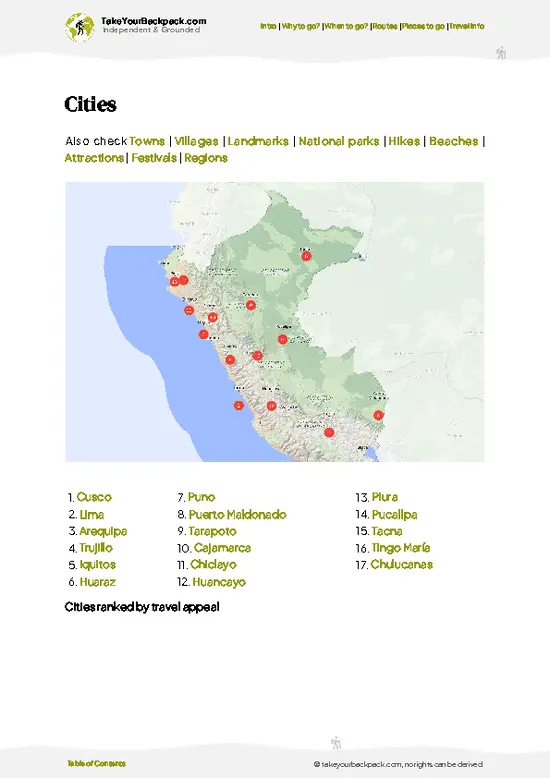
example page 2 from our offline Travel Guide for Peru
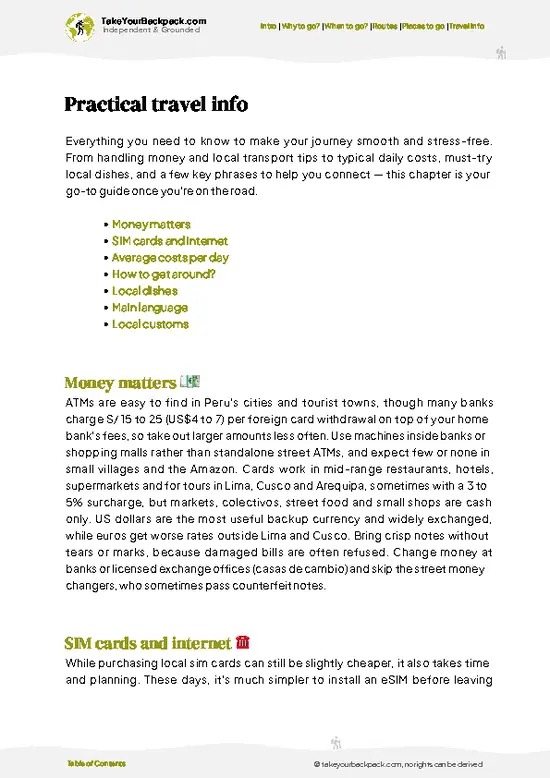
example page 3 from our offline Travel Guide for Peru
example page 4 from our offline Travel Guide for Peru
example page 5 from our offline Travel Guide for Peru
example page 6 from our offline Travel Guide for Peru
example page 7 from our offline Travel Guide for Peru
The digital guide (442 pages) contains:
118 highlights, ranked by travel appeal
Optimized 7, 14 & 21-day travel routes
Cities, national parks, landmarks, beaches
How to get around
Offline-friendly for travel without Wi-Fi
👉 Click to see all 30+ guide features

📅 Plan smarter in minutes, not weeks
Month by month travel advice
Festivals & national holidays
Budget expectations

🗺️ Go to the right places, skip the overrated ones
Honest pros & cons of destinations
Top hikes, parks & viewpoints
Lesser-known places most travelers miss
Clear “worth it vs skip it” guidance

🛏️ Travel smoothly without rookie mistakes
Best areas to stay
Transport systems explained simply
Common scams & safety advice
SIM cards, money & practical tips

🌍 Understand the country, not just visit it
Culture & traditions
52 Essential phrases & customs
Festivals worth planning around
Traveler-friendly historical context
Insights that make places more meaningful

📱 Built for real travel conditions
Fully downloadable PDF
Works completely offline
Optimized for phone use
Useful in remote areas & buses
Everything in one place
Save weeks of stressful planning
Get instant access to your full guide. 30‑day money-back guarantee.


By proceeding you agree to our terms.
Sent to your inbox immediately after payment • 100% Secure Checkout
Best Backpacking Travel Advisor 2025 tourism awardBest Backpacking
Travel Advisor
2025
What others say about Take Your Backpack Guides:
⭐⭐⭐⭐⭐
Fantastic, amazing amount of information!
⭐⭐⭐⭐⭐
My goodness this is amazing, it's what I've been looking for hats off too you!
⭐⭐⭐⭐⭐
I think this is absolutely BRILLIANT
⭐⭐⭐⭐
Very complete and informative. It's still missing places, but I gotta to commend you
⭐⭐⭐⭐⭐
This is truly amazing, thank you, can't wait to explore it with my kids!
⭐⭐⭐⭐⭐
Awesome resource, thank you!
⭐⭐⭐⭐⭐
This is amazing! Can't wait to explore the ones I haven't seen
⭐⭐⭐⭐
I love this! Well done, great idea.
⭐⭐⭐⭐⭐
Thanks for taking the time to make this gem!
⭐⭐⭐⭐⭐
This might be the best website I've ever seen.
⭐⭐⭐⭐⭐
Congratulations, and thank you so much for your work; it's incredibly valuable.
⭐⭐⭐⭐
In all seriousness I think you did a great job pointing out the important spots
⭐⭐⭐⭐⭐
10/10 very good
⭐⭐⭐⭐⭐
As someone who's only just starting to visit regularly this is awesome, thank you.
⭐⭐⭐⭐
Thank you very much! I'm going to visit my dad, it's going to be very useful!
⭐⭐⭐⭐⭐
This is really cool! We'll be travelling for the first time and this definitely come in handy.
⭐⭐⭐⭐⭐
You are now our minister of culture, congratulations 👨‍💼
⭐⭐⭐⭐⭐
Just wanted to tell you that this is a pearl! Going to follow your recommendations.
⭐⭐⭐⭐⭐
This is so cool. I'll definitely be using the resource for my travels soon.
⭐⭐⭐⭐⭐
This is very impressive! Good work.
⭐⭐⭐⭐⭐
This is an amazing and informative site. Very well done!

🛏️ Where to stay?Best areas to stay in Peru

Nazca’s heart for backpackers pulses strongest around the central plaza and the nearby Avenida Peru. This area is your launchpad—safe enough to wander after dark, with a steady hum of local life that feels welcoming rather than overwhelming. The streets here catch the dry desert light just right, casting long shadows that cool the afternoon heat, making it easier to stroll between cafes, markets, and hostels without feeling like you’re melting into the sand.

Why this spot? It’s where budget travelers cluster, so hostels aren’t just places to crash—they’re social hubs. You’ll find communal kitchens … read more 👉
Nazca’s heart for backpackers pulses strongest around the central plaza and the nearby Avenida Peru. This area is your launchpad—safe enough to wander after dark, with a steady hum of local life that feels welcoming rather than overwhelming. The streets here catch the dry desert light just right, casting long shadows that cool the afternoon heat, making it easier to stroll between cafes, markets, and hostels without feeling like you’re melting into the sand.

Why this spot? It’s where budget travelers cluster, so hostels aren’t just places to crash—they’re social hubs. You’ll find communal kitchens and common rooms where stories and plans flow as easily as the local coffee. Compared to the quieter, more residential outskirts, staying near the plaza means you’re plugged into the rhythm of Nazca’s daily pulse, with easy access to tour operators for the famous lines and a handful of eateries that won’t gouge your wallet.

Other neighborhoods might offer peace, but they lack this connective energy. Plus, the central zone’s compactness means you can walk everywhere without the hassle of taxis or confusing bus routes. In Nazca, proximity isn’t just convenience—it’s a way to soak in the town’s dusty charm and prepare for the desert’s vast, silent spectacle.

🚌 Getting aroundHow to get around Nazca

Nazca moves at its own rhythm—dusty, sunbaked, and slow enough to feel like time stretches just to let you soak in the desert air. It’s not a place where buses run like clockwork or where you’ll find a subway map to decode. Instead, the town’s pulse is set by the midday heat, the chatter of locals at the market, and the occasional hum of a plane overhead tracing those famous lines in the sand. You’ll find that patience isn’t just a virtue here; it’s your best travel tool. The streets invite you to wander, but when you need to move, knowing the local transit quirks turns a potential hassle into a smooth, almost effortless ride.


  • Walking: Nazca’s compact center is best explored on foot. The dry air carries the scent of dust and roasted corn from street vendors, and the sun casts sharp shadows
read more 👉
Nazca moves at its own rhythm—dusty, sunbaked, and slow enough to feel like time stretches just to let you soak in the desert air. It’s not a place where buses run like clockwork or where you’ll find a subway map to decode. Instead, the town’s pulse is set by the midday heat, the chatter of locals at the market, and the occasional hum of a plane overhead tracing those famous lines in the sand. You’ll find that patience isn’t just a virtue here; it’s your best travel tool. The streets invite you to wander, but when you need to move, knowing the local transit quirks turns a potential hassle into a smooth, almost effortless ride.


  • Walking: Nazca’s compact center is best explored on foot. The dry air carries the scent of dust and roasted corn from street vendors, and the sun casts sharp shadows on the adobe walls. Most key spots—plazas, markets, and eateries—are within a 15-20 minute stroll, making walking the cheapest and most immersive way to get around.


  • Colectivos (Shared Minivans): These are the budget traveler’s lifeline for short trips around town or to nearby villages. They don’t run on a strict timetable but start filling up around 7 AM and run until early evening. Fares hover around 1-2 soles. Expect a lively, cramped ride where locals chat and negotiate stops on the fly—comfort is basic, but the experience is pure Nazca.


  • Local Buses: For longer hauls, like heading out to the Nazca Lines viewing towers or the outskirts, local buses are your go-to. They usually start around 6 AM and wind down by 6 PM. Tickets cost 3-5 soles. These buses are slower and less cushioned than tourist shuttles but offer a genuine slice of daily life, rattling over uneven roads with the desert sun beating through open windows.


  • Tourist Shuttle Vans: While pricier (around 20-30 soles one way), these shuttles run on a more reliable schedule, typically from 8 AM to 4 PM, and are the fastest way to reach the Nazca Lines observation points. They offer air conditioning and a smoother ride, which can be a welcome break after hours of desert heat and dust.


  • Taxi: Taxis are plentiful but unmetered, so always agree on a fare before hopping in. Short rides within town cost about 5-10 soles. They’re a good fallback if you’re carrying gear or want to beat the heat, but don’t expect luxury—windows down, the smell of leather and gasoline, and the driver’s local playlist are part of the package.

👛 Costs (as of 11 May 2025)Money, prices, and spending tips

Backpacking in Nazca, Peru, offers a unique blend of desert landscapes and ancient mysteries, but knowing the daily costs helps you focus on the experience, not the budget surprises.
  • Dorm Accommodation: Hostels in Nazca typically charge between $8 and $15 per night for a dorm bed. These places are basic but clean, often with shared bathrooms and a communal kitchen. The desert heat means many have fans or basic AC, which is a welcome relief after a day in the sun.
  • Meals: Eating local is both a cultural dive and a budget saver. Street food and small local eateries serve up hearty plates like ceviche or pollo a la brasa for around $3 to $6. If you opt for a sit-down restaurant, expect to pay closer to $7 to $12 for a full meal. Breakfasts are often simple—bread, eggs, and coffee for $2 to $4.
read more 👉
Backpacking in Nazca, Peru, offers a unique blend of desert landscapes and ancient mysteries, but knowing the daily costs helps you focus on the experience, not the budget surprises.
  • Dorm Accommodation: Hostels in Nazca typically charge between $8 and $15 per night for a dorm bed. These places are basic but clean, often with shared bathrooms and a communal kitchen. The desert heat means many have fans or basic AC, which is a welcome relief after a day in the sun.
  • Meals: Eating local is both a cultural dive and a budget saver. Street food and small local eateries serve up hearty plates like ceviche or pollo a la brasa for around $3 to $6. If you opt for a sit-down restaurant, expect to pay closer to $7 to $12 for a full meal. Breakfasts are often simple—bread, eggs, and coffee for $2 to $4.
  • Local Transport: Getting around Nazca is straightforward and cheap. Shared colectivos (minivans) or local buses cost about $0.50 to $1 per ride within town. For trips to nearby sites like the Nazca Lines viewing tower, a taxi might run you $5 to $10 round trip if you negotiate well.
  • Basic Activities/Entry Fees: The main draw, the Nazca Lines, has an entrance fee of roughly $3 to $5. A flight over the lines, the ultimate experience, costs between $70 and $100, but ground viewing towers are a budget-friendly alternative. Museums and smaller archaeological sites charge $2 to $5.
  • Miscellaneous Expenses: Bottled water is essential in the dry climate, costing about $0.50 to $1. Snacks, souvenirs, or occasional splurges like a cold drink add up to around $2 to $5 daily.

All told, you’re looking at a daily budget of roughly $15 to $30 if you keep it lean but don’t skimp on the essentials. Nazca’s dry air and dusty streets mean you’ll appreciate simple comforts like a cold drink or a fan-cooled room more than you expect. Planning your days around the cooler morning and late afternoon light not only saves energy but makes the desert’s stark beauty easier to take in.


source: peru.travel
⚠️ Prices can change and everyone travels differently, so take this as a rough guide. Hope it helps you plan your adventure!

🚌 Day tripsShort trips worth adding

Nazca, Peru, is more than just a stopover; it’s a launchpad for unforgettable day trips that reveal the region’s rich tapestry of history and natural beauty. Here’s how to make the most of your time here.

Flight Over the Nazca Lines
Nothing beats the thrill of soaring above the Nazca Lines. These ancient geoglyphs are best appreciated from the air, where you can see the full scale of the designs. Flights typically last about 30 minutes and cost around $80 to $100. Book early in the morning for clearer skies and less turbulence. A common rookie mistake? Forgetting to take motion sickness pills; the twists and turns can be intense. The experience is surreal, as you trace the outlines of monkeys and hummingbirds etched into the earth.
👉 Explore Nazca Lines

Visit the Chauchilla Cemeteryread more 👉
Nazca, Peru, is more than just a stopover; it’s a launchpad for unforgettable day trips that reveal the region’s rich tapestry of history and natural beauty. Here’s how to make the most of your time here.

Flight Over the Nazca Lines
Nothing beats the thrill of soaring above the Nazca Lines. These ancient geoglyphs are best appreciated from the air, where you can see the full scale of the designs. Flights typically last about 30 minutes and cost around $80 to $100. Book early in the morning for clearer skies and less turbulence. A common rookie mistake? Forgetting to take motion sickness pills; the twists and turns can be intense. The experience is surreal, as you trace the outlines of monkeys and hummingbirds etched into the earth.
👉 Explore Nazca Lines

Visit the Chauchilla Cemetery
Just a short drive from Nazca, the Chauchilla Cemetery offers a haunting glimpse into ancient burial practices. Expect to spend about two hours here, with entrance fees around $3. The best time to visit is in the cooler morning hours, when the desert sun isn’t too harsh. Many first-timers overlook the importance of a guide; they can provide context that transforms the eerie atmosphere into a captivating story of the Nazca culture. The sight of mummified remains and ancient pottery against the backdrop of the arid landscape is both chilling and fascinating.


Hike to the Cahuachi Pyramids
For those who crave a bit of adventure, the Cahuachi Pyramids are a must. This archaeological site, about an hour from Nazca, is a series of adobe structures that once served as ceremonial centers. The hike is moderate and can take around 2-3 hours, with minimal costs involved—just a few soles for transport. The best time to go is during the dry season, from May to September. Many backpackers miss out on the stunning views from the top; don’t rush your ascent. The sense of history here is palpable, and the silence of the desert amplifies it.


Explore the Nazca Aqueducts
The Nazca Aqueducts, or ”Puquios,” are a marvel of ancient engineering. A quick 30-minute trip from town leads you to these underground channels that still function today. Entry is free, and you can easily spend an hour wandering the area. The best time to visit is late afternoon when the light casts long shadows, enhancing the beauty of the landscape. Many travelers overlook this site, thinking it’s just a waterway, but the ingenuity behind it is worth appreciating. The cool breeze and the sound of flowing water create a serene atmosphere.


Each of these trips offers a unique lens through which to experience Nazca, making your stay not just a stopover, but a rich exploration of culture and history.
Want to know what more Peru offers?
The Peru Travel Guide describes 118 highlights, from cities to national parks, from beaches to hikes

Get the Travel Guide -

🛡️ SafetyStaying Safe: What Travelers Should Know

Nazca is generally safe, but like any destination, a bit of awareness goes a long way. The town itself is small and walkable, but keep an eye on your belongings, especially in crowded areas like the bus terminal or local markets.

If you’re traveling solo, especially at night, stick to well-lit streets and avoid wandering too far from the main square. The atmosphere can shift after dark, so it’s best to plan your evening activities accordingly.

Scams are rare, but some travelers have reported overly persistent vendors or taxi drivers who may try to negotiate inflated prices. Always agree on a fare before getting in a cab, and don’t hesitate to walk away if something feels off.

The occasional stray dog might approach you, but they’re usually harmless. Just be mindful of your surroundings … read more 👉
Nazca is generally safe, but like any destination, a bit of awareness goes a long way. The town itself is small and walkable, but keep an eye on your belongings, especially in crowded areas like the bus terminal or local markets.

If you’re traveling solo, especially at night, stick to well-lit streets and avoid wandering too far from the main square. The atmosphere can shift after dark, so it’s best to plan your evening activities accordingly.

Scams are rare, but some travelers have reported overly persistent vendors or taxi drivers who may try to negotiate inflated prices. Always agree on a fare before getting in a cab, and don’t hesitate to walk away if something feels off.

The occasional stray dog might approach you, but they’re usually harmless. Just be mindful of your surroundings and trust your instincts. With a little caution, you can enjoy Nazca’s rich history and stunning landscapes without a hitch.

Other Peruvian towns near Nazca

Explore more nearby:

  • Paracas—coastal reserve, desert cliffs, marine wildlife| 179 km away
  • Ayacuho—Andean plazas, colonial churches, artisan workshops| 201 km away
  • Huancavelica—colonial churches, mountain valleys, thermal baths| 227 km away

💡 Not sure where to go next?
Create a personalized itinerary for Peru including Nazca and the places that fit your trip.

Generate my itinerary

👉 Discover all towns

Or checkout all Peru has to offer (think cities, towns, villages, national parks, hikes, beaches, festivals)
Country photo of Peru

We 💚 feedbackWhat to keep in mind

Nazca is a canvas of ancient mystery, where the lines etched into the earth whisper stories of a bygone civilization. The thrill of soaring over those geoglyphs is unmatched; you feel the pulse of history beneath you. But be ready for the heat—Nazca can scorch, and the dry air can sap your energy. Hydrate well and pace yourself. Embrace the challenge; the reward is a connection to something truly extraordinary.

✈️ When did I visit Peru?
Peru I visited during my half year trip through South and Central America back in 2003

✍️ Help improve this page!
The information on this page is based on my own backpacking experience in Peru, supplemented with up-to-date research and feedback from other travelers. Travel details can change, so if you notice anything outdated or incomplete, feel free to let me know.


🙋‍♂️ Give feedback

👋 Meet the founderWho’s Behind Take Your Backpack?

Johan, backpacker and founder of TakeYourBackpackHi, I’m Johan (Netherlands 🇳🇱), the creator of TakeYourBackpack. Over the past decade, I’ve backpacked through 80+ countries across six continents, gaining extensive experience with independent travel, long-term trips, and overland routes.

This site is built on a combination of firsthand travel experience and carefully curated insights from other backpackers. Many guides are based on places I’ve personally visited, while others bring together tips, observations, and practical advice shared by trusted travelers I’ve met along the way.

The goal is to provide realistic, experience-driven guidance — not generic itineraries — so you can explore destinations with better context, clearer expectations, and more confidence.

Get full Peru guide •
Instant download • 118 highlights • Full Offline guide