×

Peru🇵🇪 | landmarksRuins of Kotoshpreceramic site, layered altars, highland riverbank | things to do and best time to go

Explore PachacamacExplore Sillustani

Backpacking in Ruins of Kotosh
👀 For curious travelersunique site ranked #8
By Johan Kruseman 🇳🇱 | Updated September 4, 2026

Your boots crunch on dry earth while a cold Andean breeze carries the smell of dust and eucalyptus; a guide’s voice drops to a hush as you duck into the small stone enclosure and see the “Crossed Hands” motif carved by people who stood here 4,000 years before you. This is Kotosh, just outside Huánuco in Peru’s central highlands, far from the Cusco–Machu Picchu conveyor belt. As a backpacker destination, it’s low on spectacle and high on quiet, nerdy satisfaction. No massive crowds, low entry fee, easy moto-taxi access, but also no big “wow” skyline shot for your feed. The ruins are modest, the energy is intimate, and the real payoff is standing almost alone in a place that feels more like an archaeological whisper than a theme park.

Discover everything you want to know in the 📖 Peru Travel Guide.


Get your Peru guide
113 ranked highlights, routes & tips, works offline (416 pages)
Loading the map 🌍
CLICK TO FILTER
cities
towns
villages
landmarks
national parks
hikes
beaches
attractions
festivals
regions
SHOW COUNTRY’S BESTSHOW ALL

✨ Why go?
Ranked #8 unique site in Peru
What sets this place apart

The Ruins of Kotosh in Peru are often overshadowed by the big names like Machu Picchu, but that’s where the magic lies. This site is a breath of fresh air from the crowds. You’ll find ancient temples and intriguing carvings that tell stories of a civilization long gone. The effort-to-reward ratio is solid; a short trek from Huánuco gets you there, and the entrance fee is a mere pittance compared to other tourist traps.

What makes Kotosh special is its authenticity. You can wander through the ruins without feeling like you’re in a theme park. It’s a chance to connect with history in a way that feels genuine. Plus, it fits perfectly into a broader route through the Andes, making it a natural stop on your journey.

So, if you’re after something that’s not just a photo op but a real piece of … read more 👉
The Ruins of Kotosh in Peru are often overshadowed by the big names like Machu Picchu, but that’s where the magic lies. This site is a breath of fresh air from the crowds. You’ll find ancient temples and intriguing carvings that tell stories of a civilization long gone. The effort-to-reward ratio is solid; a short trek from Huánuco gets you there, and the entrance fee is a mere pittance compared to other tourist traps.

What makes Kotosh special is its authenticity. You can wander through the ruins without feeling like you’re in a theme park. It’s a chance to connect with history in a way that feels genuine. Plus, it fits perfectly into a broader route through the Andes, making it a natural stop on your journey.

So, if you’re after something that’s not just a photo op but a real piece of history, make time for Kotosh. It’s worth every step.
Want to include Ruins of Kotosh in your Peru route?
Create a personalized Peru itinerary that includes Ruins of Kotosh and the places that fit your trip — based on your travel style, budget, and available time. Get your route in seconds.

Generate my trip

💡 HighlightsWhat this place is best known for

  • Temple of the Crossed Hands — The signature spot: a carved relief of two crossed hands that gives the whole site its name. It’s a simple, striking image that survived millennia and still feels oddly intimate. (Personal favorite — there’s something about standing in front of that icon and imagining the rituals that used to happen here.)
  • Stratified ceremonial architecture — Kotosh isn’t a single building but a sequence of stacked construction phases. You can see how rituals and building styles changed over centuries, which is rare and revealing for such an ancient Andean site.
  • Ritual hearths and burned floors — Archaeologists found repeated hearths and scorched layers that point to long-term ceremonial use. The soot-stained floors and fire features give a tangible sense of past ceremonies
read more 👉
  • Temple of the Crossed Hands — The signature spot: a carved relief of two crossed hands that gives the whole site its name. It’s a simple, striking image that survived millennia and still feels oddly intimate. (Personal favorite — there’s something about standing in front of that icon and imagining the rituals that used to happen here.)
  • Stratified ceremonial architecture — Kotosh isn’t a single building but a sequence of stacked construction phases. You can see how rituals and building styles changed over centuries, which is rare and revealing for such an ancient Andean site.
  • Ritual hearths and burned floors — Archaeologists found repeated hearths and scorched layers that point to long-term ceremonial use. The soot-stained floors and fire features give a tangible sense of past ceremonies — not just foundations, but activity.
  • Enclosed chambers and niches — Low, intimate rooms with recessed niches and compact passageways create a very different vibe than lofty Inca plazas. They feel private and ritual-focused, which helps you imagine how people actually used the space.
  • Crossed-hands iconography across objects — That same hands motif shows up on pottery and stonework around the site, signaling a persistent visual language. It’s a neat example of continuity well before the famous later Andean cultures.
  • Quiet, off-the-beaten-path atmosphere — This place doesn’t draw tour buses, so you’ll often have it to yourself. Perfect if you want a slower, cheaper visit where you can wander and think without crowds.
  • Panorama of the Mantaro Valley — The site sits with good sightlines over the valley and surrounding fields. Bring a jacket for the breeze and stay for golden-hour light — the landscape helps explain why people settled and ritualized this spot.
  • Local displays and nearby museum context — There are interpretive panels at the site and collections in museums in Huánuco that help connect the ruins to recovered artifacts and the bigger story of early Andean religion. Handy if you want a bit more background without high-priced tours.
Spotted a mistake or missing something? Contact us.
🌤️ When to go?Choosing the right time of year


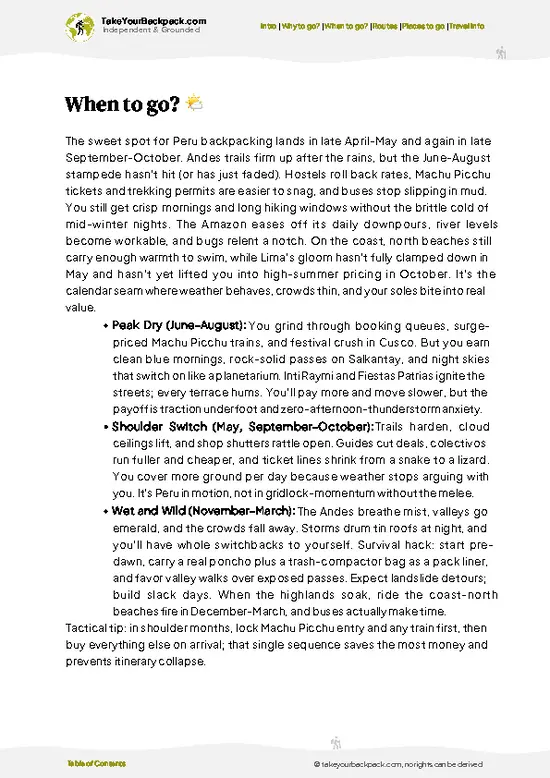
  • Weather: The dry season from May to September is your best bet. Expect clear skies and minimal rain, which means less mud and easier hiking. The wet season (October to April) turns the trails into slippery messes and can wash out parts of the site.

  • Temperature: Days hover around 18-22°C (64-72°F) during the dry season—pleasant but bring layers for chilly nights dropping to 5-8°C (41-46°F). The wet season is warmer but stickier, with highs around 24°C (75°F) and damp cold at night.

  • Daylight Hours: Roughly 11-12 hours of daylight year-round, but the dry season offers more consistent sunshine, giving you reliable daylight for exploring without rushing.

  • Crowds: The Ruins of Kotosh don’t draw massive crowds like Machu Picchu, but the dry season still sees a modest uptick in visitors. The
read more 👉

  • Weather: The dry season from May to September is your best bet. Expect clear skies and minimal rain, which means less mud and easier hiking. The wet season (October to April) turns the trails into slippery messes and can wash out parts of the site.

  • Temperature: Days hover around 18-22°C (64-72°F) during the dry season—pleasant but bring layers for chilly nights dropping to 5-8°C (41-46°F). The wet season is warmer but stickier, with highs around 24°C (75°F) and damp cold at night.

  • Daylight Hours: Roughly 11-12 hours of daylight year-round, but the dry season offers more consistent sunshine, giving you reliable daylight for exploring without rushing.

  • Crowds: The Ruins of Kotosh don’t draw massive crowds like Machu Picchu, but the dry season still sees a modest uptick in visitors. The wet season is quieter, but the trade-off is tougher conditions.

  • Seasonal Activities: Dry months are perfect for combining Kotosh with nearby hikes and cultural visits. Wet season limits outdoor plans but brings lush green landscapes if you’re into moody, atmospheric shots.

  • Price Fluctuations: Expect higher prices for local guides and accommodations during the dry season. The wet season offers better deals but factor in potential transport delays and cancellations.


Pro-tip: Aim for late May or early September—weather is solid, crowds are manageable, and prices haven’t peaked yet.


source: climatestotravel.comJANJanuary: fair for travelingFEBFebruary: fair for travelingMARMarch: fair for travelingAPRApril: fair for travelingMAYMay: highly recommended for travelingJUNJune: excellent for travelingJULJuly: excellent for travelingAUGAugust: excellent for travelingSEPSeptember: highly recommended for travelingOCTOctober: fair for travelingNOVNovember: fair for travelingDECDecember: fair for traveling
when-to-go

✈️ The backpacker research shortcutPeru Travel Guide

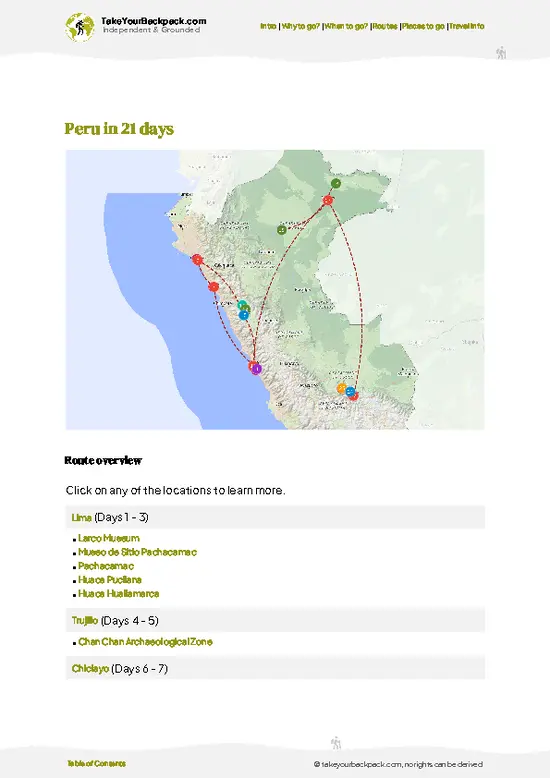
An offline-friendly backpacking guide with optimized travel routes, ranked highlights, transport advice, and the best areas to stay.
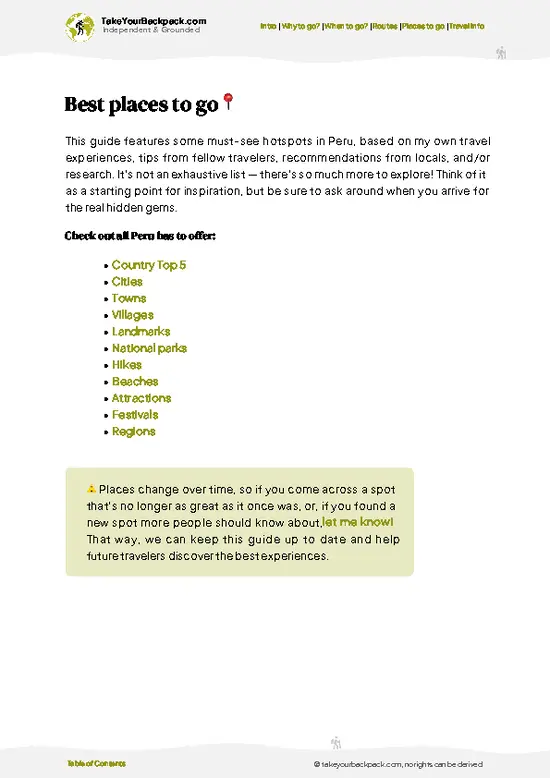
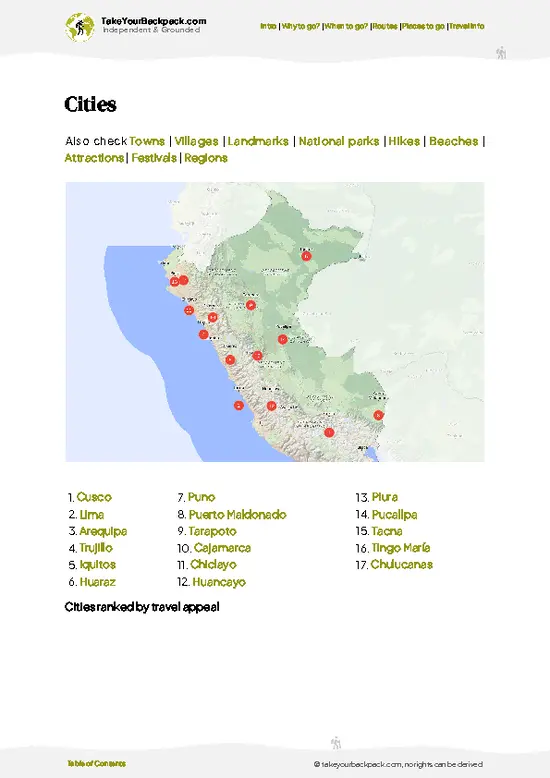
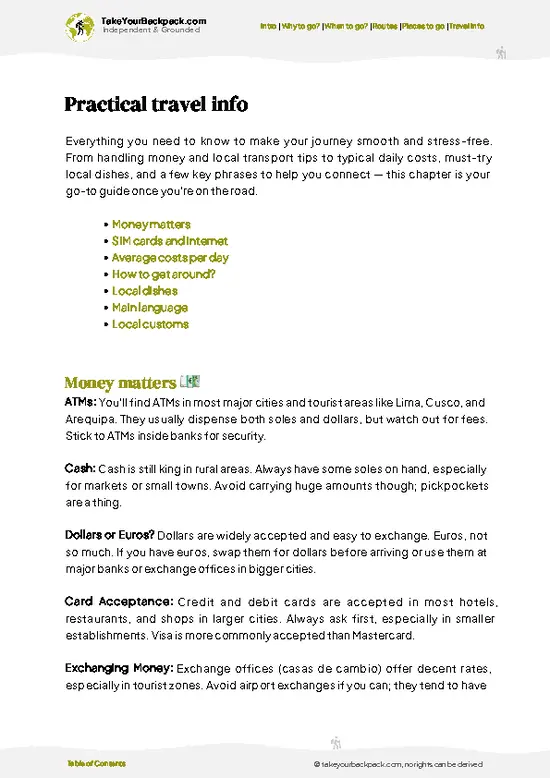
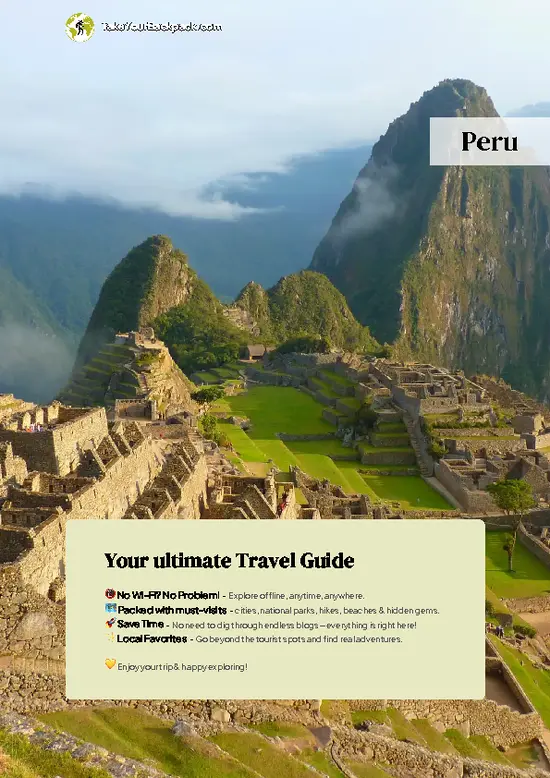
example page 0 from our offline Travel Guide for Peru
example page 1 from our offline Travel Guide for Peru
example page 2 from our offline Travel Guide for Peru
example page 3 from our offline Travel Guide for Peru
example page 4 from our offline Travel Guide for Peru
example page 5 from our offline Travel Guide for Peru
example page 6 from our offline Travel Guide for Peru
example page 7 from our offline Travel Guide for Peru
The digital guide (416 pages) contains:
113 highlights, ranked by travel appeal
Optimized 7, 14 & 21-day travel routes
Cities, national parks, landmarks, beaches
How to get around
Offline-friendly for travel without Wi-Fi
👉 Click to see all 30+ guide features

📅 Plan smarter in minutes, not weeks
Month by month travel advice
Festivals & national holidays
Budget expectations

🗺️ Go to the right places, skip the overrated ones
Honest pros & cons of destinations
Top hikes, parks & viewpoints
Lesser-known places most travelers miss
Clear “worth it vs skip it” guidance

🛏️ Travel smoothly without rookie mistakes
Best areas to stay
Transport systems explained simply
Common scams & safety advice
SIM cards, money & practical tips

🌍 Understand the country, not just visit it
Culture & traditions
52 Essential phrases & customs
Festivals worth planning around
Traveler-friendly historical context
Insights that make places more meaningful

📱 Built for real travel conditions
Fully downloadable PDF
Works completely offline
Optimized for phone use
Useful in remote areas & buses
Everything in one place
Save weeks of stressful planning
Get instant access to your full guide. 30‑day money-back guarantee.
+ Add another guide for just ₹667.00

By proceeding you agree to our terms.
Sent to your inbox immediately after payment • 100% Secure Checkout
Best Backpacking Travel Advisor 2025 tourism awardBest Backpacking
Travel Advisor
2025
What others say about Take Your Backpack Guides:
⭐⭐⭐⭐⭐
Fantastic, amazing amount of information!
⭐⭐⭐⭐⭐
My goodness this is amazing, it's what I've been looking for hats off too you!
⭐⭐⭐⭐⭐
I think this is absolutely BRILLIANT
⭐⭐⭐⭐
Very complete and informative. It's still missing places, but I gotta to commend you
⭐⭐⭐⭐⭐
This is truly amazing, thank you, can't wait to explore it with my kids!
⭐⭐⭐⭐⭐
Awesome resource, thank you!
⭐⭐⭐⭐⭐
This is amazing! Can't wait to explore the ones I haven't seen
⭐⭐⭐⭐
I love this! Well done, great idea.
⭐⭐⭐⭐⭐
Thanks for taking the time to make this gem!
⭐⭐⭐⭐⭐
This might be the best website I've ever seen.
⭐⭐⭐⭐⭐
Congratulations, and thank you so much for your work; it's incredibly valuable.
⭐⭐⭐⭐
In all seriousness I think you did a great job pointing out the important spots
⭐⭐⭐⭐⭐
10/10 very good
⭐⭐⭐⭐⭐
As someone who's only just starting to visit regularly this is awesome, thank you.
⭐⭐⭐⭐
Thank you very much! I'm going to visit my dad, it's going to be very useful!
⭐⭐⭐⭐⭐
This is really cool! We'll be travelling for the first time and this definitely come in handy.
⭐⭐⭐⭐⭐
You are now our minister of culture, congratulations 👨‍💼
⭐⭐⭐⭐⭐
Just wanted to tell you that this is a pearl! Going to follow your recommendations.
⭐⭐⭐⭐⭐
This is so cool. I'll definitely be using the resource for my travels soon.
⭐⭐⭐⭐⭐
This is very impressive! Good work.
⭐⭐⭐⭐⭐
This is an amazing and informative site. Very well done!

🛏️ Where to stay?Where staying makes the most sense

Staying near the Ruins of Kotosh? You’ll want to be smart about your choices. The area around Huánuco is your best bet. It’s a hub for backpackers, offering a mix of safety and social vibes.

Look for accommodations in the city center. This is where the action is. You’ll find plenty of budget-friendly options that cater to solo travelers. The atmosphere is relaxed, and you can easily strike up conversations with fellow adventurers.

Another option is to head slightly out of town to smaller guesthouses. These places often have a more intimate feel. You might even get a homemade breakfast from … read more 👉
Staying near the Ruins of Kotosh? You’ll want to be smart about your choices. The area around Huánuco is your best bet. It’s a hub for backpackers, offering a mix of safety and social vibes.

Look for accommodations in the city center. This is where the action is. You’ll find plenty of budget-friendly options that cater to solo travelers. The atmosphere is relaxed, and you can easily strike up conversations with fellow adventurers.

Another option is to head slightly out of town to smaller guesthouses. These places often have a more intimate feel. You might even get a homemade breakfast from a local family.

Be prepared for crowds at the ruins, especially during peak season. But don’t let that deter you. The real magic lies in the stories shared with locals and the connections you make. Embrace the chaos, and you’ll find the authentic experience that makes the journey worthwhile.

👛 Costs (as of 4 September 2026)What things cost and how to budget

Visiting the Ruins of Kotosh in Peru is a journey into ancient history, but it comes with its own set of costs that you should be aware of.
  • Entrance Fee: Expect to pay around $3 to $5 USD. This fee grants you access to the site, where you can explore the fascinating temple structures and learn about their significance. It’s a small price for a deep dive into pre-Incan culture.
  • Transportation: Getting to Kotosh can vary. If you’re traveling from Huánuco, a bus ride will cost you about $1 to $3 USD. Taxis or private transport can run higher, around $10 to $20 USD, depending on your negotiation skills and the distance.
  • Guided Tours: If you want a richer experience, consider a guided tour. Prices range from $15 to $30 USD. A knowledgeable guide can provide insights that you won’t get from a guidebook,
read more 👉
Visiting the Ruins of Kotosh in Peru is a journey into ancient history, but it comes with its own set of costs that you should be aware of.
  • Entrance Fee: Expect to pay around $3 to $5 USD. This fee grants you access to the site, where you can explore the fascinating temple structures and learn about their significance. It’s a small price for a deep dive into pre-Incan culture.
  • Transportation: Getting to Kotosh can vary. If you’re traveling from Huánuco, a bus ride will cost you about $1 to $3 USD. Taxis or private transport can run higher, around $10 to $20 USD, depending on your negotiation skills and the distance.
  • Guided Tours: If you want a richer experience, consider a guided tour. Prices range from $15 to $30 USD. A knowledgeable guide can provide insights that you won’t get from a guidebook, making the history come alive.
  • Food and Drink: Local eateries near the site offer meals for about $5 to $10 USD. Street food is even cheaper, but be cautious about hygiene. Bring water, as buying it on-site can add up.
  • Accommodation: If you plan to stay overnight, budget around $15 to $50 USD for a basic hotel or hostel. Prices can spike during peak tourist seasons, so booking in advance is wise.

The Ruins of Kotosh may not be the most famous site in Peru, but the experience is genuine. The costs are manageable, and the history is rich.


source: peru.travel
⚠️ Prices can change and everyone travels differently, so take this as a rough guide. Hope it helps you plan your adventure!

FAQFrequently asked questions about Ruins of Kotosh

Ruins of Kotosh is an ancient archaeological site in Peru known for its early temple structures dating back to around 3000 BCE, featuring the famous 'Temple of the Crossed Hands.' It represents one of the oldest examples of religious architecture in the Andes.
Visiting Ruins of Kotosh typically requires about 1 to 2 hours to explore the main structures and understand the site. This allows enough time to appreciate the archaeological significance without rushing.
To get to Ruins of Kotosh, travel to the city of Huánuco, then take a local taxi or bus approximately 8 kilometers east to the site. The site is accessible by road and is about a 20-minute drive from Huánuco.
⚠️ Things can change over time, so always validate details locally before you go.

Other Peruvian landmarks near Ruins of Kotosh

Explore more nearby:

  • Pachacamac—adobe temples, coastal plain, pilgrimage center| 261 km away
  • Kuelap—mountain fortress, massive stone walls, Chachapoya legacy| 431 km away
  • Gocta Waterfall—jungle trail, twin cascades, misty cliffs| 469 km away

💡 Not sure where to go next?
Create a personalized itinerary for Peru including Ruins of Kotosh and the places that fit your trip.

Generate my itinerary

👉 Discover all landmarks

Or checkout all Peru has to offer (think cities, towns, villages, national parks, hikes, beaches, festivals)
Country photo of Peru

We 💚 feedbackSumming up the experience

The Ruins of Kotosh are a treasure trove of ancient history, with their unique temple structures that whisper stories of Peru’s past. You’ll feel the weight of time here, and that connection is priceless. But be ready for the crowds; it can get busy, especially during peak season. If you’re after solitude, visit early. The magic is real, but so is the reality of sharing it with others.

✈️ When did I visit Peru?
Peru I visited during my half year trip through South and Central America back in 2003

✍️ Help improve this page!
The information on this page is based on my own backpacking experience in Peru, supplemented with up-to-date research and feedback from other travelers. Travel details can change, so if you notice anything outdated or incomplete, feel free to let me know.


🙋‍♂️ Give feedback

👋 Meet the founderWho’s Behind Take Your Backpack?

Johan, backpacker and founder of TakeYourBackpackHi, I’m Johan (Netherlands 🇳🇱), the creator of TakeYourBackpack. Over the past decade, I’ve backpacked through 80+ countries across six continents, gaining extensive experience with independent travel, long-term trips, and overland routes.

This site is built on a combination of firsthand travel experience and carefully curated insights from other backpackers. Many guides are based on places I’ve personally visited, while others bring together tips, observations, and practical advice shared by trusted travelers I’ve met along the way.

The goal is to provide realistic, experience-driven guidance — not generic itineraries — so you can explore destinations with better context, clearer expectations, and more confidence.

Get full Peru guide •
Instant download • 113 highlights • Full Offline guide