×

Peru🇵🇪 | festivalsSemana de PunoManco Cápac pageant, 4 November parade, diablada and morenada, Titicaca shoreline | things to do and best time to go

Explore Señor de los MilagrosExplore Festival de la Marinera

Backpacking in Semana de Puno
👀 For curious travelersfestival ranked #14
By Johan Kruseman 🇳🇱 | Updated October 20, 2026

Semana de Puno once meant a local affair of dance troupes and church processions that few outsiders ever saw; today buses of travelers arrive for it. It happens in Puno, in the south of Peru, on the shore of Lake Titicaca, with costumed dancers and brass bands. My bus from Cusco stalled at a roadside checkpoint while a band rehearsed in the dirt beside us, trumpets blaring. Book beds and bus seats weeks ahead, since prices jump and rooms vanish; watch your pockets in the crowds; and carry small bills for taxis.

Discover everything you want to know in the 📖 Peru Travel Guide.


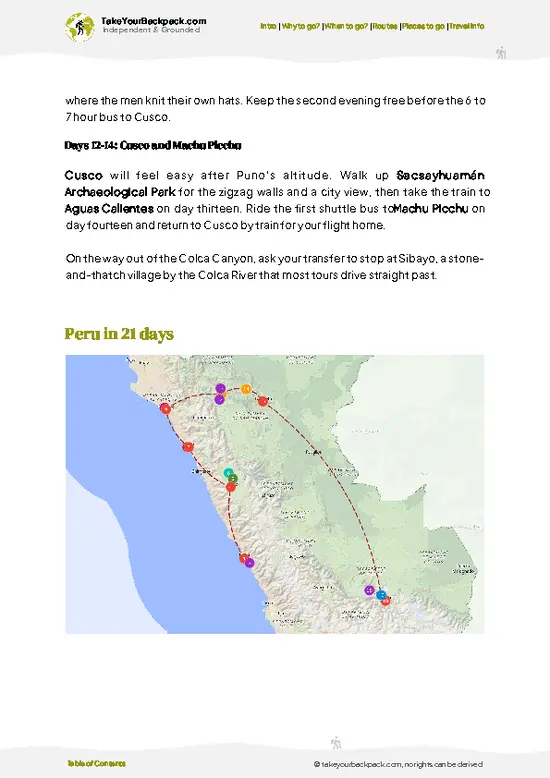
example page 0 from our offline Travel Guide for Peru
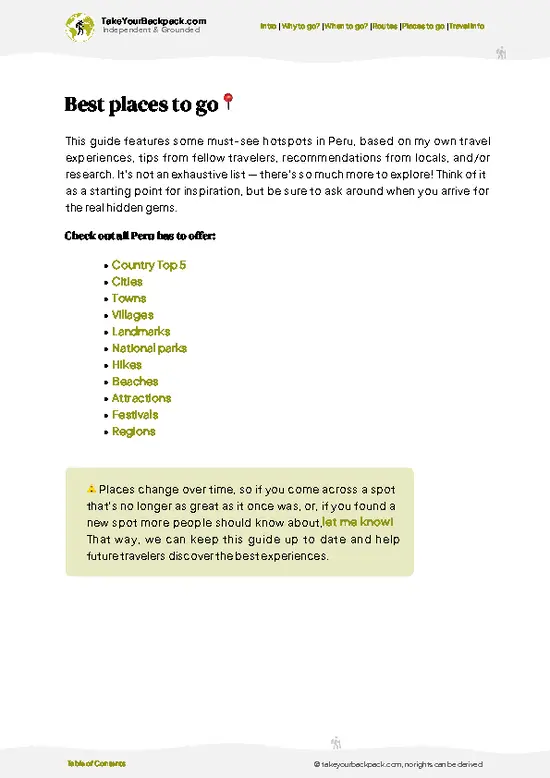
example page 1 from our offline Travel Guide for Peru
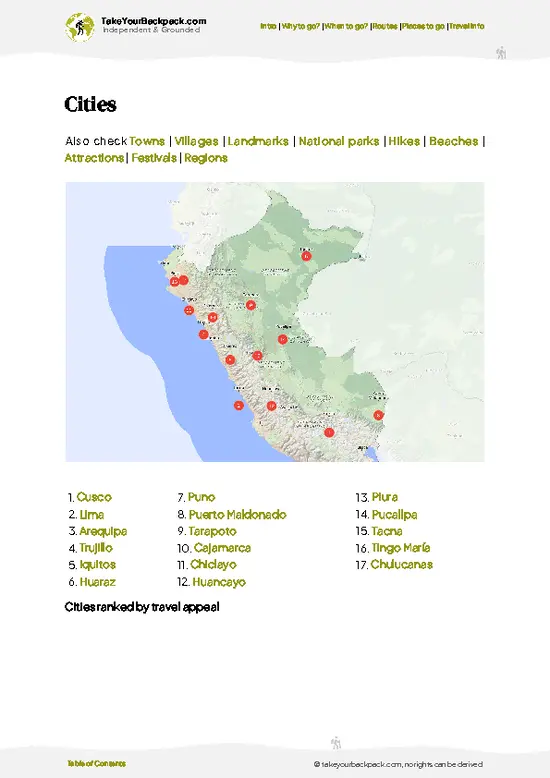
example page 2 from our offline Travel Guide for Peru
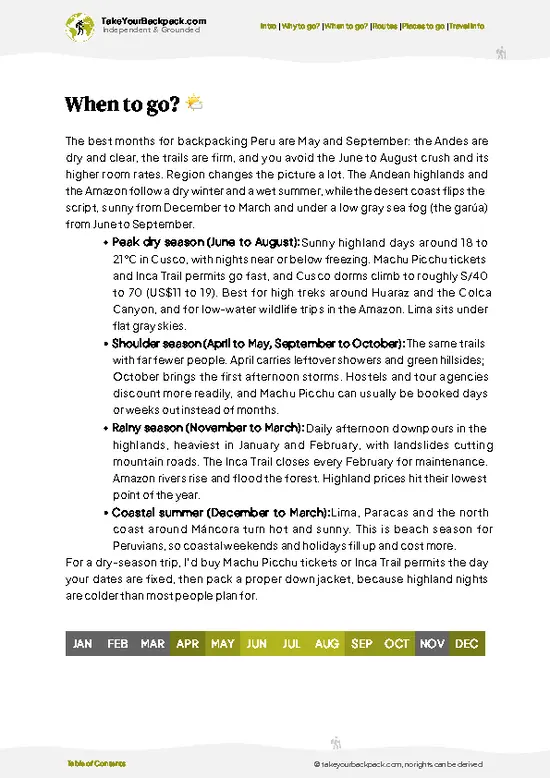
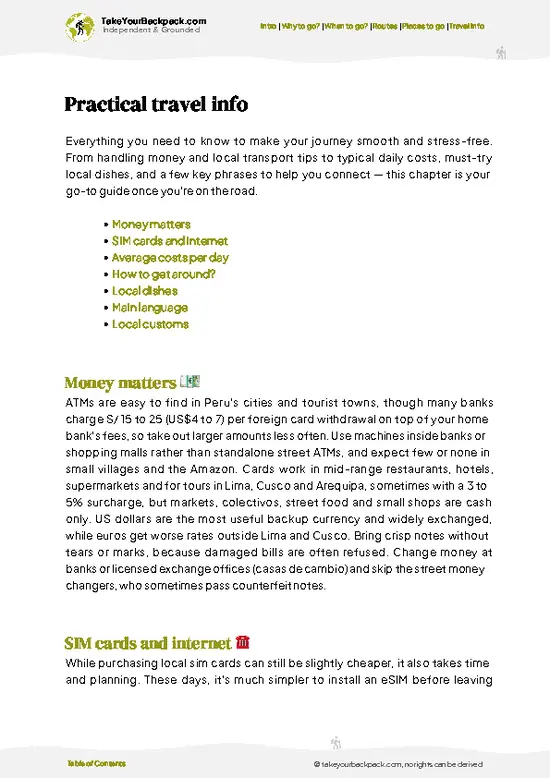
example page 3 from our offline Travel Guide for Peru
example page 4 from our offline Travel Guide for Peru
example page 5 from our offline Travel Guide for Peru
example page 6 from our offline Travel Guide for Peru
example page 7 from our offline Travel Guide for Peru
Loading the map 🌍
CLICK TO FILTER
cities
towns
villages
landmarks
national parks
hikes
beaches
attractions
festivals
regions
SHOW COUNTRY’S BESTSHOW ALL

✨ Why go?
Ranked #14 festival in Peru
Reasons people choose to celebrate the here

Semana de Puno pulls backpackers because it is the one moment when the whole Altiplano comes to town to celebrate its founding. Dancers from Aymara and Quechua communities fill the streets in handwoven and sequined costumes, and you can stand a few feet from them rather than behind a fence. The social energy spreads naturally: you share benches, snacks and dance steps with locals and other travelers. It also fits a southern Peru loop well, sitting between Cusco, Arequipa and the Bolivian border at Copacabana. Add a boat trip to the Uros floating islands and you get culture and lake in one stop.

💡 HighlightsTop highlights of Semana de Puno

  1. Manco Cápac legend pageant: The festival’s signature is the staged arrival of Manco Cápac and Mama Ocllo, said in Andean tradition to have risen from Lake Titicaca. Performers in Inca costume re-enact the myth, often with lake backdrops and crowds packed on the shore.
  2. Founding day parade on 4 November: Semana de Puno marks the city’s founding in 1668, and the main civic parade is the formal peak. Schools, unions, military bands and dance groups march through the center for hours, and locals claim their curb spots early.
  3. Folk dance and costume processions: Puno is known as the folklore capital of Peru, and the week showcases that reputation. Expect diablada masks, morenada skirts and sicuris panpipe ensembles, each with distinct rhythms and heavy embroidered outfits you can study up close.
  4. Lake
… read more 👉
  1. Manco Cápac legend pageant: The festival’s signature is the staged arrival of Manco Cápac and Mama Ocllo, said in Andean tradition to have risen from Lake Titicaca. Performers in Inca costume re-enact the myth, often with lake backdrops and crowds packed on the shore.
  2. Founding day parade on 4 November: Semana de Puno marks the city’s founding in 1668, and the main civic parade is the formal peak. Schools, unions, military bands and dance groups march through the center for hours, and locals claim their curb spots early.
  3. Folk dance and costume processions: Puno is known as the folklore capital of Peru, and the week showcases that reputation. Expect diablada masks, morenada skirts and sicuris panpipe ensembles, each with distinct rhythms and heavy embroidered outfits you can study up close.
  4. Lake Titicaca boat events and Uros islands visits: Festival days bring extra life to the waterfront, and boats head out to the floating reed islands of the Uros. The reed-built homes and the thin, bright air at 3,800 meters give the lake its strangeness.
  5. Street food and plaza evenings: After the parades, the center fills with stalls selling grilled trout, anticuchos and hot api, a purple corn drink thick enough to warm cold hands. Brass bands often keep playing late, and strangers will pull you into a dance circle.
Do the Manco Cápac legend pageant first, because it explains the myth behind every costume and procession you will see over the following days, and it gives the rest of the week a clear context.
Spotted a mistake or missing something? Contact us.

Things to do around Semana de Puno

Ratings based on Tripadvisor reviews. When you book through this link, you support our work at no extra cost to you.

🌤️ When to go?When is the celebration of Semana de Puno?

Semana de Puno runs for about a week around November 5, the anniversary of the legendary emergence of Manco Cápac and Mama Ocllo from Lake Titicaca, with parades and dance contests in Puno’s Plaza de Armas, Estadio Enrique Torres Belón and the lakefront.
  • Best day: The main parades with the biggest costumed troupes fall around November 5 and the days just before it. Quieter weekdays have rehearsals and smaller events.
  • Weather: Days reach roughly 15 to 18°C (59 to 64°F), nights drop near 3°C (37°F), and afternoon showers are possible. At 3,800 meters the sun burns, so bring layers, a rain shell and sunscreen.
  • Booking: Reserve beds 3 to 4 weeks ahead. Prices rise around 30 to 60 percent on peak nights.
  • Crowds: Arrive the day before and leave a day after, since buses fill and streets close during parades.
Buy onward bus tickets when you arrive.

source: climatestotravel.comJANJanuary: not recommended for travelingFEBFebruary: excellent for travelingMARMarch: not recommended for travelingAPRApril: not recommended for travelingMAYMay: not recommended for travelingJUNJune: not recommended for travelingJULJuly: not recommended for travelingAUGAugust: not recommended for travelingSEPSeptember: not recommended for travelingOCTOctober: not recommended for travelingNOVNovember: not recommended for travelingDECDecember: not recommended for traveling

✈️ The backpacker research shortcutPeru Travel Guide

An offline-friendly backpacking guide with optimized travel routes, ranked highlights, transport advice, and the best areas to stay.
example page 0 from our offline Travel Guide for Peru
example page 1 from our offline Travel Guide for Peru
example page 2 from our offline Travel Guide for Peru
example page 3 from our offline Travel Guide for Peru
example page 4 from our offline Travel Guide for Peru
example page 5 from our offline Travel Guide for Peru
example page 6 from our offline Travel Guide for Peru
example page 7 from our offline Travel Guide for Peru
The digital guide (310 pages) contains:
✅ 102 highlights, ranked by travel appeal
✅ Optimized 7, 14 & 21-day travel routes
✅ Cities, national parks, landmarks, beaches
✅ How to get around
✅ Offline-friendly for travel without Wi-Fi
👉 Click to see all 30+ guide features

📅 Plan smarter in minutes, not weeks
✅ Month by month travel advice
✅ Festivals & national holidays
✅ Budget expectations

🗺️ Go to the right places, skip the overrated ones
✅ Honest pros & cons of destinations
✅ Top hikes, parks & viewpoints
✅ Lesser-known places most travelers miss
✅ Clear “worth it vs skip it” guidance

🛏️ Travel smoothly without rookie mistakes
✅ Best areas to stay
✅ Transport systems explained simply
✅ Common scams & safety advice
✅ SIM cards, money & practical tips

🌍 Understand the country, not just visit it
✅ Culture & traditions
✅ 52 Essential phrases & customs
✅ Festivals worth planning around
✅ Traveler-friendly historical context
✅ Insights that make places more meaningful

📱 Built for real travel conditions
✅ Fully downloadable PDF
✅ Works completely offline
✅ Optimized for phone use
✅ Useful in remote areas & buses
✅ Everything in one place
Stop searching, start planning
Get instant access to your full guide. 30‑day money-back guarantee.
+ Add another guide for just

By proceeding you agree to our terms.
Sent to your inbox immediately after payment • 100% Secure Checkout
Best Backpacking Travel Advisor 2025 tourism awardBest Backpacking
Travel Advisor
2025
What others say about Take Your Backpack Guides:
⭐⭐⭐⭐⭐
Fantastic, amazing amount of information!
⭐⭐⭐⭐⭐
My goodness this is amazing, it's what I've been looking for hats off too you!
⭐⭐⭐⭐⭐
I think this is absolutely BRILLIANT
⭐⭐⭐⭐
Very complete and informative. It's still missing places, but I gotta to commend you
⭐⭐⭐⭐⭐
This is truly amazing, thank you, can't wait to explore it with my kids!
⭐⭐⭐⭐⭐
Awesome resource, thank you!
⭐⭐⭐⭐⭐
This is amazing! Can't wait to explore the ones I haven't seen
⭐⭐⭐⭐
I love this! Well done, great idea.
⭐⭐⭐⭐⭐
Thanks for taking the time to make this gem!
⭐⭐⭐⭐⭐
This might be the best website I've ever seen.
⭐⭐⭐⭐⭐
Congratulations, and thank you so much for your work; it's incredibly valuable.
⭐⭐⭐⭐
In all seriousness I think you did a great job pointing out the important spots
⭐⭐⭐⭐⭐
10/10 very good
⭐⭐⭐⭐⭐
As someone who's only just starting to visit regularly this is awesome, thank you.
⭐⭐⭐⭐
Thank you very much! I'm going to visit my dad, it's going to be very useful!
⭐⭐⭐⭐⭐
This is really cool! We'll be travelling for the first time and this definitely come in handy.
⭐⭐⭐⭐⭐
You are now our minister of culture, congratulations 👨‍💼
⭐⭐⭐⭐⭐
Just wanted to tell you that this is a pearl! Going to follow your recommendations.
⭐⭐⭐⭐⭐
This is so cool. I'll definitely be using the resource for my travels soon.
⭐⭐⭐⭐⭐
This is very impressive! Good work.
⭐⭐⭐⭐⭐
This is an amazing and informative site. Very well done!

🛏️ Where to stay?How to pick the right area

The streets within a few blocks of Parque Pino and the Plaza de Armas are the best base for backpackers during Semana de Puno. You can walk to the parade routes, the lakefront and the pedestrian street Jirón Lima, which has the densest cluster of bars, cafes and tour agencies. That means easy company, because solo travelers end up chatting at the same breakfast tables and rooftop terraces. Lights and foot traffic keep it fairly safe in the evening, though you should still use a taxi for late returns uphill.

The area near the Malecón Bahía de los Incas and the port is calmer, good if you want … read more 👉
The streets within a few blocks of Parque Pino and the Plaza de Armas are the best base for backpackers during Semana de Puno. You can walk to the parade routes, the lakefront and the pedestrian street Jirón Lima, which has the densest cluster of bars, cafes and tour agencies. That means easy company, because solo travelers end up chatting at the same breakfast tables and rooftop terraces. Lights and foot traffic keep it fairly safe in the evening, though you should still use a taxi for late returns uphill.

The area near the Malecón Bahía de los Incas and the port is calmer, good if you want sleep between dance nights, and still just ten minutes on foot from the main plaza. Avoid sleeping near the bus terminal or the railway station after dark, where streets are emptier and the cheapest rooms are often noisy. Book early, because the central blocks fill first.

👛 Costs (as of 20 October 2026)Typical daily expenses

A realistic budget for one day at Semana de Puno is about US$0 to 15, with a total daily budget of roughly US$78 in high season.
CategoryBudget RangeLocal Reality
Festival ticketsUS$0 to 15Street parades are free. Paid stadium seats for the big dance contests cost a few dollars up to about US$15.
AccommodationUS$15 to 35Dorm beds and simple private rooms jump in price around November 5, so US$25 is typical.
Local transportUS$1 to 5Mototaxis within town cost about US$1 to 2. Walking covers most of the center.
Food & drinksUS$12 to 25Set lunches run US$2 to 4, street snacks US$1 to 3, and a beer about US$2 to 3.
Miscellaneous expensesUS$5 to 15Chairs along the parade route, costume-watching snacks, sunscreen, small tips and bag storage.
Total Daily BudgetUS$33 to 95About US$78 in high season, using mid-range figures per row.


source: peru.travel
⚠️ Prices can change and everyone travels differently, so take this as a rough guide. Hope it helps you plan your adventure!

🍲 FoodWhat to Eat & Drink

Festival food in Puno is hearty because the nights are cold, so expect street stalls around the plaza and stadium selling anticuchos, salchipapas, fried trucha (lake trout) and picarones dripping in syrup. Pick up a bowl of caldo de cabeza or chairo, an Altiplano soup with chuño and lamb, for something distinctly local. Try cuy al horno at a sit-down place if you want the full regional experience.

For drinks, vendors pour hot emoliente and mate de coca, which also helps with altitude. Beer is easy to find, and Peru’s own Cusqueña and Cristal are sold everywhere. Small pisco sours appear at bars along Jirón Lima.

Carry cash in small coins and notes, as stalls rarely take cards. Lines move fast, portions are big enough to share, and eating where locals queue is a good rule.

FAQCommon questions from travelers

Semana de Puno takes place around November 5 each year, with events spread across roughly a week in the days before and after. It marks the legendary emergence of Manco Cápac and Mama Ocllo from Lake Titicaca. The main parades and dance contests fill the Plaza de Armas and the stadium in Puno, and the biggest crowds gather on the weekend nearest the 5th.
Attending Semana de Puno costs about US$60 to 95 a day for an independent traveler, including a bed, food and local transport. Street parades are free, while seats at stadium dance contests run from a few dollars to about US$15. Beds typically cost US$15 to 35 and meals US$2 to 4 for a set lunch.
Semana de Puno does not require tickets for the street parades, which you can watch free along the Plaza de Armas and Jirón Lima routes. Paid stadium contests sell seats at the gate or through local sellers, usually cheaper a few days ahead than on the main day. Book your bed 3 to 4 weeks early, since central rooms fill before November 5.
⚠️ Things can change over time, so always validate details locally before you go.

Other Peruvian festivals near Semana de Puno

Explore more nearby:

  • Fiesta de la Candelaria—Diablada masks, trajes de luces, brass band contest, Virgin procession| 0 km away
  • Qoyllur Rit’i—Sinakara pilgrimage, ukuku dancers, glacier ice, 4,700 meters| 286 km away
  • Inti Raymi—Quechua ceremony, Sacsayhuamán esplanade, Qorikancha sunrise, June 24| 331 km away

💡 Not sure where to go next?
Create a personalized itinerary for Peru including Semana de Puno and the places that fit your trip.

Generate my itinerary

👉 Discover all festivals

Or checkout all Peru has to offer (think cities, towns, villages, national parks, hikes, beaches, festivals)
Country photo of Peru

We 💚 feedbackIs it worth it?

Semana de Puno suits travelers who like noise, costume and crowds, and who are happy to follow a parade for hours. It is less rewarding if you want quiet or fixed schedules. I would book early and pack layers for the evenings.

✈️ When did I visit Peru?
Peru I visited during my half year trip through South and Central America back in 2003

✍️ Help improve this page!
The information on this page is based on my own backpacking experience in Peru, supplemented with up-to-date research and feedback from other travelers. Travel details can change, so if you notice anything outdated or incomplete, feel free to let me know.


🙋‍♂️ Give feedback

👋 Meet the founderWho’s Behind Take Your Backpack?

Johan, backpacker and founder of TakeYourBackpackHi, I’m Johan (Netherlands 🇳🇱), the creator of TakeYourBackpack. Over the past 3 decades, I’ve backpacked through 90+ countries across six continents, gaining extensive experience with independent travel, long-term trips, and overland routes.

This site is built on a combination of firsthand travel experience and carefully curated insights from other backpackers. Many guides are based on places I’ve personally visited, while others bring together tips, observations, and practical advice shared by trusted travelers I’ve met along the way.

The goal is to provide realistic, experience-driven guidance — not generic itineraries — so you can explore destinations with better context, clearer expectations, and more confidence.