×

Peru🇵🇪 | citiesTalaraoil fields, Pacific beaches, dry coastal hills | things to do and best time to go

Explore SullanaExplore Ilo

Backpacking in Talara
👍 Recommendedcity ranked #9
By Johan Kruseman 🇳🇱 | Updated June 18, 2026

Most people online treat Talara as a forgettable oil town, but the surprise is how useful it is as a low-key, cheap launchpad for some of northern Peru’s best desert–meets–ocean coastline. Talara sits in Piura region, on the far northwest coast, a short bus ride inland from Los Órganos, Máncora, and the beaches around Cabo Blanco. The town itself is work-first, tourism-second: hot, a bit dusty, with a compact center, a busy market, and sunset light that turns the concrete soft gold. It works best as a practical base or overnight stop, not a “stay a week” destination. Buses are frequent, mototaxis are everywhere, and you’ll mostly meet locals and a few surfers or workers, not a hostel party crowd. It’s cheaper and more grounded than Máncora, less pretty than Los Órganos, but safer-feeling than Piura city at night if you stick to central streets and normal precautions.

Discover everything you want to know in the 📖 Peru Travel Guide.


Get your Peru guide
118 ranked highlights, routes & tips, works offline (442 pages)
Loading the map 🌍
CLICK TO FILTER
cities
towns
villages
landmarks
national parks
hikes
beaches
attractions
festivals
regions
SHOW COUNTRY’S BESTSHOW ALL

✨ Why go?
Ranked #9 city in Peru
The unique appeal for travelers

Talara, Peru, is a strategic hub for backpackers navigating the northern coast. Its proximity to stunning beaches like Mancora makes it a perfect launchpad for sun-seekers and surfers alike. The local food scene is a treat, with small eateries serving fresh ceviche that bursts with flavor, often accompanied by the scent of the ocean breeze.

The town’s walkable streets invite exploration, where you can stumble upon vibrant markets and friendly locals. Accommodations range from small-scale hostels to cozy guesthouses, fostering a social atmosphere that appeals to solo travelers and small groups. While many pass through for a night or two, those who linger find a laid-back vibe that encourages connection and relaxation.

Talara is ideal for slow travelers who appreciate a blend of culture … read more 👉
Talara, Peru, is a strategic hub for backpackers navigating the northern coast. Its proximity to stunning beaches like Mancora makes it a perfect launchpad for sun-seekers and surfers alike. The local food scene is a treat, with small eateries serving fresh ceviche that bursts with flavor, often accompanied by the scent of the ocean breeze.

The town’s walkable streets invite exploration, where you can stumble upon vibrant markets and friendly locals. Accommodations range from small-scale hostels to cozy guesthouses, fostering a social atmosphere that appeals to solo travelers and small groups. While many pass through for a night or two, those who linger find a laid-back vibe that encourages connection and relaxation.

Talara is ideal for slow travelers who appreciate a blend of culture and adventure. It’s not a party town, but rather a place where you can recharge before tackling nearby hikes or soaking in the coastal charm.
Want to include Talara in your Peru route?
Create a personalized Peru itinerary that includes Talara and the places that fit your trip — based on your travel style, budget, and available time. Get your route in seconds.

Generate my trip

💡 HighlightsKey sights and experiences for travelers

  1. Plaza de Armas de Talara — The town’s social heart: shady benches, local vendors, and the steady rhythm of daily life. Great spot to sit, people-watch, and get a feel for Talara without any fuss.
  2. Parroquia San Miguel Arcángel — The main church on the plaza; modest but important to local identity. Visiting during a service or festival shows how faith and community intersect here.
  3. Mercado Central (Mercado Municipal) — Noisy, colorful, and full of real food culture: fresh seafood, ceviche stands, and fruits you rarely see elsewhere. Best place to sample cheap, authentic snacks and observe daily commerce.
  4. Malecón / Paseo Costero — The seaside promenade where locals walk at dusk. You get coastline views, fishermen hauling in small catches, and relaxed evening life — good for sunsets and local
read more 👉
  1. Plaza de Armas de Talara — The town’s social heart: shady benches, local vendors, and the steady rhythm of daily life. Great spot to sit, people-watch, and get a feel for Talara without any fuss.
  2. Parroquia San Miguel Arcángel — The main church on the plaza; modest but important to local identity. Visiting during a service or festival shows how faith and community intersect here.
  3. Mercado Central (Mercado Municipal) — Noisy, colorful, and full of real food culture: fresh seafood, ceviche stands, and fruits you rarely see elsewhere. Best place to sample cheap, authentic snacks and observe daily commerce.
  4. Malecón / Paseo Costero — The seaside promenade where locals walk at dusk. You get coastline views, fishermen hauling in small catches, and relaxed evening life — good for sunsets and local photos.
  5. Muelle de Talara (the old pier) — Weathered boards, working boats and salty air make this pier an atmospheric place to watch fishermen, see local boat traffic, and feel the town’s maritime pulse.
  6. Lonja y Puerto Pesquero — The working fish port and auction area where the catch is landed and sold. It’s gritty and real: best visited early morning to see the action and buy fresh fish affordably.
  7. Museo del Petróleo y la Industria Petrolera — Talara grew around oil; this small museum interprets that history with old equipment, photos, and stories about the refinery era. It’s the cultural key to understanding why the town exists.
  8. Antiguas instalaciones petroleras (viewpoints) — You can’t wander into all refinery zones, but accessible viewpoints and vantage points around town let you see rusted tanks, pipelines and the industrial landscape that shaped Talara’s economy and character.
  9. Casa de la Cultura / Centro Cultural local — Small exhibitions, community events, and occasional performances highlight local arts, folklore and music. Check the schedule — you might catch a dance group or a craft fair.
  10. Barrio Tradicional (El Arenal / casco antiguo) — Walkable streets of older houses, small bodegas and corner cafés where daily life still follows a slower rhythm. It’s low-key, authentic, and good for wandering without an agenda.
A few worthwhile day trips outside the city: Cabo Blanco (famous surf/angling cove and rugged coast), Punta Pariñas (the westernmost point of mainland Peru) and the surf town of Lobitos — Cabo Blanco is my personal favorite for its dramatic coastline and fishing lore.
Spotted a mistake or missing something? Contact us.
🏘️ NeighborhoodsUnderstanding the local layout

Talara, a coastal town in Peru, offers a unique blend of local culture and backpacker-friendly vibes. Here’s how to navigate its neighborhoods for the best experience.

Centro: This is the heart of Talara. Vibrant markets and local eateries fill the streets, creating a lively atmosphere. It’s budget-friendly, with plenty of hostels and low-cost dining options. Walkability is high; you can easily explore on foot. While nightlife is modest, you’ll find a few bars where locals gather. Perfect for short stays, as everything is within reach.

Los Órganos: Just a short ride from Centro, this area is quieter and more laid-back. Known for its stunning beaches, it’s ideal for those looking to relax. Accommodation tends to be a bit pricier, but the ocean views are worth it. Public transport is accessible, … read more 👉
Talara, a coastal town in Peru, offers a unique blend of local culture and backpacker-friendly vibes. Here’s how to navigate its neighborhoods for the best experience.

Centro: This is the heart of Talara. Vibrant markets and local eateries fill the streets, creating a lively atmosphere. It’s budget-friendly, with plenty of hostels and low-cost dining options. Walkability is high; you can easily explore on foot. While nightlife is modest, you’ll find a few bars where locals gather. Perfect for short stays, as everything is within reach.

Los Órganos: Just a short ride from Centro, this area is quieter and more laid-back. Known for its stunning beaches, it’s ideal for those looking to relax. Accommodation tends to be a bit pricier, but the ocean views are worth it. Public transport is accessible, but walking can be limited. Great for longer stays if you want to soak in the sun and surf.

El Alto: This neighborhood offers a more local experience, with fewer tourists. It’s a bit hilly, so expect some uphill walks. Prices are lower here, making it a budget-friendly option. The nightlife is almost non-existent, but you’ll find authentic Peruvian food. Suitable for longer stays if you want to immerse yourself in daily life.

Each area has its own flavor, so choose based on what kind of adventure you seek.

⌛️ 1 dayHow to make the most of one day

Talara, a coastal town in northern Peru, pulses with the rhythm of everyday life, where the scent of saltwater mingles with the aroma of fresh ceviche. It’s not on everyone’s radar, but that’s what makes it special. You’ll find a blend of local culture and stunning ocean views that make every moment feel authentic.

Start your morning at the bustling Mercado Central. The vibrant colors of fruits and vegetables pop under the warm sun, and the chatter of vendors fills the air. Grab a breakfast of *pan con chicharrón*—a pork sandwich that’s crispy and savory. As you savor each bite, watch locals barter and laugh; it’s a slice of life you won’t want to miss.

After breakfast, stroll along the Malecón, where the ocean breeze brushes against your skin. The views of the Pacific are breathtaking, … read more 👉
Talara, a coastal town in northern Peru, pulses with the rhythm of everyday life, where the scent of saltwater mingles with the aroma of fresh ceviche. It’s not on everyone’s radar, but that’s what makes it special. You’ll find a blend of local culture and stunning ocean views that make every moment feel authentic.

Start your morning at the bustling Mercado Central. The vibrant colors of fruits and vegetables pop under the warm sun, and the chatter of vendors fills the air. Grab a breakfast of *pan con chicharrón*—a pork sandwich that’s crispy and savory. As you savor each bite, watch locals barter and laugh; it’s a slice of life you won’t want to miss.

After breakfast, stroll along the Malecón, where the ocean breeze brushes against your skin. The views of the Pacific are breathtaking, especially as the waves crash against the rocks. Head towards the less-traveled neighborhood of El Alto. Here, you’ll find the *Iglesia San Pedro*, a charming church that often gets overlooked. Its simple beauty and the quiet surrounding streets offer a peaceful contrast to the market’s hustle.

As afternoon rolls in, make your way to the beach at Punta Sal. The golden sands invite you to relax, and if you’re up for it, rent a surfboard. The waves here are friendly for beginners, and catching your first wave is a thrill you won’t forget.

As the sun sets, return to town and find a local eatery for dinner. Try the *arroz con mariscos*—a seafood rice dish that’s rich and flavorful. Enjoy it while watching the sky turn shades of orange and pink. Talara may not be on every tourist’s map, but it’s a place where every moment feels like a discovery, and you’ll leave with a heart full of stories.
Turn your Talara visit into an Peru adventure
Build a complete Peru route with Talara, hidden gems, must-see destinations, and realistic travel times included.

Generate my trip

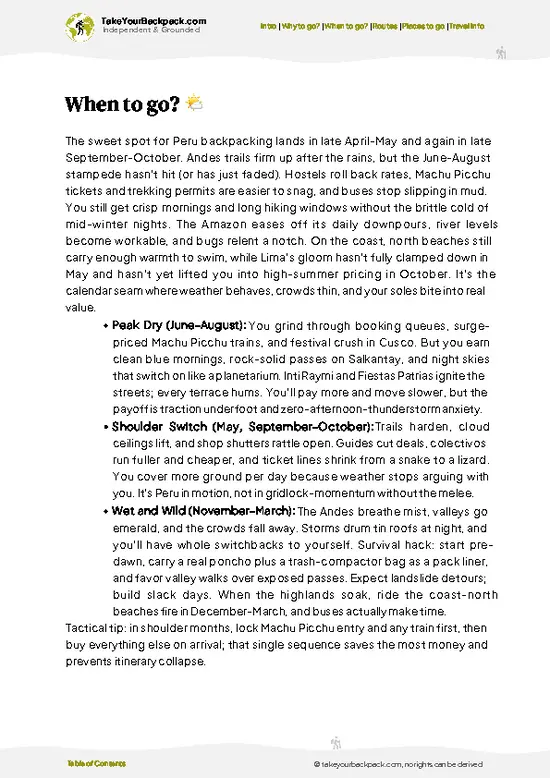
🌤️ When to go?Seasonal considerations and timing


  • Weather: Talara’s dry season runs from May to October, offering clear skies and minimal rain—perfect for beach days and exploring without soggy gear. The wet season, November to April, brings sporadic showers and higher humidity, which can weigh down your energy and gear.

  • Temperature: Expect highs around 28–32°C (82–90°F) during the dry months, with cooler nights dipping to 18–20°C (64–68°F). The wet season nudges temps slightly higher but adds that sticky humidity that makes everything feel hotter.

  • Daylight Hours: Near the equator, daylight stays steady year-round—about 12 hours—so no need to rush your hikes or beach time based on fading light.

  • Crowds: Peak tourist flow hits in July and August when Peruvians escape inland heat. Talara stays relatively chill, but expect more locals
read more 👉

  • Weather: Talara’s dry season runs from May to October, offering clear skies and minimal rain—perfect for beach days and exploring without soggy gear. The wet season, November to April, brings sporadic showers and higher humidity, which can weigh down your energy and gear.

  • Temperature: Expect highs around 28–32°C (82–90°F) during the dry months, with cooler nights dipping to 18–20°C (64–68°F). The wet season nudges temps slightly higher but adds that sticky humidity that makes everything feel hotter.

  • Daylight Hours: Near the equator, daylight stays steady year-round—about 12 hours—so no need to rush your hikes or beach time based on fading light.

  • Crowds: Peak tourist flow hits in July and August when Peruvians escape inland heat. Talara stays relatively chill, but expect more locals and slightly higher prices then.

  • Seasonal Activities: Dry months are prime for surfing and fishing, with calmer seas and consistent winds. Wet season can disrupt these, but it’s when the landscape turns greener, rewarding hikers willing to brave the damp.

  • Price Fluctuations: Accommodation and tours spike during dry season’s peak months; booking ahead saves headaches. Wet season offers bargains but at the cost of unpredictable weather.


Pro-tip: Aim for late May or early October—dry enough for comfort, fewer crowds, and better deals. You’ll catch Talara’s raw charm without the usual tourist buzz or soggy setbacks.


source: climatestotravel.comJANJanuary: fair for travelingFEBFebruary: fair for travelingMARMarch: fair for travelingAPRApril: fair for travelingMAYMay: highly recommended for travelingJUNJune: excellent for travelingJULJuly: excellent for travelingAUGAugust: excellent for travelingSEPSeptember: excellent for travelingOCTOctober: highly recommended for travelingNOVNovember: fair for travelingDECDecember: fair for traveling
when-to-go

✈️ The backpacker research shortcutPeru Travel Guide

An offline-friendly backpacking guide with optimized travel routes, ranked highlights, transport advice, and the best areas to stay.
example page 0 from our offline Travel Guide for Peru
example page 1 from our offline Travel Guide for Peru
example page 2 from our offline Travel Guide for Peru
example page 3 from our offline Travel Guide for Peru
example page 4 from our offline Travel Guide for Peru
example page 5 from our offline Travel Guide for Peru
example page 6 from our offline Travel Guide for Peru
example page 7 from our offline Travel Guide for Peru
The digital guide (442 pages) contains:
118 highlights, ranked by travel appeal
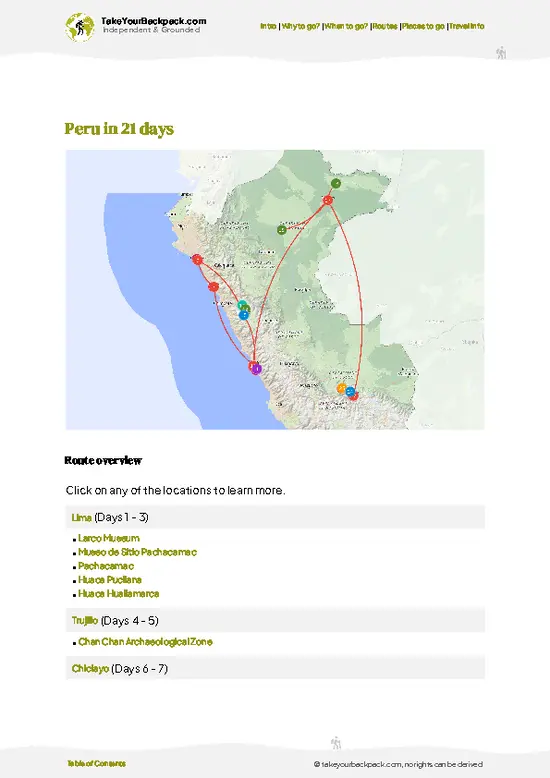
Optimized 7, 14 & 21-day travel routes
Cities, national parks, landmarks, beaches
How to get around
Offline-friendly for travel without Wi-Fi
👉 Click to see all 30+ guide features

📅 Plan smarter in minutes, not weeks
Month by month travel advice
Festivals & national holidays
Budget expectations

🗺️ Go to the right places, skip the overrated ones
Honest pros & cons of destinations
Top hikes, parks & viewpoints
Lesser-known places most travelers miss
Clear “worth it vs skip it” guidance

🛏️ Travel smoothly without rookie mistakes
Best areas to stay
Transport systems explained simply
Common scams & safety advice
SIM cards, money & practical tips

🌍 Understand the country, not just visit it
Culture & traditions
52 Essential phrases & customs
Festivals worth planning around
Traveler-friendly historical context
Insights that make places more meaningful

📱 Built for real travel conditions
Fully downloadable PDF
Works completely offline
Optimized for phone use
Useful in remote areas & buses
Everything in one place
Save weeks of stressful planning
Get instant access to your full guide. 30‑day money-back guarantee.


By proceeding you agree to our terms.
Sent to your inbox immediately after payment • 100% Secure Checkout
Best Backpacking Travel Advisor 2025 tourism awardBest Backpacking
Travel Advisor
2025
What others say about Take Your Backpack Guides:
⭐⭐⭐⭐⭐
Fantastic, amazing amount of information!
⭐⭐⭐⭐⭐
My goodness this is amazing, it's what I've been looking for hats off too you!
⭐⭐⭐⭐⭐
I think this is absolutely BRILLIANT
⭐⭐⭐⭐
Very complete and informative. It's still missing places, but I gotta to commend you
⭐⭐⭐⭐⭐
This is truly amazing, thank you, can't wait to explore it with my kids!
⭐⭐⭐⭐⭐
Awesome resource, thank you!
⭐⭐⭐⭐⭐
This is amazing! Can't wait to explore the ones I haven't seen
⭐⭐⭐⭐
I love this! Well done, great idea.
⭐⭐⭐⭐⭐
Thanks for taking the time to make this gem!
⭐⭐⭐⭐⭐
This might be the best website I've ever seen.
⭐⭐⭐⭐⭐
Congratulations, and thank you so much for your work; it's incredibly valuable.
⭐⭐⭐⭐
In all seriousness I think you did a great job pointing out the important spots
⭐⭐⭐⭐⭐
10/10 very good
⭐⭐⭐⭐⭐
As someone who's only just starting to visit regularly this is awesome, thank you.
⭐⭐⭐⭐
Thank you very much! I'm going to visit my dad, it's going to be very useful!
⭐⭐⭐⭐⭐
This is really cool! We'll be travelling for the first time and this definitely come in handy.
⭐⭐⭐⭐⭐
You are now our minister of culture, congratulations 👨‍💼
⭐⭐⭐⭐⭐
Just wanted to tell you that this is a pearl! Going to follow your recommendations.
⭐⭐⭐⭐⭐
This is so cool. I'll definitely be using the resource for my travels soon.
⭐⭐⭐⭐⭐
This is very impressive! Good work.
⭐⭐⭐⭐⭐
This is an amazing and informative site. Very well done!

🛏️ Where to stay?Choosing the right base

In Talara, the best spot for backpackers is the area around the city center, especially near Avenida Grau. This neighborhood hums with local life—street vendors selling fresh ceviche, the salty breeze from the nearby ocean mixing with the scent of grilled seafood. It’s safe enough to wander after dark, with a steady flow of people and streetlights that don’t flicker out. Here, hostels cluster in modest buildings, offering a social vibe where you can swap stories over shared meals or plan early morning trips to nearby beaches.

Compared to the quieter, more residential zones on the outskirts, the … read more 👉
In Talara, the best spot for backpackers is the area around the city center, especially near Avenida Grau. This neighborhood hums with local life—street vendors selling fresh ceviche, the salty breeze from the nearby ocean mixing with the scent of grilled seafood. It’s safe enough to wander after dark, with a steady flow of people and streetlights that don’t flicker out. Here, hostels cluster in modest buildings, offering a social vibe where you can swap stories over shared meals or plan early morning trips to nearby beaches.

Compared to the quieter, more residential zones on the outskirts, the city center keeps you plugged into the pulse of Talara. It’s where you’ll find the best balance of budget-friendly lodging and easy access to markets, eateries, and transport hubs. The streets are alive but not overwhelming—perfect for solo travelers who want to feel connected without the chaos of a big city. Staying here means you’re steps away from the real rhythm of Talara, not just a tourist bubble.

🚌 Getting aroundHow to get around Talara

Talara moves at its own rhythm—less a strict timetable, more a pulse you catch by tuning in. The air carries the salty tang of the nearby Pacific, mixing with the diesel hum of trucks and the chatter of street vendors. It’s a place where plans flex, and timing bends around the heat of the day and the slow roll of the ocean breeze. You won’t find a clock dictating your steps here, but if you learn the flow, you’ll glide through the town like a local, not a lost tourist.


  • Walking: Talara’s compact center is best explored on foot. The streets are a patchwork of sunlit sidewalks and shaded alleys, perfect for soaking in the scent of grilled seafood and fresh fruit stalls. Walking costs nothing, and you control your pace—ideal for spontaneous detours to local markets or a quick coffee break.
read more 👉
Talara moves at its own rhythm—less a strict timetable, more a pulse you catch by tuning in. The air carries the salty tang of the nearby Pacific, mixing with the diesel hum of trucks and the chatter of street vendors. It’s a place where plans flex, and timing bends around the heat of the day and the slow roll of the ocean breeze. You won’t find a clock dictating your steps here, but if you learn the flow, you’ll glide through the town like a local, not a lost tourist.


  • Walking: Talara’s compact center is best explored on foot. The streets are a patchwork of sunlit sidewalks and shaded alleys, perfect for soaking in the scent of grilled seafood and fresh fruit stalls. Walking costs nothing, and you control your pace—ideal for spontaneous detours to local markets or a quick coffee break. Just watch for uneven pavement and the occasional stray dog.


  • Colectivos (Shared Minivans): These are the lifeblood of budget transit here. They run frequently from early morning (around 6:00 AM) until early evening (about 6:30 PM), charging a few soles per ride. Colectivos don’t follow strict schedules; they leave when full, so timing is flexible but unpredictable. They’re fast and cheap, but expect a tight squeeze and a lively atmosphere.


  • Mototaxis: For short hops or when you’re pressed for time, mototaxis zip through traffic with a nimbleness no car can match. Fares are negotiable but usually under 5 soles. They’re perfect for quick dashes across town, especially when the sun is dipping low and the streets start to cool. Helmets aren’t always standard, so buckle up mentally.


  • Local Buses: Larger buses connect Talara to nearby neighborhoods and the outskirts. They run from about 5:30 AM to 7:00 PM, with fares around 1-2 soles. Slower than colectivos but more comfortable and less cramped, these buses are your go-to if you want to avoid the chaos but still keep costs low.


  • Taxi Services: Metered taxis exist but are pricier and less common for budget travelers. If you’re carrying heavy gear or traveling late, they offer a safer, more direct option. Expect to pay 10-15 soles for typical in-town rides, and always agree on the fare upfront if the meter isn’t used.

👛 Costs (as of 10 May 2025)How expensive it really is

Backpacking in Talara, Peru, offers a raw coastal vibe with a price tag that’s refreshingly light on the wallet, but knowing where to spend smartly makes all the difference.
  • Dorm Accommodation: Expect to pay around $8 to $15 per night for a bed in a basic hostel dorm. The options here are simple—think fan rooms, clean but no-frills, with shared bathrooms. It’s enough to rest after a day of salty sea air and exploring.
  • Meals: Local eateries serve up hearty plates for $3 to $6. A typical meal might be fresh ceviche or grilled fish with rice and beans, filling and flavorful without the tourist markup. Street food snacks like empanadas or tamales hover around $1 to $2, perfect for quick bites.
  • Local Transport: Public transport is cheap and straightforward. Shared combis or colectivos run about
read more 👉
Backpacking in Talara, Peru, offers a raw coastal vibe with a price tag that’s refreshingly light on the wallet, but knowing where to spend smartly makes all the difference.
  • Dorm Accommodation: Expect to pay around $8 to $15 per night for a bed in a basic hostel dorm. The options here are simple—think fan rooms, clean but no-frills, with shared bathrooms. It’s enough to rest after a day of salty sea air and exploring.
  • Meals: Local eateries serve up hearty plates for $3 to $6. A typical meal might be fresh ceviche or grilled fish with rice and beans, filling and flavorful without the tourist markup. Street food snacks like empanadas or tamales hover around $1 to $2, perfect for quick bites.
  • Local Transport: Public transport is cheap and straightforward. Shared combis or colectivos run about $0.50 to $1 per ride within town. Taxis are slightly pricier but still affordable, usually $2 to $4 depending on distance. Walking is often the best way to soak in the gritty coastal streets and ocean breeze.
  • Basic Activities/Entry Fees: Talara’s main draws are its beaches and nearby natural spots, many of which are free or cost under $5. Visiting local markets or small museums might set you back $1 to $3. Organized tours or fishing trips start around $20 but can be worth it for the experience.
  • Miscellaneous Expenses: Budget $2 to $5 for water, snacks, or occasional coffee. Internet cafes or SIM cards are cheap, around $5 for a basic data package. Keep a small buffer for unexpected expenses like toiletries or a quick phone charge.

All told, you’re looking at roughly $15 to $30 a day to cover the essentials in Talara. It’s a place where the cost of living matches the laid-back pace—simple, affordable, and real. The salty air and the hum of the ocean make every dollar feel like a step closer to something genuine, not just a tourist stop.


source: peru.travel
⚠️ Prices can change and everyone travels differently, so take this as a rough guide. Hope it helps you plan your adventure!

🚌 Day tripsShort trips worth adding

Talara, Peru, is a backpacker’s dream base for exploring the northern coast. With its laid-back vibe and proximity to stunning landscapes, you’ll find day trips that are not just easy but downright rewarding.

1. Punta Sal National Park
Just a short bus ride from Talara, Punta Sal offers pristine beaches and rich wildlife. Spend your day lounging on golden sands or snorkeling among vibrant marine life. The park is a haven for birdwatchers, too; keep an eye out for pelicans and flamingos. The best time to visit is during the dry season, from May to October, when the sun shines bright and the waters are calm. A round-trip bus ticket will set you back about $5, making it a budget-friendly escape. First-timers often underestimate the park’s size; plan to spend the whole day to soak it all in. … read more 👉
Talara, Peru, is a backpacker’s dream base for exploring the northern coast. With its laid-back vibe and proximity to stunning landscapes, you’ll find day trips that are not just easy but downright rewarding.

1. Punta Sal National Park
Just a short bus ride from Talara, Punta Sal offers pristine beaches and rich wildlife. Spend your day lounging on golden sands or snorkeling among vibrant marine life. The park is a haven for birdwatchers, too; keep an eye out for pelicans and flamingos. The best time to visit is during the dry season, from May to October, when the sun shines bright and the waters are calm. A round-trip bus ticket will set you back about $5, making it a budget-friendly escape. First-timers often underestimate the park’s size; plan to spend the whole day to soak it all in.


2. Los Órganos
A quick 30-minute ride from Talara, Los Órganos is known for its dramatic cliffs and surf-friendly waves. Grab a local bus for around $2 and arrive ready to explore. The beach here is less crowded, allowing you to enjoy the sound of crashing waves and the salty breeze. If you’re into surfing, this is the spot to catch some great waves. Visit during the early morning to avoid the heat and snag the best surf conditions. Many first-timers miss the chance to explore the nearby tide pools; don’t skip this natural wonder.


3. Mancora
About an hour south of Talara, Mancora is a lively beach town that pulses with energy. The bus ride costs around $4, and once you arrive, you’ll find a mix of relaxation and nightlife. Spend your day soaking up the sun or indulging in fresh ceviche at a beachfront restaurant. The best time to visit is from June to September when the waves are perfect for surfing. A common mistake is to rush through; take your time to enjoy the local culture and vibrant atmosphere.
👉 Explore Mancora

4. Tumbes National Forest
For a taste of the Amazon, head to Tumbes National Forest, about two hours from Talara. The bus fare is around $6. This lush area is a stark contrast to the coastal scenery, filled with exotic flora and fauna. Bring your binoculars for birdwatching or just enjoy a hike through the dense greenery. The dry season is ideal for visiting, as trails are more accessible. Many backpackers overlook this gem, but it’s a perfect way to experience Peru’s biodiversity.
Want to know what more Peru offers?
The Peru Travel Guide describes 118 highlights, from cities to national parks, from beaches to hikes

Get the Travel Guide -

🍲 FoodLocal Flavors for Backpackers

In Talara, food is a lively negotiation between the Pacific’s bounty and the desert’s austerity. The must-try dish is ceviche, where fresh fish or shrimp bathe in sharp lime juice, mingling with fiery chili and crisp red onion. It’s a punch of brightness that wakes up your palate and sets the tone for the day. For a heartier bite, seco de chabelo—a slow-cooked beef stew with plantains—offers a comforting contrast, rich and satisfying without fuss.

Backpackers find their rhythm in bustling markets and street stalls, where the air hums with sizzling grills and the scent of roasted corn. These spots are where locals gather, making every meal a social event rather than just fuel. Casual eateries serve generous portions without the pretense, perfect for those who want to eat well without overthinking … read more 👉
In Talara, food is a lively negotiation between the Pacific’s bounty and the desert’s austerity. The must-try dish is ceviche, where fresh fish or shrimp bathe in sharp lime juice, mingling with fiery chili and crisp red onion. It’s a punch of brightness that wakes up your palate and sets the tone for the day. For a heartier bite, seco de chabelo—a slow-cooked beef stew with plantains—offers a comforting contrast, rich and satisfying without fuss.

Backpackers find their rhythm in bustling markets and street stalls, where the air hums with sizzling grills and the scent of roasted corn. These spots are where locals gather, making every meal a social event rather than just fuel. Casual eateries serve generous portions without the pretense, perfect for those who want to eat well without overthinking it.

Drinks lean toward the simple and refreshing: chicha de jora, a fermented corn drink, or a cold Inca Kola to cut through the heat. Sharing a drink here is less about ceremony and more about connection—expect to clink glasses with a smile, no fuss, just genuine warmth.

🛡️ SafetyScams, Hazards, and Annoyances

Talara is generally safe, but like any place, it has its quirks. Stay aware in crowded areas, especially near the bus terminal where pickpockets might lurk. If you’re solo, avoid wandering too far off the beaten path after dark; stick to well-lit streets and populated spots.

Common scams are rare, but be cautious with street vendors who might inflate prices for tourists. Always ask for the price upfront, especially for food or services.

Annoyances can include aggressive taxi drivers; use a rideshare app if possible to avoid haggling. Carry yourself confidently, and don’t flash valuables. A relaxed demeanor goes a long way in blending in. Embrace the local vibe, and you’ll find that most interactions are warm and genuine.

Other Peruvian cities near Talara

Explore more nearby:

  • Paita—Pacific harbor, colonial lighthouse, fishing fleets| 59 km away
  • Sullana—Chira river, rice fields, tropical heat| 71 km away
  • Piura—desert coast, mango orchards, colonial squares| 93 km away

💡 Not sure where to go next?
Create a personalized itinerary for Peru including Talara and the places that fit your trip.

Generate my itinerary

👉 Discover all cities

Or checkout all Peru has to offer (think cities, towns, villages, national parks, hikes, beaches, festivals)
Country photo of Peru

We 💚 feedbackFinal thoughts on visiting Talara

Talara’s coastal vibe is infectious. The salty air, the sound of waves crashing, and the local seafood make it a sensory delight. But be ready for the heat; it can be relentless. Hydration is key, and don’t underestimate the sun. Embrace the sweat, and you’ll find the charm in its simplicity. It’s a place that rewards those willing to dive in, imperfections and all.

✈️ When did I visit Peru?
Peru I visited during my half year trip through South and Central America back in 2003

✍️ Help improve this page!
The information on this page is based on my own backpacking experience in Peru, supplemented with up-to-date research and feedback from other travelers. Travel details can change, so if you notice anything outdated or incomplete, feel free to let me know.


🙋‍♂️ Give feedback

👋 Meet the founderWho’s Behind Take Your Backpack?

Johan, backpacker and founder of TakeYourBackpackHi, I’m Johan (Netherlands 🇳🇱), the creator of TakeYourBackpack. Over the past decade, I’ve backpacked through 80+ countries across six continents, gaining extensive experience with independent travel, long-term trips, and overland routes.

This site is built on a combination of firsthand travel experience and carefully curated insights from other backpackers. Many guides are based on places I’ve personally visited, while others bring together tips, observations, and practical advice shared by trusted travelers I’ve met along the way.

The goal is to provide realistic, experience-driven guidance — not generic itineraries — so you can explore destinations with better context, clearer expectations, and more confidence.

Get full Peru guide •
Instant download • 118 highlights • Full Offline guide