×

Peru🇵🇪 | citiesPiuradesert coast, mango orchards, colonial squares | things to do and best time to go

Explore TarapotoExplore Pucallpa

Backpacking in Piura
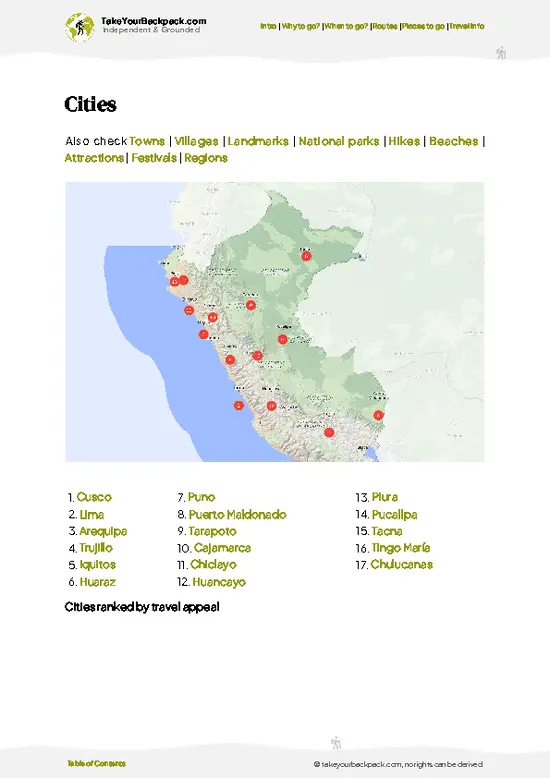
👌 Worth visitingcity ranked #14
By Johan Kruseman 🇳🇱 | Updated June 14, 2026

You land in northern Peru and face a classic fork: do you burn a day in Piura or bolt straight to the beaches of Máncora and Lobitos. That choice matters because Piura is where you trade time and comfort for money and local texture. Sitting inland in Peru’s far north, it’s a hot, busy, very Peruvian city: cheap menus, chaotic traffic, colonial churches, a decent plaza, a couple of small museums, and nightlife that’s more salsa than cocktails. It’s safe enough with street smarts, light on backpacker scene, and far less charming than chic Trujillo, but it’s real—and very easy on your budget.

Discover everything you want to know in the 📖 Peru Travel Guide.


Get your Peru guide
118 ranked highlights, routes & tips, works offline (444 pages)
Loading the map 🌍
CLICK TO FILTER
cities
towns
villages
landmarks
national parks
hikes
beaches
attractions
festivals
regions
SHOW COUNTRY’S BESTSHOW ALL

✨ Why go?
Ranked #14 city in Peru
The unique appeal for travelers

Piura is a strategic basecamp for backpackers navigating northern Peru. It offers a blend of affordable hostels and local eateries that keep your budget in check while delivering authentic flavors. The city’s walkability makes it easy to explore vibrant markets and charming plazas without breaking a sweat. Though not a major tourist hub, Piura has enough highlights to keep you entertained, and its nightlife offers a lively atmosphere for unwinding after a day of exploration. Plus, it serves as a convenient launchpad for day trips to stunning coastal and mountainous regions. If you’re looking for a place that balances comfort and value without the tourist trap feel, Piura is worth considering. Just remember, it’s best suited for those who appreciate a short stop with the potential for deeper adventures.
Want to include Piura in your Peru route?
Create a personalized Peru itinerary that includes Piura and the places that fit your trip — based on your travel style, budget, and available time. Get your route in seconds.

Generate my trip

💡 HighlightsMust-see experiences and standout moments

  1. Plaza de Armas de Piura — The heartbeat of the city: shady trees, local vendors, and people-watching. Great spot to feel Piura’s pace and start a walking loop through the historic center.
  2. Catedral de Piura (Basílica Catedral) — A central landmark with a stately façade and a quietly photogenic interior. Good for architecture, a little history, and the plaza atmosphere around it.
  3. Museo Vicús (Museo Municipal de Piura) — Small but important collection of Vicús-culture ceramics and metalwork; essential if you want to understand the deep pre-Columbian roots of the region.
  4. Mercado Modelo / Mercado Central — Chaos in a good way: fresh seafood, ceviche ingredients, regional fruits, and snacks you won’t find in guidebooks. Best place to taste and watch everyday Piuran life.
  5. Historic center (colonial
read more 👉
  1. Plaza de Armas de Piura — The heartbeat of the city: shady trees, local vendors, and people-watching. Great spot to feel Piura’s pace and start a walking loop through the historic center.
  2. Catedral de Piura (Basílica Catedral) — A central landmark with a stately façade and a quietly photogenic interior. Good for architecture, a little history, and the plaza atmosphere around it.
  3. Museo Vicús (Museo Municipal de Piura) — Small but important collection of Vicús-culture ceramics and metalwork; essential if you want to understand the deep pre-Columbian roots of the region.
  4. Mercado Modelo / Mercado Central — Chaos in a good way: fresh seafood, ceviche ingredients, regional fruits, and snacks you won’t find in guidebooks. Best place to taste and watch everyday Piuran life.
  5. Historic center (colonial balconies & old mansions) — Wander the blocks around the Plaza de Armas to find carved wooden balconies, faded facades, and low-key photo ops that tell the city’s colonial story.
  6. Iglesia San Francisco — One of the older churches in the city with local religious art and peaceful courtyards; a calm stop between the busier plazas and markets.
  7. Teatro Municipal de Piura — A piece of local culture: catch a play, a concert, or at least admire the theater’s period architecture and the cultural programs that happen there.
  8. Casa de la Cultura (spaces for local arts) — Rotating exhibitions, small performances and workshops by Piuran artists — a good place to connect with contemporary local creativity.
  9. Malecón / riverfront along the Río Piura — A relaxed riverside stroll for sunset, street food stands, and seeing how locals unwind; the riverbanks give a different side of the city than the plazas.
  10. Mercado Artesanal / craft stalls — Concentrated spots to find regional textiles, ceramics and Panama-style hats made locally — useful for authentic souvenirs and meeting local artisans.
A few great day trips nearby: the artisan town of Catacaos (ceramics, silverwork, markets), the Narihualá archaeological mounds, and the beaches around Paita/Colán — my personal favorite to visit is Catacaos for its vibe and handcrafts.
Spotted a mistake or missing something? Contact us.

🏘️ NeighborhoodsHow different areas shape the experience

Piura is a vibrant hub in northern Peru, blending rich culture with practical backpacker needs. Here’s how the neighborhoods stack up:

Centro Histórico: This is the heart of Piura. You’ll find colonial architecture and bustling markets. It’s walkable, with plenty of budget-friendly eateries. Nightlife is lively but not overwhelming. Perfect for short stays, as you can easily explore on foot.

Las Cumbres: A bit quieter, this area offers a more residential vibe. It’s slightly pricier but has cozy hostels and cafes. Ideal for longer stays if you want a homey feel. Transport options are decent, but you’ll need to rely on taxis or buses for the city center.

Piura Norte: This neighborhood is a mix of local life and modern conveniences. It’s affordable and has a laid-back atmosphere. Great for … read more 👉
Piura is a vibrant hub in northern Peru, blending rich culture with practical backpacker needs. Here’s how the neighborhoods stack up:

Centro Histórico: This is the heart of Piura. You’ll find colonial architecture and bustling markets. It’s walkable, with plenty of budget-friendly eateries. Nightlife is lively but not overwhelming. Perfect for short stays, as you can easily explore on foot.

Las Cumbres: A bit quieter, this area offers a more residential vibe. It’s slightly pricier but has cozy hostels and cafes. Ideal for longer stays if you want a homey feel. Transport options are decent, but you’ll need to rely on taxis or buses for the city center.

Piura Norte: This neighborhood is a mix of local life and modern conveniences. It’s affordable and has a laid-back atmosphere. Great for those who want to experience daily life. Walkability is moderate, and it’s suitable for both short and extended visits.

San Miguel: Known for its nightlife, this area is buzzing after dark. It’s more expensive but offers a variety of bars and clubs. If you’re looking to socialize, this is your spot. However, it’s less ideal for quiet retreats.

⌛️ 1 dayWhat you can realistically do in a day

Piura, a vibrant city in northern Peru, is a delightful blend of history and culture. It’s often overlooked, but its charm lies in its colonial architecture, lively markets, and the warmth of its people. Start your day in the historic center, where the Plaza de Armas buzzes with life. Grab a breakfast of *pan con chicharrón* from a nearby vendor—crispy pork in a bun that’s a local favorite.

After fueling up, stroll to the stunning Catedral de Piura, a beautiful example of colonial architecture. Spend some time exploring the nearby Museo de la Cultura Tumbes, where you can dive into the region’s rich pre-Columbian history.

In the afternoon, head to the bustling Mercado Modelo. This isn’t just a market; it’s an experience. The colors, sounds, and smells are intoxicating. Sample fresh fruit … read more 👉
Piura, a vibrant city in northern Peru, is a delightful blend of history and culture. It’s often overlooked, but its charm lies in its colonial architecture, lively markets, and the warmth of its people. Start your day in the historic center, where the Plaza de Armas buzzes with life. Grab a breakfast of *pan con chicharrón* from a nearby vendor—crispy pork in a bun that’s a local favorite.

After fueling up, stroll to the stunning Catedral de Piura, a beautiful example of colonial architecture. Spend some time exploring the nearby Museo de la Cultura Tumbes, where you can dive into the region’s rich pre-Columbian history.

In the afternoon, head to the bustling Mercado Modelo. This isn’t just a market; it’s an experience. The colors, sounds, and smells are intoxicating. Sample fresh fruit juices and local snacks while mingling with locals. If you’re feeling adventurous, take a short taxi ride to the less-visited neighborhood of La Arena. Here, you can find the intriguing *Casa de la Cultura*, a community space that often hosts art exhibits and workshops.

As the sun sets, return to the Plaza de Armas for dinner. Try *ceviche* at a local eatery, where the fish is as fresh as the ocean breeze. End your day with a leisurely walk, soaking in the vibrant street life. Piura may not be on every tourist’s radar, but it’s a place that rewards those who take the time to explore its heart.
Turn your Piura visit into an Peru adventure
Build a complete Peru route with Piura, hidden gems, must-see destinations, and realistic travel times included.

Generate my trip

🌤️ When to go?Best time to visit Piura


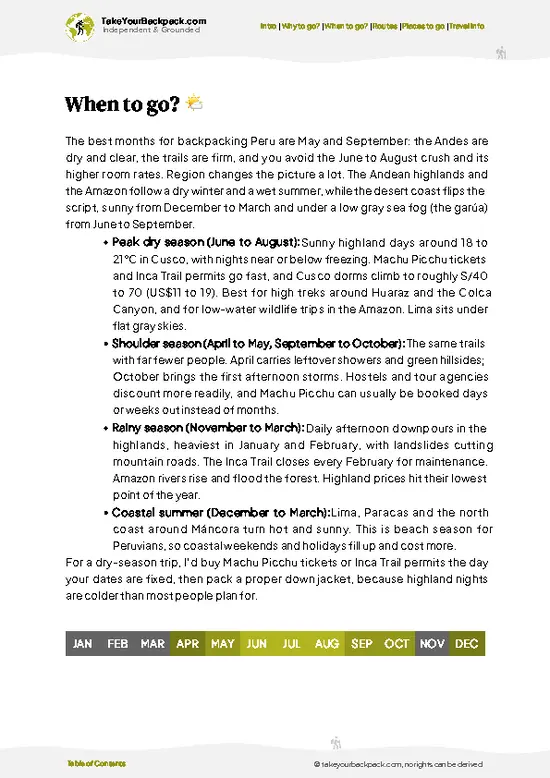
  • Weather: Piura’s dry season runs May through November, offering clear skies and minimal rain—ideal for trekking and exploring without soggy gear or muddy trails.

  • Temperature: Expect daytime highs around 28-32°C (82-90°F) in the dry months, with cooler nights dipping to 16-20°C (61-68°F), making layers a smart choice.

  • Daylight Hours: Fairly consistent year-round, about 11-12 hours of daylight, so you won’t lose precious hiking time no matter when you go.

  • Crowds: Peak tourist season aligns with the dry months, especially July and August, so expect more travelers and higher prices then.

  • Seasonal Activities: The dry season is prime for outdoor adventures like surfing and visiting nearby beaches; the wet season (December-April) can limit these options but brings lush landscapes.

  • Price
read more 👉

  • Weather: Piura’s dry season runs May through November, offering clear skies and minimal rain—ideal for trekking and exploring without soggy gear or muddy trails.

  • Temperature: Expect daytime highs around 28-32°C (82-90°F) in the dry months, with cooler nights dipping to 16-20°C (61-68°F), making layers a smart choice.

  • Daylight Hours: Fairly consistent year-round, about 11-12 hours of daylight, so you won’t lose precious hiking time no matter when you go.

  • Crowds: Peak tourist season aligns with the dry months, especially July and August, so expect more travelers and higher prices then.

  • Seasonal Activities: The dry season is prime for outdoor adventures like surfing and visiting nearby beaches; the wet season (December-April) can limit these options but brings lush landscapes.

  • Price Fluctuations: Accommodation and tours spike in the dry season, especially mid-year; the wet season offers better deals but at the cost of less predictable weather.


Pro-tip: Aim for shoulder months like May or November to balance good weather, fewer crowds, and better prices—smart timing that feels like winning the travel lottery.


source: climatestotravel.comJANJanuary: fair for travelingFEBFebruary: fair for travelingMARMarch: fair for travelingAPRApril: fair for travelingMAYMay: excellent for travelingJUNJune: highly recommended for travelingJULJuly: highly recommended for travelingAUGAugust: highly recommended for travelingSEPSeptember: excellent for travelingOCTOctober: excellent for travelingNOVNovember: excellent for travelingDECDecember: fair for traveling
when-to-go

✈️ The backpacker research shortcutPeru Travel Guide

An offline-friendly backpacking guide with optimized travel routes, ranked highlights, transport advice, and the best areas to stay.
example page 0 from our offline Travel Guide for Peru
example page 1 from our offline Travel Guide for Peru
example page 2 from our offline Travel Guide for Peru
example page 3 from our offline Travel Guide for Peru
example page 4 from our offline Travel Guide for Peru
example page 5 from our offline Travel Guide for Peru
example page 6 from our offline Travel Guide for Peru
example page 7 from our offline Travel Guide for Peru
The digital guide (444 pages) contains:
118 highlights, ranked by travel appeal
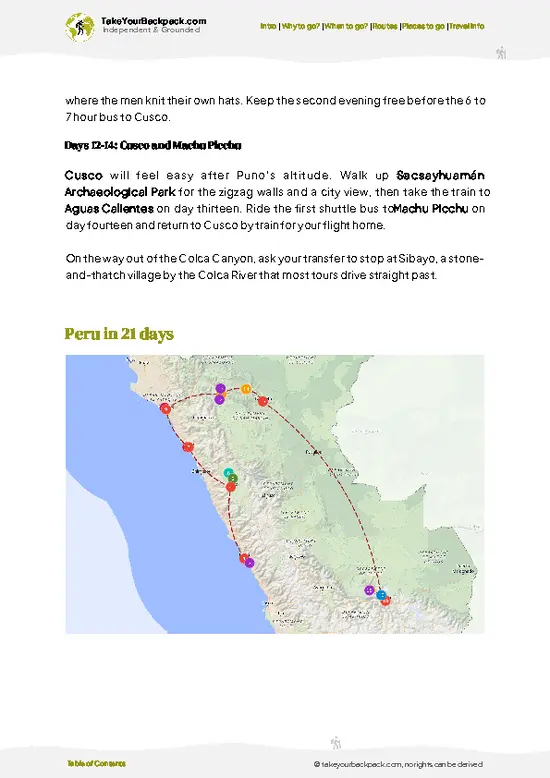
Optimized 7, 14 & 21-day travel routes
Cities, national parks, landmarks, beaches
How to get around
Offline-friendly for travel without Wi-Fi
👉 Click to see all 30+ guide features

📅 Plan smarter in minutes, not weeks
Month by month travel advice
Festivals & national holidays
Budget expectations

🗺️ Go to the right places, skip the overrated ones
Honest pros & cons of destinations
Top hikes, parks & viewpoints
Lesser-known places most travelers miss
Clear “worth it vs skip it” guidance

🛏️ Travel smoothly without rookie mistakes
Best areas to stay
Transport systems explained simply
Common scams & safety advice
SIM cards, money & practical tips

🌍 Understand the country, not just visit it
Culture & traditions
52 Essential phrases & customs
Festivals worth planning around
Traveler-friendly historical context
Insights that make places more meaningful

📱 Built for real travel conditions
Fully downloadable PDF
Works completely offline
Optimized for phone use
Useful in remote areas & buses
Everything in one place
Save weeks of stressful planning
Get instant access to your full guide. 30‑day money-back guarantee.


By proceeding you agree to our terms.
Sent to your inbox immediately after payment • 100% Secure Checkout
Best Backpacking Travel Advisor 2025 tourism awardBest Backpacking
Travel Advisor
2025
What others say about Take Your Backpack Guides:
⭐⭐⭐⭐⭐
Fantastic, amazing amount of information!
⭐⭐⭐⭐⭐
My goodness this is amazing, it's what I've been looking for hats off too you!
⭐⭐⭐⭐⭐
I think this is absolutely BRILLIANT
⭐⭐⭐⭐
Very complete and informative. It's still missing places, but I gotta to commend you
⭐⭐⭐⭐⭐
This is truly amazing, thank you, can't wait to explore it with my kids!
⭐⭐⭐⭐⭐
Awesome resource, thank you!
⭐⭐⭐⭐⭐
This is amazing! Can't wait to explore the ones I haven't seen
⭐⭐⭐⭐
I love this! Well done, great idea.
⭐⭐⭐⭐⭐
Thanks for taking the time to make this gem!
⭐⭐⭐⭐⭐
This might be the best website I've ever seen.
⭐⭐⭐⭐⭐
Congratulations, and thank you so much for your work; it's incredibly valuable.
⭐⭐⭐⭐
In all seriousness I think you did a great job pointing out the important spots
⭐⭐⭐⭐⭐
10/10 very good
⭐⭐⭐⭐⭐
As someone who's only just starting to visit regularly this is awesome, thank you.
⭐⭐⭐⭐
Thank you very much! I'm going to visit my dad, it's going to be very useful!
⭐⭐⭐⭐⭐
This is really cool! We'll be travelling for the first time and this definitely come in handy.
⭐⭐⭐⭐⭐
You are now our minister of culture, congratulations 👨‍💼
⭐⭐⭐⭐⭐
Just wanted to tell you that this is a pearl! Going to follow your recommendations.
⭐⭐⭐⭐⭐
This is so cool. I'll definitely be using the resource for my travels soon.
⭐⭐⭐⭐⭐
This is very impressive! Good work.
⭐⭐⭐⭐⭐
This is an amazing and informative site. Very well done!

🛏️ Where to stay?Where staying makes the most sense

In Piura, the sweet spot for backpackers is the historic center, especially around the Plaza de Armas. This area nails the balance between safety and social buzz, making it a magnet for solo travelers and budget adventurers. Streets here pulse with local life—markets, street food, and casual hangouts—without tipping into chaos. Hostels cluster near the plaza, offering easy access to public transport and a built-in community vibe. Compared to the quieter, more residential neighborhoods, the historic center delivers a richer, more interactive experience. It’s not about luxury but about connection—meeting … read more 👉
In Piura, the sweet spot for backpackers is the historic center, especially around the Plaza de Armas. This area nails the balance between safety and social buzz, making it a magnet for solo travelers and budget adventurers. Streets here pulse with local life—markets, street food, and casual hangouts—without tipping into chaos. Hostels cluster near the plaza, offering easy access to public transport and a built-in community vibe. Compared to the quieter, more residential neighborhoods, the historic center delivers a richer, more interactive experience. It’s not about luxury but about connection—meeting fellow travelers, swapping tips, and diving into Piura’s laid-back charm. If you stray too far into the outskirts, you lose that pulse and risk spending more on taxis or missing out on spontaneous meetups. The historic center is where your time, money, and comfort align for maximum payoff.

🚌 Getting aroundGetting around like a local

Piura moves at its own rhythm—somewhere between the laid-back pulse of a beach town and the sharp efficiency of a regional hub. It’s not a place where you’ll find strict timetables etched in stone, but neither is it a free-for-all. The city’s flow is a blend of informal hustle and practical routines, where locals navigate with a mix of intuition and experience. For a budget traveler, understanding this dance between time, money, and comfort is the key to unlocking Piura without feeling like you’re constantly chasing or wasting time.


  • Walking: The best way to soak in Piura’s character. Free, flexible, and surprisingly efficient within the central districts. Expect to cover 2-3 kilometers in 30-40 minutes, perfect for spontaneous detours and street food stops.


  • Colectivos: Shared minibuses
read more 👉
Piura moves at its own rhythm—somewhere between the laid-back pulse of a beach town and the sharp efficiency of a regional hub. It’s not a place where you’ll find strict timetables etched in stone, but neither is it a free-for-all. The city’s flow is a blend of informal hustle and practical routines, where locals navigate with a mix of intuition and experience. For a budget traveler, understanding this dance between time, money, and comfort is the key to unlocking Piura without feeling like you’re constantly chasing or wasting time.


  • Walking: The best way to soak in Piura’s character. Free, flexible, and surprisingly efficient within the central districts. Expect to cover 2-3 kilometers in 30-40 minutes, perfect for spontaneous detours and street food stops.


  • Colectivos: Shared minibuses that run on semi-fixed routes. They start early, around 5:30 AM, and run until about 9 PM. Fares hover around 1.50 PEN ($0.40). They’re cheap and relatively quick but can get cramped and unpredictable during rush hours.


  • Mototaxis: Three-wheeled motorbikes that dart through narrow streets. They’re faster than walking and cheaper than taxis, usually costing 2-3 PEN ($0.50-$0.75) for short trips. No official schedule—just flag one down when you need it. Comfort is minimal, but the speed and price make up for it.


  • Urban Buses: Larger buses covering longer routes, connecting Piura with surrounding neighborhoods. They run from 6 AM to 8 PM, with fares around 2 PEN ($0.55). Slower than colectivos but more comfortable and less chaotic.


  • Taxi: Metered taxis exist but are rare and usually more expensive (10-15 PEN for short rides). Best reserved for late-night trips or when you’re carrying heavy gear. Negotiation is common, so know your route and prices beforehand.


In Piura, every choice is a trade-off. Walk if you want immersion and zero cost but be ready to invest time. Colectivos and mototaxis save you minutes and soles but demand flexibility and a tolerance for crowding. Urban buses offer a middle ground, while taxis deliver comfort at a premium. Mastering these options means you’re not just getting around—you’re playing the city’s game on your terms.

👛 Costs (as of 11 May 2025)Typical daily expenses

Backpacking in Piura, Peru, offers a clear trade-off between cost and comfort, with prices that reflect its status as a less touristy, practical city rather than a high-end destination.
  • Dorm Accommodation (High Season): Expect to pay around $8 to $12 USD per night. High season sees a slight bump due to increased demand, but dorms remain basic and functional, often with shared bathrooms and minimal extras.
  • Dorm Accommodation (Off-Season): Prices drop to about $5 to $8 USD. Off-season is quieter, so you can negotiate or find last-minute deals easily, but expect fewer amenities and less social buzz.
  • Meals: Street food and local markets dominate here. A typical meal costs between $1.50 and $3 USD. If you opt for a sit-down local restaurant, budget around $4 to $6 USD for a filling plate. Western-style
read more 👉
Backpacking in Piura, Peru, offers a clear trade-off between cost and comfort, with prices that reflect its status as a less touristy, practical city rather than a high-end destination.
  • Dorm Accommodation (High Season): Expect to pay around $8 to $12 USD per night. High season sees a slight bump due to increased demand, but dorms remain basic and functional, often with shared bathrooms and minimal extras.
  • Dorm Accommodation (Off-Season): Prices drop to about $5 to $8 USD. Off-season is quieter, so you can negotiate or find last-minute deals easily, but expect fewer amenities and less social buzz.
  • Meals: Street food and local markets dominate here. A typical meal costs between $1.50 and $3 USD. If you opt for a sit-down local restaurant, budget around $4 to $6 USD for a filling plate. Western-style or tourist-targeted eateries push prices higher, but they’re not the norm.
  • Local Transport: Short rides on mototaxis or combis (shared minibuses) cost about $0.30 to $0.50 USD. They’re frequent and cheap but can be cramped and unpredictable in timing.
  • City Transport Pass: Piura doesn’t have a formal city transport pass system like bigger cities. Budgeting around $1 to $2 USD daily for multiple rides is realistic if you plan to move around a lot.
  • Basic Activities/Entry Fees: Piura’s attractions are mostly low-cost or free. Museums and small cultural sites charge around $1 to $3 USD. Outdoor activities like visiting nearby beaches or markets are free, but guided tours or special excursions will cost more.
  • Miscellaneous Expenses: This covers water, snacks, occasional coffee, or small purchases. Around $1 to $3 USD daily is a safe estimate, depending on your habits.

All told, a savvy backpacker can expect to spend roughly $10 to $20 USD per day in Piura. This budget balances basic comfort with local flavor, avoiding tourist traps but still allowing for a few small splurges. The key is embracing the city’s straightforward, no-frills vibe—your wallet will thank you, and you’ll get a genuine slice of Peruvian life.


source: peru.travel
⚠️ Prices can change and everyone travels differently, so take this as a rough guide. Hope it helps you plan your adventure!

🚌 Day tripsEasy escapes and nearby places

Piura is a fantastic launchpad for day trips that blend culture, nature, and adventure. Here are some top picks that pack a punch without draining your wallet or time.

Chiclayo
Just a two-hour bus ride from Piura, Chiclayo is a treasure trove of history. The bustling markets are a feast for the senses, and the nearby Sipán archaeological site offers a glimpse into ancient Moche civilization. Expect to spend around $10 for transport and a few bucks more for entry fees. The best time to visit is during the dry season from May to October. A common mistake? Skipping the local food scene—don’t miss the ceviche!
👉 Explore Chiclayo

Catacaos
A mere 30-minute jaunt from Piura, Catacaos is a charming town known for its artisan crafts. Here, you can wander through vibrant streets filled with … read more 👉
Piura is a fantastic launchpad for day trips that blend culture, nature, and adventure. Here are some top picks that pack a punch without draining your wallet or time.

Chiclayo
Just a two-hour bus ride from Piura, Chiclayo is a treasure trove of history. The bustling markets are a feast for the senses, and the nearby Sipán archaeological site offers a glimpse into ancient Moche civilization. Expect to spend around $10 for transport and a few bucks more for entry fees. The best time to visit is during the dry season from May to October. A common mistake? Skipping the local food scene—don’t miss the ceviche!
👉 Explore Chiclayo

Catacaos
A mere 30-minute jaunt from Piura, Catacaos is a charming town known for its artisan crafts. Here, you can wander through vibrant streets filled with pottery and textiles. The round trip will cost you about $5, making it a budget-friendly option. Aim for a Saturday to catch the lively market. First-timers often overlook the chance to interact with local artisans—take the time to chat and learn about their craft!


Las Huaringas
For a taste of nature, head to Las Huaringas, about an hour and a half away. This stunning area is famous for its lagoons and healing waters. The round trip can run around $15, including transport. Visit during the dry season for the best views and fewer crowds. Many backpackers miss the chance to hike around the lagoons—bring sturdy shoes and a camera!


Vichayito Beach
If you crave sun and surf, Vichayito Beach is just a two-hour bus ride away. This laid-back spot is perfect for a day of relaxation or water sports. Expect to spend around $20 for transport and a beachside meal. The best time to go is during the summer months, from December to March. A rookie mistake? Forgetting sunscreen—this beach can be deceptively sunny!
Want to know what more Peru offers?
The Peru Travel Guide describes 118 highlights, from cities to national parks, from beaches to hikes

Get the Travel Guide -

🍲 FoodWhat to Eat & Drink

In Piura, the food scene is a vibrant tapestry of flavors that beckons you to dive in. Start with ceviche, the region’s pride, where fresh fish is marinated in zesty lime and spiced with a kick of chili. The arroz con pato, a rice dish with duck, is another local favorite that’s rich and comforting, perfect after a day of exploring.

Backpackers often find themselves at bustling markets or sampling street food. Picture yourself munching on anticuchos—grilled skewers of beef heart—while chatting with locals. The atmosphere is electric, filled with laughter and the sizzling sounds of food being prepared.

When it comes to drinks, don’t miss out on chicha de jora, a fermented corn beverage that’s both refreshing and a bit of a rite of passage. Sharing a drink with locals is customary, so embrace … read more 👉
In Piura, the food scene is a vibrant tapestry of flavors that beckons you to dive in. Start with ceviche, the region’s pride, where fresh fish is marinated in zesty lime and spiced with a kick of chili. The arroz con pato, a rice dish with duck, is another local favorite that’s rich and comforting, perfect after a day of exploring.

Backpackers often find themselves at bustling markets or sampling street food. Picture yourself munching on anticuchos—grilled skewers of beef heart—while chatting with locals. The atmosphere is electric, filled with laughter and the sizzling sounds of food being prepared.

When it comes to drinks, don’t miss out on chicha de jora, a fermented corn beverage that’s both refreshing and a bit of a rite of passage. Sharing a drink with locals is customary, so embrace the communal spirit. Just remember, in Piura, food is not just sustenance; it’s a celebration of life.

🛡️ SafetySafety Tips and Common Scams in Piura

In Piura, safety is generally manageable, but awareness is key. Stick to well-lit areas at night, especially around the Plaza de Armas, where the vibe is lively but can attract pickpockets. If you’re solo, keep your belongings close and avoid showing off valuables.

Common scams include overly friendly locals offering unsolicited help, which can lead to unexpected fees. Politely decline and trust your instincts. Street vendors can be persistent, but a firm ”no gracias” usually does the trick.

Overall, Piura is welcoming, but a little caution goes a long way. Carry yourself confidently, and you’ll navigate the city like a pro.

Other Peruvian cities near Piura

Explore more nearby:

  • Sullana—Chira river, rice fields, tropical heat| 31 km away
  • Paita—Pacific harbor, colonial lighthouse, fishing fleets| 50 km away
  • Chulucanas—ceramic workshops, mango orchards, warm lowlands| 56 km away

💡 Not sure where to go next?
Create a personalized itinerary for Peru including Piura and the places that fit your trip.

Generate my itinerary

👉 Discover all cities

Or checkout all Peru has to offer (think cities, towns, villages, national parks, hikes, beaches, festivals)
Country photo of Peru

We 💚 feedbackFinal thoughts on visiting Piura

Piura’s charm lies in its vibrant street life and the warmth of its people. You’ll savor incredible local cuisine, especially the ceviche. But be ready for the heat—this city can be sweltering, and air conditioning isn’t always a given. Embrace the sweat; it’s part of the experience. Just stay hydrated and enjoy the ride!

✈️ When did I visit Peru?
Peru I visited during my half year trip through South and Central America back in 2003

✍️ Help improve this page!
The information on this page is based on my own backpacking experience in Peru, supplemented with up-to-date research and feedback from other travelers. Travel details can change, so if you notice anything outdated or incomplete, feel free to let me know.


🙋‍♂️ Give feedback

👋 Meet the founderWho’s Behind Take Your Backpack?

Johan, backpacker and founder of TakeYourBackpackHi, I’m Johan (Netherlands 🇳🇱), the creator of TakeYourBackpack. Over the past decade, I’ve backpacked through 80+ countries across six continents, gaining extensive experience with independent travel, long-term trips, and overland routes.

This site is built on a combination of firsthand travel experience and carefully curated insights from other backpackers. Many guides are based on places I’ve personally visited, while others bring together tips, observations, and practical advice shared by trusted travelers I’ve met along the way.

The goal is to provide realistic, experience-driven guidance — not generic itineraries — so you can explore destinations with better context, clearer expectations, and more confidence.

Get full Peru guide •
Instant download • 118 highlights • Full Offline guide