×

Portugal🇵🇹 | citiesPortoRibeira district, port wine cellars, iron bridges | things to do and best time to go

Explore LisbonExplore Sintra

Backpacking in Porto
🏆 Top pickcity ranked #2
By Johan Kruseman 🇳🇱 | Updated October 16, 2026

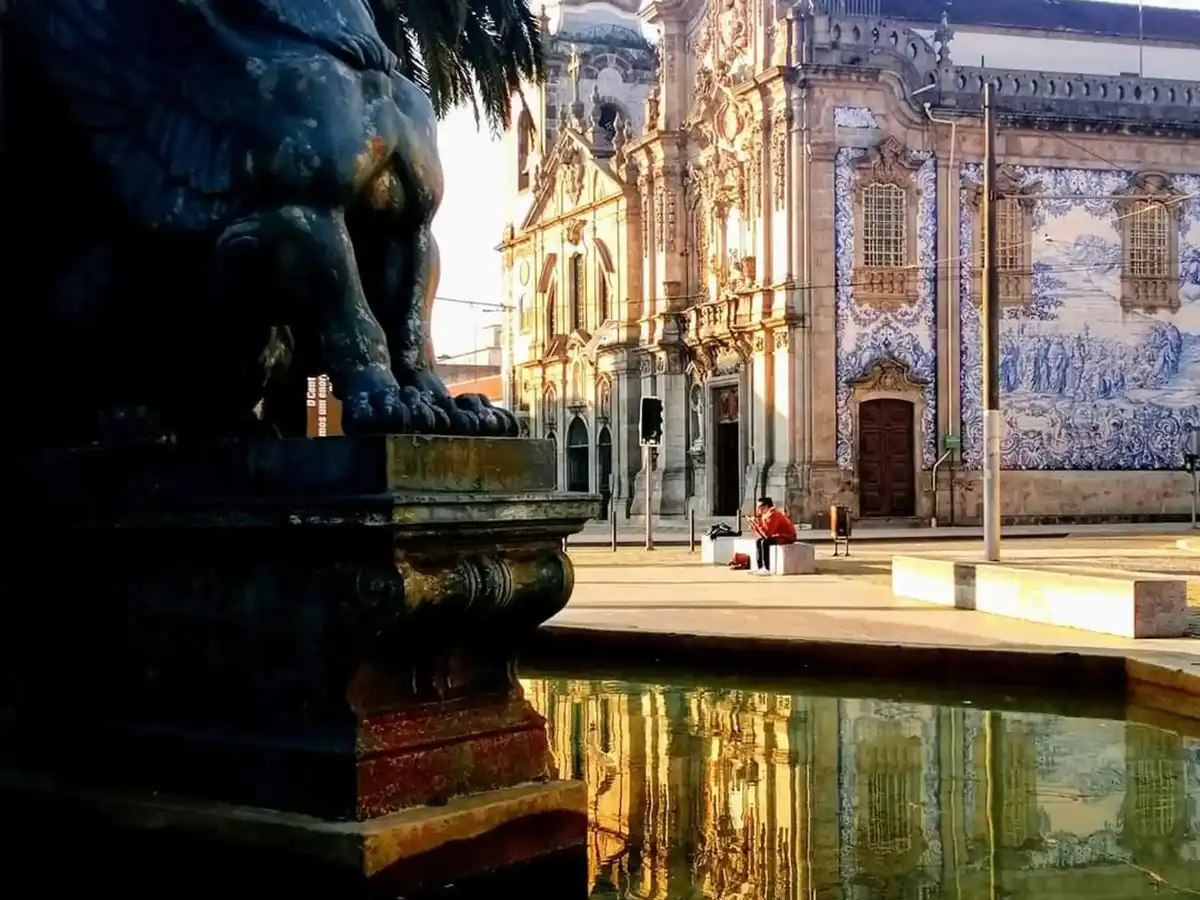
You land in Porto and the first real decision hits: do you splurge on a central hostel near São Bento and the Ribeira riverfront, or save money by staying uphill and spending your time (and legs) on those brutal cobblestones? That choice matters, because in Porto your daily energy is a real currency. Porto sits in northern Portugal, on the Douro River, a few hours by train above Lisbon. For backpackers, it’s a sweet spot: cheaper than Lisbon, more character than many beach towns, but not as instantly social as Lagos or party-heavy as Bairro Alto. You get blue-tiled churches, the Dom Luís I Bridge, port wine lodges in Vila Nova de Gaia, and a compact center that’s walkable if you don’t mind hills. Trains and trams are simple, hostels are solid, and I’ve always felt safe, but nights can be rowdy around Galerias de Paris. Overall vibe: slightly scruffy, creative, and quietly addictive.

Discover everything you want to know in the 📖 Portugal Travel Guide.


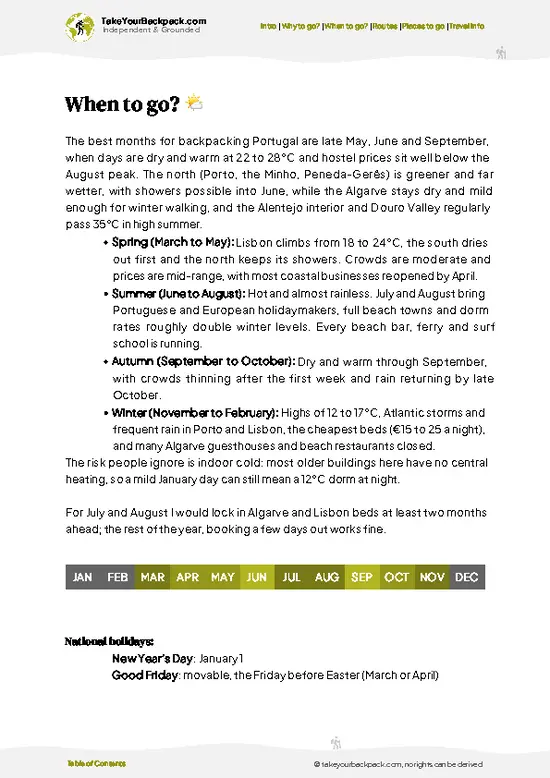
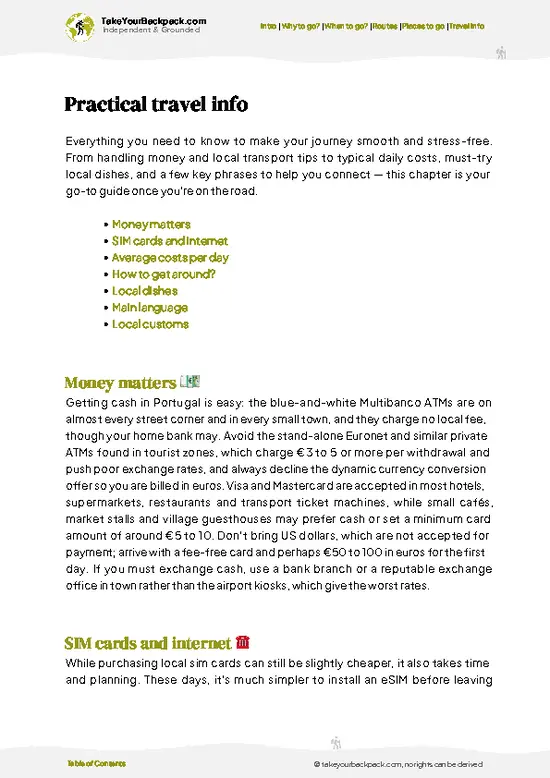
example page 0 from our offline Travel Guide for Portugal
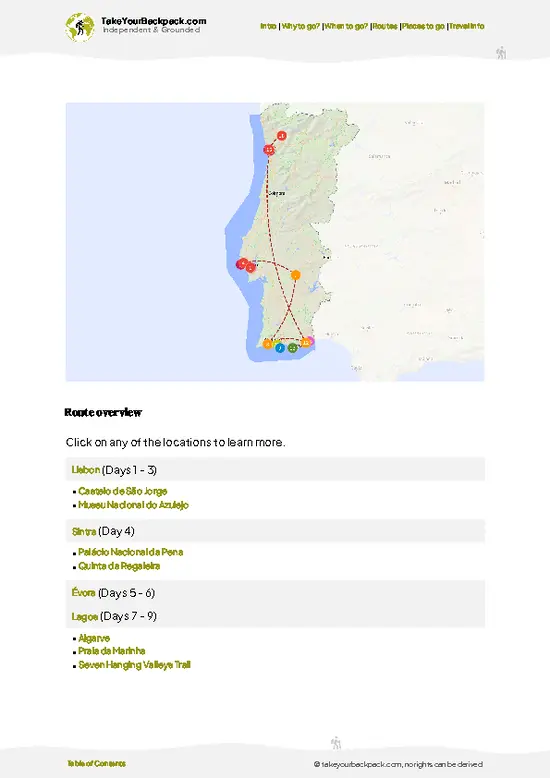
example page 1 from our offline Travel Guide for Portugal
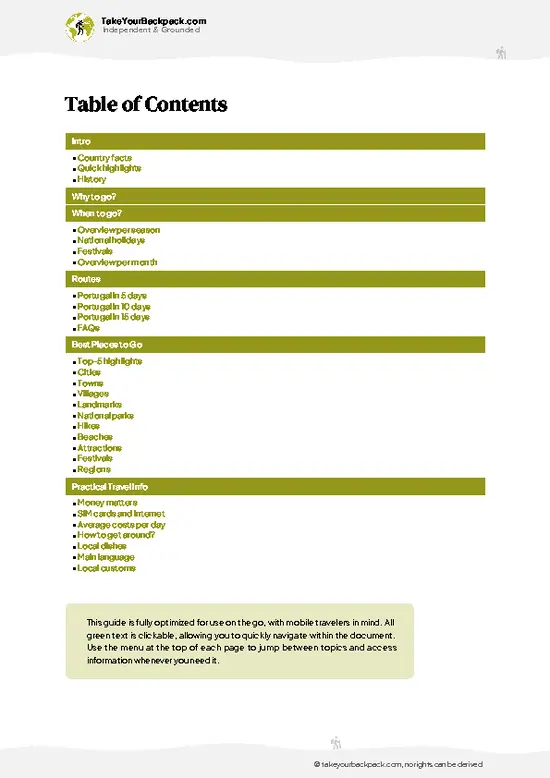
example page 2 from our offline Travel Guide for Portugal
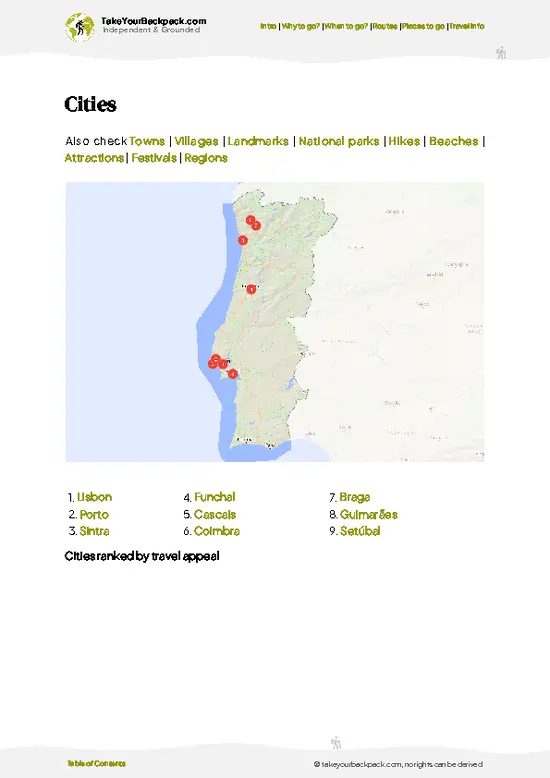
example page 3 from our offline Travel Guide for Portugal
example page 4 from our offline Travel Guide for Portugal
example page 5 from our offline Travel Guide for Portugal
example page 6 from our offline Travel Guide for Portugal
example page 7 from our offline Travel Guide for Portugal
Loading the map 🌍
CLICK TO FILTER
cities
towns
villages
landmarks
national parks
hikes
beaches
attractions
festivals
regions
SHOW COUNTRY’S BESTSHOW ALL

✨ Why go?
Ranked #2 city in Portugal
Why visitors keep coming back

Porto is a backpacker’s dream for several reasons. First, it’s a basecamp that allows easy access to stunning day trips, whether you’re craving coastal views or vineyard tours. The hostel scene here is vibrant and affordable, offering a mix of social atmospheres and cozy retreats. You’ll find places that cater to every vibe, from party hostels to quieter spots perfect for recharging.

The walkability of Porto is a game-changer. You can easily explore the city’s charming streets, with each corner revealing a new café or local market. This not only saves you money on transport but also immerses you in the local culture. Speaking of culture, the food scene is a highlight. You can indulge in delicious, budget-friendly meals that keep your energy up for exploring.

As for nightlife, Porto has a … read more 👉
Porto is a backpacker’s dream for several reasons. First, it’s a basecamp that allows easy access to stunning day trips, whether you’re craving coastal views or vineyard tours. The hostel scene here is vibrant and affordable, offering a mix of social atmospheres and cozy retreats. You’ll find places that cater to every vibe, from party hostels to quieter spots perfect for recharging.

The walkability of Porto is a game-changer. You can easily explore the city’s charming streets, with each corner revealing a new café or local market. This not only saves you money on transport but also immerses you in the local culture. Speaking of culture, the food scene is a highlight. You can indulge in delicious, budget-friendly meals that keep your energy up for exploring.

As for nightlife, Porto has a lively scene that caters to all tastes, whether you’re looking for a chill bar or a bustling club. Finally, the city’s transport links make onward travel a breeze, connecting you to other Portuguese gems or even neighboring Spain. Porto fits seamlessly into a backpacking route, making it more than just a stop; it’s a strategic choice for enriching your journey.

💡 HighlightsKey sights and experiences for travelers

  • Cais da Ribeira — The riverside neighborhood that actually feels like Porto: narrow cobbled streets, colorful facades, small bars and boat launches on the Douro. Great for people-watching, cheap petiscos by the water, and catching sunset light on the historic buildings.
  • Torre dos Clérigos (Clérigos Tower) — Climb the narrow spiral for one of the best panoramic views of the old city; the baroque church beside it is worth a quick peek too. It’s steep but short, and seeing the red roofs and river laid out below never gets old.
  • Estação de São Bento — A functioning station famous for its massive azulejo panels that depict Portuguese history and rural life. It’s quick to visit and an instant cultural hit without paying admission—plus it’s centrally located for exploring on foot.
  • Livraria Lello
… read more 👉
  • Cais da Ribeira — The riverside neighborhood that actually feels like Porto: narrow cobbled streets, colorful facades, small bars and boat launches on the Douro. Great for people-watching, cheap petiscos by the water, and catching sunset light on the historic buildings.
  • Torre dos Clérigos (Clérigos Tower) — Climb the narrow spiral for one of the best panoramic views of the old city; the baroque church beside it is worth a quick peek too. It’s steep but short, and seeing the red roofs and river laid out below never gets old.
  • Estação de São Bento — A functioning station famous for its massive azulejo panels that depict Portuguese history and rural life. It’s quick to visit and an instant cultural hit without paying admission—plus it’s centrally located for exploring on foot.
  • Livraria Lello — Yes, it’s touristy, but the carved wood, stained glass ceiling and dramatic staircase are legitimately beautiful and inspired a generation of book lovers. Buy a timed ticket (often redeemable against a book) to avoid the worst queues.
  • Igreja de São Francisco — An otherwise plain Gothic exterior hides one of the most opulent Baroque interiors in Portugal—walls dripping in gilded woodwork and dramatic carvings. Stand still for a few minutes and let the detail sink in; bring modest footwear for the stone floors.
  • Palácio da Bolsa (Stock Exchange Palace) — The 19th-century neoclassical building with the famous Arab Room and guided tours that unpack Porto’s mercantile history. It’s theatrical and tells you a lot about how the city made its wealth.
  • Serralves Museum & Park — Contemporary art museum plus a large art-deco villa and landscaped park—perfect for combining serious modern art with a relaxed walk among gardens and sculptures. Bring a picnic or time it with a temporary exhibit for the best value.
  • Mercado do Bolhão — A traditional market where sellers still hawk fruit, fish and flowers with old-school Porto energy. It’s earthy, noisy, and a great place to taste local produce or buy a cheap sandwich and people-watch.
  • Jardins do Palácio de Cristal — Spacious gardens with paths, peacocks, tiled benches and sweeping views over the Douro and the city. Ideal for a relaxed afternoon, especially if you want to escape the tourist crowds without leaving the center.
  • Foz and Passeio Alegre — Where the Douro meets the Atlantic: seawalls, seaside cafés, and a different mood from the old town—more surf, more locals. Walk or take the tram along the waterfront, then sit and watch the waves with a coffee or a grilled fish.
A few easy day trips: the port wine cellars in Vila Nova de Gaia, the Douro Valley vineyards around Peso da Régua/Pinhão, and the medieval towns of Guimarães and Braga are all close enough for a full-day outing from Porto.
Spotted a mistake or missing something? Contact us.

Things to do in Porto

Ratings based on Tripadvisor reviews. When you book through this link, you support our work at no extra cost to you.

🏘️ NeighborhoodsKey areas and districts to know

Porto is a city that thrives on contrasts, making it a playground for backpackers. Each neighborhood offers a unique flavor, so let’s break down where to stay based on your priorities.

Ribeira: This riverside area is the heart of Porto’s nightlife. Expect vibrant bars and restaurants lining the Douro River. It’s touristy but worth it for the views. Walkability is high, but it can get crowded. Ideal for short stays where you want to soak up the atmosphere.

Cedofeita: A blend of artsy vibes and local charm. This neighborhood is quieter, with boutique shops and cozy cafes. It’s perfect for longer stays if you want to feel like a local. Transport access is decent, but you’ll enjoy wandering the streets more than taking the metro.

Baixa: The city’s commercial hub, Baixa is bustling and convenient. … read more 👉
Porto is a city that thrives on contrasts, making it a playground for backpackers. Each neighborhood offers a unique flavor, so let’s break down where to stay based on your priorities.

Ribeira: This riverside area is the heart of Porto’s nightlife. Expect vibrant bars and restaurants lining the Douro River. It’s touristy but worth it for the views. Walkability is high, but it can get crowded. Ideal for short stays where you want to soak up the atmosphere.

Cedofeita: A blend of artsy vibes and local charm. This neighborhood is quieter, with boutique shops and cozy cafes. It’s perfect for longer stays if you want to feel like a local. Transport access is decent, but you’ll enjoy wandering the streets more than taking the metro.

Baixa: The city’s commercial hub, Baixa is bustling and convenient. It’s close to major attractions, making it easy to explore on foot. While it’s more expensive, you’ll find everything from street food to upscale dining. Great for those who want a mix of comfort and accessibility.

Foz do Douro: If you crave beach time, head to Foz. It’s a bit pricier and quieter, ideal for longer stays. The coastline is stunning, and you can escape the city’s hustle. Public transport is available, but walking along the beach is the real treat.

Campanhã: A bit off the beaten path, this area is budget-friendly. It’s less touristy, giving you a more authentic experience. Transport access is excellent, making it easy to explore the rest of the city. Perfect for longer stays if you’re looking to stretch your budget.

⌛️ 1 dayA smart one-day plan

Porto, Portugal, is a city that dances between the old and the new, where azulejos (ceramic tiles) tell stories on every corner and the Douro River flows like a lifeline through its heart. It’s a place where you can sip port wine in a centuries-old cellar and then stroll through vibrant streets filled with street art.

Start your morning in the Ribeira district, where the riverfront comes alive. Grab a pastel de nata from a local bakery—trust me, it’s the perfect fuel. Then, wander along the waterfront, soaking in the views of the iconic Dom Luís I Bridge. Cross the bridge to Vila Nova de Gaia for a tour of one of the port wine cellars. I recommend Sandeman; their guided tour is both informative and fun, ending with a tasting that’s worth every cent.

In the afternoon, head back to Porto … read more 👉
Porto, Portugal, is a city that dances between the old and the new, where azulejos (ceramic tiles) tell stories on every corner and the Douro River flows like a lifeline through its heart. It’s a place where you can sip port wine in a centuries-old cellar and then stroll through vibrant streets filled with street art.

Start your morning in the Ribeira district, where the riverfront comes alive. Grab a pastel de nata from a local bakery—trust me, it’s the perfect fuel. Then, wander along the waterfront, soaking in the views of the iconic Dom Luís I Bridge. Cross the bridge to Vila Nova de Gaia for a tour of one of the port wine cellars. I recommend Sandeman; their guided tour is both informative and fun, ending with a tasting that’s worth every cent.

In the afternoon, head back to Porto and explore the historic center. Visit the Livraria Lello, one of the most beautiful bookstores in the world. Yes, it’s a bit touristy, but the intricate woodwork and stained glass are breathtaking. Afterward, take a leisurely walk to the Clerigos Tower. Climbing the 240 steps is a workout, but the panoramic view of the city is your reward.

As evening approaches, make your way to the Cedofeita neighborhood, a spot often overlooked by tourists. Here, you’ll find a mix of trendy bars and local eateries. Try a petisco (Portuguese tapas) at Casa da Mariquinhas, where the atmosphere is cozy and the food is authentic.

End your day with a stroll along the river, watching the sunset paint the sky in hues of orange and pink. Porto isn’t just a destination; it’s an experience that lingers long after you leave. Each moment spent here is a choice, a trade-off between time, money, and comfort, but every choice leads to a richer understanding of this vibrant city.

🌤️ When to go?Choosing the right time of year

  • Weather: Porto’s climate is mild but variable. Summers (June to August) hover around 25-28°C (77-82°F), perfect for beach days but can feel sticky with humidity. Winters (December to February) dip to 8-14°C (46-57°F), often rainy but never freezing.
  • Temperature: Spring (March to May) and autumn (September to November) offer the best balance—comfortable 15-22°C (59-72°F) days, cooler nights, and less sweat. Ideal for walking the city’s hills without overheating or bundling up.
  • Daylight Hours: Long summer days stretch up to 15 hours, maximizing sightseeing time but also attracting more tourists. Winter days shrink to about 9 hours, limiting exploration but offering cozy evenings.
  • Crowds: Peak summer means packed streets, busy cafes, and higher prices. Shoulder seasons (spring and autumn)
… read more 👉
  • Weather: Porto’s climate is mild but variable. Summers (June to August) hover around 25-28°C (77-82°F), perfect for beach days but can feel sticky with humidity. Winters (December to February) dip to 8-14°C (46-57°F), often rainy but never freezing.
  • Temperature: Spring (March to May) and autumn (September to November) offer the best balance—comfortable 15-22°C (59-72°F) days, cooler nights, and less sweat. Ideal for walking the city’s hills without overheating or bundling up.
  • Daylight Hours: Long summer days stretch up to 15 hours, maximizing sightseeing time but also attracting more tourists. Winter days shrink to about 9 hours, limiting exploration but offering cozy evenings.
  • Crowds: Peak summer means packed streets, busy cafes, and higher prices. Shoulder seasons (spring and autumn) see fewer tourists, letting you enjoy Porto’s vibe without elbowing through crowds.
  • Seasonal Activities: Summer brings festivals and open-air concerts, while autumn is harvest time for Port wine, with vineyard tours in full swing. Winter is quieter but perfect for cultural museums and hearty food.
  • Price Fluctuations: Accommodation and flights spike in summer. Shoulder seasons offer better deals and availability, making your budget stretch further without sacrificing experience.
Pro-tip: Aim for late spring or early autumn—Porto rewards you with mild weather, manageable crowds, and wallet-friendly prices, turning timing into your secret weapon for a richer trip.


source: climatestotravel.comJANJanuary: fair for travelingFEBFebruary: fair for travelingMARMarch: highly recommended for travelingAPRApril: highly recommended for travelingMAYMay: excellent for travelingJUNJune: highly recommended for travelingJULJuly: good for travelingAUGAugust: good for travelingSEPSeptember: excellent for travelingOCTOctober: excellent for travelingNOVNovember: highly recommended for travelingDECDecember: fair for traveling
portugal-city-porto
© Google | Luis Gouveia

✈️ The backpacker research shortcutPortugal Travel Guide

An offline-friendly backpacking guide with optimized travel routes, ranked highlights, transport advice, and the best areas to stay.
example page 0 from our offline Travel Guide for Portugal
example page 1 from our offline Travel Guide for Portugal
example page 2 from our offline Travel Guide for Portugal
example page 3 from our offline Travel Guide for Portugal
example page 4 from our offline Travel Guide for Portugal
example page 5 from our offline Travel Guide for Portugal
example page 6 from our offline Travel Guide for Portugal
example page 7 from our offline Travel Guide for Portugal
The digital guide (361 pages) contains:
✅ 87 highlights, ranked by travel appeal
✅ Optimized 5, 10 & 15-day travel routes
✅ Cities, national parks, landmarks, beaches
✅ How to get around
✅ Offline-friendly for travel without Wi-Fi
👉 Click to see all 30+ guide features

📅 Plan smarter in minutes, not weeks
✅ Month by month travel advice
✅ Festivals & national holidays
✅ Budget expectations

🗺️ Go to the right places, skip the overrated ones
✅ Honest pros & cons of destinations
✅ Top hikes, parks & viewpoints
✅ Lesser-known places most travelers miss
✅ Clear “worth it vs skip it” guidance

🛏️ Travel smoothly without rookie mistakes
✅ Best areas to stay
✅ Transport systems explained simply
✅ Common scams & safety advice
✅ SIM cards, money & practical tips

🌍 Understand the country, not just visit it
✅ Culture & traditions
✅ 52 Essential phrases & customs
✅ Festivals worth planning around
✅ Traveler-friendly historical context
✅ Insights that make places more meaningful

📱 Built for real travel conditions
✅ Fully downloadable PDF
✅ Works completely offline
✅ Optimized for phone use
✅ Useful in remote areas & buses
✅ Everything in one place
Stop searching, start planning
Get instant access to your full guide. 30‑day money-back guarantee.
+ Add another guide for just

By proceeding you agree to our terms.
Sent to your inbox immediately after payment • 100% Secure Checkout
Best Backpacking Travel Advisor 2025 tourism awardBest Backpacking
Travel Advisor
2025
What others say about Take Your Backpack Guides:
⭐⭐⭐⭐⭐
Fantastic, amazing amount of information!
⭐⭐⭐⭐⭐
My goodness this is amazing, it's what I've been looking for hats off too you!
⭐⭐⭐⭐⭐
I think this is absolutely BRILLIANT
⭐⭐⭐⭐
Very complete and informative. It's still missing places, but I gotta to commend you
⭐⭐⭐⭐⭐
This is truly amazing, thank you, can't wait to explore it with my kids!
⭐⭐⭐⭐⭐
Awesome resource, thank you!
⭐⭐⭐⭐⭐
This is amazing! Can't wait to explore the ones I haven't seen
⭐⭐⭐⭐
I love this! Well done, great idea.
⭐⭐⭐⭐⭐
Thanks for taking the time to make this gem!
⭐⭐⭐⭐⭐
This might be the best website I've ever seen.
⭐⭐⭐⭐⭐
Congratulations, and thank you so much for your work; it's incredibly valuable.
⭐⭐⭐⭐
In all seriousness I think you did a great job pointing out the important spots
⭐⭐⭐⭐⭐
10/10 very good
⭐⭐⭐⭐⭐
As someone who's only just starting to visit regularly this is awesome, thank you.
⭐⭐⭐⭐
Thank you very much! I'm going to visit my dad, it's going to be very useful!
⭐⭐⭐⭐⭐
This is really cool! We'll be travelling for the first time and this definitely come in handy.
⭐⭐⭐⭐⭐
You are now our minister of culture, congratulations 👨‍💼
⭐⭐⭐⭐⭐
Just wanted to tell you that this is a pearl! Going to follow your recommendations.
⭐⭐⭐⭐⭐
This is so cool. I'll definitely be using the resource for my travels soon.
⭐⭐⭐⭐⭐
This is very impressive! Good work.
⭐⭐⭐⭐⭐
This is an amazing and informative site. Very well done!

🛏️ Where to stay?Best areas to stay in Portugal

Porto’s backpacker sweet spot is undeniably the Ribeira district and its immediate surroundings. This area nails the balance between social buzz and budget-friendly options without sacrificing safety. You’re right on the Douro River, with cobblestone streets that invite wandering and a lively mix of locals and travelers. Hostels here tend to be packed with solo backpackers and small groups, making it easy to connect without the forced vibe of a party hostel. The trade-off? It’s touristy, so prices for food and drinks can edge higher than in less central neighborhoods, but the convenience and atmosphere … read more 👉
Porto’s backpacker sweet spot is undeniably the Ribeira district and its immediate surroundings. This area nails the balance between social buzz and budget-friendly options without sacrificing safety. You’re right on the Douro River, with cobblestone streets that invite wandering and a lively mix of locals and travelers. Hostels here tend to be packed with solo backpackers and small groups, making it easy to connect without the forced vibe of a party hostel. The trade-off? It’s touristy, so prices for food and drinks can edge higher than in less central neighborhoods, but the convenience and atmosphere often justify the premium.

Just a short walk uphill, the Cedofeita and Bonfim neighborhoods offer a quieter, more local feel. These areas are less saturated with tourists, so you’ll find cheaper hostels and a more authentic slice of Porto life. The vibe is artsy and laid-back, perfect if you want to avoid the crowds but still be within reach of the city’s main attractions. The trade-off here is a bit more walking or reliance on public transit, which eats into your time but saves money and offers a more comfortable, less hectic pace.

Compared to the more residential Foz do Douro or the business-heavy Boavista, these central neighborhoods deliver the best mix of safety, social opportunities, and budget options. You’re choosing between the pulse of the riverfront or the calm of local streets, but either way, you’re set up to maximize your experience without blowing your budget or sacrificing comfort.

🚌 Getting aroundHow to get around Porto

Porto moves at its own rhythm—neither a frantic sprint nor a lazy stroll. It’s a city where old trams clang along cobbled streets, but the pulse isn’t dictated by strict timetables. Instead, it’s a blend of predictable patterns and spontaneous detours. You’ll find that time here is elastic: buses and metros run on schedules, but delays and crowds nudge you to adapt on the fly. Comfort is a relative term—sometimes you’ll squeeze into a packed tram for the experience, other times you’ll choose a slower, quieter walk to soak in the city’s character. Money? Porto rewards those who balance patience and savvy spending with authentic moments. Understanding this trade-off map—between time, money, and comfort—is your key to mastering Porto’s transit game.
  • Walking: Porto’s compact center is a playground
… read more 👉
Porto moves at its own rhythm—neither a frantic sprint nor a lazy stroll. It’s a city where old trams clang along cobbled streets, but the pulse isn’t dictated by strict timetables. Instead, it’s a blend of predictable patterns and spontaneous detours. You’ll find that time here is elastic: buses and metros run on schedules, but delays and crowds nudge you to adapt on the fly. Comfort is a relative term—sometimes you’ll squeeze into a packed tram for the experience, other times you’ll choose a slower, quieter walk to soak in the city’s character. Money? Porto rewards those who balance patience and savvy spending with authentic moments. Understanding this trade-off map—between time, money, and comfort—is your key to mastering Porto’s transit game.
  • Walking: Porto’s compact center is a playground for pedestrians. Free, flexible, and immersive, walking lets you control your pace and discover alleyways and viewpoints that no vehicle can reach. It’s the cheapest and often the most rewarding way to get around, but expect steep hills and cobblestones that demand sturdy shoes and a bit of stamina.
  • Metro: The backbone of Porto’s public transit, the metro runs from 6 AM to 1 AM with trains every 6-10 minutes during peak hours. Tickets cost around €1.20 for a single journey within the city, making it a fast and affordable option. It’s clean and efficient, but stations can get crowded during rush hour. Comfort is basic—seats are hard plastic, and space is tight when busy, but it’s a reliable way to cover longer distances quickly.
  • Bus: Buses cover areas the metro doesn’t reach, running roughly from 6 AM to midnight. Single fares hover around €2, slightly pricier than the metro but offering more route flexibility. Buses can be slower due to traffic, especially during peak times, and comfort varies widely depending on the line and vehicle age. They’re a solid choice if you want to reach neighborhoods off the beaten path without breaking the bank.
  • Tram: The historic tram lines are more tourist attraction than practical transit, with limited schedules mostly in the daytime and weekends. Tickets cost about €3, so it’s pricier and slower than buses or metro. Riding a tram is about soaking in Porto’s heritage and charm rather than speed or efficiency. Expect cramped wooden seats and a nostalgic, rattling ride.
  • Taxi / Ride-Hailing: Taxis and apps like Bolt or Uber offer door-to-door convenience, starting fares around €3.50 plus €1 per kilometer. They’re the fastest and most comfortable option, especially late at night or with heavy luggage, but the cost adds up quickly. Use them strategically—splurge for convenience when time is tight or comfort is non-negotiable.

👛 Costs (as of 16 October 2026)Travel costs and budget guide for Porto

Backpacking in Porto means balancing your budget with the city’s charm and pace. Here’s the real deal on what your daily expenses might look like:
  • Dorm Accommodation (High Season): Expect to pay around €20-€30 per night for a bed in a shared dorm during peak months (spring to early fall). These spots fill fast, so booking ahead is smart.
  • Dorm Accommodation (Off-Season): Drop to about €12-€18 per night when the crowds thin out. Winter months bring quieter hostels and better deals, perfect for flexible travelers.
  • Meals: Budget about €8-€15 daily if you mix street food, casual cafes, and occasional groceries. A hearty francesinha sandwich or a pastel de nata won’t break the bank but will fuel your day.
  • Local Transport: Single tram or bus rides cost roughly €1.20-€2.00. Walking is often the
… read more 👉
Backpacking in Porto means balancing your budget with the city’s charm and pace. Here’s the real deal on what your daily expenses might look like:
  • Dorm Accommodation (High Season): Expect to pay around €20-€30 per night for a bed in a shared dorm during peak months (spring to early fall). These spots fill fast, so booking ahead is smart.
  • Dorm Accommodation (Off-Season): Drop to about €12-€18 per night when the crowds thin out. Winter months bring quieter hostels and better deals, perfect for flexible travelers.
  • Meals: Budget about €8-€15 daily if you mix street food, casual cafes, and occasional groceries. A hearty francesinha sandwich or a pastel de nata won’t break the bank but will fuel your day.
  • Local Transport: Single tram or bus rides cost roughly €1.20-€2.00. Walking is often the best way to soak in Porto’s narrow streets, but public transport is handy for longer hauls.
  • City Transport Pass: A 24-hour Andante card runs about €7, offering unlimited rides on buses, trams, and metro. It’s a solid choice if you plan to hop around a lot in a day.
  • Basic Activities/Entry Fees: Museums and attractions typically charge €3-€10. Some highlights like Livraria Lello or the Serralves Museum lean towards the higher end but are worth the price.
  • Miscellaneous Expenses: Factor in about €3-€7 for coffee breaks, bottled water, or small souvenirs. Porto’s markets and street vendors offer affordable treats and keepsakes.

All told, you’re looking at roughly €40-€65 per day to cover the essentials without skimping on comfort or experience. This range lets you enjoy Porto’s vibe without the stress of constant penny-pinching, turning your trip into a smooth, well-played game of time, money, and comfort.


source: numbeo.com
⚠️ Prices can change and everyone travels differently, so take this as a rough guide. Hope it helps you plan your adventure!

🚌 Day tripsShort trips worth adding

Porto is a fantastic launchpad for day trips that let you dive deeper into Portugal’s rich culture and stunning landscapes. Here are some top picks that balance time, money, and comfort.

Douro Valley
Just a short train ride from Porto, the Douro Valley is a feast for the senses. Picture rolling vineyards, terraced hillsides, and the Douro River winding through it all. You can hop on a train for about 2 hours, and for around €15, you’ll find yourself in wine country. Spend your day sampling port wine at local quintas or taking a river cruise. The best time to visit is during the grape harvest in September and October, but spring is equally beautiful. A common mistake? Skipping the local eateries; they serve up hearty meals that pair perfectly with the wine.


Guimarães
Known as the birthplace … read more 👉
Porto is a fantastic launchpad for day trips that let you dive deeper into Portugal’s rich culture and stunning landscapes. Here are some top picks that balance time, money, and comfort.

Douro Valley
Just a short train ride from Porto, the Douro Valley is a feast for the senses. Picture rolling vineyards, terraced hillsides, and the Douro River winding through it all. You can hop on a train for about 2 hours, and for around €15, you’ll find yourself in wine country. Spend your day sampling port wine at local quintas or taking a river cruise. The best time to visit is during the grape harvest in September and October, but spring is equally beautiful. A common mistake? Skipping the local eateries; they serve up hearty meals that pair perfectly with the wine.


Guimarães
Known as the birthplace of Portugal, Guimarães is just an hour away by train. The medieval architecture and cobblestone streets make it feel like you’ve stepped back in time. You can explore the castle and the Palace of the Dukes for around €10 total. The train ticket will set you back about €5. Aim for a weekday visit to avoid crowds, and don’t miss the local pastries—try the “bolas de Berlim.” First-timers often overlook the small shops selling handmade crafts, which are perfect for souvenirs.
👉 Explore Guimarães

Aveiro
Often called the “Venice of Portugal,” Aveiro is about 1.5 hours from Porto. The colorful moliceiro boats and Art Nouveau buildings create a unique vibe. You can enjoy a boat ride for around €10 and indulge in the local sweet treat, ovos moles, for just a couple of euros. The best time to visit is in spring when the flowers bloom along the canals. A common pitfall is spending too much time on the boat; the town’s charm lies in wandering its streets and sampling local cuisine.
👉 Explore Aveiro

Braga
Braga, known for its religious heritage, is only an hour away and offers a mix of history and modernity. The Bom Jesus do Monte sanctuary is a must-see, with its stunning staircase and views. Entry is free, and you can get there for about €5. Spring and early fall are ideal for pleasant weather. Many first-timers miss the chance to explore the city center, which is filled with lively cafes and shops.
👉 Explore Braga

🍲 FoodWhat to Eat & Drink

In Porto, food and drink are not just sustenance; they’re a way of life. You can’t visit without trying the francesinha, a hearty sandwich layered with meats, smothered in a rich, spicy sauce. It’s a meal that demands attention, often served with a side of crispy fries. Pair it with a local Super Bock beer for the full experience.

For a lighter bite, explore the Mercado do Bolhão. This bustling market is a feast for the senses, filled with vendors selling fresh seafood, cured meats, and local cheeses. Grab a pastel de nata from a nearby café; the flaky pastry and creamy custard are a must-have.

When it comes to drinks, don’t miss the chance to sample Port wine. Head to a riverside bar for a glass of this sweet, fortified wine. It’s customary to sip it slowly while enjoying the view of the … read more 👉
In Porto, food and drink are not just sustenance; they’re a way of life. You can’t visit without trying the francesinha, a hearty sandwich layered with meats, smothered in a rich, spicy sauce. It’s a meal that demands attention, often served with a side of crispy fries. Pair it with a local Super Bock beer for the full experience.

For a lighter bite, explore the Mercado do Bolhão. This bustling market is a feast for the senses, filled with vendors selling fresh seafood, cured meats, and local cheeses. Grab a pastel de nata from a nearby café; the flaky pastry and creamy custard are a must-have.

When it comes to drinks, don’t miss the chance to sample Port wine. Head to a riverside bar for a glass of this sweet, fortified wine. It’s customary to sip it slowly while enjoying the view of the Douro River.

Etiquette here is relaxed. Sharing food is common, so don’t hesitate to order a few dishes to share with fellow travelers. Embrace the local pace; linger over your meal, savoring every bite and sip. In Porto, every meal is a celebration, and you’re invited to join in.

🛡️ SafetyStaying Safe: What Travelers Should Know

Porto is generally safe, but like any city, it has its quirks. Stay aware in crowded areas like Ribeira and Bolhão Market, where pickpockets might lurk. Keep your belongings close, especially in bustling spots.

If you’re solo, the evenings can feel different. Stick to well-lit streets and avoid wandering too far into quieter neighborhoods after dark. The locals are friendly, but trust your instincts.

Scams are rare, but a common annoyance is the occasional overly persistent street vendor. A polite “no, thank you” usually suffices. Also, be cautious with taxi services; use reputable apps instead of hailing cabs off the street to avoid inflated fares.

Overall, carry yourself confidently and engage with the locals. They’re often eager to help, and a friendly demeanor can go a long way. … read more 👉
Porto is generally safe, but like any city, it has its quirks. Stay aware in crowded areas like Ribeira and Bolhão Market, where pickpockets might lurk. Keep your belongings close, especially in bustling spots.

If you’re solo, the evenings can feel different. Stick to well-lit streets and avoid wandering too far into quieter neighborhoods after dark. The locals are friendly, but trust your instincts.

Scams are rare, but a common annoyance is the occasional overly persistent street vendor. A polite “no, thank you” usually suffices. Also, be cautious with taxi services; use reputable apps instead of hailing cabs off the street to avoid inflated fares.

Overall, carry yourself confidently and engage with the locals. They’re often eager to help, and a friendly demeanor can go a long way. Enjoy the vibrant culture, and let Porto’s charm shine through.

FAQCommon questions from travelers

3 to 4 days are sufficient to explore Porto's main attractions, including Ribeira, Livraria Lello, and the Port wine cellars. This allows time for day trips to nearby areas like Vila Nova de Gaia or the Douro Valley. Spending more than 4 days is ideal if you want to explore the region in depth.
Yes, Porto is generally safe for solo backpackers, with low crime rates in tourist areas. Standard precautions like avoiding poorly lit streets at night and keeping an eye on belongings are advised. Public transport and walking are reliable ways to get around safely.
Porto is known for its historic center, a UNESCO World Heritage site, and its production of Port wine. The city is famous for its colorful riverside district, traditional azulejo tiles, and the Dom Luís I Bridge. It also has a vibrant food scene featuring local specialties like francesinha.
⚠️ Things can change over time, so always validate details locally before you go.

Other Portuguese cities near Porto

Explore more nearby:

  • Guimarães—Medieval castle, granite plazas, artisan workshops| 42 km away
  • Braga—Baroque churches, religious festivals, leafy avenues| 46 km away
  • Coimbra—Hilltop university, student traditions, riverfront gardens| 108 km away

💡 Not sure where to go next?
Create a personalized itinerary for Portugal including Porto and the places that fit your trip.

Generate my itinerary

👉 Discover all cities

Or checkout all Portugal has to offer (think cities, towns, villages, national parks, hikes, beaches, festivals)
Country photo of Portugal

We 💚 feedbackWhat to keep in mind

Porto’s charm lies in its vibrant streets and rich history, where every corner tells a story. The local food scene? Absolutely worth the splurge—don’t skip the francesinha. But be prepared: the hilly terrain can be a workout. If you’re not up for a climb, consider your comfort level. Embrace the challenge, and you’ll find the rewards are well worth the effort.

✈️ When did I visit Portugal?
Portugal is a lovely country in Europe. Have been multiple times in the south as well as Lissabon and Porto.

✍️ Help improve this page!
The information on this page is based on my own backpacking experience in Portugal, supplemented with up-to-date research and feedback from other travelers. Travel details can change, so if you notice anything outdated or incomplete, feel free to let me know.


🙋‍♂️ Give feedback

👋 Meet the founderWho’s Behind Take Your Backpack?

Johan, backpacker and founder of TakeYourBackpackHi, I’m Johan (Netherlands 🇳🇱), the creator of TakeYourBackpack. Over the past 3 decades, I’ve backpacked through 90+ countries across six continents, gaining extensive experience with independent travel, long-term trips, and overland routes.

This site is built on a combination of firsthand travel experience and carefully curated insights from other backpackers. Many guides are based on places I’ve personally visited, while others bring together tips, observations, and practical advice shared by trusted travelers I’ve met along the way.

The goal is to provide realistic, experience-driven guidance — not generic itineraries — so you can explore destinations with better context, clearer expectations, and more confidence.