×
Lisbon

Portugal🇵🇹 | citiesLisbonTram routes, tiled facades, hilltop viewpoints | things to do and best time to go

Explore GuimarãesExplore Porto

Backpacking in Lisbon
🏆 Top pickcity ranked #1
By Johan Kruseman 🇳🇱 | Updated September 4, 2026

Lisbon is not for people who need everything hyper-organized, spotless, and punctual, or for those who hate hills, late nights, and a bit of chaos. For backpackers, though, that same messiness is exactly where the value is. The city sprawls along the Tagus River on Portugal’s southwest coast, a natural base between surf towns like Cascais and cultural heavyweights like Sintra. You get grand plazas (Praça do Comércio), crooked alleys in Alfama, cheap viewpoints everywhere, and nightlife in Bairro Alto that feels like one big street party. It’s easy to move around by tram, metro, or on foot if your knees can handle the climbs. Hostels are social without being feral, so meeting people is almost automatic. Prices are higher than Porto but still kinder than most Western capitals. Petty theft exists, but I’ve always felt relaxed walking home late. Overall vibe: sun-soaked, slightly scruffy, creative, and addictive.

Discover everything you want to know in the 📖 Portugal Travel Guide.


Get your Portugal guide
88 ranked highlights, routes & tips, works offline (369 pages)
Loading the map 🌍
CLICK TO FILTER
cities
towns
villages
landmarks
national parks
hikes
beaches
attractions
festivals
regions
SHOW COUNTRY’S BESTSHOW ALL

✨ Why go?
Ranked #1 city in Portugal
What sets this place apart

Lisbon is a backpacker’s dream for several reasons. First, its affordability makes it a standout in Western Europe. You can find hostels that are not just cheap but also vibrant, fostering a sense of community. The city’s walkability is another major plus; you can easily navigate its charming streets, soaking in the local culture without needing a bus or tram. This means you save both time and money while enjoying the sights.

The food scene is a delightful mix of traditional and modern, offering everything from street snacks to sit-down meals that won’t break the bank. Plus, Lisbon serves as an excellent basecamp for day trips to nearby gems, allowing you to maximize your experience without the hassle of constant packing and unpacking.

When the sun sets, the nightlife kicks in, with options … read more 👉
Lisbon is a backpacker’s dream for several reasons. First, its affordability makes it a standout in Western Europe. You can find hostels that are not just cheap but also vibrant, fostering a sense of community. The city’s walkability is another major plus; you can easily navigate its charming streets, soaking in the local culture without needing a bus or tram. This means you save both time and money while enjoying the sights.

The food scene is a delightful mix of traditional and modern, offering everything from street snacks to sit-down meals that won’t break the bank. Plus, Lisbon serves as an excellent basecamp for day trips to nearby gems, allowing you to maximize your experience without the hassle of constant packing and unpacking.

When the sun sets, the nightlife kicks in, with options ranging from laid-back bars to lively clubs, ensuring you can unwind after a day of exploration. Lastly, Lisbon’s transport links make onward travel easy, whether you’re heading to the Algarve or hopping over to Spain. This city is perfect for those who want to dive deep or just stop for a taste of Portugal.
Want to include Lisbon in your Portugal route?
Create a personalized Portugal itinerary that includes Lisbon and the places that fit your trip — based on your travel style, budget, and available time. Get your route in seconds.

Generate my trip

💡 HighlightsTop highlights of Lisbon

  1. Castelo de São Jorge — Big stone castle on the hill that actually feels like a place people lived and fought in; the ruins, terraces and sweeping Tagus views give context to Lisbon’s layered past and are worth lingering for sunset photos and a sense of perspective.
  2. Alfama neighborhood — Lisbon’s oldest quarter: narrow, laundry-lined alleys, tiny squares, local shops and Fado houses. Walk without a map, get lost on the cobbles, and you’ll see the city’s soul more clearly than from any guidebook.
  3. Mosteiro dos Jerónimos — A UNESCO-listed Manueline masterpiece in Belém whose carved stonework celebrates Portugal’s Age of Discovery; step inside for cloisters that feel both monumental and intimate.
  4. Torre de Belém — A riverside fortress that’s part postcard, part history lesson about Portuguese
read more 👉
  1. Castelo de São Jorge — Big stone castle on the hill that actually feels like a place people lived and fought in; the ruins, terraces and sweeping Tagus views give context to Lisbon’s layered past and are worth lingering for sunset photos and a sense of perspective.
  2. Alfama neighborhood — Lisbon’s oldest quarter: narrow, laundry-lined alleys, tiny squares, local shops and Fado houses. Walk without a map, get lost on the cobbles, and you’ll see the city’s soul more clearly than from any guidebook.
  3. Mosteiro dos Jerónimos — A UNESCO-listed Manueline masterpiece in Belém whose carved stonework celebrates Portugal’s Age of Discovery; step inside for cloisters that feel both monumental and intimate.
  4. Torre de Belém — A riverside fortress that’s part postcard, part history lesson about Portuguese navigation and defense; you can walk out to it and feel the maritime vibe of old Lisbon.
  5. Pastéis de Belém (Antiga Confeitaria de Belém) — The original custard-tart bakery where the recipe is a secret; yes, it’s touristy, but the warm tart fresh from the oven is a small, delicious piece of local food culture.
  6. Tram 28 — Hop on the vintage yellow tram for a rattling, scenic route through Graça, Alfama and Baixa; it’s touristy but it’s also a functional, memorable way to see tight streets and classic neighborhoods.
  7. Mercado da Ribeira / Time Out Market — A lively market hall where traditional stalls meet top local chefs; great if you want to sample Portuguese food from many makers in one efficient, friendly place.
  8. LX Factory — Converted factory complex under the 25 de Abril bridge that now houses indie shops, cafés, street art and weekend markets — a good spot to feel Lisbon’s creative, modern side away from the usual monuments.
  9. Museu Nacional do Azulejo — A museum dedicated to Portugal’s painted tiles, housed in a beautiful old convent; the long tile panels and the chapel alone are worth the visit if you care about craft and visual history.
  10. Feira da Ladra — Lisbon’s flea market (Campo de Santa Clara) where locals browse for antiques, clothes and odd treasures; it’s an easy way to rub shoulders with real Lisboetas and find something unexpected.
Nearby day-trip winners that are easy from Lisbon: Sintra (Pena Palace and Quinta da Regaleira), the seaside town of Cascais, and Cabo da Roca (westernmost point of continental Europe).
Spotted a mistake or missing something? Contact us.

Things to do in Lisbon

Ratings based on Tripadvisor reviews. When you book through this link, you support our work at no extra cost to you.

🏘️ NeighborhoodsNeighborhood guide to Lisbon

Lisbon is a city of contrasts, where each neighborhood offers a unique flavor for backpackers. Here’s a breakdown to help you navigate your choices.

Alfama: This is the heart of old Lisbon, with narrow, winding streets that echo with Fado music. It’s affordable, but be ready for steep hills. The vibe is laid-back, perfect for longer stays where you can soak in the history. Nightlife is quieter here, but you can find cozy bars with live music.

Bairro Alto: If you crave nightlife, this is your playground. The streets come alive after dark, filled with bars and clubs. It’s walkable, but expect higher prices for accommodation. Great for short stays if you want to party hard, but the noise can be a downside for light sleepers.

Chiado: A blend of culture and commerce, Chiado is ideal for those … read more 👉
Lisbon is a city of contrasts, where each neighborhood offers a unique flavor for backpackers. Here’s a breakdown to help you navigate your choices.

Alfama: This is the heart of old Lisbon, with narrow, winding streets that echo with Fado music. It’s affordable, but be ready for steep hills. The vibe is laid-back, perfect for longer stays where you can soak in the history. Nightlife is quieter here, but you can find cozy bars with live music.

Bairro Alto: If you crave nightlife, this is your playground. The streets come alive after dark, filled with bars and clubs. It’s walkable, but expect higher prices for accommodation. Great for short stays if you want to party hard, but the noise can be a downside for light sleepers.

Chiado: A blend of culture and commerce, Chiado is ideal for those who want a bit of everything. It’s more upscale, so costs can be higher, but the walkability is excellent. You’ll find theaters, cafes, and shops. Perfect for a short stay if you want to explore the arts scene.

Cais do Sodré: This area has transformed from a seedy port district to a trendy hub. It’s lively, with a mix of bars and restaurants. Prices are moderate, and it’s well-connected by transport. Great for a short stay, especially if you want to experience the nightlife without going too far.

Belém: Known for its monuments and museums, Belém is quieter and more spacious. It’s a bit farther from the city center, so transport is key. Costs are reasonable, and it’s perfect for longer stays if you appreciate history and culture over nightlife.

⌛️ 1 dayHow to make the most of one day

Lisbon is a city that dances between the old and the new, where cobblestone streets echo with the laughter of locals and the scent of fresh pastries wafts through the air. It’s a place where history meets vibrant street art, and every corner offers a story waiting to be discovered.

Start your day in the Alfama district, the oldest neighborhood in Lisbon. Grab a pastel de nata from Pastéis de Belém—this creamy custard tart is a must. Stroll through the narrow alleys, soaking in the colorful tiles and the sounds of Fado music drifting from nearby taverns. Make your way to the Miradouro de Santa Luzia for a stunning view of the Tagus River. It’s a perfect spot to catch your breath and snap a few photos.

In the afternoon, head to the Bairro Alto area. This neighborhood is known for its bohemian … read more 👉
Lisbon is a city that dances between the old and the new, where cobblestone streets echo with the laughter of locals and the scent of fresh pastries wafts through the air. It’s a place where history meets vibrant street art, and every corner offers a story waiting to be discovered.

Start your day in the Alfama district, the oldest neighborhood in Lisbon. Grab a pastel de nata from Pastéis de Belém—this creamy custard tart is a must. Stroll through the narrow alleys, soaking in the colorful tiles and the sounds of Fado music drifting from nearby taverns. Make your way to the Miradouro de Santa Luzia for a stunning view of the Tagus River. It’s a perfect spot to catch your breath and snap a few photos.

In the afternoon, head to the Bairro Alto area. This neighborhood is known for its bohemian vibe and eclectic shops. Stop by the Mercado da Ribeira for lunch; the food stalls offer everything from fresh seafood to gourmet sandwiches. After refueling, wander through the streets, exploring local boutiques and perhaps finding a piece of handmade jewelry. For a unique experience, visit the lesser-known Museu Nacional do Azulejo, dedicated to the art of Portuguese tiles. It’s a quiet retreat that showcases the beauty of this traditional craft.

As evening approaches, make your way to the Chiado district. Here, you can enjoy a leisurely dinner at a local restaurant, savoring dishes like bacalhau à brás. Afterward, catch the sunset from the rooftop bar at Park, a hidden gem atop a parking garage. The view of the city bathed in golden light is a perfect way to wrap up your day.

Lisbon is a city that invites you to linger, to explore, and to savor every moment. Each choice you make—whether to indulge in a pastry or take a detour to a quiet museum—adds depth to your experience. Embrace the trade-offs, and you’ll find that the high-value moments are often the ones that surprise you.
Turn your Lisbon visit into an Portugal adventure
Build a complete Portugal route with Lisbon, hidden gems, must-see destinations, and realistic travel times included.

Generate my trip

🌤️ When to go?Best time to visit Lisbon


  • Weather: Lisbon enjoys a Mediterranean climate. Winters are mild and rainy, averaging 11–15°C (52–59°F), while summers are dry and warm, hitting 27–30°C (81–86°F). Spring and fall offer a sweet spot with pleasant warmth and less rain.

  • Temperature: If you want to avoid the heat but still enjoy outdoor wandering, late March to May or September to October is ideal. Expect highs around 20–25°C (68–77°F), perfect for exploring without sweating buckets or bundling up.

  • Daylight Hours: Peak summer days stretch to about 15 hours, giving you plenty of time to roam. Winter days shrink to around 9–10 hours, which can cramp your sightseeing but offer cozy evenings.

  • Crowds: Summer (June to August) draws tourists in full force, especially July and August. Expect packed streets and higher prices.
read more 👉

  • Weather: Lisbon enjoys a Mediterranean climate. Winters are mild and rainy, averaging 11–15°C (52–59°F), while summers are dry and warm, hitting 27–30°C (81–86°F). Spring and fall offer a sweet spot with pleasant warmth and less rain.

  • Temperature: If you want to avoid the heat but still enjoy outdoor wandering, late March to May or September to October is ideal. Expect highs around 20–25°C (68–77°F), perfect for exploring without sweating buckets or bundling up.

  • Daylight Hours: Peak summer days stretch to about 15 hours, giving you plenty of time to roam. Winter days shrink to around 9–10 hours, which can cramp your sightseeing but offer cozy evenings.

  • Crowds: Summer (June to August) draws tourists in full force, especially July and August. Expect packed streets and higher prices. Shoulder seasons (spring and fall) balance fewer crowds with good weather.

  • Seasonal Activities: Festivals like Festas de Lisboa in June bring lively street parties and cultural buzz but also crowds. Spring and fall host fewer events but more authentic local vibes and open museums.

  • Price Fluctuations: Accommodation and flights spike in summer and during major festivals. Booking in shoulder seasons can save you 20–40% while still offering great weather and access.


Pro-tip: Aim for late April to early June or September to early October—this window nails the balance between weather, crowd size, and wallet-friendliness, letting you savor Lisbon on your terms.


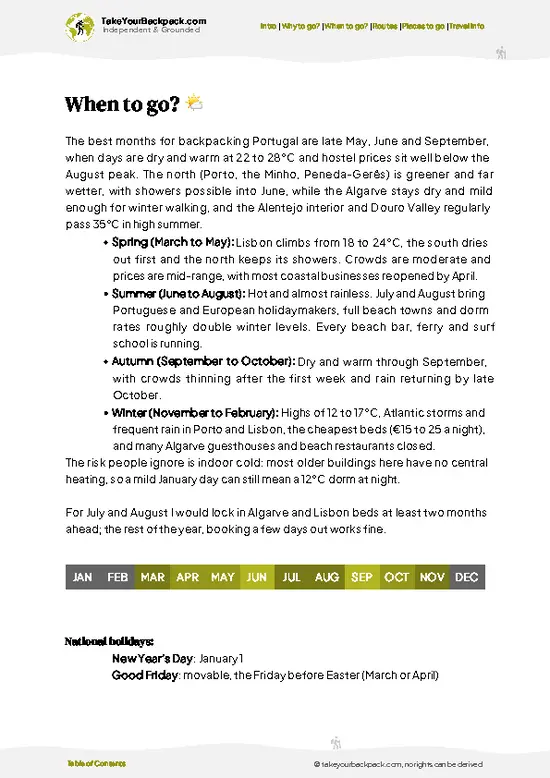
source: climatestotravel.comJANJanuary: fair for travelingFEBFebruary: fair for travelingMARMarch: good for travelingAPRApril: highly recommended for travelingMAYMay: excellent for travelingJUNJune: highly recommended for travelingJULJuly: good for travelingAUGAugust: good for travelingSEPSeptember: excellent for travelingOCTOctober: highly recommended for travelingNOVNovember: fair for travelingDECDecember: fair for traveling
Portugal - Lisbon

✈️ The backpacker research shortcutPortugal Travel Guide

An offline-friendly backpacking guide with optimized travel routes, ranked highlights, transport advice, and the best areas to stay.
example page 0 from our offline Travel Guide for Portugal
example page 1 from our offline Travel Guide for Portugal
example page 2 from our offline Travel Guide for Portugal
example page 3 from our offline Travel Guide for Portugal
example page 4 from our offline Travel Guide for Portugal
example page 5 from our offline Travel Guide for Portugal
example page 6 from our offline Travel Guide for Portugal
example page 7 from our offline Travel Guide for Portugal
The digital guide (369 pages) contains:
88 highlights, ranked by travel appeal
Optimized 5, 10 & 15-day travel routes
Cities, national parks, landmarks, beaches
How to get around
Offline-friendly for travel without Wi-Fi
👉 Click to see all 30+ guide features

📅 Plan smarter in minutes, not weeks
Month by month travel advice
Festivals & national holidays
Budget expectations

🗺️ Go to the right places, skip the overrated ones
Honest pros & cons of destinations
Top hikes, parks & viewpoints
Lesser-known places most travelers miss
Clear “worth it vs skip it” guidance

🛏️ Travel smoothly without rookie mistakes
Best areas to stay
Transport systems explained simply
Common scams & safety advice
SIM cards, money & practical tips

🌍 Understand the country, not just visit it
Culture & traditions
52 Essential phrases & customs
Festivals worth planning around
Traveler-friendly historical context
Insights that make places more meaningful

📱 Built for real travel conditions
Fully downloadable PDF
Works completely offline
Optimized for phone use
Useful in remote areas & buses
Everything in one place
Save weeks of stressful planning
Get instant access to your full guide. 30‑day money-back guarantee.
+ Add another guide for just US$7.80

By proceeding you agree to our terms.
Sent to your inbox immediately after payment • 100% Secure Checkout
Best Backpacking Travel Advisor 2025 tourism awardBest Backpacking
Travel Advisor
2025
What others say about Take Your Backpack Guides:
⭐⭐⭐⭐⭐
Fantastic, amazing amount of information!
⭐⭐⭐⭐⭐
My goodness this is amazing, it's what I've been looking for hats off too you!
⭐⭐⭐⭐⭐
I think this is absolutely BRILLIANT
⭐⭐⭐⭐
Very complete and informative. It's still missing places, but I gotta to commend you
⭐⭐⭐⭐⭐
This is truly amazing, thank you, can't wait to explore it with my kids!
⭐⭐⭐⭐⭐
Awesome resource, thank you!
⭐⭐⭐⭐⭐
This is amazing! Can't wait to explore the ones I haven't seen
⭐⭐⭐⭐
I love this! Well done, great idea.
⭐⭐⭐⭐⭐
Thanks for taking the time to make this gem!
⭐⭐⭐⭐⭐
This might be the best website I've ever seen.
⭐⭐⭐⭐⭐
Congratulations, and thank you so much for your work; it's incredibly valuable.
⭐⭐⭐⭐
In all seriousness I think you did a great job pointing out the important spots
⭐⭐⭐⭐⭐
10/10 very good
⭐⭐⭐⭐⭐
As someone who's only just starting to visit regularly this is awesome, thank you.
⭐⭐⭐⭐
Thank you very much! I'm going to visit my dad, it's going to be very useful!
⭐⭐⭐⭐⭐
This is really cool! We'll be travelling for the first time and this definitely come in handy.
⭐⭐⭐⭐⭐
You are now our minister of culture, congratulations 👨‍💼
⭐⭐⭐⭐⭐
Just wanted to tell you that this is a pearl! Going to follow your recommendations.
⭐⭐⭐⭐⭐
This is so cool. I'll definitely be using the resource for my travels soon.
⭐⭐⭐⭐⭐
This is very impressive! Good work.
⭐⭐⭐⭐⭐
This is an amazing and informative site. Very well done!

🛏️ Where to stay?Best areas to stay in Portugal

Lisbon’s backpacker sweet spot is undeniably the neighborhoods of Bairro Alto and Alfama, with a strong nod to Cais do Sodré. These areas strike a savvy balance between budget, social buzz, and safety—key for solo travelers who want to plug into the city without blowing the bank or losing their peace of mind.

Bairro Alto is the heartbeat of Lisbon’s nightlife and social scene. It’s packed with hostels that cater to backpackers craving a lively atmosphere where meeting fellow travelers is almost inevitable. The streets are narrow and steep, so expect a bit of a workout, but the payoff is a neighborhood … read more 👉
Lisbon’s backpacker sweet spot is undeniably the neighborhoods of Bairro Alto and Alfama, with a strong nod to Cais do Sodré. These areas strike a savvy balance between budget, social buzz, and safety—key for solo travelers who want to plug into the city without blowing the bank or losing their peace of mind.

Bairro Alto is the heartbeat of Lisbon’s nightlife and social scene. It’s packed with hostels that cater to backpackers craving a lively atmosphere where meeting fellow travelers is almost inevitable. The streets are narrow and steep, so expect a bit of a workout, but the payoff is a neighborhood that feels like a constant, low-key party. It’s safe, but keep your wits about you late at night—like any nightlife hub.

Alfama, on the other hand, offers a more historic, authentic vibe. It’s quieter during the day, with winding alleys and traditional Fado music spilling from local taverns. Hostels here tend to attract travelers who want to soak in Lisbon’s soul while still having access to social spaces. It’s a bit more laid-back than Bairro Alto but still very safe and walkable.

Cais do Sodré is the wild card—once a seedy port area, now a trendy hotspot with a mix of bars, clubs, and hostels. It’s perfect if you want a bit of edge and easy access to transport. The vibe is youthful and dynamic, with plenty of budget options that don’t skimp on comfort.

Compared to the more residential or business-heavy zones like Baixa or Parque das Nações, these three neighborhoods offer the best trade-off: affordable stays, social energy, and a sense of security that lets you focus on the fun parts of travel.

🚌 Getting aroundTransportation options and practical tips

Lisbon moves with a rhythm that’s part old-world charm, part modern hustle. It’s not a city where everything clicks like clockwork, but it’s far from chaos. Think of it as a dance between the slow, deliberate pace of trams winding up steep hills and the brisk, efficient flow of metro trains slicing through underground tunnels. Here, timing is a flexible concept—you’ll find schedules, but expect a little wiggle room. The city’s pulse is a blend of predictable routes and spontaneous detours, where your choice of transit shapes not just your budget but your experience of Lisbon’s layered personality.


  • Walking: The ultimate budget option and the best way to soak in Lisbon’s character. The city’s compact center and scenic hills reward your effort with unexpected viewpoints and alleyway discoveries.
read more 👉
Lisbon moves with a rhythm that’s part old-world charm, part modern hustle. It’s not a city where everything clicks like clockwork, but it’s far from chaos. Think of it as a dance between the slow, deliberate pace of trams winding up steep hills and the brisk, efficient flow of metro trains slicing through underground tunnels. Here, timing is a flexible concept—you’ll find schedules, but expect a little wiggle room. The city’s pulse is a blend of predictable routes and spontaneous detours, where your choice of transit shapes not just your budget but your experience of Lisbon’s layered personality.


  • Walking: The ultimate budget option and the best way to soak in Lisbon’s character. The city’s compact center and scenic hills reward your effort with unexpected viewpoints and alleyway discoveries. No cost, total freedom, but prepare for steep climbs and cobblestones that demand sturdy shoes.


  • Tram 28: The iconic, winding tram that’s both a tourist magnet and a practical route through historic neighborhoods. Runs roughly from 6:00 AM to 11:00 PM. Tickets cost about €3 if bought onboard, cheaper with a transport card. It’s slow and often packed, but the charm and direct access to Alfama and Bairro Alto make it a high-value trade-off between comfort and experience.


  • Metro: Fast, reliable, and affordable, the metro runs from 6:30 AM to 1:00 AM, with trains every 6-9 minutes during peak hours. A single ticket costs around €1.50 with a reloadable Viva Viagem card. It’s the best bet for covering longer distances quickly, sacrificing scenic views for speed and efficiency.


  • Buses: Extensive network covering areas the metro and trams don’t reach. Operate roughly from 6:00 AM to midnight. Tickets are similar in price to the metro. Buses can be slower due to traffic but offer a flexible, budget-friendly way to reach less touristy neighborhoods. Comfort varies widely depending on the line and time of day.


  • Elevadores (Funiculars): These short, steep cable cars—like Elevador da Glória—are perfect for saving energy on Lisbon’s infamous hills. They run from early morning until around midnight, costing about €3 per ride. They’re quick, comfortable, and add a dash of local flavor, but they cover only small distances, so they’re best combined with walking or other transit.

👛 Costs (as of 4 September 2026)What things cost and how to budget

Backpacking in Lisbon means balancing smart spending with soaking up the city’s character. Here’s how your daily costs typically stack up:
  • Dorm Accommodation (High Season): Expect to pay around €20-€30 per night in popular hostels during peak months (spring to early fall). These spots fill fast, so booking ahead is key.
  • Dorm Accommodation (Off-Season): Drop to about €12-€18 per night when the crowds thin out in winter. You’ll find quieter hostels and sometimes better deals on longer stays.
  • Meals: Budget about €10-€15 daily if you stick to casual eateries, local markets, and street food. A hearty bifana sandwich or a pastel de nata with coffee keeps you fueled without breaking the bank.
  • Local Transport: Single tram or bus rides cost roughly €1.50-€2.00. It’s a practical way to get around
read more 👉
Backpacking in Lisbon means balancing smart spending with soaking up the city’s character. Here’s how your daily costs typically stack up:
  • Dorm Accommodation (High Season): Expect to pay around €20-€30 per night in popular hostels during peak months (spring to early fall). These spots fill fast, so booking ahead is key.
  • Dorm Accommodation (Off-Season): Drop to about €12-€18 per night when the crowds thin out in winter. You’ll find quieter hostels and sometimes better deals on longer stays.
  • Meals: Budget about €10-€15 daily if you stick to casual eateries, local markets, and street food. A hearty bifana sandwich or a pastel de nata with coffee keeps you fueled without breaking the bank.
  • Local Transport: Single tram or bus rides cost roughly €1.50-€2.00. It’s a practical way to get around if you’re hopping between neighborhoods.
  • City Transport Pass: A 24-hour public transport pass runs about €6.40, covering trams, buses, and metro. If you plan multiple trips, this pass saves both money and hassle.
  • Basic Activities/Entry Fees: Museums and attractions typically charge €5-€10. Some offer free entry on certain days, so timing your visits can stretch your budget.
  • Miscellaneous Expenses: Factor in around €5-€10 for essentials like water, snacks, or a quick coffee break. Lisbon’s charm often comes with spontaneous moments worth a small splurge.

All told, a realistic daily budget for backpacking Lisbon ranges from about €40 on a tight budget in the off-season to €65 or more during high season with a bit more comfort. Knowing where your money goes lets you decide when to save and when to indulge, turning the city’s logistics into a game you’re winning.


source: numbeo.com
⚠️ Prices can change and everyone travels differently, so take this as a rough guide. Hope it helps you plan your adventure!

🚌 Day tripsExploring the surroundings

Lisbon is a fantastic launchpad for day trips that pack a punch without draining your wallet. With its efficient transport links and vibrant culture, you can easily explore the surrounding gems. Here are some standout options.

Sintra
Just a 40-minute train ride from Lisbon, Sintra feels like stepping into a fairy tale. The colorful Pena Palace and the mystical Quinta da Regaleira are must-sees. You’ll wander through lush gardens and marvel at architecture that seems pulled from a storybook. Budget around €10 for the train and another €10 for entry fees. The best time to visit is spring or early fall when the crowds are manageable, and the weather is pleasant. A common mistake? Skipping the hike up to the Moorish Castle for panoramic views.
👉 Explore Sintra

Cascais
About 30 minutes … read more 👉
Lisbon is a fantastic launchpad for day trips that pack a punch without draining your wallet. With its efficient transport links and vibrant culture, you can easily explore the surrounding gems. Here are some standout options.

Sintra
Just a 40-minute train ride from Lisbon, Sintra feels like stepping into a fairy tale. The colorful Pena Palace and the mystical Quinta da Regaleira are must-sees. You’ll wander through lush gardens and marvel at architecture that seems pulled from a storybook. Budget around €10 for the train and another €10 for entry fees. The best time to visit is spring or early fall when the crowds are manageable, and the weather is pleasant. A common mistake? Skipping the hike up to the Moorish Castle for panoramic views.
👉 Explore Sintra

Cascais
About 30 minutes by train, Cascais offers a refreshing coastal escape. This charming seaside town boasts beautiful beaches, a lively marina, and a laid-back vibe. Grab a cheap lunch at one of the local cafés and stroll along the waterfront promenade. Expect to spend around €5 on the train and maybe €15 for food and drinks. Summer is peak season, but visiting in late spring or early fall means fewer tourists and more space to breathe. Don’t miss the Boca do Inferno cliffs; they’re a stunning sight.
👉 Explore Cascais

Évora
Roughly 1.5 hours by bus, Évora is a UNESCO World Heritage site that’s rich in history. Explore the Roman Temple, the eerie Chapel of Bones, and the charming old town. You can easily get by on €15 for transport and snacks. Spring and fall are ideal for visiting, as the weather is mild and the city isn’t overrun. A common pitfall? Underestimating the walking distance between sites; wear comfortable shoes!
👉 Explore Évora

Arrábida Natural Park
For nature lovers, Arrábida is a must. Just an hour from Lisbon, this park features stunning cliffs and pristine beaches. You can hike, swim, or simply soak in the views. Budget around €10 for transport and a picnic lunch. Late spring or early fall is perfect for enjoying the outdoors without the summer heat. Many first-timers miss the hidden coves; take the time to explore off the beaten path.
👉 Explore Arrábida Natural Park

Obidos
A little over an hour by bus, Obidos is a medieval town that feels frozen in time. Walk along the castle walls and enjoy the quaint streets lined with shops selling local ginjinha. Expect to spend about €10 for transport and €5 for snacks. Spring is lovely here, with flowers blooming everywhere. A rookie mistake? Not trying the local cherry liqueur; it’s a delightful treat!
👉 Explore Obidos
Want to know what more Portugal offers?
The Portugal Travel Guide describes 88 highlights, from cities to national parks, from beaches to hikes

Get the Travel Guide -

🍲 FoodWhat to Eat & Drink

In Lisbon, food and drink are not just sustenance; they’re a way to connect with the city’s soul. Start with bacalhau à brás, a comforting dish of shredded cod, potatoes, and eggs, often seasoned with olives. It’s a staple that embodies Portuguese culinary tradition. Don’t skip the pastéis de nata, those creamy custard tarts that are best enjoyed warm, with a sprinkle of cinnamon.

Backpackers will find their culinary haven in markets like Mercado da Ribeira. Here, you can sample everything from fresh seafood to artisanal cheeses without breaking the bank. Street food is also a must; grab a bifana, a spicy pork sandwich, from a local vendor and enjoy it on the go.

When it comes to drinks, Lisbon’s ginjinha—a cherry liqueur served in a shot glass—is a rite of passage. Sip it at a local bar, … read more 👉
In Lisbon, food and drink are not just sustenance; they’re a way to connect with the city’s soul. Start with bacalhau à brás, a comforting dish of shredded cod, potatoes, and eggs, often seasoned with olives. It’s a staple that embodies Portuguese culinary tradition. Don’t skip the pastéis de nata, those creamy custard tarts that are best enjoyed warm, with a sprinkle of cinnamon.

Backpackers will find their culinary haven in markets like Mercado da Ribeira. Here, you can sample everything from fresh seafood to artisanal cheeses without breaking the bank. Street food is also a must; grab a bifana, a spicy pork sandwich, from a local vendor and enjoy it on the go.

When it comes to drinks, Lisbon’s ginjinha—a cherry liqueur served in a shot glass—is a rite of passage. Sip it at a local bar, where the atmosphere buzzes with laughter and conversation.

Etiquette is relaxed; sharing food is common, and it’s perfectly acceptable to eat standing up. Just remember, meals are often leisurely affairs, so embrace the pace. In Lisbon, every bite and sip tells a story, inviting you to savor the moment.

🛡️ SafetyTraveler Safety Guide

Lisbon is generally safe, but like any city, it has its quirks. Stay alert in crowded areas like the Baixa district or near major tourist spots. Pickpockets can be crafty, especially on trams or in bustling markets. Keep your belongings close and consider using a money belt.

If you’re solo, the Alfama district is charming but can feel a bit isolated at night. Stick to well-lit streets and avoid wandering too far off the beaten path after dark. The nightlife is vibrant, so enjoy it, but trust your instincts.

Scams are rare, but watch for the classic “friendly” approach. Someone might ask for help with directions or to sign a petition. Politely decline and keep moving. Street performers can be entertaining, but be cautious of those who get too close—sometimes they expect a tip for their “performance. … read more 👉
Lisbon is generally safe, but like any city, it has its quirks. Stay alert in crowded areas like the Baixa district or near major tourist spots. Pickpockets can be crafty, especially on trams or in bustling markets. Keep your belongings close and consider using a money belt.

If you’re solo, the Alfama district is charming but can feel a bit isolated at night. Stick to well-lit streets and avoid wandering too far off the beaten path after dark. The nightlife is vibrant, so enjoy it, but trust your instincts.

Scams are rare, but watch for the classic “friendly” approach. Someone might ask for help with directions or to sign a petition. Politely decline and keep moving. Street performers can be entertaining, but be cautious of those who get too close—sometimes they expect a tip for their “performance.”

Overall, carry yourself confidently, stay aware, and you’ll navigate Lisbon like a pro.

FAQCommon questions from travelers

3 to 4 days are sufficient to explore Lisbon's main attractions, including Belém Tower, Alfama district, and the LX Factory. This allows time for day trips to nearby Sintra or Cascais. Public transport and walking cover most sites efficiently.
Yes, Lisbon is generally safe for solo backpackers, with low violent crime rates in tourist areas. Standard precautions like avoiding poorly lit streets at night and watching belongings in crowded places are advised. Emergency services are reliable and English is widely understood.
Lisbon is known for its historic neighborhoods like Alfama, iconic yellow trams, and vibrant Fado music culture. It also stands out for its pastel-colored buildings and scenic viewpoints such as Miradouro da Senhora do Monte. The city is famous for its seafood cuisine and nearby beaches.
⚠️ Things can change over time, so always validate details locally before you go.

Other Portuguese cities near Lisbon

Explore more nearby:

  • Sintra—palaces, misty forests, Moorish castle| 19 km away
  • Cascais—Atlantic beaches, marina, seafood markets| 23 km away
  • Setúbal—fish market, estuary views, Arrábida hills| 31 km away

💡 Not sure where to go next?
Create a personalized itinerary for Portugal including Lisbon and the places that fit your trip.

Generate my itinerary

👉 Discover all cities

Or checkout all Portugal has to offer (think cities, towns, villages, national parks, hikes, beaches, festivals)
Country photo of Portugal

We 💚 feedbackKey takeaways before you go

Lisbon’s charm is magnetic. The blend of historic neighborhoods, vibrant street art, and mouthwatering pastéis de nata makes every corner feel alive. But here’s the catch: it can be tourist-heavy, especially in summer. You’ll need to navigate crowds, particularly in popular spots like Belém and Alfama. Embrace the hustle, though; it’s part of the experience. Just plan your visits wisely, and you’ll uncover the city’s soul amidst the buzz.

✈️ When did I visit Portugal?
Portugal is a lovely country in Europe. Have been multiple times in the south as well as Lissabon and Porto.

✍️ Help improve this page!
The information on this page is based on my own backpacking experience in Portugal, supplemented with up-to-date research and feedback from other travelers. Travel details can change, so if you notice anything outdated or incomplete, feel free to let me know.


🙋‍♂️ Give feedback

👋 Meet the founderWho’s Behind Take Your Backpack?

Johan, backpacker and founder of TakeYourBackpackHi, I’m Johan (Netherlands 🇳🇱), the creator of TakeYourBackpack. Over the past decade, I’ve backpacked through 80+ countries across six continents, gaining extensive experience with independent travel, long-term trips, and overland routes.

This site is built on a combination of firsthand travel experience and carefully curated insights from other backpackers. Many guides are based on places I’ve personally visited, while others bring together tips, observations, and practical advice shared by trusted travelers I’ve met along the way.

The goal is to provide realistic, experience-driven guidance — not generic itineraries — so you can explore destinations with better context, clearer expectations, and more confidence.

Get full Portugal guide •
Instant download • 88 highlights • Full Offline guide