×

Puerto Rico🇵🇷 | best beachesExplore the 10 Best beaches in Puerto Rico

Beaches in Puerto Rico come in three moods. The north coast faces the Atlantic, with surf, big waves and lifeguards at the busiest stretches. The south and southwest are drier, calmer and quieter, with water that stays gentle for swimming. The east and the offshore islands of Culebra and Vieques have the clearest water but need a ferry or a short flight. For independent travelers, public beaches are free and reachable by rental car, though parking can run US$5 to 10. Go on a weekday, arrive before 10 a.m., and grab a bag of fried snacks from a roadside kiosk, because weekends fill up with local families fast.

By Johan Kruseman 🇳🇱 | Updated October 23, 2026
Explore the best attractions in Puerto Rico

Why go?What Makes Them Special

Puerto Rico works for beaches because the island is small, varied and American in its infrastructure. You can cross it in about three hours by car and swap Atlantic surf for a Caribbean-side lagoon within a single day. Roads are paved, signage is in Spanish and English, US dollars are used, and no passport is needed for US citizens, which keeps friction low.

The geography does a lot of the work. The north faces open ocean and gets swell from winter storms far away, while the south sits in a rain shadow and stays calmer and sunnier. Offshore reefs and mangrove-lined bays protect many east and southwest shores.

Culturally, beaches are public by law. All shoreline below the high-tide mark is open to everyone, so you will share sand with locals who arrive with coolers, speakers and folding tables. … read more 👉
Puerto Rico works for beaches because the island is small, varied and American in its infrastructure. You can cross it in about three hours by car and swap Atlantic surf for a Caribbean-side lagoon within a single day. Roads are paved, signage is in Spanish and English, US dollars are used, and no passport is needed for US citizens, which keeps friction low.

The geography does a lot of the work. The north faces open ocean and gets swell from winter storms far away, while the south sits in a rain shadow and stays calmer and sunnier. Offshore reefs and mangrove-lined bays protect many east and southwest shores.

Culturally, beaches are public by law. All shoreline below the high-tide mark is open to everyone, so you will share sand with locals who arrive with coolers, speakers and folding tables. That is the best part, and also why Sundays and holidays get loud and crowded.

Before choosing the island, know that public transport to most beaches is thin, so a car is practically a must. Some beaches have strong currents, and the offshore islands book ferries and rooms early. Cheaper than much of the Caribbean, but not rock-bottom.
Our Approach to Ranking
The list of best beaches in Puerto Rico is created based on beauty, vibe, water quality, activities, and surrounding scenery. If you feel a beach is missing in this list, please let us know.

When to go?Seasonal Guide to Visiting

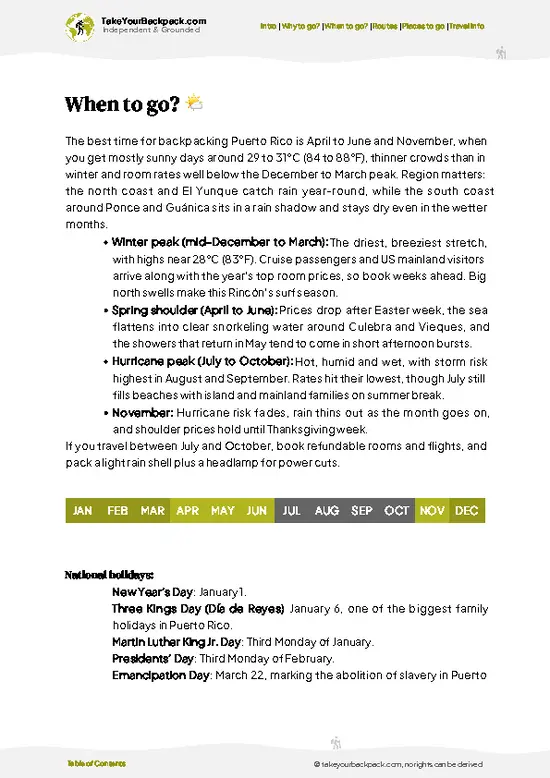
Best months and weather: The best months for beaches in Puerto Rico are December through April, when it is dry, sunny and about 82 to 86°F (28 to 30°C) with lower humidity and calmer seas on the Caribbean side. Water stays around 78 to 82°F (26 to 28°C) all year, so swimming works in every season.

Shoulder seasons and rain: May, early June and November are the sweet spot for value. Crowds thin, lodging often drops 15 to 30 percent from winter highs, and showers tend to be short afternoon bursts. From August to October, humidity climbs, temperatures hit 90°F (32°C) or more, and rainfall peaks. The Atlantic hurricane season runs June to November, with the greatest risk in August to October, so book flexible rates and ferries you can rebook.

Regional differences and peak periods: The north … read more 👉
Best months and weather: The best months for beaches in Puerto Rico are December through April, when it is dry, sunny and about 82 to 86°F (28 to 30°C) with lower humidity and calmer seas on the Caribbean side. Water stays around 78 to 82°F (26 to 28°C) all year, so swimming works in every season.

Shoulder seasons and rain: May, early June and November are the sweet spot for value. Crowds thin, lodging often drops 15 to 30 percent from winter highs, and showers tend to be short afternoon bursts. From August to October, humidity climbs, temperatures hit 90°F (32°C) or more, and rainfall peaks. The Atlantic hurricane season runs June to November, with the greatest risk in August to October, so book flexible rates and ferries you can rebook.

Regional differences and peak periods: The north coast is wetter and gets big surf from roughly November to March, which makes some stretches unsafe for swimming. The south and southwest receive far less rain and stay calm most of the year. The east sits in between, with mild winds that help in summer.

Peak crowds hit Christmas to Three Kings Day in early January, Holy Week, and summer holiday weekends including July 4. Book rental cars and island ferries well ahead then, and plan midweek beach days.

beach hoppingSuggested Travel Strategies

How many days to plan: A trip combining several beaches in Puerto Rico needs 7 to 10 days, enough for three regions without constant driving. Fewer than five forces you into one coast.

Which regions pair well: Base around San Juan first, since the main airport (SJU) is there. The north and northeast cluster together, with the east coast and the ferry port at Fajardo about 45 to 60 minutes from the capital. Natural pairs are east plus the islands of Culebra and Vieques, and southwest plus the west coast near Rincón and Cabo Rojo. San Juan to the southwest takes roughly 2.5 to 3.5 hours by car.

Direction and pacing: Travel clockwise: San Juan, east and the islands, south, southwest, then the west and back north along the coast. Allow 1 to 2 nights per mainland region and 2 to 3 nights on Culebra … read more 👉
How many days to plan: A trip combining several beaches in Puerto Rico needs 7 to 10 days, enough for three regions without constant driving. Fewer than five forces you into one coast.

Which regions pair well: Base around San Juan first, since the main airport (SJU) is there. The north and northeast cluster together, with the east coast and the ferry port at Fajardo about 45 to 60 minutes from the capital. Natural pairs are east plus the islands of Culebra and Vieques, and southwest plus the west coast near Rincón and Cabo Rojo. San Juan to the southwest takes roughly 2.5 to 3.5 hours by car.

Direction and pacing: Travel clockwise: San Juan, east and the islands, south, southwest, then the west and back north along the coast. Allow 1 to 2 nights per mainland region and 2 to 3 nights on Culebra or Vieques, because ferries run on limited schedules, with Fajardo crossings taking about 1 to 1.5 hours to Vieques and Culebra. Plan a half day at each beach, then move on at midday.

Planning mistakes: The main error is underestimating drive times. Mountain roads through the interior are slow, and a 60-mile trip can take over two hours. Another is arriving at the ferry without a reservation. Book ahead, arrive early and keep a buffer day before flights.

The ListTop beaches of Puerto Rico

1 Flamenco Beach

Mile-long crescent, rusted tanks, rock-edge reef, beachside camping

Claim a shaded spot early on this shallow bay, snorkel the rocky ends, then climb the graffiti-covered tanks before afternoon crowds arrive.

puerto-rico-beach-flamenco-beach
© Google |

2 Crash Boat Beach

Old wooden pier, pier snorkeling, painted fishing boats, Sunday party

Walk out along weathered pilings where local kids dive, then snorkel the clear water below and eat fried snacks from the kiosks.

puerto-rico-beach-crash-boat-beach
© Google | Mj Fador

3 Playa de Isla Verde

Guarded stretch, beachfront promenade, low-flying jets, avenue nightlife

Swim near the lifeguard towers, jog the paved promenade, and watch jets descend low over the water before an evening along the avenue.

puerto-rico-beach-playa-de-isla-verde
© Google |

4 Cayo Icacos

Boat-only cay, shallow turquoise water, seagrass snorkeling, no facilities

Anchor off a pale uninhabited crescent, wade ashore into knee-deep turquoise, and snorkel the seagrass with a packed cooler and your own mask.

5 Luquillo Beach

Lifeguarded balneario, coconut grove, kiosk strip, El Yunque backdrop

Settle under coconut palms beside calm reef-sheltered shallows, then walk to the highway kiosks for fritters, grilled fish and cold beer.

6 Playa Sucia

White crescent, cliff trail, lighthouse bluff, west-facing dusk

Spread out along a wide curve of pale sand, then climb the limestone cliff path above the lighthouse for a long view of the bay.

puerto-rico-beach-playa-sucia
© Google |

7 Playa Combate

Sunset shoreline, seafood shacks, salt flats, lighthouse cliffs

Wade far out in calm water, eat fried fish steps from the sea, then drive to the salt flats and limestone-cliff lighthouse.

puerto-rico-beach-playa-combate
© Google |

8 Playa Buyé

West-facing bay, moored sailboats, seagrass shallows, weekend families

Wade through warm, gentle water past anchored boats, snorkel over seagrass for rays and small fish, and stay for the orange sunset.

puerto-rico-beach-playa-buye
© Google | Erick Estrada

9 Playa La Chiva

Refuge shoreline, turtle seagrass, birdwatching, rough dirt road

Float in glassy shallows where turtles graze, then walk the refuge sand watching pelicans and herons, with lunch packed in.

10 Playa Jobos

Reef-break surf, lessons, beachfront bars, limestone coves

Paddle out for lessons or watch the reef wave from shore, then trade stories with surfers over fried snacks as the sun drops.

puerto-rico-beach-playa-jobos
© Google |

11 Playa El Escambrón

Lagoon fort, reef-sheltered cove, Old San Juan walk, free entry

Snorkel the sheltered rocks, walk east to an eighteenth-century fort, then stroll the walls toward Old San Juan for lunch.

12 Playa Tamarindo

Green turtles, seagrass beds, narrow sand, no services

Snorkel above feeding turtles in the seagrass, keep your distance, and carry in food, water and shade for a quiet northwest-shore morning.

13 Playa Escondida

Small reef cove, tide pools, early swims, no vendors

Arrive before the boats to swim flat water, check the low-tide pools for crabs, and bring your own food for a quiet sunset.

14 Playa Santa

Ultra-shallow sandy seabed, dry-hill scrub, fried seafood kiosks, weekday calm

Wade a long way out in warm, flat water, then eat fried fish at plastic tables with the sea still in view.

15 Playa La Pared

Reef surf break, rocky edge, reef shoes, kiosk strip

Watch surfers work waves breaking over shallow reef beneath El Yunque’s ridge, then walk to the kiosks for cheap fried snacks.

16 Mar Chiquita Beach

Rock-walled pool, Atlantic spray, tight palm cove

Float in a knee-deep natural pool while Atlantic swells surge through a gap in the rocks, and keep clear of the current at the opening.

puerto-rico-beach-mar-chiquita-beach
© Google | Bryan Salazar

17 Playa Guajataca

Railway tunnel, limestone bluffs, Atlantic surf, shaded picnic patches

Carry a flashlight through the old railway tunnel, walk beneath the cliffs, and watch local surfers work strong north-coast swells from shore.

18 Playa Peña Blanca

White limestone outcrop, winter swell, lighthouse ruins, sunset shore

Photograph the pale rock against the dark coast, watch northern swells from the sand, then walk to the broken lighthouse on the point.

19 Playa Zoni

East-facing sunrise, open Atlantic swell, tide-line beachcombing, no facilities

Walk the tide line at dawn for sea glass, shells and coral fragments, with Cayo Norte and Culebrita lying low on the horizon.

20 Playa Ballena

Dry-forest bay, mangrove edges, cactus trail, Fuerte Caprón lookout

Follow a scrub path to a small pebbly shore, float in flat water, and hike inland to the stone ruins of a lookout.

Think you know Puerto Rico?

Prove you’re a true local — uncover 10 lesser-known beaches in Puerto Rico that locals tend to keep to themselves.
Loading the map 🌍

Expert viewPro Tips for Exploring the Best

How many beaches to visit: Aim for 6 to 8 beaches over a week, across at least three different coasts. Fewer than that and you miss the contrast between rough Atlantic sand and calm Caribbean coves. More than one beach a day usually means you spend your time in the car instead of the water. Two beach days in a row is easy; three starts to blur.

Choosing by travel style: If you want swimming and snorkeling, prioritize the calm south, southwest and island beaches. For surf, focus on the north and west coasts in winter, when swell is highest. For social energy, pick the busy urban and kiosk-lined shores on weekends, where local music and food stalls are part of the point. For solitude, go midweek to remote bays or the less developed island stretches, and arrive before 9 a.m.

What it costs: … read more 👉
How many beaches to visit: Aim for 6 to 8 beaches over a week, across at least three different coasts. Fewer than that and you miss the contrast between rough Atlantic sand and calm Caribbean coves. More than one beach a day usually means you spend your time in the car instead of the water. Two beach days in a row is easy; three starts to blur.

Choosing by travel style: If you want swimming and snorkeling, prioritize the calm south, southwest and island beaches. For surf, focus on the north and west coasts in winter, when swell is highest. For social energy, pick the busy urban and kiosk-lined shores on weekends, where local music and food stalls are part of the point. For solitude, go midweek to remote bays or the less developed island stretches, and arrive before 9 a.m.

What it costs: Budget US$70 to 120 a day if you share rooms or stay in guesthouses, eat local, and drive. Most beaches are free. Parking at popular spots runs US$5 to 10, and some balnearios (government-run beaches) charge about US$3 to 5 per car. A rental car costs roughly US$40 to 80 a day, plus fuel. Ferries to Vieques and Culebra are inexpensive, around US$2 to 5 each way for passengers, while snorkel gear rentals run US$10 to 20. Guided kayak or snorkel tours cost US$40 to 100. Beach chairs and umbrellas run US$15 to 30 per set.

Safety on the sand: Respect flag systems and lifeguard instructions. Rip currents are the main hazard on the north coast, and drownings happen on beaches that look calm. If waves are breaking hard, stay in knee-deep water or choose another beach. Never leave valuables in a parked car, because break-ins at remote lots are common. Carry a small dry bag, lock the car with nothing visible inside, and park where other cars are.

Cultural notes: Greet people with a quick “buenas” when you arrive. Weekends belong to families, so expect loud music and big groups, and keep your own volume reasonable. Bring reef-safe sunscreen, as many protected areas prohibit harmful formulas. Take trash out with you, and never touch coral or turtles. Sea turtles nest on some shores in spring and summer, so keep lights off and stay clear of marked nests. Bring cash for kiosks and parking, because small vendors often don’t take cards.

✈️ The backpacker research shortcutPuerto Rico Travel Guide

An offline-friendly backpacking guide with optimized travel routes, ranked highlights, transport advice, and the best areas to stay.
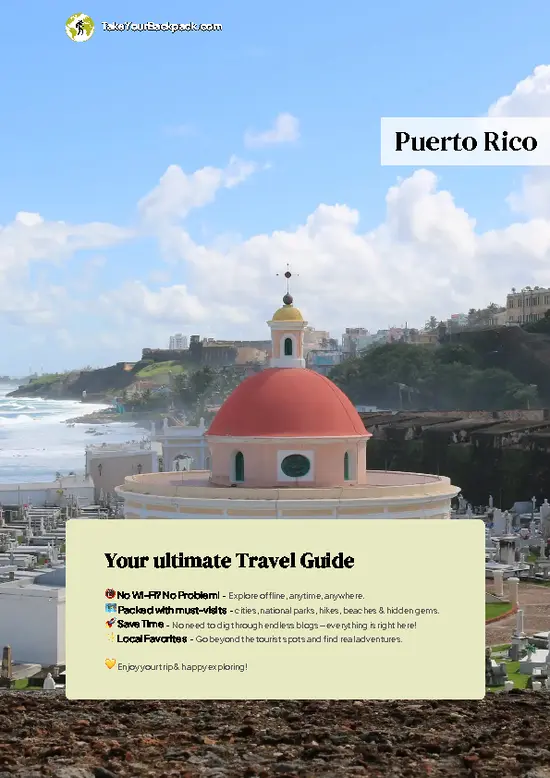
example page 0 from our offline Travel Guide for Puerto Rico
example page 1 from our offline Travel Guide for Puerto Rico
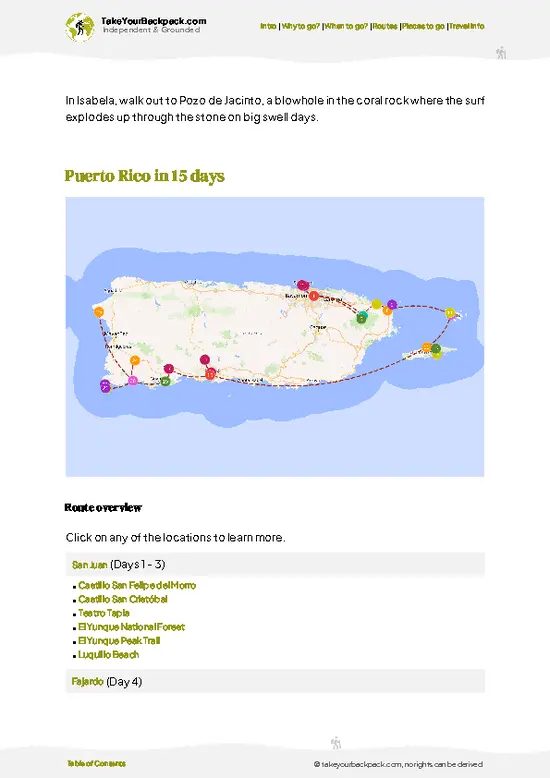
example page 2 from our offline Travel Guide for Puerto Rico
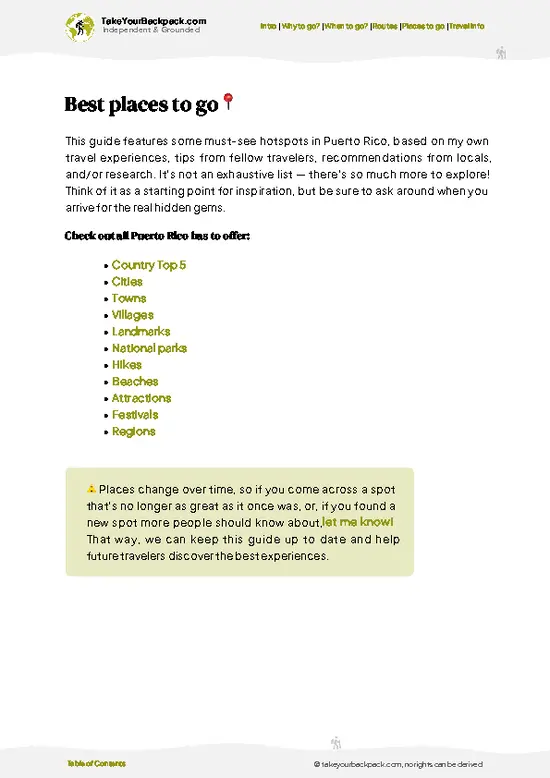
example page 3 from our offline Travel Guide for Puerto Rico
example page 4 from our offline Travel Guide for Puerto Rico
example page 5 from our offline Travel Guide for Puerto Rico
example page 6 from our offline Travel Guide for Puerto Rico
example page 7 from our offline Travel Guide for Puerto Rico
The digital guide (310 pages) contains:
✅ 81 highlights, ranked by travel appeal
✅ Optimized 5, 10 & 15-day travel routes
✅ Cities, national parks, landmarks, beaches
✅ How to get around
✅ Offline-friendly for travel without Wi-Fi
👉 Click to see all 30+ guide features

📅 Plan smarter in minutes, not weeks
✅ Month by month travel advice
✅ Festivals & national holidays
✅ Budget expectations

🗺️ Go to the right places, skip the overrated ones
✅ Honest pros & cons of destinations
✅ Top hikes, parks & viewpoints
✅ Lesser-known places most travelers miss
✅ Clear “worth it vs skip it” guidance

🛏️ Travel smoothly without rookie mistakes
✅ Best areas to stay
✅ Transport systems explained simply
✅ Common scams & safety advice
✅ SIM cards, money & practical tips

🌍 Understand the country, not just visit it
✅ Culture & traditions
✅ 52 Essential phrases & customs
✅ Festivals worth planning around
✅ Traveler-friendly historical context
✅ Insights that make places more meaningful

📱 Built for real travel conditions
✅ Fully downloadable PDF
✅ Works completely offline
✅ Optimized for phone use
✅ Useful in remote areas & buses
✅ Everything in one place
Stop searching, start planning
Get instant access to your full guide. 30‑day money-back guarantee.
+ Add another guide for just

By proceeding you agree to our terms.
Sent to your inbox immediately after payment • 100% Secure Checkout
Best Backpacking Travel Advisor 2025 tourism awardBest Backpacking
Travel Advisor
2025
What others say about Take Your Backpack Guides:
⭐⭐⭐⭐⭐
Fantastic, amazing amount of information!
⭐⭐⭐⭐⭐
My goodness this is amazing, it's what I've been looking for hats off too you!
⭐⭐⭐⭐⭐
I think this is absolutely BRILLIANT
⭐⭐⭐⭐
Very complete and informative. It's still missing places, but I gotta to commend you
⭐⭐⭐⭐⭐
This is truly amazing, thank you, can't wait to explore it with my kids!
⭐⭐⭐⭐⭐
Awesome resource, thank you!
⭐⭐⭐⭐⭐
This is amazing! Can't wait to explore the ones I haven't seen
⭐⭐⭐⭐
I love this! Well done, great idea.
⭐⭐⭐⭐⭐
Thanks for taking the time to make this gem!
⭐⭐⭐⭐⭐
This might be the best website I've ever seen.
⭐⭐⭐⭐⭐
Congratulations, and thank you so much for your work; it's incredibly valuable.
⭐⭐⭐⭐
In all seriousness I think you did a great job pointing out the important spots
⭐⭐⭐⭐⭐
10/10 very good
⭐⭐⭐⭐⭐
As someone who's only just starting to visit regularly this is awesome, thank you.
⭐⭐⭐⭐
Thank you very much! I'm going to visit my dad, it's going to be very useful!
⭐⭐⭐⭐⭐
This is really cool! We'll be travelling for the first time and this definitely come in handy.
⭐⭐⭐⭐⭐
You are now our minister of culture, congratulations 👨‍💼
⭐⭐⭐⭐⭐
Just wanted to tell you that this is a pearl! Going to follow your recommendations.
⭐⭐⭐⭐⭐
This is so cool. I'll definitely be using the resource for my travels soon.
⭐⭐⭐⭐⭐
This is very impressive! Good work.
⭐⭐⭐⭐⭐
This is an amazing and informative site. Very well done!

🛏️ Where to stay?Top Areas to Stay

Puerto Rico has a small but solid hostel scene, with dorm beds usually running US$30 to 50 a night and private rooms in guesthouses or short-term rentals from about US$80, which is pricier than most of the Caribbean backpacker circuit. In San Juan, Old San Juan puts you within walking distance of the forts and the bar streets but gets loud on weekend nights, Santurce is the pick for nightlife around the La Placita market area and for murals and cheaper food, while Condado and Ocean Park trade some of that buzz for beach access and quieter, generally safe streets (Isla Verde works mainly for a late arrival or early flight). Outside the capital, surf town Rincón on the west coast and the islands … read more 👉
Puerto Rico has a small but solid hostel scene, with dorm beds usually running US$30 to 50 a night and private rooms in guesthouses or short-term rentals from about US$80, which is pricier than most of the Caribbean backpacker circuit. In San Juan, Old San Juan puts you within walking distance of the forts and the bar streets but gets loud on weekend nights, Santurce is the pick for nightlife around the La Placita market area and for murals and cheaper food, while Condado and Ocean Park trade some of that buzz for beach access and quieter, generally safe streets (Isla Verde works mainly for a late arrival or early flight). Outside the capital, surf town Rincón on the west coast and the islands of Vieques and Culebra have guesthouses and a few hostels that fill up fast on weekends and holidays, so book ahead there.

If you enjoy meeting fellow travelers, consider choosing hostels with high ratings for atmosphere. On the other hand, if you prefer having your own space, a hotel might be a better option.

Puerto RicoDiscover the Country

👋 Meet the founderWho’s Behind Take Your Backpack?

Johan, backpacker and founder of TakeYourBackpackHi, I’m Johan (Netherlands 🇳🇱), the creator of TakeYourBackpack. Over the past 3 decades, I’ve backpacked through 90+ countries across six continents, gaining extensive experience with independent travel, long-term trips, and overland routes.

This site is built on a combination of firsthand travel experience and carefully curated insights from other backpackers. Many guides are based on places I’ve personally visited, while others bring together tips, observations, and practical advice shared by trusted travelers I’ve met along the way.

The goal is to provide realistic, experience-driven guidance — not generic itineraries — so you can explore destinations with better context, clearer expectations, and more confidence.