×

Puerto Rico🇵🇷 | best landmarksExplore the 6 Best landmarks in Puerto Rico

Landmarks in Puerto Rico come in two flavors: Spanish-colonial stone and green, wet rainforest or karst country. The first clusters in Old San Juan, where cobblestones, forts and plazas sit within a few walkable blocks, so it’s easy, busy and cheap to reach by foot or bus. The second sits in the interior and the south and west, where you’ll want a car and an early start. Cruise-ship days crowd the old city, so go before 9 a.m. or after 4 p.m. Independent travelers can do most of it on a budget, but the quieter places reward the effort of driving out.

By Johan Kruseman 🇳🇱 | Updated October 23, 2026
Explore the best national parks in Puerto Rico

Why go?What Makes Them Special

Puerto Rico packs five centuries of layered history into an island about 100 miles long, and that density is its edge. Spain held it for roughly 400 years, which left fortifications, churches and plazas that are unusually intact for the Caribbean. Add U.S. territory status since 1898 and you get something rare: no passport for Americans, U.S. dollars, and a national-park-style system that keeps major sites maintained and clearly signed. The island also has some of the most varied terrain in the region, from rainforest and limestone caves to dry southwestern coast, so natural and cultural sites sit within a couple of hours of each other.

The flip side is infrastructure. Public transport outside San Juan is thin, and the interior roads are narrow, steep and slow, so a car is close to a requirement … read more 👉
Puerto Rico packs five centuries of layered history into an island about 100 miles long, and that density is its edge. Spain held it for roughly 400 years, which left fortifications, churches and plazas that are unusually intact for the Caribbean. Add U.S. territory status since 1898 and you get something rare: no passport for Americans, U.S. dollars, and a national-park-style system that keeps major sites maintained and clearly signed. The island also has some of the most varied terrain in the region, from rainforest and limestone caves to dry southwestern coast, so natural and cultural sites sit within a couple of hours of each other.

The flip side is infrastructure. Public transport outside San Juan is thin, and the interior roads are narrow, steep and slow, so a car is close to a requirement for anything beyond the capital. Hurricane damage, especially from Maria in 2017, still shapes access at some natural sites, and reservations or timed tickets are common for the busiest ones. Check current opening status before you build a day around any place. Spanish is the everyday language, though English works at the main sites. A few phrases buy a lot of goodwill.
Why These Made the Cut
The list of best unique sites in Puerto Rico is created based on history or culture, wow factor, atmosphere, quirks, and memorability. If you feel a unique site is missing in this list, please let us know.

When to go?Seasonal Guide to Visiting

Best months and weather: The best months for landmarks in Puerto Rico are December through April, when it’s driest, with highs around 82 to 86°F (28 to 30°C) and much less rain than the rest of the year. Mornings are the real secret: the sun is mild until about 10 a.m., and afternoon showers in the mountains tend to roll in after 2 p.m. in the wetter months.
Shoulder seasons and peak crowds: May, early June and November are the shoulder months. Showers are more frequent, but crowds thin and hotel rates in San Juan can run 20 to 30 percent below winter highs. Winter, especially mid-December to mid-April, is peak season, so book timed-entry sites and rental cars early. Weekends and holidays fill up with locals too.
Rain and hurricanes: Hurricane season runs June to November, with the greatest … read more 👉
Best months and weather: The best months for landmarks in Puerto Rico are December through April, when it’s driest, with highs around 82 to 86°F (28 to 30°C) and much less rain than the rest of the year. Mornings are the real secret: the sun is mild until about 10 a.m., and afternoon showers in the mountains tend to roll in after 2 p.m. in the wetter months.
Shoulder seasons and peak crowds: May, early June and November are the shoulder months. Showers are more frequent, but crowds thin and hotel rates in San Juan can run 20 to 30 percent below winter highs. Winter, especially mid-December to mid-April, is peak season, so book timed-entry sites and rental cars early. Weekends and holidays fill up with locals too.
Rain and hurricanes: Hurricane season runs June to November, with the greatest risk from August to October. Expect heat in the high 80s to low 90s°F (31 to 34°C) and humidity that wears you down by noon. The south and southwest coast is noticeably drier than the north and the El Yunque side, which can see rain any month. Some sites close after storms, so check before you drive.

unique site hoppingSuggested Travel Strategies

How many days to plan: A trip linking several landmarks in Puerto Rico needs 5 to 8 days. That gives you room for the capital, the east and the island’s southern and western stretches without turning the drive into a blur.
Which regions go together: Base your trip around San Juan and its airport, then work outward in a loop. The northeast and east sit about 45 to 75 minutes from the capital. The south, around Ponce, is roughly 1.5 to 2 hours by the toll highway, and the west is another 1.5 to 2 hours beyond. Going clockwise from San Juan to the south, then west and back along the north coast, avoids doubling back. Give old-city stops 3 to 4 hours each, and major outdoor sites a half day.
Planning mistakes to avoid: The biggest error is underestimating mountain roads. A 40-mile hop through the … read more 👉
How many days to plan: A trip linking several landmarks in Puerto Rico needs 5 to 8 days. That gives you room for the capital, the east and the island’s southern and western stretches without turning the drive into a blur.
Which regions go together: Base your trip around San Juan and its airport, then work outward in a loop. The northeast and east sit about 45 to 75 minutes from the capital. The south, around Ponce, is roughly 1.5 to 2 hours by the toll highway, and the west is another 1.5 to 2 hours beyond. Going clockwise from San Juan to the south, then west and back along the north coast, avoids doubling back. Give old-city stops 3 to 4 hours each, and major outdoor sites a half day.
Planning mistakes to avoid: The biggest error is underestimating mountain roads. A 40-mile hop through the interior can take 2 hours, so skip tight same-day links across the central range. Another is arriving at popular sites without a timed ticket. Book ahead where required, and start by 8 a.m. to beat both heat and tour groups. Do not try to see everything from one base. Move your lodging once or twice instead of driving 3 hours at day’s end. Return the rental in San Juan only after your last night, since parking in the old city is scarce and pricey.

The ListTop landmarks of Puerto Rico

1 Fajardo Bioluminescent Bay

Mangrove channel, blue-green glow, moonless night, Las Croabas

Paddle a dark mangrove passage into a lagoon where every stroke leaves a faint blue-green trail, best booked when the moon is absent.

2 Paseo de la Princesa

Bayside promenade, wrought-iron lamps, Raíces fountain, old city wall

Stroll a flat, palm-lined path beneath the old ramparts to a bronze fountain and La Fortaleza, ideally in the softer light of late afternoon.

puerto-rico-unique-site-paseo-de-la-princesa
© Google |

3 Cueva Ventana

Limestone window, timed guided tour, bat roosts, karst valley

Follow a guide with a flashlight through narrow chambers of dripping formations to an opening that frames the Río Grande de Arecibo gorge.

puerto-rico-unique-site-cueva-ventana
© Google | Cueva Ventana

4 Cabo Rojo Lighthouse

1882 white tower, limestone cliffs, keeper’s house, windy point

Walk out along the bumpy access road to a restored tower on 200-foot cliffs, then stay for sunset with a flashlight in your pocket.

puerto-rico-unique-site-cabo-rojo-lighthouse
© Google | Bill Brignoni

5 Cabo Rojo Salt Flats

Pink evaporation pans, shorebird mudflats, low-sun light, free entry

Scan shallow ponds that shift from gray to rose for stilts, plovers and the occasional flamingo, best in late afternoon with binoculars.

6 Cayo Santiago

Rhesus macaques, boat circuit, mangrove edge, Punta Santiago launch

Paddle or ride around a closed research island to watch more than a thousand monkeys forage and squabble along the mangrove shoreline.

Loading the map 🌍

Expert viewPro Tips for Exploring the Best

How many landmarks to visit: Aim for 6 to 8 landmarks in total over a week. That is enough to cover colonial, natural and cultural sites without running on empty, and it leaves slack for rain, closures and the odd long lunch. Pack in more and you spend your trip in the car, because Puerto Rico’s distances look small on a map and aren’t on the road.
How to prioritize by travel style: On a tight budget, put the colonial sites first. They’re walkable, cheap and close to hostels and guesthouses. If you like hiking and nature, prioritize rainforest and cave sites, which demand early starts and sturdy shoes. Culture-minded travelers should add one or two museums or historic districts outside San Juan, where crowds are thinner and local guides actually have time to talk. Mix kinds rather than stacking … read more 👉
How many landmarks to visit: Aim for 6 to 8 landmarks in total over a week. That is enough to cover colonial, natural and cultural sites without running on empty, and it leaves slack for rain, closures and the odd long lunch. Pack in more and you spend your trip in the car, because Puerto Rico’s distances look small on a map and aren’t on the road.
How to prioritize by travel style: On a tight budget, put the colonial sites first. They’re walkable, cheap and close to hostels and guesthouses. If you like hiking and nature, prioritize rainforest and cave sites, which demand early starts and sturdy shoes. Culture-minded travelers should add one or two museums or historic districts outside San Juan, where crowds are thinner and local guides actually have time to talk. Mix kinds rather than stacking the same one three days running, because fatigue sets in fast in the humidity.
Budget per day and per visit: Plan on US$70 to 130 a day for a frugal independent traveler, covering a hostel dorm or simple guesthouse (US$35 to 80), food, and some transport. Add a rental car at roughly US$40 to 80 a day plus fuel and tolls (about US$10 to 25 a day on longer drives). Entry fees run from free to about US$10 to 25 for the main forts and parks, and timed-entry rainforest permits are typically a few dollars. Local guides cost about US$15 to 50 per person for a half day. Parking in Old San Juan lots runs US$2 to 5 an hour, so leave the car at your lodging when you can.
Safety and cultural considerations: Landmarks are generally safe, but never leave valuables in a parked car, especially at trailheads and beach lots, where break-ins are the usual trouble. Carry water, at least 2 liters for a hike, and wear reef-safe sunscreen. Rivers and waterfalls can flash flood after rain even under blue skies, so check conditions and turn back if the water rises. Roads in the interior are dark and winding at night, so finish driving by dusk. Culturally, a friendly “buenos días” on entering shops and sites goes a long way. Dress modestly for churches, and ask before photographing people. Cash is useful for small vendors and rural parking, though cards work at most major sites. Some places close on Mondays or after storms, so confirm hours that morning. One practical note: the earliest slots at the busiest sites are cooler and quieter, and I’d book those first.

✈️ The backpacker research shortcutPuerto Rico Travel Guide

An offline-friendly backpacking guide with optimized travel routes, ranked highlights, transport advice, and the best areas to stay.
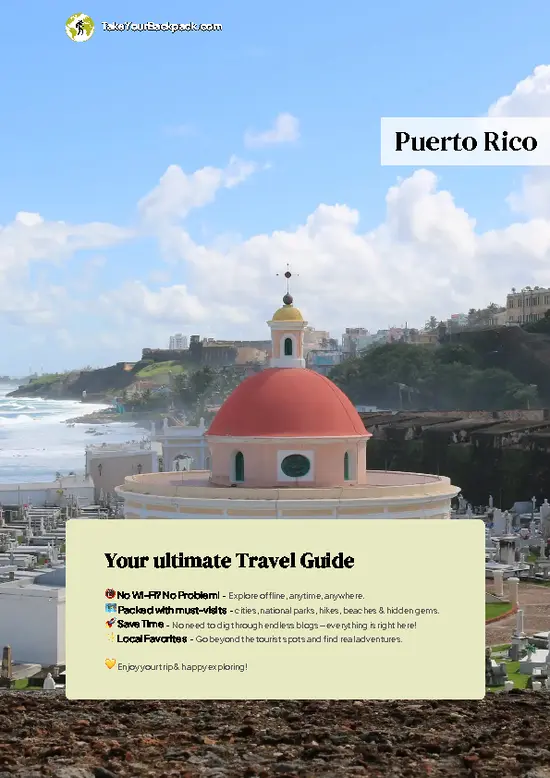
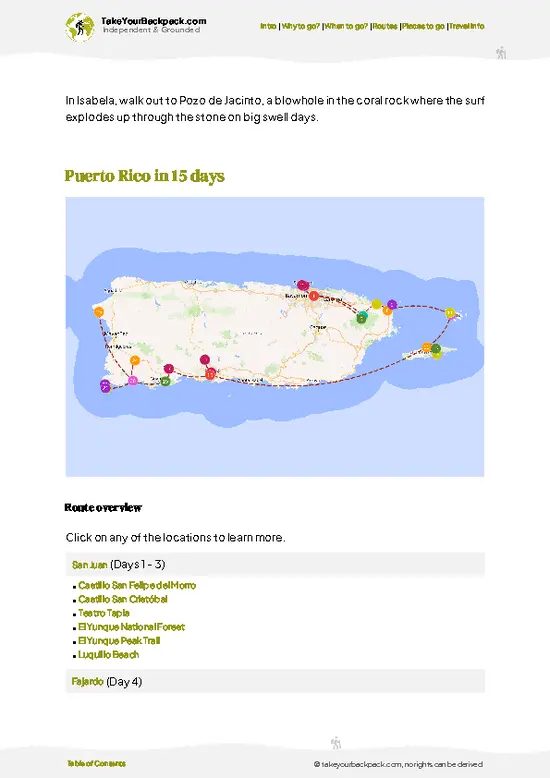
example page 0 from our offline Travel Guide for Puerto Rico
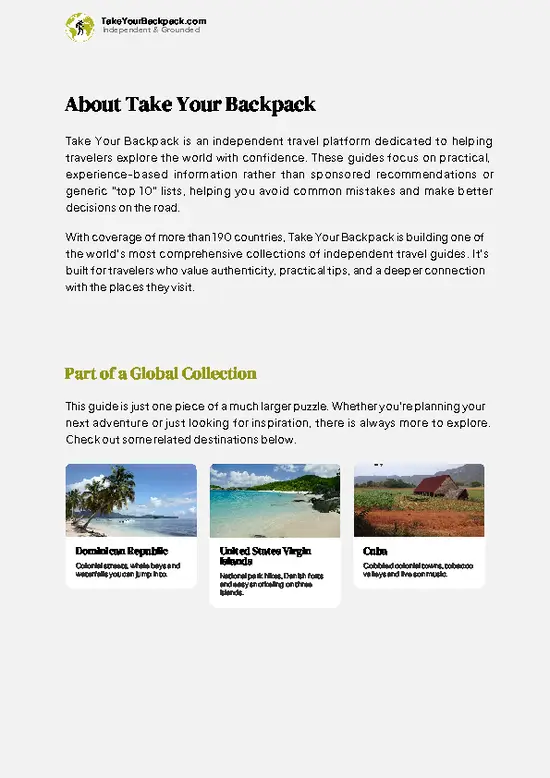
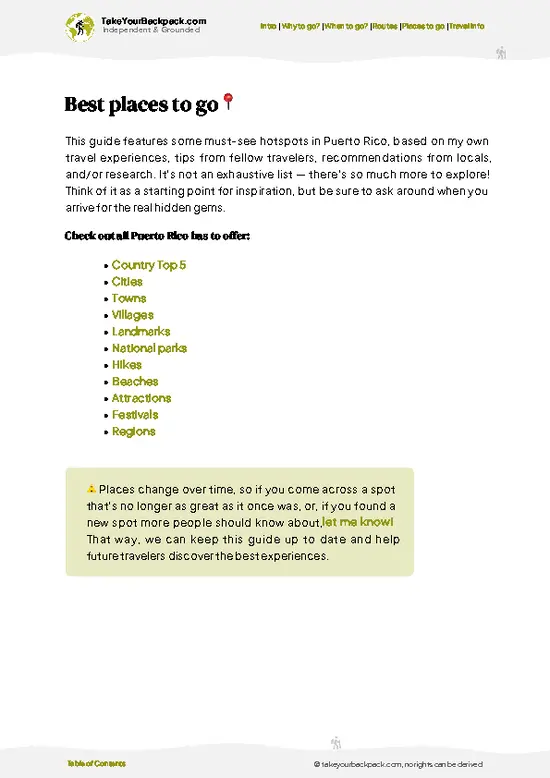
example page 1 from our offline Travel Guide for Puerto Rico
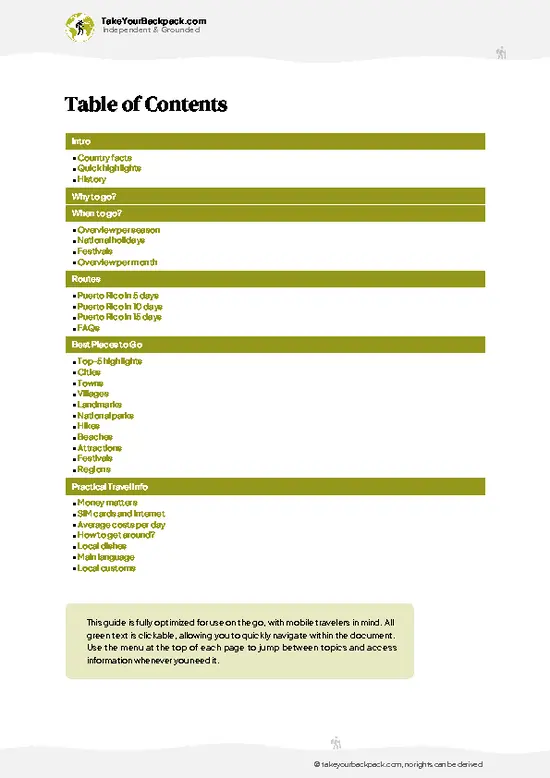
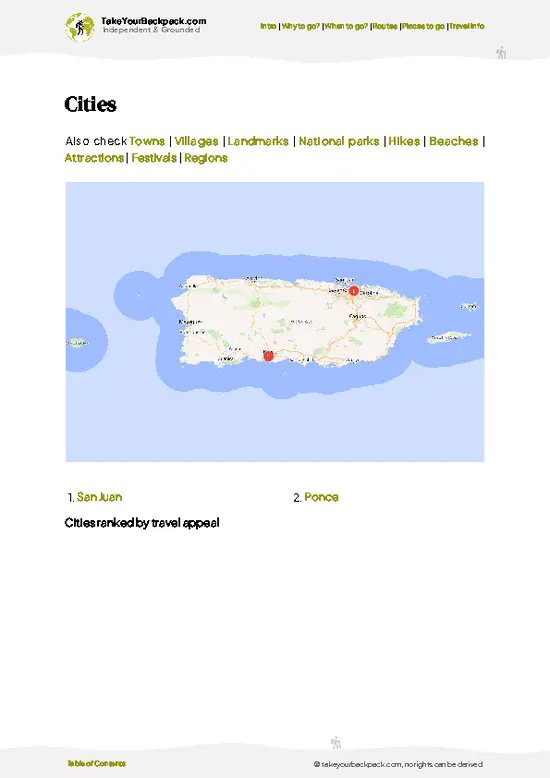
example page 2 from our offline Travel Guide for Puerto Rico
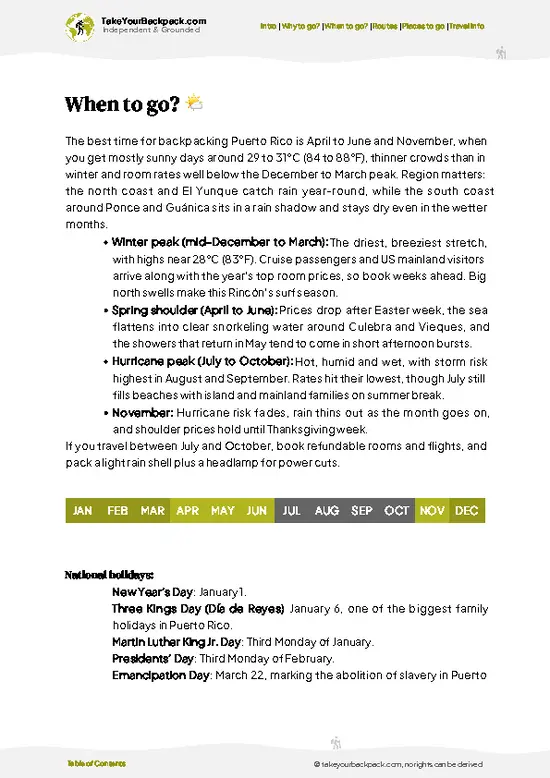
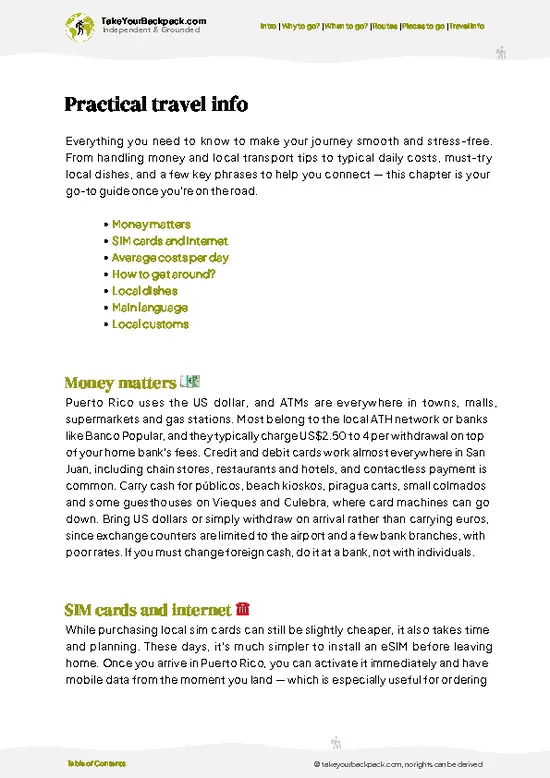
example page 3 from our offline Travel Guide for Puerto Rico
example page 4 from our offline Travel Guide for Puerto Rico
example page 5 from our offline Travel Guide for Puerto Rico
example page 6 from our offline Travel Guide for Puerto Rico
example page 7 from our offline Travel Guide for Puerto Rico
The digital guide (310 pages) contains:
✅ 81 highlights, ranked by travel appeal
✅ Optimized 5, 10 & 15-day travel routes
✅ Cities, national parks, landmarks, beaches
✅ How to get around
✅ Offline-friendly for travel without Wi-Fi
👉 Click to see all 30+ guide features

📅 Plan smarter in minutes, not weeks
✅ Month by month travel advice
✅ Festivals & national holidays
✅ Budget expectations

🗺️ Go to the right places, skip the overrated ones
✅ Honest pros & cons of destinations
✅ Top hikes, parks & viewpoints
✅ Lesser-known places most travelers miss
✅ Clear “worth it vs skip it” guidance

🛏️ Travel smoothly without rookie mistakes
✅ Best areas to stay
✅ Transport systems explained simply
✅ Common scams & safety advice
✅ SIM cards, money & practical tips

🌍 Understand the country, not just visit it
✅ Culture & traditions
✅ 52 Essential phrases & customs
✅ Festivals worth planning around
✅ Traveler-friendly historical context
✅ Insights that make places more meaningful

📱 Built for real travel conditions
✅ Fully downloadable PDF
✅ Works completely offline
✅ Optimized for phone use
✅ Useful in remote areas & buses
✅ Everything in one place
Stop searching, start planning
Get instant access to your full guide. 30‑day money-back guarantee.
+ Add another guide for just

By proceeding you agree to our terms.
Sent to your inbox immediately after payment • 100% Secure Checkout
Best Backpacking Travel Advisor 2025 tourism awardBest Backpacking
Travel Advisor
2025
What others say about Take Your Backpack Guides:
⭐⭐⭐⭐⭐
Fantastic, amazing amount of information!
⭐⭐⭐⭐⭐
My goodness this is amazing, it's what I've been looking for hats off too you!
⭐⭐⭐⭐⭐
I think this is absolutely BRILLIANT
⭐⭐⭐⭐
Very complete and informative. It's still missing places, but I gotta to commend you
⭐⭐⭐⭐⭐
This is truly amazing, thank you, can't wait to explore it with my kids!
⭐⭐⭐⭐⭐
Awesome resource, thank you!
⭐⭐⭐⭐⭐
This is amazing! Can't wait to explore the ones I haven't seen
⭐⭐⭐⭐
I love this! Well done, great idea.
⭐⭐⭐⭐⭐
Thanks for taking the time to make this gem!
⭐⭐⭐⭐⭐
This might be the best website I've ever seen.
⭐⭐⭐⭐⭐
Congratulations, and thank you so much for your work; it's incredibly valuable.
⭐⭐⭐⭐
In all seriousness I think you did a great job pointing out the important spots
⭐⭐⭐⭐⭐
10/10 very good
⭐⭐⭐⭐⭐
As someone who's only just starting to visit regularly this is awesome, thank you.
⭐⭐⭐⭐
Thank you very much! I'm going to visit my dad, it's going to be very useful!
⭐⭐⭐⭐⭐
This is really cool! We'll be travelling for the first time and this definitely come in handy.
⭐⭐⭐⭐⭐
You are now our minister of culture, congratulations 👨‍💼
⭐⭐⭐⭐⭐
Just wanted to tell you that this is a pearl! Going to follow your recommendations.
⭐⭐⭐⭐⭐
This is so cool. I'll definitely be using the resource for my travels soon.
⭐⭐⭐⭐⭐
This is very impressive! Good work.
⭐⭐⭐⭐⭐
This is an amazing and informative site. Very well done!

🛏️ Where to stay?Top Areas to Stay

Puerto Rico has a small but solid hostel scene, with dorm beds usually running US$30 to 50 a night and private rooms in guesthouses or short-term rentals from about US$80, which is pricier than most of the Caribbean backpacker circuit. In San Juan, Old San Juan puts you within walking distance of the forts and the bar streets but gets loud on weekend nights, Santurce is the pick for nightlife around the La Placita market area and for murals and cheaper food, while Condado and Ocean Park trade some of that buzz for beach access and quieter, generally safe streets (Isla Verde works mainly for a late arrival or early flight). Outside the capital, surf town Rincón on the west coast and the islands … read more 👉
Puerto Rico has a small but solid hostel scene, with dorm beds usually running US$30 to 50 a night and private rooms in guesthouses or short-term rentals from about US$80, which is pricier than most of the Caribbean backpacker circuit. In San Juan, Old San Juan puts you within walking distance of the forts and the bar streets but gets loud on weekend nights, Santurce is the pick for nightlife around the La Placita market area and for murals and cheaper food, while Condado and Ocean Park trade some of that buzz for beach access and quieter, generally safe streets (Isla Verde works mainly for a late arrival or early flight). Outside the capital, surf town Rincón on the west coast and the islands of Vieques and Culebra have guesthouses and a few hostels that fill up fast on weekends and holidays, so book ahead there.

If you enjoy meeting fellow travelers, consider choosing hostels with high ratings for atmosphere. On the other hand, if you prefer having your own space, a hotel might be a better option.

Puerto RicoDiscover the Country

👋 Meet the founderWho’s Behind Take Your Backpack?

Johan, backpacker and founder of TakeYourBackpackHi, I’m Johan (Netherlands 🇳🇱), the creator of TakeYourBackpack. Over the past 3 decades, I’ve backpacked through 90+ countries across six continents, gaining extensive experience with independent travel, long-term trips, and overland routes.

This site is built on a combination of firsthand travel experience and carefully curated insights from other backpackers. Many guides are based on places I’ve personally visited, while others bring together tips, observations, and practical advice shared by trusted travelers I’ve met along the way.

The goal is to provide realistic, experience-driven guidance — not generic itineraries — so you can explore destinations with better context, clearer expectations, and more confidence.