
×

Puerto Rico🇵🇷 | landmarksCueva VentanaLimestone window, timed guided tour, bat roosts, karst valley | things to do and best time to go

Explore Cayo SantiagoExplore Fajardo Bioluminescent Bay

Backpacking in Cueva Ventana
🌟 Highlightunique site ranked #4
By Johan Kruseman 🇳🇱 | Updated October 22, 2026

Cueva Ventana is a limestone cave with a natural window, not a hike through jungle to a hidden grotto, and the trail to it is short and mostly paved or stepped. It sits in the north of Puerto Rico, in the Río Camuy karst country above the town of Arecibo, on private land overlooking the Río Grande de Arecibo valley. Entry is by timed guided tour, so you can’t just wander up, and slots on weekends fill early. Book ahead and aim for the first tour of the day, when the valley is quieter and the bats are still settling. The tour costs a modest amount, which feels fair for a guide, a flashlight walk and the view. The tight passages are dark and uneven, so wear shoes with grip. The finish is the window itself, framing a drop of green hills and the river far below.

Discover everything you want to know in the 📖 Puerto Rico Travel Guide.


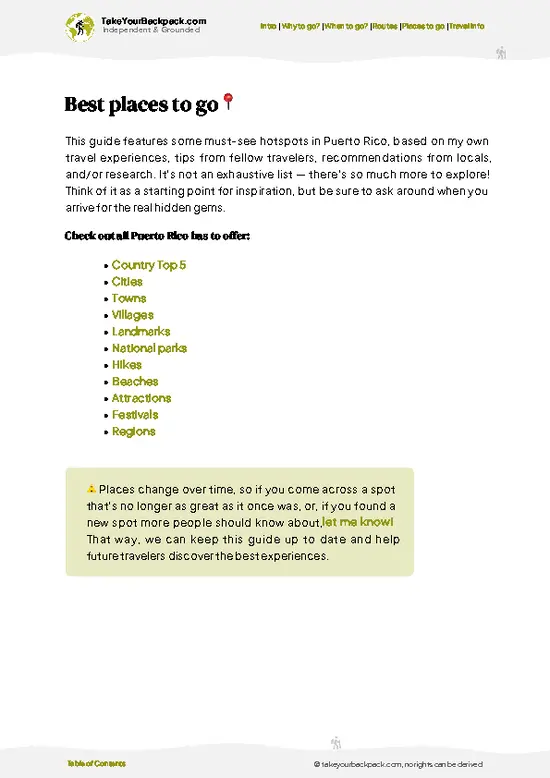
example page 0 from our offline Travel Guide for Puerto Rico
example page 1 from our offline Travel Guide for Puerto Rico
example page 2 from our offline Travel Guide for Puerto Rico
example page 3 from our offline Travel Guide for Puerto Rico
example page 4 from our offline Travel Guide for Puerto Rico
example page 5 from our offline Travel Guide for Puerto Rico
example page 6 from our offline Travel Guide for Puerto Rico
example page 7 from our offline Travel Guide for Puerto Rico
Loading the map 🌍
CLICK TO FILTER
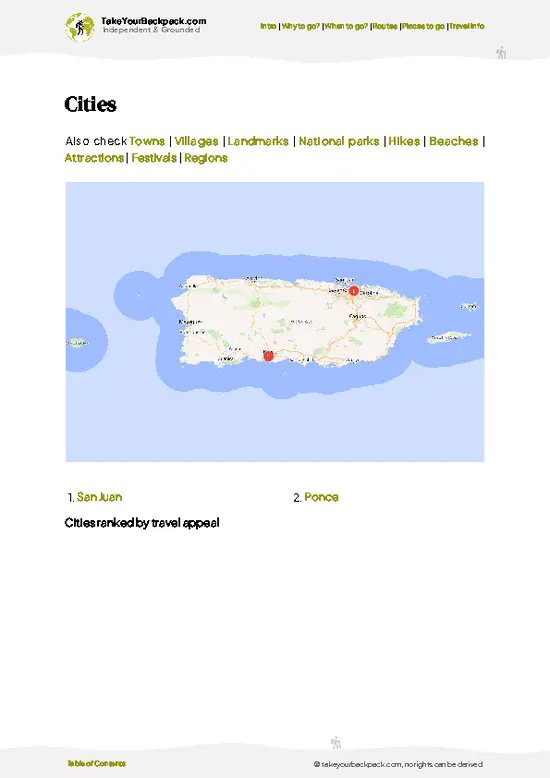
cities
towns
villages
landmarks
national parks
hikes
beaches
attractions
festivals
regions
SHOW COUNTRY’S BESTSHOW ALL

✨ Why go?
Ranked #4 unique site in Puerto Rico
The unique appeal for travelers

Cueva Ventana earns the detour because the payoff is out of proportion to the effort. The walk is short, yet you stand inside a cave whose opening hangs high over the Río Grande de Arecibo valley, a view you can’t get from the road. The guided tour covers more than the window. Guides point out the stalactites and explain the cave’s bat colonies, including the fruit-eating and insect-eating species that roost in the chambers, so you leave knowing what you saw. It also fits neatly into a north-coast loop. The Río Camuy karst belt sits inland from Arecibo, and the nearby Arecibo Lighthouse and Camuy caves region make an easy chain of stops. For travelers renting a car, it breaks up the drive between San Juan and the west coast better than most detours do, and the dramatic limestone landscape is a break from beach days.

💡 HighlightsTop highlights of Cueva Ventana

  1. The Window Viewpoint: the cave’s signature opening, a natural gap in the limestone that frames the Río Grande de Arecibo valley far below. Photos here are the reason most people come, and the framing is best when the light hits the valley floor.
  2. The Guided Cave Walk: the tour leads through narrow passages and chambers with a guide, who explains how the rock formed and where to step. Flashlights are part of the experience, and the route is short but uneven.
  3. Stalactites and Stalagmites: slow-growing mineral formations hang and rise in the chambers, shaped by water dripping through limestone over a very long time. Guides point out the best examples.
  4. Bat Colonies: several bat species roost in the cave. Seeing them overhead, and learning how they help disperse seeds and control insects, is a highlight
… read more 👉
  1. The Window Viewpoint: the cave’s signature opening, a natural gap in the limestone that frames the Río Grande de Arecibo valley far below. Photos here are the reason most people come, and the framing is best when the light hits the valley floor.
  2. The Guided Cave Walk: the tour leads through narrow passages and chambers with a guide, who explains how the rock formed and where to step. Flashlights are part of the experience, and the route is short but uneven.
  3. Stalactites and Stalagmites: slow-growing mineral formations hang and rise in the chambers, shaped by water dripping through limestone over a very long time. Guides point out the best examples.
  4. Bat Colonies: several bat species roost in the cave. Seeing them overhead, and learning how they help disperse seeds and control insects, is a highlight for anyone curious about ecology.
  5. Río Grande de Arecibo Valley: the view from the cave mouth takes in a green gorge of hills, forest and river. It is one of the best places in the area to understand how the karst landscape is laid out.
  6. Karst Landscape Walk: the approach trail passes mogotes and rock outcrops, the rounded limestone hills typical of this part of northern Puerto Rico. Stop for a look at the vegetation clinging to the stone.
Cueva Ventana pairs well with the Arecibo Lighthouse in one day, with the cave tour in the morning and the coast in the afternoon.
Spotted a mistake or missing something? Contact us.

Things to do near Cueva Ventana

Ratings based on Tripadvisor reviews. When you book through this link, you support our work at no extra cost to you.

🌤️ When to go?Seasonal considerations and timing

  • Winter and early spring (December to April): Cueva Ventana is at its most comfortable, with the driest weather on the north coast near Arecibo. Highs run 27 to 29°C (81 to 84°F), nights 19 to 22°C (66 to 72°F), and the limestone trail stays far less slick than in summer.
  • Summer (June to September): Expect 30 to 33°C (86 to 91°F) with heavy humidity, afternoon downpours, and the heat of the climb up the stone steps. Go for the earliest slot.
  • Hurricane season (August to October): Storms can close the trail and roads, so keep your dates flexible.
  • Crowds and prices: Weekends and US holiday weeks fill the tour slots first. Weekday mornings are quietest, and lodging in Arecibo stays cheap year-round.
  • Daylight: Roughly 11 hours in December and 13 in June, so plan for a morning visit.
Book a weekday morning … read more 👉
  • Winter and early spring (December to April): Cueva Ventana is at its most comfortable, with the driest weather on the north coast near Arecibo. Highs run 27 to 29°C (81 to 84°F), nights 19 to 22°C (66 to 72°F), and the limestone trail stays far less slick than in summer.
  • Summer (June to September): Expect 30 to 33°C (86 to 91°F) with heavy humidity, afternoon downpours, and the heat of the climb up the stone steps. Go for the earliest slot.
  • Hurricane season (August to October): Storms can close the trail and roads, so keep your dates flexible.
  • Crowds and prices: Weekends and US holiday weeks fill the tour slots first. Weekday mornings are quietest, and lodging in Arecibo stays cheap year-round.
  • Daylight: Roughly 11 hours in December and 13 in June, so plan for a morning visit.
Book a weekday morning in February or March and you get the best light across the Río Grande de Arecibo valley.


source: climatestotravel.comJANJanuary: excellent for travelingFEBFebruary: excellent for travelingMARMarch: excellent for travelingAPRApril: excellent for travelingMAYMay: fair for travelingJUNJune: fair for travelingJULJuly: fair for travelingAUGAugust: fair for travelingSEPSeptember: fair for travelingOCTOctober: fair for travelingNOVNovember: fair for travelingDECDecember: excellent for traveling
puerto-rico-unique-site-cueva-ventana
© Google | Cueva Ventana

✈️ The backpacker research shortcutPuerto Rico Travel Guide

An offline-friendly backpacking guide with optimized travel routes, ranked highlights, transport advice, and the best areas to stay.
example page 0 from our offline Travel Guide for Puerto Rico
example page 1 from our offline Travel Guide for Puerto Rico
example page 2 from our offline Travel Guide for Puerto Rico
example page 3 from our offline Travel Guide for Puerto Rico
example page 4 from our offline Travel Guide for Puerto Rico
example page 5 from our offline Travel Guide for Puerto Rico
example page 6 from our offline Travel Guide for Puerto Rico
example page 7 from our offline Travel Guide for Puerto Rico
The digital guide (310 pages) contains:
✅ 81 highlights, ranked by travel appeal
✅ Optimized 5, 10 & 15-day travel routes
✅ Cities, national parks, landmarks, beaches
✅ How to get around
✅ Offline-friendly for travel without Wi-Fi
👉 Click to see all 30+ guide features

📅 Plan smarter in minutes, not weeks
✅ Month by month travel advice
✅ Festivals & national holidays
✅ Budget expectations

🗺️ Go to the right places, skip the overrated ones
✅ Honest pros & cons of destinations
✅ Top hikes, parks & viewpoints
✅ Lesser-known places most travelers miss
✅ Clear “worth it vs skip it” guidance

🛏️ Travel smoothly without rookie mistakes
✅ Best areas to stay
✅ Transport systems explained simply
✅ Common scams & safety advice
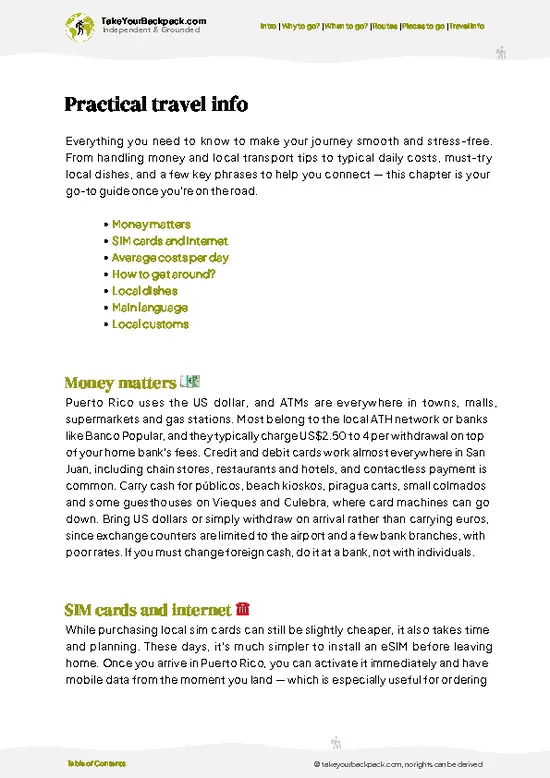
✅ SIM cards, money & practical tips

🌍 Understand the country, not just visit it
✅ Culture & traditions
✅ 52 Essential phrases & customs
✅ Festivals worth planning around
✅ Traveler-friendly historical context
✅ Insights that make places more meaningful

📱 Built for real travel conditions
✅ Fully downloadable PDF
✅ Works completely offline
✅ Optimized for phone use
✅ Useful in remote areas & buses
✅ Everything in one place
Stop searching, start planning
Get instant access to your full guide. 30‑day money-back guarantee.
+ Add another guide for just

By proceeding you agree to our terms.
Sent to your inbox immediately after payment • 100% Secure Checkout
Best Backpacking Travel Advisor 2025 tourism awardBest Backpacking
Travel Advisor
2025
What others say about Take Your Backpack Guides:
⭐⭐⭐⭐⭐
Fantastic, amazing amount of information!
⭐⭐⭐⭐⭐
My goodness this is amazing, it's what I've been looking for hats off too you!
⭐⭐⭐⭐⭐
I think this is absolutely BRILLIANT
⭐⭐⭐⭐
Very complete and informative. It's still missing places, but I gotta to commend you
⭐⭐⭐⭐⭐
This is truly amazing, thank you, can't wait to explore it with my kids!
⭐⭐⭐⭐⭐
Awesome resource, thank you!
⭐⭐⭐⭐⭐
This is amazing! Can't wait to explore the ones I haven't seen
⭐⭐⭐⭐
I love this! Well done, great idea.
⭐⭐⭐⭐⭐
Thanks for taking the time to make this gem!
⭐⭐⭐⭐⭐
This might be the best website I've ever seen.
⭐⭐⭐⭐⭐
Congratulations, and thank you so much for your work; it's incredibly valuable.
⭐⭐⭐⭐
In all seriousness I think you did a great job pointing out the important spots
⭐⭐⭐⭐⭐
10/10 very good
⭐⭐⭐⭐⭐
As someone who's only just starting to visit regularly this is awesome, thank you.
⭐⭐⭐⭐
Thank you very much! I'm going to visit my dad, it's going to be very useful!
⭐⭐⭐⭐⭐
This is really cool! We'll be travelling for the first time and this definitely come in handy.
⭐⭐⭐⭐⭐
You are now our minister of culture, congratulations 👨‍💼
⭐⭐⭐⭐⭐
Just wanted to tell you that this is a pearl! Going to follow your recommendations.
⭐⭐⭐⭐⭐
This is so cool. I'll definitely be using the resource for my travels soon.
⭐⭐⭐⭐⭐
This is very impressive! Good work.
⭐⭐⭐⭐⭐
This is an amazing and informative site. Very well done!

🛏️ Where to stay?Best areas to stay in Puerto Rico

Arecibo town is the most practical base for Cueva Ventana, about 10 to 15 minutes by car from the Cueva Ventana trailhead in barrio Hato Viejo. It has the cheapest beds and the most food options nearby, from bakeries to fritter stands along the waterfront. Arecibo suits travelers who want a local feel over resort comfort, and the center is walkable by day.

Camuy, about 20 to 25 minutes west, makes sense if you plan to pair the cave with Cueva del Indio or the Camuy cave area. Expect small guesthouses and a quieter evening scene.

If you want more nightlife and hostels, base in San Juan, roughly … read more 👉
Arecibo town is the most practical base for Cueva Ventana, about 10 to 15 minutes by car from the Cueva Ventana trailhead in barrio Hato Viejo. It has the cheapest beds and the most food options nearby, from bakeries to fritter stands along the waterfront. Arecibo suits travelers who want a local feel over resort comfort, and the center is walkable by day.

Camuy, about 20 to 25 minutes west, makes sense if you plan to pair the cave with Cueva del Indio or the Camuy cave area. Expect small guesthouses and a quieter evening scene.

If you want more nightlife and hostels, base in San Juan, roughly 1 to 1.5 hours east. Condado and Santurce have the best concentration of social dorms, and you can rent a car for the day. Starting that early drive makes the cave morning feasible, but it adds fuel and parking costs.

For solo backpackers, Arecibo and San Juan are the safer bets because other travelers and transport are easier to find. Whichever you choose, rent or arrange a ride, since evenings near the trailhead are dark and quiet.

👛 Costs (as of 22 October 2026)How expensive it really is

Cueva Ventana costs a backpacker roughly US$95 a day when you rent a car and book a guided visit. The table splits that out.
CategoryBudget RangeLocal Reality
Cave access and guided tourUS$15 to 35Entry is a guided tour run by Aventura Cueva Ventana from a ticket office on PR-10. Reserve ahead for weekends.
Accommodation (high season)US$35 to 60Dorms are mostly in San Juan. Arecibo has modest guesthouses and rooms.
FoodUS$15 to 25Fritters, rice and beans plates, and mofongo at local counters. Cash is handy at small stands.
TransportUS$25 to 50A shared rental car costs US$40 to 70 a day, plus fuel and parking. Public buses rarely reach the trailhead.
ExtrasUS$5 to 10Water, insect repellent, and a tip for your guide.
Total Daily BudgetUS$95Splitting a car with other travelers brings it down noticeably.
⚠️ Prices can change and everyone travels differently, so take this as a rough guide. Hope it helps you plan your adventure!

FAQFrequently asked questions about Cueva Ventana

Cueva Ventana is a limestone cave in the hills above the Río Grande de Arecibo, known for its natural window opening that frames the valley. The cave sits near Arecibo on Puerto Rico’s north coast, within the karst region. A short trail leads up about 100 steps, and guided visits run roughly US$15 to 35.
Plan on 2 to 3 hours at Cueva Ventana, which covers the hike, time at the window, and a short walk inside the cave. A guided tour usually lasts about 1 to 2 hours. Pairing the cave with the Camuy cave area or Arecibo’s waterfront turns it into a full day.
Drive to Cueva Ventana from Arecibo in about 10 to 15 minutes, or from San Juan in roughly 1 to 1.5 hours via Highway PR-22. Public buses rarely reach the trailhead in barrio Hato Viejo, so renting a car (from about US$40 to 70 a day) is the practical option. Rideshare and taxis can work from Arecibo, though getting a return ride is harder.
⚠️ Things can change over time, so always validate details locally before you go.

Other Puerto Rican landmarks near Cueva Ventana

Explore more nearby:


💡 Not sure where to go next?
Create a personalized itinerary for Puerto Rico including Cueva Ventana and the places that fit your trip.

Generate my itinerary

👉 Discover all landmarks

Or checkout all Puerto Rico has to offer (think cities, towns, villages, national parks, hikes, beaches, festivals)
Country photo of Puerto Rico

We 💚 feedbackKey takeaways before you go

Cueva Ventana is best remembered for the bats, so don’t rush past the ceilings while chasing the window photo. Look up, keep your flashlight steady rather than waving it around, and listen to the guide explain what roosts where. I would bring a small daypack, grippy shoes and a light layer, since the cave air feels cooler than the valley outside.

✍️ Help improve this page!
The information on this page is based on in-depth research, insights shared by experienced travelers, and feedback from the local travel community in Puerto Rico. While every effort is made to keep the information accurate and current, conditions can change — so if you spot anything incorrect or outdated, please get in touch.


🙋‍♂️ Give feedback

👋 Meet the founderWho’s Behind Take Your Backpack?

Johan, backpacker and founder of TakeYourBackpackHi, I’m Johan (Netherlands 🇳🇱), the creator of TakeYourBackpack. Over the past 3 decades, I’ve backpacked through 90+ countries across six continents, gaining extensive experience with independent travel, long-term trips, and overland routes.

This site is built on a combination of firsthand travel experience and carefully curated insights from other backpackers. Many guides are based on places I’ve personally visited, while others bring together tips, observations, and practical advice shared by trusted travelers I’ve met along the way.

The goal is to provide realistic, experience-driven guidance — not generic itineraries — so you can explore destinations with better context, clearer expectations, and more confidence.