×

Puerto Rico🇵🇷 | national parksMona IslandGround iguanas, sea caves, remote reef snorkeling | things to do and best time to go

Explore Las Cabezas de San Juan Nature ReserveExplore Río Abajo State Forest

Backpacking in Mona Island
🌟 Highlightnational park ranked #5
By Johan Kruseman 🇳🇱 | Updated October 22, 2026

Mona Island has no stores, no restaurants, no hotels and no drinking water you can count on, and almost nobody lives there beyond rangers. It sits in the Mona Passage, roughly 40 miles west of mainland Puerto Rico, a long, rough crossing from the Cabo Rojo and Mayagüez coast. Here is why that matters: the island is a reserve run by the Department of Natural and Environmental Resources, so access is by permit and boat only, which keeps numbers low. Expect limestone cliffs over 200 feet high, caves, empty beaches, iguanas the size of small dogs and hiking that is hot, rocky and unshaded. Roads are nonexistent and cell signal is patchy. An experienced traveler carries every liter of water needed and books the camping permit and boat transfer weeks ahead, because both sell out.

Discover everything you want to know in the 📖 Puerto Rico Travel Guide.


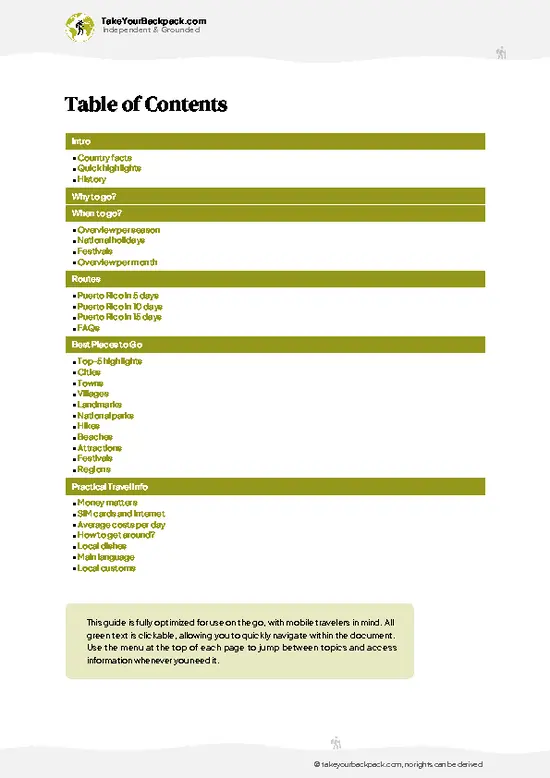
example page 0 from our offline Travel Guide for Puerto Rico
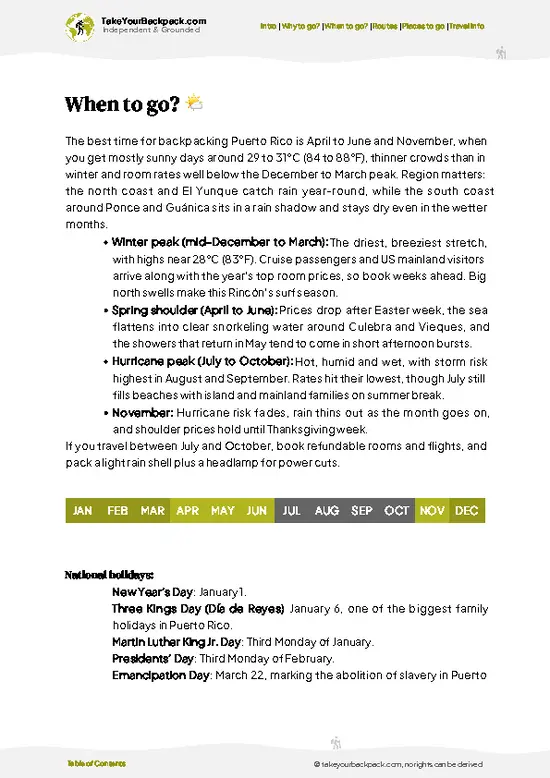
example page 1 from our offline Travel Guide for Puerto Rico
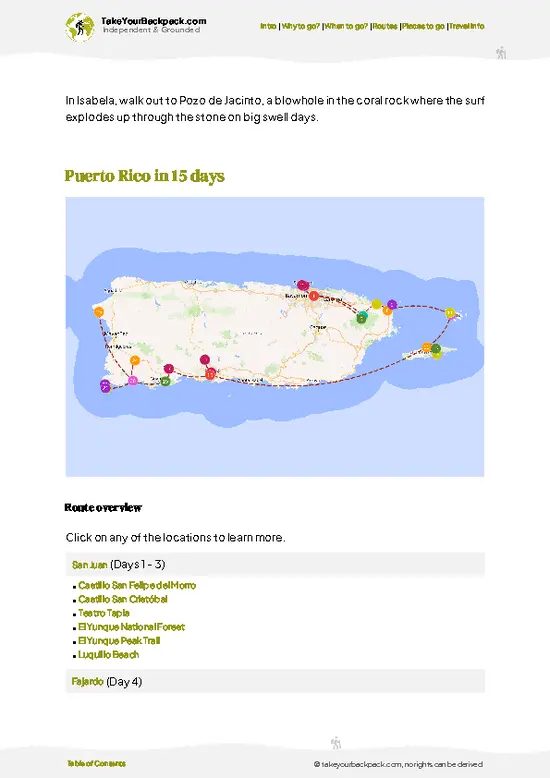
example page 2 from our offline Travel Guide for Puerto Rico
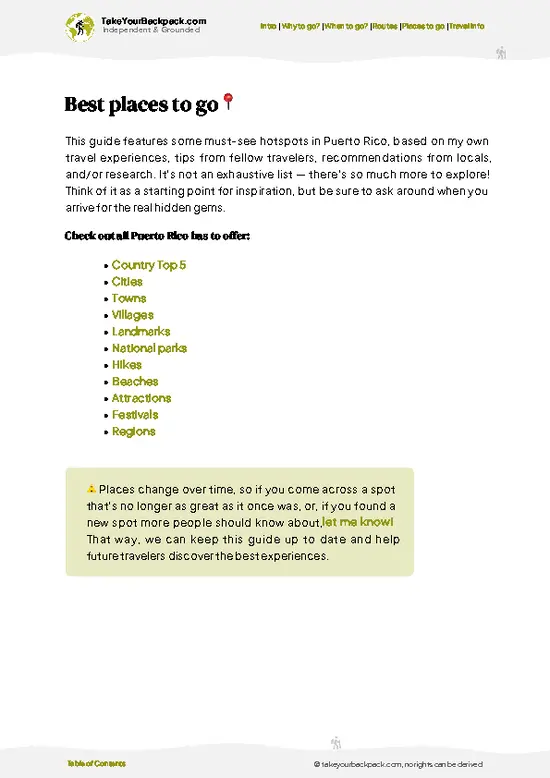
example page 3 from our offline Travel Guide for Puerto Rico
example page 4 from our offline Travel Guide for Puerto Rico
example page 5 from our offline Travel Guide for Puerto Rico
example page 6 from our offline Travel Guide for Puerto Rico
example page 7 from our offline Travel Guide for Puerto Rico
Loading the map 🌍
CLICK TO FILTER
cities
towns
villages
landmarks
national parks
hikes
beaches
attractions
festivals
regions
SHOW COUNTRY’S BESTSHOW ALL

✨ Why go?
Ranked #5 national park in Puerto Rico
The unique appeal for travelers

Mona Island suits backpackers who like their trips self-sufficient, since the whole place works like a remote wilderness camp. You pitch a tent near the ranger station at Playa Sardinera, haul your own food and water, and walk as far as your legs and the heat allow. There are no guided circuits you must follow, so you set the pace. The trail variety is the other draw: you can reach cliff-top lookouts, cave systems and the lighthouse ruins on foot, all without another large group in sight. Wildlife is the real show here, with the endemic Mona ground iguana roaming the campground and nesting sea turtles on the beaches in season. Camping costs far less than any resort stay in Puerto Rico, though transport is the bigger expense. This is a place for people comfortable with basic logistics and willing … read more 👉
Mona Island suits backpackers who like their trips self-sufficient, since the whole place works like a remote wilderness camp. You pitch a tent near the ranger station at Playa Sardinera, haul your own food and water, and walk as far as your legs and the heat allow. There are no guided circuits you must follow, so you set the pace. The trail variety is the other draw: you can reach cliff-top lookouts, cave systems and the lighthouse ruins on foot, all without another large group in sight. Wildlife is the real show here, with the endemic Mona ground iguana roaming the campground and nesting sea turtles on the beaches in season. Camping costs far less than any resort stay in Puerto Rico, though transport is the bigger expense. This is a place for people comfortable with basic logistics and willing to plan; casual drop-in tourism simply does not exist.

💡 HighlightsThe experiences that define the visit

  1. Mona ground iguana: This endemic, endangered lizard, up to about 3 feet long, wanders right through the campground at Sardinera. Keep food sealed or it will investigate.
  2. Playa Sardinera: The main landing beach and camp base, a long sweep of pale sand backed by trees, with the ranger station nearby.
  3. Cueva del Lirio: One of several caves in the limestone terraces, known for its bat colonies and rock formations. A headlamp is essential.
  4. Mona Lighthouse ruins: The abandoned iron lighthouse on the eastern point, first lit in 1900, stands among old buildings and is reached by a long walk along the coast.
  5. Cliffs at Cabo Barrionuevo: Sheer limestone walls rise over 200 feet above the sea, with views across the Mona Passage on clear days.
  6. Playa Pájaros: A quieter beach with clear water and a good chance
… read more 👉
  1. Mona ground iguana: This endemic, endangered lizard, up to about 3 feet long, wanders right through the campground at Sardinera. Keep food sealed or it will investigate.
  2. Playa Sardinera: The main landing beach and camp base, a long sweep of pale sand backed by trees, with the ranger station nearby.
  3. Cueva del Lirio: One of several caves in the limestone terraces, known for its bat colonies and rock formations. A headlamp is essential.
  4. Mona Lighthouse ruins: The abandoned iron lighthouse on the eastern point, first lit in 1900, stands among old buildings and is reached by a long walk along the coast.
  5. Cliffs at Cabo Barrionuevo: Sheer limestone walls rise over 200 feet above the sea, with views across the Mona Passage on clear days.
  6. Playa Pájaros: A quieter beach with clear water and a good chance of seeing sea turtles and seabirds, including red-footed boobies nesting nearby.
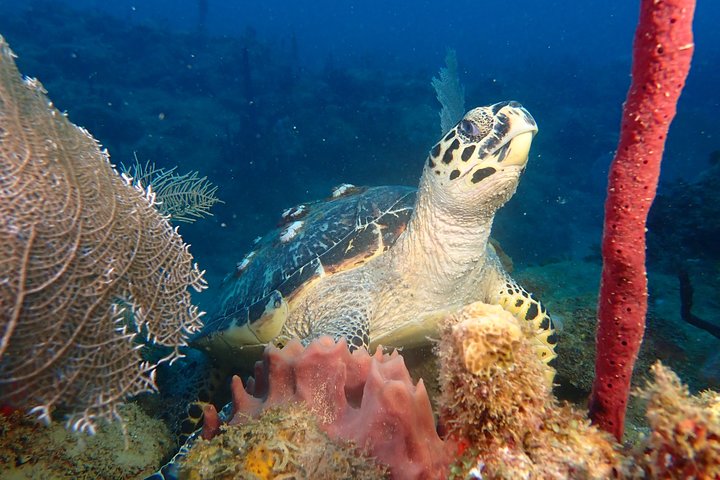
  7. Snorkeling at the reef: The waters off the beaches hold coral, reef fish and sea turtles, with visibility often good in calm weather.
Mona Island requires a camping permit from the Department of Natural and Environmental Resources, and the boat transfer should be booked well ahead as spaces are limited.
Spotted a mistake or missing something? Contact us.

Things to do near Mona Island

Ratings based on Tripadvisor reviews. When you book through this link, you support our work at no extra cost to you.

🌤️ When to go?Best time to explore Mona Island

  • Dry Season (December to April): Calm seas, little rain and highs of 27 to 30°C (81 to 86°F) make this the easiest window. Nights drop to about 21 to 23°C (70 to 73°F). Daylight runs roughly 11 to 12 hours. Camping permits sell out fastest, especially around Christmas and Holy Week.
  • Hot Season (May to August): Highs reach 31 to 33°C (88 to 91°F) with strong humidity and almost no shade on the southern plateau. Snorkeling visibility is excellent and daylight stretches to about 13 hours. Weekends book up with local campers.
  • Hurricane Season (September to November): Heavy showers, 30 to 32°C (86 to 90°F) and possible storm closures. Crowds thin, but boat crossings get canceled and the ferry-free logistics become unreliable.
  • Whale Season (January to March): Humpbacks pass through the Mona Passage,
… read more 👉
  • Dry Season (December to April): Calm seas, little rain and highs of 27 to 30°C (81 to 86°F) make this the easiest window. Nights drop to about 21 to 23°C (70 to 73°F). Daylight runs roughly 11 to 12 hours. Camping permits sell out fastest, especially around Christmas and Holy Week.
  • Hot Season (May to August): Highs reach 31 to 33°C (88 to 91°F) with strong humidity and almost no shade on the southern plateau. Snorkeling visibility is excellent and daylight stretches to about 13 hours. Weekends book up with local campers.
  • Hurricane Season (September to November): Heavy showers, 30 to 32°C (86 to 90°F) and possible storm closures. Crowds thin, but boat crossings get canceled and the ferry-free logistics become unreliable.
  • Whale Season (January to March): Humpbacks pass through the Mona Passage, visible from the boat and cliffs.
Book your permit as early as the reservation window opens, and aim for February or early March for the best mix of calm water and open dates.


source: climatestotravel.comJANJanuary: excellent for travelingFEBFebruary: excellent for travelingMARMarch: excellent for travelingAPRApril: excellent for travelingMAYMay: highly recommended for travelingJUNJune: fair for travelingJULJuly: fair for travelingAUGAugust: fair for travelingSEPSeptember: below average for travelingOCTOctober: below average for travelingNOVNovember: highly recommended for travelingDECDecember: excellent for traveling
puerto-rico-national-park-mona-island
© Google | Jason Ramirez

✈️ The backpacker research shortcutPuerto Rico Travel Guide

An offline-friendly backpacking guide with optimized travel routes, ranked highlights, transport advice, and the best areas to stay.
example page 0 from our offline Travel Guide for Puerto Rico
example page 1 from our offline Travel Guide for Puerto Rico
example page 2 from our offline Travel Guide for Puerto Rico
example page 3 from our offline Travel Guide for Puerto Rico
example page 4 from our offline Travel Guide for Puerto Rico
example page 5 from our offline Travel Guide for Puerto Rico
example page 6 from our offline Travel Guide for Puerto Rico
example page 7 from our offline Travel Guide for Puerto Rico
The digital guide (310 pages) contains:
✅ 81 highlights, ranked by travel appeal
✅ Optimized 5, 10 & 15-day travel routes
✅ Cities, national parks, landmarks, beaches
✅ How to get around
✅ Offline-friendly for travel without Wi-Fi
👉 Click to see all 30+ guide features

📅 Plan smarter in minutes, not weeks
✅ Month by month travel advice
✅ Festivals & national holidays
✅ Budget expectations

🗺️ Go to the right places, skip the overrated ones
✅ Honest pros & cons of destinations
✅ Top hikes, parks & viewpoints
✅ Lesser-known places most travelers miss
✅ Clear “worth it vs skip it” guidance

🛏️ Travel smoothly without rookie mistakes
✅ Best areas to stay
✅ Transport systems explained simply
✅ Common scams & safety advice
✅ SIM cards, money & practical tips

🌍 Understand the country, not just visit it
✅ Culture & traditions
✅ 52 Essential phrases & customs
✅ Festivals worth planning around
✅ Traveler-friendly historical context
✅ Insights that make places more meaningful

📱 Built for real travel conditions
✅ Fully downloadable PDF
✅ Works completely offline
✅ Optimized for phone use
✅ Useful in remote areas & buses
✅ Everything in one place
Stop searching, start planning
Get instant access to your full guide. 30‑day money-back guarantee.
+ Add another guide for just

By proceeding you agree to our terms.
Sent to your inbox immediately after payment • 100% Secure Checkout
Best Backpacking Travel Advisor 2025 tourism awardBest Backpacking
Travel Advisor
2025
What others say about Take Your Backpack Guides:
⭐⭐⭐⭐⭐
Fantastic, amazing amount of information!
⭐⭐⭐⭐⭐
My goodness this is amazing, it's what I've been looking for hats off too you!
⭐⭐⭐⭐⭐
I think this is absolutely BRILLIANT
⭐⭐⭐⭐
Very complete and informative. It's still missing places, but I gotta to commend you
⭐⭐⭐⭐⭐
This is truly amazing, thank you, can't wait to explore it with my kids!
⭐⭐⭐⭐⭐
Awesome resource, thank you!
⭐⭐⭐⭐⭐
This is amazing! Can't wait to explore the ones I haven't seen
⭐⭐⭐⭐
I love this! Well done, great idea.
⭐⭐⭐⭐⭐
Thanks for taking the time to make this gem!
⭐⭐⭐⭐⭐
This might be the best website I've ever seen.
⭐⭐⭐⭐⭐
Congratulations, and thank you so much for your work; it's incredibly valuable.
⭐⭐⭐⭐
In all seriousness I think you did a great job pointing out the important spots
⭐⭐⭐⭐⭐
10/10 very good
⭐⭐⭐⭐⭐
As someone who's only just starting to visit regularly this is awesome, thank you.
⭐⭐⭐⭐
Thank you very much! I'm going to visit my dad, it's going to be very useful!
⭐⭐⭐⭐⭐
This is really cool! We'll be travelling for the first time and this definitely come in handy.
⭐⭐⭐⭐⭐
You are now our minister of culture, congratulations 👨‍💼
⭐⭐⭐⭐⭐
Just wanted to tell you that this is a pearl! Going to follow your recommendations.
⭐⭐⭐⭐⭐
This is so cool. I'll definitely be using the resource for my travels soon.
⭐⭐⭐⭐⭐
This is very impressive! Good work.
⭐⭐⭐⭐⭐
This is an amazing and informative site. Very well done!

🛏️ Where to stay?Best areas to stay in Puerto Rico

Mona Island has no hotels, so you sleep in one of the two DRNA camping areas, at Playa Sardinera or Playa Pájaros. The Department of Natural and Environmental Resources (DRNA) runs it, and you must reserve in advance through its office. The site has cold-water showers, composting-style restrooms and picnic tables, but no store, so you carry in every meal and all your water. Bring a sturdy tent and a tarp, since wind and rain arrive quickly.

Most visitors reach the island by chartered boat from Joyuda or Boquerón in Cabo Rojo, on Puerto Rico’s southwest coast. Both towns have guesthouses and small … read more 👉
Mona Island has no hotels, so you sleep in one of the two DRNA camping areas, at Playa Sardinera or Playa Pájaros. The Department of Natural and Environmental Resources (DRNA) runs it, and you must reserve in advance through its office. The site has cold-water showers, composting-style restrooms and picnic tables, but no store, so you carry in every meal and all your water. Bring a sturdy tent and a tarp, since wind and rain arrive quickly.

Most visitors reach the island by chartered boat from Joyuda or Boquerón in Cabo Rojo, on Puerto Rico’s southwest coast. Both towns have guesthouses and small hotels (US$70 to 130 a night), and Boquerón has the livelier food scene and a few hostels with dorm beds around US$30 to 45. Many boat operators stay overnight near the dock the evening before departure, so book a room there if your boat leaves early. Mayagüez, about 45 minutes inland, offers more hotel choice and a nearby airport.

👛 Costs (as of 22 October 2026)Typical daily expenses

A realistic budget for Mona Island is about US$190 to 305 per person per day, driven mostly by the boat crossing. The table below covers a typical camping trip.
CategoryBudget RangeLocal Reality
Camping permitUS$10 to 20 per person per nightReserved through the DRNA in advance; spots fill quickly in dry season.
Boat transportUS$150 to 220 per person round tripLicensed charters from Cabo Rojo; the crossing takes about 3 to 4 hours each way, so a one-night stay costs more per day.
Food and suppliesUS$20 to 35Everything is brought from the mainland; no shops or restaurants on the island.
WaterUS$5 to 10Bottled water in large jugs, about 4 liters per person daily.
Local transport and extrasUS$5 to 20Ground transfers to the Cabo Rojo dock, plus optional snorkel gear rental.
Total Daily BudgetUS$190 to
… read more 👉
A realistic budget for Mona Island is about US$190 to 305 per person per day, driven mostly by the boat crossing. The table below covers a typical camping trip.
CategoryBudget RangeLocal Reality
Camping permitUS$10 to 20 per person per nightReserved through the DRNA in advance; spots fill quickly in dry season.
Boat transportUS$150 to 220 per person round tripLicensed charters from Cabo Rojo; the crossing takes about 3 to 4 hours each way, so a one-night stay costs more per day.
Food and suppliesUS$20 to 35Everything is brought from the mainland; no shops or restaurants on the island.
WaterUS$5 to 10Bottled water in large jugs, about 4 liters per person daily.
Local transport and extrasUS$5 to 20Ground transfers to the Cabo Rojo dock, plus optional snorkel gear rental.
Total Daily BudgetUS$190 to 305Roughly US$240 for a typical high-season day, costs per day fall on longer stays.


source: parquesnacionalespr.com
⚠️ Prices can change and everyone travels differently, so take this as a rough guide. Hope it helps you plan your adventure!

🥾 TrailsBest hikes in Mona Island national park

Mona Island offers walking that is rugged, exposed and rewarding, with limestone terrain, sharp rock, cactus scrub and almost no shade. Wear sturdy shoes, because the rock shreds sandals. Hikes start from the Sardinera camp area, where rangers can explain current conditions.
  • Sardinera to the cliff lookouts: A moderate to hard walk of several hours round trip, climbing from the coastal plain to the plateau edge, with sweeping sea views and iguanas along the path.
  • Cave walks: Short, rocky approaches to caves such as Cueva del Lirio, taking an hour or two, with uneven footing and a need for a headlamp.
… read more 👉
Mona Island offers walking that is rugged, exposed and rewarding, with limestone terrain, sharp rock, cactus scrub and almost no shade. Wear sturdy shoes, because the rock shreds sandals. Hikes start from the Sardinera camp area, where rangers can explain current conditions.
  • Sardinera to the cliff lookouts: A moderate to hard walk of several hours round trip, climbing from the coastal plain to the plateau edge, with sweeping sea views and iguanas along the path.
  • Cave walks: Short, rocky approaches to caves such as Cueva del Lirio, taking an hour or two, with uneven footing and a need for a headlamp.
  • Lighthouse route: A long, hot walk toward the old lighthouse, usually a full day out and back, passing beaches, scrub and ruined buildings. Carry plenty of water and start early.
  • Beach walks: Easy strolls between Sardinera and nearby coves, good for evenings when the heat has eased and for spotting turtles and crabs.
Wildlife is a highlight. Besides iguanas, you may see feral goats and pigs, wild seabirds and sea turtles. Do not touch or feed any animals.
Getting to Mona Island takes a private boat or an authorized charter from the west coast of Puerto Rico, because there is no public transport. Visitors are limited, so it is never crowded, and the camping permit is the main fee. Bring all supplies and pack out your trash.
⚠️ Hiking info can sometimes be outdated or inaccurate. Before you hit the trail, check the latest conditions with locals. If you do spot anything that's off, I'd love to hear from you, so I can update it for fellow travelers.

🛡️ SafetySafety Tips and Common Scams in Mona Island

Mona Island is manageable for anyone prepared, but it is remote, and the main risks are heat, water and isolation. The plateau has little shade and summer humidity is heavy, so hike early, carry at least 4 liters of water a day and wear a hat. No reliable fresh water exists on the island, so everything must come with you. Trails over limestone are sharp and uneven, and caves are easy to get turned around in, so closed-toe shoes and a headlamp matter. Cell coverage is patchy; tell the rangers your plans and follow marked routes. Mona iguanas and feral goats and pigs are common. Keep food sealed in your tent, never feed the iguanas, and give pigs room. Seas in the Mona Passage can be rough, so choose a licensed boat captain and expect delays when the weather turns. Strong currents affect some beaches, so swim near the camping area.

FAQFrequently asked questions about Mona Island

Plan on 3 to 4 days for Mona Island if you want to hike to the lighthouse ruins, explore the caves and snorkel at Playa Pájaros. Two nights is the practical minimum given the 3 to 4 hour boat crossing each way. Weather delays can add a day, so leave a buffer.
Mona Island cannot be reached without a boat, so a car matters only for getting to the departure point. Charters leave from Cabo Rojo (Joyuda or Boquerón), roughly 3 to 4 hours by sea. Once on the island, you travel on foot, about 5 to 12 km per day on the main trails.
Yes, Mona Island requires a camping permit from the DRNA, which usually costs about US$10 to 20 per person per night. You must reserve ahead, and spots in dry season (December to April) go fast. Day visits are restricted, so book the permit before you book a boat.
⚠️ Things can change over time, so always validate details locally before you go.

Other Puerto Rican national parks near Mona Island

Explore more nearby:


💡 Not sure where to go next?
Create a personalized itinerary for Puerto Rico including Mona Island and the places that fit your trip.

Generate my itinerary

👉 Discover all national parks

Or checkout all Puerto Rico has to offer (think cities, towns, villages, national parks, hikes, beaches, festivals)
Country photo of Puerto Rico

We 💚 feedbackSumming up the experience

Mona Island is for self-reliant campers who like quiet, rough terrain and animals that outnumber people. If you need a shower and a menu, skip it. I would bring far more water than seems sensible, a headlamp for the caves and a sturdy tent that handles wind.

✍️ Help improve this page!
The information on this page is based on in-depth research, insights shared by experienced travelers, and feedback from the local travel community in Puerto Rico. While every effort is made to keep the information accurate and current, conditions can change — so if you spot anything incorrect or outdated, please get in touch.


🙋‍♂️ Give feedback

👋 Meet the founderWho’s Behind Take Your Backpack?

Johan, backpacker and founder of TakeYourBackpackHi, I’m Johan (Netherlands 🇳🇱), the creator of TakeYourBackpack. Over the past 3 decades, I’ve backpacked through 90+ countries across six continents, gaining extensive experience with independent travel, long-term trips, and overland routes.

This site is built on a combination of firsthand travel experience and carefully curated insights from other backpackers. Many guides are based on places I’ve personally visited, while others bring together tips, observations, and practical advice shared by trusted travelers I’ve met along the way.

The goal is to provide realistic, experience-driven guidance — not generic itineraries — so you can explore destinations with better context, clearer expectations, and more confidence.