Short version: yes, but it’s more like backpacking a mini-Alps-in-the-ocean than a cheap Southeast Asia island. Réunion is French, safe, and very organized, which makes independent travel straightforward if you’re comfortable with basic French and planning ahead.
For budget travelers, the main challenges are cost and logistics, not safety. Accommodation is pricier than classic backpacker hubs, but you can keep it reasonable with gîtes d’étape (mountain refuges), simple guesthouses, and occasional camping where allowed. Wild camping is technically restricted in many areas, so treat it as a stealth backup, not a plan.
Hiking is where Réunion shines for independent backpackers. Trails are well-marked, villages are used to trekkers, and multi-day routes like the Cirque de Mafate network feel like a real trekking playground. You just need to pre-book refuges in popular spots (especially Mafate, Cilaos, and Piton de la Fournaise weekends) because they do fill up.
Solo travel is common and generally safe; crime against tourists is low, and people are helpful if you’re respectful and try a few words of French or Creole. The main risk is underestimating the mountains and weather. Trails can be steep, exposed, and slippery after rain, and clouds roll in fast. Always check route times (they’re often longer than they look on a map), start early, and carry layers, headlamp, and enough water.
If you’re used to backpacking in places with dense hostel networks and constant public transport, Réunion will feel more like a DIY trekker’s island: fewer social hostels, more small family stays and refuges, more planning around bus schedules and weather windows. If that sounds fun, you’ll love it.
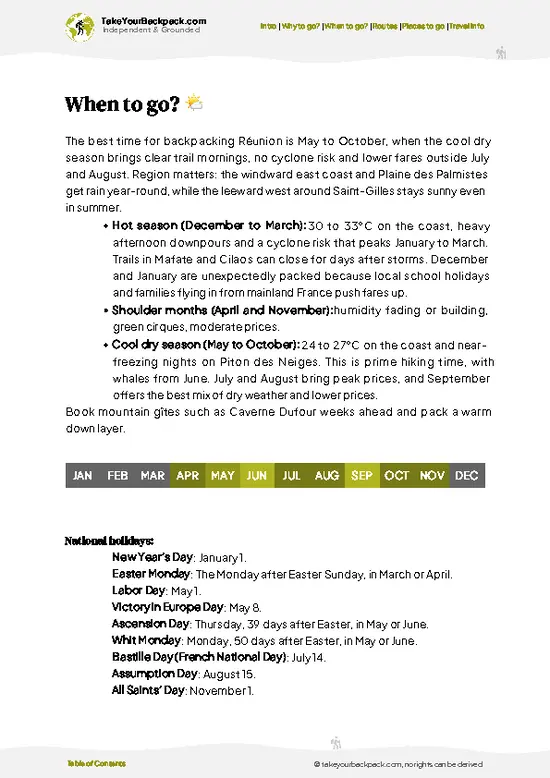
If you’re flying all the way to Réunion, anything under a week feels rushed. For a budget backpacker trying to balance cost and experience, these time frames work well:
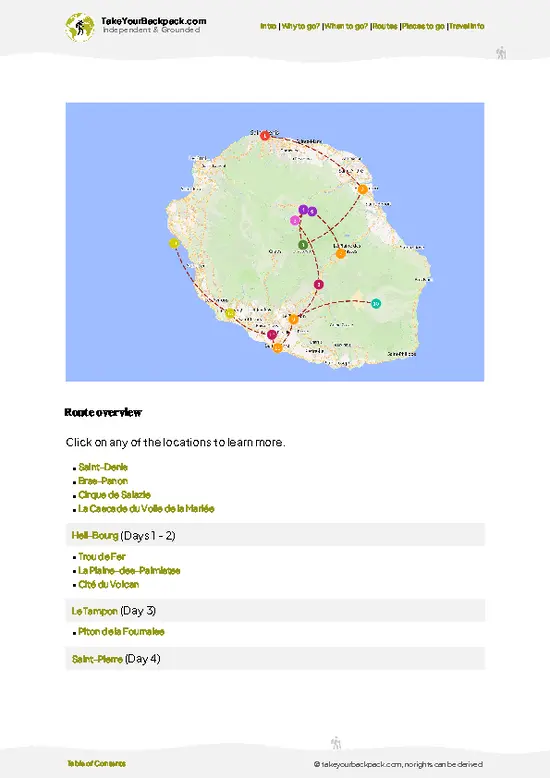
5–7 days (minimum that still feels worth it)- Base yourself in 2–3 areas: e.g., Saint-Denis or Saint-Pierre (arrival), Cilaos, and one cirque or volcano area.
- Prioritize 2–3 big hikes: Mafate day or overnight, a Cilaos ridge hike, and Piton de la Fournaise crater area.
- You’ll be moving fast and skipping a lot of coastal downtime.
10–12 days (sweet spot for most backpackers)- Enough time to do a proper 3–4 day trek through Mafate or a multi-day combo of Mafate + Cilaos.
- Full day for Piton de la Fournaise (or two if you want a weather backup).
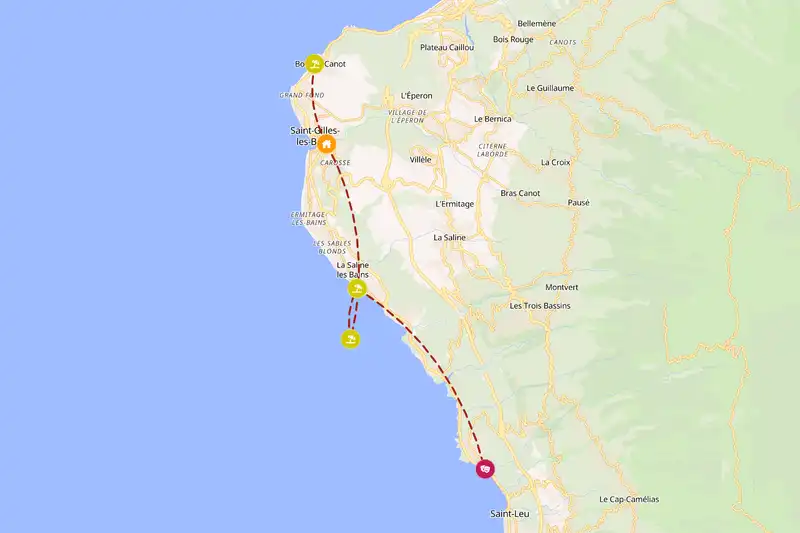
- A couple of slower days on the west coast (Saint-Gilles/La Saline) for beaches, snorkeling, and laundry.
- Time to adapt to bus schedules or share rides without stressing.
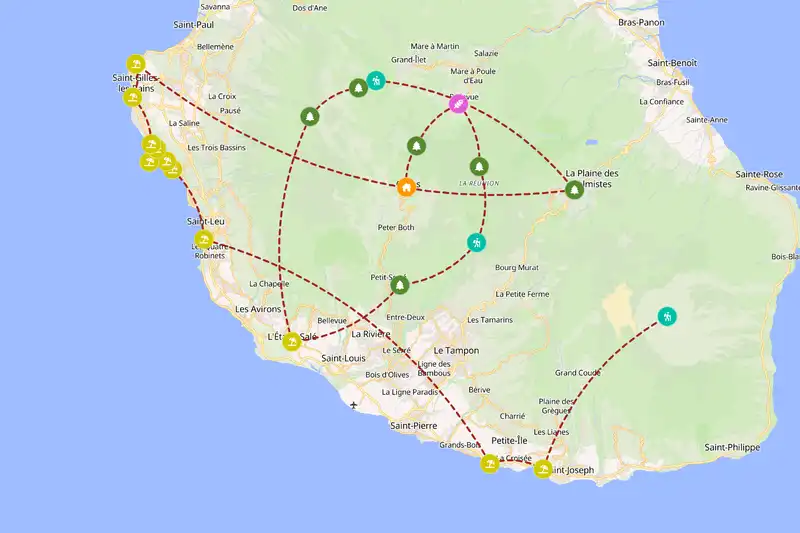
2+ weeks (if you love hiking and want to go deep)- Link the three cirques (Mafate, Cilaos, Salazie) into a longer trekking circuit.
- Add side valleys, lesser-known trails, and more waterfalls.
- Mix in cultural days: markets, Creole villages, rum distilleries, and coastal walks.
For pure hiking-focused backpacking, 10–12 days gives you a strong taste without blowing your budget on extra car days or long stays in pricier coastal towns. If you’re short on time, cut beach days before you cut mountain days; the mountains are what make Réunion special.
You can get around without a car, but it changes how you travel. Think: slower, more local, and more planning. For a budget backpacker, that can actually be a plus if you’re patient.
Buses- Réunion has a decent island-wide bus network (Car Jaune plus local lines), especially along the coast and to main towns like Saint-Denis, Saint-Pierre, Saint-Gilles, Saint-André.
- Buses are cheap but not frequent; many routes thin out in the evenings, on Sundays, and on holidays.
- Mountain towns like Cilaos and Salazie are reachable by bus, but you’ll need to time connections carefully.
Hiking without a car- Mafate is only accessible on foot or by helicopter, so you’re on equal footing with car drivers there.
- Many trailheads are reachable by bus or a short hitchhike from a bus stop.
- If you plan hut-to-hut treks, you can often start and finish in places with bus access, then ride back to your base.
Hitchhiking & rideshares- Hitchhiking is relatively common and usually safe if you use normal caution; locals are used to hikers on the road near trailheads.
- Rideshare apps and Facebook groups are popular among locals and can save money on long coastal stretches.
When a car really helps- Sunrise missions (like early starts for Piton de la Fournaise) are much easier with a car.
- Chaining multiple short hikes or viewpoints in one day is tough by bus.
- If you’re in a group of 2–4, a rental car can actually be cost-effective compared to multiple bus fares and lost time.
If you’re solo, patient, and focused on multi-day hikes, going car-free is totally workable. If you want to sample lots of different corners of the island in under a week, a car saves you a lot of frustration.
For a backpacker on a budget, the must-visits are the places where your legs do the work and the scenery feels way bigger than the price tag.
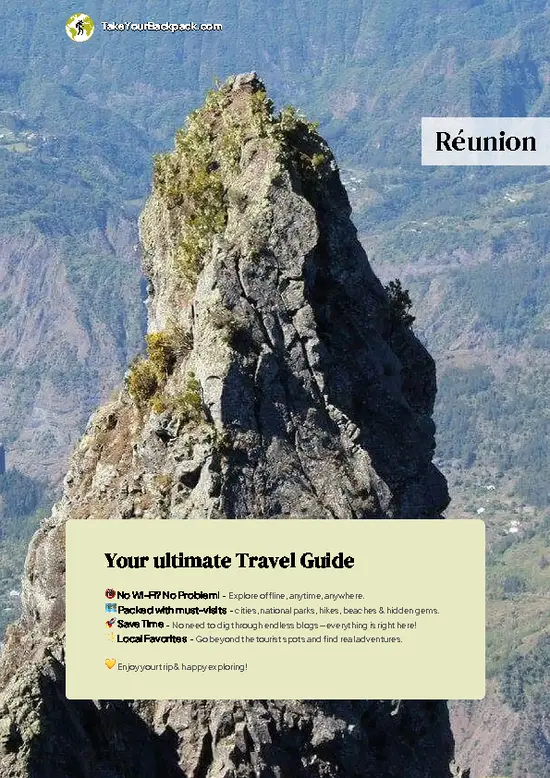
1. Cirque de Mafate- The heart of Réunion for hikers. No roads, just footpaths and tiny villages.
- Do at least an overnight: hike in from Col des Bœufs or Rivière des Galets, sleep in a gîte, and hike out a different way.
- You get big-mountain energy, starry skies, and simple Creole meals with other trekkers.
2. Cilaos- Mountain town with sharp peaks, switchback roads, and loads of day hikes.
- Great base for budget travelers: gîtes, small hotels, and a few cheaper eats.
- Hikes like La Chapelle, Bras Rouge, or more serious ridges (if you’re experienced) give you huge views for the bus fare.
3. Piton de la Fournaise (volcano area)- One of the most accessible active volcanoes on the planet.
- Even if you don’t summit, walking across the lunar landscape of the Enclos Fouqué is worth the early start.
- Weather can ruin views, so build in a backup day if you can.
4. Salazie & Hell-Bourg- Lush cirque with waterfalls and Creole architecture.
- Hell-Bourg is touristy but still charming, with short hikes and good intro trails if you’re easing into the terrain.
5. West Coast Lagoon (Saint-Gilles / La Saline / L’Ermitage)- Calm lagoon protected by a reef: good for cheap snorkeling and rest days.
- Not the world’s best beaches, but after big hikes, a few lazy hours here feel earned.
6. A local market (e.g., Saint-Paul or Saint-Pierre)- Budget-friendly way to eat: samoussas, bouchons, fruit, and local snacks.
- Also where you feel the island’s mix of cultures in one place.
If you hit Mafate, Cilaos, the volcano, and at least one lagoon day, you’ve basically done the core Réunion backpacker circuit.
If you’re short on time or cash, skip anything that eats days without giving you that “only-in-Réunion” feeling.
1. Long, lazy beach holidays- The lagoon is nice, but if you’ve seen decent beaches elsewhere, you don’t need more than 1–2 chill days here.
- Don’t burn half your trip lying on sand when the cirques and volcano are what make the island special.
2. Expensive organized excursions- Helicopter flights, canyoning, and some 4x4 tours are cool but pricey.
- If you’re on a backpacker budget, you’ll get more value from self-guided hikes and public viewpoints.
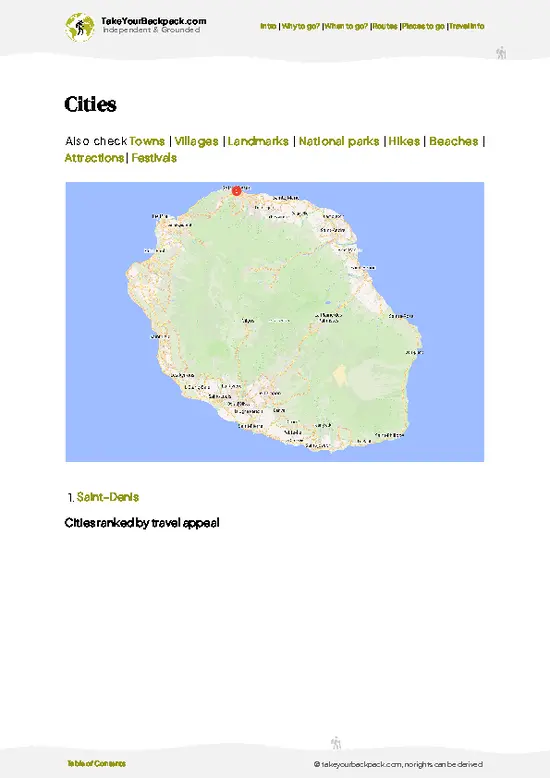
3. Overdoing the coastal towns- Saint-Denis, Saint-Pierre, and Saint-Gilles are worth a wander, but none of them justify full days if you’re tight on time.
- Treat them as bases for sleep, food, and buses, not main attractions.
4. Too many waterfalls- Réunion has a lot of waterfalls; after a few, they start to blur.
- Pick 1–2 good ones (like around Salazie) and skip chasing every cascade on the map.
5. Deep south and far-flung corners (on a short trip)- Places like the wild south coast and remote villages are interesting but time-hungry if you’re relying on buses.
- If you have under 10 days, focus on one or two cirques plus the volcano instead of trying to lap the whole island.
When in doubt, prioritize: Mafate over extra beaches, Cilaos over city time, and a full day on the volcano over a string of minor viewpoints. Réunion rewards depth more than breadth.