×

Rwanda🇷🇼 | regionsBureraTwin lakes, dugout canoes, volcano views, lakeside dawns | things to do and best time to go

Explore NyamashekeExplore Nyaruguru

Backpacking in Burera
🏆 Top pickregion ranked #15
By Johan Kruseman 🇳🇱 | Updated October 22, 2026

The decision most travelers face in Burera is whether to base in Musanze and day-trip, or sleep beside the lakes themselves. Staying lakeside costs you convenience and some comfort, since lodging is sparse and simple, but it saves transit hours and puts you on the water at dawn. For a backpacker, sleeping lakeside gives the most. Burera sits in the north of Rwanda, a district of two long lakes, Burera and Ruhondo, ringed by terraced hills and the Virunga volcanoes. It is quiet, rural and barely touristed, with little nightlife. Bring cash, because ATMs are scarce.

Discover everything you want to know in the 📖 Rwanda Travel Guide.


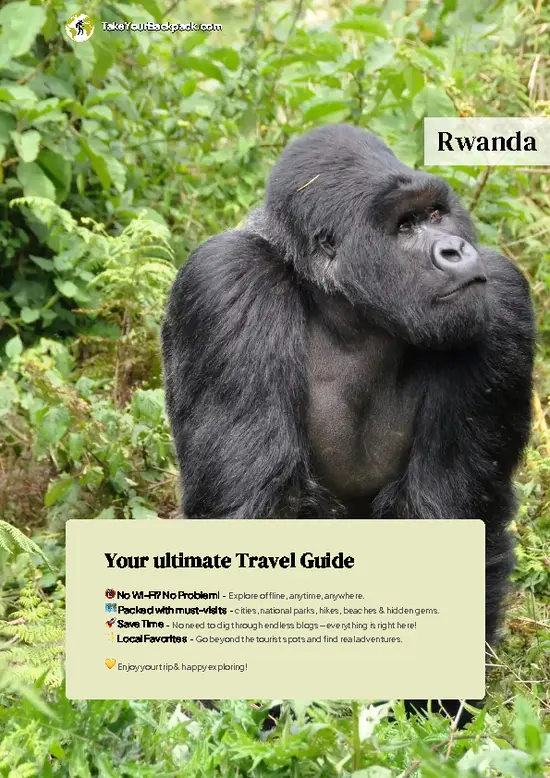
example page 0 from our offline Travel Guide for Rwanda
example page 1 from our offline Travel Guide for Rwanda
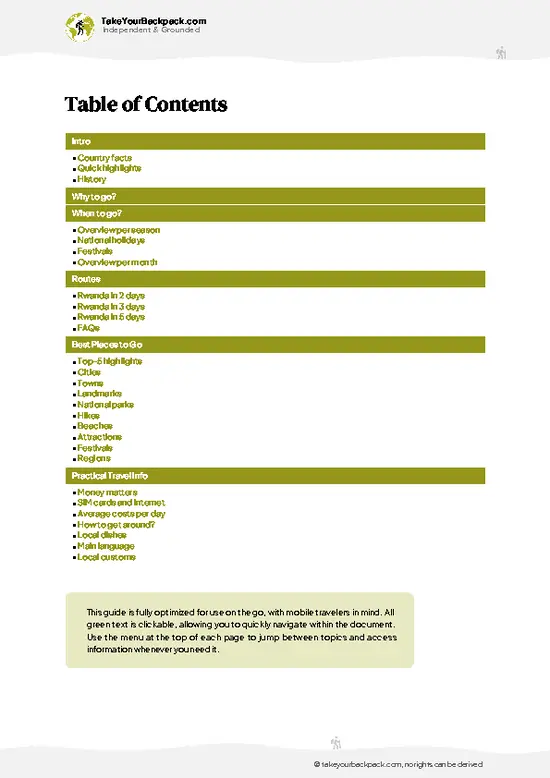
example page 2 from our offline Travel Guide for Rwanda
example page 3 from our offline Travel Guide for Rwanda
example page 4 from our offline Travel Guide for Rwanda
example page 5 from our offline Travel Guide for Rwanda
example page 6 from our offline Travel Guide for Rwanda
example page 7 from our offline Travel Guide for Rwanda
Loading the map 🌍
CLICK TO FILTER
cities
towns
landmarks
national parks
hikes
beaches
attractions
festivals
regions
SHOW COUNTRY’S BESTSHOW ALL

✨ Why go?
Ranked #15 region in Rwanda
Reasons people choose to visit here

Burera rewards backpackers who want volcano-country scenery without the crowds of its neighbor. The district holds Lake Burera and Lake Ruhondo, linked by a narrow channel, so you can walk, paddle and swim-watch fishermen in one area without changing bases. Hills here are farmed to the summit, which makes village walks easy and conversation constant. Add the Twin Lakes’ view of Muhabura and Bisoke volcanoes and a slow pace suits the place. Moto-taxis connect the scattered communities, so you can string short hops together rather than commit to one long ride. It is a region for lingering, not for ticking.

💡 HighlightsPlaces and moments you shouldn't skip

  1. Lake Burera: the larger lake, deep blue with islands, wooded peninsulas and views of the volcanoes behind it.
  2. Lake Ruhondo: the sister lake, with a more winding shoreline, quiet coves and hilltop lodges looking down on it.
  3. Gahunga Hill viewpoints: farm tracks climb to wide views over both lakes and the terraces.
  4. Twin Lakes canoe trips: local boatmen paddle wooden dugouts past fishing nets and small islands.
  5. Kidaho border area hills: lesser-known farmland close to the Uganda frontier, with crisp air and few visitors.
  6. Butaro Hospital surroundings: a well-known rural hospital set in a green valley, pleasant to walk through.
  7. Cyanika lakeshore: an easy-going stretch of shore where villagers wash, fish and trade.
  8. Rugarama peninsula: a less-visited finger of land with sweeping water views.
  9. Local village
… read more 👉
  1. Lake Burera: the larger lake, deep blue with islands, wooded peninsulas and views of the volcanoes behind it.
  2. Lake Ruhondo: the sister lake, with a more winding shoreline, quiet coves and hilltop lodges looking down on it.
  3. Gahunga Hill viewpoints: farm tracks climb to wide views over both lakes and the terraces.
  4. Twin Lakes canoe trips: local boatmen paddle wooden dugouts past fishing nets and small islands.
  5. Kidaho border area hills: lesser-known farmland close to the Uganda frontier, with crisp air and few visitors.
  6. Butaro Hospital surroundings: a well-known rural hospital set in a green valley, pleasant to walk through.
  7. Cyanika lakeshore: an easy-going stretch of shore where villagers wash, fish and trade.
  8. Rugarama peninsula: a less-visited finger of land with sweeping water views.
  9. Local village walks: footpaths between homesteads, banana groves and potato fields, best with a local guide.
  10. Lakeside sunrise spots: mist lifts off the water while fishermen head out, with the volcanoes emerging behind.
Burera’s Gahunga Hill viewpoints and a canoe trip on the Twin Lakes fit neatly into one day, hiking up early and paddling in the afternoon.
Spotted a mistake or missing something? Contact us.

Things to do near Burera

Ratings based on Tripadvisor reviews. When you book through this link, you support our work at no extra cost to you.

🏘️ NeighborhoodsUnderstanding the local layout

Burera, Rwanda, is a tapestry of lush landscapes and vibrant culture, perfect for backpackers seeking both adventure and connection. Here’s how to navigate its neighborhoods:

Burera Town: The heart of the action. It’s bustling with local markets and street food stalls. Affordable accommodations are plentiful, making it ideal for budget travelers. The walkability is decent, but expect some uneven paths. Nightlife is low-key, with a few bars offering local brews. Perfect for short stays.

Ruhondo: This area offers stunning views of Lake Ruhondo. It’s quieter, ideal for those wanting to soak in nature. Accommodations are a bit pricier, but the tranquility is worth it. Great for longer stays if you’re into hiking and birdwatching. Transport options are limited, so plan ahead.

Gakenke: A bit … read more 👉
Burera, Rwanda, is a tapestry of lush landscapes and vibrant culture, perfect for backpackers seeking both adventure and connection. Here’s how to navigate its neighborhoods:

Burera Town: The heart of the action. It’s bustling with local markets and street food stalls. Affordable accommodations are plentiful, making it ideal for budget travelers. The walkability is decent, but expect some uneven paths. Nightlife is low-key, with a few bars offering local brews. Perfect for short stays.

Ruhondo: This area offers stunning views of Lake Ruhondo. It’s quieter, ideal for those wanting to soak in nature. Accommodations are a bit pricier, but the tranquility is worth it. Great for longer stays if you’re into hiking and birdwatching. Transport options are limited, so plan ahead.

Gakenke: A bit off the beaten path, Gakenke is for the adventurous. It’s less touristy, offering a more authentic experience. Costs are low, and the walkability is good. Perfect for longer stays if you want to immerse yourself in local life.

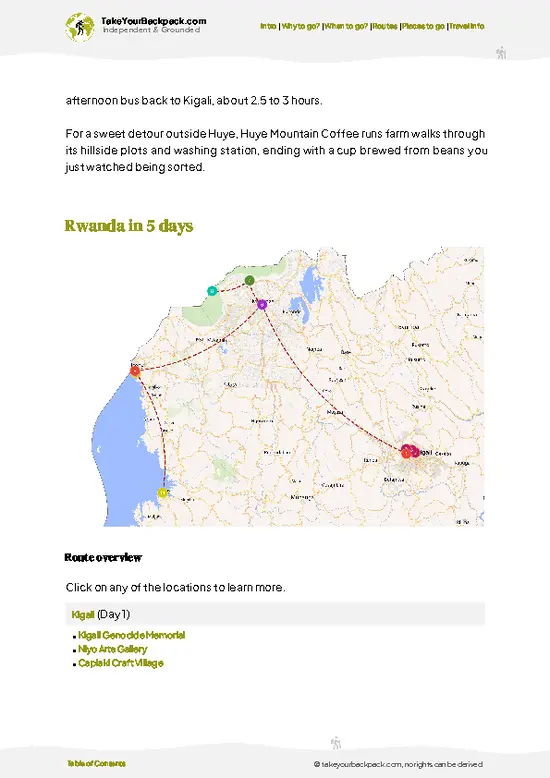
⌛️ 5 daysSeeing the highlights in 5 days

Everything here moves at moto-taxi pace, so plan short hops, an early start and a long midday pause when the sun is hard on the shore.
Day 1: Lake Burera: Arrive and settle lakeside. Spend the afternoon walking the shoreline and talking to fishermen, because the boats come in late and the light is soft.
Day 2: Gahunga Hill: Climb in the cool morning for the view over both lakes, then rest through the heat. A second walk through the terraces fills the afternoon.
Day 3: Lake Ruhondo: Take a moto across to the sister lake. Its coves and quiet lodges suit a slow day of swimming-free lounging and watching the water.
Day 4: Twin Lakes by canoe: A paddled dugout trip links the scenery you have only seen from above. This is the day that justifies the whole trip.
Day 5: Butaro detour: Ride up to the valley … read more 👉
Everything here moves at moto-taxi pace, so plan short hops, an early start and a long midday pause when the sun is hard on the shore.
Day 1: Lake Burera: Arrive and settle lakeside. Spend the afternoon walking the shoreline and talking to fishermen, because the boats come in late and the light is soft.
Day 2: Gahunga Hill: Climb in the cool morning for the view over both lakes, then rest through the heat. A second walk through the terraces fills the afternoon.
Day 3: Lake Ruhondo: Take a moto across to the sister lake. Its coves and quiet lodges suit a slow day of swimming-free lounging and watching the water.
Day 4: Twin Lakes by canoe: A paddled dugout trip links the scenery you have only seen from above. This is the day that justifies the whole trip.
Day 5: Butaro detour: Ride up to the valley around Butaro for a final village walk before heading out, an easy addition that keeps your route intact.

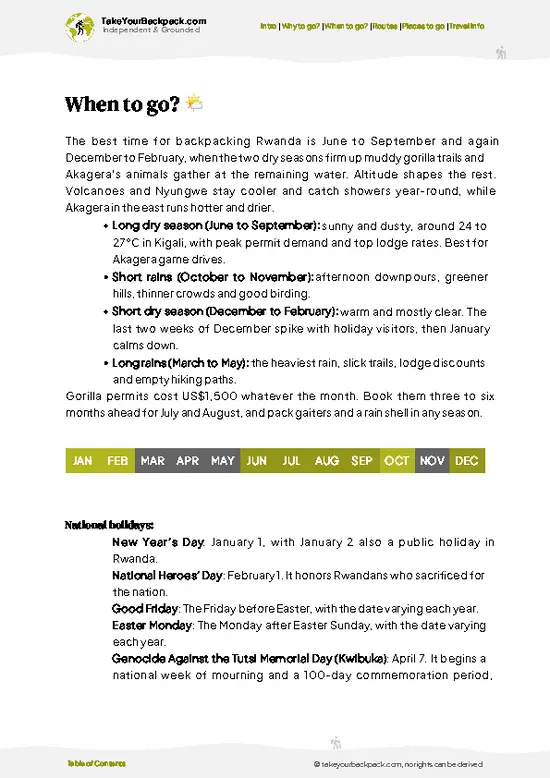
🌤️ When to go?Best time to visit Burera

  • Long Dry Season (June to September): Clearest skies for the Virunga volcano views over lakes Burera and Ruhondo. Days reach 22 to 25°C (72 to 77°F), nights drop to 10 to 12°C (50 to 54°F). Roads and trails are firmest, and lodging prices and crowds peak, especially in July and August.
  • Long Rains (March to May): Heavy afternoon downpours, slick red clay, and cloud that hides the peaks. Expect 18 to 22°C (64 to 72°F). Rooms are cheapest and the lakeshore is nearly empty.
  • Short Rains (October to November): Showers are shorter and the hills turn green. Temperatures sit around 18 to 23°C (64 to 73°F).
  • Short Dry Spell (December to February): Mostly clear mornings and good hiking, with modest holiday bumps in price.
Start walks and boat trips early, since mornings are clearest all year.

source: climatestotravel.comJANJanuary: excellent for travelingFEBFebruary: excellent for travelingMARMarch: fair for travelingAPRApril: fair for travelingMAYMay: fair for travelingJUNJune: highly recommended for travelingJULJuly: excellent for travelingAUGAugust: excellent for travelingSEPSeptember: excellent for travelingOCTOctober: fair for travelingNOVNovember: fair for travelingDECDecember: excellent for traveling
when-to-go

✈️ The backpacker research shortcutRwanda Travel Guide

An offline-friendly backpacking guide with optimized travel routes, ranked highlights, transport advice, and the best areas to stay.
example page 0 from our offline Travel Guide for Rwanda
example page 1 from our offline Travel Guide for Rwanda
example page 2 from our offline Travel Guide for Rwanda
example page 3 from our offline Travel Guide for Rwanda
example page 4 from our offline Travel Guide for Rwanda
example page 5 from our offline Travel Guide for Rwanda
example page 6 from our offline Travel Guide for Rwanda
example page 7 from our offline Travel Guide for Rwanda
The digital guide (233 pages) contains:
✅ 57 highlights, ranked by travel appeal
✅ Optimized 2, 3 & 5-day travel routes
✅ Cities, national parks, landmarks, beaches
✅ How to get around
✅ Offline-friendly for travel without Wi-Fi
👉 Click to see all 30+ guide features

📅 Plan smarter in minutes, not weeks
✅ Month by month travel advice
✅ Festivals & national holidays
✅ Budget expectations

🗺️ Go to the right places, skip the overrated ones
✅ Honest pros & cons of destinations
✅ Top hikes, parks & viewpoints
✅ Lesser-known places most travelers miss
✅ Clear “worth it vs skip it” guidance

🛏️ Travel smoothly without rookie mistakes
✅ Best areas to stay
✅ Transport systems explained simply
✅ Common scams & safety advice
✅ SIM cards, money & practical tips

🌍 Understand the country, not just visit it
✅ Culture & traditions
✅ 52 Essential phrases & customs
✅ Festivals worth planning around
✅ Traveler-friendly historical context
✅ Insights that make places more meaningful

📱 Built for real travel conditions
✅ Fully downloadable PDF
✅ Works completely offline
✅ Optimized for phone use
✅ Useful in remote areas & buses
✅ Everything in one place
Stop searching, start planning
Get instant access to your full guide. 30‑day money-back guarantee.
+ Add another guide for just

By proceeding you agree to our terms.
Sent to your inbox immediately after payment • 100% Secure Checkout
Best Backpacking Travel Advisor 2025 tourism awardBest Backpacking
Travel Advisor
2025
What others say about Take Your Backpack Guides:
⭐⭐⭐⭐⭐
Fantastic, amazing amount of information!
⭐⭐⭐⭐⭐
My goodness this is amazing, it's what I've been looking for hats off too you!
⭐⭐⭐⭐⭐
I think this is absolutely BRILLIANT
⭐⭐⭐⭐
Very complete and informative. It's still missing places, but I gotta to commend you
⭐⭐⭐⭐⭐
This is truly amazing, thank you, can't wait to explore it with my kids!
⭐⭐⭐⭐⭐
Awesome resource, thank you!
⭐⭐⭐⭐⭐
This is amazing! Can't wait to explore the ones I haven't seen
⭐⭐⭐⭐
I love this! Well done, great idea.
⭐⭐⭐⭐⭐
Thanks for taking the time to make this gem!
⭐⭐⭐⭐⭐
This might be the best website I've ever seen.
⭐⭐⭐⭐⭐
Congratulations, and thank you so much for your work; it's incredibly valuable.
⭐⭐⭐⭐
In all seriousness I think you did a great job pointing out the important spots
⭐⭐⭐⭐⭐
10/10 very good
⭐⭐⭐⭐⭐
As someone who's only just starting to visit regularly this is awesome, thank you.
⭐⭐⭐⭐
Thank you very much! I'm going to visit my dad, it's going to be very useful!
⭐⭐⭐⭐⭐
This is really cool! We'll be travelling for the first time and this definitely come in handy.
⭐⭐⭐⭐⭐
You are now our minister of culture, congratulations 👨‍💼
⭐⭐⭐⭐⭐
Just wanted to tell you that this is a pearl! Going to follow your recommendations.
⭐⭐⭐⭐⭐
This is so cool. I'll definitely be using the resource for my travels soon.
⭐⭐⭐⭐⭐
This is very impressive! Good work.
⭐⭐⭐⭐⭐
This is an amazing and informative site. Very well done!

🛏️ Where to stay?Where staying makes the most sense

Musanze is the practical base for Burera, about an hour away, with the widest choice of cheap rooms, other backpackers, and frequent minibuses to the district. It is safe, walkable and full of cafés where you can arrange moto-taxis and drivers. Staying inside Burera itself suits those who want quiet. The shoreline around Kidaho and the lake’s southern edge has a few lodges and community-run guesthouses, where evenings are calm and mornings start with mist on the water. Butaro, known for its hospital and hillside views, offers simple guesthouses and few other travelers. Social energy is limited … read more 👉
Musanze is the practical base for Burera, about an hour away, with the widest choice of cheap rooms, other backpackers, and frequent minibuses to the district. It is safe, walkable and full of cafés where you can arrange moto-taxis and drivers. Staying inside Burera itself suits those who want quiet. The shoreline around Kidaho and the lake’s southern edge has a few lodges and community-run guesthouses, where evenings are calm and mornings start with mist on the water. Butaro, known for its hospital and hillside views, offers simple guesthouses and few other travelers. Social energy is limited beyond Musanze, so many visitors sleep there and make day trips, then spend a night or two on the lake for the stillness.

🚌 Getting aroundGetting around like a local

Burera is a scattered district of lakeshore villages and hill roads, so walking works within a trading center such as Kirambo or Butaro but stops making sense once you want to reach another sector, since the distances are long and the slopes steep. Most backpackers come up from Musanze or Kigali and use public minibuses and moto-taxis, which are reliable on the paved main roads and slower on the dirt ones.
  • Minibus (twegerane): The cheapest way up from Musanze, at roughly US$1 to 2 for the 45 minute to 1.5 hour ride depending on the destination. They leave when full, so you give up some predictability, but for the money they give a backpacker the most.
  • Moto-taxi: Costs US$1 to 5 for most local hops and reaches lakeside spots minibuses skip. It is quick and flexible, though you ride exposed on
… read more 👉
Burera is a scattered district of lakeshore villages and hill roads, so walking works within a trading center such as Kirambo or Butaro but stops making sense once you want to reach another sector, since the distances are long and the slopes steep. Most backpackers come up from Musanze or Kigali and use public minibuses and moto-taxis, which are reliable on the paved main roads and slower on the dirt ones.
  • Minibus (twegerane): The cheapest way up from Musanze, at roughly US$1 to 2 for the 45 minute to 1.5 hour ride depending on the destination. They leave when full, so you give up some predictability, but for the money they give a backpacker the most.
  • Moto-taxi: Costs US$1 to 5 for most local hops and reaches lakeside spots minibuses skip. It is quick and flexible, though you ride exposed on steep, sometimes wet roads. Ask for a helmet, which drivers are required to carry.
  • Shared or private car with driver: About US$50 to 80 a day from Musanze. It is the most comfortable and fastest for reaching Butaro and the lake viewpoints in one day, and it only pays off when split among three or four people.
  • Boat or canoe: Local canoes cross parts of Lake Burera for roughly US$5 to 15 depending on distance and bargaining. Slow and quiet, with the volcanoes in view, it suits short crossings rather than getting anywhere on a schedule.
Leave Musanze before mid-morning, since minibuses thin out by afternoon and the last return rides fill early.

👛 Costs (as of 22 October 2026)Money, prices, and spending tips

Backpacking in Burera, Rwanda, offers a raw, authentic experience where every dollar stretches further than you might expect, but knowing the local cost rhythm is key to unlocking smooth travel days.
  • Dorm Accommodation: Expect to pay around $5 to $10 per night for a basic dorm bed in guesthouses or small hostels. These places are simple but clean, often with shared bathrooms and a chance to mingle with other travelers or locals. The lighting is usually soft, with natural daylight filtering through modest windows, setting a calm tone for your stay.
  • Meals: Local meals are affordable and filling, typically costing between $2 and $5. Street food and small eateries serve hearty staples like ugali, beans, and fresh vegetables, often accompanied by the earthy aroma of freshly brewed Rwandan coffee
… read more 👉
Backpacking in Burera, Rwanda, offers a raw, authentic experience where every dollar stretches further than you might expect, but knowing the local cost rhythm is key to unlocking smooth travel days.
  • Dorm Accommodation: Expect to pay around $5 to $10 per night for a basic dorm bed in guesthouses or small hostels. These places are simple but clean, often with shared bathrooms and a chance to mingle with other travelers or locals. The lighting is usually soft, with natural daylight filtering through modest windows, setting a calm tone for your stay.
  • Meals: Local meals are affordable and filling, typically costing between $2 and $5. Street food and small eateries serve hearty staples like ugali, beans, and fresh vegetables, often accompanied by the earthy aroma of freshly brewed Rwandan coffee or tea. Eating here means embracing the local flavors and rhythms without breaking the bank.
  • Local Transport: Getting around Burera mostly involves moto-taxis, which cost about $0.50 to $1 per short ride. These rides are quick, bumpy, and come with the scent of dust and engine oil, but they’re the fastest way to navigate the town’s narrow, uneven roads. For longer trips, shared minibuses might run around $2 to $4.
  • Basic Activities/Entry Fees: Many local attractions, like community markets or natural sites, have minimal or no entry fees, but expect to pay $2 to $5 for guided walks or entry to specific cultural spots. These fees support local guides and conservation efforts, adding value to your experience by connecting you directly with the community and environment.
  • Miscellaneous Expenses: Budget around $1 to $3 for essentials like bottled water, snacks, or small souvenirs. Internet access can be patchy and might cost $1 to $2 for a basic data bundle, keeping you connected without overspending.

All told, a realistic daily budget for backpacking in Burera falls between $10 and $25. This range covers the essentials while leaving room for small splurges, letting you soak in the atmosphere without the stress of overspending. The modest costs reflect the town’s pace—unhurried, grounded, and genuine.


source: visitrwanda.com
⚠️ Prices can change and everyone travels differently, so take this as a rough guide. Hope it helps you plan your adventure!

🚌 Day tripsWhere to go beyond the main area

Burera, Rwanda, is a backpacker’s dream base, with its lush landscapes and vibrant culture, making day trips not just feasible but downright exhilarating.

Lake Burera Exploration
A morning paddle on Lake Burera is pure magic. The mist rising off the water at dawn feels like stepping into a painting. Rent a kayak for around $10 and glide through the calm waters, surrounded by rolling hills and local fishermen casting their nets. It’s about a 30-minute ride from town, so you’ll have plenty of time to soak in the scenery. The best time to visit is during the dry season, from June to September, when the skies are clear and the reflections on the lake are stunning. Many first-timers miss the chance to chat with the fishermen; their stories add depth to the experience.


Virunga National Park … read more 👉
Burera, Rwanda, is a backpacker’s dream base, with its lush landscapes and vibrant culture, making day trips not just feasible but downright exhilarating.

Lake Burera Exploration
A morning paddle on Lake Burera is pure magic. The mist rising off the water at dawn feels like stepping into a painting. Rent a kayak for around $10 and glide through the calm waters, surrounded by rolling hills and local fishermen casting their nets. It’s about a 30-minute ride from town, so you’ll have plenty of time to soak in the scenery. The best time to visit is during the dry season, from June to September, when the skies are clear and the reflections on the lake are stunning. Many first-timers miss the chance to chat with the fishermen; their stories add depth to the experience.


Virunga National Park
Just a short drive away, Virunga National Park offers a chance to witness Rwanda’s incredible wildlife. The journey takes about an hour, and the entrance fee is around $40. Spend the day trekking through the park, where the air is thick with the scent of earth and foliage. You might spot gorillas or golden monkeys if you’re lucky. The dry season is ideal for wildlife spotting, but be prepared for muddy trails in the rainy months. A common mistake is underestimating the physical demand of the trek; come ready to sweat!


Musanze Caves
The Musanze Caves are a hidden treasure just 20 minutes from Burera. For a mere $5, you can explore these ancient formations, where the cool, damp air contrasts sharply with the warm sun outside. Guided tours offer insights into the caves’ history and geology, making it a fascinating stop. Early morning is best to avoid crowds and enjoy the tranquility. Many backpackers overlook this spot, thinking it’s just another cave, but the stories etched in the walls are captivating.
👉 Explore Musanze Caves

🍲 FoodLocal Cuisine & Drinks

Food in Burera is farm food, built on the potatoes, beans and sorghum that cover the hills. Expect ibirayi (potatoes) fried or boiled, isombe (cassava leaves stewed with groundnut paste), and brochettes of grilled goat or beef with a smoky, charred edge. Fresh tilapia from the lake is grilled whole where it is landed. Cheap meals come from small roadside canteens serving a buffet of rice, beans, plantain and cabbage for US$1.50 to 3, and from market stalls selling roasted corn and sweet bananas. Drink strong, milky chai or sip urwagwa (banana beer) when offered. Eat with your right hand when sharing, accept a first serving graciously, and expect service to be unhurried. Evening options thin out early, so eat before dark.

🛡️ SafetyStaying Safe: What Travelers Should Know

Burera is generally safe, but like anywhere, a bit of awareness goes a long way. Stick to well-lit areas at night; the streets can feel quiet, and a little caution helps. Solo travelers should blend in—avoid flashy gear and keep your phone tucked away.

While scams are rare, some locals may approach you with overly friendly offers for guided tours or services. Politely decline if it feels off. The real charm lies in spontaneous interactions, so trust your instincts. Carry yourself confidently, and you’ll find that Burera welcomes you with open arms.

FAQCommon questions from travelers

Two to three days covers Burera comfortably. One day is enough for Lake Burera viewpoints and a canoe crossing, while a second adds Butaro and its hillside scenery. A third day suits a hike toward the Virunga foothills, with Musanze about an hour away as the base.
Minibuses run from Musanze for roughly US$1 to 2, and moto-taxis cover local hops for US$1 to 5. For lakeside spots off the main road, a moto is the easiest choice, and canoes cross parts of Lake Burera for about US$5 to 15. Burera is best reached by leaving Musanze before mid-morning.
Burera is known for twin lakes, Burera and Ruhondo, set against the Virunga volcanoes in northern Rwanda. The hillsides are terraced with potatoes and beans, and Butaro is noted for its hospital and sweeping views. Canoe rides, quiet shoreline villages and lake tilapia draw visitors, with Volcanoes National Park less than an hour away.
⚠️ Things can change over time, so always validate details locally before you go.

Other Rwandan regions near Burera

Explore more nearby:

  • Rulindo—Mulindi tea hills, RPF headquarters, Kinihira rock, Nyabarongo wetlands| 36 km away
  • Nyabihu—Gishwati forest, potato fields, tea slopes, cool highlands| 39 km away
  • Rutsiro—Congo Nile Trail, Kivu ridges, coffee washing station, fishing landings| 73 km away

💡 Not sure where to go next?
Create a personalized itinerary for Rwanda including Burera and the places that fit your trip.

Generate my itinerary

👉 Discover all regions

Or checkout all Rwanda has to offer (think cities, towns, villages, national parks, hikes, beaches, festivals)
Country photo of Rwanda

We 💚 feedbackWhat to keep in mind

Burera’s real attraction is the early morning, when mist sits on both lakes and fishermen paddle out in silence. First-timers sleep through it. I would set an alarm, carry a warm layer and keep enough cash for the boatman.

✍️ Help improve this page!
The information on this page is based on in-depth research, insights shared by experienced travelers, and feedback from the local travel community in Rwanda. While every effort is made to keep the information accurate and current, conditions can change — so if you spot anything incorrect or outdated, please get in touch.


🙋‍♂️ Give feedback

👋 Meet the founderWho’s Behind Take Your Backpack?

Johan, backpacker and founder of TakeYourBackpackHi, I’m Johan (Netherlands 🇳🇱), the creator of TakeYourBackpack. Over the past 3 decades, I’ve backpacked through 90+ countries across six continents, gaining extensive experience with independent travel, long-term trips, and overland routes.

This site is built on a combination of firsthand travel experience and carefully curated insights from other backpackers. Many guides are based on places I’ve personally visited, while others bring together tips, observations, and practical advice shared by trusted travelers I’ve met along the way.

The goal is to provide realistic, experience-driven guidance — not generic itineraries — so you can explore destinations with better context, clearer expectations, and more confidence.