×

Rwanda🇷🇼 | regionsNyamashekeNyungwe canopy, chimp permits, Kivu beaches, tea factory | things to do and best time to go

Explore RutsiroExplore Burera

Backpacking in Nyamasheke
🌟 Highlightregion ranked #16
By Johan Kruseman 🇳🇱 | Updated October 22, 2026

Most people come to Nyamasheke for Nyungwe Forest National Park, whose canopy walkway and chimpanzee tracking draw the crowds. Lake Kivu's shoreline here is just as worthwhile and far quieter, with fishing villages and tea hills that few itineraries mention. Nyamasheke sits in the southwest of Rwanda, along the lake's southern stretch. Shared minibuses cost little but run slowly, while a motorbike taxi saves hours for modest money and costs you some comfort. For a backpacker, buses between stops and motos for the last miles give the best return. The Gisakura tea factory still sorts leaves by hand at dawn.

Discover everything you want to know in the 📖 Rwanda Travel Guide.


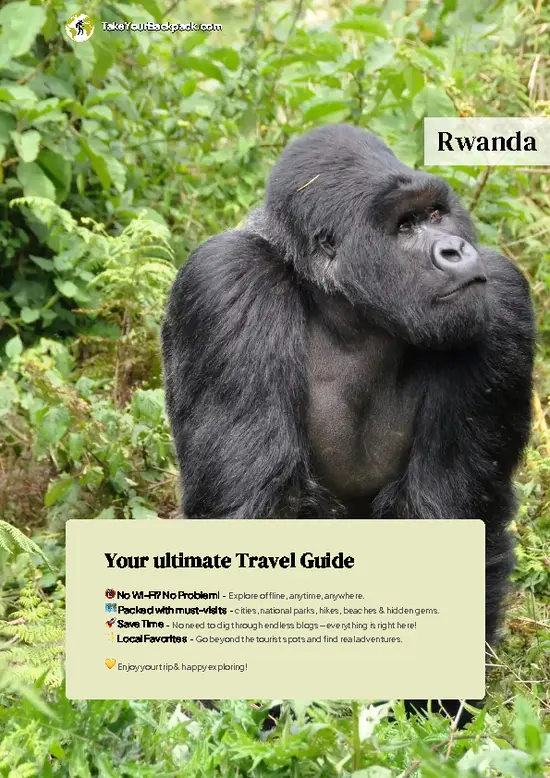
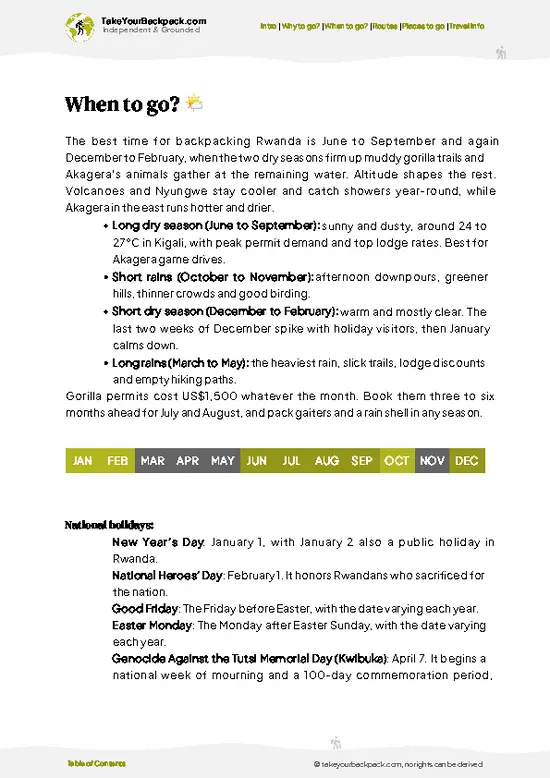
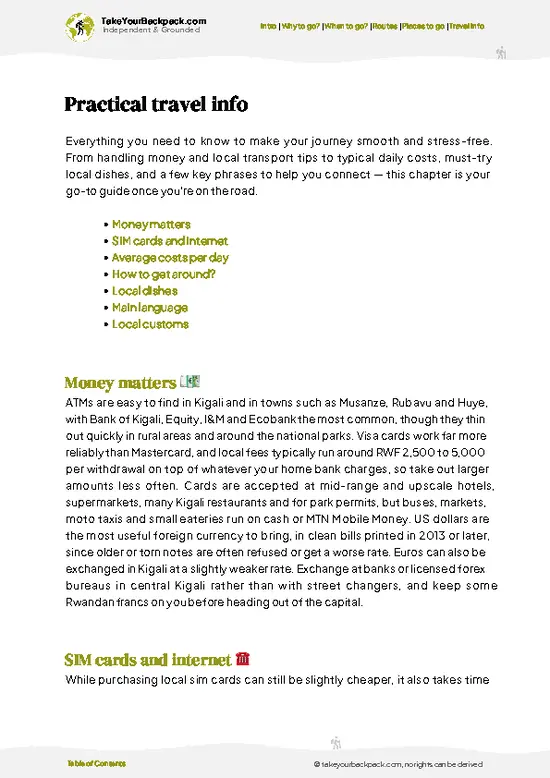
example page 0 from our offline Travel Guide for Rwanda
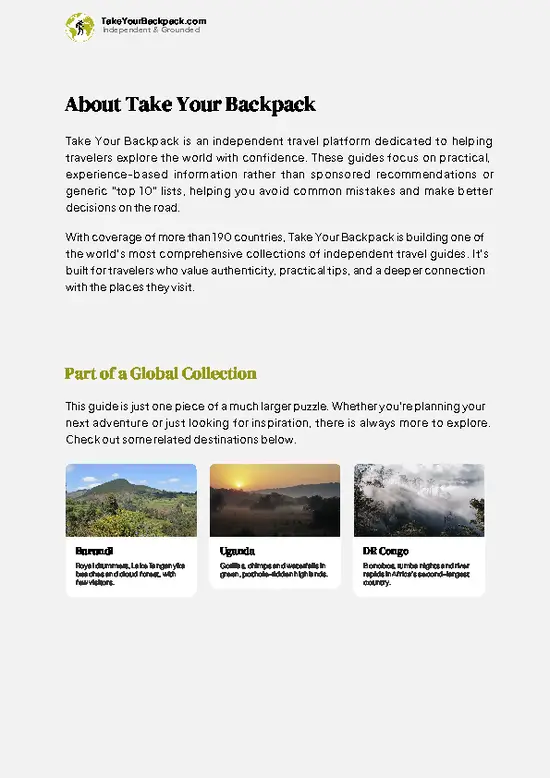
example page 1 from our offline Travel Guide for Rwanda
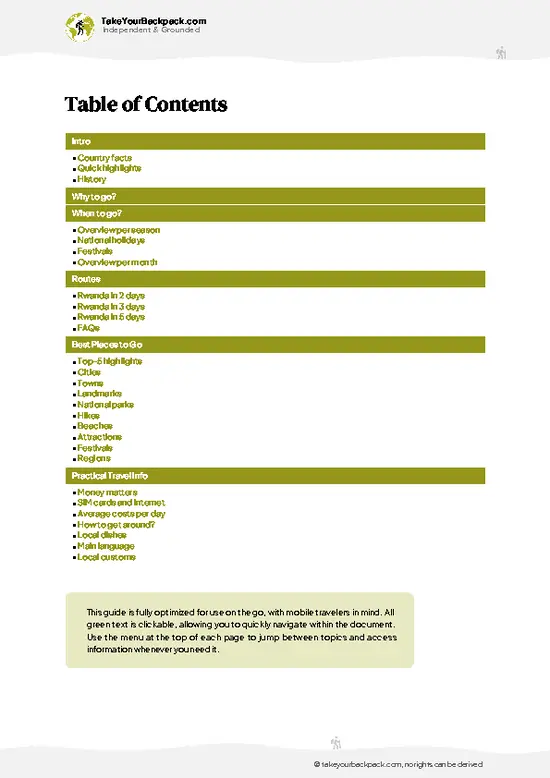
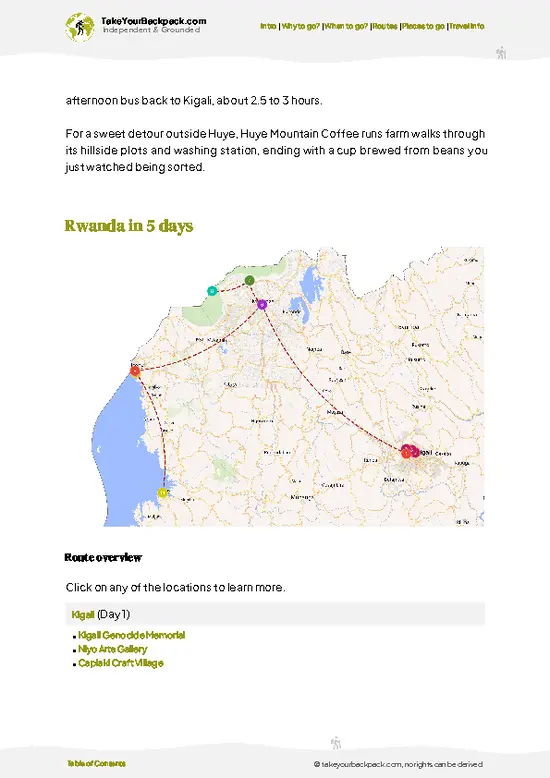
example page 2 from our offline Travel Guide for Rwanda
example page 3 from our offline Travel Guide for Rwanda
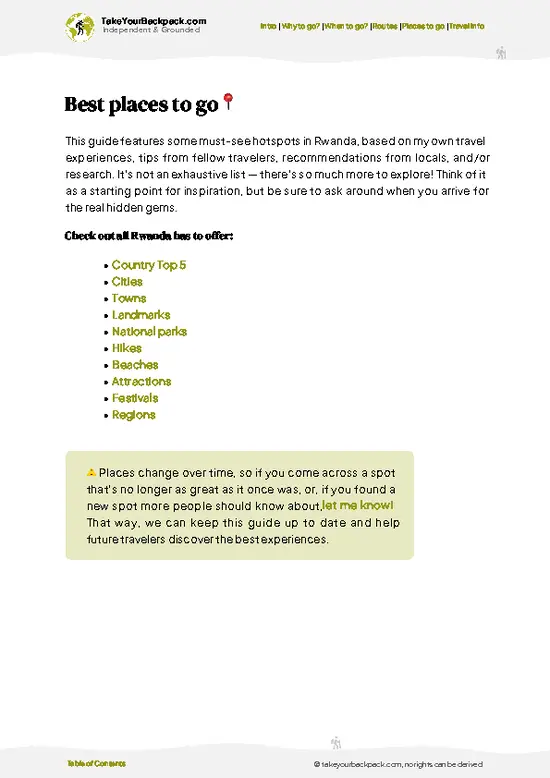
example page 4 from our offline Travel Guide for Rwanda
example page 5 from our offline Travel Guide for Rwanda
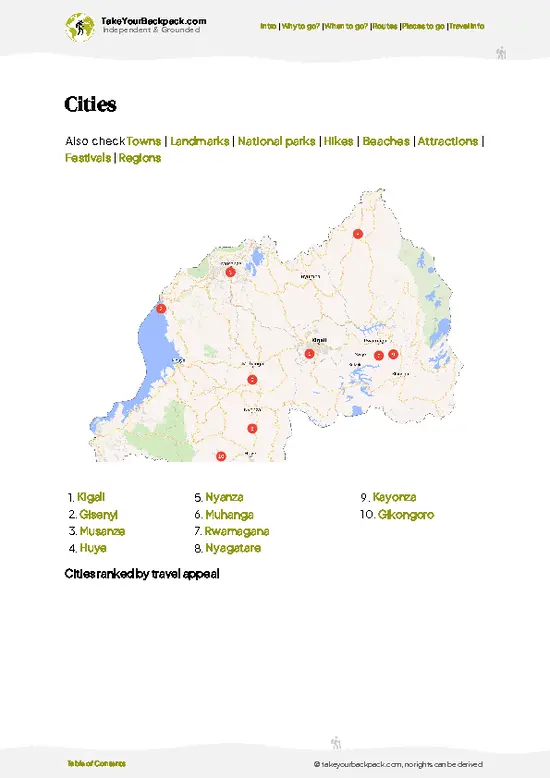
example page 6 from our offline Travel Guide for Rwanda
example page 7 from our offline Travel Guide for Rwanda
Loading the map 🌍
CLICK TO FILTER
cities
towns
landmarks
national parks
hikes
beaches
attractions
festivals
regions
SHOW COUNTRY’S BESTSHOW ALL

✨ Why go?
Ranked #16 region in Rwanda
What makes this region worth visiting

Nyamasheke lets you pair rainforest with lakeshore without repacking your bag. The Nyungwe Forest edge at Gisakura sits within reach of the Kivu coast, so you can hike under tall trees in the morning and watch fishing boats in the afternoon. Tea plantations fill the gaps between, and walking them is free. The Kivu Belt road and local minibuses make slow travel workable, since you can stop in villages instead of rushing between sights. Few places in Rwanda give you this much variety with so few other backpackers around.

💡 HighlightsKey sights and experiences for travelers

  1. Nyungwe Canopy Walkway: a suspended bridge roughly 50 meters above the forest floor, reached by a short trail from Uwinka.
  2. Chimpanzee Tracking in Nyungwe: permits are required, and the forest holds one of the region's larger chimp populations.
  3. Gisakura Tea Plantation: guided walks show how leaves are plucked and withered at the factory.
  4. Kamiranzovu Marsh Trail: a quiet path to a large wetland where orchids and birds are the draw.
  5. Bweyeye Hot Springs Area: a lesser-known spot locals visit for bathing near the forest.
  6. Kibogora Lakeshore: a calm Kivu beach for swimming and watching sunsets over the water.
  7. Nyamasheke Genocide Memorial at Cyato Church: a solemn site that remembers the victims killed at the church.
  8. Kivu Belt Cycling Stretch: hilly lakeside road with village views and little traffic.
  9. Ijwi
… read more 👉
  1. Nyungwe Canopy Walkway: a suspended bridge roughly 50 meters above the forest floor, reached by a short trail from Uwinka.
  2. Chimpanzee Tracking in Nyungwe: permits are required, and the forest holds one of the region's larger chimp populations.
  3. Gisakura Tea Plantation: guided walks show how leaves are plucked and withered at the factory.
  4. Kamiranzovu Marsh Trail: a quiet path to a large wetland where orchids and birds are the draw.
  5. Bweyeye Hot Springs Area: a lesser-known spot locals visit for bathing near the forest.
  6. Kibogora Lakeshore: a calm Kivu beach for swimming and watching sunsets over the water.
  7. Nyamasheke Genocide Memorial at Cyato Church: a solemn site that remembers the victims killed at the church.
  8. Kivu Belt Cycling Stretch: hilly lakeside road with village views and little traffic.
  9. Ijwi Island Boat Views: fishermen's boats on the lake, often seen at dawn from Kibogora.
  10. Local Banana Beer Villages: informal stops in hill hamlets where residents sell homemade brews.
Nyamasheke rewards a day pairing the Gisakura Tea Plantation with the nearby Canopy Walkway, since both sit close together on the forest edge.
Spotted a mistake or missing something? Contact us.

Things to do near Nyamasheke

Ratings based on Tripadvisor reviews. When you book through this link, you support our work at no extra cost to you.

🏘️ NeighborhoodsKey areas and districts to know

Nyamasheke offers a unique blend of tranquility and adventure, making it a perfect base for backpackers eager to explore Rwanda’s stunning landscapes and rich culture.

Kibuye: This lakeside area is a backpacker favorite for its serene vibe and stunning views of Lake Kivu. It’s walkable, with plenty of guesthouses and eateries that won’t break the bank. The nightlife is low-key, perfect for unwinding after a day of hiking. Ideal for short stays, Kibuye’s charm lies in its relaxed atmosphere and proximity to water activities.

Nyamasheke Town Center: The bustling heart of the region, this area is where you’ll find local markets and shops. It’s a bit more hectic, but that’s part of the charm. Prices are generally lower here, making it budget-friendly. While nightlife is minimal, the local cafes … read more 👉
Nyamasheke offers a unique blend of tranquility and adventure, making it a perfect base for backpackers eager to explore Rwanda’s stunning landscapes and rich culture.

Kibuye: This lakeside area is a backpacker favorite for its serene vibe and stunning views of Lake Kivu. It’s walkable, with plenty of guesthouses and eateries that won’t break the bank. The nightlife is low-key, perfect for unwinding after a day of hiking. Ideal for short stays, Kibuye’s charm lies in its relaxed atmosphere and proximity to water activities.

Nyamasheke Town Center: The bustling heart of the region, this area is where you’ll find local markets and shops. It’s a bit more hectic, but that’s part of the charm. Prices are generally lower here, making it budget-friendly. While nightlife is minimal, the local cafes offer a taste of Rwandan culture. Great for longer stays, it provides easy access to transport options for day trips.

Bugarama: Known for its hot springs, Bugarama is quieter and less touristy. The vibe is laid-back, with a few guesthouses offering basic amenities. It’s a bit off the beaten path, but that means fewer crowds. Perfect for those looking to immerse themselves in local life, it’s best suited for longer stays where you can truly unwind and explore the surrounding nature.

⌛️ 5 daysSeeing the highlights in 5 days

Day 1: Gisakura: Start at the forest edge, where tea estates and Nyungwe's trailheads sit together. Buses reach here from the main road, so you avoid long transfers and can walk the plantation and settle in early.
Day 2: Nyungwe Forest: Spend a full day on the canopy walkway and the marsh trail. Early starts matter because morning mist clears by midday and wildlife is most active then. Chimp tracking, if you hold a permit, needs a pre-dawn start.
Day 3: Kibogora: Move down to the lake. Minibuses are infrequent, so travel in the morning and leave afternoons for swimming. The slower pace suits a day off from hiking.
Day 4: Cyato and the Kivu Belt: Visit the memorial, then hire a moto along the lakeside road. A short detour to the hot springs near Bweyeye adds a quiet, local stop without breaking … read more 👉
Day 1: Gisakura: Start at the forest edge, where tea estates and Nyungwe's trailheads sit together. Buses reach here from the main road, so you avoid long transfers and can walk the plantation and settle in early.
Day 2: Nyungwe Forest: Spend a full day on the canopy walkway and the marsh trail. Early starts matter because morning mist clears by midday and wildlife is most active then. Chimp tracking, if you hold a permit, needs a pre-dawn start.
Day 3: Kibogora: Move down to the lake. Minibuses are infrequent, so travel in the morning and leave afternoons for swimming. The slower pace suits a day off from hiking.
Day 4: Cyato and the Kivu Belt: Visit the memorial, then hire a moto along the lakeside road. A short detour to the hot springs near Bweyeye adds a quiet, local stop without breaking the logistics.
Day 5: Back to Nyungwe: Return to the forest for the day that justifies the trip: chimpanzee tracking at first light, with the canopy in morning sun.

🌤️ When to go?Weather, crowds, and seasonal trade-offs

  • Long Dry Season (June to August): Roads and trails are firm, and Lake Kivu views stay clear. Days reach 24 to 27°C (75 to 81°F), nights drop to about 15°C (59°F).
  • Short Dry Season (December to February): Sunnier and a touch warmer, with a few showers. Kayak trips and Nyungwe visits are easy, and prices rise slightly around the holidays.
  • Rainy Seasons (March to May, October to November): Heavy downpours turn dirt roads slick. Lodges drop rates and the forest is lush.
Daylight stays steady all year, so plan hikes to finish by late afternoon.

source: climatestotravel.comJANJanuary: excellent for travelingFEBFebruary: excellent for travelingMARMarch: fair for travelingAPRApril: fair for travelingMAYMay: highly recommended for travelingJUNJune: excellent for travelingJULJuly: excellent for travelingAUGAugust: excellent for travelingSEPSeptember: excellent for travelingOCTOctober: highly recommended for travelingNOVNovember: fair for travelingDECDecember: excellent for traveling
when-to-go

✈️ The backpacker research shortcutRwanda Travel Guide

An offline-friendly backpacking guide with optimized travel routes, ranked highlights, transport advice, and the best areas to stay.
example page 0 from our offline Travel Guide for Rwanda
example page 1 from our offline Travel Guide for Rwanda
example page 2 from our offline Travel Guide for Rwanda
example page 3 from our offline Travel Guide for Rwanda
example page 4 from our offline Travel Guide for Rwanda
example page 5 from our offline Travel Guide for Rwanda
example page 6 from our offline Travel Guide for Rwanda
example page 7 from our offline Travel Guide for Rwanda
The digital guide (233 pages) contains:
✅ 57 highlights, ranked by travel appeal
✅ Optimized 2, 3 & 5-day travel routes
✅ Cities, national parks, landmarks, beaches
✅ How to get around
✅ Offline-friendly for travel without Wi-Fi
👉 Click to see all 30+ guide features

📅 Plan smarter in minutes, not weeks
✅ Month by month travel advice
✅ Festivals & national holidays
✅ Budget expectations

🗺️ Go to the right places, skip the overrated ones
✅ Honest pros & cons of destinations
✅ Top hikes, parks & viewpoints
✅ Lesser-known places most travelers miss
✅ Clear “worth it vs skip it” guidance

🛏️ Travel smoothly without rookie mistakes
✅ Best areas to stay
✅ Transport systems explained simply
✅ Common scams & safety advice
✅ SIM cards, money & practical tips

🌍 Understand the country, not just visit it
✅ Culture & traditions
✅ 52 Essential phrases & customs
✅ Festivals worth planning around
✅ Traveler-friendly historical context
✅ Insights that make places more meaningful

📱 Built for real travel conditions
✅ Fully downloadable PDF
✅ Works completely offline
✅ Optimized for phone use
✅ Useful in remote areas & buses
✅ Everything in one place
Stop searching, start planning
Get instant access to your full guide. 30‑day money-back guarantee.
+ Add another guide for just

By proceeding you agree to our terms.
Sent to your inbox immediately after payment • 100% Secure Checkout
Best Backpacking Travel Advisor 2025 tourism awardBest Backpacking
Travel Advisor
2025
What others say about Take Your Backpack Guides:
⭐⭐⭐⭐⭐
Fantastic, amazing amount of information!
⭐⭐⭐⭐⭐
My goodness this is amazing, it's what I've been looking for hats off too you!
⭐⭐⭐⭐⭐
I think this is absolutely BRILLIANT
⭐⭐⭐⭐
Very complete and informative. It's still missing places, but I gotta to commend you
⭐⭐⭐⭐⭐
This is truly amazing, thank you, can't wait to explore it with my kids!
⭐⭐⭐⭐⭐
Awesome resource, thank you!
⭐⭐⭐⭐⭐
This is amazing! Can't wait to explore the ones I haven't seen
⭐⭐⭐⭐
I love this! Well done, great idea.
⭐⭐⭐⭐⭐
Thanks for taking the time to make this gem!
⭐⭐⭐⭐⭐
This might be the best website I've ever seen.
⭐⭐⭐⭐⭐
Congratulations, and thank you so much for your work; it's incredibly valuable.
⭐⭐⭐⭐
In all seriousness I think you did a great job pointing out the important spots
⭐⭐⭐⭐⭐
10/10 very good
⭐⭐⭐⭐⭐
As someone who's only just starting to visit regularly this is awesome, thank you.
⭐⭐⭐⭐
Thank you very much! I'm going to visit my dad, it's going to be very useful!
⭐⭐⭐⭐⭐
This is really cool! We'll be travelling for the first time and this definitely come in handy.
⭐⭐⭐⭐⭐
You are now our minister of culture, congratulations 👨‍💼
⭐⭐⭐⭐⭐
Just wanted to tell you that this is a pearl! Going to follow your recommendations.
⭐⭐⭐⭐⭐
This is so cool. I'll definitely be using the resource for my travels soon.
⭐⭐⭐⭐⭐
This is very impressive! Good work.
⭐⭐⭐⭐⭐
This is an amazing and informative site. Very well done!

🛏️ Where to stay?Best areas to stay in Rwanda

Kibogora, on the shore of Lake Kivu, is the best base in Nyamasheke, with quiet beaches, swimmable water and kayak access, and its small cluster of budget guesthouses makes it easy to meet other travelers. Expect beds from about US$10 to 30. Shell Beach on the lake is a calmer, scenic alternative. Safety is good, with little hassle after dark, though lanes are unlit. Nyamasheke town itself has basic, cheap rooms near the market and the lakeside memorial church, handy for early buses but quiet socially. Many backpackers also sleep in Kamembe, about an hour south, for its restaurants and transit … read more 👉
Kibogora, on the shore of Lake Kivu, is the best base in Nyamasheke, with quiet beaches, swimmable water and kayak access, and its small cluster of budget guesthouses makes it easy to meet other travelers. Expect beds from about US$10 to 30. Shell Beach on the lake is a calmer, scenic alternative. Safety is good, with little hassle after dark, though lanes are unlit. Nyamasheke town itself has basic, cheap rooms near the market and the lakeside memorial church, handy for early buses but quiet socially. Many backpackers also sleep in Kamembe, about an hour south, for its restaurants and transit links, or in the Nyungwe side of the district for early forest starts. Book ahead on weekends.

🚌 Getting aroundTransportation options and practical tips

Nyamasheke is served mainly by shared minibuses and moto-taxis, and a short moto ride costs about US$0.50 to 2, paid in cash in Rwandan francs (mobile money works with some drivers). Most backpackers reach the district from Rusizi or Kamembe in the south, or from Karongi along the lake road to the north. Services run daily and are reliable on the paved roads, but thin out after about 5 pm.
  • Shared minibus: The cheapest way between Nyamasheke, Kamembe and Karongi at roughly US$2 to 5 per leg. They leave when full, so waits of 20 to 40 minutes are normal, and seats are tight. For a budget traveler this gives the most for the money.
  • Moto-taxi: Quick for the hilly last stretches to Kibogora, Bushenge or Nyungwe trailheads. Fares run US$1 to 4, you sit exposed on steep roads, and you should ask for
… read more 👉
Nyamasheke is served mainly by shared minibuses and moto-taxis, and a short moto ride costs about US$0.50 to 2, paid in cash in Rwandan francs (mobile money works with some drivers). Most backpackers reach the district from Rusizi or Kamembe in the south, or from Karongi along the lake road to the north. Services run daily and are reliable on the paved roads, but thin out after about 5 pm.
  • Shared minibus: The cheapest way between Nyamasheke, Kamembe and Karongi at roughly US$2 to 5 per leg. They leave when full, so waits of 20 to 40 minutes are normal, and seats are tight. For a budget traveler this gives the most for the money.
  • Moto-taxi: Quick for the hilly last stretches to Kibogora, Bushenge or Nyungwe trailheads. Fares run US$1 to 4, you sit exposed on steep roads, and you should ask for the helmet. Good value for short hops.
  • Private car with driver: About US$60 to 100 a day, comfortable and flexible for Nyungwe at dawn. It costs several times the bus, so it only makes sense split between three or four people.
  • Boat: Lake Kivu boats and kayak hire run from Kibogora at around US$10 to 25 for a few hours. They are slow and scenic rather than practical transit.
Start early, because the last minibuses leave mid-afternoon and the hills are hard to cover after dark.

👛 Costs (as of 22 October 2026)How expensive it really is

Backpacking in Nyamasheke, Rwanda, offers a raw, authentic experience where every dollar stretches further than you might expect, but knowing the local cost rhythm helps you move with ease.
  • Dorm Accommodation: Expect to pay around $5 to $10 per night for a basic dorm bed. Options are limited and simple, often family-run guesthouses with shared bathrooms. The rooms are modest but clean, with the scent of wood smoke lingering from nearby cooking fires.
  • Meals: Local meals cost between $2 and $5. Street food and small local eateries serve hearty portions of staples like plantains, beans, and fresh fish from Lake Kivu. The food is filling, straightforward, and flavored with local spices, offering a genuine taste of the region without the tourist markup.
  • Local Transport: Getting around mainly
… read more 👉
Backpacking in Nyamasheke, Rwanda, offers a raw, authentic experience where every dollar stretches further than you might expect, but knowing the local cost rhythm helps you move with ease.
  • Dorm Accommodation: Expect to pay around $5 to $10 per night for a basic dorm bed. Options are limited and simple, often family-run guesthouses with shared bathrooms. The rooms are modest but clean, with the scent of wood smoke lingering from nearby cooking fires.
  • Meals: Local meals cost between $2 and $5. Street food and small local eateries serve hearty portions of staples like plantains, beans, and fresh fish from Lake Kivu. The food is filling, straightforward, and flavored with local spices, offering a genuine taste of the region without the tourist markup.
  • Local Transport: Getting around mainly means moto-taxis, which cost about $0.50 to $1 per short ride. For longer trips, shared minibuses run around $1 to $3 depending on distance. The roads are often rough, so rides can be bumpy but give you a real feel for the landscape and local life.
  • Basic Activities/Entry Fees: Entry to local attractions like Nyungwe Forest or cultural sites typically ranges from $5 to $15. Guided walks or community tours might add a few dollars more but are worth it for the insight and safety they provide in this less touristy area.
  • Miscellaneous Expenses: Budget around $1 to $3 for essentials like bottled water, snacks, or small tips. Internet access is spotty and usually costs a couple of dollars for a daily SIM data package, so plan accordingly if you need to stay connected.

Altogether, a realistic daily budget for backpacking in Nyamasheke falls between $15 and $35. This range covers basic comfort without cutting corners, letting you soak in the atmosphere—the humid air thick with lake mist and the earthy scent of rain-soaked soil—without scrambling for cash or missing out on key experiences.


source: visitrwanda.com
⚠️ Prices can change and everyone travels differently, so take this as a rough guide. Hope it helps you plan your adventure!

🚌 Day tripsExploring the surroundings

Nyamasheke, Rwanda, is a backpacker’s dream base, offering easy access to stunning landscapes and rich culture. The town itself buzzes with life, from the aroma of fresh coffee wafting through the air to the vibrant chatter of locals. Here are some day trips that will elevate your experience.

Lake Kivu Exploration
Just a short ride from Nyamasheke, Lake Kivu is a paradise for water lovers. Rent a kayak or take a boat tour to explore the serene shores dotted with fishing villages. The lake’s deep blue waters contrast beautifully with the surrounding green hills. Expect to spend around 10,000 RWF for a kayak rental, and don’t forget your sunscreen. Early mornings are best to catch the mist rising off the water, creating a magical atmosphere. Many first-timers miss out by not packing a picnic … read more 👉
Nyamasheke, Rwanda, is a backpacker’s dream base, offering easy access to stunning landscapes and rich culture. The town itself buzzes with life, from the aroma of fresh coffee wafting through the air to the vibrant chatter of locals. Here are some day trips that will elevate your experience.

Lake Kivu Exploration
Just a short ride from Nyamasheke, Lake Kivu is a paradise for water lovers. Rent a kayak or take a boat tour to explore the serene shores dotted with fishing villages. The lake’s deep blue waters contrast beautifully with the surrounding green hills. Expect to spend around 10,000 RWF for a kayak rental, and don’t forget your sunscreen. Early mornings are best to catch the mist rising off the water, creating a magical atmosphere. Many first-timers miss out by not packing a picnic to enjoy on one of the secluded beaches.
👉 Explore Lake Kivu

Nyungwe National Park
A bit further afield, Nyungwe National Park is a must for nature enthusiasts. The drive takes about an hour, and the entrance fee is around 20,000 RWF. This lush rainforest is home to diverse wildlife, including chimpanzees and countless bird species. The canopy walk offers breathtaking views and a rush of adrenaline. Aim for a weekday visit to avoid crowds. Many travelers underestimate the park’s size; plan for a full day to truly soak in its beauty.


Tea Plantations of Gisakura
Just a 30-minute drive from Nyamasheke, the Gisakura tea plantations are a feast for the senses. The rolling hills are carpeted in vibrant green tea bushes, and the air is filled with the earthy scent of fresh leaves. A guided tour costs about 5,000 RWF and includes tastings. The best time to visit is during the harvest season, when the fields are alive with activity. A common mistake is rushing through; take your time to appreciate the craftsmanship behind your cup of tea.


Kibuye
Kibuye, another lakeside gem, is about an hour away and offers stunning views and a peaceful atmosphere. The journey costs around 2,000 RWF by bus. Spend your day swimming, biking, or simply soaking in the scenery. The best time to visit is during the dry season, when the skies are clear. Many backpackers overlook the local eateries; don’t miss the chance to try fresh fish caught that morning.
👉 Explore Kibuye

🍲 FoodLocal Flavors for Backpackers

Lake Kivu supplies the region’s signature taste: grilled tilapia and tiny fried isambaza, crunchy and salty, served with a squeeze of lime. Pair them with ibijumba (sweet potato) or ugali and isombe, cassava leaves stewed with a deep, earthy savor. Nyamasheke grows tea and coffee, so a cup of fresh Rwandan coffee or spiced milky chai is easy to find. Eat at lakeside shacks, small local restaurants serving buffet lunches for US$2 to 4, and roadside stalls with grilled corn and brochettes. Locals eat with the right hand and share dishes, and meals often come slowly, so order early. Try urwagwa banana beer only when offered by hosts.

🛡️ SafetyTraveler Safety Guide

Nyamasheke is generally safe, but a few practical tips can enhance your experience. The town has a friendly vibe, yet it’s wise to stay aware, especially in crowded markets. Keep your belongings close; pickpocketing can happen in busy areas.

If you’re traveling solo, avoid wandering too far after dark. The streets can be quiet, and it’s better to stick to well-lit paths.

While scams are rare, some locals might try to overcharge for services or goods. Always negotiate prices upfront, especially with taxi drivers.

Annoyances can include persistent vendors; a polite but firm “no, thank you” usually does the trick. Carry yourself confidently, smile, and engage with locals. This openness often leads to genuine interactions and a richer experience.

FAQTraveler FAQ

Two to three days covers Nyamasheke well. Give one day to Kibogora for kayaking and the lake shore, one to the Nyungwe forest edge or tea plantations, and add a third for the genocide memorial church and slow lakeside time. Beds start around US$10.
Shared minibuses link Nyamasheke with Kamembe and Karongi for roughly US$2 to 5 a leg, and they run most of the day. Moto-taxis cover short hops for US$1 to 4 and reach trailheads and lake villages. Plan to finish travel before dusk, since services thin out in the late afternoon.
Nyamasheke is known for its stretch of Lake Kivu shoreline around Kibogora, with kayaking, swimming and islands within reach. It borders Nyungwe Forest, home to chimpanzees and canopy walks, and its hillsides grow tea and coffee. The Nyamasheke church memorial, a genocide site, draws respectful visits, and Kamembe is roughly an hour away by road.
⚠️ Things can change over time, so always validate details locally before you go.

Other Rwandan regions near Nyamasheke

Explore more nearby:

  • Nyaruguru—Kitabi rainforest edge, tea rows, birding trail, honey cooperatives| 51 km away
  • Rutsiro—Congo Nile Trail, Kivu ridges, coffee washing station, fishing landings| 53 km away
  • Gisagara—Rice marshland, coffee washing station, terraced ridges, market towns| 76 km away

💡 Not sure where to go next?
Create a personalized itinerary for Rwanda including Nyamasheke and the places that fit your trip.

Generate my itinerary

👉 Discover all regions

Or checkout all Rwanda has to offer (think cities, towns, villages, national parks, hikes, beaches, festivals)
Country photo of Rwanda

We 💚 feedbackParting advice and final tips

Nyamasheke needs three nights, four if you want chimps and a lake day without hurrying. Two nights only gets you the forest. I would bring a rain jacket in any season and book chimp permits well ahead.

✍️ Help improve this page!
The information on this page is based on in-depth research, insights shared by experienced travelers, and feedback from the local travel community in Rwanda. While every effort is made to keep the information accurate and current, conditions can change — so if you spot anything incorrect or outdated, please get in touch.


🙋‍♂️ Give feedback

👋 Meet the founderWho’s Behind Take Your Backpack?

Johan, backpacker and founder of TakeYourBackpackHi, I’m Johan (Netherlands 🇳🇱), the creator of TakeYourBackpack. Over the past 3 decades, I’ve backpacked through 90+ countries across six continents, gaining extensive experience with independent travel, long-term trips, and overland routes.

This site is built on a combination of firsthand travel experience and carefully curated insights from other backpackers. Many guides are based on places I’ve personally visited, while others bring together tips, observations, and practical advice shared by trusted travelers I’ve met along the way.

The goal is to provide realistic, experience-driven guidance — not generic itineraries — so you can explore destinations with better context, clearer expectations, and more confidence.