×

Rwanda🇷🇼 | citiesGikongoroMurambi memorial, cool tea ridges, Huye-Nyungwe stopover | things to do and best time to go

Explore MuhangaExplore Kayonza

Backpacking in Gikongoro
👀 For curious travelerscity ranked #17
By Johan Kruseman 🇳🇱 | Updated October 22, 2026

Gikongoro is a practical stop for anyone heading between Huye and Nyungwe, with the memorial in town reachable on foot from the main road. The town sits in the southwest of Rwanda, on high, cool hills. Staying here costs little time and gives most to a backpacker who wants history and quiet, while the capital offers more comfort. Nightlife and hostel scenes are thin. Eucalyptus-lined ridges drop away to tea and banana slopes on all sides of the town.

Discover everything you want to know in the 📖 Rwanda Travel Guide.


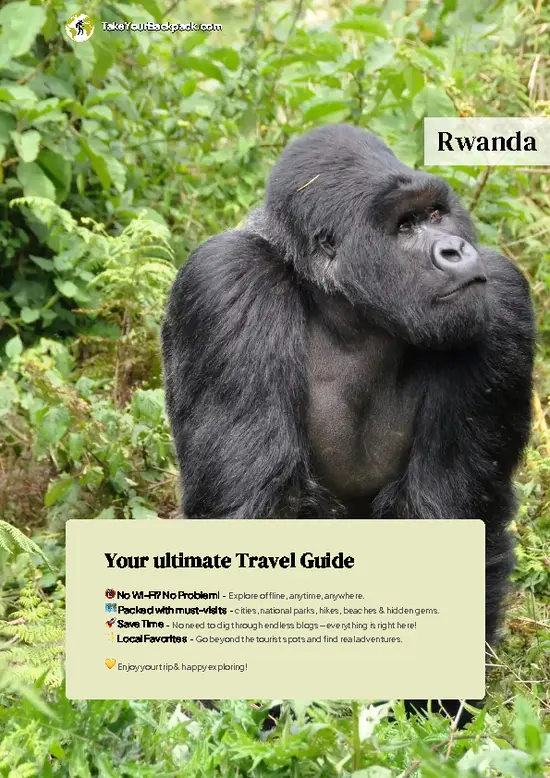
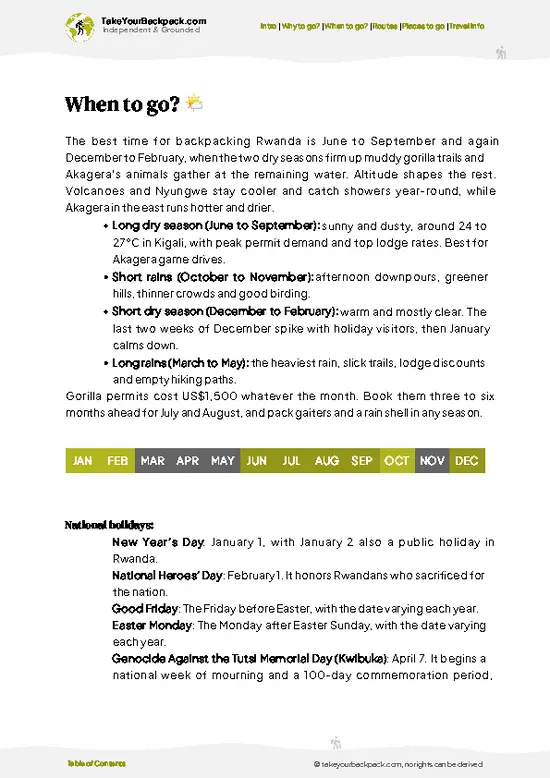
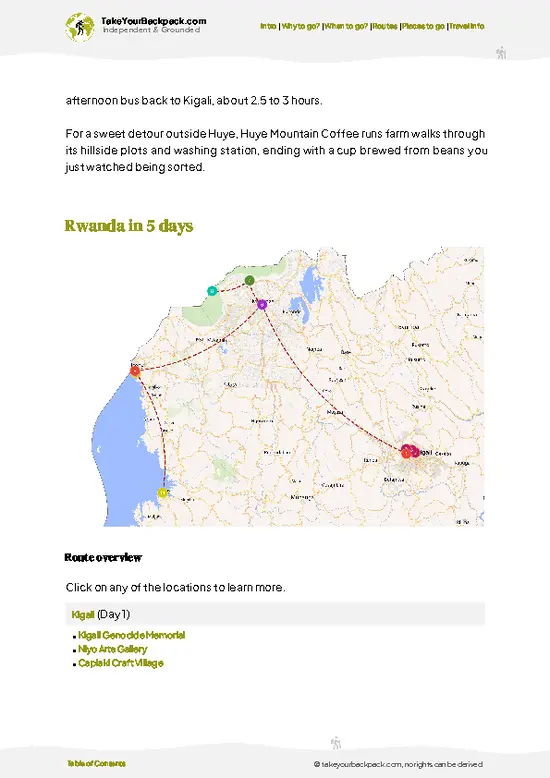
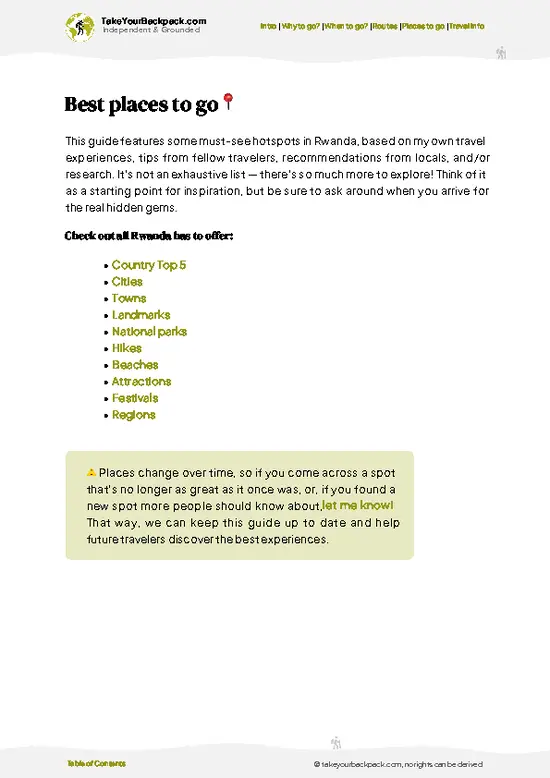
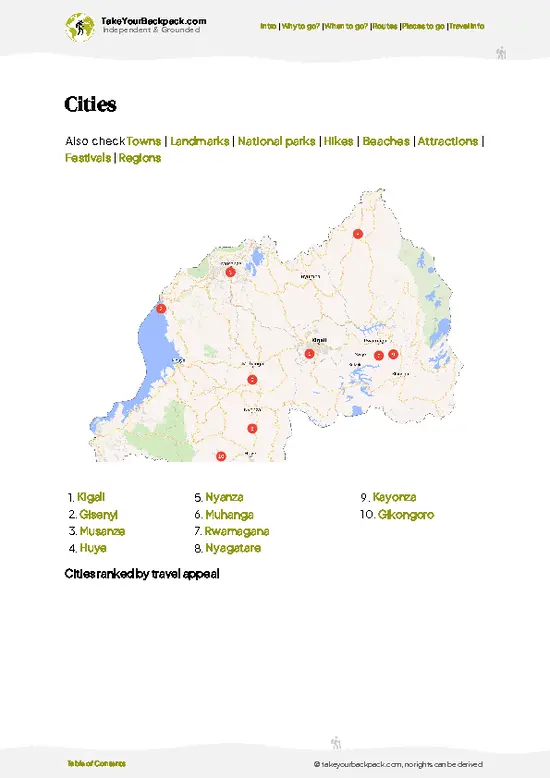
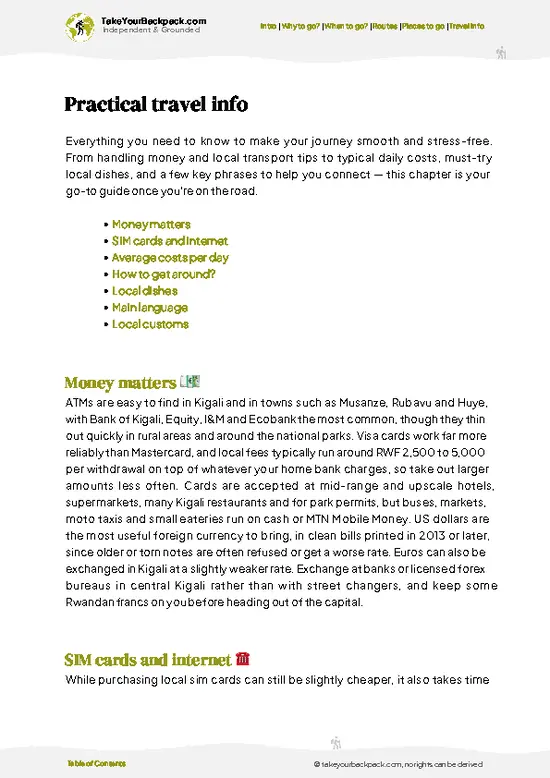
example page 0 from our offline Travel Guide for Rwanda
example page 1 from our offline Travel Guide for Rwanda
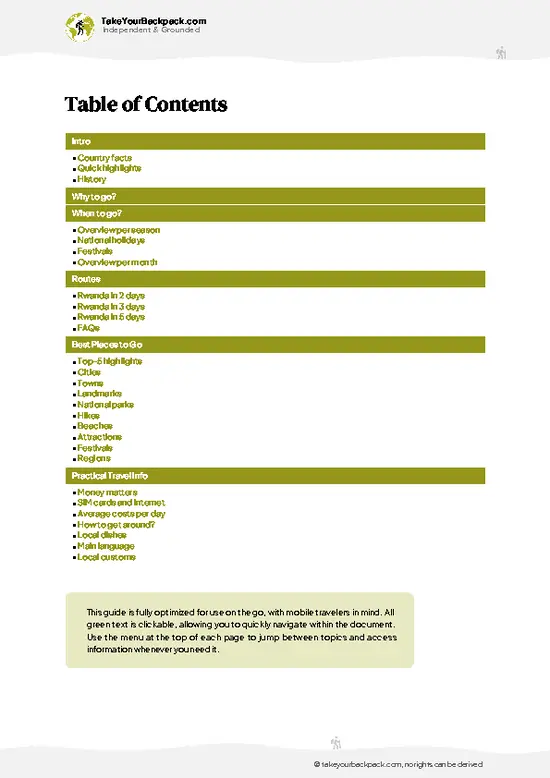
example page 2 from our offline Travel Guide for Rwanda
example page 3 from our offline Travel Guide for Rwanda
example page 4 from our offline Travel Guide for Rwanda
example page 5 from our offline Travel Guide for Rwanda
example page 6 from our offline Travel Guide for Rwanda
example page 7 from our offline Travel Guide for Rwanda
Loading the map 🌍
CLICK TO FILTER
cities
towns
landmarks
national parks
hikes
beaches
attractions
festivals
regions
SHOW COUNTRY’S BESTSHOW ALL

✨ Why go?
Ranked #17 city in Rwanda
What sets this place apart

Gikongoro works as a quiet pause on the southern route, not as a destination you plan days around. Most people come for the Murambi Genocide Memorial, which is hard, necessary history, and for the position between Huye and Nyungwe Forest, so you can break a long overland leg here. Guesthouses are simple, food is brochettes, beans and chips, and the town can be crossed on foot in minutes. Evenings are early and cold at this altitude. Come for a night or two with a purpose, and skip it if you need nightlife.

💡 HighlightsTop highlights of Gikongoro

  1. Murambi Genocide Memorial: A former technical school where thousands were killed in 1994, now a memorial with preserved remains and a guided tour. Go in the morning when you can be unhurried. Entry is about US$5 to 10 with a guide, and a visit takes 1.5 to 2 hours.
  2. Murambi memorial gardens and hilltop views: The grounds look over rolling hills toward the valley. Mornings are clearest. Free with your ticket, allow 20 to 30 minutes.
  3. Gikongoro town market: A working market with produce, secondhand clothes and cheap snacks. Go early morning, spend US$1 to 3 on fruit and snacks, and allow about an hour.
  4. Walks through the tea and banana hills: Dirt tracks leave the town edges into farming ridges where you will meet locals in the fields. Cool mornings are best. It costs nothing and takes 1 to 3 hours.
… read more 👉
  1. Murambi Genocide Memorial: A former technical school where thousands were killed in 1994, now a memorial with preserved remains and a guided tour. Go in the morning when you can be unhurried. Entry is about US$5 to 10 with a guide, and a visit takes 1.5 to 2 hours.
  2. Murambi memorial gardens and hilltop views: The grounds look over rolling hills toward the valley. Mornings are clearest. Free with your ticket, allow 20 to 30 minutes.
  3. Gikongoro town market: A working market with produce, secondhand clothes and cheap snacks. Go early morning, spend US$1 to 3 on fruit and snacks, and allow about an hour.
  4. Walks through the tea and banana hills: Dirt tracks leave the town edges into farming ridges where you will meet locals in the fields. Cool mornings are best. It costs nothing and takes 1 to 3 hours.
  5. Roadside brochette stops on the main road: Grilled goat and banana served at simple spots where buses stop. Evenings are lively. Expect US$2 to 4 and about 45 minutes.
Nyungwe Forest National Park, Huye’s Ethnographic Museum and the Kitabi tea estates are easy day trips from Gikongoro. The walks through the hills are free, and the market costs the least of the paid options.
Spotted a mistake or missing something? Contact us.

Things to do near Gikongoro

Ratings based on Tripadvisor reviews. When you book through this link, you support our work at no extra cost to you.

🏘️ NeighborhoodsWhere things are and how it's laid out

Gikongoro is the former name of the town now officially called Nyamagabe, and it is small enough to cover on foot or by short moto ride.
  • Town center and main road: A strip of shops, banks with ATMs, bus offices and simple eateries along the Huye to Rusizi road. Flat enough to walk end to end in about 20 minutes, and it is where you will buy supplies and catch minibuses. Evenings are quiet, with a few bars serving beer and brochettes.
  • Murambi: A hillside area a short moto ride from the center, home to the Murambi Genocide Memorial. The visit is sober and takes one to two hours. Going by moto costs little and saves a steep uphill walk, so it gives the best value for your energy.
  • Nyungwe edge (Uwinka and Gasumo side): Reached by road to the southwest, this is forest and tea country with almost no
… read more 👉
Gikongoro is the former name of the town now officially called Nyamagabe, and it is small enough to cover on foot or by short moto ride.
  • Town center and main road: A strip of shops, banks with ATMs, bus offices and simple eateries along the Huye to Rusizi road. Flat enough to walk end to end in about 20 minutes, and it is where you will buy supplies and catch minibuses. Evenings are quiet, with a few bars serving beer and brochettes.
  • Murambi: A hillside area a short moto ride from the center, home to the Murambi Genocide Memorial. The visit is sober and takes one to two hours. Going by moto costs little and saves a steep uphill walk, so it gives the best value for your energy.
  • Nyungwe edge (Uwinka and Gasumo side): Reached by road to the southwest, this is forest and tea country with almost no services. A day here costs more in transport than anything in town, but the forest walks justify it.

⌛️ 1 dayA smart one-day plan

8:00 AM, Gikongoro town market: Start here while the stalls are fresh and the air is cold, so you can eat fruit and grab a coffee before the day warms. Walk to the main road afterward.
9:30 AM, Murambi Genocide Memorial: Take a moto-taxi a short ride out and join the guided tour. It is heavy, so plan a quiet pause afterward in the gardens, where the hill views open up.
12:30 PM, Brochette lunch on the main road: Eat grilled meat with banana and chips at a simple roadside spot, and rest.
2:30 PM, Hill-track walk: Leave the town edge on a dirt path through banana groves and tea slopes. This is outside the usual route, and you will mostly share it with farmers heading home.
5:30 PM, Back in town: Finish with tea at a local café before the temperature drops.

🌤️ When to go?When to go for the best experience

Dry months from June to September suit Gikongoro best, since the hill roads and forest trails stay firm.
  • Long Dry Season (June to September): Days reach 22 to 26°C (72 to 79°F), nights near 10 to 12°C (50 to 54°F). Best trekking, though lodges around Nyungwe fill up.
  • Short Rains (October to December): Frequent afternoon showers, temperatures 13 to 23°C (55 to 73°F), fewer visitors.
  • Long Rains (March to May): Heaviest rain, slippery trails and some muddy roads. Prices are lowest.
  • January and February: A short drier spell with lighter crowds.
Book forest permits ahead if you travel in July or August.

source: climatestotravel.comJANJanuary: excellent for travelingFEBFebruary: excellent for travelingMARMarch: fair for travelingAPRApril: below average for travelingMAYMay: fair for travelingJUNJune: highly recommended for travelingJULJuly: excellent for travelingAUGAugust: excellent for travelingSEPSeptember: highly recommended for travelingOCTOctober: fair for travelingNOVNovember: fair for travelingDECDecember: excellent for traveling
when-to-go

✈️ The backpacker research shortcutRwanda Travel Guide

An offline-friendly backpacking guide with optimized travel routes, ranked highlights, transport advice, and the best areas to stay.
example page 0 from our offline Travel Guide for Rwanda
example page 1 from our offline Travel Guide for Rwanda
example page 2 from our offline Travel Guide for Rwanda
example page 3 from our offline Travel Guide for Rwanda
example page 4 from our offline Travel Guide for Rwanda
example page 5 from our offline Travel Guide for Rwanda
example page 6 from our offline Travel Guide for Rwanda
example page 7 from our offline Travel Guide for Rwanda
The digital guide (233 pages) contains:
✅ 57 highlights, ranked by travel appeal
✅ Optimized 2, 3 & 5-day travel routes
✅ Cities, national parks, landmarks, beaches
✅ How to get around
✅ Offline-friendly for travel without Wi-Fi
👉 Click to see all 30+ guide features

📅 Plan smarter in minutes, not weeks
✅ Month by month travel advice
✅ Festivals & national holidays
✅ Budget expectations

🗺️ Go to the right places, skip the overrated ones
✅ Honest pros & cons of destinations
✅ Top hikes, parks & viewpoints
✅ Lesser-known places most travelers miss
✅ Clear “worth it vs skip it” guidance

🛏️ Travel smoothly without rookie mistakes
✅ Best areas to stay
✅ Transport systems explained simply
✅ Common scams & safety advice
✅ SIM cards, money & practical tips

🌍 Understand the country, not just visit it
✅ Culture & traditions
✅ 52 Essential phrases & customs
✅ Festivals worth planning around
✅ Traveler-friendly historical context
✅ Insights that make places more meaningful

📱 Built for real travel conditions
✅ Fully downloadable PDF
✅ Works completely offline
✅ Optimized for phone use
✅ Useful in remote areas & buses
✅ Everything in one place
Stop searching, start planning
Get instant access to your full guide. 30‑day money-back guarantee.
+ Add another guide for just

By proceeding you agree to our terms.
Sent to your inbox immediately after payment • 100% Secure Checkout
Best Backpacking Travel Advisor 2025 tourism awardBest Backpacking
Travel Advisor
2025
What others say about Take Your Backpack Guides:
⭐⭐⭐⭐⭐
Fantastic, amazing amount of information!
⭐⭐⭐⭐⭐
My goodness this is amazing, it's what I've been looking for hats off too you!
⭐⭐⭐⭐⭐
I think this is absolutely BRILLIANT
⭐⭐⭐⭐
Very complete and informative. It's still missing places, but I gotta to commend you
⭐⭐⭐⭐⭐
This is truly amazing, thank you, can't wait to explore it with my kids!
⭐⭐⭐⭐⭐
Awesome resource, thank you!
⭐⭐⭐⭐⭐
This is amazing! Can't wait to explore the ones I haven't seen
⭐⭐⭐⭐
I love this! Well done, great idea.
⭐⭐⭐⭐⭐
Thanks for taking the time to make this gem!
⭐⭐⭐⭐⭐
This might be the best website I've ever seen.
⭐⭐⭐⭐⭐
Congratulations, and thank you so much for your work; it's incredibly valuable.
⭐⭐⭐⭐
In all seriousness I think you did a great job pointing out the important spots
⭐⭐⭐⭐⭐
10/10 very good
⭐⭐⭐⭐⭐
As someone who's only just starting to visit regularly this is awesome, thank you.
⭐⭐⭐⭐
Thank you very much! I'm going to visit my dad, it's going to be very useful!
⭐⭐⭐⭐⭐
This is really cool! We'll be travelling for the first time and this definitely come in handy.
⭐⭐⭐⭐⭐
You are now our minister of culture, congratulations 👨‍💼
⭐⭐⭐⭐⭐
Just wanted to tell you that this is a pearl! Going to follow your recommendations.
⭐⭐⭐⭐⭐
This is so cool. I'll definitely be using the resource for my travels soon.
⭐⭐⭐⭐⭐
This is very impressive! Good work.
⭐⭐⭐⭐⭐
This is an amazing and informative site. Very well done!

🛏️ Where to stay?Best areas and accommodation options

The town center along the main road is the best bet for a budget bed in Gikongoro, with a handful of guesthouses at roughly US$10 to 25 a night and no true hostel scene. You are close to the bus stops, shops and ATMs, and streets are calm and mostly dark after 9 pm, so walking back from dinner is fine but not lively. The alternative is the Nyungwe forest edge, where lodging is scarcer and pricier, though it saves an early transfer if you plan a trek at dawn. For most backpackers, the center is simpler and cheaper.

🚌 Getting aroundHow to get from A to B

A moto-taxi ride within Gikongoro costs about US$0.50 to 1.50, and you pay in cash Rwandan francs at the end, so agree the fare first. Most backpackers pair a short moto hop with a minibus for longer legs, and the center is small enough to walk.
  • Walking: Free and fine for the main road, but Murambi and the outer hills are steep and slow. Use it in the center only.
  • Moto-taxi: Cheapest per minute saved. A helmet is provided by law, comfort is basic and rides to Murambi take 10 to 15 minutes. Best value for hilly outskirts.
  • Minibus and coach: Buses run to Huye (about 1 hour, US$1.50 to 2.50), Kigali (3 to 4 hours, US$4 to 6) and Rusizi/Kamembe via Nyungwe (about 3 hours, US$4 to 6). Services leave mainly in the morning to mid-afternoon, and are cramped but the most economical option for distance.
… read more 👉
A moto-taxi ride within Gikongoro costs about US$0.50 to 1.50, and you pay in cash Rwandan francs at the end, so agree the fare first. Most backpackers pair a short moto hop with a minibus for longer legs, and the center is small enough to walk.
  • Walking: Free and fine for the main road, but Murambi and the outer hills are steep and slow. Use it in the center only.
  • Moto-taxi: Cheapest per minute saved. A helmet is provided by law, comfort is basic and rides to Murambi take 10 to 15 minutes. Best value for hilly outskirts.
  • Minibus and coach: Buses run to Huye (about 1 hour, US$1.50 to 2.50), Kigali (3 to 4 hours, US$4 to 6) and Rusizi/Kamembe via Nyungwe (about 3 hours, US$4 to 6). Services leave mainly in the morning to mid-afternoon, and are cramped but the most economical option for distance.
  • Private moto or car hire: Pricey, roughly US$20 to 40 for a half-day by moto, more by car. Worth it only for Nyungwe trailheads where public transport is thin.

👛 Costs (as of 22 October 2026)Typical daily expenses

Gikongoro suits a backpacker budget of about US$32 to 38 a day, with the biggest swing coming from forest activities.
CategoryBudget RangeLocal Reality
Dorm accommodation (high season)US$10 to 15Mostly basic private rooms in guesthouses, no real dorms
Dorm accommodation (off-season)US$8 to 12Rooms are easy to find without booking
MealsUS$5 to 8Canteen plates, tea and brochettes
Local transportUS$2 to 4Moto hops and minibus rides
City transport passNot availablePay per ride in cash
Basic activities/entry feesUS$5 to 8Murambi memorial; Nyungwe walks cost more
MiscellaneousUS$2 to 4Water, SIM data, snacks
Total Daily BudgetUS$32 to 38Before permits and treks
Share moto rides and buy fruit at the market to trim costs.
⚠️ Prices can change and everyone travels differently, so take this as a rough guide. Hope it helps you plan your adventure!

🚌 Day tripsBest day trips from Gikongoro

Gikongoro is a practical base for one-day outings, mainly toward forest and memorial sites reached by public transport and moto.Nyungwe Forest National Park: Canopy walk and chimpanzee or colobus treks start from Uwinka and Gisakura, about 1 to 1.5 hours by minibus or moto. Trails and the canopy walk cost roughly US$60 to 70 for the walk, with chimp permits far higher. Go June to September, and start early because tours leave in the morning.
👉 Explore Nyungwe Forest National ParkMurambi Genocide Memorial: Just outside town, this former technical school holds preserved remains and an exhibit. Allow two hours and a moto round trip of US$2 to 4, plus a small entry fee. Visitors often arrive too late in the day, so go in the morning.
Huye (Butare): About one hour by minibus, Huye has the National … read more 👉
Gikongoro is a practical base for one-day outings, mainly toward forest and memorial sites reached by public transport and moto.Nyungwe Forest National Park: Canopy walk and chimpanzee or colobus treks start from Uwinka and Gisakura, about 1 to 1.5 hours by minibus or moto. Trails and the canopy walk cost roughly US$60 to 70 for the walk, with chimp permits far higher. Go June to September, and start early because tours leave in the morning.
👉 Explore Nyungwe Forest National ParkMurambi Genocide Memorial: Just outside town, this former technical school holds preserved remains and an exhibit. Allow two hours and a moto round trip of US$2 to 4, plus a small entry fee. Visitors often arrive too late in the day, so go in the morning.
Huye (Butare): About one hour by minibus, Huye has the National Museum of Rwanda and an arboretum. Budget US$10 to 15 including transport and entry. Easy in any season.
👉 Explore Huye

🍲 FoodEating & Drinking in Gikongoro

Gikongoro sits in tea and highland farming country, so expect fresh milk and tea served hot and sweet, often with mandazi doughnuts in the morning. Look for ibirayi (potatoes) and isombe, cassava leaves cooked down with eggplant, which taste earthier than elsewhere. Near the forest, honey from local cooperatives is sold in jars.
Most backpackers eat at simple canteen-style buffets along the main road, where a plate of beans, rice, plantain and a bit of meat runs about US$1.50 to 3. Evenings mean brochettes of goat or beef and a cold local beer, about US$1 to 1.50, at small bars in the center.

🛡️ SafetyStaying Safe: What Travelers Should Know

Gikongoro is calm and low-crime. Street crime is rare, and the main annoyances are moto drivers who quote tourist prices, so agree the fare before you climb on. Walk the center after dark if you wish, but keep to lit roads, as the hill paths have no lighting. Solo travelers, including women, report few problems. Carry a rain layer and water if you head into the forest, and stay on marked trails, because mist can arrive quickly. Keep passport copies on you.

FAQCommon questions from travelers

Two days is enough for Gikongoro if you add one day for Nyungwe Forest and one for Murambi Genocide Memorial. Add a third day if you want a chimpanzee trek or the long Nyungwe trails. Huye is about 1 hour away by minibus for a side trip.
Yes, Gikongoro is safe for solo backpackers, with low street crime and a calm center. Moto fares should be agreed before riding, usually US$0.50 to 1.50 in town. Avoid unlit hill paths after dark and keep to marked forest trails.
Gikongoro is known for the Murambi Genocide Memorial and as the gateway to Nyungwe Forest National Park, about 1 to 1.5 hours away. The area also has tea plantations and cool highland weather. Visitors typically spend US$30 to 40 a day on a modest budget.
⚠️ Things can change over time, so always validate details locally before you go.

Other Rwandan cities near Gikongoro

Explore more nearby:

  • Huye—Ethnographic museum, arboretum, coffee hills, student town| 21 km away
  • Nyanza—Royal palace, Inyambo cattle, Rwesero art, former capital| 25 km away
  • Karongi—lakefront promenade, boat docks, market stalls| 38 km away

💡 Not sure where to go next?
Create a personalized itinerary for Rwanda including Gikongoro and the places that fit your trip.

Generate my itinerary

👉 Discover all cities

Or checkout all Rwanda has to offer (think cities, towns, villages, national parks, hikes, beaches, festivals)
Country photo of Rwanda

We 💚 feedbackSumming up the experience

Gikongoro is best in the early morning, when mist sits in the valleys and Murambi is quiet enough to take in properly. I would book the visit for then, carry a warm layer, and leave the afternoon for walking.

✍️ Help improve this page!
The information on this page is based on in-depth research, insights shared by experienced travelers, and feedback from the local travel community in Rwanda. While every effort is made to keep the information accurate and current, conditions can change — so if you spot anything incorrect or outdated, please get in touch.


🙋‍♂️ Give feedback

👋 Meet the founderWho’s Behind Take Your Backpack?

Johan, backpacker and founder of TakeYourBackpackHi, I’m Johan (Netherlands 🇳🇱), the creator of TakeYourBackpack. Over the past 3 decades, I’ve backpacked through 90+ countries across six continents, gaining extensive experience with independent travel, long-term trips, and overland routes.

This site is built on a combination of firsthand travel experience and carefully curated insights from other backpackers. Many guides are based on places I’ve personally visited, while others bring together tips, observations, and practical advice shared by trusted travelers I’ve met along the way.

The goal is to provide realistic, experience-driven guidance — not generic itineraries — so you can explore destinations with better context, clearer expectations, and more confidence.