×

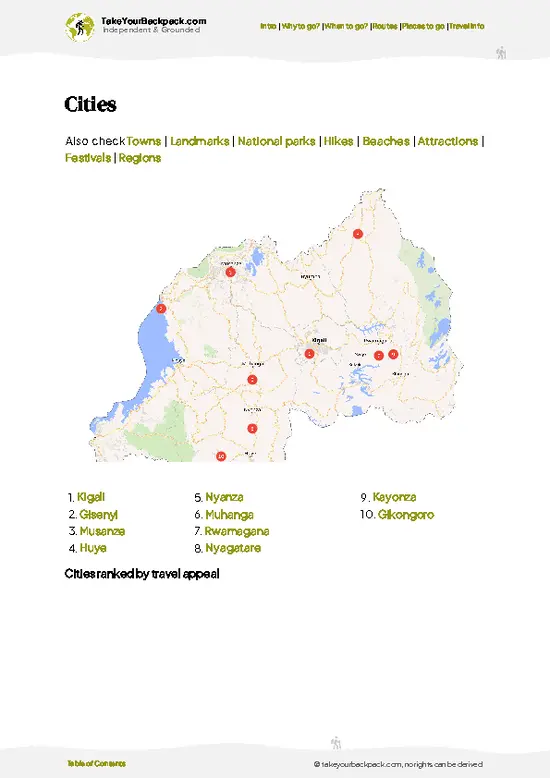
Rwanda🇷🇼 | citiesMuhangatransport hub, roadside eateries, clay pottery | things to do and best time to go

Explore NyagatareExplore Bugesera

Backpacking in Muhanga
🌟 Highlightcity ranked #9
By Johan Kruseman 🇳🇱 | Updated September 3, 2026

If you crave neon nightlife, glossy museums, or a city that never sleeps, Muhanga will feel too quiet, too workaday. But that’s exactly why it works for backpackers who want Rwanda without the filter. Muhanga sits southwest of Kigali, a couple of hours by bus, and feels like a crossroads where the country exhales—dusty, sun-warmed, with the scent of grilled maize and red earth in the air. The town itself is practical, not pretty, but it’s a launchpad: you’re close to the rolling hills of Gitarama, easy day trips to Lake Kivu, and the rural heartland that most travelers skip. Buses are frequent, the center is walkable, and you’ll find simple guesthouses and a handful of local cafés where travelers swap tips over Fanta. It’s cheaper and more relaxed than Huye or Kigali, with fewer touts and more genuine smiles. You won’t find a party scene, but you will find space to breathe, plan, and connect with Rwanda’s everyday rhythm.

Discover everything you want to know in the 📖 Rwanda Travel Guide.


Get your Rwanda guide
61 ranked highlights, routes & tips, works offline (246 pages)
Loading the map 🌍
CLICK TO FILTER
cities
towns
landmarks
national parks
hikes
beaches
attractions
festivals
SHOW COUNTRY’S BESTSHOW ALL

✨ Why go?
Ranked #9 city in Rwanda
What makes it a must-see city

Muhanga serves as a gateway for backpackers exploring Rwanda’s stunning landscapes. Nestled between hiking trails and cultural sites, it’s a practical stop for those heading to the Nyungwe Forest or the Volcanoes National Park. The town’s walkable streets are lined with small-scale hostels and guesthouses, offering a cozy atmosphere that encourages interaction among travelers. You’ll find local eateries where the aroma of ugali and samosas fills the air, making it easy to dive into authentic Rwandan cuisine.

Most backpackers stay for a few days, soaking in the friendly social vibe while planning their next adventure. It’s not a party hub; instead, it attracts slow travelers, hikers, and solo adventurers looking for a genuine experience. The pace is relaxed, allowing you to connect with fellow … read more 👉
Muhanga serves as a gateway for backpackers exploring Rwanda’s stunning landscapes. Nestled between hiking trails and cultural sites, it’s a practical stop for those heading to the Nyungwe Forest or the Volcanoes National Park. The town’s walkable streets are lined with small-scale hostels and guesthouses, offering a cozy atmosphere that encourages interaction among travelers. You’ll find local eateries where the aroma of ugali and samosas fills the air, making it easy to dive into authentic Rwandan cuisine.

Most backpackers stay for a few days, soaking in the friendly social vibe while planning their next adventure. It’s not a party hub; instead, it attracts slow travelers, hikers, and solo adventurers looking for a genuine experience. The pace is relaxed, allowing you to connect with fellow explorers or simply enjoy a quiet moment in the town square. If you’re seeking a balance of culture and nature, Muhanga is more than just a stopover; it’s a place to recharge before diving deeper into Rwanda’s beauty.
Want to include Muhanga in your Rwanda route?
Create a personalized Rwanda itinerary that includes Muhanga and the places that fit your trip — based on your travel style, budget, and available time. Get your route in seconds.

Generate my trip

💡 HighlightsWhat this place is best known for

  • Gitarama (Muhanga) Genocide Memorial — A solemn, powerful site where mass graves, preserved evidence and survivor testimonies explain the 1994 events; the memorial’s exhibits and grounds make the history tangible and are essential for understanding Rwanda’s recent past.
  • Muhanga Central Market (Gitarama Market) — The town’s busiest marketplace: colorful produce, spices, stools of small vendors, second-hand clothing (kitenge and “mitumba”), and street food; a hands-on place to meet locals, buy affordable crafts and feel the rhythm of everyday life.
  • Muhanga Town Centre & Bus Park — The transport and commercial hub where minibus life, roadside cafés and small shops converge; visiting the bus park is the quickest way to absorb local commerce, see regional travel patterns, and jump onto day-trip
read more 👉
  • Gitarama (Muhanga) Genocide Memorial — A solemn, powerful site where mass graves, preserved evidence and survivor testimonies explain the 1994 events; the memorial’s exhibits and grounds make the history tangible and are essential for understanding Rwanda’s recent past.
  • Muhanga Central Market (Gitarama Market) — The town’s busiest marketplace: colorful produce, spices, stools of small vendors, second-hand clothing (kitenge and “mitumba”), and street food; a hands-on place to meet locals, buy affordable crafts and feel the rhythm of everyday life.
  • Muhanga Town Centre & Bus Park — The transport and commercial hub where minibus life, roadside cafés and small shops converge; visiting the bus park is the quickest way to absorb local commerce, see regional travel patterns, and jump onto day-trip routes out of town.
Nearby day trips worth doing from Muhanga: the King’s Palace and Rwesero Art Museum in Nyanza, the Ethnographic Museum in Huye (Butare), and the Kibeho Marian Shrine.
Spotted a mistake or missing something? Contact us.

Things to do near Muhanga

Ratings based on Tripadvisor reviews. When you book through this link, you support our work at no extra cost to you.

🏘️ NeighborhoodsHow different areas shape the experience

Muhanga is a vibrant hub in Rwanda, offering a mix of local culture and accessibility for backpackers. Here’s how to navigate its neighborhoods:

City Center: This is the heartbeat of Muhanga. You’ll find bustling markets, local eateries, and shops. The vibe is energetic, perfect for those who thrive on activity. It’s walkable, making it easy to explore on foot. Costs are moderate; you can grab a meal for a few dollars. Nightlife is low-key, with a few bars where locals gather. Ideal for short stays, as you can soak up the local atmosphere quickly.

Nyamabuye: A quieter area, Nyamabuye is great for those seeking a more relaxed experience. It’s slightly further from the center, but the walk is pleasant, with views of rolling hills. Accommodations here are affordable, often with a homely feel. … read more 👉
Muhanga is a vibrant hub in Rwanda, offering a mix of local culture and accessibility for backpackers. Here’s how to navigate its neighborhoods:

City Center: This is the heartbeat of Muhanga. You’ll find bustling markets, local eateries, and shops. The vibe is energetic, perfect for those who thrive on activity. It’s walkable, making it easy to explore on foot. Costs are moderate; you can grab a meal for a few dollars. Nightlife is low-key, with a few bars where locals gather. Ideal for short stays, as you can soak up the local atmosphere quickly.

Nyamabuye: A quieter area, Nyamabuye is great for those seeking a more relaxed experience. It’s slightly further from the center, but the walk is pleasant, with views of rolling hills. Accommodations here are affordable, often with a homely feel. This neighborhood is perfect for longer stays, allowing you to immerse yourself in the local community. Transport options are available, but expect a bit of a wait.

Shyogwe: Known for its lush surroundings, Shyogwe is a nature lover’s dream. It’s less developed, which means fewer tourists and a more authentic experience. Costs can vary, but you’ll find some budget-friendly guesthouses. Walkability is limited, so consider renting a bike. It’s best for longer stays, as you’ll want time to explore the nearby hills and engage with local life.

⌛️ 1 dayHow to make the most of one day

Muhanga, a vibrant town in Rwanda, pulses with life and culture, offering a glimpse into the heart of Rwandan community spirit. The air is often filled with the scent of fresh matoke cooking and the sounds of laughter echoing from bustling markets. This is a place where you can experience authentic local life, away from the typical tourist trails.

Start your morning at the local market, where the colors of fruits and vegetables pop against the backdrop of the town’s earthy tones. Engage with vendors selling everything from ripe avocados to handmade crafts. Grab a fresh passion fruit juice to sip as you wander. This isn’t just shopping; it’s a chance to connect with the locals and understand their daily rhythms.

As the sun climbs higher, head to the nearby Nyabarongo River. The gentle flow … read more 👉
Muhanga, a vibrant town in Rwanda, pulses with life and culture, offering a glimpse into the heart of Rwandan community spirit. The air is often filled with the scent of fresh matoke cooking and the sounds of laughter echoing from bustling markets. This is a place where you can experience authentic local life, away from the typical tourist trails.

Start your morning at the local market, where the colors of fruits and vegetables pop against the backdrop of the town’s earthy tones. Engage with vendors selling everything from ripe avocados to handmade crafts. Grab a fresh passion fruit juice to sip as you wander. This isn’t just shopping; it’s a chance to connect with the locals and understand their daily rhythms.

As the sun climbs higher, head to the nearby Nyabarongo River. The gentle flow of water and the chirping of birds create a serene atmosphere. You can take a short walk along the riverbank, where you might spot fishermen casting their nets or children playing nearby. This peaceful setting is a perfect contrast to the market’s hustle and bustle.

In the afternoon, visit the historic Rukara Church, a site that tells stories of resilience and community. The architecture is simple yet striking, and the surrounding gardens invite you to sit and reflect. This is a spot often overlooked by tourists, but it offers a profound sense of place and history.

As evening falls, make your way to a local eatery like “Café de la Paix.” The aroma of grilled meats fills the air, and the atmosphere buzzes with chatter. Enjoy a plate of brochettes paired with a local beer, soaking in the warmth of the community around you.

In Muhanga, every moment is a chance to dive deeper into Rwandan culture, making your day not just a visit, but a meaningful experience.
Turn your Muhanga visit into an Rwanda adventure
Build a complete Rwanda route with Muhanga, hidden gems, must-see destinations, and realistic travel times included.

Generate my trip

🌤️ When to go?Seasonal considerations and timing


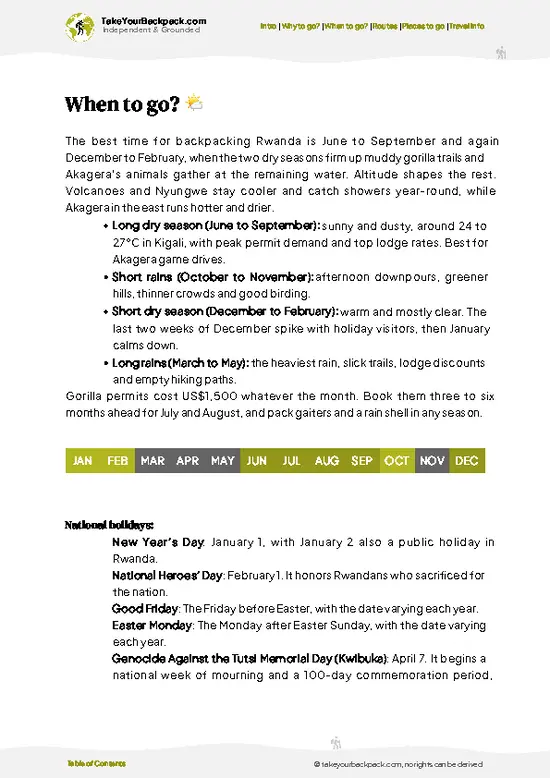
  • Topic: Weather – Muhanga’s dry seasons, from June to September and December to February, offer clearer skies and less mud, making trails easier and the air feel crisp rather than heavy with humidity.

  • Topic: Temperature – Expect daytime highs around 22-26°C (72-79°F) during dry months, which is comfortable for hiking without overheating; nights dip to 12-15°C (54-59°F), so pack a light jacket.

  • Topic: Daylight Hours – Near the equator, Muhanga enjoys roughly 12 hours of daylight year-round, but the sun rises and sets sharply, so plan your hikes to start early and finish before dusk to avoid sudden darkness.

  • Topic: Crowds – Tourist flow peaks during dry seasons, especially July and August, so expect more fellow backpackers and slightly higher prices; the shoulder months offer quieter
read more 👉

  • Topic: Weather – Muhanga’s dry seasons, from June to September and December to February, offer clearer skies and less mud, making trails easier and the air feel crisp rather than heavy with humidity.

  • Topic: Temperature – Expect daytime highs around 22-26°C (72-79°F) during dry months, which is comfortable for hiking without overheating; nights dip to 12-15°C (54-59°F), so pack a light jacket.

  • Topic: Daylight Hours – Near the equator, Muhanga enjoys roughly 12 hours of daylight year-round, but the sun rises and sets sharply, so plan your hikes to start early and finish before dusk to avoid sudden darkness.

  • Topic: Crowds – Tourist flow peaks during dry seasons, especially July and August, so expect more fellow backpackers and slightly higher prices; the shoulder months offer quieter trails and a more local vibe.

  • Topic: Seasonal Activities – Dry months are prime for exploring nearby national parks and cultural sites without the interruption of rain, while the wet season brings lush greenery but can limit access to some trails.

  • Topic: Price Fluctuations – Accommodation and transport costs rise during dry season due to demand; visiting just before or after these months can save money without sacrificing too much on weather quality.


Pro-tip: Aim for late June or early September to catch dry trails, manageable crowds, and better rates—this sweet spot turns the challenge of travel into a smooth, rewarding rhythm.


source: climatestotravel.comJANJanuary: highly recommended for travelingFEBFebruary: highly recommended for travelingMARMarch: fair for travelingAPRApril: fair for travelingMAYMay: good for travelingJUNJune: highly recommended for travelingJULJuly: excellent for travelingAUGAugust: excellent for travelingSEPSeptember: highly recommended for travelingOCTOctober: good for travelingNOVNovember: fair for travelingDECDecember: highly recommended for traveling
when-to-go

✈️ The backpacker research shortcutRwanda Travel Guide

An offline-friendly backpacking guide with optimized travel routes, ranked highlights, transport advice, and the best areas to stay.
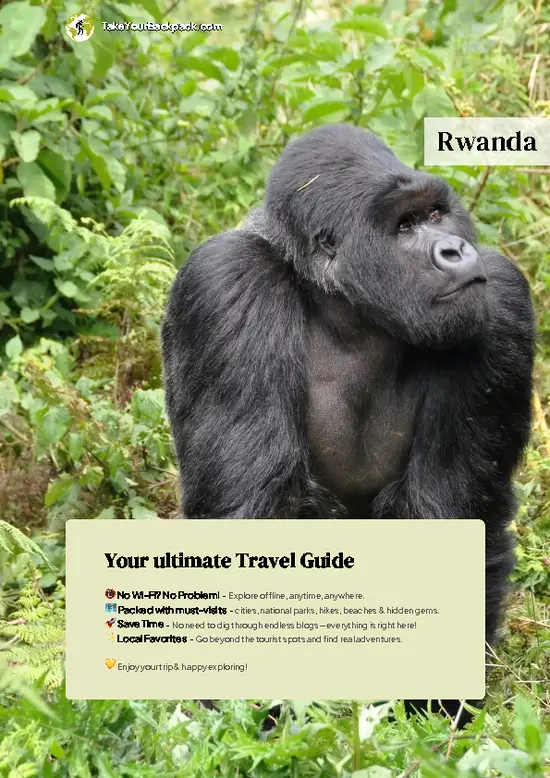
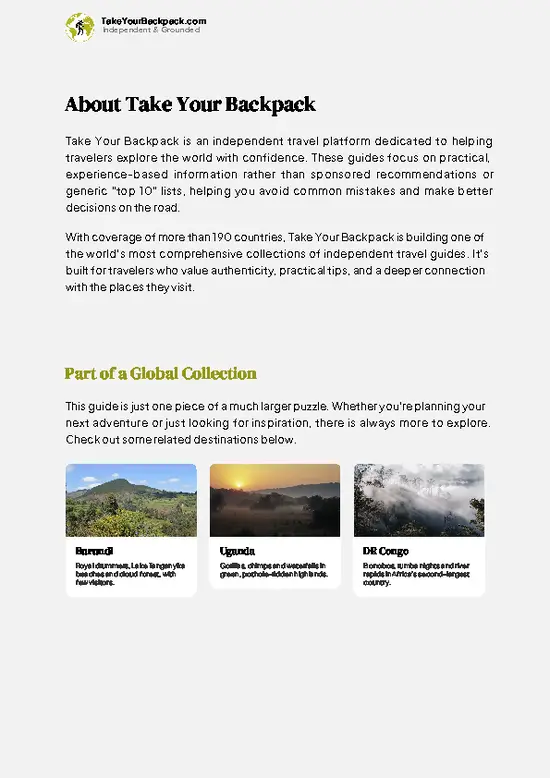
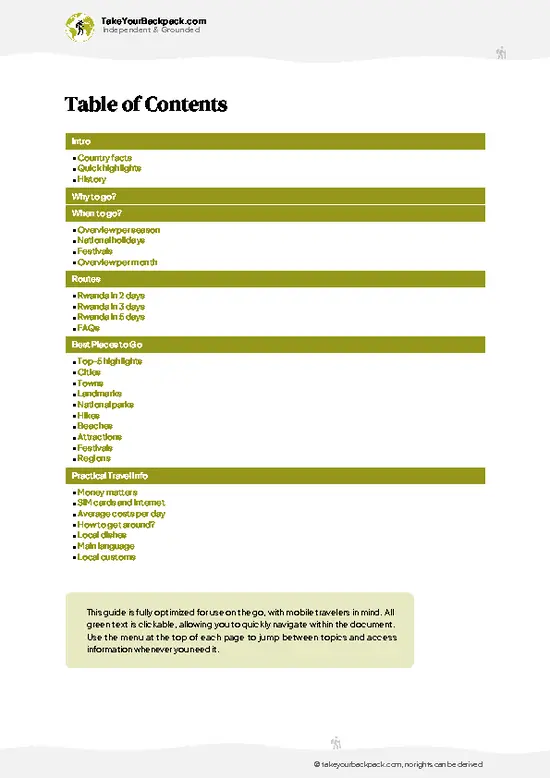
example page 0 from our offline Travel Guide for Rwanda
example page 1 from our offline Travel Guide for Rwanda
example page 2 from our offline Travel Guide for Rwanda
example page 3 from our offline Travel Guide for Rwanda
example page 4 from our offline Travel Guide for Rwanda
example page 5 from our offline Travel Guide for Rwanda
example page 6 from our offline Travel Guide for Rwanda
example page 7 from our offline Travel Guide for Rwanda
The digital guide (246 pages) contains:
61 highlights, ranked by travel appeal
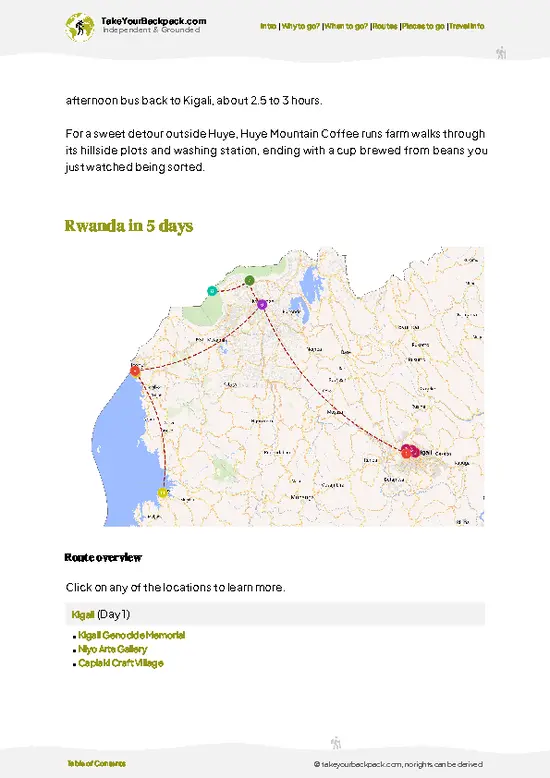
Optimized 2, 3 & 5-day travel routes
Cities, national parks, landmarks, beaches
How to get around
Offline-friendly for travel without Wi-Fi
👉 Click to see all 30+ guide features

📅 Plan smarter in minutes, not weeks
Month by month travel advice
Festivals & national holidays
Budget expectations

🗺️ Go to the right places, skip the overrated ones
Honest pros & cons of destinations
Top hikes, parks & viewpoints
Lesser-known places most travelers miss
Clear “worth it vs skip it” guidance

🛏️ Travel smoothly without rookie mistakes
Best areas to stay
Transport systems explained simply
Common scams & safety advice
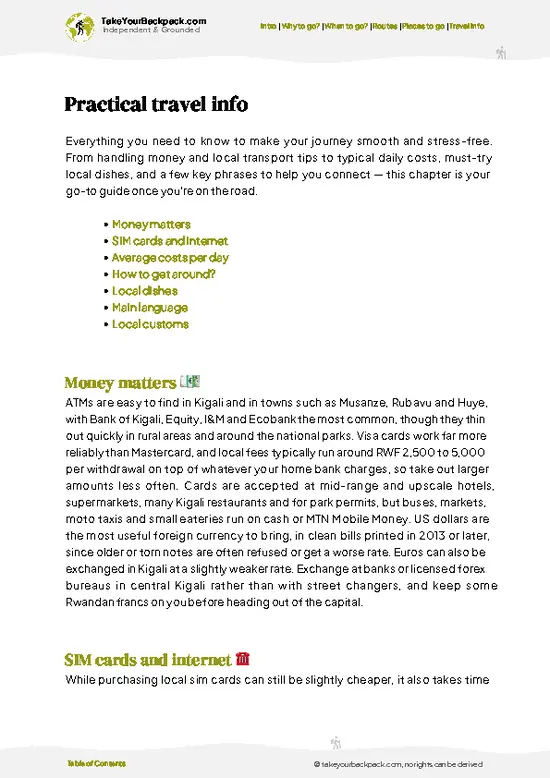
SIM cards, money & practical tips

🌍 Understand the country, not just visit it
Culture & traditions
52 Essential phrases & customs
Festivals worth planning around
Traveler-friendly historical context
Insights that make places more meaningful

📱 Built for real travel conditions
Fully downloadable PDF
Works completely offline
Optimized for phone use
Useful in remote areas & buses
Everything in one place
Save weeks of stressful planning
Get instant access to your full guide. 30‑day money-back guarantee.
+ Add another guide for just €6.50

By proceeding you agree to our terms.
Sent to your inbox immediately after payment • 100% Secure Checkout
Best Backpacking Travel Advisor 2025 tourism awardBest Backpacking
Travel Advisor
2025
What others say about Take Your Backpack Guides:
⭐⭐⭐⭐⭐
Fantastic, amazing amount of information!
⭐⭐⭐⭐⭐
My goodness this is amazing, it's what I've been looking for hats off too you!
⭐⭐⭐⭐⭐
I think this is absolutely BRILLIANT
⭐⭐⭐⭐
Very complete and informative. It's still missing places, but I gotta to commend you
⭐⭐⭐⭐⭐
This is truly amazing, thank you, can't wait to explore it with my kids!
⭐⭐⭐⭐⭐
Awesome resource, thank you!
⭐⭐⭐⭐⭐
This is amazing! Can't wait to explore the ones I haven't seen
⭐⭐⭐⭐
I love this! Well done, great idea.
⭐⭐⭐⭐⭐
Thanks for taking the time to make this gem!
⭐⭐⭐⭐⭐
This might be the best website I've ever seen.
⭐⭐⭐⭐⭐
Congratulations, and thank you so much for your work; it's incredibly valuable.
⭐⭐⭐⭐
In all seriousness I think you did a great job pointing out the important spots
⭐⭐⭐⭐⭐
10/10 very good
⭐⭐⭐⭐⭐
As someone who's only just starting to visit regularly this is awesome, thank you.
⭐⭐⭐⭐
Thank you very much! I'm going to visit my dad, it's going to be very useful!
⭐⭐⭐⭐⭐
This is really cool! We'll be travelling for the first time and this definitely come in handy.
⭐⭐⭐⭐⭐
You are now our minister of culture, congratulations 👨‍💼
⭐⭐⭐⭐⭐
Just wanted to tell you that this is a pearl! Going to follow your recommendations.
⭐⭐⭐⭐⭐
This is so cool. I'll definitely be using the resource for my travels soon.
⭐⭐⭐⭐⭐
This is very impressive! Good work.
⭐⭐⭐⭐⭐
This is an amazing and informative site. Very well done!

🛏️ Where to stay?How to pick the right area

Muhanga’s heart for backpackers beats strongest in the central district around the main market and the nearby bus station area. This zone hums with life from dawn till dusk—the scent of fresh produce mingling with the earthy aroma of wet soil after a rain. It’s where you’ll find the most budget-friendly hostels, often run by locals who double as informal guides. Staying here means you’re plugged into the pulse of daily Rwandan life, with easy access to shared taxis and minibuses that thread through the region.

Compared to quieter, more residential neighborhoods on the outskirts, this central … read more 👉
Muhanga’s heart for backpackers beats strongest in the central district around the main market and the nearby bus station area. This zone hums with life from dawn till dusk—the scent of fresh produce mingling with the earthy aroma of wet soil after a rain. It’s where you’ll find the most budget-friendly hostels, often run by locals who double as informal guides. Staying here means you’re plugged into the pulse of daily Rwandan life, with easy access to shared taxis and minibuses that thread through the region.

Compared to quieter, more residential neighborhoods on the outskirts, this central hub offers a social atmosphere that’s hard to beat. You’ll bump into fellow travelers swapping stories over roadside tea stalls or join impromptu soccer games in the dusty open spaces. Safety here is solid, thanks to the steady flow of people and local vigilance, but it’s wise to keep your wits about you after dark.

If you want to skip the sterile hotel vibe and dive into authentic, on-the-ground experiences, this is your base. It’s not polished, but it’s real—and that’s the kind of energy that turns a trip into a story worth telling.

🚌 Getting aroundHow to get around Muhanga

Muhanga moves at a rhythm that’s part deliberate, part improvisational. The sun slants through dusty streets where motorbikes buzz like persistent flies, and the air carries a mix of earth, exhaust, and fresh produce from the market stalls. It’s not a place where you’ll find strict timetables or polished transit hubs. Instead, you navigate by feel—watching the flow of people, catching the right moment to hop on a moto, or deciding to stretch your legs and take in the town’s pulse on foot. This is a town where patience and a keen eye pay off, turning what might seem chaotic into a dance you quickly learn to lead.


  • Walking: Muhanga’s compact center is best explored on foot. Streets are uneven but manageable, and walking lets you soak in the scent of roasting maize and the chatter of vendors.
read more 👉
Muhanga moves at a rhythm that’s part deliberate, part improvisational. The sun slants through dusty streets where motorbikes buzz like persistent flies, and the air carries a mix of earth, exhaust, and fresh produce from the market stalls. It’s not a place where you’ll find strict timetables or polished transit hubs. Instead, you navigate by feel—watching the flow of people, catching the right moment to hop on a moto, or deciding to stretch your legs and take in the town’s pulse on foot. This is a town where patience and a keen eye pay off, turning what might seem chaotic into a dance you quickly learn to lead.


  • Walking: Muhanga’s compact center is best explored on foot. Streets are uneven but manageable, and walking lets you soak in the scent of roasting maize and the chatter of vendors. It’s free, flexible, and perfect for short hops between markets, cafes, and local shops.


  • Moto-Taxis (Motorcycle Taxis): The backbone of local transit, motos dart through traffic with nimble urgency. Expect to pay around 200-500 RWF for short rides within town. They run from dawn until late evening, but negotiate fares upfront—there’s no meter, just street smarts. This is your fastest option, slicing through narrow alleys and crowded streets.


  • Buses (Minibuses): For trips beyond the town center, minibuses offer a budget-friendly choice. They leave when full, so timing is flexible but unpredictable. Fares hover around 300-700 RWF depending on distance. The ride is bumpy and slow, but it’s a window into local life, packed with chatter and the occasional impromptu stop.


  • Bicycle Rentals: If you want to cover more ground without breaking the bank, renting a bicycle is a solid option. Rentals cost about 1,000-2,000 RWF per day. The roads can be rough, so a sturdy bike is essential. This gives you freedom to explore outskirts and nearby villages at your own pace, with the wind and sun as your companions.

👛 Costs (as of 3 September 2026)Typical daily expenses

Backpacking in Muhanga, Rwanda, offers a straightforward, no-frills experience where your money goes directly toward the essentials, making it easy to keep costs low without sacrificing comfort.
  • Dorm Accommodation: Expect to pay around $5 to $10 per night for a bed in a basic guesthouse or hostel dorm. These places are simple but clean, often with shared bathrooms and limited hot water, so pack your patience along with your gear.
  • Meals: Local eateries serve hearty meals for about $2 to $4 each. Think staple dishes like ugali, beans, and grilled meat, filling and flavorful without the tourist markup. Street food snacks can be even cheaper, around $1 to $2.
  • Local Transport: Getting around mainly means moto-taxis, which cost roughly $0.50 to $1 for short rides within town. For longer trips
read more 👉
Backpacking in Muhanga, Rwanda, offers a straightforward, no-frills experience where your money goes directly toward the essentials, making it easy to keep costs low without sacrificing comfort.
  • Dorm Accommodation: Expect to pay around $5 to $10 per night for a bed in a basic guesthouse or hostel dorm. These places are simple but clean, often with shared bathrooms and limited hot water, so pack your patience along with your gear.
  • Meals: Local eateries serve hearty meals for about $2 to $4 each. Think staple dishes like ugali, beans, and grilled meat, filling and flavorful without the tourist markup. Street food snacks can be even cheaper, around $1 to $2.
  • Local Transport: Getting around mainly means moto-taxis, which cost roughly $0.50 to $1 for short rides within town. For longer trips to nearby villages or markets, expect to pay $2 to $5. Walking is also a solid option given Muhanga’s compact size.
  • Basic Activities/Entry Fees: Muhanga isn’t packed with pricey tourist attractions, but small local museums or cultural sites charge nominal fees, usually under $3. This keeps your activity budget light while still offering a glimpse into local life.
  • Miscellaneous Expenses: Budget around $1 to $3 daily for essentials like bottled water, snacks, or phone credit. These small costs add up but remain manageable if you keep an eye on them.

All told, you’re looking at roughly $10 to $25 per day to cover the basics in Muhanga. This range lets you move through the town with ease, savor local flavors, and explore without feeling pinched, making the simplicity of the place part of the charm rather than a compromise.


source: rwandatourism.com
⚠️ Prices can change and everyone travels differently, so take this as a rough guide. Hope it helps you plan your adventure!

🚌 Day tripsBest day trips from Muhanga

Muhanga, Rwanda, is a fantastic launchpad for day trips that blend adventure with cultural immersion. The town itself buzzes with local life, and the surrounding landscapes offer a rich tapestry of experiences. Here are some standout day trips that make the most of your time in this vibrant region.

Lake Kivu
Just a couple of hours from Muhanga, Lake Kivu is a serene escape. The journey winds through lush hills, and as you approach, the air fills with the scent of fresh water and earth. Spend your day swimming, kayaking, or simply lounging on the beach. The local eateries serve up fresh fish that’s worth every Rwandan franc. Aim for a weekday visit to avoid the weekend crowds. Expect to spend around $10 on transport and meals.
👉 Explore Lake Kivu

Nyungwe Forest National Park
A bit more … read more 👉
Muhanga, Rwanda, is a fantastic launchpad for day trips that blend adventure with cultural immersion. The town itself buzzes with local life, and the surrounding landscapes offer a rich tapestry of experiences. Here are some standout day trips that make the most of your time in this vibrant region.

Lake Kivu
Just a couple of hours from Muhanga, Lake Kivu is a serene escape. The journey winds through lush hills, and as you approach, the air fills with the scent of fresh water and earth. Spend your day swimming, kayaking, or simply lounging on the beach. The local eateries serve up fresh fish that’s worth every Rwandan franc. Aim for a weekday visit to avoid the weekend crowds. Expect to spend around $10 on transport and meals.
👉 Explore Lake Kivu

Nyungwe Forest National Park
A bit more effort leads you to Nyungwe, about a two-hour drive away. This ancient rainforest is a biodiversity hotspot, home to over 300 bird species and several primate groups, including the playful colobus monkeys. The canopy walk offers a thrilling perspective, swaying high above the forest floor. Bring a packed lunch to enjoy amidst the trees. The park is best visited in the dry season from June to September, and budget around $30 for transport and entrance fees. A common mistake? Underestimating the need for sturdy shoes; the trails can be slippery.
👉 Explore Nyungwe Forest National Park

Butare
Just an hour from Muhanga, Butare is a cultural treasure. Home to the National Museum of Rwanda, it offers deep insights into the country’s history and traditions. The museum’s exhibits are engaging, and the surrounding gardens are perfect for a leisurely stroll. Grab a local meal at one of the small eateries nearby for a taste of authentic Rwandan cuisine. Plan your visit on a weekday to avoid school groups. Expect to spend around $15 for transport and lunch.


Gikongoro
For a more off-the-beaten-path experience, head to Gikongoro, about an hour’s drive away. This area is rich in history, particularly related to the 1994 genocide. Visiting the memorial site is a sobering but essential experience. The landscape here is stunning, with rolling hills and tea plantations. Bring a camera to capture the beauty, but be respectful of the somber history. Budget around $20 for transport and a guide. Many first-timers overlook the importance of understanding the local context; take your time to absorb the stories.
👉 Explore Gikongoro
Want to know what more Rwanda offers?
The Rwanda Travel Guide describes 61 highlights, from cities to national parks, from beaches to hikes

Get the Travel Guide -

🍲 FoodWhat to Eat & Drink

In Muhanga, food is a lively negotiation between tradition and everyday hustle. The must-try is definitely Isombe, a creamy cassava leaf stew that tastes like the earth itself, often paired with Ugali or Matoke—steamed plantains that soak up every bit of flavor. For a quick bite, street vendors serve up Brochettes, skewers of marinated meat grilled over open flames, smoky and tender, perfect with a cold local beer.

Backpackers find themselves drawn to the bustling markets where fresh fruits like passionfruit and pineapple explode with sweetness, and the air is thick with the scent of roasting maize. Casual eateries here don’t fuss with fancy menus; it’s all about hearty, straightforward meals that fuel your day without emptying your wallet.

Drinking culture leans toward local brews and tea, … read more 👉
In Muhanga, food is a lively negotiation between tradition and everyday hustle. The must-try is definitely Isombe, a creamy cassava leaf stew that tastes like the earth itself, often paired with Ugali or Matoke—steamed plantains that soak up every bit of flavor. For a quick bite, street vendors serve up Brochettes, skewers of marinated meat grilled over open flames, smoky and tender, perfect with a cold local beer.

Backpackers find themselves drawn to the bustling markets where fresh fruits like passionfruit and pineapple explode with sweetness, and the air is thick with the scent of roasting maize. Casual eateries here don’t fuss with fancy menus; it’s all about hearty, straightforward meals that fuel your day without emptying your wallet.

Drinking culture leans toward local brews and tea, often shared in small groups, a social ritual that invites conversation and connection. Expect to eat with your right hand—clean and respectful—and don’t rush. Meals here are as much about the company as the food, a slow dance of flavors and friendship.

🛡️ SafetyTraveler Safety Guide

Muhanga is generally safe, but a few practical tips can enhance your experience. Stay aware in crowded markets, especially around the bus station. Pickpocketing can happen, so keep your valuables close.

If you’re traveling solo, avoid wandering too far after dark. The streets can feel quiet, and it’s best to stick to well-lit areas.

Scams are rare, but be cautious with unofficial taxi drivers. Always agree on a fare beforehand or use a trusted ride-hailing app.

Annoyances can pop up, like persistent vendors. A polite but firm “no, thank you” usually does the trick.

Embrace the local vibe, and carry yourself with confidence. A friendly smile goes a long way, and you’ll find that the warmth of the people often outweighs any minor inconveniences.

FAQTraveler FAQ

2 to 3 days are sufficient to explore Muhanga. This allows time to visit local markets, the Muhanga Genocide Memorial, and nearby tea plantations. Additional days may be needed if planning day trips to surrounding areas.
Yes, Muhanga is generally safe for solo backpackers. Basic precautions like avoiding poorly lit areas at night and keeping valuables secure are advised. The town has a low crime rate compared to larger cities in Rwanda.
Muhanga is known for its historical significance and agricultural economy. It hosts the Muhanga Genocide Memorial and is surrounded by tea and coffee plantations. The town also serves as a regional commercial hub.
⚠️ Things can change over time, so always validate details locally before you go.

Other Rwandan cities near Muhanga

Explore more nearby:

  • Nyanza—royal palace, cattle herds, art workshops| 30 km away
  • Karongi—lakefront promenade, boat docks, market stalls| 34 km away
  • Kigali—Hilltop neighborhoods, contemporary art, memorial sites, city markets| 38 km away

💡 Not sure where to go next?
Create a personalized itinerary for Rwanda including Muhanga and the places that fit your trip.

Generate my itinerary

👉 Discover all cities

Or checkout all Rwanda has to offer (think cities, towns, villages, national parks, hikes, beaches, festivals)
Country photo of Rwanda

We 💚 feedbackFinal thoughts on visiting Muhanga

Muhanga has a pulse that’s hard to ignore. The air is thick with the scent of fresh earth after rain, and the laughter of locals fills the streets. Don’t miss the vibrant markets; they’re a sensory overload in the best way. A surprise? The warmth of the people—genuine and welcoming. Just a heads-up: the roads can be bumpy, so brace yourself for a bit of a jolt. But trust me, the journey is part of the charm.

✍️ Help improve this page!
The information on this page is based on in-depth research, insights shared by experienced travelers, and feedback from the local travel community in Rwanda. While every effort is made to keep the information accurate and current, conditions can change — so if you spot anything incorrect or outdated, please get in touch.


🙋‍♂️ Give feedback

👋 Meet the founderWho’s Behind Take Your Backpack?

Johan, backpacker and founder of TakeYourBackpackHi, I’m Johan (Netherlands 🇳🇱), the creator of TakeYourBackpack. Over the past decade, I’ve backpacked through 80+ countries across six continents, gaining extensive experience with independent travel, long-term trips, and overland routes.

This site is built on a combination of firsthand travel experience and carefully curated insights from other backpackers. Many guides are based on places I’ve personally visited, while others bring together tips, observations, and practical advice shared by trusted travelers I’ve met along the way.

The goal is to provide realistic, experience-driven guidance — not generic itineraries — so you can explore destinations with better context, clearer expectations, and more confidence.

Get full Rwanda guide •
Instant download • 61 highlights • Full Offline guide