×

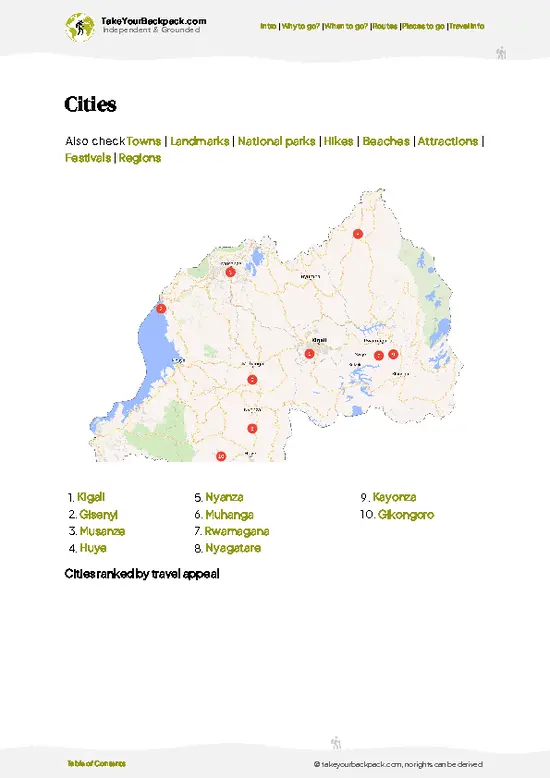
Rwanda🇷🇼 | citiesHuyeEthnographic museum, arboretum, coffee hills, student town | things to do and best time to go

Explore GisenyiExplore Karongi

Backpacking in Huye
🌟 Highlightcity ranked #4
By Johan Kruseman 🇳🇱 | Updated October 24, 2026

Huye suits travelers who like their history in museums and their evenings quiet: students of Rwandan culture, people building a southern loop, and anyone who wants a university town without capital-city traffic. It is less satisfying if you need nightlife, big-ticket adventure or a long list of sights, because the town is small and the good things can be seen in a day or two. Huye sits in the south of Rwanda, in the hills of the Southern Province, and was long known as Butare, the country’s intellectual center. The Ethnographic Museum is the one stop I would not skip, and the arboretum nearby is a calm place to walk. The genocide memorial at Ngoma is sobering and deserves unhurried time. The wide, tidy streets mean little to see beyond the main sites. Carry some cash before you arrive, since card machines and ATMs can be unreliable outside the central streets.

Discover everything you want to know in the 📖 Rwanda Travel Guide.


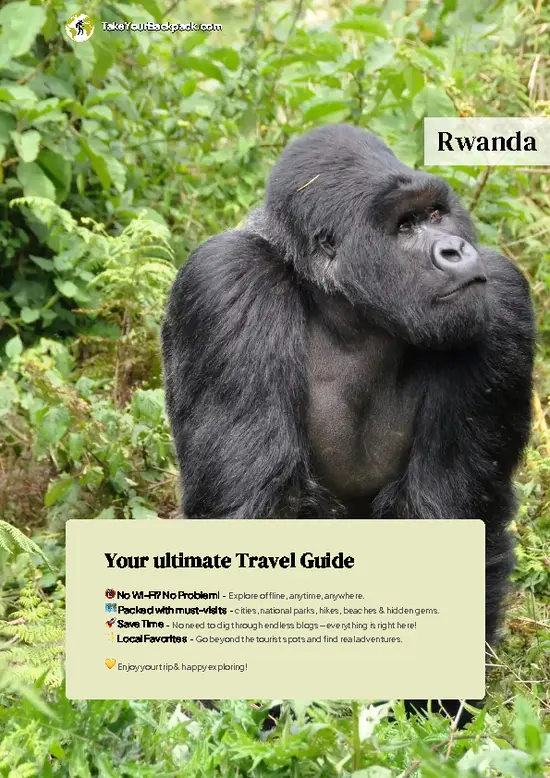
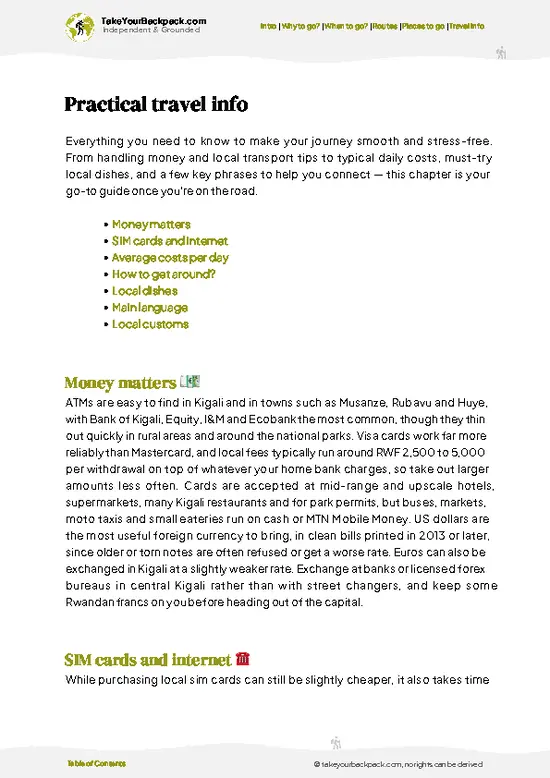
example page 0 from our offline Travel Guide for Rwanda
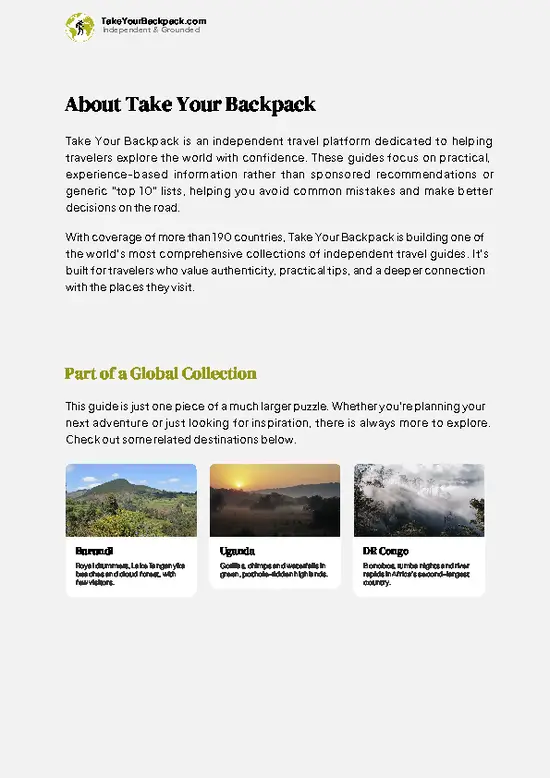
example page 1 from our offline Travel Guide for Rwanda
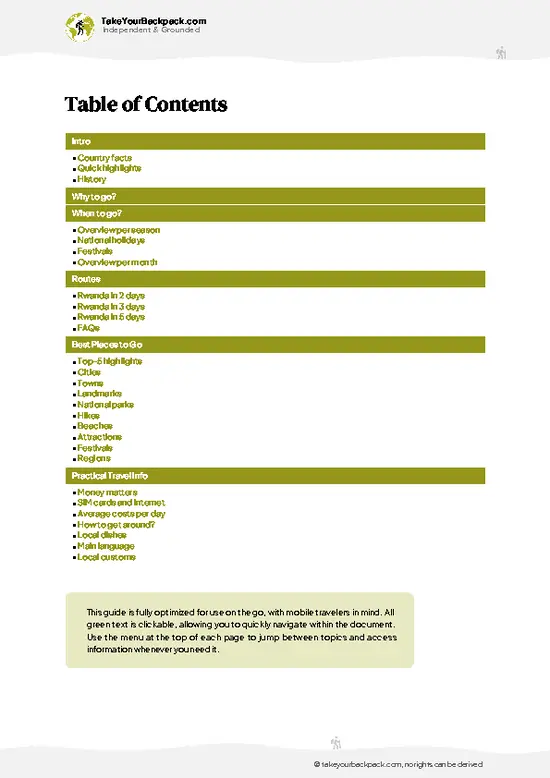
example page 2 from our offline Travel Guide for Rwanda
example page 3 from our offline Travel Guide for Rwanda
example page 4 from our offline Travel Guide for Rwanda
example page 5 from our offline Travel Guide for Rwanda
example page 6 from our offline Travel Guide for Rwanda
example page 7 from our offline Travel Guide for Rwanda
Loading the map 🌍
CLICK TO FILTER
cities
towns
landmarks
national parks
hikes
beaches
attractions
festivals
regions
SHOW COUNTRY’S BESTSHOW ALL

✨ Why go?
Ranked #4 city in Rwanda
What sets this place apart

Huye earns a place on a southern Rwanda loop because it packs the country's best ethnographic collection into a town you can cross on foot or by a short moto ride. The university student population keeps prices in cafés and small restaurants sensible, and gives the evenings a relaxed, bookish feel instead of a party scene. There are only a handful of hostel-style beds, but guesthouses and mid-range hotels fill the gap well. As a base, Huye works nicely because it sits on the main road toward the Burundi border and the forest country to the west, so you can slot it between Kigali and Nyungwe or Lake Kivu without backtracking. Expect a couple of unhurried days rather than a week. Coffee lovers get an extra reason, since the surrounding hills are farming country and a cooperative visit is easy … read more 👉
Huye earns a place on a southern Rwanda loop because it packs the country's best ethnographic collection into a town you can cross on foot or by a short moto ride. The university student population keeps prices in cafés and small restaurants sensible, and gives the evenings a relaxed, bookish feel instead of a party scene. There are only a handful of hostel-style beds, but guesthouses and mid-range hotels fill the gap well. As a base, Huye works nicely because it sits on the main road toward the Burundi border and the forest country to the west, so you can slot it between Kigali and Nyungwe or Lake Kivu without backtracking. Expect a couple of unhurried days rather than a week. Coffee lovers get an extra reason, since the surrounding hills are farming country and a cooperative visit is easy to arrange. If you need big nightlife, shopping or a long list of attractions, treat this as one night and move on.

💡 HighlightsEssential experiences to have while visiting Huye

  1. Ethnographic Museum of Rwanda (National Museum): The country's finest museum, with thousands of objects on traditional Rwandan life, from basketry and weapons to dairy tools and royal drums, laid out in a well-lit building. Go in the morning when the galleries are quiet. Entry is about US$6 to 10 for foreigners, and you need 1.5 to 2 hours.
  2. Ibiti Nature Reserve: A small botanical garden and arboretum on the edge of town, with labeled native trees, shaded paths and a good chance of birdsong. Early morning is best for birds. Expect US$2 to 5 and about an hour.
  3. Butare Cathedral (Cathédrale Notre-Dame de l'Assomption): A large brick church that dominates the town center. Quiet midweek visits are best, and Sunday mornings bring full, singing congregations. Entry is free, and 20 to 30 minutes is plenty.
… read more 👉
  1. Ethnographic Museum of Rwanda (National Museum): The country's finest museum, with thousands of objects on traditional Rwandan life, from basketry and weapons to dairy tools and royal drums, laid out in a well-lit building. Go in the morning when the galleries are quiet. Entry is about US$6 to 10 for foreigners, and you need 1.5 to 2 hours.
  2. Ibiti Nature Reserve: A small botanical garden and arboretum on the edge of town, with labeled native trees, shaded paths and a good chance of birdsong. Early morning is best for birds. Expect US$2 to 5 and about an hour.
  3. Butare Cathedral (Cathédrale Notre-Dame de l'Assomption): A large brick church that dominates the town center. Quiet midweek visits are best, and Sunday mornings bring full, singing congregations. Entry is free, and 20 to 30 minutes is plenty.
  4. Murambi and Kibeho memorial context at the Genocide Memorial in Huye (Butare Memorial Site): A sober place of remembrance for victims in the region, with a burial site and exhibition. Go in the morning, dress modestly and keep your voice low. A donation is welcome, entry is usually free, and plan 1 hour.
  5. Coffee cooperative visit around Huye: The hills here are known for Arabica, and cooperatives let you see washing stations, drying beds and a tasting. Harvest months, roughly March to July, are the liveliest. Costs run about US$10 to 25 with a guide, and it takes 2 to 3 hours.
  6. University campus and Saturday-evening town stroll: Walk the avenues near the National University of Rwanda campus, with its student cafés and old colonial buildings. Late afternoon is pleasant, it costs nothing, and it takes about an hour.
From Huye, Nyungwe Forest National Park, the Kibeho shrine and Lake Kivu towns are all realistic day trips or short onward stops. Between the museum, the arboretum and the cathedral you will use about one full day, or a day and a half with a coffee visit.
Spotted a mistake or missing something? Contact us.

Things to do in Huye

Ratings based on Tripadvisor reviews. When you book through this link, you support our work at no extra cost to you.

🏘️ NeighborhoodsNeighborhood guide to Huye

Huye is compact, and the areas worth your time sit within a few kilometers of each other. Here is how they compare.
  • Town center and Butare Cathedral area: The old administrative core around the main roundabout and Avenue de la Paix is low-key and easy to walk. Banks, mobile money kiosks, pharmacies and brochette grills cluster here. It is functional rather than pretty, so treat it as a base for errands and quick meals.
  • Ngoma and the Ethnographic Museum side: This is the area to prioritize. The National Museum of Rwanda is the best museum in the country, and the quiet roads around it suit a slow stroll. Allow half a day. Distances between sights are walkable but hilly.
  • University district (Tumba and Butare campus): Students keep cafés, cheap canteens and small bars busy, especially in the evening.
… read more 👉
Huye is compact, and the areas worth your time sit within a few kilometers of each other. Here is how they compare.
  • Town center and Butare Cathedral area: The old administrative core around the main roundabout and Avenue de la Paix is low-key and easy to walk. Banks, mobile money kiosks, pharmacies and brochette grills cluster here. It is functional rather than pretty, so treat it as a base for errands and quick meals.
  • Ngoma and the Ethnographic Museum side: This is the area to prioritize. The National Museum of Rwanda is the best museum in the country, and the quiet roads around it suit a slow stroll. Allow half a day. Distances between sights are walkable but hilly.
  • University district (Tumba and Butare campus): Students keep cafés, cheap canteens and small bars busy, especially in the evening. Nightlife is modest, mostly beer and music at local spots. It is worth an evening if you want to meet Rwandans your own age.
  • Matyazo and Mukura road: Residential, hilly and quiet. Little to see, though the road toward Nyungwe passes tea and eucalyptus slopes. Skip it unless you are heading out of town.
  • Cyarwa market area: Loud, crowded and useful. Fruit, vegetables, secondhand clothes and fabric are sold here, and it is the place to see daily local trade. Go in the morning.

⌛️ 1 dayHow to make the most of one day

A museum day, with coffee and a long walk to pace it.
8:30 AM: Breakfast near the town center Start with strong local coffee and eggs at a café close to the main road. It is a gentle introduction, and you can watch students heading to class before you walk toward the museum.
9:30 AM: Ethnographic Museum of Rwanda Take a moto or a taxi, since it sits on the edge of town, and spend close to two hours with the galleries. The traditional crafts and royal items give you context for everything else you will see in the country.
12:00 PM: Lunch at a student restaurant Head back toward the university area for a plate of brochettes, beans, plantains or a buffet. Prices are modest and portions are generous.
1:30 PM: Butare Cathedral and the town center Walk the avenues to the large brick cathedral and wander … read more 👉
A museum day, with coffee and a long walk to pace it.
8:30 AM: Breakfast near the town center Start with strong local coffee and eggs at a café close to the main road. It is a gentle introduction, and you can watch students heading to class before you walk toward the museum.
9:30 AM: Ethnographic Museum of Rwanda Take a moto or a taxi, since it sits on the edge of town, and spend close to two hours with the galleries. The traditional crafts and royal items give you context for everything else you will see in the country.
12:00 PM: Lunch at a student restaurant Head back toward the university area for a plate of brochettes, beans, plantains or a buffet. Prices are modest and portions are generous.
1:30 PM: Butare Cathedral and the town center Walk the avenues to the large brick cathedral and wander the market streets around it. It is the most walkable stretch of town, with enough shade to keep the afternoon comfortable.
3:00 PM: Ibiti Nature Reserve Spend an hour on the shaded paths among labeled trees. Few visitors come here, so you may have the place to yourself, and the birds are best in the cooler hours.
5:00 PM: Memorial site visit Pay a quiet visit to the local genocide memorial, which gives an honest view of the town's past. Keep it unhurried.
6:30 PM: Dinner by the campus Finish with a simple meal at a small place near the university, where the evening crowd is mostly students.

🌤️ When to go?When to go for the best experience

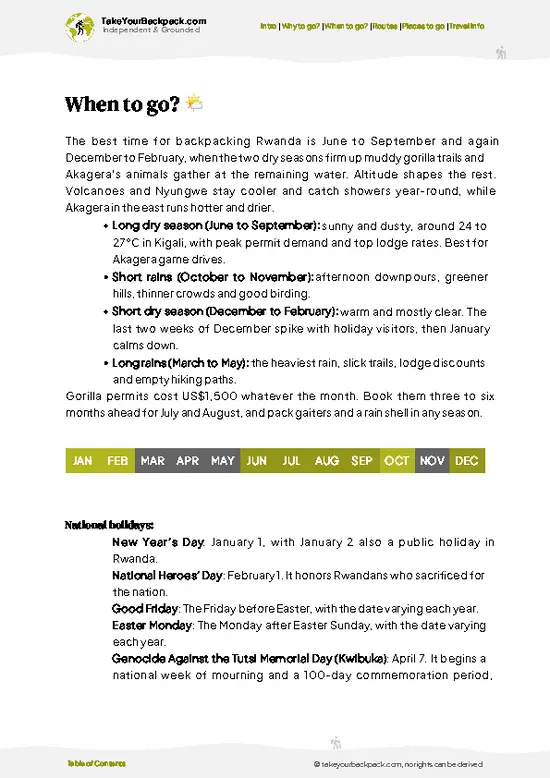
Huye is easiest from June to September, when rain is scarce and roads and footpaths stay dry. Elevation near 1,700 meters keeps temperatures mild all year.
  • Long Dry Season (June to September): Days reach 24 to 27°C (75 to 81°F), nights fall to 12 to 14°C (54 to 57°F). Museum visits and day trips run smoothly, but guesthouses fill more often and prices edge up.
  • Short Rains (October to December): Afternoon downpours are common. Highs sit at 23 to 25°C (73 to 77°F). Crowds thin and the hills turn very green.
  • Short Dry Spell (January to February): Mostly sunny, with warm days up to 26°C (79°F) and cool nights. Pleasant for hiking.
  • Long Rains (March to May): The wettest months. Roads to rural sites can turn slippery, and some minibuses run late. Lodging is at its cheapest.
Daylight stays close to twelve … read more 👉
Huye is easiest from June to September, when rain is scarce and roads and footpaths stay dry. Elevation near 1,700 meters keeps temperatures mild all year.
  • Long Dry Season (June to September): Days reach 24 to 27°C (75 to 81°F), nights fall to 12 to 14°C (54 to 57°F). Museum visits and day trips run smoothly, but guesthouses fill more often and prices edge up.
  • Short Rains (October to December): Afternoon downpours are common. Highs sit at 23 to 25°C (73 to 77°F). Crowds thin and the hills turn very green.
  • Short Dry Spell (January to February): Mostly sunny, with warm days up to 26°C (79°F) and cool nights. Pleasant for hiking.
  • Long Rains (March to May): The wettest months. Roads to rural sites can turn slippery, and some minibuses run late. Lodging is at its cheapest.
Daylight stays close to twelve hours all year, so plan outdoor trips for the morning, before clouds build.


source: climatestotravel.comJANJanuary: excellent for travelingFEBFebruary: excellent for travelingMARMarch: fair for travelingAPRApril: fair for travelingMAYMay: highly recommended for travelingJUNJune: excellent for travelingJULJuly: highly recommended for travelingAUGAugust: highly recommended for travelingSEPSeptember: excellent for travelingOCTOctober: highly recommended for travelingNOVNovember: fair for travelingDECDecember: excellent for traveling
rwanda-city-huye v1
© Google |

✈️ The backpacker research shortcutRwanda Travel Guide

An offline-friendly backpacking guide with optimized travel routes, ranked highlights, transport advice, and the best areas to stay.
example page 0 from our offline Travel Guide for Rwanda
example page 1 from our offline Travel Guide for Rwanda
example page 2 from our offline Travel Guide for Rwanda
example page 3 from our offline Travel Guide for Rwanda
example page 4 from our offline Travel Guide for Rwanda
example page 5 from our offline Travel Guide for Rwanda
example page 6 from our offline Travel Guide for Rwanda
example page 7 from our offline Travel Guide for Rwanda
The digital guide (233 pages) contains:
✅ 57 highlights, ranked by travel appeal
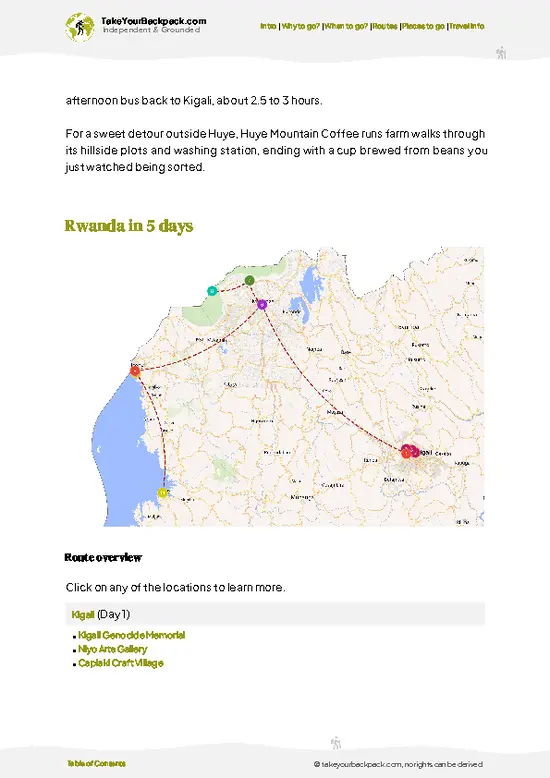
✅ Optimized 2, 3 & 5-day travel routes
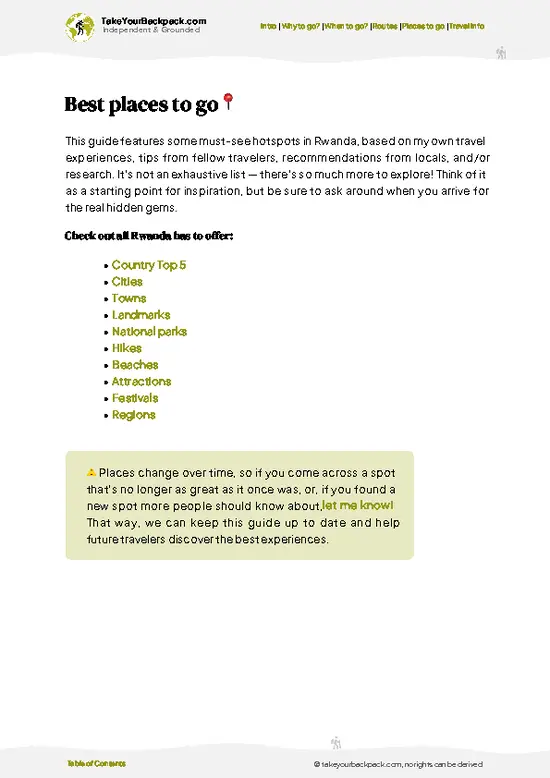
✅ Cities, national parks, landmarks, beaches
✅ How to get around
✅ Offline-friendly for travel without Wi-Fi
👉 Click to see all 30+ guide features

📅 Plan smarter in minutes, not weeks
✅ Month by month travel advice
✅ Festivals & national holidays
✅ Budget expectations

🗺️ Go to the right places, skip the overrated ones
✅ Honest pros & cons of destinations
✅ Top hikes, parks & viewpoints
✅ Lesser-known places most travelers miss
✅ Clear “worth it vs skip it” guidance

🛏️ Travel smoothly without rookie mistakes
✅ Best areas to stay
✅ Transport systems explained simply
✅ Common scams & safety advice
✅ SIM cards, money & practical tips

🌍 Understand the country, not just visit it
✅ Culture & traditions
✅ 52 Essential phrases & customs
✅ Festivals worth planning around
✅ Traveler-friendly historical context
✅ Insights that make places more meaningful

📱 Built for real travel conditions
✅ Fully downloadable PDF
✅ Works completely offline
✅ Optimized for phone use
✅ Useful in remote areas & buses
✅ Everything in one place
Stop searching, start planning
Get instant access to your full guide. 30‑day money-back guarantee.
+ Add another guide for just

By proceeding you agree to our terms.
Sent to your inbox immediately after payment • 100% Secure Checkout
Best Backpacking Travel Advisor 2025 tourism awardBest Backpacking
Travel Advisor
2025
What others say about Take Your Backpack Guides:
⭐⭐⭐⭐⭐
Fantastic, amazing amount of information!
⭐⭐⭐⭐⭐
My goodness this is amazing, it's what I've been looking for hats off too you!
⭐⭐⭐⭐⭐
I think this is absolutely BRILLIANT
⭐⭐⭐⭐
Very complete and informative. It's still missing places, but I gotta to commend you
⭐⭐⭐⭐⭐
This is truly amazing, thank you, can't wait to explore it with my kids!
⭐⭐⭐⭐⭐
Awesome resource, thank you!
⭐⭐⭐⭐⭐
This is amazing! Can't wait to explore the ones I haven't seen
⭐⭐⭐⭐
I love this! Well done, great idea.
⭐⭐⭐⭐⭐
Thanks for taking the time to make this gem!
⭐⭐⭐⭐⭐
This might be the best website I've ever seen.
⭐⭐⭐⭐⭐
Congratulations, and thank you so much for your work; it's incredibly valuable.
⭐⭐⭐⭐
In all seriousness I think you did a great job pointing out the important spots
⭐⭐⭐⭐⭐
10/10 very good
⭐⭐⭐⭐⭐
As someone who's only just starting to visit regularly this is awesome, thank you.
⭐⭐⭐⭐
Thank you very much! I'm going to visit my dad, it's going to be very useful!
⭐⭐⭐⭐⭐
This is really cool! We'll be travelling for the first time and this definitely come in handy.
⭐⭐⭐⭐⭐
You are now our minister of culture, congratulations 👨‍💼
⭐⭐⭐⭐⭐
Just wanted to tell you that this is a pearl! Going to follow your recommendations.
⭐⭐⭐⭐⭐
This is so cool. I'll definitely be using the resource for my travels soon.
⭐⭐⭐⭐⭐
This is very impressive! Good work.
⭐⭐⭐⭐⭐
This is an amazing and informative site. Very well done!

🛏️ Where to stay?Best areas and accommodation options

The town center and the area around the National University are the best places for a budget bed in Huye. Dorm beds are scarce, so most budget travelers end up in basic guesthouses and small hotels, with private rooms often costing about US$10 to 25.

The center gives you the most convenience. The bus station, moto-taxi stands, banks and cheap eateries are all within a short walk, and early departures to Kigali are easy. Streets are quiet by 9 pm, so noise is rarely a problem, though bars near the main roundabout can play music late on weekends. Walking after dark is usually fine on the main roads, … read more 👉
The town center and the area around the National University are the best places for a budget bed in Huye. Dorm beds are scarce, so most budget travelers end up in basic guesthouses and small hotels, with private rooms often costing about US$10 to 25.

The center gives you the most convenience. The bus station, moto-taxi stands, banks and cheap eateries are all within a short walk, and early departures to Kigali are easy. Streets are quiet by 9 pm, so noise is rarely a problem, though bars near the main roundabout can play music late on weekends. Walking after dark is usually fine on the main roads, but moto-taxis are better for unlit side streets.

The university district is calmer during the day and livelier in the evening, with student cafés and canteens close by. It is a short moto ride from the transport hub and the museum. During graduation periods and the start of term, rooms fill fast, so book ahead. Beyond these two areas, the outskirts have fewer options and slow transport links.

🚌 Getting aroundGetting around like a local

Huye’s center is walkable in under 20 minutes end to end, but the hills are steep and the museum, university and market sit far enough apart that walking all three in a day gets tiring. Traffic is light, and the main road to Kigali is the only busy one. Public transport is reliable, though it does not follow timetables beyond the intercity buses.
  • Walking: Free and fine for the center, the cathedral area and the university. Roads are paved and lit in town, but sidewalks vanish quickly outside it.
  • Moto-taxis: The fastest way around, and the one most backpackers use. Short rides cost about US$0.50 to 1.50, and the museum from the center is about US$1. Agree on the price first and ask for a helmet, which drivers must provide. They run from early morning until about 9 or 10 pm.
  • Minibuses (twegerane):
… read more 👉
Huye’s center is walkable in under 20 minutes end to end, but the hills are steep and the museum, university and market sit far enough apart that walking all three in a day gets tiring. Traffic is light, and the main road to Kigali is the only busy one. Public transport is reliable, though it does not follow timetables beyond the intercity buses.
  • Walking: Free and fine for the center, the cathedral area and the university. Roads are paved and lit in town, but sidewalks vanish quickly outside it.
  • Moto-taxis: The fastest way around, and the one most backpackers use. Short rides cost about US$0.50 to 1.50, and the museum from the center is about US$1. Agree on the price first and ask for a helmet, which drivers must provide. They run from early morning until about 9 or 10 pm.
  • Minibuses (twegerane): Shared vans serve nearby villages and towns for roughly US$0.50 to 3. They leave when full, so waiting times vary.
  • Intercity buses: Companies run frequent departures to Kigali, about 2.5 to 3.5 hours for US$3 to 5, and onward to Rusizi and Nyamagabe. Services start around 5 am and the last ones leave in the late afternoon. Buy tickets at the station.
  • Taxis and ride-hailing: A few cars are available at the station and via phone, costing US$3 to 8 for city trips. Useful with luggage or after dark.
Moto-taxis are the best value, and the only sensible way to reach the museum when you are short of time.

👛 Costs (as of 24 October 2026)Typical daily expenses

Huye is one of the cheapest bases in Rwanda, and a backpacker can get by on about US$37 a day. The table gives typical prices for independent travelers.
CategoryBudget RangeLocal Reality
Dorm accommodation (high season)US$10 to 15Few true dorms exist, so basic guesthouse rooms are the norm in June to September.
Dorm accommodation (off-season)US$8 to 12Prices soften during the March to May rains.
MealsUS$6 to 12Canteen buffets and brochettes are cheap; restaurant mains cost more.
Local transportUS$2 to 5Several short moto-taxi rides a day, plus the occasional minibus.
City transport passNot availableNo pass exists. Pay per ride in cash or mobile money.
Basic activities and entry feesUS$5 to 12The National Museum costs around US$6 to 10 for foreigners; other town sights are free.
MiscellaneousUS$2 to
… read more 👉
Huye is one of the cheapest bases in Rwanda, and a backpacker can get by on about US$37 a day. The table gives typical prices for independent travelers.
CategoryBudget RangeLocal Reality
Dorm accommodation (high season)US$10 to 15Few true dorms exist, so basic guesthouse rooms are the norm in June to September.
Dorm accommodation (off-season)US$8 to 12Prices soften during the March to May rains.
MealsUS$6 to 12Canteen buffets and brochettes are cheap; restaurant mains cost more.
Local transportUS$2 to 5Several short moto-taxi rides a day, plus the occasional minibus.
City transport passNot availableNo pass exists. Pay per ride in cash or mobile money.
Basic activities and entry feesUS$5 to 12The National Museum costs around US$6 to 10 for foreigners; other town sights are free.
MiscellaneousUS$2 to 5Water, coffee, SIM data and small snacks.
Total Daily BudgetUS$35 to 59About US$37 at the lean end of comfort.
Eat at local canteens at midday, where a full plate is often under US$2.
⚠️ Prices can change and everyone travels differently, so take this as a rough guide. Hope it helps you plan your adventure!

🚌 Day tripsShort trips worth adding

Huye works well as a base for day trips, since several major sights are within a half-day ride and transport runs from early morning.
Nyungwe Forest National Park: Chimpanzee tracking and canopy walks make this the headline excursion. Minibuses and buses toward Rusizi take about 2 to 3 hours to the Uwinka or Gisakura area, costing US$3 to 6 each way. Entry fees are high, from about US$60 for the canopy walk to several hundred for chimpanzees, so check permits first. First-timers often leave too late, so go for the earliest bus. Dry months suit it best.
👉 Explore Nyungwe Forest National Park
Nyanza (King’s Palace): A reconstructed royal palace with long-horned Inyambo cattle and a good cultural interpretation. It is about 45 minutes by minibus for roughly US$1 to 2, and entry is around US$10 to … read more 👉
Huye works well as a base for day trips, since several major sights are within a half-day ride and transport runs from early morning.
Nyungwe Forest National Park: Chimpanzee tracking and canopy walks make this the headline excursion. Minibuses and buses toward Rusizi take about 2 to 3 hours to the Uwinka or Gisakura area, costing US$3 to 6 each way. Entry fees are high, from about US$60 for the canopy walk to several hundred for chimpanzees, so check permits first. First-timers often leave too late, so go for the earliest bus. Dry months suit it best.
👉 Explore Nyungwe Forest National Park
Nyanza (King’s Palace): A reconstructed royal palace with long-horned Inyambo cattle and a good cultural interpretation. It is about 45 minutes by minibus for roughly US$1 to 2, and entry is around US$10 to 15 for foreigners. A common mistake is skipping the guided tour. Go in the morning, any season.
👉 Explore Nyanza
Kibeho: A pilgrimage village known for reported Marian apparitions, with a quiet shrine and a memorial. It takes about 1.5 hours by minibus, costing US$2 to 4, and the visit is free. Dress modestly and avoid August crowds around the pilgrimage days unless you want to witness it.

Gishwati-Mukura or Gisagara: Gisagara has hillside views and lightly visited rural lanes reached by a short moto and minibus ride for under US$3. It suits a relaxed half day in dry months.
👉 Explore Gisagara

🍲 FoodEating & Drinking in Huye

Huye’s student population shapes the eating scene: cheap, filling and unfussy. Look for brochettes, grilled goat or beef skewers served with roasted banana, at evening grills near the center and university. Many canteens serve ibihaza (pumpkin) stews and isombe, cassava leaves cooked with eggplant and sometimes fish. Local Inyange dairy products are common, and fresh milk and yogurt from nearby farms come cold in small shops.

For drinks, try Urwagwa (banana beer) and ikigage (sorghum beer) in village bars, usually shared from a communal pot. Skol and Primus are on every counter. Coffee is the better choice: southern Rwanda grows excellent beans, and small cafés near the university pour a strong cup for US$1 to 2. The Cyarwa market is the place to buy avocados, passion fruit and tree tomatoes … read more 👉
Huye’s student population shapes the eating scene: cheap, filling and unfussy. Look for brochettes, grilled goat or beef skewers served with roasted banana, at evening grills near the center and university. Many canteens serve ibihaza (pumpkin) stews and isombe, cassava leaves cooked with eggplant and sometimes fish. Local Inyange dairy products are common, and fresh milk and yogurt from nearby farms come cold in small shops.

For drinks, try Urwagwa (banana beer) and ikigage (sorghum beer) in village bars, usually shared from a communal pot. Skol and Primus are on every counter. Coffee is the better choice: southern Rwanda grows excellent beans, and small cafés near the university pour a strong cup for US$1 to 2. The Cyarwa market is the place to buy avocados, passion fruit and tree tomatoes for pennies, while a plate of a local lunch costs about US$1.50 to 3. Sharing food with new acquaintances is common, so accept a bite when it is offered.

🛡️ SafetyTraveler Safety Guide

Huye is calm and safe, and you can walk the center in daylight with little concern. The usual city habits apply: keep your phone out of sight on market days at Cyarwa, where crowds are dense and pickpocketing can happen. After dark, take a moto-taxi rather than walking unlit side streets, especially around the edges of the university district. Solo travelers, including women, report few problems, though persistent greetings and curious stares are normal rather than threatening. Moto drivers sometimes quote higher prices to foreigners, so settle the fare before you set off and keep small notes for exact change. Students and guesthouse staff are usually glad to point you to a fair rate. Photography near government buildings and security posts can cause trouble, so ask first. Plastic bags are … read more 👉
Huye is calm and safe, and you can walk the center in daylight with little concern. The usual city habits apply: keep your phone out of sight on market days at Cyarwa, where crowds are dense and pickpocketing can happen. After dark, take a moto-taxi rather than walking unlit side streets, especially around the edges of the university district. Solo travelers, including women, report few problems, though persistent greetings and curious stares are normal rather than threatening. Moto drivers sometimes quote higher prices to foreigners, so settle the fare before you set off and keep small notes for exact change. Students and guesthouse staff are usually glad to point you to a fair rate. Photography near government buildings and security posts can cause trouble, so ask first. Plastic bags are banned in Rwanda, and police may check bags at borders, so leave them at home. Keep your passport copy on you.

FAQFrequently asked questions about Huye

Two days is enough for Huye if you focus on the National Museum of Rwanda, the university area and Cyarwa market. Add a third day for Nyanza’s King’s Palace, about 45 minutes away, or a fourth if you head to Nyungwe Forest, 2 to 3 hours by bus. Buses to Kigali take 2.5 to 3.5 hours for US$3 to 5.
Huye is safe for solo backpackers, with low crime and a relaxed student-town atmosphere. Keep valuables out of sight at Cyarwa market, use moto-taxis after dark instead of walking unlit side streets, and agree on fares beforehand, usually US$0.50 to 1.50 for short rides. Solo women also report few problems.
Huye is known for the National Museum of Rwanda, the country’s largest and finest collection of cultural artifacts, and for the University of Rwanda campus, which gives it a youthful feel. It was the colonial-era administrative center called Butare. Visitors also use it as a base for Nyungwe Forest and Nyanza’s royal palace, and museum entry costs about US$6 to 10 for foreigners.
⚠️ Things can change over time, so always validate details locally before you go.

Other Rwandan cities near Huye

Explore more nearby:

  • Gikongoro—Murambi memorial, cool tea ridges, Huye-Nyungwe stopover| 21 km away
  • Nyanza—Royal palace, Inyambo cattle, Rwesero art, former capital| 28 km away
  • Karongi—lakefront promenade, boat docks, market stalls| 56 km away

💡 Not sure where to go next?
Create a personalized itinerary for Rwanda including Huye and the places that fit your trip.

Generate my itinerary

👉 Discover all cities

Or checkout all Rwanda has to offer (think cities, towns, villages, national parks, hikes, beaches, festivals)
Country photo of Rwanda

We 💚 feedbackFinal thoughts on visiting Huye

Huye pairs best with Nyungwe Forest on one side and Lake Kivu on the other, giving you a culture stop between two very different landscapes. I would give it one night, start the museum when it opens, and keep the late afternoon free for the arboretum. Carry cash, because card machines are rare.

✍️ Help improve this page!
The information on this page is based on in-depth research, insights shared by experienced travelers, and feedback from the local travel community in Rwanda. While every effort is made to keep the information accurate and current, conditions can change — so if you spot anything incorrect or outdated, please get in touch.


🙋‍♂️ Give feedback

👋 Meet the founderWho’s Behind Take Your Backpack?

Johan, backpacker and founder of TakeYourBackpackHi, I’m Johan (Netherlands 🇳🇱), the creator of TakeYourBackpack. Over the past 3 decades, I’ve backpacked through 90+ countries across six continents, gaining extensive experience with independent travel, long-term trips, and overland routes.

This site is built on a combination of firsthand travel experience and carefully curated insights from other backpackers. Many guides are based on places I’ve personally visited, while others bring together tips, observations, and practical advice shared by trusted travelers I’ve met along the way.

The goal is to provide realistic, experience-driven guidance — not generic itineraries — so you can explore destinations with better context, clearer expectations, and more confidence.