
×

Rwanda🇷🇼 | attractionsKigali Cultural Villageopen-air market, food stalls, local textiles | things to do and best time to go

Explore Rwanda Art MuseumExplore Iby’Iwacu Cultural Village

Backpacking in Kigali Cultural Village
👌 Worth visitingattraction ranked #11
By Johan Kruseman 🇳🇱 | Updated September 3, 2026

Forget the Instagram myth: Kigali Cultural Village is not some sprawling, centuries-old Rwandan heritage site where you’ll wander through ancient huts and tribal dances on every corner. It’s a modern, purpose-built space on the outskirts of Kigali, near the Gikondo area—think pop-up markets, art installations, and food stalls, not a living museum. Here’s the real deal: if you’re backpacking Rwanda, this place is less about jaw-dropping architecture and more about the pulse of contemporary Kigali—local artists hustling, musicians jamming, and entrepreneurs selling everything from woven baskets to goat brochettes. The crowds are mostly young Rwandans and a handful of expats, not busloads of tourists. Entry is usually free, but you’ll want a few francs for street food or crafts. It’s not the country’s most dramatic spot—skip it if you’re chasing volcanoes or gorillas—but for raw, creative energy and a taste of Rwanda’s next generation, it’s a worthy detour.

Discover everything you want to know in the 📖 Rwanda Travel Guide.


Get your Rwanda guide
61 ranked highlights, routes & tips, works offline (246 pages)
Loading the map 🌍
CLICK TO FILTER
cities
towns
landmarks
national parks
hikes
beaches
attractions
festivals
SHOW COUNTRY’S BESTSHOW ALL

✨ Why go?
Ranked #11 attraction in Rwanda
What makes it a must-see attraction

The Kigali Cultural Village isn’t just another stop on the Rwanda itinerary—it’s a checkpoint where the country’s soul hits you hard. Forget the glossy Instagram shots that make it look like a sanitized theme park. Yes, it draws crowds, especially during peak season, and the entrance fee isn’t pocket change for a backpacker. But here’s the kicker: this place is a living archive of Rwanda’s identity, stitched together with raw history and vibrant traditions that no quick snapshot can capture.

You’ll find yourself walking through reconstructed traditional huts, but it’s the stories—the ones told by local guides who lived through the country’s darkest and brightest days—that turn this from a tourist trap into a profound experience. It’s a cultural deep dive that demands your attention and rewards … read more 👉
The Kigali Cultural Village isn’t just another stop on the Rwanda itinerary—it’s a checkpoint where the country’s soul hits you hard. Forget the glossy Instagram shots that make it look like a sanitized theme park. Yes, it draws crowds, especially during peak season, and the entrance fee isn’t pocket change for a backpacker. But here’s the kicker: this place is a living archive of Rwanda’s identity, stitched together with raw history and vibrant traditions that no quick snapshot can capture.

You’ll find yourself walking through reconstructed traditional huts, but it’s the stories—the ones told by local guides who lived through the country’s darkest and brightest days—that turn this from a tourist trap into a profound experience. It’s a cultural deep dive that demands your attention and rewards it with a connection to Rwanda’s resilience and spirit. For backpackers threading through East Africa, it’s a milestone that grounds your journey in something real, beyond the safaris and city buzz.

The effort to get here pays off because it’s not just about seeing culture—it’s about feeling it. The adrenaline rush comes from confronting history and heritage head-on, making the Kigali Cultural Village a must-stop that’s as educational as it is emotionally stirring.
Want to include Kigali Cultural Village in your Rwanda route?
Create a personalized Rwanda itinerary that includes Kigali Cultural Village and the places that fit your trip — based on your travel style, budget, and available time. Get your route in seconds.

Generate my trip

💡 HighlightsMust-see experiences and standout moments

Open-Air Artisans’ Market
Forget the sanitized souvenir shops. The real action is at the open-air market, where Rwandan craftspeople set up shop under canvas tents and open sky. You’ll see woodcarvers chiseling masks, basket-weavers working impossibly tight coils, and painters adding the final brushstrokes to bold, contemporary canvases. This isn’t a staged “cultural experience”—it’s a living, breathing marketplace where you can actually talk to the artists, haggle (politely), and watch the creative process unfold. If you want a souvenir with a story, this is where you get it.


Live Music and Dance Performances
Instagram will show you a snippet of a drum circle, but it won’t capture the chest-thumping energy of a live Rwandan dance troupe in full swing. The Cultural Village hosts regular performances—sometimes … read more 👉
Open-Air Artisans’ Market
Forget the sanitized souvenir shops. The real action is at the open-air market, where Rwandan craftspeople set up shop under canvas tents and open sky. You’ll see woodcarvers chiseling masks, basket-weavers working impossibly tight coils, and painters adding the final brushstrokes to bold, contemporary canvases. This isn’t a staged “cultural experience”—it’s a living, breathing marketplace where you can actually talk to the artists, haggle (politely), and watch the creative process unfold. If you want a souvenir with a story, this is where you get it.


Live Music and Dance Performances
Instagram will show you a snippet of a drum circle, but it won’t capture the chest-thumping energy of a live Rwandan dance troupe in full swing. The Cultural Village hosts regular performances—sometimes scheduled, sometimes spontaneous—where you can feel the ground shake with the Intore dancers’ stomps or get swept up in the call-and-response of traditional singers. The crowd is a mix of locals and travelers, and if you’re game, you’ll probably get pulled in for a few moves yourself. It’s sweaty, loud, and absolutely electric.


Traditional Food Stalls
Skip the hotel buffet. The food stalls here serve up Rwandan staples—think grilled brochettes, steaming plates of ibirayi (spiced potatoes), and fresh fruit that actually tastes like fruit. It’s street food, but with a side of conversation: vendors are quick to explain what’s in the pot, and you’ll often find yourself sharing a bench with Kigali locals on their lunch break. The prices are refreshingly local, too—no “tourist tax” here.


Pop-Up Art Exhibitions
This isn’t a static gallery. The Village regularly hosts pop-up exhibitions from up-and-coming Rwandan artists—photographers, sculptors, mixed-media experimenters—who are redefining what “African art” means. Sometimes the artists are on hand to talk shop, sometimes you’ll just find a cluster of people debating a provocative piece. Either way, it’s a window into Kigali’s creative pulse, and you’ll see work here that hasn’t been packaged for export.


Workshops and Hands-On Experiences
If you’re tired of being a spectator, this is your chance to dive in. The Village offers workshops—basket weaving, drumming, painting—run by actual practitioners, not bored guides. You’ll fumble, you’ll laugh, and you’ll walk away with something you made (or at least tried to make). It’s messy, humbling, and a lot more memorable than snapping another photo from the sidelines.
Spotted a mistake or missing something? Contact us.

Things to do around Kigali Cultural Village

Ratings based on Tripadvisor reviews. When you book through this link, you support our work at no extra cost to you.

🌤️ When to go?Seasonal considerations and timing


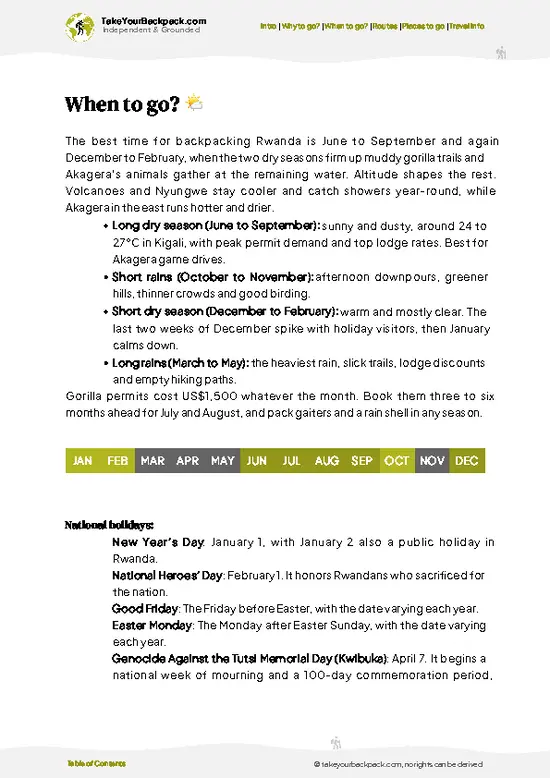
  • Weather: Kigali’s climate is pretty consistent, but the dry seasons from June to September and December to February are your best bets. Expect less rain, which means fewer muddy trails and more reliable visits to the Cultural Village. The wet seasons, especially March to May, can turn your plans into a soggy mess.

  • Temperature: Temperatures hover around 18-27°C (64-81°F) year-round. It’s mild but can feel cooler in the evenings, especially in the dry season. Pack layers, but don’t expect extremes.

  • Daylight Hours: Daylight is steady, roughly 12 hours year-round. Sunrise around 6:30 AM and sunset near 6:30 PM, so you get plenty of time to explore without rushing.

  • Crowds: The Cultural Village isn’t a tourist crush point like national parks, but weekends and holidays in July and August
read more 👉

  • Weather: Kigali’s climate is pretty consistent, but the dry seasons from June to September and December to February are your best bets. Expect less rain, which means fewer muddy trails and more reliable visits to the Cultural Village. The wet seasons, especially March to May, can turn your plans into a soggy mess.

  • Temperature: Temperatures hover around 18-27°C (64-81°F) year-round. It’s mild but can feel cooler in the evenings, especially in the dry season. Pack layers, but don’t expect extremes.

  • Daylight Hours: Daylight is steady, roughly 12 hours year-round. Sunrise around 6:30 AM and sunset near 6:30 PM, so you get plenty of time to explore without rushing.

  • Crowds: The Cultural Village isn’t a tourist crush point like national parks, but weekends and holidays in July and August see a spike in local visitors. For a quieter, more immersive experience, aim for weekdays outside these peak months.

  • Seasonal Activities: Cultural festivals and traditional dance performances often peak during the dry season, especially around July and August. This is when the village’s spirit truly comes alive, offering more than just a static exhibit.

  • Price Fluctuations: Entry fees and local guide prices stay fairly stable year-round. However, expect slight hikes during peak tourist months (July-August) and around major Rwandan holidays.


Pro-tip: Visit during the early dry season (June) to dodge crowds, enjoy crisp weather, and catch authentic cultural performances without the inflated prices of peak months.


source: climatestotravel.comJANJanuary: excellent for travelingFEBFebruary: excellent for travelingMARMarch: fair for travelingAPRApril: fair for travelingMAYMay: fair for travelingJUNJune: excellent for travelingJULJuly: highly recommended for travelingAUGAugust: highly recommended for travelingSEPSeptember: excellent for travelingOCTOctober: good for travelingNOVNovember: good for travelingDECDecember: excellent for traveling
when-to-go

✈️ The backpacker research shortcutRwanda Travel Guide

An offline-friendly backpacking guide with optimized travel routes, ranked highlights, transport advice, and the best areas to stay.
example page 0 from our offline Travel Guide for Rwanda
example page 1 from our offline Travel Guide for Rwanda
example page 2 from our offline Travel Guide for Rwanda
example page 3 from our offline Travel Guide for Rwanda
example page 4 from our offline Travel Guide for Rwanda
example page 5 from our offline Travel Guide for Rwanda
example page 6 from our offline Travel Guide for Rwanda
example page 7 from our offline Travel Guide for Rwanda
The digital guide (246 pages) contains:
61 highlights, ranked by travel appeal
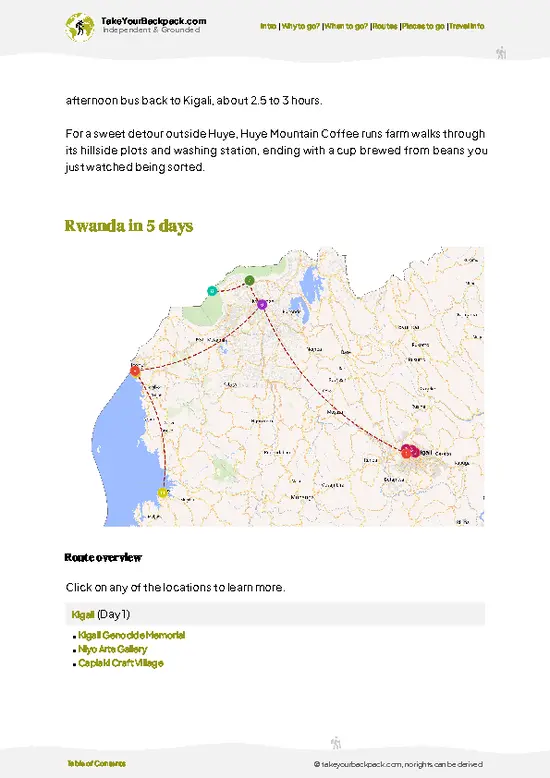
Optimized 2, 3 & 5-day travel routes
Cities, national parks, landmarks, beaches
How to get around
Offline-friendly for travel without Wi-Fi
👉 Click to see all 30+ guide features

📅 Plan smarter in minutes, not weeks
Month by month travel advice
Festivals & national holidays
Budget expectations

🗺️ Go to the right places, skip the overrated ones
Honest pros & cons of destinations
Top hikes, parks & viewpoints
Lesser-known places most travelers miss
Clear “worth it vs skip it” guidance

🛏️ Travel smoothly without rookie mistakes
Best areas to stay
Transport systems explained simply
Common scams & safety advice
SIM cards, money & practical tips

🌍 Understand the country, not just visit it
Culture & traditions
52 Essential phrases & customs
Festivals worth planning around
Traveler-friendly historical context
Insights that make places more meaningful

📱 Built for real travel conditions
Fully downloadable PDF
Works completely offline
Optimized for phone use
Useful in remote areas & buses
Everything in one place
Save weeks of stressful planning
Get instant access to your full guide. 30‑day money-back guarantee.
+ Add another guide for just US$7.80

By proceeding you agree to our terms.
Sent to your inbox immediately after payment • 100% Secure Checkout
Best Backpacking Travel Advisor 2025 tourism awardBest Backpacking
Travel Advisor
2025
What others say about Take Your Backpack Guides:
⭐⭐⭐⭐⭐
Fantastic, amazing amount of information!
⭐⭐⭐⭐⭐
My goodness this is amazing, it's what I've been looking for hats off too you!
⭐⭐⭐⭐⭐
I think this is absolutely BRILLIANT
⭐⭐⭐⭐
Very complete and informative. It's still missing places, but I gotta to commend you
⭐⭐⭐⭐⭐
This is truly amazing, thank you, can't wait to explore it with my kids!
⭐⭐⭐⭐⭐
Awesome resource, thank you!
⭐⭐⭐⭐⭐
This is amazing! Can't wait to explore the ones I haven't seen
⭐⭐⭐⭐
I love this! Well done, great idea.
⭐⭐⭐⭐⭐
Thanks for taking the time to make this gem!
⭐⭐⭐⭐⭐
This might be the best website I've ever seen.
⭐⭐⭐⭐⭐
Congratulations, and thank you so much for your work; it's incredibly valuable.
⭐⭐⭐⭐
In all seriousness I think you did a great job pointing out the important spots
⭐⭐⭐⭐⭐
10/10 very good
⭐⭐⭐⭐⭐
As someone who's only just starting to visit regularly this is awesome, thank you.
⭐⭐⭐⭐
Thank you very much! I'm going to visit my dad, it's going to be very useful!
⭐⭐⭐⭐⭐
This is really cool! We'll be travelling for the first time and this definitely come in handy.
⭐⭐⭐⭐⭐
You are now our minister of culture, congratulations 👨‍💼
⭐⭐⭐⭐⭐
Just wanted to tell you that this is a pearl! Going to follow your recommendations.
⭐⭐⭐⭐⭐
This is so cool. I'll definitely be using the resource for my travels soon.
⭐⭐⭐⭐⭐
This is very impressive! Good work.
⭐⭐⭐⭐⭐
This is an amazing and informative site. Very well done!

🛏️ Where to stay?Best areas to stay in Rwanda

Kigali Cultural Village sits in the heart of Kigali, a city that’s often misunderstood as just a gateway to gorilla trekking. Let’s cut through the Instagram gloss: this isn’t a polished tourist bubble. The area around the village is lively but gritty, with the kind of urban energy that can feel overwhelming if you’re not prepared. Crowds aren’t massive, but you’ll definitely encounter locals going about their daily hustle, which is part of the real charm.

For backpackers, the best spots to crash are neighborhoods like Kiyovu and Nyarugenge. These areas strike a balance between safety and social … read more 👉
Kigali Cultural Village sits in the heart of Kigali, a city that’s often misunderstood as just a gateway to gorilla trekking. Let’s cut through the Instagram gloss: this isn’t a polished tourist bubble. The area around the village is lively but gritty, with the kind of urban energy that can feel overwhelming if you’re not prepared. Crowds aren’t massive, but you’ll definitely encounter locals going about their daily hustle, which is part of the real charm.

For backpackers, the best spots to crash are neighborhoods like Kiyovu and Nyarugenge. These areas strike a balance between safety and social buzz. Kiyovu leans a bit more upscale and quieter, offering a safer vibe without killing the local flavor. It’s where you’ll find a mix of expats, solo travelers, and budget backpackers who want to connect without the chaos. Nyarugenge, on the other hand, is rawer and more authentic—think street markets, local eateries, and a pulse that’s unmistakably Kigali. It’s perfect if you want to dive into the city’s real rhythm, but keep your wits about you.

Both neighborhoods have guesthouses and budget lodgings that encourage socializing—communal spaces, shared meals, and the kind of informal meetups where you swap stories and tips. It’s not luxury, but it’s genuine. Staying here means you’re not just visiting the Cultural Village; you’re living the city’s story, with all its rough edges and unexpected warmth.

👛 Costs (as of 3 September 2026)Typical daily expenses

As of the most recent estimates, the entrance fee for Kigali Cultural Village ranges from €4 to €8 per person. Additional costs may apply for special activities or workshops, but specific details are not provided.

source: visitrwandagorilla.com
⚠️ Prices can change and everyone travels differently, so take this as a rough guide. Hope it helps you plan your adventure!

FAQTraveler FAQ

2 to 3 hours is sufficient to visit Kigali Cultural Village. This allows enough time to explore the traditional huts, watch cultural performances, and visit the craft market. Plan for a morning or afternoon visit to avoid the midday heat.
Yes, Kigali Cultural Village is worth the entrance fee, which is around $10 USD. The fee supports cultural preservation and offers an immersive experience into Rwandan heritage. Visitors gain insight into traditional lifestyles and crafts not easily accessible elsewhere.
You can get to Kigali Cultural Village by taxi or motorcycle taxi from Kigali city center, approximately 15 kilometers away. The journey takes about 30 minutes depending on traffic. It is advisable to arrange transport through your accommodation or a local guide for convenience.
⚠️ Things can change over time, so always validate details locally before you go.

Other Rwandan attractions near Kigali Cultural Village

Explore more nearby:


💡 Not sure where to go next?
Create a personalized itinerary for Rwanda including Kigali Cultural Village and the places that fit your trip.

Generate my itinerary

👉 Discover all attractions

Or checkout all Rwanda has to offer (think cities, towns, villages, national parks, hikes, beaches, festivals)
Country photo of Rwanda

We 💚 feedbackFinal thoughts on visiting Kigali Cultural Village

Kigali Cultural Village isn’t a polished theme park pretending to be a cultural utopia. It’s raw, sometimes crowded, and yes, a bit touristy. But here’s the kicker: the real magic happens when you drop the guidebook script and actually talk to the locals. Their stories, laughter, and the way they live their traditions—unfiltered—hit harder than any staged performance. Just don’t expect Instagram-perfect quiet; this place hums with life, chaos, and genuine warmth. It’s worth the noise if you’re ready to listen.

✍️ Help improve this page!
The information on this page is based on in-depth research, insights shared by experienced travelers, and feedback from the local travel community in Rwanda. While every effort is made to keep the information accurate and current, conditions can change — so if you spot anything incorrect or outdated, please get in touch.


🙋‍♂️ Give feedback

👋 Meet the founderWho’s Behind Take Your Backpack?

Johan, backpacker and founder of TakeYourBackpackHi, I’m Johan (Netherlands 🇳🇱), the creator of TakeYourBackpack. Over the past decade, I’ve backpacked through 80+ countries across six continents, gaining extensive experience with independent travel, long-term trips, and overland routes.

This site is built on a combination of firsthand travel experience and carefully curated insights from other backpackers. Many guides are based on places I’ve personally visited, while others bring together tips, observations, and practical advice shared by trusted travelers I’ve met along the way.

The goal is to provide realistic, experience-driven guidance — not generic itineraries — so you can explore destinations with better context, clearer expectations, and more confidence.

Get full Rwanda guide •
Instant download • 61 highlights • Full Offline guide