v2.webp)
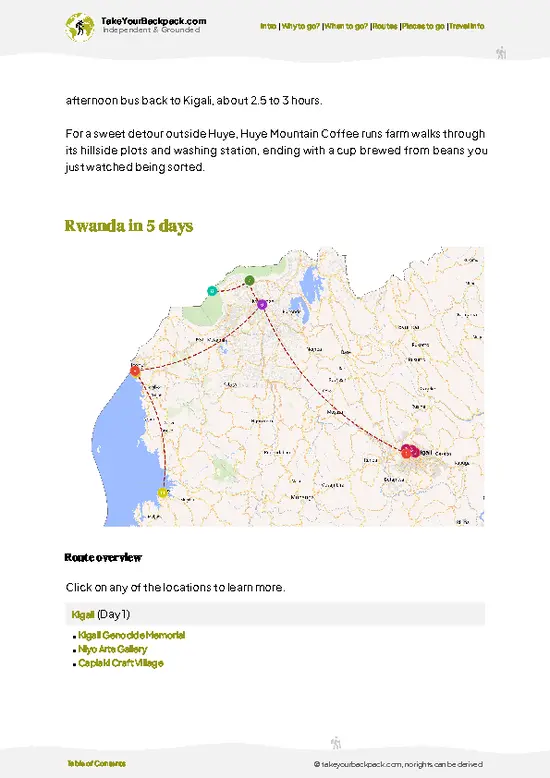
- Kigali Genocide Memorial: The national memorial in Gisozi holds mass graves of more than 250,000 victims and an exhibition on the 1994 genocide against the Tutsi, along with sections on other genocides. Entry is free, and an audio guide costs about US$15. Allow 2 to 3 hours and go in the morning, when it is quieter. Photography is not allowed inside the exhibition.
- Campaign Against Genocide Museum: Inside the parliament building, it tells the story of the RPF forces who were stationed there in 1994. Tickets cost about US$5 to 10 with a guide, and a visit takes about 1 hour. It gives the military and political side that the memorial does not.
- Kandt House Museum: The restored house of Richard Kandt, the German founder of Kigali, covers the city’s colonial beginnings and natural history. Entry
- Kigali Genocide Memorial: The national memorial in Gisozi holds mass graves of more than 250,000 victims and an exhibition on the 1994 genocide against the Tutsi, along with sections on other genocides. Entry is free, and an audio guide costs about US$15. Allow 2 to 3 hours and go in the morning, when it is quieter. Photography is not allowed inside the exhibition.
- Campaign Against Genocide Museum: Inside the parliament building, it tells the story of the RPF forces who were stationed there in 1994. Tickets cost about US$5 to 10 with a guide, and a visit takes about 1 hour. It gives the military and political side that the memorial does not.
- Kandt House Museum: The restored house of Richard Kandt, the German founder of Kigali, covers the city’s colonial beginnings and natural history. Entry is about US$5 to 10, and it takes 1 hour. The small snake house and garden are quiet, and mornings are best.
- Inema Arts Center: A gallery and studio space in Kacyiru where Rwandan painters and sculptors work and sell contemporary art. Entry is usually free, and a visit takes 1 hour. Come on a weekday afternoon to catch artists working.
- Kimironko Market: The city’s biggest everyday market, with piles of produce, fabric stalls and tailors who make clothes within a day or two. Entry is free and you can spend 1 to 2 hours. Go in the morning for the best choice, and bring small notes.
- Nyamirambo Women’s Center walking tour: A guided walk through Nyamirambo, the Muslim-influenced neighborhood, with visits to a tailor, a hair salon and a home for a meal. Tours cost about US$20 to 40 and take 2 to 4 hours. Book ahead, and aim for the late morning.
- Rwanda Art Museum: Housed in the former presidential palace in Kanombe, it shows traditional and modern Rwandan art in a building with an unusual history. Entry is about US$5 to 10, and it takes 1 to 2 hours. A guide explains the palace layout.
Do the Kigali Genocide Memorial first, in the morning, because it gives the context that makes everything else in the city and country easier to understand.
Spotted a mistake or missing something? Contact us.

Private Gorilla Trekking Transfer from kigali to Volcanoes N.Park

Women-led Coffee Farm Trek

1 Day Gorilla Trekking Safari Tour

Kigali Motorbike Tours

Kigali Private Car City Tour with a Local Guide

1 Day Rwanda Gorilla Trekking Tour

Akagera 1-Day Safari, Lake Ihema Boat Ride & Park Fees Included

One Day Akagera Safari From Kigali

1 Day Rwanda Gorilla Trekking In Volcanoes National Park


 Best Backpacking
.jpg) Hi, I’m Johan (Netherlands 🇳🇱), the creator of TakeYourBackpack. Over the past 3 decades, I’ve backpacked through 90+ countries across six continents, gaining extensive experience with independent travel, long-term trips, and overland routes.
Hi, I’m Johan (Netherlands 🇳🇱), the creator of TakeYourBackpack. Over the past 3 decades, I’ve backpacked through 90+ countries across six continents, gaining extensive experience with independent travel, long-term trips, and overland routes.