×

Senegal🇸🇳 | citiesLougacattle markets, Wolof heartland, dry plains, music traditions | things to do and best time to go

Explore MbackéExplore Dak’Art

Backpacking in Louga
🌟 Highlightcity ranked #8
By Johan Kruseman 🇳🇱 | Updated September 3, 2026

Louga, once a crossroads for traders and nomads, used to hum with the unpredictable energy of passing caravans and impromptu markets—today, it’s steadier, more local, and less likely to surprise you with a midnight drum circle or a wandering griot. Set in Senegal’s northern interior, Louga sits on the main Dakar–Saint-Louis route, but most travelers breeze through, chasing the coast or the colonial grandeur of Saint-Louis. For backpackers, Louga is honest: affordable, safe by Senegalese standards, and refreshingly free of tourist hustle, but also light on headline attractions. The city’s main mosque, a few colonial-era buildings, and the occasional music festival offer glimpses of character, but nightlife is subdued and meeting fellow travelers takes effort. Louga’s charm is subtle—think slow mornings, friendly locals, and the feeling you’ve stumbled into real, unvarnished Senegal.

Discover everything you want to know in the 📖 Senegal Travel Guide.


Get your Senegal guide
93 ranked highlights, routes & tips, works offline (380 pages)
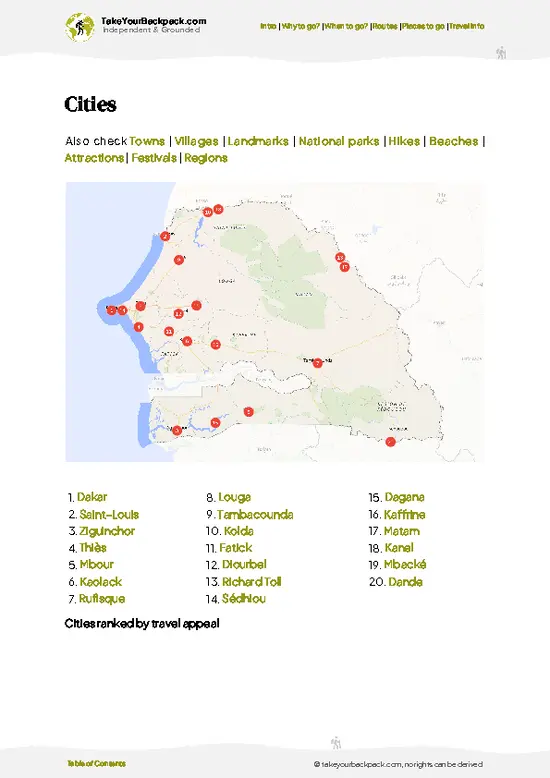
Loading the map 🌍
CLICK TO FILTER
cities
towns
villages
landmarks
national parks
hikes
beaches
attractions
festivals
regions
SHOW COUNTRY’S BESTSHOW ALL

✨ Why go?
Ranked #8 city in Senegal
Reasons people choose to visit here

Louga is a strategic stop for backpackers weaving through Senegal. It offers a unique blend of affordability and authenticity that’s hard to find elsewhere. The hostels here are budget-friendly and often buzzing with fellow travelers, making it easy to swap stories and tips. The walkability of the city means you can explore local markets and street food stalls without breaking a sweat. Speaking of food, the local cuisine is a delightful mix of flavors that won’t dent your wallet.

As a basecamp, Louga opens doors to day trips that showcase the region’s diversity. Plus, the nightlife is laid-back yet lively, perfect for unwinding after a day of exploration. With easy onward travel options, you can seamlessly continue your journey. If you’re after a genuine experience without the tourist traps, Louga is worth your time.
Want to include Louga in your Senegal route?
Create a personalized Senegal itinerary that includes Louga and the places that fit your trip — based on your travel style, budget, and available time. Get your route in seconds.

Generate my trip

💡 HighlightsMust-see experiences and standout moments

  • Grande Mosquée de Louga — The city’s main mosque and social anchor; visit to see the local Islamic architectural style, watch the rhythm of daily prayers, and feel how religion shapes public life in Louga.
  • Marché aux bestiaux (Livestock Market) — One of Louga’s liveliest scenes: herders, traders and animals converge in the morning for real bargaining and trading of cattle, sheep and goats. Great for energetic street photography and to experience the region’s pastoral economy up close.
  • Marché Central de Louga (Central Market) — The packed market where locals buy food, fabrics, spices and everyday goods; it’s the best place to taste street food, pick up woven textiles, and watch day-to-day commerce in an honest, un-touristy setting.
Nearby day trips worth planning from Louga include the Lompoul … read more 👉
  • Grande Mosquée de Louga — The city’s main mosque and social anchor; visit to see the local Islamic architectural style, watch the rhythm of daily prayers, and feel how religion shapes public life in Louga.
  • Marché aux bestiaux (Livestock Market) — One of Louga’s liveliest scenes: herders, traders and animals converge in the morning for real bargaining and trading of cattle, sheep and goats. Great for energetic street photography and to experience the region’s pastoral economy up close.
  • Marché Central de Louga (Central Market) — The packed market where locals buy food, fabrics, spices and everyday goods; it’s the best place to taste street food, pick up woven textiles, and watch day-to-day commerce in an honest, un-touristy setting.
Nearby day trips worth planning from Louga include the Lompoul Desert for dunes and overnight camp tents, the colonial island city of Saint-Louis for its architecture and riverfront, and the Djoudj National Bird Sanctuary for exceptional birdwatching.
Spotted a mistake or missing something? Contact us.
🏘️ NeighborhoodsNeighborhood guide to Louga

Louga is a vibrant hub in Senegal, offering a mix of cultural experiences and practical amenities for backpackers. Here’s how the neighborhoods stack up:

Centre Ville: This is the heart of Louga. It’s bustling, with local markets and street vendors. Expect a lively atmosphere, especially in the evenings. Costs are moderate, and it’s walkable. Perfect for short stays, but the nightlife can be noisy.

Quartier de la Gare: Close to the train station, this area is ideal for those needing quick transport options. It’s quieter than Centre Ville, with a mix of budget accommodations. Great for longer stays if you want easy access to travel routes without the chaos.

Quartier de l’Indépendance: A bit more upscale, this neighborhood offers a relaxed vibe with cafes and parks. Prices are higher, but … read more 👉
Louga is a vibrant hub in Senegal, offering a mix of cultural experiences and practical amenities for backpackers. Here’s how the neighborhoods stack up:

Centre Ville: This is the heart of Louga. It’s bustling, with local markets and street vendors. Expect a lively atmosphere, especially in the evenings. Costs are moderate, and it’s walkable. Perfect for short stays, but the nightlife can be noisy.

Quartier de la Gare: Close to the train station, this area is ideal for those needing quick transport options. It’s quieter than Centre Ville, with a mix of budget accommodations. Great for longer stays if you want easy access to travel routes without the chaos.

Quartier de l’Indépendance: A bit more upscale, this neighborhood offers a relaxed vibe with cafes and parks. Prices are higher, but the comfort level is worth it. It’s walkable and perfect for longer stays, especially if you enjoy a slower pace.

Quartier de la Liberté: This area is a hidden treasure for budget travelers. It’s less touristy, offering authentic local experiences. Costs are low, and it’s easy to navigate on foot. Ideal for those looking to immerse themselves in daily life.

⌛️ 1 dayA smart one-day plan

Louga, a city steeped in history and culture, offers a vibrant glimpse into Senegalese life beyond the tourist trail. Start your day in the bustling heart of the city, the Place de l’Indépendance. Grab a coffee at a nearby café and soak in the morning energy as vendors set up their stalls, selling everything from fresh fruit to handmade crafts.

After your caffeine fix, stroll through the lively streets of the Medina neighborhood. Here, you’ll find colorful murals and local artisans at work. Don’t miss the chance to visit the Grand Mosque, an architectural gem that showcases the city’s Islamic heritage.

As the sun climbs higher, head to the nearby market, Marché de Louga. This is where you can truly immerse yourself in local life. The vibrant colors and sounds are a feast for the senses. … read more 👉
Louga, a city steeped in history and culture, offers a vibrant glimpse into Senegalese life beyond the tourist trail. Start your day in the bustling heart of the city, the Place de l’Indépendance. Grab a coffee at a nearby café and soak in the morning energy as vendors set up their stalls, selling everything from fresh fruit to handmade crafts.

After your caffeine fix, stroll through the lively streets of the Medina neighborhood. Here, you’ll find colorful murals and local artisans at work. Don’t miss the chance to visit the Grand Mosque, an architectural gem that showcases the city’s Islamic heritage.

As the sun climbs higher, head to the nearby market, Marché de Louga. This is where you can truly immerse yourself in local life. The vibrant colors and sounds are a feast for the senses. Sample some street food—try the yassa, a tangy chicken dish that’s a local favorite.

In the afternoon, take a short taxi ride to the outskirts and visit the lesser-known village of Kébémer. This area is rich in traditional crafts, and you might catch artisans weaving intricate textiles.

As evening approaches, return to Louga and unwind at a local eatery. Enjoy a meal while chatting with locals, sharing stories, and soaking in the warm atmosphere. This day in Louga isn’t just about sights; it’s about connecting with the heart of Senegal.
Turn your Louga visit into an Senegal adventure
Build a complete Senegal route with Louga, hidden gems, must-see destinations, and realistic travel times included.

Generate my trip

🌤️ When to go?Weather, crowds, and seasonal trade-offs


  • Weather: Louga’s climate swings between a hot, dry season and a brief rainy season. The dry months from November to May offer clear skies and minimal humidity, making trekking and exploring more comfortable.

  • Temperature: Expect daytime highs around 28-35°C (82-95°F) during the dry season, cooling off at night to 18-22°C (64-72°F). The rainy season, June to October, brings slightly cooler days but sticky humidity and sporadic downpours.

  • Daylight Hours: Daylight remains fairly consistent year-round, roughly 11 to 12 hours daily, so your hiking and sightseeing windows won’t fluctuate much.

  • Crowds: Louga is off the beaten path, so crowds are minimal year-round. However, local festivals during the dry season can draw regional visitors, adding a lively cultural layer without overwhelming
read more 👉

  • Weather: Louga’s climate swings between a hot, dry season and a brief rainy season. The dry months from November to May offer clear skies and minimal humidity, making trekking and exploring more comfortable.

  • Temperature: Expect daytime highs around 28-35°C (82-95°F) during the dry season, cooling off at night to 18-22°C (64-72°F). The rainy season, June to October, brings slightly cooler days but sticky humidity and sporadic downpours.

  • Daylight Hours: Daylight remains fairly consistent year-round, roughly 11 to 12 hours daily, so your hiking and sightseeing windows won’t fluctuate much.

  • Crowds: Louga is off the beaten path, so crowds are minimal year-round. However, local festivals during the dry season can draw regional visitors, adding a lively cultural layer without overwhelming the town.

  • Seasonal Activities: The dry season aligns with traditional markets and cultural events, offering a richer experience of local life. The rainy season limits outdoor activities but transforms the landscape into lush green, appealing to nature lovers.

  • Price Fluctuations: Accommodation and transport costs dip during the rainy season due to lower demand, but the trade-off is less predictable weather and fewer open services.


Pro-tip: Aim for the shoulder months of November or May to balance pleasant weather, manageable prices, and authentic local events—your sweet spot for smart timing in Louga.


source: climatestotravel.comJANJanuary: excellent for travelingFEBFebruary: excellent for travelingMARMarch: excellent for travelingAPRApril: excellent for travelingMAYMay: highly recommended for travelingJUNJune: fair for travelingJULJuly: fair for travelingAUGAugust: fair for travelingSEPSeptember: fair for travelingOCTOctober: fair for travelingNOVNovember: highly recommended for travelingDECDecember: excellent for traveling
when-to-go

✈️ The backpacker research shortcutSenegal Travel Guide

An offline-friendly backpacking guide with optimized travel routes, ranked highlights, transport advice, and the best areas to stay.
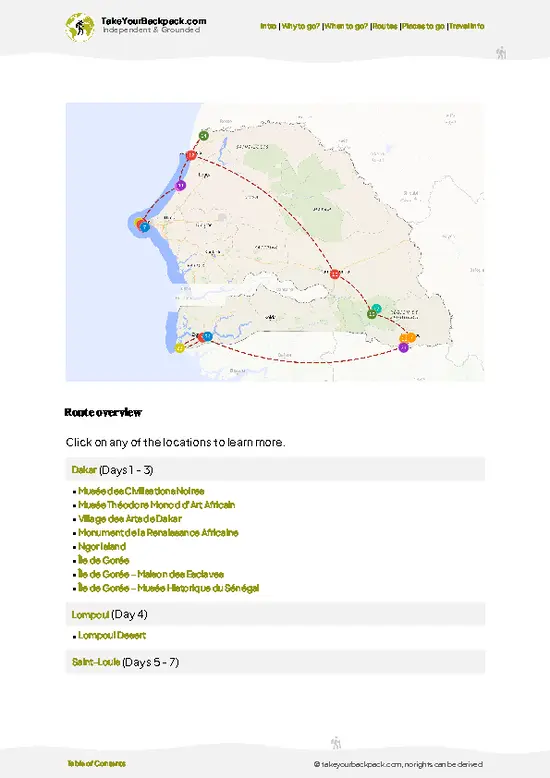
example page 0 from our offline Travel Guide for Senegal
example page 1 from our offline Travel Guide for Senegal
example page 2 from our offline Travel Guide for Senegal
example page 3 from our offline Travel Guide for Senegal
example page 4 from our offline Travel Guide for Senegal
example page 5 from our offline Travel Guide for Senegal
example page 6 from our offline Travel Guide for Senegal
example page 7 from our offline Travel Guide for Senegal
The digital guide (380 pages) contains:
93 highlights, ranked by travel appeal
Optimized 5, 10 & 15-day travel routes
Cities, national parks, landmarks, beaches
How to get around
Offline-friendly for travel without Wi-Fi
👉 Click to see all 30+ guide features

📅 Plan smarter in minutes, not weeks
Month by month travel advice
Festivals & national holidays
Budget expectations

🗺️ Go to the right places, skip the overrated ones
Honest pros & cons of destinations
Top hikes, parks & viewpoints
Lesser-known places most travelers miss
Clear “worth it vs skip it” guidance

🛏️ Travel smoothly without rookie mistakes
Best areas to stay
Transport systems explained simply
Common scams & safety advice
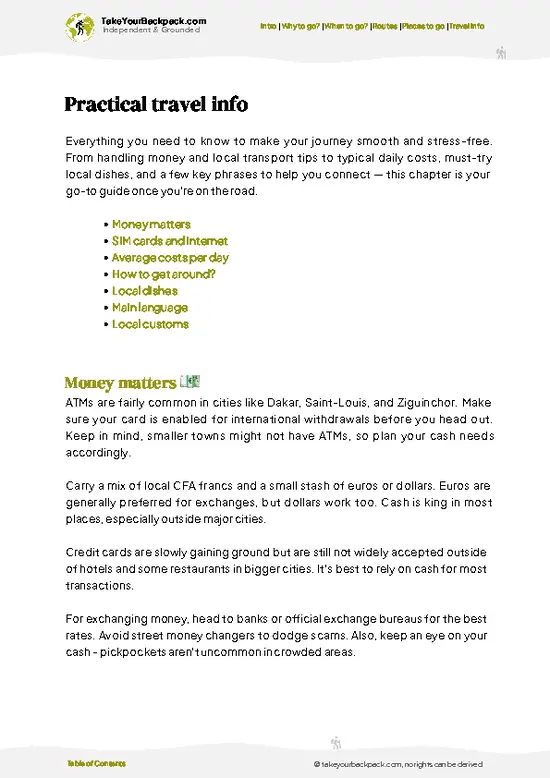
SIM cards, money & practical tips

🌍 Understand the country, not just visit it
Culture & traditions
52 Essential phrases & customs
Festivals worth planning around
Traveler-friendly historical context
Insights that make places more meaningful

📱 Built for real travel conditions
Fully downloadable PDF
Works completely offline
Optimized for phone use
Useful in remote areas & buses
Everything in one place
Save weeks of stressful planning
Get instant access to your full guide. 30‑day money-back guarantee.
+ Add another guide for just US$7.80

By proceeding you agree to our terms.
Sent to your inbox immediately after payment • 100% Secure Checkout
Best Backpacking Travel Advisor 2025 tourism awardBest Backpacking
Travel Advisor
2025
What others say about Take Your Backpack Guides:
⭐⭐⭐⭐⭐
Fantastic, amazing amount of information!
⭐⭐⭐⭐⭐
My goodness this is amazing, it's what I've been looking for hats off too you!
⭐⭐⭐⭐⭐
I think this is absolutely BRILLIANT
⭐⭐⭐⭐
Very complete and informative. It's still missing places, but I gotta to commend you
⭐⭐⭐⭐⭐
This is truly amazing, thank you, can't wait to explore it with my kids!
⭐⭐⭐⭐⭐
Awesome resource, thank you!
⭐⭐⭐⭐⭐
This is amazing! Can't wait to explore the ones I haven't seen
⭐⭐⭐⭐
I love this! Well done, great idea.
⭐⭐⭐⭐⭐
Thanks for taking the time to make this gem!
⭐⭐⭐⭐⭐
This might be the best website I've ever seen.
⭐⭐⭐⭐⭐
Congratulations, and thank you so much for your work; it's incredibly valuable.
⭐⭐⭐⭐
In all seriousness I think you did a great job pointing out the important spots
⭐⭐⭐⭐⭐
10/10 very good
⭐⭐⭐⭐⭐
As someone who's only just starting to visit regularly this is awesome, thank you.
⭐⭐⭐⭐
Thank you very much! I'm going to visit my dad, it's going to be very useful!
⭐⭐⭐⭐⭐
This is really cool! We'll be travelling for the first time and this definitely come in handy.
⭐⭐⭐⭐⭐
You are now our minister of culture, congratulations 👨‍💼
⭐⭐⭐⭐⭐
Just wanted to tell you that this is a pearl! Going to follow your recommendations.
⭐⭐⭐⭐⭐
This is so cool. I'll definitely be using the resource for my travels soon.
⭐⭐⭐⭐⭐
This is very impressive! Good work.
⭐⭐⭐⭐⭐
This is an amazing and informative site. Very well done!

🛏️ Where to stay?Where staying makes the most sense

In Louga, Senegal, the best spot for backpackers is the city center, especially around the main market and the area near the bus station. This zone strikes a solid balance between safety and social buzz. It’s where locals and travelers cross paths naturally, making it easier to connect without the forced vibe of tourist traps. You’ll find a handful of budget guesthouses and informal hostels here, which means you’re not paying for fancy amenities but for a place that’s clean and functional—perfect for a solo traveler who values interaction over luxury.

Compared to the quieter, more residential … read more 👉
In Louga, Senegal, the best spot for backpackers is the city center, especially around the main market and the area near the bus station. This zone strikes a solid balance between safety and social buzz. It’s where locals and travelers cross paths naturally, making it easier to connect without the forced vibe of tourist traps. You’ll find a handful of budget guesthouses and informal hostels here, which means you’re not paying for fancy amenities but for a place that’s clean and functional—perfect for a solo traveler who values interaction over luxury.

Compared to the quieter, more residential neighborhoods on the outskirts, the city center keeps you plugged into the pulse of Louga. It’s where you can grab street food, catch a local event, or just people-watch without feeling isolated. The trade-off is a bit more noise and hustle, but that’s the price for immersion and convenience. For backpackers, this area offers the highest value: safety, social opportunities, and budget options all wrapped into one manageable zone.

🚌 Getting aroundGetting around like a local

Louga moves at its own rhythm—neither strictly regimented nor wildly unpredictable. It’s a city where the clock matters, but so does the human element. You’ll find schedules that exist more as guidelines than ironclad rules, and a pulse that’s steady but flexible. This blend means your travel choices here aren’t just about getting from A to B; they’re about reading the flow and deciding what you’re willing to trade: time, money, or comfort. Mastering Louga’s transit game means understanding these trade-offs and picking the option that fits your style and priorities.


  • Walking: The ultimate budget move. Louga’s compact center makes walking practical and free, but it demands time and stamina—expect 20-30 minutes to cross the main parts. Perfect if you want to soak in street life and avoid
read more 👉
Louga moves at its own rhythm—neither strictly regimented nor wildly unpredictable. It’s a city where the clock matters, but so does the human element. You’ll find schedules that exist more as guidelines than ironclad rules, and a pulse that’s steady but flexible. This blend means your travel choices here aren’t just about getting from A to B; they’re about reading the flow and deciding what you’re willing to trade: time, money, or comfort. Mastering Louga’s transit game means understanding these trade-offs and picking the option that fits your style and priorities.


  • Walking: The ultimate budget move. Louga’s compact center makes walking practical and free, but it demands time and stamina—expect 20-30 minutes to cross the main parts. Perfect if you want to soak in street life and avoid any transit hassle.

  • Local Minibuses (Car Rapide): These are the workhorses of Louga’s streets, running roughly from 6 AM to 8 PM. They cost next to nothing—around 100-200 CFA francs—but expect crowding and a stop-and-go pace. Comfort is minimal, but speed can be decent if you catch one at off-peak times.

  • Shared Taxis: More expensive than minibuses, typically 500-1000 CFA francs per ride, but faster and more direct. They operate on a semi-flexible schedule, often filling up before departure. Comfort is basic but better than standing in a packed minibus. Ideal if you want to save time without breaking the bank.

  • Private Taxis: The most comfortable and fastest option, but also the priciest—expect to pay 3000 CFA francs or more for short trips. Available 24/7, they offer door-to-door service, which is a big plus if you’re carrying heavy gear or traveling late.

  • Bicycle Rentals: A middle ground between walking and motorized transport. Renting a bike costs about 1000-1500 CFA francs per day. It’s faster than walking and gives you freedom to explore at your own pace, but requires some physical effort and caution on busy roads.

👛 Costs (as of 3 September 2026)Typical daily expenses

Backpacking in Louga, Senegal, offers a clear trade-off between cost and comfort, with prices reflecting the city’s modest scale and local lifestyle. Here’s how the daily expenses typically break down for an independent traveler:
  • Dorm Accommodation (High Season): Expect to pay around €8-€12 per night. Options are limited but clean, basic dorms in guesthouses or small hostels cater mostly to budget travelers during peak travel months.
  • Dorm Accommodation (Off-Season): Prices drop to about €5-€8 per night. With fewer tourists, you can negotiate better rates or find quieter spots, though amenities remain simple.
  • Meals: Local eateries serve filling meals for €2-€4 each. Street food and small restaurants dominate, offering traditional Senegalese dishes like thiéboudienne at wallet-friendly prices.
read more 👉
Backpacking in Louga, Senegal, offers a clear trade-off between cost and comfort, with prices reflecting the city’s modest scale and local lifestyle. Here’s how the daily expenses typically break down for an independent traveler:
  • Dorm Accommodation (High Season): Expect to pay around €8-€12 per night. Options are limited but clean, basic dorms in guesthouses or small hostels cater mostly to budget travelers during peak travel months.
  • Dorm Accommodation (Off-Season): Prices drop to about €5-€8 per night. With fewer tourists, you can negotiate better rates or find quieter spots, though amenities remain simple.
  • Meals: Local eateries serve filling meals for €2-€4 each. Street food and small restaurants dominate, offering traditional Senegalese dishes like thiéboudienne at wallet-friendly prices.
  • Local Transport: Shared taxis and minibuses cost roughly €0.30-€0.50 per trip within the city. They’re frequent but can be crowded and irregular, so factor in some waiting time.
  • City Transport Pass: Louga doesn’t have a formal city transport pass system. Budgeting for individual rides is more practical here.
  • Basic Activities/Entry Fees: Cultural sites and local markets usually have minimal or no entry fees, often under €1. Guided tours are rare and typically arranged privately, costing around €10-€15 if available.
  • Miscellaneous Expenses: Budget around €1-€3 for essentials like bottled water, snacks, or small tips. Internet cafes and SIM cards are affordable, with data packages costing about €5 for a week.

In total, a backpacker in Louga can expect to spend between €12 and €25 per day, depending on the season and personal comfort preferences. This range balances basic needs with the occasional small splurge, giving you control over where to save and where to invest in your experience.


source: senegal-tourism.com
⚠️ Prices can change and everyone travels differently, so take this as a rough guide. Hope it helps you plan your adventure!

🚌 Day tripsEasy escapes and nearby places

Louga, Senegal, is a strategic launchpad for day trips that blend culture, nature, and adventure. Here’s how to make the most of your time while keeping costs low.

Lake Guiers
Just an hour from Louga, Lake Guiers offers a refreshing escape. The lake is a hub for fishing and birdwatching, with vibrant local life along its shores. You can rent a canoe for a few dollars or simply stroll the banks to soak in the scenery. The best time to visit is during the dry season, when the wildlife is most active. A common mistake is underestimating the sun; pack sunscreen and plenty of water.


Linguère
A quick 45-minute ride will take you to Linguère, a town rich in history and culture. Here, you can explore the local markets, where the colors and scents of spices fill the air. Don’t miss the chance … read more 👉
Louga, Senegal, is a strategic launchpad for day trips that blend culture, nature, and adventure. Here’s how to make the most of your time while keeping costs low.

Lake Guiers
Just an hour from Louga, Lake Guiers offers a refreshing escape. The lake is a hub for fishing and birdwatching, with vibrant local life along its shores. You can rent a canoe for a few dollars or simply stroll the banks to soak in the scenery. The best time to visit is during the dry season, when the wildlife is most active. A common mistake is underestimating the sun; pack sunscreen and plenty of water.


Linguère
A quick 45-minute ride will take you to Linguère, a town rich in history and culture. Here, you can explore the local markets, where the colors and scents of spices fill the air. Don’t miss the chance to chat with artisans about their crafts. The trip is budget-friendly, with transport costing around $2. Aim for a morning visit to catch the market at its liveliest. First-timers often overlook the importance of timing; arriving too late means missing the best interactions.
👉 Explore Linguère

Keur Massar
About an hour and a half away, Keur Massar is a hidden treasure for those seeking a taste of rural Senegal. The landscape shifts to rolling hills and lush greenery, perfect for hiking. You can engage with local communities and learn about traditional farming practices. Costs are minimal, with transport around $3. The rainy season can make trails muddy, so plan your visit for the dry months. Newcomers often forget to ask locals for guidance, which can lead to missed experiences.


Saint-Louis
A bit further afield, but worth the 2-hour journey, Saint-Louis is a UNESCO World Heritage site. The colonial architecture and vibrant culture are captivating. Explore the island on foot or by bike, and don’t miss the local seafood. Expect to spend around $5 on transport. The best time to visit is during the annual jazz festival, which adds an extra layer of excitement. First-timers sometimes rush through; take your time to soak it all in.
👉 Explore Saint-Louis
Want to know what more Senegal offers?
The Senegal Travel Guide describes 93 highlights, from cities to national parks, from beaches to hikes

Get the Travel Guide -

🍲 FoodLocal Cuisine & Drinks

In Louga, food is a vibrant celebration of local flavors. Dive into thieboudienne, the national dish, where tender fish meets a medley of vegetables and rice, all simmered in a rich tomato sauce. The aroma alone is enough to draw you in. Don’t miss yassa, a zesty chicken or fish dish marinated in lemon and onions, served with rice that soaks up every drop of flavor.

Street food is where the real magic happens. Vendors line the bustling markets, offering meat skewers grilled to perfection and bissap, a refreshing hibiscus drink that’s both tart and sweet. Grab a seat on a plastic stool and soak in the lively chatter around you.

Etiquette is relaxed but communal. Sharing food is common, so don’t hesitate to offer a taste or join in a group meal. Embrace the slow pace of dining; it’s all about … read more 👉
In Louga, food is a vibrant celebration of local flavors. Dive into thieboudienne, the national dish, where tender fish meets a medley of vegetables and rice, all simmered in a rich tomato sauce. The aroma alone is enough to draw you in. Don’t miss yassa, a zesty chicken or fish dish marinated in lemon and onions, served with rice that soaks up every drop of flavor.

Street food is where the real magic happens. Vendors line the bustling markets, offering meat skewers grilled to perfection and bissap, a refreshing hibiscus drink that’s both tart and sweet. Grab a seat on a plastic stool and soak in the lively chatter around you.

Etiquette is relaxed but communal. Sharing food is common, so don’t hesitate to offer a taste or join in a group meal. Embrace the slow pace of dining; it’s all about savoring the moment and connecting with locals.

🛡️ SafetySafety Tips and Common Scams in Louga

Louga is generally safe for travelers, but a few smart habits can enhance your experience. Stay aware in crowded markets, where pickpockets might lurk. Keep your belongings close and avoid flashy displays of wealth.

If you’re solo, especially at night, stick to well-lit areas and consider using a trusted taxi service instead of walking. Locals are friendly, but some may try to sell you overpriced goods or services. A polite “no, thank you” usually suffices.

Annoyances like persistent street vendors can test your patience. A friendly smile and firm but respectful refusal can go a long way. By staying alert and confident, you’ll navigate Louga with ease and enjoy its vibrant culture.

FAQCommon questions from travelers

2 to 3 days is sufficient to explore Louga. This allows time to visit local markets, the Grand Mosque, and nearby rural villages. Louga is a small city, so extended stays are usually unnecessary unless combining with regional travel.
Yes, Louga is generally safe for solo backpackers. Standard precautions apply, such as avoiding poorly lit areas at night and securing belongings. The city has a low crime rate compared to larger urban centers in Senegal.
Louga is known for its vibrant weekly market and traditional Fulani culture. It is also recognized for its livestock trading and the nearby Djoudj National Bird Sanctuary, which attracts bird watchers and nature enthusiasts.
⚠️ Things can change over time, so always validate details locally before you go.

Other Senegalese cities near Louga

Explore more nearby:

  • Saint-Louis—colonial architecture, island bridges, jazz heritage, riverfront| 54 km away
  • Mbacké—Religious neighbor, transport hub, local commerce| 97 km away
  • Diourbel—peanut processing, Sufi shrines, railway stop, agricultural trade| 107 km away

💡 Not sure where to go next?
Create a personalized itinerary for Senegal including Louga and the places that fit your trip.

Generate my itinerary

👉 Discover all cities

Or checkout all Senegal has to offer (think cities, towns, villages, national parks, hikes, beaches, festivals)
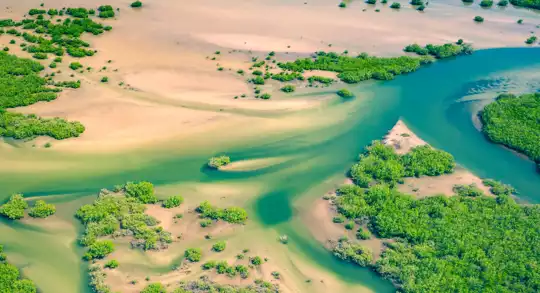
Country photo of Senegal

We 💚 feedbackParting advice and final tips

Louga has a raw, authentic vibe that feels like stepping into a living postcard of Senegalese life. The best surprise? The local markets bursting with color and energy—don’t miss the chance to haggle for spices. Just a heads-up: the heat can be intense, so stay hydrated and pace yourself. Embrace the rhythm, and you’ll find treasures in the everyday.

✍️ Help improve this page!
The information on this page is based on in-depth research, insights shared by experienced travelers, and feedback from the local travel community in Senegal. While every effort is made to keep the information accurate and current, conditions can change — so if you spot anything incorrect or outdated, please get in touch.


🙋‍♂️ Give feedback

👋 Meet the founderWho’s Behind Take Your Backpack?

Johan, backpacker and founder of TakeYourBackpackHi, I’m Johan (Netherlands 🇳🇱), the creator of TakeYourBackpack. Over the past decade, I’ve backpacked through 80+ countries across six continents, gaining extensive experience with independent travel, long-term trips, and overland routes.

This site is built on a combination of firsthand travel experience and carefully curated insights from other backpackers. Many guides are based on places I’ve personally visited, while others bring together tips, observations, and practical advice shared by trusted travelers I’ve met along the way.

The goal is to provide realistic, experience-driven guidance — not generic itineraries — so you can explore destinations with better context, clearer expectations, and more confidence.

Get full Senegal guide •
Instant download • 93 highlights • Full Offline guide