

×

Senegal🇸🇳 | citiesZiguinchorCasamance port, Marché Saint-Maur, Diola crafts, mangrove pirogues | things to do and best time to go

Explore Saint-LouisExplore Matam

Backpacking in Ziguinchor
🏆 Top pickcity ranked #3
By Johan Kruseman 🇳🇱 | Updated October 22, 2026

The decision most travelers face in Ziguinchor is how to get here: the ferry from Dakar across the Gambia-bound Atlantic coast costs more in time but less in money and gives you a deck, a breeze and a proper arrival, while a flight is fast but pricey and a road trip through The Gambia is cheap yet slow, with border queues and a river crossing. For a backpacker, the ferry gives the most for the money, if you can spare the hours. Ziguinchor sits in the south of Senegal, on the Casamance River, a few hours from the Atlantic. Expect red dust, mango shade, the whine of Jakarta motorbikes, smoke from roadside grills and a river that smells of mud and salt. Heat is heavy, power cuts happen, and sights are few. Travelers who like slow, green, rural Africa and long conversations will love it. Anyone chasing a checklist of monuments or fast connections won't.

Discover everything you want to know in the 📖 Senegal Travel Guide.


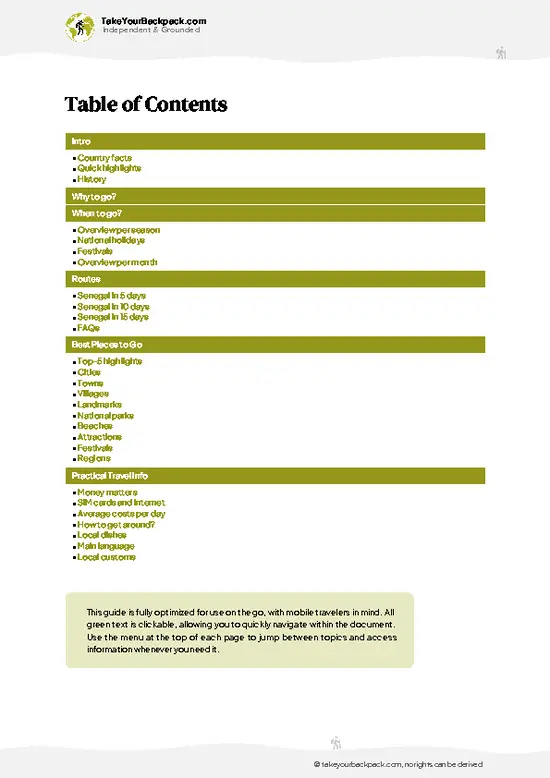
example page 0 from our offline Travel Guide for Senegal
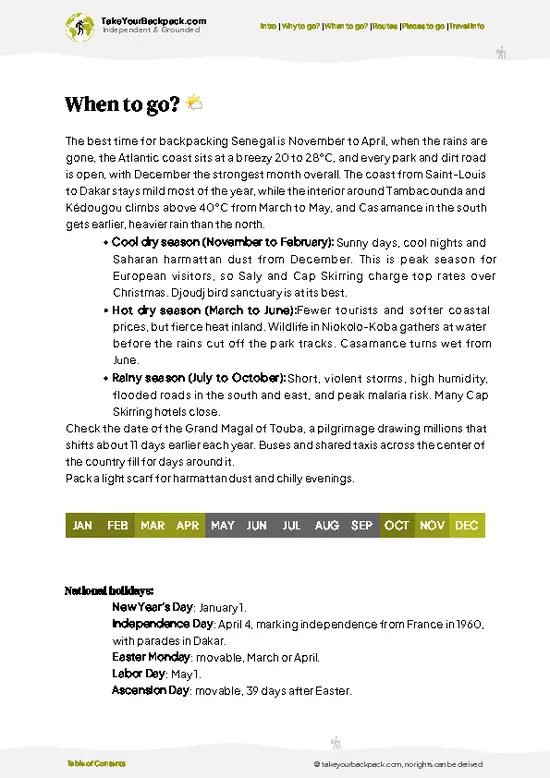
example page 1 from our offline Travel Guide for Senegal
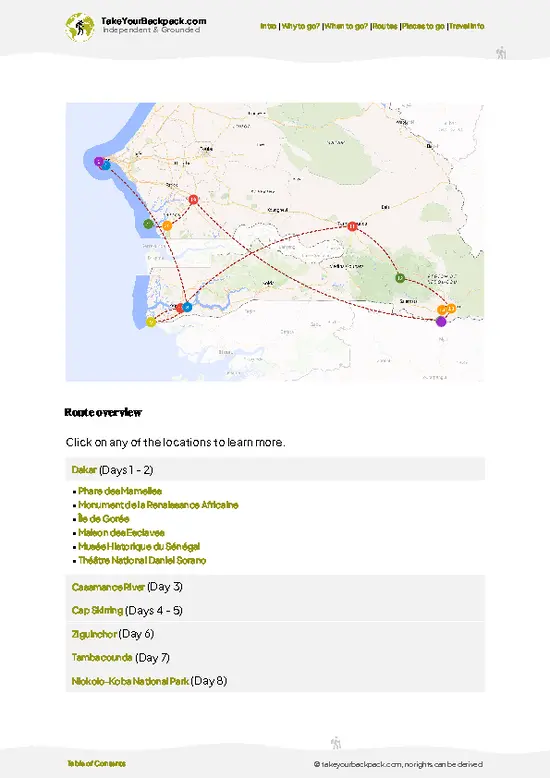
example page 2 from our offline Travel Guide for Senegal
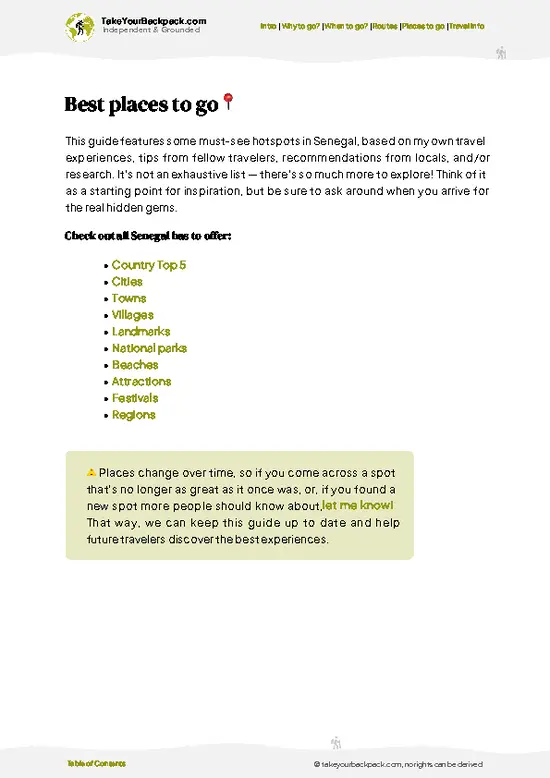
example page 3 from our offline Travel Guide for Senegal
example page 4 from our offline Travel Guide for Senegal
example page 5 from our offline Travel Guide for Senegal
example page 6 from our offline Travel Guide for Senegal
example page 7 from our offline Travel Guide for Senegal
Loading the map 🌍
CLICK TO FILTER
cities
towns
villages
landmarks
national parks
beaches
attractions
festivals
regions
SHOW COUNTRY’S BESTSHOW ALL

✨ Why go?
Ranked #3 city in Senegal
Reasons people choose to visit here

Ziguinchor works because it is the doorway to the Casamance, a region that feels distinct from the dry north. You come for the Casamance River setting, the greenery and a calmer pace than Dakar, and you stay because the town is easy on foot. Its flat streets, shaded avenues and compact center mean you can cover most of it without a taxi. The Diola culture shapes the food, the music and the pace of conversation, and it is easy to meet people at the market, the riverfront and the small bars that fill after dark. Hostels and guesthouses are few but friendly, and owners often double as guides for the surrounding villages and islands. As a route stop, Ziguinchor links Dakar, The Gambia, Guinea-Bissau and the beach towns of the coast, so it suits a loop rather than a dead end. Treat it as a base … read more 👉
Ziguinchor works because it is the doorway to the Casamance, a region that feels distinct from the dry north. You come for the Casamance River setting, the greenery and a calmer pace than Dakar, and you stay because the town is easy on foot. Its flat streets, shaded avenues and compact center mean you can cover most of it without a taxi. The Diola culture shapes the food, the music and the pace of conversation, and it is easy to meet people at the market, the riverfront and the small bars that fill after dark. Hostels and guesthouses are few but friendly, and owners often double as guides for the surrounding villages and islands. As a route stop, Ziguinchor links Dakar, The Gambia, Guinea-Bissau and the beach towns of the coast, so it suits a loop rather than a dead end. Treat it as a base of two or three nights, longer if you want the countryside.

💡 HighlightsThe experiences that define the visit

  1. Marché Saint-Maur: The main market is the best place to see the town at work, with palm oil, dried fish, cashews, tie-dyed cloth and Diola crafts. Go in the morning when it is coolest and busiest. Entry is free, allow 1 to 2 hours.
  2. Ziguinchor Riverfront and Port: Pirogues and the big ferry dock along the Casamance, and the waterfront is the place for a late afternoon stroll with fishermen mending nets. Free, about 1 hour, best near dusk.
  3. Marché Artisanal (Craft Market): Stalls sell carved wood, masks, drums and jewelry, and you can bargain gently. Mornings are quieter. Free to enter, 45 minutes to 1 hour, purchases from about €2 to 15.
  4. Alliance Franco-Sénégalaise: A cultural center that hosts concerts, exhibitions and film evenings, useful for catching local music. Check evening events. Tickets
… read more 👉
  1. Marché Saint-Maur: The main market is the best place to see the town at work, with palm oil, dried fish, cashews, tie-dyed cloth and Diola crafts. Go in the morning when it is coolest and busiest. Entry is free, allow 1 to 2 hours.
  2. Ziguinchor Riverfront and Port: Pirogues and the big ferry dock along the Casamance, and the waterfront is the place for a late afternoon stroll with fishermen mending nets. Free, about 1 hour, best near dusk.
  3. Marché Artisanal (Craft Market): Stalls sell carved wood, masks, drums and jewelry, and you can bargain gently. Mornings are quieter. Free to enter, 45 minutes to 1 hour, purchases from about €2 to 15.
  4. Alliance Franco-Sénégalaise: A cultural center that hosts concerts, exhibitions and film evenings, useful for catching local music. Check evening events. Tickets are usually €2 to 5, 1 to 2 hours.
  5. Cathedral of Saint Antoine de Padoue: A colonial-era church in the center with a calm interior, worth a short stop when the heat peaks. Free, 20 to 30 minutes, best in the morning.
  6. Maison du Patrimoine and old colonial quarter: Walk the shaded streets with faded colonial houses and old trading buildings. Free, 1 hour, early morning or late afternoon.
  7. Pirogue trip on the Casamance River: A boat ride through mangrove channels shows the river life up close. Expect €8 to 20 per person depending on group size and route, 2 to 4 hours, best in the morning.
Beyond town, Cap Skirring beach, Oussouye, Carabane island and the Diola villages of the lower Casamance make strong day trips from Ziguinchor. For a first visit, the market is the best item, because it packs the town's food, crafts and faces into one walk.
Spotted a mistake or missing something? Contact us.

🏘️ NeighborhoodsNeighborhood guide to Ziguinchor

Ziguinchor sprawls along the Casamance River, and the parts worth your time sit within a few kilometers of each other. Walk the center and take a taxi when the sun is high or the road turns to sand.
  • Centre-ville and the Marché Saint-Maur: Mango trees shade wide, colonial-era avenues, and the market is a crush of dried fish, smoked oysters, palm oil and wax-print cloth. Go early, before the heat builds. This is the best use of a morning, it costs nothing, and you can cover it entirely on foot.
  • Riverfront and the port: The quay smells of diesel, river mud and grilled fish, and pirogues knock against the pilings. Boats to Dakar and the Carabane islands leave from here. Walking is easy, and a late-afternoon stroll beats any paid attraction.
  • Boucotte: A residential district with sandy lanes, small
… read more 👉
Ziguinchor sprawls along the Casamance River, and the parts worth your time sit within a few kilometers of each other. Walk the center and take a taxi when the sun is high or the road turns to sand.
  • Centre-ville and the Marché Saint-Maur: Mango trees shade wide, colonial-era avenues, and the market is a crush of dried fish, smoked oysters, palm oil and wax-print cloth. Go early, before the heat builds. This is the best use of a morning, it costs nothing, and you can cover it entirely on foot.
  • Riverfront and the port: The quay smells of diesel, river mud and grilled fish, and pirogues knock against the pilings. Boats to Dakar and the Carabane islands leave from here. Walking is easy, and a late-afternoon stroll beats any paid attraction.
  • Boucotte: A residential district with sandy lanes, small bars and cheap eateries where Jola families sit outside on plastic chairs. Evenings are loud with music. Walkable from the center in 20 minutes, but a short taxi ride home after dark saves your feet.
  • Lyndiane and Kandé: Quieter outer quarters of dusty roads, goats and roadside grills. They are less interesting to wander, so a taxi ride for a specific meal or a bus connection makes more sense than a long walk in the glare.
  • Escale and the cultural quarter: Old buildings, the artisan stalls and the regional museum sit close together near the river. Small, shaded and easy to cover in a couple of hours, which makes it the most efficient cultural stop in town.

⌛️ 1 day1-day itinerary for Ziguinchor

8:00 AM, Marché Saint-Maur: Start here, before the heat builds. Wander the aisles of dried fish, palm oil, spices and cloth, and eat a hot bread-and-bean breakfast from a stall. Then walk ten minutes toward the center.
9:30 AM, Cathedral of Saint Antoine de Padoue: A short, cool stop with a quiet interior and a good look at colonial-era building. Continue on foot along the shaded avenues.
10:30 AM, Marché Artisanal: Browse masks, drums and carved figures, and talk to the makers rather than only the sellers. Bargain gently and buy small.
12:30 PM, Lunch near the center: Order grilled fish or a rice dish with oysters at a local eatery and wait out the hottest hours in shade.
3:00 PM, Old colonial quarter: Walk the quieter residential streets with faded villas and mango trees, away from the usual … read more 👉
8:00 AM, Marché Saint-Maur: Start here, before the heat builds. Wander the aisles of dried fish, palm oil, spices and cloth, and eat a hot bread-and-bean breakfast from a stall. Then walk ten minutes toward the center.
9:30 AM, Cathedral of Saint Antoine de Padoue: A short, cool stop with a quiet interior and a good look at colonial-era building. Continue on foot along the shaded avenues.
10:30 AM, Marché Artisanal: Browse masks, drums and carved figures, and talk to the makers rather than only the sellers. Bargain gently and buy small.
12:30 PM, Lunch near the center: Order grilled fish or a rice dish with oysters at a local eatery and wait out the hottest hours in shade.
3:00 PM, Old colonial quarter: Walk the quieter residential streets with faded villas and mango trees, away from the usual route. Neighbors chat on doorsteps and the pace is slow.
4:30 PM, Riverfront and port: Follow the street down to the Casamance. Watch pirogues unload, and sit on the bank for the changing light on the water.
6:30 PM, Alliance Franco-Sénégalaise or a local bar: Check for live music or a film. If nothing is on, find a small bar with a terrace and finish with a cold drink and grilled meat.

🌤️ When to go?Choosing the right time of year

November to February is the most comfortable window, with days of 28 to 33°C (82 to 91°F), cool nights near 18 to 22°C (64 to 72°F) and dry, dusty air.
  • Cool Dry Season (November to February): Sunny, low humidity, ten to eleven hours of daylight, and river trips are at their easiest. Guesthouses fill around Christmas and prices rise a little.
  • Hot Dry Season (March to May): Afternoons reach 35 to 40°C (95 to 104°F). Mornings are fine, midday is for shade, and crowds are thin.
  • Rainy Season (June to October): Highs of 30 to 34°C (86 to 93°F) with heavy humidity, and August brings the biggest downpours. Everything turns green, mosquitoes multiply, and some sandy tracks and village roads flood. Rooms are cheapest now.
  • Festivals: Cultural events and the Catholic and Muslim holidays pull in local crowds,
… read more 👉
November to February is the most comfortable window, with days of 28 to 33°C (82 to 91°F), cool nights near 18 to 22°C (64 to 72°F) and dry, dusty air.
  • Cool Dry Season (November to February): Sunny, low humidity, ten to eleven hours of daylight, and river trips are at their easiest. Guesthouses fill around Christmas and prices rise a little.
  • Hot Dry Season (March to May): Afternoons reach 35 to 40°C (95 to 104°F). Mornings are fine, midday is for shade, and crowds are thin.
  • Rainy Season (June to October): Highs of 30 to 34°C (86 to 93°F) with heavy humidity, and August brings the biggest downpours. Everything turns green, mosquitoes multiply, and some sandy tracks and village roads flood. Rooms are cheapest now.
  • Festivals: Cultural events and the Catholic and Muslim holidays pull in local crowds, and transport gets fuller.
Book river boats a few days ahead in December and January, since seats vanish first.


source: climatestotravel.comJANJanuary: excellent for travelingFEBFebruary: excellent for travelingMARMarch: excellent for travelingAPRApril: excellent for travelingMAYMay: highly recommended for travelingJUNJune: fair for travelingJULJuly: fair for travelingAUGAugust: fair for travelingSEPSeptember: fair for travelingOCTOctober: fair for travelingNOVNovember: highly recommended for travelingDECDecember: excellent for traveling
when-to-go

✈️ The backpacker research shortcutSenegal Travel Guide

An offline-friendly backpacking guide with optimized travel routes, ranked highlights, transport advice, and the best areas to stay.
example page 0 from our offline Travel Guide for Senegal
example page 1 from our offline Travel Guide for Senegal
example page 2 from our offline Travel Guide for Senegal
example page 3 from our offline Travel Guide for Senegal
example page 4 from our offline Travel Guide for Senegal
example page 5 from our offline Travel Guide for Senegal
example page 6 from our offline Travel Guide for Senegal
example page 7 from our offline Travel Guide for Senegal
The digital guide (360 pages) contains:
✅ 85 highlights, ranked by travel appeal
✅ Optimized 5, 10 & 15-day travel routes
✅ Cities, national parks, landmarks, beaches
✅ How to get around
✅ Offline-friendly for travel without Wi-Fi
👉 Click to see all 30+ guide features

📅 Plan smarter in minutes, not weeks
✅ Month by month travel advice
✅ Festivals & national holidays
✅ Budget expectations

🗺️ Go to the right places, skip the overrated ones
✅ Honest pros & cons of destinations
✅ Top hikes, parks & viewpoints
✅ Lesser-known places most travelers miss
✅ Clear “worth it vs skip it” guidance

🛏️ Travel smoothly without rookie mistakes
✅ Best areas to stay
✅ Transport systems explained simply
✅ Common scams & safety advice
✅ SIM cards, money & practical tips

🌍 Understand the country, not just visit it
✅ Culture & traditions
✅ 52 Essential phrases & customs
✅ Festivals worth planning around
✅ Traveler-friendly historical context
✅ Insights that make places more meaningful

📱 Built for real travel conditions
✅ Fully downloadable PDF
✅ Works completely offline
✅ Optimized for phone use
✅ Useful in remote areas & buses
✅ Everything in one place
Stop searching, start planning
Get instant access to your full guide. 30‑day money-back guarantee.
+ Add another guide for just

By proceeding you agree to our terms.
Sent to your inbox immediately after payment • 100% Secure Checkout
Best Backpacking Travel Advisor 2025 tourism awardBest Backpacking
Travel Advisor
2025
What others say about Take Your Backpack Guides:
⭐⭐⭐⭐⭐
Fantastic, amazing amount of information!
⭐⭐⭐⭐⭐
My goodness this is amazing, it's what I've been looking for hats off too you!
⭐⭐⭐⭐⭐
I think this is absolutely BRILLIANT
⭐⭐⭐⭐
Very complete and informative. It's still missing places, but I gotta to commend you
⭐⭐⭐⭐⭐
This is truly amazing, thank you, can't wait to explore it with my kids!
⭐⭐⭐⭐⭐
Awesome resource, thank you!
⭐⭐⭐⭐⭐
This is amazing! Can't wait to explore the ones I haven't seen
⭐⭐⭐⭐
I love this! Well done, great idea.
⭐⭐⭐⭐⭐
Thanks for taking the time to make this gem!
⭐⭐⭐⭐⭐
This might be the best website I've ever seen.
⭐⭐⭐⭐⭐
Congratulations, and thank you so much for your work; it's incredibly valuable.
⭐⭐⭐⭐
In all seriousness I think you did a great job pointing out the important spots
⭐⭐⭐⭐⭐
10/10 very good
⭐⭐⭐⭐⭐
As someone who's only just starting to visit regularly this is awesome, thank you.
⭐⭐⭐⭐
Thank you very much! I'm going to visit my dad, it's going to be very useful!
⭐⭐⭐⭐⭐
This is really cool! We'll be travelling for the first time and this definitely come in handy.
⭐⭐⭐⭐⭐
You are now our minister of culture, congratulations 👨‍💼
⭐⭐⭐⭐⭐
Just wanted to tell you that this is a pearl! Going to follow your recommendations.
⭐⭐⭐⭐⭐
This is so cool. I'll definitely be using the resource for my travels soon.
⭐⭐⭐⭐⭐
This is very impressive! Good work.
⭐⭐⭐⭐⭐
This is an amazing and informative site. Very well done!

🛏️ Where to stay?Best areas and accommodation options

Stay in or near the center around the market and river quay, where dorm beds and cheap private rooms are easiest to find, usually priced around €8 to 20. Ziguinchor has few true hostels, so most budget travelers use small guesthouses and basic hotels, some with shared rooms. Being central means you can walk to food, the port and the garage where shared cars leave, and you avoid taxi fares at both ends of a long travel day. Streets are fairly quiet after dark, though a few bars and the occasional mosque call wake light sleepers early, so bring earplugs.

Boucotte is the second option if you want … read more 👉
Stay in or near the center around the market and river quay, where dorm beds and cheap private rooms are easiest to find, usually priced around €8 to 20. Ziguinchor has few true hostels, so most budget travelers use small guesthouses and basic hotels, some with shared rooms. Being central means you can walk to food, the port and the garage where shared cars leave, and you avoid taxi fares at both ends of a long travel day. Streets are fairly quiet after dark, though a few bars and the occasional mosque call wake light sleepers early, so bring earplugs.

Boucotte is the second option if you want a more local feel. Rooms there are often cheaper and the lanes are lively in the evening with music and grills, but it is a 15 to 20 minute walk from the center, and sandy, unlit stretches mean a short taxi ride at night. Fans or air conditioning matter more than location from April to October, so check that power and water work before you pay. Book ahead around Christmas and major holidays, because small places fill quickly.

🚌 Getting aroundMoving around without the hassle

The center of Ziguinchor is flat and compact, so you can walk between the market, the riverfront and the main avenues in 10 to 20 minutes, and walking stops making sense once you head to outer districts or travel in the midday heat. Traffic is light compared with Dakar, though dust and motorbikes are constant. There is no real public bus network, so shared and private cars do the work.
  • Walking: Free, and the best way to cover the center, where mango shade and river breezes soften the heat. Pavements disappear in places, so you share the road with motorbikes. Go early or after 4 pm.
  • Local taxis: Yellow-and-black cabs run set short hops for about €0.40 to 0.80 within town and €1 to 2 to farther districts. Agree the price before you get in. They are cheap, they come quickly and they are the best
… read more 👉
The center of Ziguinchor is flat and compact, so you can walk between the market, the riverfront and the main avenues in 10 to 20 minutes, and walking stops making sense once you head to outer districts or travel in the midday heat. Traffic is light compared with Dakar, though dust and motorbikes are constant. There is no real public bus network, so shared and private cars do the work.
  • Walking: Free, and the best way to cover the center, where mango shade and river breezes soften the heat. Pavements disappear in places, so you share the road with motorbikes. Go early or after 4 pm.
  • Local taxis: Yellow-and-black cabs run set short hops for about €0.40 to 0.80 within town and €1 to 2 to farther districts. Agree the price before you get in. They are cheap, they come quickly and they are the best value when walking becomes miserable.
  • Jakarta motorbike taxis: Fast through sandy back lanes for about €0.30 to 0.60. You get wind and dust in your face, and helmets are rare, so they suit short, daytime rides.
  • Sept-places (shared cars) and minibuses: They leave from the garage when full, to Cap Skirring (1 to 1.5 hours, about €3 to 4), Kolda and Banjul-bound border points. Seats are cramped and engines loud, but they are the cheapest way to reach villages.
  • Ferry and boats: The ferry to Dakar runs a few times a week, takes about 12 to 14 hours overnight and costs roughly €15 to 30 depending on seat or cabin. Smaller boats go to Carabane (about 1.5 to 2.5 hours, €5 to 10). Book early, and expect the deck to smell of fish and diesel. The ferry is slow but saves a night of lodging and the long road through The Gambia.

👛 Costs (as of 22 October 2026)What things cost and how to budget

Ziguinchor costs about €25 to 54 a day for a backpacker, and the table shows where it goes. Prices are in euros, though you pay in local currency.
CategoryBudget RangeLocal Reality
Dorm accommodation (high season)€8 to 15Few true dorms, so basic guesthouse rooms are the norm, with fan and shared bathroom.
Dorm accommodation (off-season)€6 to 10Rainy months from June to October bring discounts and easy bargaining.
Meals€6 to 12Rice and fish plates at local canteens run €1.50 to 3, with café meals higher.
Local transport€1 to 4Short taxi hops cost about €0.40 to 0.80, and motorbike taxis are similar.
City transport passNot availableNo pass exists, so you pay per ride in cash.
Basic activities and entry fees€2 to 8Museum and artisan visits are cheap, and a local guide costs about €5 to 10.
Miscellaneous€2
… read more 👉
Ziguinchor costs about €25 to 54 a day for a backpacker, and the table shows where it goes. Prices are in euros, though you pay in local currency.
CategoryBudget RangeLocal Reality
Dorm accommodation (high season)€8 to 15Few true dorms, so basic guesthouse rooms are the norm, with fan and shared bathroom.
Dorm accommodation (off-season)€6 to 10Rainy months from June to October bring discounts and easy bargaining.
Meals€6 to 12Rice and fish plates at local canteens run €1.50 to 3, with café meals higher.
Local transport€1 to 4Short taxi hops cost about €0.40 to 0.80, and motorbike taxis are similar.
City transport passNot availableNo pass exists, so you pay per ride in cash.
Basic activities and entry fees€2 to 8Museum and artisan visits are cheap, and a local guide costs about €5 to 10.
Miscellaneous€2 to 5Water, SIM data, repellent and small tips.
Total Daily Budget€25 to 54About €35 for most budget travelers in high season.
Eat where locals eat, because market canteens cost a third of café prices and the food is fresher.
⚠️ Prices can change and everyone travels differently, so take this as a rough guide. Hope it helps you plan your adventure!

🚌 Day tripsWhere to go beyond the main area

Ziguinchor works well as a base, since roads and boats fan out to beaches, forests and island villages, and most trips fit in a day.
Cap Skirring: Senegal’s best-known beach strip lies 1 to 1.5 hours away by shared car for about €3 to 4 each way. White sand, palm shade and cheap grilled fish make it worth the trip, best from November to April. First-timers often leave too late and miss the last return car, which departs mid-afternoon.
👉 Explore Cap Skirring
Carabane Island: A sleepy former colonial outpost at the river mouth, with a ruined church, mangroves and quiet sand lanes. The boat takes about 1.5 to 2.5 hours and costs about €5 to 10 each way. Check the return schedule before you leave, since the tide and boat timetable shape the day. Go in the dry months.

Enampore and the Jola villages: … read more 👉
Ziguinchor works well as a base, since roads and boats fan out to beaches, forests and island villages, and most trips fit in a day.
Cap Skirring: Senegal’s best-known beach strip lies 1 to 1.5 hours away by shared car for about €3 to 4 each way. White sand, palm shade and cheap grilled fish make it worth the trip, best from November to April. First-timers often leave too late and miss the last return car, which departs mid-afternoon.
👉 Explore Cap Skirring
Carabane Island: A sleepy former colonial outpost at the river mouth, with a ruined church, mangroves and quiet sand lanes. The boat takes about 1.5 to 2.5 hours and costs about €5 to 10 each way. Check the return schedule before you leave, since the tide and boat timetable shape the day. Go in the dry months.

Enampore and the Jola villages: The road toward Oussouye passes rice paddies and traditional Jola mud-brick houses. A shared car costs about €1.50 to 3 and takes under an hour. You can wander on foot for a few hours, and a local guide for around €5 to 10 makes the visit more meaningful. Skip it in peak rains, when paths flood.

Bignona and the Kassa forests: An hour or so north by sept-place, around €2 to 3, Bignona has a lively market and access to nearby forest tracks. Go on market day, and avoid arriving after midday when stalls thin out.
👉 Explore Bignona

🍲 FoodLocal Flavors for Backpackers

Casamance cooking leans on the river and the sea, so smoked fish, oysters and shrimp show up at stalls and in family kitchens. Try huîtres de palétuvier (mangrove oysters), sold grilled or in sauce, and caldou, a tangy fish stew with lemon and onion, plus mafé de poisson variants with local twists. Rice dominates, often paired with palm oil and fresh seafood.

For drinks, look for bounouk, a sweet-tart juice made from local fruits, and palm wine, tapped fresh in the morning and fizzy by afternoon. Cashew apple juice is also a regional specialty, sweet and a little astringent.

Backpackers usually eat at the Marché Saint-Maur food stalls, at roadside grills near the riverfront and in small local canteens where a plate of rice and fish costs about €1.50 to 3. Evening street corners serve grilled … read more 👉
Casamance cooking leans on the river and the sea, so smoked fish, oysters and shrimp show up at stalls and in family kitchens. Try huîtres de palétuvier (mangrove oysters), sold grilled or in sauce, and caldou, a tangy fish stew with lemon and onion, plus mafé de poisson variants with local twists. Rice dominates, often paired with palm oil and fresh seafood.

For drinks, look for bounouk, a sweet-tart juice made from local fruits, and palm wine, tapped fresh in the morning and fizzy by afternoon. Cashew apple juice is also a regional specialty, sweet and a little astringent.

Backpackers usually eat at the Marché Saint-Maur food stalls, at roadside grills near the riverfront and in small local canteens where a plate of rice and fish costs about €1.50 to 3. Evening street corners serve grilled fish, bread with sauce and sweet tea. Ask for a pinch of pepper first, because the chili sauce hits hard.

🛡️ SafetyScams, Hazards, and Annoyances

Ziguinchor is calm and friendly, and most problems are petty. Keep phones and cameras out of sight at the Marché Saint-Maur and around the port, where crowds make pickpocketing possible. Solo travelers, including women, usually walk the center comfortably in daylight. After dark, take a taxi between districts, since many sandy lanes are unlit and uneven. Expect persistent but good-humored offers from touts and unofficial guides near the quay, and a firm “non, merci” with a smile works. Agree taxi and motorbike prices before you ride. Mosquitoes are a daily nuisance, so use repellent and check the latest malaria advice. Parts of the wider Casamance countryside have had past tension, so ask locals or your guesthouse about current road conditions before heading to remote villages, and keep to main routes and daytime travel.

FAQCommon questions from travelers

Two full days cover Ziguinchor itself, including the Marché Saint-Maur, the riverfront and the artisan quarter. Add one day for Cap Skirring, about 1 to 1.5 hours away, and another for Carabane Island by boat. Most backpackers spend three to four days in total.
Ziguinchor is calm and generally comfortable for solo backpackers, including women, in daylight. Petty theft around the market and port is the main risk, so keep valuables hidden. After dark, a taxi costing about €0.40 to 1 is wiser than walking unlit sandy streets, and you should check road conditions before visiting remote Casamance villages.
Ziguinchor is known as the main city of Casamance, with leafy colonial avenues along the river and a strong Jola cultural presence. Visitors come for the Marché Saint-Maur, smoked fish and oysters, and as a gateway to Cap Skirring beaches and Carabane Island. The overnight ferry to Dakar, about 12 to 14 hours, is also a signature way to reach it.
⚠️ Things can change over time, so always validate details locally before you go.

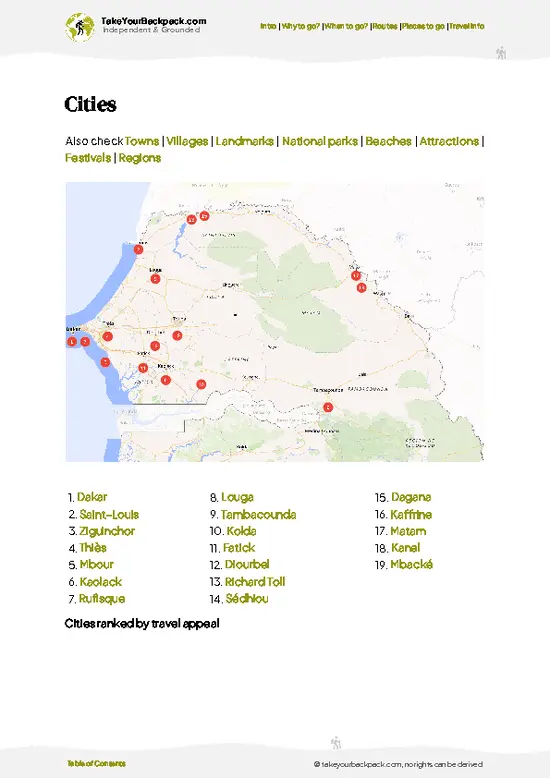
Other Senegalese cities near Ziguinchor

Explore more nearby:

  • Sédhiou—Casamance bluff, colonial residence, mangrove channels, cashew orchards| 78 km away
  • Kolda—Fula weekly market, Casamance banks, cattle at dusk, artisan lanes| 148 km away
  • Kaolack—Saloum salt flats, kola and peanut market, river port, twin-minaret mosque| 179 km away

💡 Not sure where to go next?
Create a personalized itinerary for Senegal including Ziguinchor and the places that fit your trip.

Generate my itinerary

👉 Discover all cities

Or checkout all Senegal has to offer (think cities, towns, villages, national parks, hikes, beaches, festivals)
Country photo of Senegal

We 💚 feedbackParting advice and final tips

Ziguinchor is often treated as a quick transit stop, and that is the mistake. Give it at least two nights and spend one of those days on the river or in a Diola village. Bring small cash, mosquito repellent and patience for power cuts, and I would skip rushing to the beach until you have eaten at the market.

✍️ Help improve this page!
The information on this page is based on in-depth research, insights shared by experienced travelers, and feedback from the local travel community in Senegal. While every effort is made to keep the information accurate and current, conditions can change — so if you spot anything incorrect or outdated, please get in touch.


🙋‍♂️ Give feedback

👋 Meet the founderWho’s Behind Take Your Backpack?

Johan, backpacker and founder of TakeYourBackpackHi, I’m Johan (Netherlands 🇳🇱), the creator of TakeYourBackpack. Over the past 3 decades, I’ve backpacked through 90+ countries across six continents, gaining extensive experience with independent travel, long-term trips, and overland routes.

This site is built on a combination of firsthand travel experience and carefully curated insights from other backpackers. Many guides are based on places I’ve personally visited, while others bring together tips, observations, and practical advice shared by trusted travelers I’ve met along the way.

The goal is to provide realistic, experience-driven guidance — not generic itineraries — so you can explore destinations with better context, clearer expectations, and more confidence.