v2.webp)
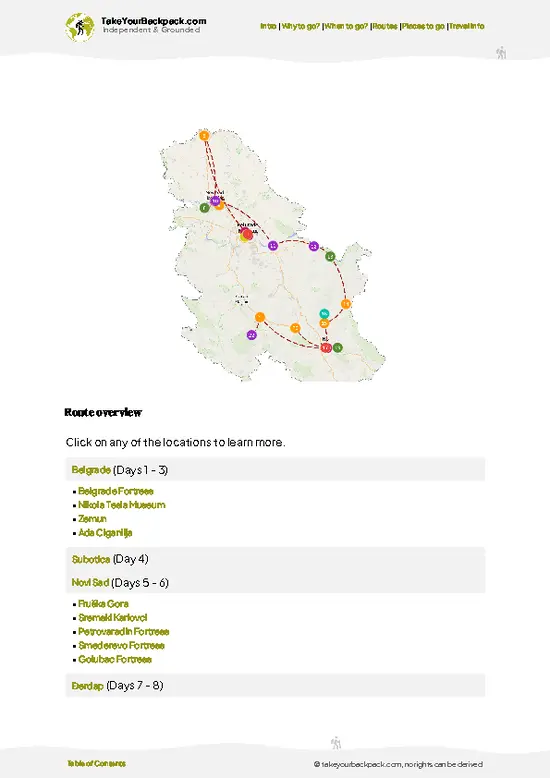
- Massive lowland walls and semicircular towers — The scale hits you first: long stone curtain walls punctuated by rounded towers that were built to defend a fortress on flat ground. It’s rare to see a medieval stronghold this big without a hill beneath it, and the engineering for a lowland defense is part of what makes Smederevo special.
- Despot Đurađ’s palace ruins — The remains of the despot’s urban palace are inside the walls. This was the administrative heart of the Serbian Despotate in the 15th century, so walking those foundations feels like stepping into the country’s late-medieval power hub.
- Danube-facing position and riverside gate — The fortress sits right on the Danube, with a historic river gate and quay that underline its strategic river-control role. The views and evening light
- Massive lowland walls and semicircular towers — The scale hits you first: long stone curtain walls punctuated by rounded towers that were built to defend a fortress on flat ground. It’s rare to see a medieval stronghold this big without a hill beneath it, and the engineering for a lowland defense is part of what makes Smederevo special.
- Despot Đurađ’s palace ruins — The remains of the despot’s urban palace are inside the walls. This was the administrative heart of the Serbian Despotate in the 15th century, so walking those foundations feels like stepping into the country’s late-medieval power hub.
- Danube-facing position and riverside gate — The fortress sits right on the Danube, with a historic river gate and quay that underline its strategic river-control role. The views and evening light over the water are excellent; the river was both lifeline and defence for the fortress.
- Main gate and defensive approach — The approach to the main entrance is intentionally dramatic: tight angles, thick walls and defensive features designed to slow attackers. It’s a neat example of practical medieval military thinking you can still trace with your eyes.
- Archaeology and recovered treasures — Ongoing digs and museum displays inside the complex have produced ceramics, coins and structural finds that tell the story of everyday life, warfare and trade here. Small exhibits make the history tangible rather than just a pile of stones.
- Medieval townscape—streets, courtyards and wells — Smederevo isn’t just a military shell: it was a fortified town. Narrow lanes, inner courtyards and service areas still hint at the market, workshops and households that once lived under the walls.
- Local culture and seasonal events — The fortress doubles as a cultural stage in summer: concerts, open-air events and wine tastings from the nearby Župa vineyards bring the place to life. Visiting with a festival in progress gives the site a social energy that contrasts nicely with its stone austerity.
Spotted a mistake or missing something? Contact us.


 Best Backpacking
.jpg) Hi, I’m Johan (Netherlands 🇳🇱), the creator of TakeYourBackpack. Over the past 3 decades, I’ve backpacked through 90+ countries across six continents, gaining extensive experience with independent travel, long-term trips, and overland routes.
Hi, I’m Johan (Netherlands 🇳🇱), the creator of TakeYourBackpack. Over the past 3 decades, I’ve backpacked through 90+ countries across six continents, gaining extensive experience with independent travel, long-term trips, and overland routes.