×

Slovenia🇸🇮 | best townsExplore the 10 Best towns in Slovenia

Towns in Slovenia are small, walkable and rarely more than 90 minutes apart, because the country is only about 20,000 square kilometers. Differences come from geography. The Alpine northwest has the highest prices and the biggest summer crowds around its lakes and peaks. The Adriatic coast is short, Venetian in architecture and costly in July and August. The Karst and central basins sit between the two, with moderate costs and steady access by bus and train. The eastern lowlands are the cheapest and quietest, but services thin out after dark. For backpacking or any independent trip, pick the type first, then the route.

By Johan Kruseman 🇳🇱 | Updated October 17, 2026
Explore the best villages in Slovenia

Why go?What Makes Them Special

Slovenia suits town travel because of how its history and geography packed so much variety into a small area. Alpine, Mediterranean, Pannonian and Karst landscapes meet here, and each shaped a different settlement type: Habsburg market towns, Venetian ports, medieval hill fortresses and spa settlements. Centuries under Austrian rule left compact, tidy centers with pedestrian cores, and the country’s small size means almost nothing is far from anything else.

Infrastructure matters too. Slovenia has a dense network of intercity buses and a rail spine connecting the capital with major regional hubs, though trains are slower than the distances suggest and some rural lines are sparse. English is widely spoken, especially by under-50s, so independent travel is easy.

Before committing, know the … read more 👉
Slovenia suits town travel because of how its history and geography packed so much variety into a small area. Alpine, Mediterranean, Pannonian and Karst landscapes meet here, and each shaped a different settlement type: Habsburg market towns, Venetian ports, medieval hill fortresses and spa settlements. Centuries under Austrian rule left compact, tidy centers with pedestrian cores, and the country’s small size means almost nothing is far from anything else.

Infrastructure matters too. Slovenia has a dense network of intercity buses and a rail spine connecting the capital with major regional hubs, though trains are slower than the distances suggest and some rural lines are sparse. English is widely spoken, especially by under-50s, so independent travel is easy.

Before committing, know the limits. Slovenia is a small, relatively expensive country by Balkan standards, and it uses the euro. Peak-season pricing in the Alps and on the coast is steep, and towns are modest in scale, so the appeal lies in atmosphere and surrounding nature rather than monumental sights. Many places close early, and Sundays are quiet because most shops shut. Travelers expecting big-city nightlife outside the capital will find little.
Why These Made the Cut
The list of best towns in Slovenia is created based on charm, local culture, atmosphere, hidden gems, and visitor appeal. If you feel a town is missing in this list, please let us know.

When to go?Timing Your Visit for the Best Experience

Best months for Slovenian towns: The best months are May, June and September, when daytime highs reach roughly 18 to 26°C, terraces are open, and prices and crowds sit below the July and August peak. Snow no longer blocks Alpine roads and the Adriatic is warm enough for swimming by late June.

Summer peak: July and August bring highs of 27 to 33°C inland and on the coast, and accommodation near the Alpine lakes and Adriatic can run 30 to 60 percent above shoulder-season rates. Afternoon thunderstorms are common in the mountains. Inland towns such as those in the central basin stay manageable, since visitors concentrate in the northwest and on the coast.

Shoulder and winter seasons: April and October are cooler (8 to 18°C) and wetter, with Slovenia receiving roughly 1,000 to 1,500 mm of rain … read more 👉
Best months for Slovenian towns: The best months are May, June and September, when daytime highs reach roughly 18 to 26°C, terraces are open, and prices and crowds sit below the July and August peak. Snow no longer blocks Alpine roads and the Adriatic is warm enough for swimming by late June.

Summer peak: July and August bring highs of 27 to 33°C inland and on the coast, and accommodation near the Alpine lakes and Adriatic can run 30 to 60 percent above shoulder-season rates. Afternoon thunderstorms are common in the mountains. Inland towns such as those in the central basin stay manageable, since visitors concentrate in the northwest and on the coast.

Shoulder and winter seasons: April and October are cooler (8 to 18°C) and wetter, with Slovenia receiving roughly 1,000 to 1,500 mm of rain a year, more in the Julian Alps and less in the east. Fall brings fog in lowland basins but good hiking weather in the hills. From November to March, temperatures hover around 0 to 5°C inland and often dip below freezing in the Alps. Coastal towns are mild but many seasonal businesses close. December brings Christmas markets in the larger centers, and ski-area towns fill from late December through February.

town hoppingTips for Visiting Multiple Destinations

How long a multi-town trip takes: A trip combining several towns in Slovenia needs 7 to 10 days. The country is small enough that most transfers take 1 to 2.5 hours, so time is lost to bad sequencing rather than distance.

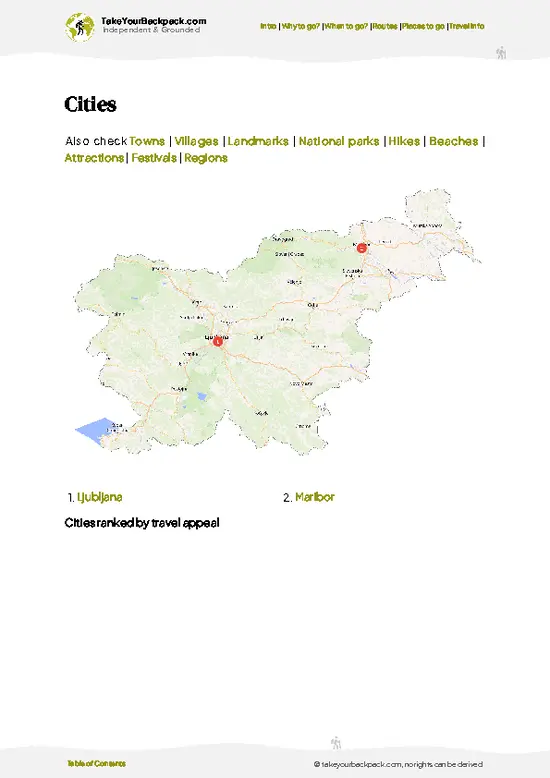
Regions and direction: Ljubljana works as the central hub, since buses and trains radiate from it. Group stops by region: northwest Alps, the coast and Karst to the southwest, and the east around Maribor and Ptuj. Travel in a loop, for instance starting in the capital, heading northwest to the Alps (about 1 to 1.5 hours), then returning through the center to the coast (about 1.5 to 2 hours), and finishing east (about 2 to 2.5 hours by train or bus). Reversing this works equally well.

Time per stop and common errors: Allow 1 to 2 nights for compact historic towns and 2 to … read more 👉
How long a multi-town trip takes: A trip combining several towns in Slovenia needs 7 to 10 days. The country is small enough that most transfers take 1 to 2.5 hours, so time is lost to bad sequencing rather than distance.

Regions and direction: Ljubljana works as the central hub, since buses and trains radiate from it. Group stops by region: northwest Alps, the coast and Karst to the southwest, and the east around Maribor and Ptuj. Travel in a loop, for instance starting in the capital, heading northwest to the Alps (about 1 to 1.5 hours), then returning through the center to the coast (about 1.5 to 2 hours), and finishing east (about 2 to 2.5 hours by train or bus). Reversing this works equally well.

Time per stop and common errors: Allow 1 to 2 nights for compact historic towns and 2 to 3 for Alpine bases where hiking is the point. A frequent mistake is trying to see too many places in too few days, which turns the trip into transit. Another is relying on trains for the Alps and Karst, where buses are faster and more frequent, so check both timetables. Travelers also underestimate Sunday and holiday schedules, which cut services sharply. Booking a base for several nights and doing day trips avoids repeated packing.

The ListMust-Visit towns in Slovenia

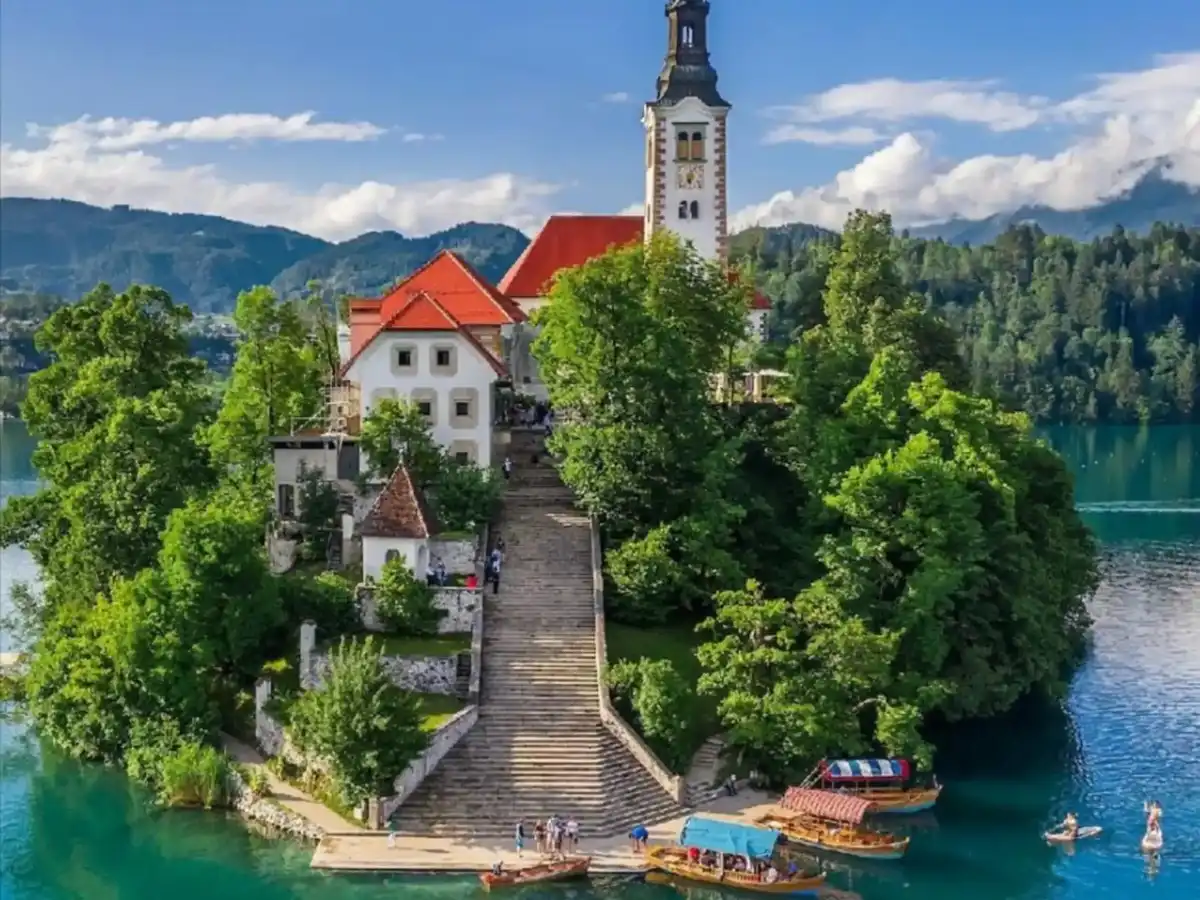
1 Bled

lake island, cliffside castle, rowing boats

Glide across a glacial lake to a tiny island, then hike forested trails and sample local cream cake with mountain views.

slovenia-city-bled
© Google | Around The World

2 Piran

medieval walls, salt pans, narrow streets

Climb ancient fortifications for Adriatic views, explore labyrinthine alleys, and watch sunset from a stone pier.

slovenia-city-piran
© Google | Dragan Arunović

3 Škofja Loka

wooden bridges, medieval castle, artisan workshops

Cross centuries-old bridges, visit a castle museum, and watch craftspeople at work in a town shaped by trade routes.

slovenia-city-skofja-loka
© Google | Marko Pajic

4 Koper

Adriatic port, Venetian palaces, seaside promenade

Stroll past ornate facades and lively squares, then relax by the sea where Mediterranean and Slovenian cultures meet.

slovenia-city-koper
© Google | Randolfo Santos

5 Ptuj

castle hill, Roman relics, carnival masks

Trace Roman footprints through cobbled lanes, visit a hilltop castle, and encounter unique folk traditions in Slovenia’s oldest town.

slovenia-city-ptuj
© Google | Randolfo Santos

6 Bohinjska Bistrica

mountain base, thermal pools, alpine railway

Relax in thermal waters, catch a train through mountain tunnels, and set out for hikes into Triglav National Park.

7 Idrija

mercury mine, lace workshops, industrial heritage

Tour a UNESCO-listed mine, learn lace-making traditions, and see how industry shaped daily life in this compact valley town.

8 Radovljica

beekeeping museum, baroque square, chocolate shops

Sample local sweets, explore a museum dedicated to bees, and enjoy quiet streets framed by mountain backdrops.

slovenia-city-radovljica
© Google |

9 Tolmin

river gorges, festival grounds, mountain gateway

Hike through dramatic gorges, camp by turquoise rivers, and use the town as a base for exploring the Julian Alps.

slovenia-city-tolmin
© Google |

10 Kamnik

Kamniška Bistrica river, twin castles, mountain backdrop

Walk riverside trails, explore castle ruins, and use Kamnik as a launch point for alpine adventures in the nearby highlands.

11 Vipava

wine estates, river springs, valley views

Taste local varietals at family-run vineyards, walk riverside trails, and enjoy open landscapes shaped by wind and water.

12 Celje

castle ruins, city park, riverside cafes

Climb to a ruined fortress for sweeping views, then return to leafy parks and riverside terraces in the city below.

slovenia-city-celje
© Google |

13 Novo Mesto

Krka river bends, hilltop church, Dolenjska vineyards

Paddle along gentle river curves, visit a church overlooking red rooftops, and sample wines unique to the region.

14 Lendava

thermal spa, lookout tower, Hungarian cuisine

Soak in mineral-rich pools, climb a spiral tower for borderland views, and try dishes influenced by neighboring Hungary.

15 Tržič

mountain pass, shoemaking legacy, alpine houses

Follow old trade routes through a narrow valley, discover local crafts, and hike trails leading into the Karawanks.

16 Žalec

hop fields, beer fountain, cycling routes

Taste regional brews from a public fountain, cycle past green hop fields, and learn about Slovenia’s brewing traditions.

Think you know Slovenia?

Prove you’re a true local — uncover 6 lesser-known towns in Slovenia that locals tend to keep to themselves.
Loading the map 🌍

Expert viewTips and Advice from Travelers

How many towns to visit: Plan on four to six towns over a week to ten days. Slovenia’s transport is efficient, but each region has a distinct character, and fewer than four misses the Alps-to-coast contrast while more than six means you spend afternoons waiting for buses. Slow travel also lets you use the surrounding countryside, where much of the value sits.

Prioritizing by travel style: Hikers and outdoor travelers should favor Alpine bases, because trailheads, lakes and gorges are minutes away by local bus or bike. Culture and food travelers get more from the central and eastern towns, where castles, wine cellars and markets are cheaper and less crowded. Beach seekers should treat the short coast as a one or two night stop, since it is compact, costly in summer and swimming is mostly from … read more 👉
How many towns to visit: Plan on four to six towns over a week to ten days. Slovenia’s transport is efficient, but each region has a distinct character, and fewer than four misses the Alps-to-coast contrast while more than six means you spend afternoons waiting for buses. Slow travel also lets you use the surrounding countryside, where much of the value sits.

Prioritizing by travel style: Hikers and outdoor travelers should favor Alpine bases, because trailheads, lakes and gorges are minutes away by local bus or bike. Culture and food travelers get more from the central and eastern towns, where castles, wine cellars and markets are cheaper and less crowded. Beach seekers should treat the short coast as a one or two night stop, since it is compact, costly in summer and swimming is mostly from platforms and rocky shores rather than sand. Budget travelers do best weighting the east and interior, where prices are noticeably lower.

What it costs: Expect US$55 to 95 a day (about €50 to 85) on a backpacker budget: dorm beds run €25 to 45 in summer, lower in shoulder season, a bakery or market lunch €5 to 8, a sit-down dinner €12 to 20, and intercity buses €5 to 15 per leg. Castle entry typically costs €8 to 15, small museums €4 to 8, and guided walks in the main centers €10 to 20 or are tip-based. Tourist cards in some towns bundle transport and entry, which pays off only if you use several attractions. Coast and lake prices jump in July and August, so book ahead then. Cooking in hostels cuts costs, as supermarkets are well priced.

Safety and local etiquette: Slovenia is among Europe’s safest countries, with low violent crime, but pickpocketing happens in crowded summer centers and on busy trails’ parking areas, where car break-ins occur. Leave nothing visible in a vehicle. Tap water is drinkable almost everywhere, a saving over bottled water. Mountain weather changes fast, so towns near the Alps demand proper layers and a check of the forecast before any hike. Locals value punctuality, quiet after 10 p.m. in residential areas, and tidy behavior in public spaces. Greet shopkeepers on entry, and tipping of 5 to 10 percent is appreciated rather than required. Most shops close on Sundays and public holidays, so buy groceries in advance. Cash is accepted less often in rural areas than people expect, though cards work in most places, so carry a small amount of euros for bakeries and mountain huts.

✈️ The backpacker research shortcutSlovenia Travel Guide

An offline-friendly backpacking guide with optimized travel routes, ranked highlights, transport advice, and the best areas to stay.
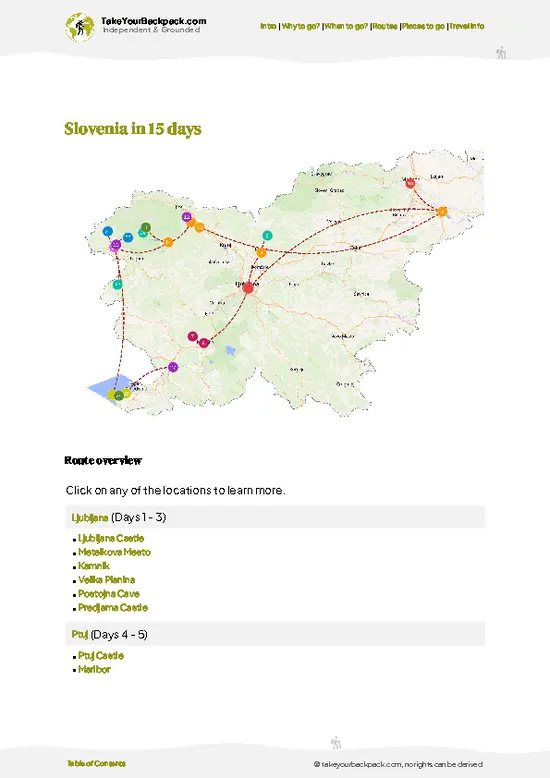
example page 0 from our offline Travel Guide for Slovenia
example page 1 from our offline Travel Guide for Slovenia
example page 2 from our offline Travel Guide for Slovenia
example page 3 from our offline Travel Guide for Slovenia
example page 4 from our offline Travel Guide for Slovenia
example page 5 from our offline Travel Guide for Slovenia
example page 6 from our offline Travel Guide for Slovenia
example page 7 from our offline Travel Guide for Slovenia
The digital guide (310 pages) contains:
✅ 77 highlights, ranked by travel appeal
✅ Optimized 5, 10 & 15-day travel routes
✅ Cities, national parks, landmarks, beaches
✅ How to get around
✅ Offline-friendly for travel without Wi-Fi
👉 Click to see all 30+ guide features

📅 Plan smarter in minutes, not weeks
✅ Month by month travel advice
✅ Festivals & national holidays
✅ Budget expectations

🗺️ Go to the right places, skip the overrated ones
✅ Honest pros & cons of destinations
✅ Top hikes, parks & viewpoints
✅ Lesser-known places most travelers miss
✅ Clear “worth it vs skip it” guidance

🛏️ Travel smoothly without rookie mistakes
✅ Best areas to stay
✅ Transport systems explained simply
✅ Common scams & safety advice
✅ SIM cards, money & practical tips

🌍 Understand the country, not just visit it
✅ Culture & traditions
✅ 52 Essential phrases & customs
✅ Festivals worth planning around
✅ Traveler-friendly historical context
✅ Insights that make places more meaningful

📱 Built for real travel conditions
✅ Fully downloadable PDF
✅ Works completely offline
✅ Optimized for phone use
✅ Useful in remote areas & buses
✅ Everything in one place
Stop searching, start planning
Get instant access to your full guide. 30‑day money-back guarantee.
+ Add another guide for just

By proceeding you agree to our terms.
Sent to your inbox immediately after payment • 100% Secure Checkout
Best Backpacking Travel Advisor 2025 tourism awardBest Backpacking
Travel Advisor
2025
What others say about Take Your Backpack Guides:
⭐⭐⭐⭐⭐
Fantastic, amazing amount of information!
⭐⭐⭐⭐⭐
My goodness this is amazing, it's what I've been looking for hats off too you!
⭐⭐⭐⭐⭐
I think this is absolutely BRILLIANT
⭐⭐⭐⭐
Very complete and informative. It's still missing places, but I gotta to commend you
⭐⭐⭐⭐⭐
This is truly amazing, thank you, can't wait to explore it with my kids!
⭐⭐⭐⭐⭐
Awesome resource, thank you!
⭐⭐⭐⭐⭐
This is amazing! Can't wait to explore the ones I haven't seen
⭐⭐⭐⭐
I love this! Well done, great idea.
⭐⭐⭐⭐⭐
Thanks for taking the time to make this gem!
⭐⭐⭐⭐⭐
This might be the best website I've ever seen.
⭐⭐⭐⭐⭐
Congratulations, and thank you so much for your work; it's incredibly valuable.
⭐⭐⭐⭐
In all seriousness I think you did a great job pointing out the important spots
⭐⭐⭐⭐⭐
10/10 very good
⭐⭐⭐⭐⭐
As someone who's only just starting to visit regularly this is awesome, thank you.
⭐⭐⭐⭐
Thank you very much! I'm going to visit my dad, it's going to be very useful!
⭐⭐⭐⭐⭐
This is really cool! We'll be travelling for the first time and this definitely come in handy.
⭐⭐⭐⭐⭐
You are now our minister of culture, congratulations 👨‍💼
⭐⭐⭐⭐⭐
Just wanted to tell you that this is a pearl! Going to follow your recommendations.
⭐⭐⭐⭐⭐
This is so cool. I'll definitely be using the resource for my travels soon.
⭐⭐⭐⭐⭐
This is very impressive! Good work.
⭐⭐⭐⭐⭐
This is an amazing and informative site. Very well done!

🛏️ Where to stay?Top Places to Consider Staying

Slovenia has a solid hostel network, with dorm beds running roughly €20 to €35 a night in summer and private guesthouse rooms (look for “sobe” signs) from about €50 to €80. In Ljubljana, the Old Town puts you on foot to the castle and riverside bars but gets loud on weekend nights, while the streets around the train station and Metelkova are cheaper, close to transport and the alternative club scene, though grittier after dark (still very safe by European standards). Outside the capital, Bled and Bohinj fill up fast in July and August with quiet, lake-close options, and Piran on the coast has few beds inside its car-free old core, so book weeks ahead.

If you enjoy meeting fellow travelers, consider … read more 👉
Slovenia has a solid hostel network, with dorm beds running roughly €20 to €35 a night in summer and private guesthouse rooms (look for “sobe” signs) from about €50 to €80. In Ljubljana, the Old Town puts you on foot to the castle and riverside bars but gets loud on weekend nights, while the streets around the train station and Metelkova are cheaper, close to transport and the alternative club scene, though grittier after dark (still very safe by European standards). Outside the capital, Bled and Bohinj fill up fast in July and August with quiet, lake-close options, and Piran on the coast has few beds inside its car-free old core, so book weeks ahead.

If you enjoy meeting fellow travelers, consider choosing hostels with high ratings for atmosphere. On the other hand, if you prefer having your own space, a hotel might be a better option.

SloveniaMore Places Across Slovenia

👋 Meet the founderWho’s Behind Take Your Backpack?

Johan, backpacker and founder of TakeYourBackpackHi, I’m Johan (Netherlands 🇳🇱), the creator of TakeYourBackpack. Over the past 3 decades, I’ve backpacked through 90+ countries across six continents, gaining extensive experience with independent travel, long-term trips, and overland routes.

This site is built on a combination of firsthand travel experience and carefully curated insights from other backpackers. Many guides are based on places I’ve personally visited, while others bring together tips, observations, and practical advice shared by trusted travelers I’ve met along the way.

The goal is to provide realistic, experience-driven guidance — not generic itineraries — so you can explore destinations with better context, clearer expectations, and more confidence.