×

Solomon Islands🇸🇧 | townsHoniaraNational museum, WWII sites, central market | things to do and best time to go

Explore GizoExplore Munda

Backpacking in Honiara
🏆 Top picktown ranked #1
By Johan Kruseman 🇳🇱 | Updated September 23, 2026

Everyone talks about Honiara because of the WWII history and wreck dives, but the city itself matters more as your living, breathing basecamp than as a bucket-list “site.” This is the capital of Solomon Islands, strung along the north coast of Guadalcanal, where hot asphalt, sea haze, and exhaust mix with the smell of betel nut and fried fish. For backpackers, Honiara is less “charming town” and more “logistics hub with moments of character.” You come here to sort boats and flights, grab cash, stock up on supplies, and then launch to quieter islands and villages.

There are a few anchors: the Central Market for real everyday life, basic but social guesthouses, and dusty streets where you’ll actually meet locals, not tour groups. It’s busy, rough around the edges, and not cheap for what you get, but it’s where you’ll find other travelers, SIM cards, and onward transport. Compared with sleepy coastal settlements, Honiara feels practical rather than pretty, a necessary stop that rewards patience more than photography.

Discover everything you want to know in the 📖 Solomon Islands Travel Guide.
Loading the map 🌍
CLICK TO FILTER
towns
villages
landmarks
national parks
hikes
beaches
attractions
festivals
regions
SHOW COUNTRY’S BESTSHOW ALL

✨ Why go?
Ranked #1 town in Solomon Islands
Reasons people choose to visit here

Honiara is a gateway for backpackers exploring the Solomon Islands, offering a unique blend of convenience and cultural immersion. The town serves as a launchpad for nearby hikes like the Mount Austen Trail, where the scent of damp earth and lush foliage fills the air. After a day of trekking, you can unwind at local beaches like Lunga Point, where the soft sound of waves creates a soothing backdrop.

Accommodations range from small-scale hostels to cozy guesthouses, fostering a friendly social atmosphere. You’ll find travelers swapping stories over local dishes like palusami or fish curry at nearby eateries. The streets are walkable, making it easy to navigate between attractions and soak in the local vibe.

Most backpackers tend to stay a few days, enjoying the laid-back pace. It’s ideal … read more 👉
Honiara is a gateway for backpackers exploring the Solomon Islands, offering a unique blend of convenience and cultural immersion. The town serves as a launchpad for nearby hikes like the Mount Austen Trail, where the scent of damp earth and lush foliage fills the air. After a day of trekking, you can unwind at local beaches like Lunga Point, where the soft sound of waves creates a soothing backdrop.

Accommodations range from small-scale hostels to cozy guesthouses, fostering a friendly social atmosphere. You’ll find travelers swapping stories over local dishes like palusami or fish curry at nearby eateries. The streets are walkable, making it easy to navigate between attractions and soak in the local vibe.

Most backpackers tend to stay a few days, enjoying the laid-back pace. It’s ideal for slow travelers, hikers, and solo adventurers looking for connection without the chaos of nightlife. Honiara isn’t just a stopover; it’s a place to linger, breathe in the culture, and prepare for the next leg of your adventure.
Want to include Honiara in your Solomon Islands route?
Create a personalized Solomon Islands itinerary that includes Honiara and the places that fit your trip — based on your travel style, budget, and available time. Get your route in seconds.

Generate my trip

💡 HighlightsWhat this place is best known for

  • Honiara Central Market — The city’s beating heart: stalls of fresh fish, tropical fruit, betel nut vendors and local crafts. Great for people-watching, cheap eats and buying woven bags, shell necklaces or a hunk of fresh coconut bread.
  • Solomon Islands National Museum & Cultural Centre — Compact but rich: traditional artefacts, carvings, and exhibits about Guadalcanal’s cultural groups and wartime history. Worth a few hours to get context before you wander other sites.
  • St. Barnabas’ Anglican Cathedral — A quiet, atmospheric church set on a ridge above town. The timber interior and local memorials give a real sense of how faith and community are woven into island life.
  • Henderson Field (Honiara International Airport) — WWII heritage zone — The airfield is an active airport, but the surrounds
… read more 👉
  • Honiara Central Market — The city’s beating heart: stalls of fresh fish, tropical fruit, betel nut vendors and local crafts. Great for people-watching, cheap eats and buying woven bags, shell necklaces or a hunk of fresh coconut bread.
  • Solomon Islands National Museum & Cultural Centre — Compact but rich: traditional artefacts, carvings, and exhibits about Guadalcanal’s cultural groups and wartime history. Worth a few hours to get context before you wander other sites.
  • St. Barnabas’ Anglican Cathedral — A quiet, atmospheric church set on a ridge above town. The timber interior and local memorials give a real sense of how faith and community are woven into island life.
  • Henderson Field (Honiara International Airport) — WWII heritage zone — The airfield is an active airport, but the surrounds are full of WWII scars: memorial markers, roadside relics and interpretive signs. Driving or walking nearby gives a direct sense of Guadalcanal’s pivotal wartime role.
  • Point Cruz Waterfront & Yacht Club — The best spot for sunset walks, watching commuter boats and chatting with sailors. There’s also a small foreshore area where you can see local fishing activity and board small excursions out into Ironbottom Sound.
  • Memorial Park / National War Memorial (Point Cruz area) — The main public memorials to the WWII campaigns are here. It’s compact, solemn and easy to visit on foot from town — good for reflection and photography of plaques, guns and memorial gardens.
  • Mendana Avenue & Town Centre — Honiara’s main drag: government buildings, shops, budget cafés and informal roadside stalls. Walkable, noisy and useful for feeling how everyday life in the capital actually runs.
  • Honiara Handicraft Stalls (local arts market) — Scattered near the waterfront and market precincts, these smaller craft stands are where local artisans actually sell their work: carved figures, shell art, printed tapa and handwoven items that are more authentic than airport souvenirs.
  • National Library & Archives — Low-key but invaluable for anyone interested in deeper local history or doing research: documents, maps and photographs that tell the island story beyond the museum displays.
  • Honiara Sports & Community Grounds / National Stadium area — More than a stadium: community events, local football and occasional cultural performances happen here. Drop by during a match or Sunday event to see everyday island social life.
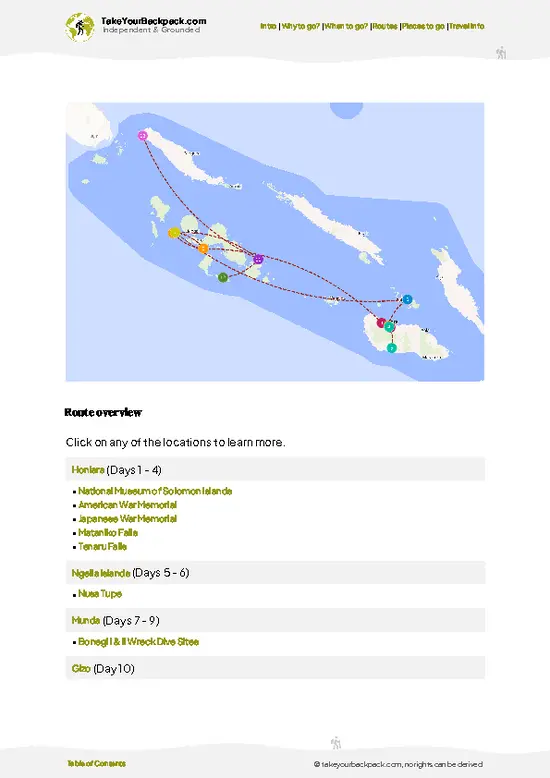
For day trips from Honiara consider Tulagi and Gavutu (short boat trips into Ironbottom Sound), the Vilu War Museum west of town, and the Tenaru/Alligator Creek WWII battlefield sites east of the city.
Spotted a mistake or missing something? Contact us.

Things to do near Honiara

Ratings based on Tripadvisor reviews. When you book through this link, you support our work at no extra cost to you.

🏘️ NeighborhoodsKey areas and districts to know

Honiara, the capital of the Solomon Islands, is a vibrant hub where the Pacific meets local culture. Each neighborhood offers a unique flavor, making it essential to choose wisely for your backpacking adventure.

Central Honiara
This is the heartbeat of the city. Bustling markets, local eateries, and shops line the streets. You’ll find affordable accommodations here, perfect for short stays. The vibe is energetic, especially around the Central Market, where the scent of fresh produce mingles with the chatter of locals. Walkability is high, but be cautious of traffic. Nightlife is low-key; think laid-back bars rather than wild parties.

Kukum
Just a short walk from Central Honiara, Kukum offers a more relaxed atmosphere. It’s quieter, with a mix of guesthouses and budget hotels. Ideal for … read more 👉
Honiara, the capital of the Solomon Islands, is a vibrant hub where the Pacific meets local culture. Each neighborhood offers a unique flavor, making it essential to choose wisely for your backpacking adventure.

Central Honiara
This is the heartbeat of the city. Bustling markets, local eateries, and shops line the streets. You’ll find affordable accommodations here, perfect for short stays. The vibe is energetic, especially around the Central Market, where the scent of fresh produce mingles with the chatter of locals. Walkability is high, but be cautious of traffic. Nightlife is low-key; think laid-back bars rather than wild parties.

Kukum
Just a short walk from Central Honiara, Kukum offers a more relaxed atmosphere. It’s quieter, with a mix of guesthouses and budget hotels. Ideal for longer stays, you can soak in the local life without the hustle. The beach is nearby, perfect for sunset views. Transport options are good, with easy access to public buses.

Point Cruz
This area is where the ocean meets the city. It’s a bit pricier, but worth it for the waterfront views. The vibe is chill, with cafes and restaurants offering fresh seafood. Ideal for those looking to unwind after a day of exploring. Walkability is decent, but you might want to grab a taxi for late-night returns.

Lunga
A bit further out, Lunga is a quieter residential area. It’s less touristy, giving you a taste of everyday life. Accommodations are affordable, and it’s great for longer stays if you want to escape the city buzz. Transport can be tricky, so plan ahead. The local beaches are a bonus, providing a serene escape.

⌛️ 1 dayA smart one-day plan

Honiara, the capital of the Solomon Islands, pulses with a unique blend of history and local culture. The air is thick with the scent of salt and tropical blooms, and the vibrant markets buzz with life. This isn’t just a stopover; it’s a chance to dive into the heart of Melanesian culture.

Start your day at the Honiara Central Market. Arrive early to beat the heat and the crowds. The market is a sensory overload—brightly colored fruits, fresh fish, and handmade crafts fill the stalls. Engage with the vendors; their stories add depth to the experience. Grab a fresh coconut to sip on as you wander, letting the sweet water refresh you.

After soaking in the market’s energy, head to the nearby National Museum. It’s often overlooked, but it offers a rich tapestry of the Solomon Islands’ history, … read more 👉
Honiara, the capital of the Solomon Islands, pulses with a unique blend of history and local culture. The air is thick with the scent of salt and tropical blooms, and the vibrant markets buzz with life. This isn’t just a stopover; it’s a chance to dive into the heart of Melanesian culture.

Start your day at the Honiara Central Market. Arrive early to beat the heat and the crowds. The market is a sensory overload—brightly colored fruits, fresh fish, and handmade crafts fill the stalls. Engage with the vendors; their stories add depth to the experience. Grab a fresh coconut to sip on as you wander, letting the sweet water refresh you.

After soaking in the market’s energy, head to the nearby National Museum. It’s often overlooked, but it offers a rich tapestry of the Solomon Islands’ history, showcasing artifacts that tell tales of ancient traditions and World War II. Spend an hour here; the exhibits are small but impactful, and the staff are eager to share their knowledge.

For lunch, make your way to the waterfront area. Try a local eatery like the “Breakwater Café,” where you can enjoy fresh fish and chips while watching the waves lap against the shore. The breeze carries the scent of the ocean, making every bite feel like a mini-vacation.

In the afternoon, take a short drive to the picturesque Bonegi Beach. It’s a bit off the standard tourist path, but the clear waters and coral reefs are worth the trip. Snorkeling here reveals a vibrant underwater world, and you’ll likely have the place mostly to yourself.

As the sun begins to set, return to Honiara and stroll along the waterfront promenade. The golden light casts a warm glow, perfect for reflection. For dinner, find a spot at “The Coral Sea Resort,” where you can indulge in local dishes while enjoying the view of the sunset over the harbor.

This day in Honiara isn’t just about ticking boxes; it’s about connecting with the land and its people, making every moment feel like a step deeper into the soul of the Solomon Islands.
Turn your Honiara visit into an Solomon Islands adventure
Build a complete Solomon Islands route with Honiara, hidden gems, must-see destinations, and realistic travel times included.

Generate my trip

🌤️ When to go?Seasonal considerations and timing


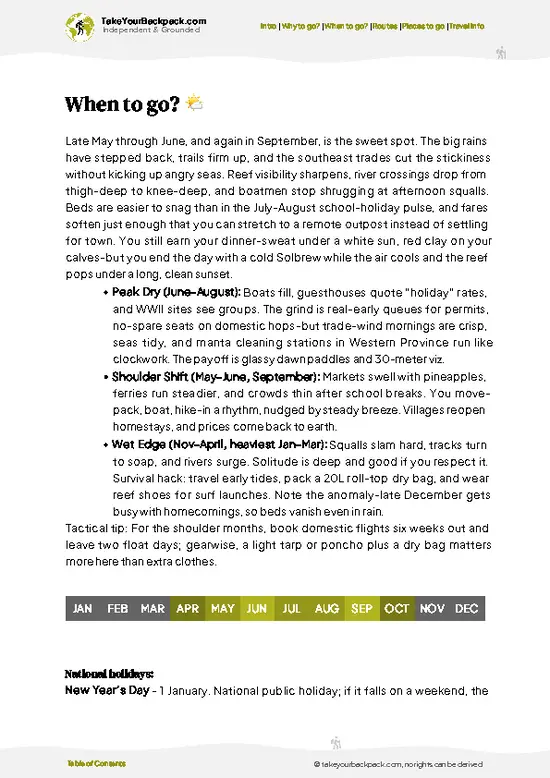
  • Topic: Weather – Honiara’s tropical climate means it’s warm year-round, but the dry season from May to October is your best bet. Expect less humidity and fewer downpours, making trails and beaches more accessible without the constant threat of a sudden tropical shower.

  • Topic: Temperature – Temperatures hover between 24°C and 30°C (75°F to 86°F) during the dry months, which feels like a comfortable warmth rather than a stifling heat. The wet season can push humidity higher, making the same temps feel heavier and more draining.

  • Topic: Daylight Hours – Near the equator, daylight is steady year-round, roughly 11 to 12 hours. This consistency means you won’t have to rush your hikes or dives due to early sunsets, but starting early is still smart to avoid midday heat.

  • Topic: Crowds – The
… read more 👉

  • Topic: Weather – Honiara’s tropical climate means it’s warm year-round, but the dry season from May to October is your best bet. Expect less humidity and fewer downpours, making trails and beaches more accessible without the constant threat of a sudden tropical shower.

  • Topic: Temperature – Temperatures hover between 24°C and 30°C (75°F to 86°F) during the dry months, which feels like a comfortable warmth rather than a stifling heat. The wet season can push humidity higher, making the same temps feel heavier and more draining.

  • Topic: Daylight Hours – Near the equator, daylight is steady year-round, roughly 11 to 12 hours. This consistency means you won’t have to rush your hikes or dives due to early sunsets, but starting early is still smart to avoid midday heat.

  • Topic: Crowds – The dry season draws more travelers, especially from July to September, so expect a livelier vibe but also higher prices and busier spots. Off-season offers solitude but comes with the risk of rain disrupting plans.

  • Topic: Seasonal Activities – Dive visibility peaks in the dry months, revealing vibrant coral reefs and WWII wrecks. Cultural festivals often align with this period, giving you a chance to experience local traditions without weather interruptions.

  • Topic: Price Fluctuations – Accommodation and tours tend to be pricier during the dry season’s peak months. Booking early can lock in better rates, while the wet season offers bargains if you’re flexible and ready for occasional rain.


Pro-tip: Aim for the shoulder months of May or October—enjoy manageable crowds, good weather, and better deals, all while soaking in the island’s natural rhythms without the rush.


source: climatestotravel.comJANJanuary: fair for travelingFEBFebruary: fair for travelingMARMarch: fair for travelingAPRApril: good for travelingMAYMay: highly recommended for travelingJUNJune: highly recommended for travelingJULJuly: excellent for travelingAUGAugust: excellent for travelingSEPSeptember: excellent for travelingOCTOctober: highly recommended for travelingNOVNovember: good for travelingDECDecember: fair for traveling
when-to-go

✈️ The backpacker research shortcutSolomon Islands Travel Guide

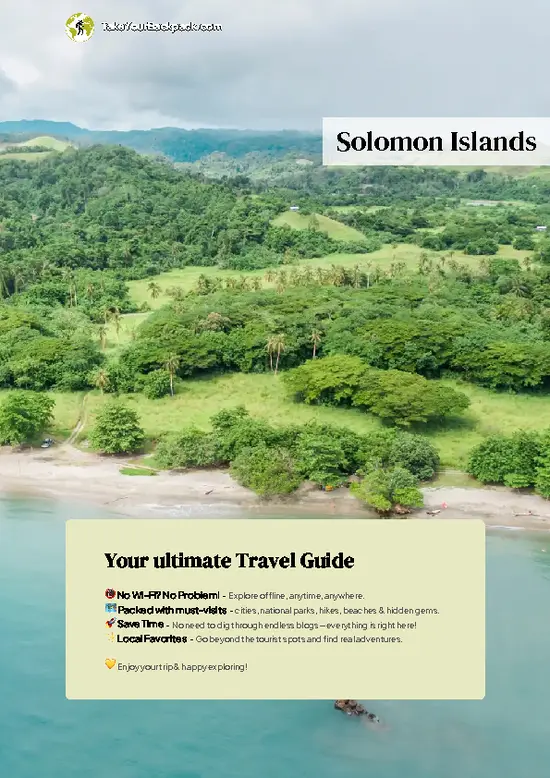
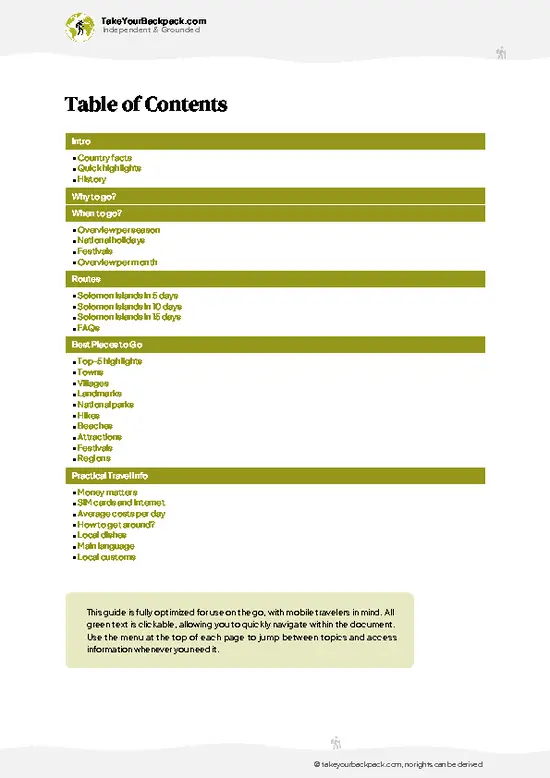
An offline-friendly backpacking guide with optimized travel routes, ranked highlights, transport advice, and the best areas to stay.
example page 0 from our offline Travel Guide for Solomon Islands
example page 1 from our offline Travel Guide for Solomon Islands
example page 2 from our offline Travel Guide for Solomon Islands
example page 3 from our offline Travel Guide for Solomon Islands
example page 4 from our offline Travel Guide for Solomon Islands
example page 5 from our offline Travel Guide for Solomon Islands
example page 6 from our offline Travel Guide for Solomon Islands
example page 7 from our offline Travel Guide for Solomon Islands
The digital guide (173 pages) contains:
✅ 39 highlights, ranked by travel appeal
✅ Optimized 5, 10 & 15-day travel routes
✅ Cities, national parks, landmarks, beaches
✅ How to get around
✅ Offline-friendly for travel without Wi-Fi
👉 Click to see all 30+ guide features

📅 Plan smarter in minutes, not weeks
✅ Month by month travel advice
✅ Festivals & national holidays
✅ Budget expectations

🗺️ Go to the right places, skip the overrated ones
✅ Honest pros & cons of destinations
✅ Top hikes, parks & viewpoints
✅ Lesser-known places most travelers miss
✅ Clear “worth it vs skip it” guidance

🛏️ Travel smoothly without rookie mistakes
✅ Best areas to stay
✅ Transport systems explained simply
✅ Common scams & safety advice
✅ SIM cards, money & practical tips

🌍 Understand the country, not just visit it
✅ Culture & traditions
✅ 52 Essential phrases & customs
✅ Festivals worth planning around
✅ Traveler-friendly historical context
✅ Insights that make places more meaningful

📱 Built for real travel conditions
✅ Fully downloadable PDF
✅ Works completely offline
✅ Optimized for phone use
✅ Useful in remote areas & buses
✅ Everything in one place
Save weeks of stressful planning
Get instant access to your full guide. 30‑day money-back guarantee.
+ Add another guide for just

By proceeding you agree to our terms.
Sent to your inbox immediately after payment • 100% Secure Checkout
Best Backpacking Travel Advisor 2025 tourism awardBest Backpacking
Travel Advisor
2025
What others say about Take Your Backpack Guides:
⭐⭐⭐⭐⭐
Fantastic, amazing amount of information!
⭐⭐⭐⭐⭐
My goodness this is amazing, it's what I've been looking for hats off too you!
⭐⭐⭐⭐⭐
I think this is absolutely BRILLIANT
⭐⭐⭐⭐
Very complete and informative. It's still missing places, but I gotta to commend you
⭐⭐⭐⭐⭐
This is truly amazing, thank you, can't wait to explore it with my kids!
⭐⭐⭐⭐⭐
Awesome resource, thank you!
⭐⭐⭐⭐⭐
This is amazing! Can't wait to explore the ones I haven't seen
⭐⭐⭐⭐
I love this! Well done, great idea.
⭐⭐⭐⭐⭐
Thanks for taking the time to make this gem!
⭐⭐⭐⭐⭐
This might be the best website I've ever seen.
⭐⭐⭐⭐⭐
Congratulations, and thank you so much for your work; it's incredibly valuable.
⭐⭐⭐⭐
In all seriousness I think you did a great job pointing out the important spots
⭐⭐⭐⭐⭐
10/10 very good
⭐⭐⭐⭐⭐
As someone who's only just starting to visit regularly this is awesome, thank you.
⭐⭐⭐⭐
Thank you very much! I'm going to visit my dad, it's going to be very useful!
⭐⭐⭐⭐⭐
This is really cool! We'll be travelling for the first time and this definitely come in handy.
⭐⭐⭐⭐⭐
You are now our minister of culture, congratulations 👨‍💼
⭐⭐⭐⭐⭐
Just wanted to tell you that this is a pearl! Going to follow your recommendations.
⭐⭐⭐⭐⭐
This is so cool. I'll definitely be using the resource for my travels soon.
⭐⭐⭐⭐⭐
This is very impressive! Good work.
⭐⭐⭐⭐⭐
This is an amazing and informative site. Very well done!

🛏️ Where to stay?Best areas and accommodation options

In Honiara, the heartbeat for backpackers pulses strongest around the Chinatown district and the nearby Point Cruz area. This isn’t just where you crash; it’s where you plug into the city’s rhythm. Chinatown offers a gritty, authentic vibe—think narrow streets lined with market stalls, the scent of fresh fish mingling with tropical fruit, and locals chatting over steaming cups of coffee. It’s a place where you can find budget accommodations that feel more like community hubs than anonymous rooms. Staying here means you’re never far from the pulse of daily life, and the social scene naturally unfolds … read more 👉
In Honiara, the heartbeat for backpackers pulses strongest around the Chinatown district and the nearby Point Cruz area. This isn’t just where you crash; it’s where you plug into the city’s rhythm. Chinatown offers a gritty, authentic vibe—think narrow streets lined with market stalls, the scent of fresh fish mingling with tropical fruit, and locals chatting over steaming cups of coffee. It’s a place where you can find budget accommodations that feel more like community hubs than anonymous rooms. Staying here means you’re never far from the pulse of daily life, and the social scene naturally unfolds in the shared spaces of hostels and local eateries.

Point Cruz, just a short walk away, balances that raw energy with a slightly calmer waterfront atmosphere. It’s where you’ll find more hostels catering to solo travelers, with easy access to the ferry terminal and local transport. The sea breeze here cuts through the tropical humidity, offering a refreshing break after a day of exploring. This area feels safer after dark compared to other parts of town, which is a big deal when you’re navigating a new place solo.

Avoid the sprawling suburbs or the industrial zones—they lack the social fabric and practical conveniences that make backpacking in Honiara rewarding. Chinatown and Point Cruz are your launchpads: safe enough to relax, lively enough to meet people, and close enough to the city’s core to keep your adventure moving forward without hassle.

🚌 Getting aroundTransportation options and practical tips

Honiara moves at its own pace—neither frantic nor sluggish, but a rhythm shaped by the tropical heat and the ebb of daily life on Guadalcanal Island. The sun hangs heavy, casting sharp shadows on cracked pavement and the occasional splash of color from market stalls. Here, schedules are more a suggestion than a rule, and the scent of salt and diesel mingles with fresh fruit and grilled fish. You’ll find that getting around isn’t about strict timetables but about reading the flow of the streets, catching rides when they come, and savoring the unpredictability. This isn’t a place where you race against the clock; it’s a place where patience unlocks the real experience.

Walking: The heart of Honiara is compact enough to explore on foot, especially around the Central Market and Chinatown. Walking … read more 👉
Honiara moves at its own pace—neither frantic nor sluggish, but a rhythm shaped by the tropical heat and the ebb of daily life on Guadalcanal Island. The sun hangs heavy, casting sharp shadows on cracked pavement and the occasional splash of color from market stalls. Here, schedules are more a suggestion than a rule, and the scent of salt and diesel mingles with fresh fruit and grilled fish. You’ll find that getting around isn’t about strict timetables but about reading the flow of the streets, catching rides when they come, and savoring the unpredictability. This isn’t a place where you race against the clock; it’s a place where patience unlocks the real experience.

Walking: The heart of Honiara is compact enough to explore on foot, especially around the Central Market and Chinatown. Walking lets you soak in the humid air, hear the chatter of vendors, and spot the vibrant colors of local crafts. It’s free, obviously, and the best way to catch the city’s pulse. Just watch for uneven sidewalks and the occasional stray dog.

Local Buses (Minibuses): These are the lifeblood of budget transit, weaving through the city and out to nearby villages. They don’t run on a strict schedule—expect them to leave when full, which can mean waiting 10 minutes or 30. Fares hover around 2-5 SBD (Solomon Islands Dollars), making them the cheapest way to cover longer distances. The ride is bumpy, the seats basic, but the windows open wide to catch the sea breeze.

Shared Taxis: Shared taxis operate like minibuses but with more comfort and a bit more speed. They follow common routes but won’t leave until they have enough passengers. Expect to pay around 10-15 SBD. They’re a solid middle ground if you want to move faster without the cost of a private taxi. The trade-off is less flexibility in stops, but you’ll get a smoother ride.

Private Taxis: If you’re in a hurry or carrying heavy gear, private taxis are your go-to. They’re pricey by local standards—usually 50-100 SBD for short trips—but offer door-to-door service and air conditioning in some newer vehicles. Negotiate the fare upfront; meters are rare. This is the option for when time is tight or when you want to escape the humidity for a bit.

Motorbike Rentals: For the adventurous, renting a motorbike offers freedom to explore beyond the city limits at your own pace. Rentals cost about 100-150 SBD per day. The roads can be rough, and traffic unpredictable, so this is best if you’re confident on two wheels. The reward is access to hidden beaches and villages where buses don’t go, with the wind and salt spray as your constant companions.

Understanding these options means you don’t just get from point A to B—you tap into the local rhythm, turning transit into part of the adventure rather than a chore. The unpredictability, the smells, the sounds—they’re all part of what makes Honiara feel alive. Embrace the flow, and you’ll find the city opens up in ways a strict schedule never could.

👛 Costs (as of 23 September 2026)Money, prices, and spending tips

Backpacking in Honiara, Solomon Islands, means balancing the raw charm of the South Pacific with practical costs that reflect its remote island vibe. Here’s what you’re looking at day-to-day.
  • Dorm Accommodation: Expect to pay around $10 to $20 USD per night for a bed in a basic guesthouse dorm. These places are simple, often with shared bathrooms and limited air conditioning, but they put you right in the heart of the town’s laid-back rhythm.
  • Meals: Local food is affordable if you stick to markets and small eateries. A typical meal—think fresh fish, rice, and tropical veggies—runs about $3 to $7 USD. Western-style or restaurant meals push closer to $10 to $15 USD, especially if you want a cold beer or imported goods.
  • Local Transport: Getting around mostly means hopping on a minibus or shared
… read more 👉
Backpacking in Honiara, Solomon Islands, means balancing the raw charm of the South Pacific with practical costs that reflect its remote island vibe. Here’s what you’re looking at day-to-day.
  • Dorm Accommodation: Expect to pay around $10 to $20 USD per night for a bed in a basic guesthouse dorm. These places are simple, often with shared bathrooms and limited air conditioning, but they put you right in the heart of the town’s laid-back rhythm.
  • Meals: Local food is affordable if you stick to markets and small eateries. A typical meal—think fresh fish, rice, and tropical veggies—runs about $3 to $7 USD. Western-style or restaurant meals push closer to $10 to $15 USD, especially if you want a cold beer or imported goods.
  • Local Transport: Getting around mostly means hopping on a minibus or shared taxi. Fares are cheap, usually $0.50 to $1.50 USD per ride, depending on distance. If you’re heading to more remote spots, expect to pay a bit more for private transport or boat rides.
  • Basic Activities/Entry Fees: Many natural attractions like beaches and markets are free or cost just a small donation. Organized tours or cultural experiences can range from $10 to $30 USD, which is worth it for the insight and access you get.
  • Miscellaneous Expenses: Budget around $2 to $5 USD daily for essentials like bottled water, snacks, or phone credit. Internet can be patchy and pricey, so plan accordingly if you need to stay connected.

All told, you’re looking at roughly $20 to $50 USD per day to cover the essentials in Honiara. This range lets you experience the island’s unique pace without overspending, making the occasional splurge on a tour or a nicer meal feel like a real treat.


source: visitsolomons.com.sb
⚠️ Prices can change and everyone travels differently, so take this as a rough guide. Hope it helps you plan your adventure!

🚌 Day tripsExploring the surroundings

Honiara is your launchpad for exploring the Solomon Islands, offering a mix of adventure and cultural immersion. Here are some day trips that will make your backpacking experience truly rewarding.

1. Mataniko Falls
Just a short bus ride from Honiara, Mataniko Falls is a refreshing escape into nature. The journey takes about 30 minutes, and the trail to the falls is a mix of lush greenery and the occasional muddy patch, so wear sturdy shoes. The sound of cascading water fills the air as you approach, and the cool mist is a welcome relief from the tropical heat. Bring a packed lunch to enjoy by the water, but be mindful of the slippery rocks. Many first-timers underestimate the hike back; it can be a bit steep, so pace yourself. Expect to spend around $10 for transport and snacks. Best visited … read more 👉
Honiara is your launchpad for exploring the Solomon Islands, offering a mix of adventure and cultural immersion. Here are some day trips that will make your backpacking experience truly rewarding.

1. Mataniko Falls
Just a short bus ride from Honiara, Mataniko Falls is a refreshing escape into nature. The journey takes about 30 minutes, and the trail to the falls is a mix of lush greenery and the occasional muddy patch, so wear sturdy shoes. The sound of cascading water fills the air as you approach, and the cool mist is a welcome relief from the tropical heat. Bring a packed lunch to enjoy by the water, but be mindful of the slippery rocks. Many first-timers underestimate the hike back; it can be a bit steep, so pace yourself. Expect to spend around $10 for transport and snacks. Best visited in the dry season, from May to October, when the trails are less muddy.
👉 Explore Mataniko Falls

2. Bonegi Beach
A mere 20-minute drive from Honiara, Bonegi Beach is a slice of paradise with a twist of history. Known for its World War II wrecks just offshore, this beach offers both relaxation and exploration. The water is crystal clear, perfect for snorkeling among the coral and fish. Pack your gear and some snacks; you can easily spend a whole day here. The cost is minimal—around $5 for transport and maybe $10 for a local lunch. Avoid weekends if you can; it gets crowded with locals enjoying their day off. The best time to go is early morning, when the light dances on the water, making for stunning photos.


3. Guadalcanal Plains
For a deeper dive into history, head to the Guadalcanal Plains, about an hour from Honiara. This area is rich with WWII sites, including the famous American and Japanese battlefields. Guided tours are available, and while they cost around $30, the insights you gain are invaluable. The landscape is hauntingly beautiful, with remnants of war juxtaposed against lush hills. Many backpackers miss the chance to engage with local guides who share stories that bring the history alive. Aim for the dry season for the best experience, and don’t forget your camera.


4. Savo Island
Catch a boat from Honiara to Savo Island, a volcanic island about 30 minutes away. This trip is a blend of adventure and relaxation, with opportunities for hiking, hot springs, and snorkeling. The island’s sulfur springs are a unique experience, and the views from the hikes are breathtaking. Expect to spend around $20 for the boat ride and another $10 for snacks. First-timers often overlook the need for sun protection; the sun can be fierce, so slather on that sunscreen. The best time to visit is during the dry season, when the weather is more predictable.
👉 Explore Savo Island

Each of these trips offers a unique glimpse into the beauty and culture of the Solomon Islands, making Honiara a perfect base for your adventures.
Want to know what more Solomon Islands offers?
The Solomon Islands Travel Guide describes 39 highlights, from cities to national parks, from beaches to hikes

Get the Travel Guide -

🛡️ SafetySafety Tips and Common Scams in Honiara

Honiara is generally safe, but a few practical tips can enhance your experience. The bustling markets, like the Central Market, are vibrant but can feel overwhelming. Keep your belongings close and be aware of your surroundings, especially during peak hours when crowds thicken.

If you’re traveling solo, stick to well-lit areas after dark. The waterfront can be inviting, but it’s best to avoid wandering too far from the main streets at night.

Scams are rare, but some locals may approach you with offers that seem too good to be true, especially around tourist spots. Politely decline and keep moving. Everyday annoyances include the occasional lack of public transport schedules, so plan for flexibility.

Carry yourself with confidence; a friendly smile goes a long way. Engaging with locals … read more 👉
Honiara is generally safe, but a few practical tips can enhance your experience. The bustling markets, like the Central Market, are vibrant but can feel overwhelming. Keep your belongings close and be aware of your surroundings, especially during peak hours when crowds thicken.

If you’re traveling solo, stick to well-lit areas after dark. The waterfront can be inviting, but it’s best to avoid wandering too far from the main streets at night.

Scams are rare, but some locals may approach you with offers that seem too good to be true, especially around tourist spots. Politely decline and keep moving. Everyday annoyances include the occasional lack of public transport schedules, so plan for flexibility.

Carry yourself with confidence; a friendly smile goes a long way. Engaging with locals can lead to genuine connections, but trust your instincts. By staying aware and grounded, you’ll navigate Honiara smoothly, soaking in its unique atmosphere without unnecessary stress.

FAQFrequently asked questions about Honiara

Honiara is worth visiting for its cultural sites and World War II history, not just a stopover. Key attractions include the National Museum and the nearby WWII relics. It offers a unique glimpse into Solomon Islands' heritage.
You need about 2 to 3 days in Honiara to explore the main sites and enjoy local markets and beaches. This allows time for a day trip to nearby attractions like the Tenaru Falls or the Mataniko Falls. Staying longer is recommended if you want to dive or explore outer islands.
No, Honiara cannot be visited as a day trip from a nearby city because it is the capital and main urban center on Guadalcanal Island. There are no larger cities nearby within easy day-trip distance. Visitors usually fly into Honiara or arrive by boat from other islands.
⚠️ Things can change over time, so always validate details locally before you go.

Other Solomon Islander towns near Honiara

Explore more nearby:

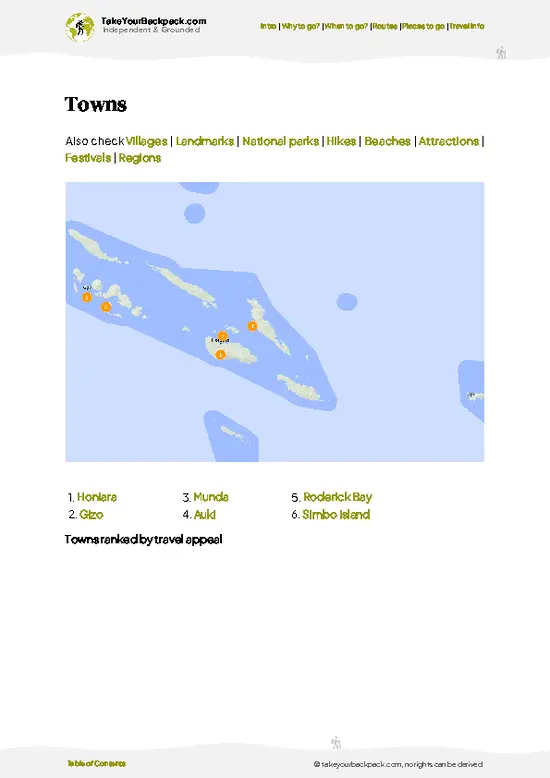
  • Simbo Island—Crater lakes, hot springs, traditional villages| 48 km away
  • Roderick Bay—Shipwreck site, sheltered anchorage, local crafts| 49 km away
  • Auki—Malaita market, lagoon views, local ferries| 110 km away

💡 Not sure where to go next?
Create a personalized itinerary for Solomon Islands including Honiara and the places that fit your trip.

Generate my itinerary

👉 Discover all towns

Or checkout all Solomon Islands has to offer (think cities, towns, villages, national parks, hikes, beaches, festivals)
Country photo of Solomon Islands

We 💚 feedbackKey takeaways before you go

Honiara has a raw, unfiltered vibe that feels like a secret waiting to be discovered. The scent of salt and earth mingles in the air, especially at sunset when the sky ignites. Don’t miss the local markets; they’re a sensory overload of colors and flavors, and the people are genuinely warm. Just a heads-up: the roads can be rough, so don’t rush. Embrace the pace. The real magic lies in the moments you slow down and connect. Trust me, it’s worth it.

✍️ Help improve this page!
The information on this page is based on in-depth research, insights shared by experienced travelers, and feedback from the local travel community in Solomon Islands. While every effort is made to keep the information accurate and current, conditions can change — so if you spot anything incorrect or outdated, please get in touch.


🙋‍♂️ Give feedback

👋 Meet the founderWho’s Behind Take Your Backpack?

Johan, backpacker and founder of TakeYourBackpackHi, I’m Johan (Netherlands 🇳🇱), the creator of TakeYourBackpack. Over the past decade, I’ve backpacked through 80+ countries across six continents, gaining extensive experience with independent travel, long-term trips, and overland routes.

This site is built on a combination of firsthand travel experience and carefully curated insights from other backpackers. Many guides are based on places I’ve personally visited, while others bring together tips, observations, and practical advice shared by trusted travelers I’ve met along the way.

The goal is to provide realistic, experience-driven guidance — not generic itineraries — so you can explore destinations with better context, clearer expectations, and more confidence.

Get full country guide •
Instant download • 39 highlights • Full Offline guide