
×

Solomon Islands🇸🇧 | townsTulagiTown wharf, Iron Bottom Sound, wartime caves, harbor sunsets | things to do and best time to go

Explore Malaita IslandExplore Auki

Backpacking in Tulagi
👀 For curious travelerstown ranked #6
By Johan Kruseman 🇳🇱 | Updated October 22, 2026

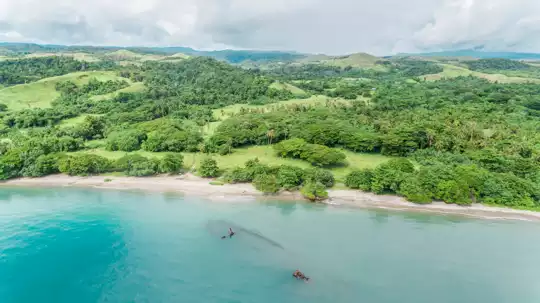
Tulagi Beach sits steps from the town wharf, so you can swim within minutes of stepping off the boat and skip any onward transport. The town is on Tulagi Island, just off the south coast of Nggela Sule, in the Central Province of the Solomon Islands, north of Honiara across Iron Bottom Sound. Expect a narrow strip of gray-tan sand and coral rubble, warm water the color of weak tea after rain, and the hum of outboard motors drifting over from the harbor. Crowds are thin, mostly local kids and a few dive guests. Snorkeling over the nearby wrecks and reef is the draw, though the beach itself is modest and litter turns up near the town end. Food is simple and cheap, guesthouses are basic, and boat fuel makes everything else pricey. Best for divers and history-minded wanderers; sunbathers wanting resort polish will be bored.

Discover everything you want to know in the 📖 Solomon Islands Travel Guide.


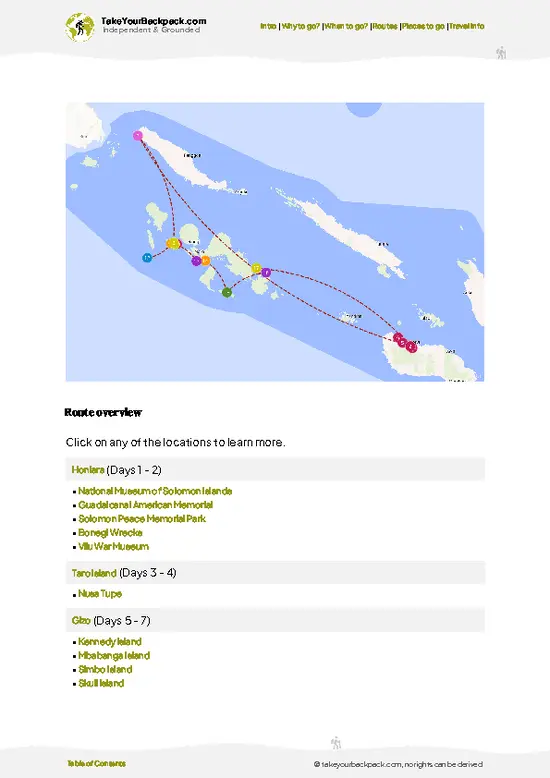
example page 0 from our offline Travel Guide for Solomon Islands
example page 1 from our offline Travel Guide for Solomon Islands
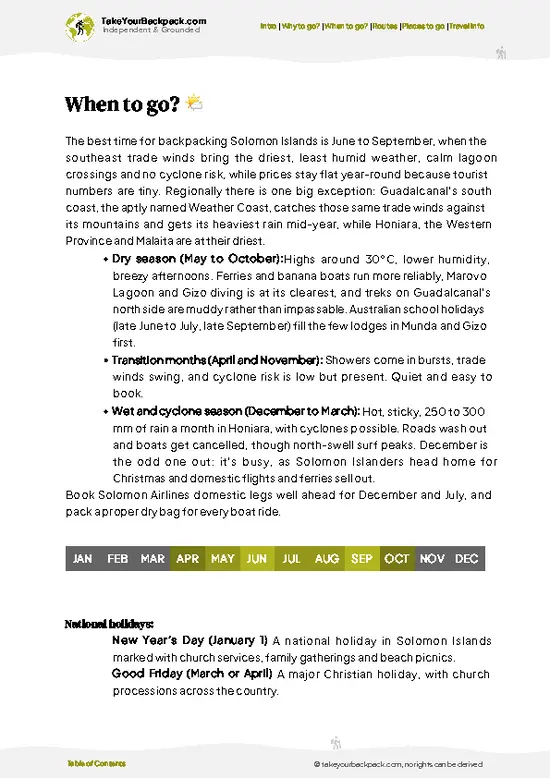
example page 2 from our offline Travel Guide for Solomon Islands
example page 3 from our offline Travel Guide for Solomon Islands
example page 4 from our offline Travel Guide for Solomon Islands
example page 5 from our offline Travel Guide for Solomon Islands
example page 6 from our offline Travel Guide for Solomon Islands
example page 7 from our offline Travel Guide for Solomon Islands
Loading the map 🌍
CLICK TO FILTER
towns
villages
landmarks
national parks
hikes
beaches
attractions
festivals
regions
SHOW COUNTRY’S BESTSHOW ALL

✨ Why go?
Ranked #6 town in Solomon Islands
What sets this place apart

Backpackers stop here for the water, not the sand. Iron Bottom Sound holds World War II wrecks and aircraft, and Tulagi’s reefs put that history within reach of a dive boat or a mask and fins. If you have ever wanted to float over rusted steel with fish schooling through it, this is the place to do it in the Solomons.

The second reason is rhythm. Tulagi was the British colonial capital before the war and the Japanese seaplane base that triggered the first Guadalcanal landings in 1942. Old hillside paths, rusting relics and quiet lanes make for slow, curious wandering after a swim. Nobody hassles you, and locals tend to start conversations first.

It also works as a pause. You trade Honiara’s traffic and dust for a place where the loudest sound is a canoe paddle, and then you decide whether … read more 👉
Backpackers stop here for the water, not the sand. Iron Bottom Sound holds World War II wrecks and aircraft, and Tulagi’s reefs put that history within reach of a dive boat or a mask and fins. If you have ever wanted to float over rusted steel with fish schooling through it, this is the place to do it in the Solomons.

The second reason is rhythm. Tulagi was the British colonial capital before the war and the Japanese seaplane base that triggered the first Guadalcanal landings in 1942. Old hillside paths, rusting relics and quiet lanes make for slow, curious wandering after a swim. Nobody hassles you, and locals tend to start conversations first.

It also works as a pause. You trade Honiara’s traffic and dust for a place where the loudest sound is a canoe paddle, and then you decide whether to push on to the Nggela islands or head back with your gear dry and your head clear.

💡 HighlightsThe experiences that define the visit

  1. Snorkeling off the town shore: Reef flats drop to coral gardens a short paddle from the sand, with clownfish, parrotfish and the occasional reef shark. Visibility is best on calm mornings.
  2. Wreck diving in Iron Bottom Sound: Local operators run boats to sunken warships and aircraft from the 1942 campaign. Coral now cloaks the hulls, so it feels part museum, part reef.
  3. Tulagi wartime relics walk: Old Japanese caves, gun emplacements and rusted remains sit along hillside paths above the harbor. Go early, wear closed shoes and take a local guide who knows the tracks.
  4. Tulagi Harbour at sunset: Canoes slip between anchored boats while the sky turns orange over Florida Islands water. Sit on the wharf edge and watch the commuter boats return.
  5. Evening on the waterfront: Nights are quiet here, with a few
… read more 👉
  1. Snorkeling off the town shore: Reef flats drop to coral gardens a short paddle from the sand, with clownfish, parrotfish and the occasional reef shark. Visibility is best on calm mornings.
  2. Wreck diving in Iron Bottom Sound: Local operators run boats to sunken warships and aircraft from the 1942 campaign. Coral now cloaks the hulls, so it feels part museum, part reef.
  3. Tulagi wartime relics walk: Old Japanese caves, gun emplacements and rusted remains sit along hillside paths above the harbor. Go early, wear closed shoes and take a local guide who knows the tracks.
  4. Tulagi Harbour at sunset: Canoes slip between anchored boats while the sky turns orange over Florida Islands water. Sit on the wharf edge and watch the commuter boats return.
  5. Evening on the waterfront: Nights are quiet here, with a few lamps, easy chatter and the occasional string band. It suits a cold drink and a long talk with locals rather than a party.
Snorkel in the morning when the water is flat, then take the relics walk in the late afternoon once the heat eases.
Spotted a mistake or missing something? Contact us.

Things to do near Tulagi

Ratings based on Tripadvisor reviews. When you book through this link, you support our work at no extra cost to you.

🏘️ NeighborhoodsWhere things are and how it's laid out

Tulagi is tiny, a hilly island about 4 km long, so every area is a walk or a short paddle apart. The smarter move is to treat it as a loop and go on foot, because the few roads are narrow and the heat is heavy by midday.
  • Main wharf and town center: Diesel fumes, shouting over boat engines and the smell of fish and copra mark the waterfront. Shops are basic, with tinned food, rice and phone credit. Buy supplies here early, because stock runs low when the provincial boat has not come in.
  • Government hill and old colonial ridge: Quiet lanes climb through frangipani and big shade trees past rusting relics of the old British capital. Views over Iron Bottom Sound are best once the sun drops lower. Wear closed shoes, since the paths are rutty and slick after rain.
  • Waterfront dive area: Dive operators
… read more 👉
Tulagi is tiny, a hilly island about 4 km long, so every area is a walk or a short paddle apart. The smarter move is to treat it as a loop and go on foot, because the few roads are narrow and the heat is heavy by midday.
  • Main wharf and town center: Diesel fumes, shouting over boat engines and the smell of fish and copra mark the waterfront. Shops are basic, with tinned food, rice and phone credit. Buy supplies here early, because stock runs low when the provincial boat has not come in.
  • Government hill and old colonial ridge: Quiet lanes climb through frangipani and big shade trees past rusting relics of the old British capital. Views over Iron Bottom Sound are best once the sun drops lower. Wear closed shoes, since the paths are rutty and slick after rain.
  • Waterfront dive area: Dive operators work from the shoreline, and wrecks from the 1942 battles lie just offshore. Water is warm and clear on calm days. Book through the dive shop a day ahead, as boats run on fixed schedules.
  • Village edges and the western shore: Wooden houses on stilts, kids splashing off jetties, smoke from cooking fires. Greet people, ask before photographing, and expect to be waved at.
  • Nightlife: There is almost none. Evenings mean frogs, insects and a cold drink at a guesthouse, so bring a flashlight for the dark paths.

⌛️ 1 day1-day itinerary for Tulagi

This is a slow island day built around old harbor history, a little walking and plenty of time on the water.

7:30 AM, Waterfront and harbor jetty: Start where the boats come in, watching fishers unload and locals buy the early catch. The air is cool and the light is easy for photos. Walk the main shoreline road toward the hill to get your bearings.

9:00 AM, Colonial hill and old residence grounds: Climb the path to the old administrative area above the harbor. Foundations and views across the channel toward Nggela and Guadalcanal show why the British picked this spot. Take it slowly, it is steep and humid.

11:00 AM, WWII relics around town: Follow the ridge paths and shoreline to find rusting Japanese and Allied remains. Ask a local for the safest tracks, since some are overgrown. This … read more 👉
This is a slow island day built around old harbor history, a little walking and plenty of time on the water.

7:30 AM, Waterfront and harbor jetty: Start where the boats come in, watching fishers unload and locals buy the early catch. The air is cool and the light is easy for photos. Walk the main shoreline road toward the hill to get your bearings.

9:00 AM, Colonial hill and old residence grounds: Climb the path to the old administrative area above the harbor. Foundations and views across the channel toward Nggela and Guadalcanal show why the British picked this spot. Take it slowly, it is steep and humid.

11:00 AM, WWII relics around town: Follow the ridge paths and shoreline to find rusting Japanese and Allied remains. Ask a local for the safest tracks, since some are overgrown. This is where the 1942 fighting stops being a date and becomes terrain.

1:00 PM, Lunch in town: Eat simple island food at a small stall or guesthouse, usually fish, rice and root vegetables. Rest in the shade through the hottest hours.

2:30 PM, Snorkel or dive stop near the harbor: Arrange a boat with a local operator for the shallow reefs and wreck-dotted water. Even surface snorkeling shows bright coral and fish life close to town.

4:30 PM, Village walk toward the quieter shore: Not on the usual itinerary, a stroll to the small residential edges of the island shows daily life, with kids playing and canoes pulled up. Greet people and ask before taking photos.

6:00 PM, Harbor at dusk: Finish on the waterfront with a cold drink and the day’s boat traffic fading out.

🌤️ When to go?Choosing the right time of year

  • Dry Season (May to October): The best window for Tulagi, with southeast trade winds, lower rainfall and clearer water for diving the WWII wrecks. Days run about 28 to 31°C (82 to 88°F), nights 23 to 25°C (73 to 77°F). Sunrise and sunset sit near 6 a.m. and 6 p.m. all year.
  • Wet Season (November to April): Humid, with heavy afternoon downpours, 29 to 32°C (84 to 90°F) and a cyclone risk from about January to March. Visibility drops after big rain, and boats to Honiara can be bumpy or canceled.
  • Crowds and Prices: Tulagi is quiet in any month. Dive operators on nearby Florida Islands and in Honiara hold steady rates, with slightly more demand from June to September.
  • Events: Solomon Islands Independence Day on July 7 brings local festivities across the province.
Book your boat transfer a day ahead … read more 👉
  • Dry Season (May to October): The best window for Tulagi, with southeast trade winds, lower rainfall and clearer water for diving the WWII wrecks. Days run about 28 to 31°C (82 to 88°F), nights 23 to 25°C (73 to 77°F). Sunrise and sunset sit near 6 a.m. and 6 p.m. all year.
  • Wet Season (November to April): Humid, with heavy afternoon downpours, 29 to 32°C (84 to 90°F) and a cyclone risk from about January to March. Visibility drops after big rain, and boats to Honiara can be bumpy or canceled.
  • Crowds and Prices: Tulagi is quiet in any month. Dive operators on nearby Florida Islands and in Honiara hold steady rates, with slightly more demand from June to September.
  • Events: Solomon Islands Independence Day on July 7 brings local festivities across the province.
Book your boat transfer a day ahead in the dry season, since small ferries fill with locals returning home on weekends.


source: climatestotravel.comJANJanuary: fair for travelingFEBFebruary: fair for travelingMARMarch: fair for travelingAPRApril: highly recommended for travelingMAYMay: excellent for travelingJUNJune: excellent for travelingJULJuly: excellent for travelingAUGAugust: excellent for travelingSEPSeptember: excellent for travelingOCTOctober: highly recommended for travelingNOVNovember: fair for travelingDECDecember: fair for traveling
solomon-islands-city-tulagi v1
© Google |

✈️ The backpacker research shortcutSolomon Islands Travel Guide

An offline-friendly backpacking guide with optimized travel routes, ranked highlights, transport advice, and the best areas to stay.
example page 0 from our offline Travel Guide for Solomon Islands
example page 1 from our offline Travel Guide for Solomon Islands
example page 2 from our offline Travel Guide for Solomon Islands
example page 3 from our offline Travel Guide for Solomon Islands
example page 4 from our offline Travel Guide for Solomon Islands
example page 5 from our offline Travel Guide for Solomon Islands
example page 6 from our offline Travel Guide for Solomon Islands
example page 7 from our offline Travel Guide for Solomon Islands
The digital guide (145 pages) contains:
✅ 33 highlights, ranked by travel appeal
✅ Optimized 5, 10 & 15-day travel routes
✅ Cities, national parks, landmarks, beaches
✅ How to get around
✅ Offline-friendly for travel without Wi-Fi
👉 Click to see all 30+ guide features

📅 Plan smarter in minutes, not weeks
✅ Month by month travel advice
✅ Festivals & national holidays
✅ Budget expectations

🗺️ Go to the right places, skip the overrated ones
✅ Honest pros & cons of destinations
✅ Top hikes, parks & viewpoints
✅ Lesser-known places most travelers miss
✅ Clear “worth it vs skip it” guidance

🛏️ Travel smoothly without rookie mistakes
✅ Best areas to stay
✅ Transport systems explained simply
✅ Common scams & safety advice
✅ SIM cards, money & practical tips

🌍 Understand the country, not just visit it
✅ Culture & traditions
✅ 52 Essential phrases & customs
✅ Festivals worth planning around
✅ Traveler-friendly historical context
✅ Insights that make places more meaningful

📱 Built for real travel conditions
✅ Fully downloadable PDF
✅ Works completely offline
✅ Optimized for phone use
✅ Useful in remote areas & buses
✅ Everything in one place
Stop searching, start planning
Get instant access to your full guide. 30‑day money-back guarantee.
+ Add another guide for just

By proceeding you agree to our terms.
Sent to your inbox immediately after payment • 100% Secure Checkout
Best Backpacking Travel Advisor 2025 tourism awardBest Backpacking
Travel Advisor
2025
What others say about Take Your Backpack Guides:
⭐⭐⭐⭐⭐
Fantastic, amazing amount of information!
⭐⭐⭐⭐⭐
My goodness this is amazing, it's what I've been looking for hats off too you!
⭐⭐⭐⭐⭐
I think this is absolutely BRILLIANT
⭐⭐⭐⭐
Very complete and informative. It's still missing places, but I gotta to commend you
⭐⭐⭐⭐⭐
This is truly amazing, thank you, can't wait to explore it with my kids!
⭐⭐⭐⭐⭐
Awesome resource, thank you!
⭐⭐⭐⭐⭐
This is amazing! Can't wait to explore the ones I haven't seen
⭐⭐⭐⭐
I love this! Well done, great idea.
⭐⭐⭐⭐⭐
Thanks for taking the time to make this gem!
⭐⭐⭐⭐⭐
This might be the best website I've ever seen.
⭐⭐⭐⭐⭐
Congratulations, and thank you so much for your work; it's incredibly valuable.
⭐⭐⭐⭐
In all seriousness I think you did a great job pointing out the important spots
⭐⭐⭐⭐⭐
10/10 very good
⭐⭐⭐⭐⭐
As someone who's only just starting to visit regularly this is awesome, thank you.
⭐⭐⭐⭐
Thank you very much! I'm going to visit my dad, it's going to be very useful!
⭐⭐⭐⭐⭐
This is really cool! We'll be travelling for the first time and this definitely come in handy.
⭐⭐⭐⭐⭐
You are now our minister of culture, congratulations 👨‍💼
⭐⭐⭐⭐⭐
Just wanted to tell you that this is a pearl! Going to follow your recommendations.
⭐⭐⭐⭐⭐
This is so cool. I'll definitely be using the resource for my travels soon.
⭐⭐⭐⭐⭐
This is very impressive! Good work.
⭐⭐⭐⭐⭐
This is an amazing and informative site. Very well done!

🛏️ Where to stay?Best areas to stay in Solomon Islands

Stay on Tulagi island itself, in the small settlement near the old Tulagi Harbor waterfront, because everything you will want sits within a 20 minute walk. Accommodation here is limited to a handful of guesthouses and simple lodges, typically around SBD 300 to 700 (US$35 to 85) a night for a basic room, and none of it is a party scene. Social life happens over shared meals, on verandas and among divers who come for the wrecks and WWII relics. Solo travelers will find it easy to chat with locals at the market and wharf, and the island is small enough that you will recognize faces by day two.

If … read more 👉
Stay on Tulagi island itself, in the small settlement near the old Tulagi Harbor waterfront, because everything you will want sits within a 20 minute walk. Accommodation here is limited to a handful of guesthouses and simple lodges, typically around SBD 300 to 700 (US$35 to 85) a night for a basic room, and none of it is a party scene. Social life happens over shared meals, on verandas and among divers who come for the wrecks and WWII relics. Solo travelers will find it easy to chat with locals at the market and wharf, and the island is small enough that you will recognize faces by day two.

If you want more beach and village life, look at the neighboring Nggela (Florida) Islands, reached by small outboard boat in 15 to 40 minutes. Homestays and village guesthouses there cost less, often SBD 200 to 400 (US$25 to 50) with meals, and put you right on the sand with kitchens run by families. Bring cash, since cards and ATMs are scarce outside Honiara. Another option is staying in Honiara and visiting on a day trip, though you lose the quiet evenings, which are the best part of Tulagi.

🚌 Getting aroundTransportation options and practical tips

From the main wharf, the heart of Tulagi, everything you need is within a 10 to 15 minute walk, because the island is small and its few roads end quickly. Public transport barely exists, and the sound you will hear most is outboard motors, not buses. Experienced travelers plan around boats, not wheels, since the water is the real highway here.
  • Walking: Free and the best way to see the island. A full loop takes about 1.5 to 2 hours with stops. Start early, since the heat sits on you by 10 am, and carry water because shops are few. Paths turn to red mud after downpours, so pack sandals with grip.
  • Local boat taxis: Small fiberglass dinghies with outboards, a smelly, splashy ride, hop between Tulagi, Gavutu, Tanambogo and nearby islands. Expect US$5 to 15 per boat for short hops, depending on fuel
… read more 👉
From the main wharf, the heart of Tulagi, everything you need is within a 10 to 15 minute walk, because the island is small and its few roads end quickly. Public transport barely exists, and the sound you will hear most is outboard motors, not buses. Experienced travelers plan around boats, not wheels, since the water is the real highway here.
  • Walking: Free and the best way to see the island. A full loop takes about 1.5 to 2 hours with stops. Start early, since the heat sits on you by 10 am, and carry water because shops are few. Paths turn to red mud after downpours, so pack sandals with grip.
  • Local boat taxis: Small fiberglass dinghies with outboards, a smelly, splashy ride, hop between Tulagi, Gavutu, Tanambogo and nearby islands. Expect US$5 to 15 per boat for short hops, depending on fuel and distance. Agree the price and the return pickup before you step in, because fuel is the main cost and boatmen set fares by it.
  • Ferry and provincial boats from Honiara: Public boats and the faster ferry cross Iron Bottom Sound, usually about 1.5 to 3 hours depending on the vessel, for roughly US$10 to 25. Schedules shift with weather and passenger numbers, so confirm the departure day at the Honiara wharf and arrive early. Smarter travelers sit in the shade and keep bags off the wet deck.
  • Dive boats: Operators run charters to the wrecks and to nearby islands. Single dives usually run US$60 to 90 with gear, and a boat ride to a site is included. Booking a few dives together lowers the per-dive price, so ask about a package.
  • Hitching a canoe ride: Villagers sometimes paddle or motor across for a small contribution of US$2 to 5. It is friendly and slow. Offer money for fuel, and never assume it is free.

👛 Costs (as of 22 October 2026)Money, prices, and spending tips

Expect to spend about US$75 a day in Tulagi, high season, once boats and dives are counted. Prices are higher than on the mainland because most goods arrive by boat from Honiara. Pay in Solomon Islands dollars, and carry cash.
CategoryBudget RangeLocal Reality
Dorm accommodationUS$20 to 30Few true dorms exist, so a basic guesthouse room or shared bed is the norm
MealsUS$12 to 20Rice, fish, sweet potato and cassava at small eateries and your guesthouse
Local transportUS$5 to 15Walking is free, boat hops cost the most
Basic activities/entry feesUS$10 to 25Village visit fees, snorkeling spots and guide contributions
Miscellaneous expensesUS$3 to 8Phone credit, water and snacks
Total Daily BudgetUS$75Per person, per day, in high season.
Share boat rides with other guests and carry your own water bottle to cut costs.
⚠️ Prices can change and everyone travels differently, so take this as a rough guide. Hope it helps you plan your adventure!

🚌 Day tripsShort trips worth adding

Tulagi suits day trips by boat, since most of the interesting spots sit within 15 minutes to 2 hours across the water. You arrange them through your guesthouse or a dive operator, because there are no tour desks. Calm, dry months from roughly May to October give the smoothest crossings.
Gavutu and Tanambogo: Two tiny linked islands with rusting war remains and snorkeling over coral gardens. A boat takes 10 to 15 minutes and costs about US$10 to 20 return. Most first-timers show up at midday, when the sun flattens the water, so go earlier. Respect village customs and ask permission before landing.

Honiara: The national capital sits across Iron Bottom Sound, about 1.5 to 3 hours each way by ferry or provincial boat. Fares run roughly US$10 to 25 each way. It works as a day trip only if you catch … read more 👉
Tulagi suits day trips by boat, since most of the interesting spots sit within 15 minutes to 2 hours across the water. You arrange them through your guesthouse or a dive operator, because there are no tour desks. Calm, dry months from roughly May to October give the smoothest crossings.
Gavutu and Tanambogo: Two tiny linked islands with rusting war remains and snorkeling over coral gardens. A boat takes 10 to 15 minutes and costs about US$10 to 20 return. Most first-timers show up at midday, when the sun flattens the water, so go earlier. Respect village customs and ask permission before landing.

Honiara: The national capital sits across Iron Bottom Sound, about 1.5 to 3 hours each way by ferry or provincial boat. Fares run roughly US$10 to 25 each way. It works as a day trip only if you catch the morning departure and confirm the return time, because the last boat leaves early and missing it strands you. The Central Market and the war memorial on Skyline Ridge are the draws.
👉 Explore Honiara
Nggela Islands villages: Lanes of stilt houses, gardens and quiet beaches sit on the larger islands next to Tulagi. Boats take 20 to 40 minutes, and a day costs about US$15 to 40 shared. Bring small notes for village fees and snacks. The calmest water is in the morning.
👉 Explore Nggela Islands
Iron Bottom Sound wreck dives: Warships and aircraft from 1942 lie close to the surface. Boats leave in the morning, and trips cost about US$60 to 90 per dive with gear. Certification is needed, and snorkelers can see a few shallow sites. Book a day ahead.

🛡️ SafetyStaying Safe: What Travelers Should Know

Tulagi Beach is calm and generally safe, with sheltered water inside the Nggela channel and very little surf. Currents are mild at the shore but can pull through the narrow channels between islands, so swim near the beach rather than out toward passing boats. Crocodiles are present in parts of the Solomons, so ask locals before swimming in river mouths or mangrove areas, and stay with the spots villagers use. Coral is close to shore in places, and reef shoes protect against cuts and urchins. The sun is fierce from mid-morning to mid-afternoon, so swim early or late and cover up. Afternoon storms can roll in quickly in the wet season. Petty theft is uncommon, but keep valuables out of sight and ask permission before using land that belongs to a family, as most beaches here are customary property.

FAQFrequently asked questions about Tulagi

Most travelers reach Tulagi by boat from Honiara on Guadalcanal, usually via a small ferry or shared outboard that takes roughly 1.5 to 3 hours depending on the vessel and weather. Services are limited, so check the schedule the day before and expect fares around SBD 150 to 400 (US$18 to 48) each way. Private charters from Honiara cost much more. Honiara International Airport is the entry point for international flights.
Swimming is pleasant in the calm, sheltered water, though the beach itself is small and the main appeal is the area around it. Snorkeling and diving are the real draw, with WWII wrecks and coral in the surrounding Iron Bottom Sound and the Nggela Islands, and dive trips typically run US$80 to 150 for a two-tank outing. Surfing is not a feature here. Bring your own snorkel gear if you want to avoid rental fees.
Yes, there is no entrance fee, but most beaches in the Solomon Islands sit on customary land, so ask permission from locals or a village elder first. A small gift or a modest fee of around SBD 20 to 50 (US$2 to 6) is sometimes requested if you are camping or visiting a village-owned stretch. Boat transport to Tulagi and any guided dive or history tours are the real costs.
⚠️ Things can change over time, so always validate details locally before you go.

Other Solomon Islander towns near Tulagi

Explore more nearby:

  • Honiara—Guadalcanal memorial, Central Market, national museum, Mataniko Falls| 42 km away
  • Auki—Shell money market, Malaita capital, Lau Lagoon launch point, harbor wharf| 71 km away
  • Munda—Kokengolo bunkers, airstrip relics, Roviana snorkeling, dawn fish market| 327 km away

💡 Not sure where to go next?
Create a personalized itinerary for Solomon Islands including Tulagi and the places that fit your trip.

Generate my itinerary

👉 Discover all towns

Or checkout all Solomon Islands has to offer (think cities, towns, villages, national parks, hikes, beaches, festivals)
Country photo of Solomon Islands

We 💚 feedbackParting advice and final tips

Tulagi works best as one stop in a longer Central Province loop. Pair it with the Florida Islands, where the small villages and quiet coves around Tulagi’s neighbors give you more room to wander, and with the dive sites of Iron Bottom Sound, where the wrecks from the 1942 Guadalcanal campaign lie. I would spend a night or two here, bring your own snorkel gear, and keep the rest of your days for the water around it.

✍️ Help improve this page!
The information on this page is based on in-depth research, insights shared by experienced travelers, and feedback from the local travel community in Solomon Islands. While every effort is made to keep the information accurate and current, conditions can change — so if you spot anything incorrect or outdated, please get in touch.


🙋‍♂️ Give feedback

👋 Meet the founderWho’s Behind Take Your Backpack?

Johan, backpacker and founder of TakeYourBackpackHi, I’m Johan (Netherlands 🇳🇱), the creator of TakeYourBackpack. Over the past 3 decades, I’ve backpacked through 90+ countries across six continents, gaining extensive experience with independent travel, long-term trips, and overland routes.

This site is built on a combination of firsthand travel experience and carefully curated insights from other backpackers. Many guides are based on places I’ve personally visited, while others bring together tips, observations, and practical advice shared by trusted travelers I’ve met along the way.

The goal is to provide realistic, experience-driven guidance — not generic itineraries — so you can explore destinations with better context, clearer expectations, and more confidence.