×

South Korea🇰🇷 | hikesHallasanvolcanic crater, alpine flora, shifting weather | things to do and best time to go

Explore GeumosanExplore Seoraksan Ulsanbawi Rock Trail

Backpacking in Hallasan
🏆 Top pickhike ranked #2
By Johan Kruseman 🇳🇱 | Updated September 4, 2026

Your breath fogs in the cold air as the wooden steps tilt upward again, thighs burning, volcanic gravel crunching under your boots while a gust rips across the boardwalk and slaps you with the smell of pine, wet soil, and distant ocean. This is Hallasan, the dormant volcano that rises out of Jeju Island, off South Korea’s southern coast. The hike feels like a slow, stubborn grind rather than a graceful mountain stroll: long stair sections, exposed ridgelines, and a time cutoff that forces you to keep moving. In return, you get shifting scenery that actually earns the hype—dark lava rock, dwarf forests, wind-bent trees, and, on a clear day, the crater lake and both coasts of Jeju at once. It’s tougher and longer than most mainland Korean peaks but still reachable by city bus, which makes it wildly accessible—and crowded, regulated, and not exactly a solitude hike.

Discover everything you want to know in the 📖 South Korea Travel Guide.
Best time to go: March - June, September - November
Duration: 9 to 10 hours
Distance: 22 kilometers
Total ascent: 1,947 meters
Loading the map 🌍
CLICK TO FILTER
cities
towns
villages
landmarks
national parks
hikes
beaches
attractions
festivals
regions
SHOW COUNTRY’S BESTSHOW ALL

✨ Why go?
Ranked #2 hike in South Korea
What makes it a must-see hike

The hike up Hallasan is a rite of passage for backpackers in South Korea. This towering volcano offers a scenery-to-effort ratio that’s hard to beat. You’ll start in lush forests, where the air is thick with the scent of pine and the sounds of chirping birds. As you ascend, the landscape shifts dramatically, revealing sweeping vistas that make every step worthwhile.

Access is a breeze with public transport options that drop you right at the trailhead. No need for a car rental or complicated logistics—just hop on a bus and you’re set. Plus, the low cost of the hike means you can save your cash for that post-hike cold beer.

What’s great is the flexible distances; you can choose a shorter route if you’re pressed for time or tackle the full summit for a real challenge. Either way, the sense … read more 👉
The hike up Hallasan is a rite of passage for backpackers in South Korea. This towering volcano offers a scenery-to-effort ratio that’s hard to beat. You’ll start in lush forests, where the air is thick with the scent of pine and the sounds of chirping birds. As you ascend, the landscape shifts dramatically, revealing sweeping vistas that make every step worthwhile.

Access is a breeze with public transport options that drop you right at the trailhead. No need for a car rental or complicated logistics—just hop on a bus and you’re set. Plus, the low cost of the hike means you can save your cash for that post-hike cold beer.

What’s great is the flexible distances; you can choose a shorter route if you’re pressed for time or tackle the full summit for a real challenge. Either way, the sense of accomplishment is palpable.

Hallasan fits seamlessly into a longer backpacking route, making it an ideal stop on your journey through Jeju Island. The burn in your legs will fade, but the views and the thrill of the climb will stick with you long after you’ve returned to the trailhead.
Want to include Hallasan in your South Korea route?
Create a personalized South Korea itinerary that includes Hallasan and the places that fit your trip — based on your travel style, budget, and available time. Get your route in seconds.

Generate my trip

💡 HighlightsWhat this place is best known for

  1. Baengnokdam (the summit crater lake) — A shallow, mirror-like crater lake at the very top that feels almost otherworldly when the clouds part; it’s the defining Hallasan moment — quiet, often misty, and tied to local legends (the “white deer” story). Be warned: summit visibility can vanish in minutes, so don’t count on a clear reflection unless you’re lucky.
  2. 360° Summit Views over Jeju and the Sea — From the rim you can see the whole island peel away into coastline and ocean; that combo of island + sea from Korea’s highest peak is rare and dramatic. On clear days you get a real sense of scale — cliffs, farms, villages and the blue horizon all in one sweep.
  3. Eoseungsaengak ridge and Yeongsil viewpoints — Short, punchy sections with steep rock ledges and dramatic drop-offs that reward you
read more 👉
  1. Baengnokdam (the summit crater lake) — A shallow, mirror-like crater lake at the very top that feels almost otherworldly when the clouds part; it’s the defining Hallasan moment — quiet, often misty, and tied to local legends (the “white deer” story). Be warned: summit visibility can vanish in minutes, so don’t count on a clear reflection unless you’re lucky.
  2. 360° Summit Views over Jeju and the Sea — From the rim you can see the whole island peel away into coastline and ocean; that combo of island + sea from Korea’s highest peak is rare and dramatic. On clear days you get a real sense of scale — cliffs, farms, villages and the blue horizon all in one sweep.
  3. Eoseungsaengak ridge and Yeongsil viewpoints — Short, punchy sections with steep rock ledges and dramatic drop-offs that reward you with postcard panoramas. Yeongsil is a broad terrace of sweeping views; Eoseungsaengak is a scrambly ridge that gives a close-up feel of the crater rim — both are great for photos and don’t take as long as the full summit slog.
  4. Alpine flora and seasonal color zones — Hallasan’s vertical vegetation belts are something to nerd out on: broadleaf forest at the base, then conifers and subalpine shrubs, plus a huge spring azalea show and silver-grass (eulalia) waves in autumn. You’ll notice plant species you won’t see on the mainland — it’s a botanist’s playground and a photographer’s dream.
  5. Gwaneumsa temple and local culture along the trail — Small temple stops, old stone walls and Jeju folk stories thread the hike with human history — Gwaneumsa (near one of the trailheads) is a nice low-effort cultural pause. Little details like prayer ribbons, trail-side shrines and local signboards make Hallasan feel lived-in, not just a nature spectacle.
Spotted a mistake or missing something? Contact us.

Things to do around Hallasan

Ratings based on Tripadvisor reviews. When you book through this link, you support our work at no extra cost to you.

🌤️ When to go?Weather, crowds, and seasonal trade-offs


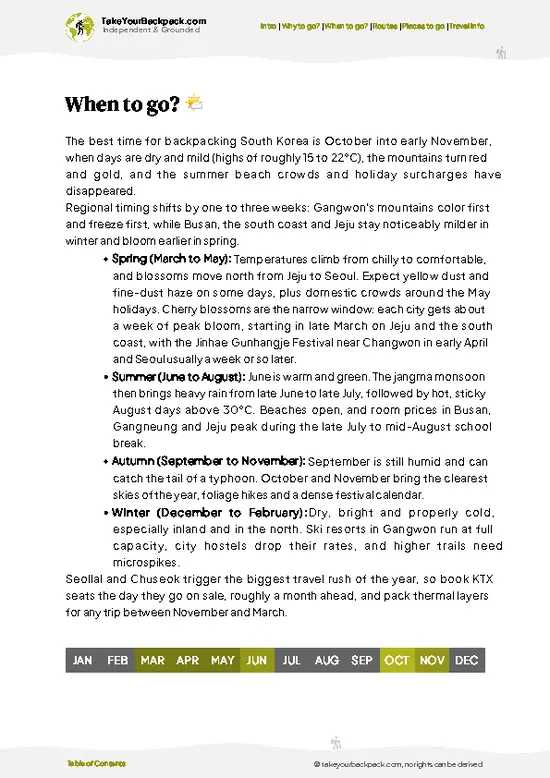
  • Weather: Spring (April to June) and fall (September to November) deliver the clearest skies and stable conditions. Summers bring heavy rain and humidity, while winter can freeze trails solid, making the climb tougher but quieter.

  • Temperature: Spring and fall hover between 10-20°C (50-68°F), perfect for sweating without overheating. Summer spikes past 25°C (77°F), turning the trail into a sauna. Winter dips below freezing, especially at the summit, demanding serious gear.

  • Daylight Hours: Spring and fall offer 10-12 hours of daylight, enough to pace your ascent and descent without rushing. Winter’s short days cut your window to 8-9 hours, pushing you to start early and move fast.

  • Crowds: Peak season is spring cherry blossom time and fall foliage, packing the trails with hikers. Early
read more 👉

  • Weather: Spring (April to June) and fall (September to November) deliver the clearest skies and stable conditions. Summers bring heavy rain and humidity, while winter can freeze trails solid, making the climb tougher but quieter.

  • Temperature: Spring and fall hover between 10-20°C (50-68°F), perfect for sweating without overheating. Summer spikes past 25°C (77°F), turning the trail into a sauna. Winter dips below freezing, especially at the summit, demanding serious gear.

  • Daylight Hours: Spring and fall offer 10-12 hours of daylight, enough to pace your ascent and descent without rushing. Winter’s short days cut your window to 8-9 hours, pushing you to start early and move fast.

  • Crowds: Peak season is spring cherry blossom time and fall foliage, packing the trails with hikers. Early spring and late fall see fewer people, giving you more breathing room and a quieter trail experience.

  • Seasonal Activities: Spring blooms and fall colors transform the landscape into a living canvas. Winter’s snow blankets the mountain, attracting those craving a frosty challenge but limiting flora and fauna sightings.

  • Price Fluctuations: Accommodation and transport costs spike during peak blossom and foliage seasons. Off-peak months offer better deals but come with trade-offs in weather and daylight.


Pro-tip: Aim for late April or early October—when the weather is kind, the crowds thin, and the mountain’s character shines without compromise.


source: climatestotravel.comJANJanuary: fair for travelingFEBFebruary: fair for travelingMARMarch: good for travelingAPRApril: excellent for travelingMAYMay: excellent for travelingJUNJune: highly recommended for travelingJULJuly: fair for travelingAUGAugust: fair for travelingSEPSeptember: excellent for travelingOCTOctober: excellent for travelingNOVNovember: highly recommended for travelingDECDecember: fair for traveling
south-korea-hike-hallasan
© Google |

✈️ The backpacker research shortcutSouth Korea Travel Guide

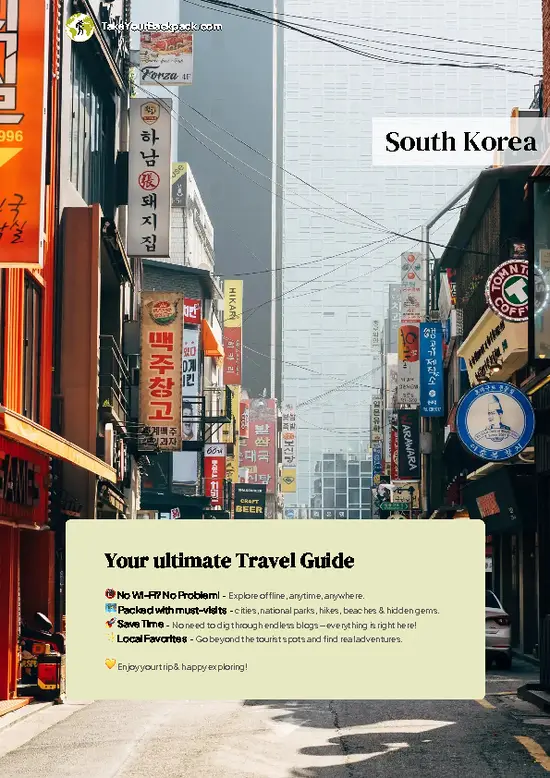
An offline-friendly backpacking guide with optimized travel routes, ranked highlights, transport advice, and the best areas to stay.
example page 0 from our offline Travel Guide for South Korea
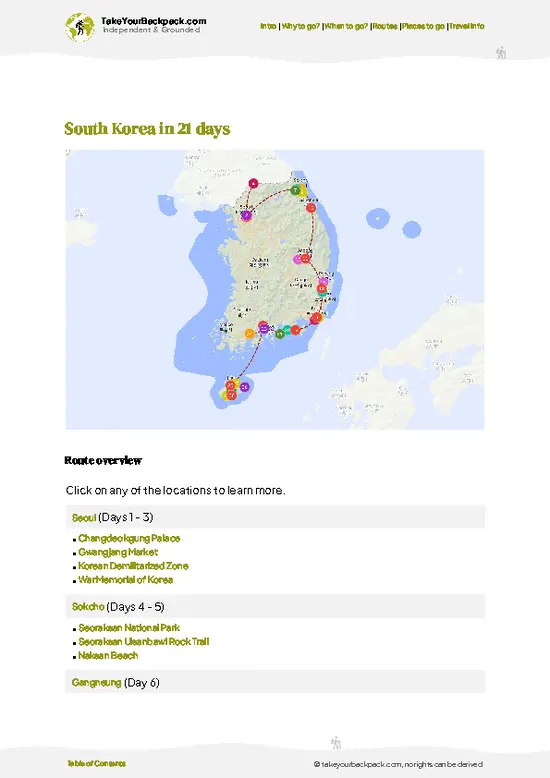
example page 1 from our offline Travel Guide for South Korea
example page 2 from our offline Travel Guide for South Korea
example page 3 from our offline Travel Guide for South Korea
example page 4 from our offline Travel Guide for South Korea
example page 5 from our offline Travel Guide for South Korea
example page 6 from our offline Travel Guide for South Korea
example page 7 from our offline Travel Guide for South Korea
The digital guide (439 pages) contains:
124 highlights, ranked by travel appeal
Optimized 7, 14 & 21-day travel routes
Cities, national parks, landmarks, beaches
How to get around
Offline-friendly for travel without Wi-Fi
👉 Click to see all 30+ guide features

📅 Plan smarter in minutes, not weeks
Month by month travel advice
Festivals & national holidays
Budget expectations

🗺️ Go to the right places, skip the overrated ones
Honest pros & cons of destinations
Top hikes, parks & viewpoints
Lesser-known places most travelers miss
Clear “worth it vs skip it” guidance

🛏️ Travel smoothly without rookie mistakes
Best areas to stay
Transport systems explained simply
Common scams & safety advice
SIM cards, money & practical tips

🌍 Understand the country, not just visit it
Culture & traditions
52 Essential phrases & customs
Festivals worth planning around
Traveler-friendly historical context
Insights that make places more meaningful

📱 Built for real travel conditions
Fully downloadable PDF
Works completely offline
Optimized for phone use
Useful in remote areas & buses
Everything in one place
Save weeks of stressful planning
Get instant access to your full guide. 30‑day money-back guarantee.
+ Add another guide for just US$7.80

By proceeding you agree to our terms.
Sent to your inbox immediately after payment • 100% Secure Checkout
Best Backpacking Travel Advisor 2025 tourism awardBest Backpacking
Travel Advisor
2025
What others say about Take Your Backpack Guides:
⭐⭐⭐⭐⭐
Fantastic, amazing amount of information!
⭐⭐⭐⭐⭐
My goodness this is amazing, it's what I've been looking for hats off too you!
⭐⭐⭐⭐⭐
I think this is absolutely BRILLIANT
⭐⭐⭐⭐
Very complete and informative. It's still missing places, but I gotta to commend you
⭐⭐⭐⭐⭐
This is truly amazing, thank you, can't wait to explore it with my kids!
⭐⭐⭐⭐⭐
Awesome resource, thank you!
⭐⭐⭐⭐⭐
This is amazing! Can't wait to explore the ones I haven't seen
⭐⭐⭐⭐
I love this! Well done, great idea.
⭐⭐⭐⭐⭐
Thanks for taking the time to make this gem!
⭐⭐⭐⭐⭐
This might be the best website I've ever seen.
⭐⭐⭐⭐⭐
Congratulations, and thank you so much for your work; it's incredibly valuable.
⭐⭐⭐⭐
In all seriousness I think you did a great job pointing out the important spots
⭐⭐⭐⭐⭐
10/10 very good
⭐⭐⭐⭐⭐
As someone who's only just starting to visit regularly this is awesome, thank you.
⭐⭐⭐⭐
Thank you very much! I'm going to visit my dad, it's going to be very useful!
⭐⭐⭐⭐⭐
This is really cool! We'll be travelling for the first time and this definitely come in handy.
⭐⭐⭐⭐⭐
You are now our minister of culture, congratulations 👨‍💼
⭐⭐⭐⭐⭐
Just wanted to tell you that this is a pearl! Going to follow your recommendations.
⭐⭐⭐⭐⭐
This is so cool. I'll definitely be using the resource for my travels soon.
⭐⭐⭐⭐⭐
This is very impressive! Good work.
⭐⭐⭐⭐⭐
This is an amazing and informative site. Very well done!

🛏️ Where to stay?Where staying makes the most sense

If you enjoy meeting fellow travelers, consider choosing hostels with high ratings for atmosphere. On the other hand, if you prefer having your own space, a hotel might be a better option.

🥾 Hike detailsTrail overview: what to expect on the hike

Total Distance: The Hallasan trail is about 22 kilometers (13.6 miles) round trip, taking you to the summit and back, which is a solid trek for a day.

Estimated Duration: Expect to spend around 8 to 10 hours on the trail. This includes time for breaks and enjoying the views, so don’t rush it!

Difficulty Level: This hike is generally rated as moderate to challenging. The ascent can be steep in parts, and the altitude can catch you off guard if you’re not acclimated.

Starting Point: The trailhead is located at the Hallasan National Park entrance.
  • Public Transport: You can take a bus from Jeju
read more 👉
Total Distance: The Hallasan trail is about 22 kilometers (13.6 miles) round trip, taking you to the summit and back, which is a solid trek for a day.

Estimated Duration: Expect to spend around 8 to 10 hours on the trail. This includes time for breaks and enjoying the views, so don’t rush it!

Difficulty Level: This hike is generally rated as moderate to challenging. The ascent can be steep in parts, and the altitude can catch you off guard if you’re not acclimated.

Starting Point: The trailhead is located at the Hallasan National Park entrance.
  • Public Transport: You can take a bus from Jeju City to the park entrance. Look for bus number 780, which runs frequently and takes about 40 minutes.

Major Landmarks Along the Route:
  • Seongpanak Trail: This is one of the two main trails leading to the summit, offering stunning views as you climb.
  • Witse Oreum: A scenic viewpoint along the way where you can catch your breath and snap some great photos.
  • Baengnokdam Crater: The summit features this beautiful crater lake, which is the highlight of the hike.

Type of Terrain and Scenery: The trail varies from rocky paths to well-maintained steps, and the scenery changes as you ascend. You’ll pass through dense forests, rocky outcrops, and eventually reach alpine meadows near the summit. The views from the top are breathtaking, especially on a clear day.

Typical Vegetation and Wildlife:
  • Vegetation: Expect to see a mix of temperate forest with species like Korean fir and various shrubs. Near the top, the landscape shifts to alpine plants.
  • Wildlife: Keep an eye out for Jeju’s unique wildlife, including the endangered Hallasan deer and various birds like the Korean magpie.

This trail is a fantastic way to experience the natural beauty of Jeju Island, but make sure to pack enough water and snacks, and check the weather before you head out. Happy hiking!
⚠️ Hiking info can sometimes be outdated or inaccurate. Before you hit the trail, check the latest conditions with locals. If you do spot anything that's off, I'd love to hear from you, so I can update it for fellow travelers.

🛡️ SafetyScams, Hazards, and Annoyances

Hallasan offers a straightforward yet invigorating hike, but it’s essential to stay grounded in reality. Weather can shift quickly; sunny skies can morph into misty conditions, so pack a light, waterproof jacket. The trail is well-marked, but don’t underestimate the steep sections. They’ll get your heart racing, especially as you gain altitude.

Footing can be tricky in places, with roots and rocks demanding your attention. Take your time; rushing can lead to slips. The trail is generally safe, but be mindful of your surroundings. Wildlife encounters are rare, but if you spot a deer or a bird, enjoy the moment from a distance.

Start early to beat the crowds and savor the solitude. Bring plenty of water and snacks to fuel your ascent. The reward? A panoramic view from the summit that makes … read more 👉
Hallasan offers a straightforward yet invigorating hike, but it’s essential to stay grounded in reality. Weather can shift quickly; sunny skies can morph into misty conditions, so pack a light, waterproof jacket. The trail is well-marked, but don’t underestimate the steep sections. They’ll get your heart racing, especially as you gain altitude.

Footing can be tricky in places, with roots and rocks demanding your attention. Take your time; rushing can lead to slips. The trail is generally safe, but be mindful of your surroundings. Wildlife encounters are rare, but if you spot a deer or a bird, enjoy the moment from a distance.

Start early to beat the crowds and savor the solitude. Bring plenty of water and snacks to fuel your ascent. The reward? A panoramic view from the summit that makes every step worth it. And when you return, a cold beer at a local pub will taste like victory.

FAQFrequently asked questions about Hallasan

The Hallasan hike typically takes 4 to 9 hours round trip depending on the trail chosen. The two main routes are the Seongpanak Trail (9.6 km, about 8-9 hours) and the Gwaneumsa Trail (8.7 km, about 5-6 hours).
The hike is considered moderately difficult due to steep sections and altitude gain up to 1,950 meters, South Korea's highest peak. Proper fitness and hiking gear are recommended, especially in colder months from November to March when trails can be icy.
No guide is required for Hallasan, but a permit is needed during peak seasons (spring and autumn) to limit daily hikers. Permits can be reserved online in advance, and hiking outside designated hours or trails is prohibited.
⚠️ Things can change over time, so always validate details locally before you go.

Other South Korean hikes near Hallasan

Explore more nearby:


💡 Not sure where to go next?
Create a personalized itinerary for South Korea including Hallasan and the places that fit your trip.

Generate my itinerary

👉 Discover all hikes

Or checkout all South Korea has to offer (think cities, towns, villages, national parks, hikes, beaches, festivals)
Country photo of South Korea

We 💚 feedbackWhat to keep in mind

The climb up Hallasan is a sweat-soaked challenge, but the view from the summit? Worth every step. You’ll feel the burn in your legs, but that moment when you catch sight of the crater lake is pure magic. Don’t underestimate the weather; it can shift faster than you think. Pack layers and a snack for the top. And trust me, that first cold beer in the village afterward hits differently. Embrace the grit, and let the mountain surprise you.

✍️ Help improve this page!
The information on this page is based on in-depth research, insights shared by experienced travelers, and feedback from the local travel community in South Korea. While every effort is made to keep the information accurate and current, conditions can change — so if you spot anything incorrect or outdated, please get in touch.


🙋‍♂️ Give feedback

👋 Meet the founderWho’s Behind Take Your Backpack?

Johan, backpacker and founder of TakeYourBackpackHi, I’m Johan (Netherlands 🇳🇱), the creator of TakeYourBackpack. Over the past decade, I’ve backpacked through 80+ countries across six continents, gaining extensive experience with independent travel, long-term trips, and overland routes.

This site is built on a combination of firsthand travel experience and carefully curated insights from other backpackers. Many guides are based on places I’ve personally visited, while others bring together tips, observations, and practical advice shared by trusted travelers I’ve met along the way.

The goal is to provide realistic, experience-driven guidance — not generic itineraries — so you can explore destinations with better context, clearer expectations, and more confidence.

Get full country guide •
Instant download • 124 highlights • Full Offline guide