×

South Korea🇰🇷 | townsDamyangbamboo groves, slow food, riverside cycling | things to do and best time to go

Explore MujuExplore Boseong

Backpacking in Damyang
🌟 Highlighttown ranked #6
By Johan Kruseman 🇳🇱 | Updated July 20, 2026

Most people only realize on the bus ride out that Damyang is where they should’ve slowed down for a night, not just dashed through for bamboo selfies. This small town in South Jeolla Province, just north of Gwangju in South Korea’s southwest, works best as a soft landing between big-city legs like Busan–Gwangju–Jeonju. The air smells like wet leaves and grilled ddeok-galbi, and once the day-trippers leave, the streets go quiet in a way Seoul never does. You come here for the bamboo forest, riverside bike paths, and easy countryside walks, not nightlife or hostel bar crawls. Buses from Gwangju make it simple to reach, and the core is walkable, but rural sights need local buses or taxis. It’s cheaper and calmer than Jeonju, safer than it feels after dark, and more scenic than practical, which is exactly its charm.

Discover everything you want to know in the 📖 South Korea Travel Guide.
Loading the map 🌍
CLICK TO FILTER
cities
towns
villages
landmarks
national parks
hikes
beaches
attractions
festivals
regions
SHOW COUNTRY’S BESTSHOW ALL

✨ Why go?
Ranked #6 town in South Korea
What makes it a must-see town

Damyang is a backpacker’s haven that strikes a balance between convenience and authenticity. Nestled between the Jirisan National Park and the coast, it’s a perfect pit stop for those craving both hikes and beach days. The walkable streets invite you to explore local food stalls and cozy guesthouses, where the scent of grilled bamboo rice wafts through the air.

You’ll find a mix of solo travelers and small groups, all drawn to the friendly atmosphere that encourages connection. Most backpackers stay a couple of days, soaking in the slow pace and the chance to recharge. The town’s charm lies in its small-scale hostels, where you can swap stories over a cup of green tea or join a local cooking class.

While it’s not a nightlife hotspot, the evenings are filled with laughter and shared meals, … read more 👉
Damyang is a backpacker’s haven that strikes a balance between convenience and authenticity. Nestled between the Jirisan National Park and the coast, it’s a perfect pit stop for those craving both hikes and beach days. The walkable streets invite you to explore local food stalls and cozy guesthouses, where the scent of grilled bamboo rice wafts through the air.

You’ll find a mix of solo travelers and small groups, all drawn to the friendly atmosphere that encourages connection. Most backpackers stay a couple of days, soaking in the slow pace and the chance to recharge. The town’s charm lies in its small-scale hostels, where you can swap stories over a cup of green tea or join a local cooking class.

While it’s not a nightlife hotspot, the evenings are filled with laughter and shared meals, making it easy to meet fellow adventurers. If you’re looking for a place to linger and immerse yourself in Korean culture, or simply a rest stop on your journey, Damyang offers a rewarding experience that feels well-earned.
Want to include Damyang in your South Korea route?
Create a personalized South Korea itinerary that includes Damyang and the places that fit your trip — based on your travel style, budget, and available time. Get your route in seconds.

Generate my trip

💡 HighlightsWhat this place is best known for

  1. Juknokwon (죽녹원) — A peaceful, well-maintained bamboo forest with boardwalks and small pavilions; it’s Damyang’s signature experience for wandering through towering bamboo and trying bamboo-themed snacks or tea.
  2. Metasequoia Road (메타세쿼이아 가로수길) — That picture-perfect avenue of metasequoia trees; excellent for a slow stroll, cycling, or sunset photos when the light comes through the trunks.
  3. Soswaewon Garden (소쇄원) — A small, elegant Joseon-period private garden where courtiers once retreated; the layout and quiet ponds give a clear sense of classical Korean garden aesthetics.
  4. Gwanbangjerim Zelkova Grove (관방제림) — A historic riverside tree corridor planted centuries ago; it’s cool, shady, and full of local character — great for a reflective walk along the water.
  5. Damyang Eupseong (담양읍성) — Remnants
read more 👉
  1. Juknokwon (죽녹원) — A peaceful, well-maintained bamboo forest with boardwalks and small pavilions; it’s Damyang’s signature experience for wandering through towering bamboo and trying bamboo-themed snacks or tea.
  2. Metasequoia Road (메타세쿼이아 가로수길) — That picture-perfect avenue of metasequoia trees; excellent for a slow stroll, cycling, or sunset photos when the light comes through the trunks.
  3. Soswaewon Garden (소쇄원) — A small, elegant Joseon-period private garden where courtiers once retreated; the layout and quiet ponds give a clear sense of classical Korean garden aesthetics.
  4. Gwanbangjerim Zelkova Grove (관방제림) — A historic riverside tree corridor planted centuries ago; it’s cool, shady, and full of local character — great for a reflective walk along the water.
  5. Damyang Eupseong (담양읍성) — Remnants of the old town fortress and walls that reveal how the town used to be organized; walk the ramparts and imagine the town’s defensive past.
  6. Damyang Hyanggyo (담양향교) — The local Confucian school and shrine; visiting shows you how Confucian education shaped provincial life, and the quiet courtyard feels very authentic.
  7. Damyang Traditional Market (담양시장) — A lively, no-frills market where you can sample regional bites (look for bamboo rice and local tteok), buy ingredients, and watch everyday Damyang life.
  8. Bamboo craft workshops and studios — Scattered around the town and near Juknokwon, these small workshops let you see (and often try) traditional bamboo weaving and make simple souvenirs like chopsticks or fans.
  9. Bamboo Museum / Local bamboo exhibition spaces — Small, focused displays about bamboo’s role in local craft, construction, and cuisine; useful for context before or after wandering the bamboo grove.
  10. Local tea houses and hanok stays in the town center — Simple, local tea rooms and a handful of preserved hanok (traditional houses) where you can slow down, try local teas or a hanjeongsik, and get a feel for everyday Damyang hospitality.
A few excellent day trips near Damyang are the Boseong green tea fields, Suncheon Bay wetlands and gardens, and Gwangju’s museums and markets — all easily reachable for a relaxed day out.
Spotted a mistake or missing something? Contact us.

Things to do near Damyang

Ratings based on Tripadvisor reviews. When you book through this link, you support our work at no extra cost to you.

🏘️ NeighborhoodsNeighborhood guide to Damyang

Damyang is a charming blend of nature and culture, perfect for backpackers seeking an authentic South Korean experience. Here’s how to navigate its neighborhoods:

Juknokwon: This area is a must for nature lovers. Home to the famous bamboo forest, it’s a serene escape. The vibe is tranquil, making it ideal for longer stays. You can stroll through the paths, soaking in the scent of fresh bamboo. Accommodations are reasonably priced, and the walkability is excellent. Plus, it’s close to local eateries serving delicious, affordable meals.

Damyang-eup: The town center buzzes with life. Here, you’ll find markets and shops that offer a taste of local culture. It’s perfect for short stays, with plenty of budget-friendly guesthouses. The nightlife is low-key, but you can find cozy bars to unwind … read more 👉
Damyang is a charming blend of nature and culture, perfect for backpackers seeking an authentic South Korean experience. Here’s how to navigate its neighborhoods:

Juknokwon: This area is a must for nature lovers. Home to the famous bamboo forest, it’s a serene escape. The vibe is tranquil, making it ideal for longer stays. You can stroll through the paths, soaking in the scent of fresh bamboo. Accommodations are reasonably priced, and the walkability is excellent. Plus, it’s close to local eateries serving delicious, affordable meals.

Damyang-eup: The town center buzzes with life. Here, you’ll find markets and shops that offer a taste of local culture. It’s perfect for short stays, with plenty of budget-friendly guesthouses. The nightlife is low-key, but you can find cozy bars to unwind after a day of exploration. Transport access is solid, making it easy to venture out to nearby attractions.

Metasequoia-lined Road: This picturesque stretch is ideal for leisurely walks or bike rides. The atmosphere is dreamy, especially at sunset. While it’s not a nightlife hub, the beauty here makes it worth a visit. It’s more suited for short stays, as accommodations are limited, but the experience of walking among towering trees is unforgettable.

Gwangju Road: A bit busier, this area offers a mix of modernity and tradition. It’s great for those who want a taste of urban life while still being close to nature. The transport links are excellent, making it easy to explore further afield. Accommodations vary from budget to mid-range, catering to different backpacker needs.

⌛️ 1 dayHow to make the most of one day

Damyang, South Korea, is a delightful blend of nature and culture, known for its bamboo groves and traditional architecture. The air here carries a fresh, earthy scent, especially in the morning when the mist clings to the hills. This town is a canvas of green, where you can immerse yourself in the tranquility of nature while savoring local delicacies.

Start your day at the Damyang Bamboo Forest. As you stroll through the towering stalks, the sunlight filters through the leaves, creating a dance of shadows on the ground. The gentle rustle of bamboo swaying in the breeze is a soothing soundtrack. Take your time; the forest is a perfect spot for reflection or a quiet moment with a cup of tea from one of the nearby tea houses.

After soaking in the serenity, head to the nearby Metasequoia-lined … read more 👉
Damyang, South Korea, is a delightful blend of nature and culture, known for its bamboo groves and traditional architecture. The air here carries a fresh, earthy scent, especially in the morning when the mist clings to the hills. This town is a canvas of green, where you can immerse yourself in the tranquility of nature while savoring local delicacies.

Start your day at the Damyang Bamboo Forest. As you stroll through the towering stalks, the sunlight filters through the leaves, creating a dance of shadows on the ground. The gentle rustle of bamboo swaying in the breeze is a soothing soundtrack. Take your time; the forest is a perfect spot for reflection or a quiet moment with a cup of tea from one of the nearby tea houses.

After soaking in the serenity, head to the nearby Metasequoia-lined Road. This picturesque avenue is often overlooked by tourists, but it’s a local favorite. The trees create a natural archway, and the light filtering through the leaves is simply magical. Grab a quick bite at a local café; try the rice cakes filled with sweet red bean paste—comfort food at its finest.

In the afternoon, visit the historic Damyang Hyanggyo, a Confucian school that dates back to the 15th century. The architecture is stunning, and the surrounding gardens are perfect for a leisurely walk. You’ll find yourself stepping back in time, imagining scholars walking these paths.

As evening approaches, make your way to the charming neighborhood of Juknokwon, where you can enjoy a traditional Korean barbecue. The smoky aroma wafts through the air as you grill your meat right at the table. Pair it with a local craft beer or a refreshing makgeolli, and you’ll feel like you’ve truly embraced the local culture.

Damyang is not just a destination; it’s an experience that rewards those who take the time to explore its hidden corners.
Turn your Damyang visit into an South Korea adventure
Build a complete South Korea route with Damyang, hidden gems, must-see destinations, and realistic travel times included.

Generate my trip

🌤️ When to go?Seasonal considerations and timing


  • Weather: Spring (April to June) and autumn (September to November) offer the most comfortable weather. Expect mild temperatures around 15-22°C (59-72°F), perfect for wandering bamboo groves without sweating buckets or shivering.

  • Temperature: Summers can spike to 28-32°C (82-90°F), sticky and humid, which can drain your energy fast. Winters dip below freezing, around -3 to 5°C (27-41°F), making outdoor exploration less inviting unless you’re bundled up.

  • Daylight Hours: Spring and autumn provide balanced daylight—about 12 to 14 hours—giving you ample time to soak in the scenery without rushing or losing light early.

  • Crowds: Peak tourist season hits in autumn when the bamboo forest is framed by fall colors. Visiting early in the morning or on weekdays helps dodge the busiest times and
read more 👉

  • Weather: Spring (April to June) and autumn (September to November) offer the most comfortable weather. Expect mild temperatures around 15-22°C (59-72°F), perfect for wandering bamboo groves without sweating buckets or shivering.

  • Temperature: Summers can spike to 28-32°C (82-90°F), sticky and humid, which can drain your energy fast. Winters dip below freezing, around -3 to 5°C (27-41°F), making outdoor exploration less inviting unless you’re bundled up.

  • Daylight Hours: Spring and autumn provide balanced daylight—about 12 to 14 hours—giving you ample time to soak in the scenery without rushing or losing light early.

  • Crowds: Peak tourist season hits in autumn when the bamboo forest is framed by fall colors. Visiting early in the morning or on weekdays helps dodge the busiest times and lets you enjoy the quiet rustle of leaves.

  • Seasonal Activities: Autumn hosts local festivals celebrating harvest and bamboo crafts, adding cultural layers to your hike. Spring brings fresh greenery and blooming azaleas, enhancing the forest’s scent and color palette.

  • Price Fluctuations: Accommodation and transport costs rise during autumn festivals and spring holidays. Booking ahead or choosing shoulder-season dates can save you a noticeable chunk of cash.


Pro-tip: Aim for late April or mid-October mornings—cool air, soft light filtering through bamboo stalks, and fewer people make your trek feel like a secret shared only with the forest.


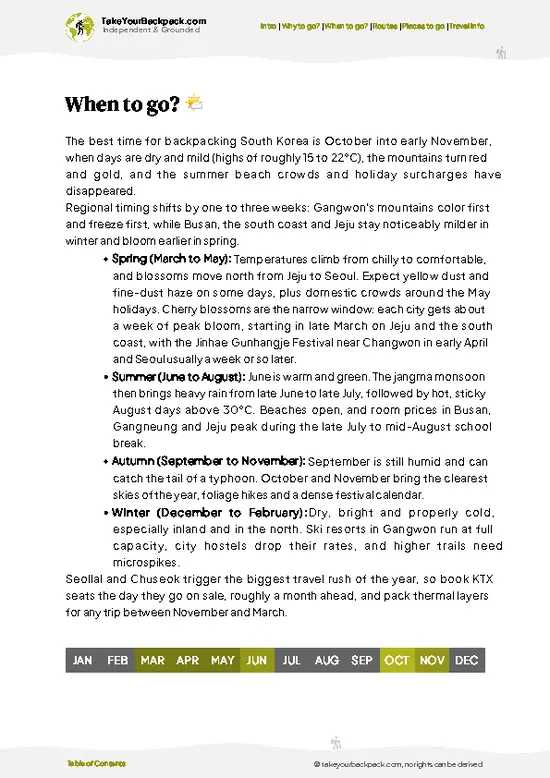
source: climatestotravel.comJANJanuary: fair for travelingFEBFebruary: fair for travelingMARMarch: good for travelingAPRApril: excellent for travelingMAYMay: excellent for travelingJUNJune: highly recommended for travelingJULJuly: fair for travelingAUGAugust: fair for travelingSEPSeptember: highly recommended for travelingOCTOctober: excellent for travelingNOVNovember: highly recommended for travelingDECDecember: fair for traveling
when-to-go

✈️ The backpacker research shortcutSouth Korea Travel Guide

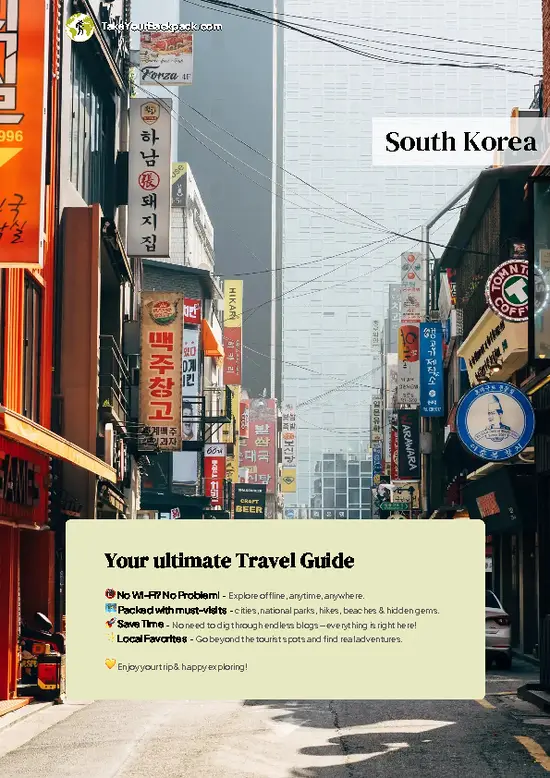
An offline-friendly backpacking guide with optimized travel routes, ranked highlights, transport advice, and the best areas to stay.
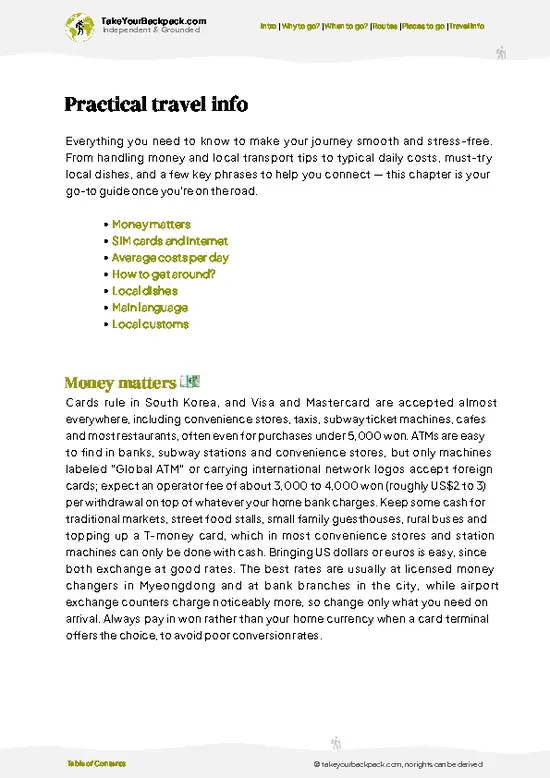
example page 0 from our offline Travel Guide for South Korea
example page 1 from our offline Travel Guide for South Korea
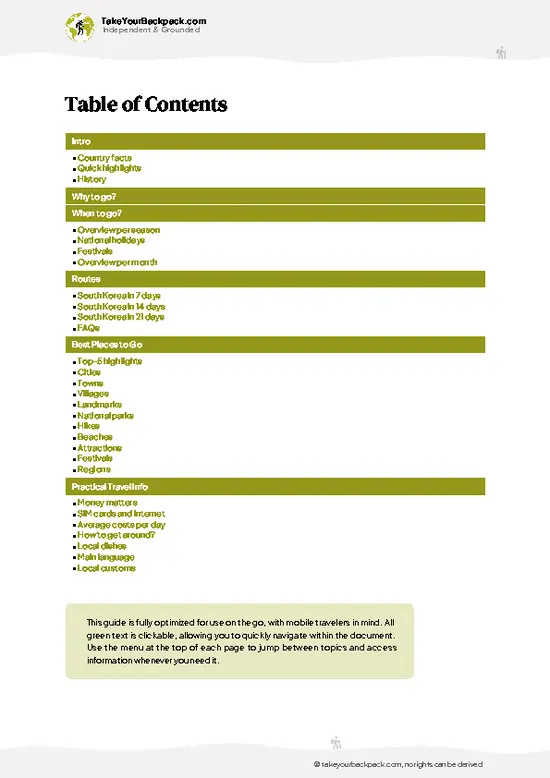
example page 2 from our offline Travel Guide for South Korea
example page 3 from our offline Travel Guide for South Korea
example page 4 from our offline Travel Guide for South Korea
example page 5 from our offline Travel Guide for South Korea
example page 6 from our offline Travel Guide for South Korea
example page 7 from our offline Travel Guide for South Korea
The digital guide (439 pages) contains:
124 highlights, ranked by travel appeal
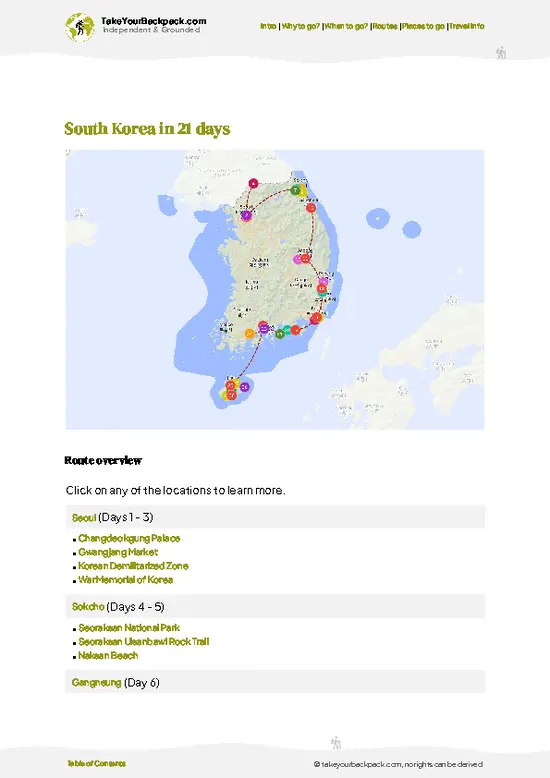
Optimized 7, 14 & 21-day travel routes
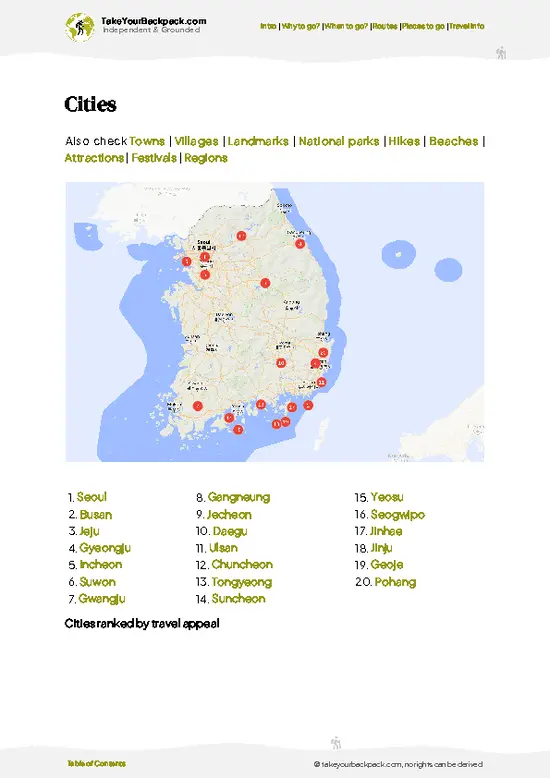
Cities, national parks, landmarks, beaches
How to get around
Offline-friendly for travel without Wi-Fi
👉 Click to see all 30+ guide features

📅 Plan smarter in minutes, not weeks
Month by month travel advice
Festivals & national holidays
Budget expectations

🗺️ Go to the right places, skip the overrated ones
Honest pros & cons of destinations
Top hikes, parks & viewpoints
Lesser-known places most travelers miss
Clear “worth it vs skip it” guidance

🛏️ Travel smoothly without rookie mistakes
Best areas to stay
Transport systems explained simply
Common scams & safety advice
SIM cards, money & practical tips

🌍 Understand the country, not just visit it
Culture & traditions
52 Essential phrases & customs
Festivals worth planning around
Traveler-friendly historical context
Insights that make places more meaningful

📱 Built for real travel conditions
Fully downloadable PDF
Works completely offline
Optimized for phone use
Useful in remote areas & buses
Everything in one place
Save weeks of stressful planning
Get instant access to your full guide. 30‑day money-back guarantee.


By proceeding you agree to our terms.
Sent to your inbox immediately after payment • 100% Secure Checkout
Best Backpacking Travel Advisor 2025 tourism awardBest Backpacking
Travel Advisor
2025
What others say about Take Your Backpack Guides:
⭐⭐⭐⭐⭐
Fantastic, amazing amount of information!
⭐⭐⭐⭐⭐
My goodness this is amazing, it's what I've been looking for hats off too you!
⭐⭐⭐⭐⭐
I think this is absolutely BRILLIANT
⭐⭐⭐⭐
Very complete and informative. It's still missing places, but I gotta to commend you
⭐⭐⭐⭐⭐
This is truly amazing, thank you, can't wait to explore it with my kids!
⭐⭐⭐⭐⭐
Awesome resource, thank you!
⭐⭐⭐⭐⭐
This is amazing! Can't wait to explore the ones I haven't seen
⭐⭐⭐⭐
I love this! Well done, great idea.
⭐⭐⭐⭐⭐
Thanks for taking the time to make this gem!
⭐⭐⭐⭐⭐
This might be the best website I've ever seen.
⭐⭐⭐⭐⭐
Congratulations, and thank you so much for your work; it's incredibly valuable.
⭐⭐⭐⭐
In all seriousness I think you did a great job pointing out the important spots
⭐⭐⭐⭐⭐
10/10 very good
⭐⭐⭐⭐⭐
As someone who's only just starting to visit regularly this is awesome, thank you.
⭐⭐⭐⭐
Thank you very much! I'm going to visit my dad, it's going to be very useful!
⭐⭐⭐⭐⭐
This is really cool! We'll be travelling for the first time and this definitely come in handy.
⭐⭐⭐⭐⭐
You are now our minister of culture, congratulations 👨‍💼
⭐⭐⭐⭐⭐
Just wanted to tell you that this is a pearl! Going to follow your recommendations.
⭐⭐⭐⭐⭐
This is so cool. I'll definitely be using the resource for my travels soon.
⭐⭐⭐⭐⭐
This is very impressive! Good work.
⭐⭐⭐⭐⭐
This is an amazing and informative site. Very well done!

🛏️ Where to stay?Choosing the right base

Damyang’s best spot for backpackers is the area around Damyang Bus Terminal and the nearby downtown stretch. This neighborhood hums with a low-key energy—quiet enough to rest but lively enough to meet fellow travelers over a cheap meal or a local brew. The streets here are lined with small guesthouses and hostels that cater to budget travelers, so you’ll find a mix of solo backpackers and small groups swapping tips and stories. The vibe is unpretentious, grounded in the rhythms of daily Korean life, with markets offering fresh produce and street food scents that pull you out of your room.

Why … read more 👉
Damyang’s best spot for backpackers is the area around Damyang Bus Terminal and the nearby downtown stretch. This neighborhood hums with a low-key energy—quiet enough to rest but lively enough to meet fellow travelers over a cheap meal or a local brew. The streets here are lined with small guesthouses and hostels that cater to budget travelers, so you’ll find a mix of solo backpackers and small groups swapping tips and stories. The vibe is unpretentious, grounded in the rhythms of daily Korean life, with markets offering fresh produce and street food scents that pull you out of your room.

Why this area? It’s the practical heart of Damyang, close to the bamboo forests and Metasequoia Road, so you’re never far from the main draws. Staying here means easy access to buses and taxis without the hassle of long walks or expensive rides. Compared to the quieter outskirts or residential zones, this spot balances safety with social opportunities—perfect for those who want to feel connected without the noise of a big city. The light here shifts gently in the evening, casting long shadows from the bamboo groves, making your downtime feel like part of the adventure.

🚌 Getting aroundMoving around without the hassle

Damyang moves at a pace that feels like a slow breath in a forest clearing—unhurried but deliberate. The town’s rhythm isn’t dictated by strict timetables or the buzz of neon signs but by the gentle unfolding of daylight through bamboo groves and the soft murmur of locals greeting each other. Here, time is measured in footsteps and the scent of pine rather than by the relentless ticking of a clock. This means your best bet is to lean into the town’s natural flow, blending patience with a bit of savvy planning to unlock its quiet magic without getting stuck waiting.


  • Walking: Damyang’s compact size makes walking the most authentic and budget-friendly way to get around. The air carries the fresh, earthy scent of bamboo and pine, and every turn reveals a new patch of green or a small, local
read more 👉
Damyang moves at a pace that feels like a slow breath in a forest clearing—unhurried but deliberate. The town’s rhythm isn’t dictated by strict timetables or the buzz of neon signs but by the gentle unfolding of daylight through bamboo groves and the soft murmur of locals greeting each other. Here, time is measured in footsteps and the scent of pine rather than by the relentless ticking of a clock. This means your best bet is to lean into the town’s natural flow, blending patience with a bit of savvy planning to unlock its quiet magic without getting stuck waiting.


  • Walking: Damyang’s compact size makes walking the most authentic and budget-friendly way to get around. The air carries the fresh, earthy scent of bamboo and pine, and every turn reveals a new patch of green or a small, local eatery. Most key spots, like the Bamboo Forest and Metasequoia Road, are within a 20-30 minute stroll from the town center. Walking lets you soak in the atmosphere at your own pace without spending a won.


  • Local Buses: The bus system is straightforward but runs on a relaxed schedule, typically from 6:30 AM to 8:00 PM. Tickets cost around 1,200 won, making it a cheap option if you want to cover longer distances, like reaching the Soswaewon Garden. Buses aren’t always punctual, so it’s wise to arrive early and expect a bit of waiting, especially outside peak hours. The ride itself offers a window into daily life, with locals chatting softly and the occasional scent of street food wafting in through open windows.


  • Shared Taxis: For a faster, slightly pricier option, shared taxis operate on fixed routes connecting major tourist spots. They cost about 3,000-5,000 won per ride and run from 8:00 AM to 7:00 PM. These taxis don’t follow a strict timetable but leave once full, so there’s a bit of unpredictability. They’re a good middle ground if you want to save time but keep costs low, plus the drivers often share local tips if you strike up a conversation.


  • Bicycle Rentals: Renting a bike is a fantastic way to explore Damyang’s scenic routes, especially the bamboo forest trails and riverside paths. Rentals cost roughly 5,000-7,000 won per hour, with shops typically open from 9:00 AM to 6:00 PM. The breeze through the trees and the soft crunch of gravel under tires make this a sensory-rich way to cover ground faster than walking but still stay connected to the environment.

👛 Costs (as of 3 April 2026)How expensive it really is

Backpacking in Damyang, South Korea, offers a mix of rustic charm and cultural depth, but knowing the daily costs helps you plan without surprises.
  • Dorm Accommodation: Expect to pay around $15 to $25 per night for a bed in a guesthouse or hostel dorm. These places are simple but clean, often with shared bathrooms and a quiet, laid-back vibe that matches Damyang’s slower pace.
  • Meals: Local eateries serve up hearty Korean dishes like bibimbap or grilled fish for about $5 to $8 per meal. Street food snacks, like tteokbokki or fried snacks, hover around $2 to $4, making it easy to eat well without breaking the bank.
  • Local Transport: Damyang is compact, so walking covers most spots. For longer trips, local buses cost roughly $1 to $2 per ride. Renting a bicycle, a popular way to explore bamboo
read more 👉
Backpacking in Damyang, South Korea, offers a mix of rustic charm and cultural depth, but knowing the daily costs helps you plan without surprises.
  • Dorm Accommodation: Expect to pay around $15 to $25 per night for a bed in a guesthouse or hostel dorm. These places are simple but clean, often with shared bathrooms and a quiet, laid-back vibe that matches Damyang’s slower pace.
  • Meals: Local eateries serve up hearty Korean dishes like bibimbap or grilled fish for about $5 to $8 per meal. Street food snacks, like tteokbokki or fried snacks, hover around $2 to $4, making it easy to eat well without breaking the bank.
  • Local Transport: Damyang is compact, so walking covers most spots. For longer trips, local buses cost roughly $1 to $2 per ride. Renting a bicycle, a popular way to explore bamboo groves and scenic areas, runs about $5 to $10 per day.
  • Basic Activities/Entry Fees: Entry to Damyang’s famous bamboo forest and gardens typically costs between $3 and $7. Other cultural sites or small museums charge similar fees, keeping your activity budget modest but rewarding.
  • Miscellaneous Expenses: Budget around $3 to $7 for essentials like bottled water, snacks, or a coffee. If you want souvenirs or local crafts, prices vary but small items start at about $5.

All told, a realistic daily budget for backpacking in Damyang ranges from about $30 to $50. This covers comfortable dorm stays, satisfying meals, easy transport, and enough left over to soak in the local culture without feeling rushed or skimping on the experience.


source: english.visitkorea.or.kr
⚠️ Prices can change and everyone travels differently, so take this as a rough guide. Hope it helps you plan your adventure!

🚌 Day tripsBest day trips from Damyang

Damyang is a fantastic base for day trips, offering a blend of nature, culture, and adventure that’s easy to access. Here are some worthwhile excursions that will enrich your experience.

Boseong Green Tea Fields
Just an hour away, the Boseong Green Tea Fields are a feast for the senses. Imagine walking through rolling hills covered in vibrant green tea plants, the air thick with the earthy scent of freshly brewed leaves. The best time to visit is in spring when the fields are lush and the weather is mild. A round-trip bus ticket will set you back about 5,000 KRW. Don’t miss the chance to sample some local tea at the charming tea houses, but be wary of visiting on weekends; the crowds can be overwhelming.


Juknokwon Bamboo Garden
A mere 30-minute bus ride from Damyang, Juknokwon is … read more 👉
Damyang is a fantastic base for day trips, offering a blend of nature, culture, and adventure that’s easy to access. Here are some worthwhile excursions that will enrich your experience.

Boseong Green Tea Fields
Just an hour away, the Boseong Green Tea Fields are a feast for the senses. Imagine walking through rolling hills covered in vibrant green tea plants, the air thick with the earthy scent of freshly brewed leaves. The best time to visit is in spring when the fields are lush and the weather is mild. A round-trip bus ticket will set you back about 5,000 KRW. Don’t miss the chance to sample some local tea at the charming tea houses, but be wary of visiting on weekends; the crowds can be overwhelming.


Juknokwon Bamboo Garden
A mere 30-minute bus ride from Damyang, Juknokwon is a tranquil escape. Walking through the towering bamboo groves, you’ll hear the gentle rustle of leaves and feel the cool shade envelop you. The entrance fee is around 3,000 KRW, and the best time to go is early morning, when the light filters through the bamboo, creating a magical atmosphere. First-timers often underestimate how peaceful this place is; take your time to soak it all in.


Gwanbangjerim Forest
About 40 minutes from Damyang, Gwanbangjerim Forest is a hidden treasure. This forest is home to ancient trees and a serene river, perfect for a leisurely hike or a picnic. The entrance is free, making it a budget-friendly option. Visit in autumn for stunning foliage, but be prepared for some muddy trails after rain. Many overlook the importance of sturdy footwear here; don’t skimp on your hiking shoes.


Yeongam Pottery Village
Just under an hour away, Yeongam Pottery Village offers a unique cultural experience. You can watch artisans at work and even try your hand at pottery. The village is quiet, allowing you to connect with the local craft. Expect to spend around 10,000 KRW for a pottery session. Spring and fall are ideal for visiting, as the weather is pleasant. A common mistake is rushing through; take your time to appreciate the artistry.


Each of these trips adds a layer of depth to your Damyang experience, making the journey as rewarding as the destination.
Want to know what more South Korea offers?
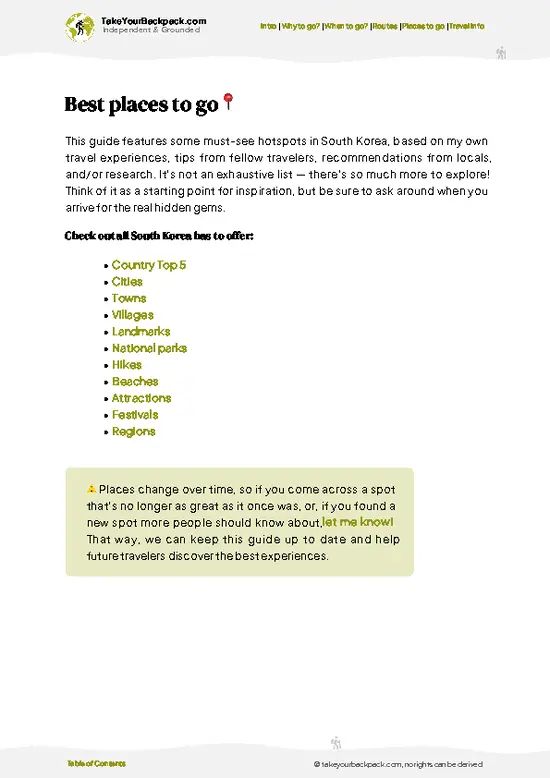
The South Korea Travel Guide describes 124 highlights, from cities to national parks, from beaches to hikes

Get the Travel Guide -

🛡️ SafetySafety Tips and Common Scams in Damyang

Damyang is generally safe, but a few situational nuances can enhance your experience. The main streets are well-lit and bustling, but when wandering into quieter areas, especially at night, keep your awareness sharp. Stick to populated paths and trust your instincts; if something feels off, pivot to a busier spot.

Solo travelers should embrace the local culture. Engage with shopkeepers and fellow diners; they’re often warm and welcoming. However, be cautious in crowded markets where distractions can lead to minor annoyances, like someone bumping into you while their partner swipes your phone.

Scams are rare, but watch for overly eager vendors pushing overpriced items. A polite “no, thank you” usually suffices. Carry your belongings close, especially in busy areas, and keep your phone tucked … read more 👉
Damyang is generally safe, but a few situational nuances can enhance your experience. The main streets are well-lit and bustling, but when wandering into quieter areas, especially at night, keep your awareness sharp. Stick to populated paths and trust your instincts; if something feels off, pivot to a busier spot.

Solo travelers should embrace the local culture. Engage with shopkeepers and fellow diners; they’re often warm and welcoming. However, be cautious in crowded markets where distractions can lead to minor annoyances, like someone bumping into you while their partner swipes your phone.

Scams are rare, but watch for overly eager vendors pushing overpriced items. A polite “no, thank you” usually suffices. Carry your belongings close, especially in busy areas, and keep your phone tucked away when not in use. This way, you’ll soak in the bamboo groves and local cuisine without unnecessary stress. Enjoy the journey; it’s all part of the adventure.

Other South Korean towns near Damyang

Explore more nearby:

  • Jeonju Hanok Village—hanok houses, street food, artisan workshops| 57 km away
  • Boseong—green tea fields, misty hills, tea houses| 62 km away
  • Sancheong—herbal medicine, mountain trails, rural festivals| 82 km away

💡 Not sure where to go next?
Create a personalized itinerary for South Korea including Damyang and the places that fit your trip.

Generate my itinerary

👉 Discover all towns

Or checkout all South Korea has to offer (think cities, towns, villages, national parks, hikes, beaches, festivals)
Country photo of South Korea

We 💚 feedbackFinal thoughts on visiting Damyang

Damyang has a vibe that’s both tranquil and alive, with bamboo groves swaying gently in the breeze. The best surprise? Strolling through the Metasequoia-lined road at dusk, when the golden light filters through the trees, creating a magical atmosphere. Just a heads-up: the local food scene is incredible, but don’t underestimate the spice levels. Embrace the heat, and you’ll find a depth of flavor that’s worth every bead of sweat. This place isn’t just a stop; it’s a moment to savor.

✍️ Help improve this page!
The information on this page is based on in-depth research, insights shared by experienced travelers, and feedback from the local travel community in South Korea. While every effort is made to keep the information accurate and current, conditions can change — so if you spot anything incorrect or outdated, please get in touch.


🙋‍♂️ Give feedback

👋 Meet the founderWho’s Behind Take Your Backpack?

Johan, backpacker and founder of TakeYourBackpackHi, I’m Johan (Netherlands 🇳🇱), the creator of TakeYourBackpack. Over the past decade, I’ve backpacked through 80+ countries across six continents, gaining extensive experience with independent travel, long-term trips, and overland routes.

This site is built on a combination of firsthand travel experience and carefully curated insights from other backpackers. Many guides are based on places I’ve personally visited, while others bring together tips, observations, and practical advice shared by trusted travelers I’ve met along the way.

The goal is to provide realistic, experience-driven guidance — not generic itineraries — so you can explore destinations with better context, clearer expectations, and more confidence.

Get full country guide •
Instant download • 124 highlights • Full Offline guide