×

South Korea🇰🇷 | townsMujumountain park, firefly festival, traditional markets | things to do and best time to go

Explore PyeongchangExplore Damyang

Backpacking in Muju
👌 Worth visitingtown ranked #10
By Johan Kruseman 🇳🇱 | Updated September 4, 2026

Most people online treat Muju as a winter ski detour, but the surprise is that it’s actually better as a slow, off-grid base for forest time than as a resort town. Sitting in central South Korea’s inland mountains of Jeollabuk-do, Muju feels like a pause button between busier hubs like Daejeon and Jeonju. The town itself is small, a bit sleepy, with modest cafés and a riverfront that smells of pine and woodsmoke on cool evenings. It works best as a base for Deogyusan National Park hikes and hot springs, not as a standalone “city stop.” Buses are the main way in and out, and you’ll walk most places, maybe grabbing short taxis. Nights are quiet, hostels are limited, and you won’t trip over other backpackers, which keeps costs reasonable but the social scene thin. Compared to Jeonju’s food buzz or Daejeon’s practicality, Muju is more scenic and slower, better for hikers who like early mornings and early nights.

Discover everything you want to know in the 📖 South Korea Travel Guide.
Loading the map 🌍
CLICK TO FILTER
cities
towns
villages
landmarks
national parks
hikes
beaches
attractions
festivals
regions
SHOW COUNTRY’S BESTSHOW ALL

✨ Why go?
Ranked #10 town in South Korea
Why Muju should be on your travel list

Muju is a backpacker’s haven that serves as a strategic base for exploring South Korea’s natural beauty. Nestled near Jirisan National Park, it’s a gateway to some of the country’s best hikes. The crisp mountain air and the scent of pine trees create an inviting atmosphere for those who crave the outdoors.

You’ll find a mix of small-scale hostels and guesthouses, perfect for solo travelers or small groups looking to connect. The walkable streets are lined with local eateries where you can savor authentic Korean dishes, from spicy kimchi to hearty bibimbap.

Travelers often linger here for a few days, soaking in the friendly social vibe while planning their next adventure. It’s not a party town, but the sense of community is palpable. Whether you’re a slow traveler or a hiker, Muju offers … read more 👉
Muju is a backpacker’s haven that serves as a strategic base for exploring South Korea’s natural beauty. Nestled near Jirisan National Park, it’s a gateway to some of the country’s best hikes. The crisp mountain air and the scent of pine trees create an inviting atmosphere for those who crave the outdoors.

You’ll find a mix of small-scale hostels and guesthouses, perfect for solo travelers or small groups looking to connect. The walkable streets are lined with local eateries where you can savor authentic Korean dishes, from spicy kimchi to hearty bibimbap.

Travelers often linger here for a few days, soaking in the friendly social vibe while planning their next adventure. It’s not a party town, but the sense of community is palpable. Whether you’re a slow traveler or a hiker, Muju offers a blend of convenience and charm, making it a worthwhile stop on your journey through South Korea.
Want to include Muju in your South Korea route?
Create a personalized South Korea itinerary that includes Muju and the places that fit your trip — based on your travel style, budget, and available time. Get your route in seconds.

Generate my trip

💡 HighlightsKey sights and experiences for travelers

  • Deogyusan National Park: The mountain that defines Muju — high ridgelines, mixed forests and clear mountain streams with a network of well-marked hiking trails. It delivers real alpine scenery (good wildflowers in summer, snowy panoramas in winter) and the kind of quiet mountain temples and viewpoints that make a day on the trails worth it.
  • Muju Deogyusan Resort (Muju Ski Resort): The county’s big all-season mountain resort with groomed runs and a gondola/cable lift up into the Deogyusan massif. It’s the place to ski or snowboard in winter, ride up for panoramas in shoulder seasons, and use as a base for easy access to nearby trails.
  • Muju Firefly Festival / Firefly Habitat: A seasonal, visitable highlight where local conservation efforts and night-walk programs let you experience native
read more 👉
  • Deogyusan National Park: The mountain that defines Muju — high ridgelines, mixed forests and clear mountain streams with a network of well-marked hiking trails. It delivers real alpine scenery (good wildflowers in summer, snowy panoramas in winter) and the kind of quiet mountain temples and viewpoints that make a day on the trails worth it.
  • Muju Deogyusan Resort (Muju Ski Resort): The county’s big all-season mountain resort with groomed runs and a gondola/cable lift up into the Deogyusan massif. It’s the place to ski or snowboard in winter, ride up for panoramas in shoulder seasons, and use as a base for easy access to nearby trails.
  • Muju Firefly Festival / Firefly Habitat: A seasonal, visitable highlight where local conservation efforts and night-walk programs let you experience native firefly habitats along Muju’s streams. The festival side brings night tours, eco-programs and a lively local atmosphere in early summer.
Jeonju Hanok Village, Damyang’s Juknokwon (bamboo forest) and the Gochang Dolmen sites are all real, visitable highlights a convenient drive from Muju and make excellent day trips.
Spotted a mistake or missing something? Contact us.

Things to do near Muju

Ratings based on Tripadvisor reviews. When you book through this link, you support our work at no extra cost to you.

🏘️ NeighborhoodsUnderstanding the local layout

Muju is a charming town that serves as a gateway to nature and culture, perfect for backpackers seeking both adventure and tranquility. Here’s how to navigate its neighborhoods:

Muju-eup: This is the heart of the town, where you’ll find local eateries and shops. The vibe is laid-back, making it ideal for short stays. Everything is within walking distance, so you can easily grab a bite or stock up on supplies. Prices are reasonable, and the atmosphere is friendly. Nightlife is minimal, but you can enjoy a quiet evening at a café.

Deogyusan National Park Area: If you’re here for the mountains, this area is a must. It’s a bit more remote, but the stunning views and hiking trails are worth it. Accommodations range from budget hostels to cozy guesthouses. This area is perfect for longer stays, … read more 👉
Muju is a charming town that serves as a gateway to nature and culture, perfect for backpackers seeking both adventure and tranquility. Here’s how to navigate its neighborhoods:

Muju-eup: This is the heart of the town, where you’ll find local eateries and shops. The vibe is laid-back, making it ideal for short stays. Everything is within walking distance, so you can easily grab a bite or stock up on supplies. Prices are reasonable, and the atmosphere is friendly. Nightlife is minimal, but you can enjoy a quiet evening at a café.

Deogyusan National Park Area: If you’re here for the mountains, this area is a must. It’s a bit more remote, but the stunning views and hiking trails are worth it. Accommodations range from budget hostels to cozy guesthouses. This area is perfect for longer stays, especially if you want to immerse yourself in nature. Transport access is decent, but expect to walk a bit to reach trailheads.

Muju Resort: This area caters to those looking for a more upscale experience. It’s lively, especially during ski season, with plenty of dining and entertainment options. Prices can be higher here, but the amenities are top-notch. It’s walkable, but you might want to use local transport for longer excursions. Ideal for both short and extended visits, especially if you enjoy a mix of relaxation and activity.

⌛️ 1 dayWhat you can realistically do in a day

Muju, a charming town in South Korea, is a treasure trove of natural beauty and cultural experiences. Nestled in the mountains, it’s a place where the air feels fresher and the pace slows down. You’ll find vibrant local markets, serene temples, and stunning landscapes that invite exploration.

Start your morning with a visit to the Muju Traditional Market. The scent of grilled fish and fresh produce fills the air as you wander through the stalls. Grab a warm, flaky “bungeoppang” (fish-shaped pastry filled with sweet red bean) from a vendor. It’s the perfect fuel for your day. Afterward, head to Deogyusan National Park. The trails here are well-marked, leading you through lush forests and up to breathtaking viewpoints. The crisp mountain air invigorates your spirit, and the sounds of nature … read more 👉
Muju, a charming town in South Korea, is a treasure trove of natural beauty and cultural experiences. Nestled in the mountains, it’s a place where the air feels fresher and the pace slows down. You’ll find vibrant local markets, serene temples, and stunning landscapes that invite exploration.

Start your morning with a visit to the Muju Traditional Market. The scent of grilled fish and fresh produce fills the air as you wander through the stalls. Grab a warm, flaky “bungeoppang” (fish-shaped pastry filled with sweet red bean) from a vendor. It’s the perfect fuel for your day. Afterward, head to Deogyusan National Park. The trails here are well-marked, leading you through lush forests and up to breathtaking viewpoints. The crisp mountain air invigorates your spirit, and the sounds of nature surround you.

In the afternoon, make your way to the lesser-known Muju Firefly Park. It’s a hidden gem where you can stroll along the river and enjoy the tranquility. The soft rustle of leaves and the gentle flow of water create a peaceful atmosphere. Take a moment to breathe it all in; this is where the beauty of Muju truly shines.

As evening approaches, return to the town center. Find a cozy restaurant in the bustling area near Muju’s main square. Try “bibimbap,” a colorful mix of rice, vegetables, and spicy sauce. The flavors are rich and comforting, a perfect end to your day. After dinner, take a leisurely walk through the streets, where the soft glow of lanterns lights your path, wrapping up your day in this delightful town.
Turn your Muju visit into an South Korea adventure
Build a complete South Korea route with Muju, hidden gems, must-see destinations, and realistic travel times included.

Generate my trip

🌤️ When to go?Weather, crowds, and seasonal trade-offs


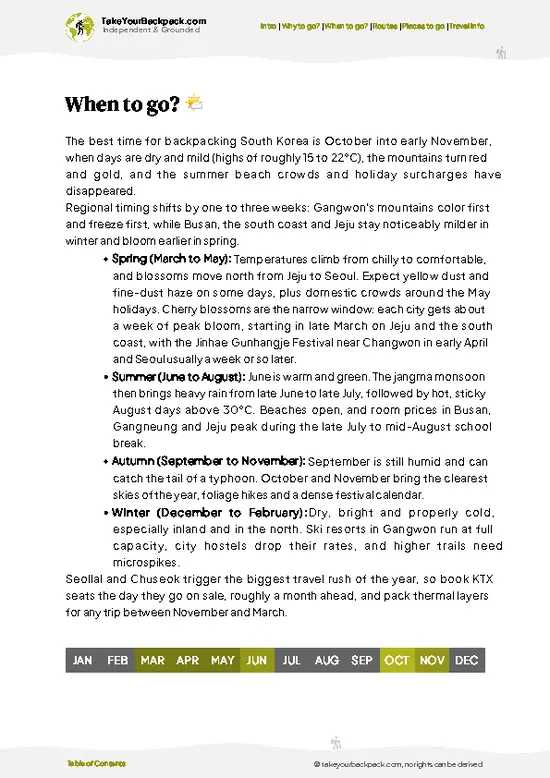
  • Weather: Muju’s climate swings with the seasons. Summers (June to August) bring warm, humid days around 25-30°C (77-86°F), perfect for hiking but sticky. Winters (December to February) dive below freezing, often hitting -5°C (23°F), blanketing the area in snow—ideal if you’re into winter sports.

  • Temperature: Spring and autumn offer the sweet spot, with daytime highs between 15-22°C (59-72°F). Crisp mornings and evenings keep you alert, and the air carries the scent of pine and earth, making every breath feel like a reset.

  • Daylight Hours: In summer, daylight stretches to about 14 hours, giving you long, golden evenings to explore. Winter cuts that to roughly 9 hours, so plan your hikes early to avoid dusk on the trails.

  • Crowds: Peak tourist season hits during the Muju Firefly Festival
read more 👉

  • Weather: Muju’s climate swings with the seasons. Summers (June to August) bring warm, humid days around 25-30°C (77-86°F), perfect for hiking but sticky. Winters (December to February) dive below freezing, often hitting -5°C (23°F), blanketing the area in snow—ideal if you’re into winter sports.

  • Temperature: Spring and autumn offer the sweet spot, with daytime highs between 15-22°C (59-72°F). Crisp mornings and evenings keep you alert, and the air carries the scent of pine and earth, making every breath feel like a reset.

  • Daylight Hours: In summer, daylight stretches to about 14 hours, giving you long, golden evenings to explore. Winter cuts that to roughly 9 hours, so plan your hikes early to avoid dusk on the trails.

  • Crowds: Peak tourist season hits during the Muju Firefly Festival in June and ski season in winter. If you want solitude, aim for late spring or early autumn when the town hums quietly, letting you soak in nature without elbowing through crowds.

  • Seasonal Activities: Summer invites river rafting and mountain biking, while autumn paints the forests in fiery reds and golds, perfect for photography. Winter transforms Muju into a snow playground with skiing and snowboarding.

  • Price Fluctuations: Expect accommodation and activity prices to spike during ski season and festival times. Booking in shoulder seasons like April-May or September-October often nets better deals and more flexible options.


Pro-tip: Visit Muju in early autumn to catch crisp air, fewer crowds, and a riot of fall colors—nature’s way of rewarding your timing with a sensory feast.


source: climatestotravel.comJANJanuary: highly recommended for travelingFEBFebruary: highly recommended for travelingMARMarch: good for travelingAPRApril: highly recommended for travelingMAYMay: highly recommended for travelingJUNJune: good for travelingJULJuly: good for travelingAUGAugust: good for travelingSEPSeptember: highly recommended for travelingOCTOctober: excellent for travelingNOVNovember: highly recommended for travelingDECDecember: highly recommended for traveling
when-to-go

✈️ The backpacker research shortcutSouth Korea Travel Guide

An offline-friendly backpacking guide with optimized travel routes, ranked highlights, transport advice, and the best areas to stay.
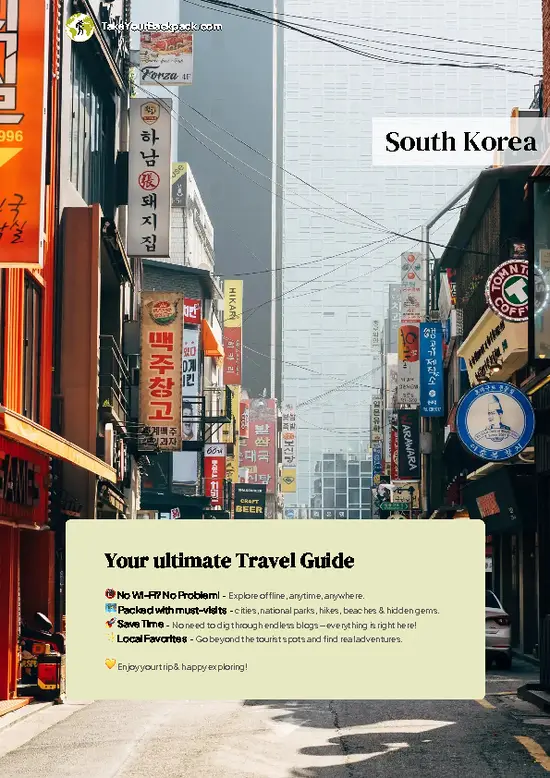
example page 0 from our offline Travel Guide for South Korea
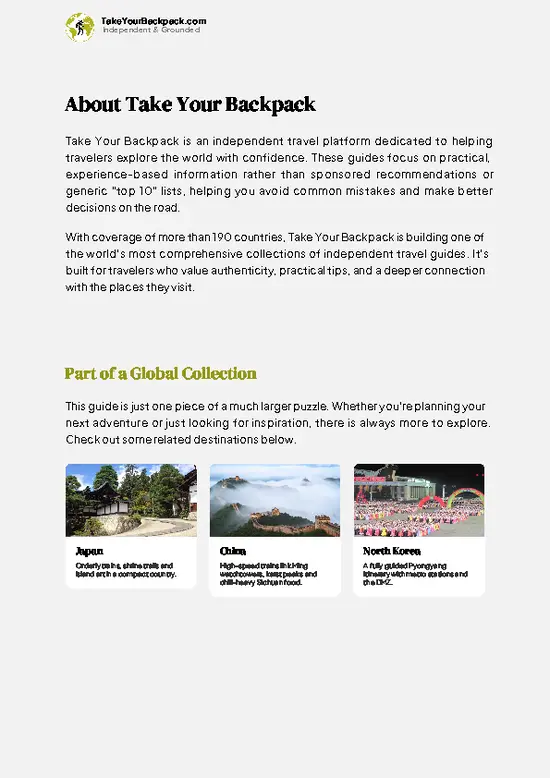
example page 1 from our offline Travel Guide for South Korea
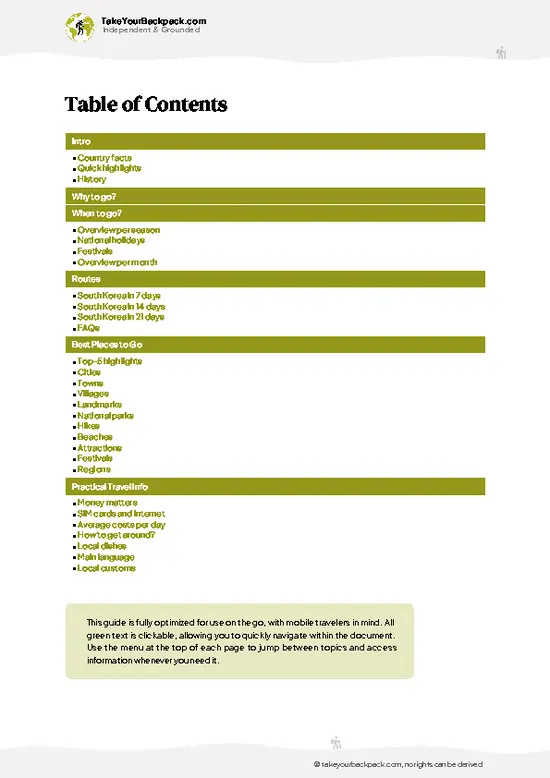
example page 2 from our offline Travel Guide for South Korea
example page 3 from our offline Travel Guide for South Korea
example page 4 from our offline Travel Guide for South Korea
example page 5 from our offline Travel Guide for South Korea
example page 6 from our offline Travel Guide for South Korea
example page 7 from our offline Travel Guide for South Korea
The digital guide (439 pages) contains:
124 highlights, ranked by travel appeal
Optimized 7, 14 & 21-day travel routes
Cities, national parks, landmarks, beaches
How to get around
Offline-friendly for travel without Wi-Fi
👉 Click to see all 30+ guide features

📅 Plan smarter in minutes, not weeks
Month by month travel advice
Festivals & national holidays
Budget expectations

🗺️ Go to the right places, skip the overrated ones
Honest pros & cons of destinations
Top hikes, parks & viewpoints
Lesser-known places most travelers miss
Clear “worth it vs skip it” guidance

🛏️ Travel smoothly without rookie mistakes
Best areas to stay
Transport systems explained simply
Common scams & safety advice
SIM cards, money & practical tips

🌍 Understand the country, not just visit it
Culture & traditions
52 Essential phrases & customs
Festivals worth planning around
Traveler-friendly historical context
Insights that make places more meaningful

📱 Built for real travel conditions
Fully downloadable PDF
Works completely offline
Optimized for phone use
Useful in remote areas & buses
Everything in one place
Save weeks of stressful planning
Get instant access to your full guide. 30‑day money-back guarantee.
+ Add another guide for just US$7.80

By proceeding you agree to our terms.
Sent to your inbox immediately after payment • 100% Secure Checkout
Best Backpacking Travel Advisor 2025 tourism awardBest Backpacking
Travel Advisor
2025
What others say about Take Your Backpack Guides:
⭐⭐⭐⭐⭐
Fantastic, amazing amount of information!
⭐⭐⭐⭐⭐
My goodness this is amazing, it's what I've been looking for hats off too you!
⭐⭐⭐⭐⭐
I think this is absolutely BRILLIANT
⭐⭐⭐⭐
Very complete and informative. It's still missing places, but I gotta to commend you
⭐⭐⭐⭐⭐
This is truly amazing, thank you, can't wait to explore it with my kids!
⭐⭐⭐⭐⭐
Awesome resource, thank you!
⭐⭐⭐⭐⭐
This is amazing! Can't wait to explore the ones I haven't seen
⭐⭐⭐⭐
I love this! Well done, great idea.
⭐⭐⭐⭐⭐
Thanks for taking the time to make this gem!
⭐⭐⭐⭐⭐
This might be the best website I've ever seen.
⭐⭐⭐⭐⭐
Congratulations, and thank you so much for your work; it's incredibly valuable.
⭐⭐⭐⭐
In all seriousness I think you did a great job pointing out the important spots
⭐⭐⭐⭐⭐
10/10 very good
⭐⭐⭐⭐⭐
As someone who's only just starting to visit regularly this is awesome, thank you.
⭐⭐⭐⭐
Thank you very much! I'm going to visit my dad, it's going to be very useful!
⭐⭐⭐⭐⭐
This is really cool! We'll be travelling for the first time and this definitely come in handy.
⭐⭐⭐⭐⭐
You are now our minister of culture, congratulations 👨‍💼
⭐⭐⭐⭐⭐
Just wanted to tell you that this is a pearl! Going to follow your recommendations.
⭐⭐⭐⭐⭐
This is so cool. I'll definitely be using the resource for my travels soon.
⭐⭐⭐⭐⭐
This is very impressive! Good work.
⭐⭐⭐⭐⭐
This is an amazing and informative site. Very well done!

🛏️ Where to stay?Best areas and accommodation options

Muju’s best spot for backpackers is the area around Muju-eup, the town’s central hub. This neighborhood pulses with a low-key energy that’s perfect for solo travelers and budget adventurers. Streets here are lined with small guesthouses and hostels that cater to the backpacker crowd—places where you can swap stories over a shared kitchen or a late-night cup of instant coffee. The vibe is relaxed but social, with local markets and eateries nearby that fill the air with the scent of grilled fish and spicy kimchi, grounding you in authentic daily life.

Compared to the quieter outskirts or the ski … read more 👉
Muju’s best spot for backpackers is the area around Muju-eup, the town’s central hub. This neighborhood pulses with a low-key energy that’s perfect for solo travelers and budget adventurers. Streets here are lined with small guesthouses and hostels that cater to the backpacker crowd—places where you can swap stories over a shared kitchen or a late-night cup of instant coffee. The vibe is relaxed but social, with local markets and eateries nearby that fill the air with the scent of grilled fish and spicy kimchi, grounding you in authentic daily life.

Compared to the quieter outskirts or the ski resort zones, Muju-eup offers a safer, more walkable environment. You won’t need a car to get around, and the friendly locals make it easy to strike up conversations. The light here shifts beautifully in the late afternoon, casting long shadows over the tiled roofs, inviting you to linger in a café or take a slow stroll before heading out to the mountains. Staying here means you’re plugged into the town’s rhythm without losing the freedom to explore beyond.

🚌 Getting aroundTransportation options and practical tips

Muju moves at a pace that feels like a slow breath in a forest clearing—unhurried but deliberate. The town’s rhythm isn’t dictated by strict timetables but by the natural flow of daylight and the seasons. You’ll notice how the air carries the scent of pine and earth, especially in the early morning when the mist still clings to the hills. This isn’t a place where you race against the clock; it’s a place where your timing bends to the landscape. That means your best moves come from understanding the local pulse, not just following a schedule.


  • Walking: The heart of Muju is compact enough to explore on foot. Strolling through the town in the soft morning light reveals quiet streets lined with traditional hanok houses and small markets. Walking is free, flexible, and the best way to soak in
read more 👉
Muju moves at a pace that feels like a slow breath in a forest clearing—unhurried but deliberate. The town’s rhythm isn’t dictated by strict timetables but by the natural flow of daylight and the seasons. You’ll notice how the air carries the scent of pine and earth, especially in the early morning when the mist still clings to the hills. This isn’t a place where you race against the clock; it’s a place where your timing bends to the landscape. That means your best moves come from understanding the local pulse, not just following a schedule.


  • Walking: The heart of Muju is compact enough to explore on foot. Strolling through the town in the soft morning light reveals quiet streets lined with traditional hanok houses and small markets. Walking is free, flexible, and the best way to soak in the subtle shifts in atmosphere from dawn to dusk.


  • Local Bus: The backbone of budget transit here, local buses run roughly from 6:30 AM to 9 PM. Fares hover around 1,200 KRW, making it a wallet-friendly option. The buses aren’t flashy but are reliable for reaching key spots like Muju Deogyusan Resort and the market area. Expect a slower pace with frequent stops, perfect for watching the town’s daily life unfold.


  • Intercity Bus: For trips beyond Muju, the intercity bus terminal connects you to larger hubs like Jeonju and Daejeon. Buses start early, around 5:30 AM, and run until about 8 PM. Tickets cost between 5,000 to 10,000 KRW depending on distance. These buses are more comfortable and faster than local options, ideal when you want to cover ground without breaking the bank.


  • Taxi: Taxis are available but not abundant, and fares start around 3,000 KRW for short rides. They’re best reserved for early mornings, late nights, or when you’re carrying gear for the mountains. The ride is quick and direct, cutting through the quiet streets with little fuss.

👛 Costs (as of 4 September 2026)Travel costs and budget guide for Muju

Backpacking in Muju, South Korea, offers a mix of fresh mountain air and affordable living, but knowing the costs upfront helps you plan a trip that feels smooth, not squeezed.
  • Dorm Accommodation: Expect to pay around $15 to $25 per night for a bed in a guesthouse or hostel dorm. These places are simple but clean, often with shared bathrooms and a communal vibe that’s perfect for meeting other travelers. Prices can spike slightly during ski season or festivals.
  • Meals: Local eateries serve up hearty Korean dishes like bibimbap or spicy stews for about $4 to $7 per meal. Street food snacks like tteokbokki or hotteok hover around $2 to $4. If you want to splurge on a nicer sit-down meal, budget $10 to $15, but most backpackers find filling, tasty options well within the lower range.
  • Local
read more 👉
Backpacking in Muju, South Korea, offers a mix of fresh mountain air and affordable living, but knowing the costs upfront helps you plan a trip that feels smooth, not squeezed.
  • Dorm Accommodation: Expect to pay around $15 to $25 per night for a bed in a guesthouse or hostel dorm. These places are simple but clean, often with shared bathrooms and a communal vibe that’s perfect for meeting other travelers. Prices can spike slightly during ski season or festivals.
  • Meals: Local eateries serve up hearty Korean dishes like bibimbap or spicy stews for about $4 to $7 per meal. Street food snacks like tteokbokki or hotteok hover around $2 to $4. If you want to splurge on a nicer sit-down meal, budget $10 to $15, but most backpackers find filling, tasty options well within the lower range.
  • Local Transport: Muju is small, so walking covers a lot, but buses and taxis fill in the gaps. Bus rides typically cost under $1.50, while short taxi trips start around $4. Renting a bike is another option, usually about $8 to $12 per day, which lets you explore the scenic spots at your own pace.
  • Basic Activities/Entry Fees: Muju is famous for its national park and ski resort. Entry to Muju Deogyusan National Park is free, but some trails or facilities might charge a small fee, around $2 to $5. Ski lift tickets during the season can run $30 to $50 per day, but off-season hiking and nature walks keep costs low.
  • Miscellaneous Expenses: Budget around $3 to $7 daily for essentials like bottled water, snacks, or occasional laundry. Wi-Fi is widely available and free in most accommodations, so no extra charge there.

All told, you’re looking at roughly $25 to $50 per day to cover the essentials in Muju. This range gives you room to enjoy local flavors, get around comfortably, and soak in the mountain atmosphere without feeling pinched.


source: english.visitkorea.or.kr
⚠️ Prices can change and everyone travels differently, so take this as a rough guide. Hope it helps you plan your adventure!

🚌 Day tripsExploring the surroundings

Muju is a fantastic base for exploring the heart of South Korea, with easy access to stunning landscapes and cultural experiences. Here are some day trips that will elevate your adventure.

Deogyusan National Park
Just a short bus ride from Muju, Deogyusan National Park is a hiker’s paradise. The trails here range from leisurely walks to challenging climbs, with the summit offering breathtaking views that stretch for miles. The crisp mountain air is laced with the scent of pine, and if you visit in autumn, the foliage will set your soul on fire. Aim for a weekday to avoid crowds, and pack a picnic to enjoy at one of the scenic overlooks. Expect to spend around 10,000 KRW for transport and park entry.
👉 Explore Deogyusan National Park

Muju Firefly Festival
If you’re in town during late … read more 👉
Muju is a fantastic base for exploring the heart of South Korea, with easy access to stunning landscapes and cultural experiences. Here are some day trips that will elevate your adventure.

Deogyusan National Park
Just a short bus ride from Muju, Deogyusan National Park is a hiker’s paradise. The trails here range from leisurely walks to challenging climbs, with the summit offering breathtaking views that stretch for miles. The crisp mountain air is laced with the scent of pine, and if you visit in autumn, the foliage will set your soul on fire. Aim for a weekday to avoid crowds, and pack a picnic to enjoy at one of the scenic overlooks. Expect to spend around 10,000 KRW for transport and park entry.
👉 Explore Deogyusan National Park

Muju Firefly Festival
If you’re in town during late spring, don’t miss the Muju Firefly Festival. This enchanting event celebrates the natural beauty of fireflies lighting up the night sky. The festival includes local food stalls and cultural performances, making it a sensory feast. It’s a short walk from the town center, so you can easily spend a few hours soaking in the atmosphere. Admission is typically free, but bring some cash for snacks.
👉 Explore Muju Firefly Festival

Jinan Red Clay Hot Springs
A trip to the Jinan Red Clay Hot Springs is a must for relaxation. About an hour away by bus, these natural springs are known for their therapeutic properties. The earthy scent of the clay mixed with the steam creates a soothing ambiance. Bring a towel and enjoy a soak for around 8,000 KRW. The best time to visit is during cooler months when the contrast between the hot water and chilly air is invigorating. Just remember to hydrate before you go!


Gurye Sansuyu Village
For a taste of rural life, head to Gurye Sansuyu Village, famous for its yellow dogwood flowers in early spring. The village is about an hour and a half from Muju by bus. Stroll through the fields, and you’ll be greeted by the sweet scent of blossoms. It’s a peaceful escape, perfect for photography and local snacks. Budget around 15,000 KRW for transport and treats. Avoid weekends if you can; the village can get busy with visitors.
Want to know what more South Korea offers?
The South Korea Travel Guide describes 124 highlights, from cities to national parks, from beaches to hikes

Get the Travel Guide -

🛡️ SafetyScams, Hazards, and Annoyances

Muju is generally safe, but a few practical tips can enhance your experience. The bustling market area can get crowded, so keep your belongings close. When wandering solo, especially at night, stick to well-lit streets and avoid shortcuts through dark alleys.

While scams are rare, be cautious of overly friendly locals offering unsolicited help; they might expect something in return. Language barriers can lead to misunderstandings, so a simple translation app can be a lifesaver.

Annoyances like loud karaoke bars can pop up, especially on weekends. Embrace the local vibe, but if you need quiet, seek accommodations away from the main nightlife spots. Carry yourself with confidence, and you’ll blend in seamlessly, enjoying the charm of Muju without a hitch.

FAQCommon questions from travelers

Yes, Muju is worth visiting for its natural beauty and outdoor activities, especially Muju Deogyusan Resort, popular for skiing in winter and hiking in summer. It offers a peaceful retreat with scenic mountains and traditional Korean culture.
2 to 3 days are ideal to explore Muju thoroughly, including hiking trails, the ski resort, and local markets. This allows time to enjoy both outdoor activities and cultural experiences without rushing.
Yes, Muju can be visited as a day trip from nearby cities like Jeonju, which is about 1.5 hours away by bus. However, a day trip limits time for hiking or skiing, so it suits travelers with tight schedules or those focusing on quick sightseeing.
⚠️ Things can change over time, so always validate details locally before you go.

Other South Korean towns near Muju

Explore more nearby:

  • Jeonju Hanok Village—hanok houses, street food, artisan workshops| 50 km away
  • Sancheong—herbal medicine, mountain trails, rural festivals| 69 km away
  • Damyang—bamboo groves, slow food, riverside cycling| 98 km away

💡 Not sure where to go next?
Create a personalized itinerary for South Korea including Muju and the places that fit your trip.

Generate my itinerary

👉 Discover all towns

Or checkout all South Korea has to offer (think cities, towns, villages, national parks, hikes, beaches, festivals)
Country photo of South Korea

We 💚 feedbackFinal thoughts on visiting Muju

Muju has a vibe that’s both laid-back and invigorating, especially in the crisp mountain air. The best surprise? Stumbling upon a local festival where the community dances and shares homemade treats. It’s a slice of life you won’t find in guidebooks. Just a heads-up: the trails can get slippery after rain, so pack those trekking poles. Embrace the challenge; the views at the top are worth every step.

✍️ Help improve this page!
The information on this page is based on in-depth research, insights shared by experienced travelers, and feedback from the local travel community in South Korea. While every effort is made to keep the information accurate and current, conditions can change — so if you spot anything incorrect or outdated, please get in touch.


🙋‍♂️ Give feedback

👋 Meet the founderWho’s Behind Take Your Backpack?

Johan, backpacker and founder of TakeYourBackpackHi, I’m Johan (Netherlands 🇳🇱), the creator of TakeYourBackpack. Over the past decade, I’ve backpacked through 80+ countries across six continents, gaining extensive experience with independent travel, long-term trips, and overland routes.

This site is built on a combination of firsthand travel experience and carefully curated insights from other backpackers. Many guides are based on places I’ve personally visited, while others bring together tips, observations, and practical advice shared by trusted travelers I’ve met along the way.

The goal is to provide realistic, experience-driven guidance — not generic itineraries — so you can explore destinations with better context, clearer expectations, and more confidence.

Get full country guide •
Instant download • 124 highlights • Full Offline guide