×

South Korea🇰🇷 | citiesDaeguTextile district, herbal medicine alley, city festivals | things to do and best time to go

Explore UlsanExplore Mokpo

Backpacking in Daegu
🌟 Highlightcity ranked #10
By Johan Kruseman 🇳🇱 | Updated September 4, 2026

Steam from your tteokbokki bowl fogs your glasses as a subway train rumbles underfoot, neon Hangul reflecting off the metal cart while an ajumma snaps on plastic gloves and slaps more fish cake into your cup.

Daegu sits in South Korea’s southeast, inland between Busan and Gyeongju, and it feels like the country’s “everyday city” turned up to eleven. For backpackers, it’s cheap by Korean standards, easy to navigate on the metro, and very safe, but you’ll work a bit harder here to meet other travelers than in Seoul or Busan. Dongseongno’s shopping streets, Seomun Market, and the low-key bar scene around Banwoldang give you urban grit, while Apsan Park’s night views add just enough drama. Less spectacle, more real life; that’s the trade.

Discover everything you want to know in the 📖 South Korea Travel Guide.
Loading the map 🌍
CLICK TO FILTER
cities
towns
villages
landmarks
national parks
hikes
beaches
attractions
festivals
regions
SHOW COUNTRY’S BESTSHOW ALL

✨ Why go?
Ranked #10 city in South Korea
Why visitors keep coming back

Daegu is a strategic stop for backpackers weaving through South Korea. It offers a basecamp value that’s hard to beat, making it easy to launch day trips into the surrounding mountains or nearby cities. The hostel scene is solid, with affordable options that cater to social butterflies and solo travelers alike.

You’ll find a walkable city that invites exploration; the compact layout means you can dive into local markets and street food without breaking a sweat. Speaking of food, Daegu’s culinary scene is a delight, with affordable eats that pack a punch.

When the sun sets, the nightlife buzzes, offering everything from cozy bars to vibrant clubs. Plus, with easy onward travel options, you can seamlessly continue your journey. Whether you’re looking to linger or just passing through, Daegu … read more 👉
Daegu is a strategic stop for backpackers weaving through South Korea. It offers a basecamp value that’s hard to beat, making it easy to launch day trips into the surrounding mountains or nearby cities. The hostel scene is solid, with affordable options that cater to social butterflies and solo travelers alike.

You’ll find a walkable city that invites exploration; the compact layout means you can dive into local markets and street food without breaking a sweat. Speaking of food, Daegu’s culinary scene is a delight, with affordable eats that pack a punch.

When the sun sets, the nightlife buzzes, offering everything from cozy bars to vibrant clubs. Plus, with easy onward travel options, you can seamlessly continue your journey. Whether you’re looking to linger or just passing through, Daegu has a way of enriching your backpacking experience without demanding too much of your time or money.
Want to include Daegu in your South Korea route?
Create a personalized South Korea itinerary that includes Daegu and the places that fit your trip — based on your travel style, budget, and available time. Get your route in seconds.

Generate my trip

💡 HighlightsDon't-miss highlights and experiences

  • Seomun Market — One of Korea’s oldest and largest markets; textiles, street food (try the hotteok and bindaetteok), and a genuine locals’ atmosphere where you can haggle, snack, and people-watch for hours.
  • Dongseongno Shopping Street — The city’s pedestrian spine for young fashion, cafés, and nightlife; great for window-shopping, late-night street food, and catching buskers or impromptu events.
  • Yangnyeongsi Herb Medicine Market & Museum — A centuries-old traditional medicine market turned living museum; the lanes smell of roots and spices, and the museum explains Korea’s herbal practices in a very tangible way.
  • Apsan Park & Observatory — Hikeable city mountain with trails, a cable car option, and an observatory that gives one of the best sunset-to-night views of Daegu; a perfect blend
read more 👉
  • Seomun Market — One of Korea’s oldest and largest markets; textiles, street food (try the hotteok and bindaetteok), and a genuine locals’ atmosphere where you can haggle, snack, and people-watch for hours.
  • Dongseongno Shopping Street — The city’s pedestrian spine for young fashion, cafés, and nightlife; great for window-shopping, late-night street food, and catching buskers or impromptu events.
  • Yangnyeongsi Herb Medicine Market & Museum — A centuries-old traditional medicine market turned living museum; the lanes smell of roots and spices, and the museum explains Korea’s herbal practices in a very tangible way.
  • Apsan Park & Observatory — Hikeable city mountain with trails, a cable car option, and an observatory that gives one of the best sunset-to-night views of Daegu; a perfect blend of easy exercise and skyline panoramas.
  • E-World & 83 Tower (Duryu Park) — Family-friendly amusement park anchored by the 83 Tower; good for skyline photos, seasonal lights, and a lively park scene right inside the city.
  • Kim Gwang-seok-gil (Memorial Street) — A narrow alley of murals, plaques and small cafés dedicated to the beloved folk singer Kim Gwang-seok; it’s intimate, artsy, and a favorite spot for live acoustic sets.
  • Daegu Modern History Museum — Small but sharp museum that walks you through Daegu’s growth from market town to industrial hub, with exhibits on daily life, wartime history, and urban change.
  • Daegu Arboretum — Quiet, well-designed botanical gardens with themed plant collections, walking paths and seasonal displays; an easy escape from the city bustle and great for picnics or photography.
  • Suseong Lake (Suseongho) & Park — Popular local leisure spot with pedal boats, a lakeside promenade, cafés and evening lights; excellent for a relaxed stroll and to see Daegu families and couples unwinding.
  • 2·28 Student Movement Memorial Park & Museum — A compact but important civic memorial to the 1960 youth democracy movement; meaningful for anyone wanting to understand local civic pride and modern Korean history.
A few great day trips from Daegu: Palgongsan (Gatbawi and Donghwasa Temple), the historic city of Gyeongju (Bulguksa, Seokguram), and the traditional Andong Hahoe Folk Village are all easily reachable and well worth a day out.
Spotted a mistake or missing something? Contact us.

Things to do in Daegu

Ratings based on Tripadvisor reviews. When you book through this link, you support our work at no extra cost to you.

🏘️ NeighborhoodsNeighborhood guide to Daegu

Daegu is a city that balances tradition and modernity, making it a fascinating stop for backpackers. Here’s a breakdown of key neighborhoods to help you navigate your stay.

Dongseongno: This is the heart of Daegu’s nightlife. Packed with bars, cafes, and shops, it’s vibrant and energetic. Expect higher prices here, but the convenience is worth it. It’s walkable and perfect for short stays, especially if you want to dive into local nightlife.

Seongseo: A quieter area, Seongseo is ideal for those seeking a more relaxed vibe. It’s home to parks and cafes, making it great for longer stays. Costs are moderate, and while nightlife is limited, you can easily access public transport to explore the city.

Daegu Station Area: This area is a transport hub, making it incredibly convenient for backpackers. … read more 👉
Daegu is a city that balances tradition and modernity, making it a fascinating stop for backpackers. Here’s a breakdown of key neighborhoods to help you navigate your stay.

Dongseongno: This is the heart of Daegu’s nightlife. Packed with bars, cafes, and shops, it’s vibrant and energetic. Expect higher prices here, but the convenience is worth it. It’s walkable and perfect for short stays, especially if you want to dive into local nightlife.

Seongseo: A quieter area, Seongseo is ideal for those seeking a more relaxed vibe. It’s home to parks and cafes, making it great for longer stays. Costs are moderate, and while nightlife is limited, you can easily access public transport to explore the city.

Daegu Station Area: This area is a transport hub, making it incredibly convenient for backpackers. It’s bustling, with a mix of budget accommodations and eateries. While it lacks the charm of other neighborhoods, it’s perfect for short stays or if you’re just passing through.

Kim Gwangseok-gil Street: Known for its artistic vibe, this area is dotted with murals and street art. It’s walkable and offers a unique cultural experience. Costs are reasonable, and it’s a great spot for those who appreciate local art and history.

⌛️ 1 dayHow to make the most of one day

Daegu, South Korea, is a city where tradition meets modernity, offering a unique blend of vibrant markets, serene temples, and a rich cultural tapestry. It’s a place where you can dive into local life without the overwhelming crowds of bigger cities like Seoul.

Start your morning in the bustling district of Dongseong-ro. Grab a cup of aromatic Korean coffee at a local café, then wander through the nearby Seomun Market. This isn’t just any market; it’s a sensory overload of sights and smells, with vendors selling everything from fresh produce to handmade crafts. Don’t miss the chance to sample some hotteok, a sweet pancake filled with brown sugar and nuts.

As the afternoon rolls in, head to the peaceful Apsan Park. A short hike will reward you with panoramic views of the city and the surrounding … read more 👉
Daegu, South Korea, is a city where tradition meets modernity, offering a unique blend of vibrant markets, serene temples, and a rich cultural tapestry. It’s a place where you can dive into local life without the overwhelming crowds of bigger cities like Seoul.

Start your morning in the bustling district of Dongseong-ro. Grab a cup of aromatic Korean coffee at a local café, then wander through the nearby Seomun Market. This isn’t just any market; it’s a sensory overload of sights and smells, with vendors selling everything from fresh produce to handmade crafts. Don’t miss the chance to sample some hotteok, a sweet pancake filled with brown sugar and nuts.

As the afternoon rolls in, head to the peaceful Apsan Park. A short hike will reward you with panoramic views of the city and the surrounding mountains. The trails are well-marked, making it accessible even for casual hikers. After soaking in the scenery, make your way to the historic Daegu Yangnyeongsi Museum of Oriental Medicine. This lesser-known spot offers fascinating insights into traditional Korean medicine, a unique experience that’s often overlooked by tourists.

As evening approaches, return to Dongseong-ro for dinner. Try a local specialty like bulgogi or galbi at one of the many restaurants. Afterward, stroll through the vibrant streets, where neon lights and street performances create an electric atmosphere.

In just one day, Daegu offers a rich tapestry of experiences, blending the familiar with the unexpected, leaving you with memories that linger long after you’ve left.
Turn your Daegu visit into an South Korea adventure
Build a complete South Korea route with Daegu, hidden gems, must-see destinations, and realistic travel times included.

Generate my trip

🌤️ When to go?When to go for the best experience


  • Topic: Weather and Temperature — Spring (April to June) and autumn (September to November) offer mild, comfortable temperatures ranging from 15°C to 25°C (59°F to 77°F). Summers spike into the high 20s and 30s Celsius (80s to 90s Fahrenheit) with high humidity, while winters dip below freezing, often around -5°C to 5°C (23°F to 41°F).

  • Topic: Daylight Hours — Longer days in late spring and early autumn provide 12 to 14 hours of daylight, maximizing your trekking and sightseeing time without the oppressive heat of summer or the chill of winter.

  • Topic: Crowds — Peak tourist influx hits in summer and during the Korean holiday of Chuseok (fall), which can crowd popular spots and inflate prices. Spring and autumn see fewer tourists, letting you explore with more breathing room.

  • Topic: Seasonal
read more 👉

  • Topic: Weather and Temperature — Spring (April to June) and autumn (September to November) offer mild, comfortable temperatures ranging from 15°C to 25°C (59°F to 77°F). Summers spike into the high 20s and 30s Celsius (80s to 90s Fahrenheit) with high humidity, while winters dip below freezing, often around -5°C to 5°C (23°F to 41°F).

  • Topic: Daylight Hours — Longer days in late spring and early autumn provide 12 to 14 hours of daylight, maximizing your trekking and sightseeing time without the oppressive heat of summer or the chill of winter.

  • Topic: Crowds — Peak tourist influx hits in summer and during the Korean holiday of Chuseok (fall), which can crowd popular spots and inflate prices. Spring and autumn see fewer tourists, letting you explore with more breathing room.

  • Topic: Seasonal Activities — Cherry blossoms bloom in April, painting the city pink, while autumn brings vibrant foliage perfect for hiking. Summer festivals are lively but come with heat and crowds; winter offers fewer events but cozy local experiences.

  • Topic: Price Fluctuations — Accommodation and transport costs rise sharply in summer and during major holidays. Shoulder seasons (spring and autumn) balance better prices with pleasant conditions, making them the smartest choice for budget-conscious backpackers.


Pro-tip: Target late April to early June or mid-September to mid-November for the best blend of weather, crowd control, and wallet-friendly rates—turning your Daegu trip into a strategic win.


source: climatestotravel.comJANJanuary: fair for travelingFEBFebruary: fair for travelingMARMarch: good for travelingAPRApril: excellent for travelingMAYMay: excellent for travelingJUNJune: highly recommended for travelingJULJuly: fair for travelingAUGAugust: fair for travelingSEPSeptember: highly recommended for travelingOCTOctober: excellent for travelingNOVNovember: highly recommended for travelingDECDecember: fair for traveling
when-to-go

✈️ The backpacker research shortcutSouth Korea Travel Guide

An offline-friendly backpacking guide with optimized travel routes, ranked highlights, transport advice, and the best areas to stay.
example page 0 from our offline Travel Guide for South Korea
example page 1 from our offline Travel Guide for South Korea
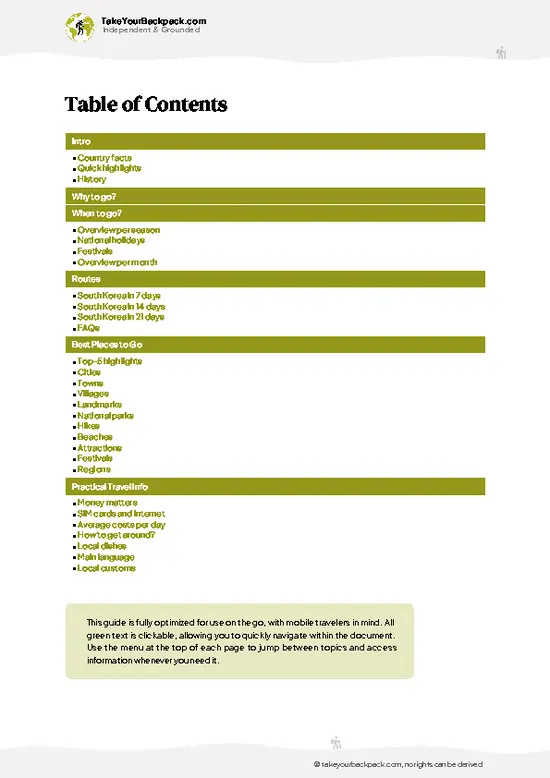
example page 2 from our offline Travel Guide for South Korea
example page 3 from our offline Travel Guide for South Korea
example page 4 from our offline Travel Guide for South Korea
example page 5 from our offline Travel Guide for South Korea
example page 6 from our offline Travel Guide for South Korea
example page 7 from our offline Travel Guide for South Korea
The digital guide (439 pages) contains:
124 highlights, ranked by travel appeal
Optimized 7, 14 & 21-day travel routes
Cities, national parks, landmarks, beaches
How to get around
Offline-friendly for travel without Wi-Fi
👉 Click to see all 30+ guide features

📅 Plan smarter in minutes, not weeks
Month by month travel advice
Festivals & national holidays
Budget expectations

🗺️ Go to the right places, skip the overrated ones
Honest pros & cons of destinations
Top hikes, parks & viewpoints
Lesser-known places most travelers miss
Clear “worth it vs skip it” guidance

🛏️ Travel smoothly without rookie mistakes
Best areas to stay
Transport systems explained simply
Common scams & safety advice
SIM cards, money & practical tips

🌍 Understand the country, not just visit it
Culture & traditions
52 Essential phrases & customs
Festivals worth planning around
Traveler-friendly historical context
Insights that make places more meaningful

📱 Built for real travel conditions
Fully downloadable PDF
Works completely offline
Optimized for phone use
Useful in remote areas & buses
Everything in one place
Save weeks of stressful planning
Get instant access to your full guide. 30‑day money-back guarantee.
+ Add another guide for just US$7.80

By proceeding you agree to our terms.
Sent to your inbox immediately after payment • 100% Secure Checkout
Best Backpacking Travel Advisor 2025 tourism awardBest Backpacking
Travel Advisor
2025
What others say about Take Your Backpack Guides:
⭐⭐⭐⭐⭐
Fantastic, amazing amount of information!
⭐⭐⭐⭐⭐
My goodness this is amazing, it's what I've been looking for hats off too you!
⭐⭐⭐⭐⭐
I think this is absolutely BRILLIANT
⭐⭐⭐⭐
Very complete and informative. It's still missing places, but I gotta to commend you
⭐⭐⭐⭐⭐
This is truly amazing, thank you, can't wait to explore it with my kids!
⭐⭐⭐⭐⭐
Awesome resource, thank you!
⭐⭐⭐⭐⭐
This is amazing! Can't wait to explore the ones I haven't seen
⭐⭐⭐⭐
I love this! Well done, great idea.
⭐⭐⭐⭐⭐
Thanks for taking the time to make this gem!
⭐⭐⭐⭐⭐
This might be the best website I've ever seen.
⭐⭐⭐⭐⭐
Congratulations, and thank you so much for your work; it's incredibly valuable.
⭐⭐⭐⭐
In all seriousness I think you did a great job pointing out the important spots
⭐⭐⭐⭐⭐
10/10 very good
⭐⭐⭐⭐⭐
As someone who's only just starting to visit regularly this is awesome, thank you.
⭐⭐⭐⭐
Thank you very much! I'm going to visit my dad, it's going to be very useful!
⭐⭐⭐⭐⭐
This is really cool! We'll be travelling for the first time and this definitely come in handy.
⭐⭐⭐⭐⭐
You are now our minister of culture, congratulations 👨‍💼
⭐⭐⭐⭐⭐
Just wanted to tell you that this is a pearl! Going to follow your recommendations.
⭐⭐⭐⭐⭐
This is so cool. I'll definitely be using the resource for my travels soon.
⭐⭐⭐⭐⭐
This is very impressive! Good work.
⭐⭐⭐⭐⭐
This is an amazing and informative site. Very well done!

🛏️ Where to stay?How to pick the right area

Daegu’s backpacker sweet spot is the Dongseongno area. It’s the city’s beating heart for young travelers—safe, lively, and packed with budget hostels that cater to solo adventurers and groups alike. You’re trading a bit of quiet for a social buzz that’s hard to beat. Streets here pulse with street food vendors, late-night cafes, and bars where you can swap stories with fellow travelers or locals. The vibe is energetic but not overwhelming, striking a balance between comfort and the thrill of discovery.

Compared to quieter residential neighborhoods, Dongseongno offers a clear advantage: proximity. … read more 👉
Daegu’s backpacker sweet spot is the Dongseongno area. It’s the city’s beating heart for young travelers—safe, lively, and packed with budget hostels that cater to solo adventurers and groups alike. You’re trading a bit of quiet for a social buzz that’s hard to beat. Streets here pulse with street food vendors, late-night cafes, and bars where you can swap stories with fellow travelers or locals. The vibe is energetic but not overwhelming, striking a balance between comfort and the thrill of discovery.

Compared to quieter residential neighborhoods, Dongseongno offers a clear advantage: proximity. You’re a short walk or subway ride from major attractions, markets, and cultural spots, which means less time and money spent on transport. Hostels here often have communal spaces designed to connect guests, making it easier to meet people without sacrificing your budget. If you want to maximize social interaction and convenience without splurging, this is your zone. Other areas might be quieter or cheaper, but they lack the pulse and backpacker-friendly infrastructure that makes Dongseongno the logical choice for savvy travelers.

🚌 Getting aroundTransportation options and practical tips

Daegu moves with a rhythm that’s part clockwork, part improvisation. The city’s pulse is set by a blend of punctual public transit and the spontaneous flow of street life. You’ll find that buses and subways stick to schedules with a reliable precision, but the streets themselves invite a more fluid approach—pedestrians weaving through markets, scooters darting past, and the occasional unexpected detour. Understanding this balance is your key to mastering Daegu’s transit game: knowing when to trust the timetable and when to embrace the city’s natural ebb and flow.


  • Daegu Metro: Runs from about 5:30 AM to midnight, with trains every 5-10 minutes during peak hours. At roughly 1,300 KRW per ride, it’s the fastest way to cover long distances across the city, offering clean, air-conditioned cars
read more 👉
Daegu moves with a rhythm that’s part clockwork, part improvisation. The city’s pulse is set by a blend of punctual public transit and the spontaneous flow of street life. You’ll find that buses and subways stick to schedules with a reliable precision, but the streets themselves invite a more fluid approach—pedestrians weaving through markets, scooters darting past, and the occasional unexpected detour. Understanding this balance is your key to mastering Daegu’s transit game: knowing when to trust the timetable and when to embrace the city’s natural ebb and flow.


  • Daegu Metro: Runs from about 5:30 AM to midnight, with trains every 5-10 minutes during peak hours. At roughly 1,300 KRW per ride, it’s the fastest way to cover long distances across the city, offering clean, air-conditioned cars and a predictable schedule that’s a godsend when you’re on a tight itinerary.


  • City Buses: Operating from around 5 AM to 11 PM, fares hover near 1,200 KRW. Buses are slower than the metro but reach corners the subway doesn’t, making them essential for budget travelers who want to explore neighborhoods off the beaten path. Expect some variability in timing—rush hour can turn a 15-minute trip into 30.


  • Walking: Daegu’s compact downtown and cultural districts reward those who lace up their boots. Walking costs nothing, offers the richest sensory experience, and lets you absorb the city’s textures—street food stalls, local chatter, and unexpected alleyways. It’s slower but priceless for those who want to feel the city’s heartbeat.


  • Taxi: Starting fare is about 3,800 KRW, with rides typically cheaper than in Seoul but pricier than public transit. Taxis offer door-to-door comfort and flexibility, especially late at night when buses and subways have stopped. They’re a smart splurge if you’re carrying heavy gear or racing against the clock.

👛 Costs (as of 4 September 2026)How expensive it really is

Backpacking in Daegu, South Korea, offers a clear trade-off map between time, money, and comfort, with costs that reflect a balance of efficient urban travel and affordable living.
  • Dorm Accommodation (High Season): Expect to pay around $15 to $25 per night. High season, typically spring and autumn, pushes prices up due to increased demand from tourists and festivals.
  • Dorm Accommodation (Off-Season): Prices drop to about $10 to $18 per night. Winter months see fewer travelers, making it easier to snag a bed at a discount without sacrificing basic comfort.
  • Meals: Street food and casual eateries dominate the scene. Budget around $5 to $10 per day if you stick to local markets and small restaurants. A filling bowl of kalguksu (handmade noodle soup) or a serving of tteokbokki (spicy rice cakes)
read more 👉
Backpacking in Daegu, South Korea, offers a clear trade-off map between time, money, and comfort, with costs that reflect a balance of efficient urban travel and affordable living.
  • Dorm Accommodation (High Season): Expect to pay around $15 to $25 per night. High season, typically spring and autumn, pushes prices up due to increased demand from tourists and festivals.
  • Dorm Accommodation (Off-Season): Prices drop to about $10 to $18 per night. Winter months see fewer travelers, making it easier to snag a bed at a discount without sacrificing basic comfort.
  • Meals: Street food and casual eateries dominate the scene. Budget around $5 to $10 per day if you stick to local markets and small restaurants. A filling bowl of kalguksu (handmade noodle soup) or a serving of tteokbokki (spicy rice cakes) keeps costs low and energy high.
  • Local Transport: Single bus or metro rides cost roughly $1 to $1.50. Daegu’s public transport is efficient, so hopping on and off is both cheap and time-saving.
  • City Transport Pass: A daily pass for unlimited rides runs about $4 to $6. If you plan multiple trips, this pass turns convenience into a money-saver, cutting down on the hassle of buying individual tickets.
  • Basic Activities/Entry Fees: Museums, temples, and parks typically charge between $2 and $5. Daegu’s cultural spots are affordable, letting you dive into local history without breaking the bank.
  • Miscellaneous Expenses: Budget $3 to $7 for essentials like bottled water, snacks, or occasional coffee. These small costs add up but remain manageable with a little planning.

In total, a daily budget for backpacking in Daegu ranges from about $25 on the leanest days to $50 if you lean into comfort and convenience. This range lets you decide how much time and comfort you want to buy with your money, turning your trip into a strategic balance rather than a guessing game.


source: english.visitkorea.or.kr
⚠️ Prices can change and everyone travels differently, so take this as a rough guide. Hope it helps you plan your adventure!

🚌 Day tripsWhere to go beyond the main area

Daegu is a fantastic launchpad for day trips that pack a punch without draining your wallet or time. Here are some standout options that will enrich your experience in South Korea.

**Haeinsa Temple**
Just a short bus ride from Daegu, Haeinsa Temple is home to the Tripitaka Koreana, a UNESCO World Heritage site. The temple’s serene atmosphere and stunning architecture make it a spiritual haven. Expect to spend around 1.5 hours traveling one way, and entry is usually under $5. The best time to visit is during the fall when the surrounding foliage bursts into color. A common mistake is underestimating the hike up to the temple; wear comfortable shoes!
👉 Explore Haeinsa Temple

**Gyeongju**
Known as the ”museum without walls,” Gyeongju is a treasure trove of ancient sites, including tombs, … read more 👉
Daegu is a fantastic launchpad for day trips that pack a punch without draining your wallet or time. Here are some standout options that will enrich your experience in South Korea.

**Haeinsa Temple**
Just a short bus ride from Daegu, Haeinsa Temple is home to the Tripitaka Koreana, a UNESCO World Heritage site. The temple’s serene atmosphere and stunning architecture make it a spiritual haven. Expect to spend around 1.5 hours traveling one way, and entry is usually under $5. The best time to visit is during the fall when the surrounding foliage bursts into color. A common mistake is underestimating the hike up to the temple; wear comfortable shoes!
👉 Explore Haeinsa Temple

**Gyeongju**
Known as the ”museum without walls,” Gyeongju is a treasure trove of ancient sites, including tombs, palaces, and the stunning Anapji Pond. It’s about an hour from Daegu by train, costing around $10 round trip. Allocate a full day to explore, especially if you want to rent a bike to cover more ground. Spring is ideal for cherry blossoms, but summer can be sweltering. First-timers often miss the lesser-known sites; don’t just stick to the main attractions!
👉 Explore Gyeongju

**Palgongsan National Park**
For those craving nature, Palgongsan offers breathtaking views and hiking trails that cater to all levels. The park is roughly 30 minutes from Daegu, and entry is free. Bring a packed lunch and enjoy a picnic with a view. Fall is particularly stunning here, with vibrant foliage. Many backpackers overlook the early morning hikes; starting at dawn rewards you with fewer crowds and cooler temperatures.


**Andong**
Famous for its traditional hanok village, Andong is about an hour and a half from Daegu. The village showcases Korea’s architectural heritage and offers a glimpse into traditional life. Expect to spend around $15 for transport and entry fees. The best time to visit is during the Andong Mask Dance Festival in autumn. A common pitfall is trying to see everything in one go; take your time to soak in the atmosphere.
👉 Explore Andong
Want to know what more South Korea offers?
The South Korea Travel Guide describes 124 highlights, from cities to national parks, from beaches to hikes

Get the Travel Guide -

🍲 FoodLocal Flavors for Backpackers

In Daegu, **food** is a vibrant tapestry of flavors that beckons every backpacker. Start with **tteokgalbi**, a grilled short rib patty that’s tender and savory, often served with a side of sticky rice. Don’t miss **jjimgalbi**, braised short ribs that melt in your mouth, usually enjoyed with a splash of spicy sauce.

Street food is where the magic happens. Wander through bustling markets and you’ll find **hotteok**, sweet pancakes filled with brown sugar and nuts, sizzling on griddles. The aroma alone is enough to draw you in. Pair that with a cup of **makgeolli**, a traditional rice wine that’s slightly sweet and effervescent, perfect for sharing with new friends.

Dining here is a communal affair. Expect to see **banchan**, small side dishes, filling the table, inviting you to taste and … read more 👉
In Daegu, **food** is a vibrant tapestry of flavors that beckons every backpacker. Start with **tteokgalbi**, a grilled short rib patty that’s tender and savory, often served with a side of sticky rice. Don’t miss **jjimgalbi**, braised short ribs that melt in your mouth, usually enjoyed with a splash of spicy sauce.

Street food is where the magic happens. Wander through bustling markets and you’ll find **hotteok**, sweet pancakes filled with brown sugar and nuts, sizzling on griddles. The aroma alone is enough to draw you in. Pair that with a cup of **makgeolli**, a traditional rice wine that’s slightly sweet and effervescent, perfect for sharing with new friends.

Dining here is a communal affair. Expect to see **banchan**, small side dishes, filling the table, inviting you to taste and share. When you’re done, don’t rush off; lingering over your meal is part of the experience. Embrace the **local custom** of toasting with a hearty “geonbae!” before sipping your drinks. In Daegu, every bite and sip is a chance to connect, making your journey all the richer.

🛡️ SafetyTraveler Safety Guide

Daegu is generally safe for backpackers, but a few situational awareness tips can enhance your experience. Stick to well-lit areas at night, especially around the downtown district and the popular Dongseongno street. Solo travelers should feel comfortable, but it’s wise to avoid quieter alleys after dark.

While scams are rare, be cautious of overly friendly locals who might offer unsolicited help; they could expect a tip. Street vendors can sometimes be a bit pushy, but a polite “no, thank you” usually suffices.

Keep your belongings secure, especially in crowded markets like Seomun Market, where pickpockets might lurk. Overall, carry yourself confidently, stay aware, and you’ll navigate Daegu’s vibrant streets with ease.

FAQCommon questions from travelers

3 to 4 days are sufficient to explore Daegu, covering major attractions like Apsan Park, Donghwasa Temple, and Seomun Market. This allows time for hiking, cultural visits, and sampling local cuisine. Additional days can be added for day trips to nearby areas.
Yes, Daegu is safe for solo backpackers with low crime rates and a friendly local population. Basic precautions like avoiding poorly lit areas at night and securing belongings are advised. Public transport is reliable and easy to navigate for solo travelers.
Daegu is known for its textile industry, traditional markets like Seomun Market, and vibrant festivals such as the Daegu Chimac Festival in July. It also has notable historical sites and is famous for spicy local dishes like jjim galbi.
⚠️ Things can change over time, so always validate details locally before you go.

Other South Korean cities near Daegu

Explore more nearby:

  • Gyeongsan—University district, commuter city, suburban parks| 20 km away
  • Gimcheon—Ginkgo avenue, Buddhist temples, agricultural markets| 48 km away
  • Gyeongju—Royal tombs, ancient observatory, Buddhist relics| 62 km away

💡 Not sure where to go next?
Create a personalized itinerary for South Korea including Daegu and the places that fit your trip.

Generate my itinerary

👉 Discover all cities

Or checkout all South Korea has to offer (think cities, towns, villages, national parks, hikes, beaches, festivals)
Country photo of South Korea

We 💚 feedbackWhat to keep in mind

Daegu has a pulse that’s both energetic and laid-back. You’ll find the best surprise in the local markets—try the spicy tteokbokki; it’s a flavor explosion. But watch out for the summer heat; it can be relentless. Embrace the city’s quirky charm, from the vibrant street art to the cozy cafes. It’s a place where you can truly feel the heartbeat of South Korea, away from the tourist crowds.

✍️ Help improve this page!
The information on this page is based on in-depth research, insights shared by experienced travelers, and feedback from the local travel community in South Korea. While every effort is made to keep the information accurate and current, conditions can change — so if you spot anything incorrect or outdated, please get in touch.


🙋‍♂️ Give feedback

👋 Meet the founderWho’s Behind Take Your Backpack?

Johan, backpacker and founder of TakeYourBackpackHi, I’m Johan (Netherlands 🇳🇱), the creator of TakeYourBackpack. Over the past decade, I’ve backpacked through 80+ countries across six continents, gaining extensive experience with independent travel, long-term trips, and overland routes.

This site is built on a combination of firsthand travel experience and carefully curated insights from other backpackers. Many guides are based on places I’ve personally visited, while others bring together tips, observations, and practical advice shared by trusted travelers I’ve met along the way.

The goal is to provide realistic, experience-driven guidance — not generic itineraries — so you can explore destinations with better context, clearer expectations, and more confidence.

Get full country guide •
Instant download • 124 highlights • Full Offline guide