×

South Korea🇰🇷 | citiesIncheonChinatown, tidal mudflats, airport gateway | things to do and best time to go

Explore GyeongjuExplore Jeju

Backpacking in Incheon
🌟 Highlightcity ranked #5
By Johan Kruseman 🇳🇱 | Updated June 5, 2026

Incheon is not for travelers chasing a postcard-perfect “Korea highlight reel” or nonstop hostel bar crawls. It’s the country’s front door instead: a port-and-airport city on the northwest coast, just west of Seoul, where the logistics actually get interesting. For backpackers, Incheon is a smart base and a layover playground. You get cheap guesthouses, safe streets, and easy subway access straight into Seoul, plus side trips to places like Wolmido’s old-school amusement strip and the stepped alleys of Chinatown. The vibe is workaday and coastal rather than glamorous; nightlife exists but feels more local than legendary. Meeting other travelers is easier around the airport and in a few hostels, harder in the older districts. Compared with Seoul or Busan, Incheon is less intense, less polished, and often better value if you treat it as your launchpad, not your main event.

Discover everything you want to know in the 📖 South Korea Travel Guide.
Loading the map 🌍
CLICK TO FILTER
cities
towns
villages
landmarks
national parks
hikes
beaches
attractions
festivals
regions
SHOW COUNTRY’S BESTSHOW ALL

✨ Why go?
Ranked #5 city in South Korea
What sets this place apart

Incheon is a strategic hub for backpackers, offering a blend of affordability and convenience. It’s not just a stopover; it’s a basecamp for exploring South Korea. The hostel scene is vibrant, with options that cater to every budget, making it easy to find a cozy spot to recharge.

The city is walkable, allowing you to soak in the local vibe without the hassle of public transport. When hunger strikes, the food scene is diverse and delicious, from street vendors to cozy eateries, ensuring you can fuel up without breaking the bank.

Incheon’s nightlife is lively, with plenty of bars and cafes that keep the energy high. Plus, the easy onward travel options make it a breeze to hop to nearby destinations, whether you’re heading to Seoul or venturing further afield.

If you’re looking for a city … read more 👉
Incheon is a strategic hub for backpackers, offering a blend of affordability and convenience. It’s not just a stopover; it’s a basecamp for exploring South Korea. The hostel scene is vibrant, with options that cater to every budget, making it easy to find a cozy spot to recharge.

The city is walkable, allowing you to soak in the local vibe without the hassle of public transport. When hunger strikes, the food scene is diverse and delicious, from street vendors to cozy eateries, ensuring you can fuel up without breaking the bank.

Incheon’s nightlife is lively, with plenty of bars and cafes that keep the energy high. Plus, the easy onward travel options make it a breeze to hop to nearby destinations, whether you’re heading to Seoul or venturing further afield.

If you’re looking for a city that balances high-value experiences with practicality, Incheon fits the bill perfectly. It’s ideal for those who want to dive into local culture while keeping their itinerary flexible.
Want to include Incheon in your South Korea route?
Create a personalized South Korea itinerary that includes Incheon and the places that fit your trip — based on your travel style, budget, and available time. Get your route in seconds.

Generate my trip

💡 HighlightsMust-see experiences and standout moments

  1. Incheon Chinatown — The oldest and largest Chinatown in Korea, full of color, historic streets and the Jjajangmyeon Museum; great for trying local-Chinese-Korean food and seeing how Incheon opened to foreign trade in the late 19th century.
  2. Jayu Park (Freedom Park) — Korea’s first modern-style public park with sweeping harbor views and the statue of General MacArthur; a compact, historic green space where locals picnic and watch ships come and go.
  3. Wolmido Island & Wolmido Park — A seaside boardwalk with small amusement rides, seafood stalls and Ferris-wheel views of the bay; lively on weekends and a classic coastal Incheon experience.
  4. Sinpo International Market — Packed stalls, old-school vendors and the famous dakgangjeong (sweet crispy fried chicken) alley; excellent for hands-on street-food
read more 👉
  1. Incheon Chinatown — The oldest and largest Chinatown in Korea, full of color, historic streets and the Jjajangmyeon Museum; great for trying local-Chinese-Korean food and seeing how Incheon opened to foreign trade in the late 19th century.
  2. Jayu Park (Freedom Park) — Korea’s first modern-style public park with sweeping harbor views and the statue of General MacArthur; a compact, historic green space where locals picnic and watch ships come and go.
  3. Wolmido Island & Wolmido Park — A seaside boardwalk with small amusement rides, seafood stalls and Ferris-wheel views of the bay; lively on weekends and a classic coastal Incheon experience.
  4. Sinpo International Market — Packed stalls, old-school vendors and the famous dakgangjeong (sweet crispy fried chicken) alley; excellent for hands-on street-food tasting and a real local market vibe.
  5. Songdo Central Park — A surprisingly leafy canal-style park in the middle of a futuristic district: rent a paddle boat or take a water taxi, then walk past bold modern architecture and waterfront cafes.
  6. Tri-Bowl (Songdo) — A visually striking, bowl-shaped cultural building on the Songdo waterfront that hosts exhibitions and performances — a small but memorable example of Incheon’s modern-design ambitions.
  7. Incheon Open Port / Jemulpo Historic District & Incheon Modern History Museum — Brick-era buildings, former consulates and museums that trace Incheon’s role as a gateway port; best explored on foot to appreciate the layered modern-history sites.
  8. Incheon Grand Park — A huge municipal park with trails, a small zoo, botanical gardens and seasonal blooms; the easiest day-out for hiking, cycling or escaping the city buzz without leaving Incheon.
  9. Sorae Ecology Park — Boardwalks over mudflats and old salt pans where migratory birds gather; quiet, excellent for photos and for seeing the Yellow Sea’s tidal ecology up close.
  10. Eulwangri Beach (Yeongjong Island) — Long sandy stretch with sunset views, seafood restaurants and a more relaxed beach culture than Seoul’s crowded spots; handy if you want sand and sea near the airport.
A few easy day trips outside the city: Ganghwa Island for forts, dolmens and old temples; Muuido (Muui Island) for hiking and beaches; and Suwon’s Hwaseong Fortress for a compact, walkable slice of Joseon history.
Spotted a mistake or missing something? Contact us.

Things to do in Incheon

Ratings based on Tripadvisor reviews. When you book through this link, you support our work at no extra cost to you.

🏘️ NeighborhoodsNeighborhood guide to Incheon

Incheon is a dynamic city that serves as a gateway to South Korea, blending modernity with rich culture. Here’s how its neighborhoods stack up for backpackers.

Incheon International Airport Area: Perfect for short stays, this area is all about convenience. You’ll find budget-friendly accommodations and easy access to the airport. The vibe is transient, with a mix of travelers. Walkability is decent, but nightlife is minimal. Ideal for those needing a quick stopover.

Songdo: A futuristic district with sleek architecture and parks. It’s walkable and offers a unique blend of urban life and nature. Costs can be higher here, but the experience is worth it. Nightlife is subdued, making it suitable for longer stays if you appreciate a quieter atmosphere.

Chinatown: Rich in history and culture, … read more 👉
Incheon is a dynamic city that serves as a gateway to South Korea, blending modernity with rich culture. Here’s how its neighborhoods stack up for backpackers.

Incheon International Airport Area: Perfect for short stays, this area is all about convenience. You’ll find budget-friendly accommodations and easy access to the airport. The vibe is transient, with a mix of travelers. Walkability is decent, but nightlife is minimal. Ideal for those needing a quick stopover.

Songdo: A futuristic district with sleek architecture and parks. It’s walkable and offers a unique blend of urban life and nature. Costs can be higher here, but the experience is worth it. Nightlife is subdued, making it suitable for longer stays if you appreciate a quieter atmosphere.

Chinatown: Rich in history and culture, this area is vibrant and affordable. You’ll find street food and local shops, making it a sensory delight. Walkability is excellent, and the nightlife buzzes with energy. Perfect for those wanting a lively experience without breaking the bank.

Downtown Incheon: The heart of the city, it’s bustling with shops, eateries, and nightlife. Costs are moderate, and it’s highly walkable. This area suits both short and longer stays, offering a taste of local life with plenty of entertainment options.

⌛️ 1 dayHow to make the most of one day

Incheon, South Korea, is more than just an airport stopover; it’s a vibrant city where modernity meets tradition. With its bustling neighborhoods, rich history, and stunning waterfront, Incheon offers a unique glimpse into Korean culture.

Start your day in the charming neighborhood of Songdo. Grab a coffee at one of the local cafés, then stroll through the Songdo Central Park. This urban oasis features beautiful walking paths and a serene lake, perfect for a leisurely morning. Don’t miss the iconic Tri-Bowl, an architectural marvel that hosts cultural events and exhibitions.

As the sun climbs higher, head to Chinatown, just a short ride away. This area is a feast for the senses, with colorful shops and tantalizing street food. Try some jjamppong (spicy seafood noodle soup) at a local eatery. … read more 👉
Incheon, South Korea, is more than just an airport stopover; it’s a vibrant city where modernity meets tradition. With its bustling neighborhoods, rich history, and stunning waterfront, Incheon offers a unique glimpse into Korean culture.

Start your day in the charming neighborhood of Songdo. Grab a coffee at one of the local cafés, then stroll through the Songdo Central Park. This urban oasis features beautiful walking paths and a serene lake, perfect for a leisurely morning. Don’t miss the iconic Tri-Bowl, an architectural marvel that hosts cultural events and exhibitions.

As the sun climbs higher, head to Chinatown, just a short ride away. This area is a feast for the senses, with colorful shops and tantalizing street food. Try some jjamppong (spicy seafood noodle soup) at a local eatery. After lunch, explore the Incheon Art Platform, a creative space showcasing local artists. It’s often overlooked by tourists, but the vibrant art scene here is worth the detour.

In the afternoon, make your way to the Incheon Grand Park. This expansive green space is perfect for a relaxing walk or a quick nap under the trees. If you’re feeling adventurous, rent a bike and explore the park’s trails.

As evening approaches, head to the Incheon Bridge for a stunning sunset view. The bridge lights up beautifully at night, creating a picturesque backdrop. For dinner, venture to the nearby Bupyeong Market. This bustling market is a treasure trove of local delicacies. Try some tteokbokki (spicy rice cakes) and soak in the lively atmosphere.

In just one day, you’ve tasted the essence of Incheon, balancing comfort, time, and money while uncovering its hidden gems.
Turn your Incheon visit into an South Korea adventure
Build a complete South Korea route with Incheon, hidden gems, must-see destinations, and realistic travel times included.

Generate my trip

🌤️ When to go?Choosing the right time of year


  • Weather: Spring (April to June) and autumn (September to November) offer the most agreeable weather. Expect mild temperatures and low humidity, avoiding the sweltering heat and heavy rains of summer or the biting cold of winter.

  • Temperature: Spring highs hover around 15-22°C (59-72°F), while autumn ranges from 14-20°C (57-68°F). Winters dip below freezing, and summers can spike above 30°C (86°F), which can sap your energy on long walks.

  • Daylight Hours: Spring and autumn provide balanced daylight, roughly 12-14 hours, perfect for maximizing sightseeing without burning out or rushing.

  • Crowds: Peak tourist seasons align with cherry blossom season in April and autumn foliage in October. These bring crowds and higher prices but also vibrant local festivals.

  • Seasonal Activities: Spring
read more 👉

  • Weather: Spring (April to June) and autumn (September to November) offer the most agreeable weather. Expect mild temperatures and low humidity, avoiding the sweltering heat and heavy rains of summer or the biting cold of winter.

  • Temperature: Spring highs hover around 15-22°C (59-72°F), while autumn ranges from 14-20°C (57-68°F). Winters dip below freezing, and summers can spike above 30°C (86°F), which can sap your energy on long walks.

  • Daylight Hours: Spring and autumn provide balanced daylight, roughly 12-14 hours, perfect for maximizing sightseeing without burning out or rushing.

  • Crowds: Peak tourist seasons align with cherry blossom season in April and autumn foliage in October. These bring crowds and higher prices but also vibrant local festivals.

  • Seasonal Activities: Spring showcases cherry blossoms and outdoor markets; autumn offers harvest festivals and crisp hiking conditions. Winter’s cold limits outdoor options, while summer’s monsoon rains can disrupt plans.

  • Price Fluctuations: Accommodation and flights spike during cherry blossom and autumn foliage seasons. Off-peak months like January-February see significant discounts but come with colder weather and shorter days.


Pro-tip: Aim for late April or early October to balance pleasant weather, manageable crowds, and fair prices—turning timing into your secret weapon for a smooth, memorable trip.


source: climatestotravel.comJANJanuary: fair for travelingFEBFebruary: fair for travelingMARMarch: good for travelingAPRApril: excellent for travelingMAYMay: highly recommended for travelingJUNJune: highly recommended for travelingJULJuly: below average for travelingAUGAugust: below average for travelingSEPSeptember: highly recommended for travelingOCTOctober: excellent for travelingNOVNovember: highly recommended for travelingDECDecember: fair for traveling
when-to-go

✈️ The backpacker research shortcutSouth Korea Travel Guide

An offline-friendly backpacking guide with optimized travel routes, ranked highlights, transport advice, and the best areas to stay.
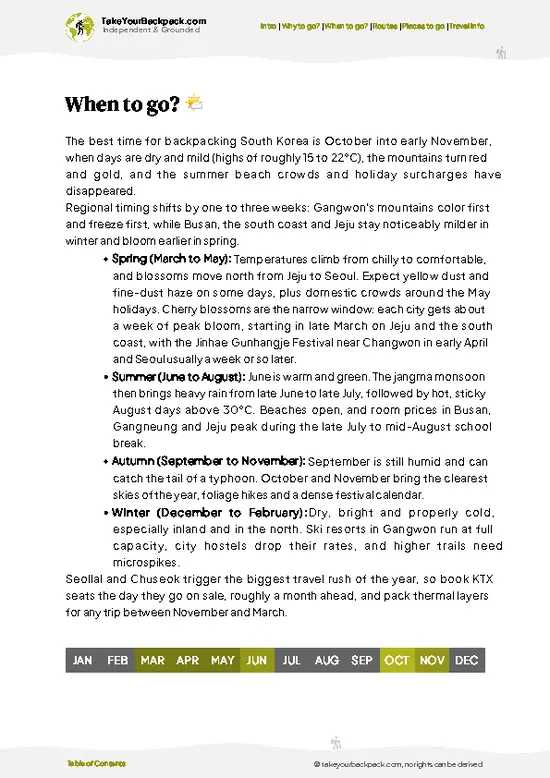
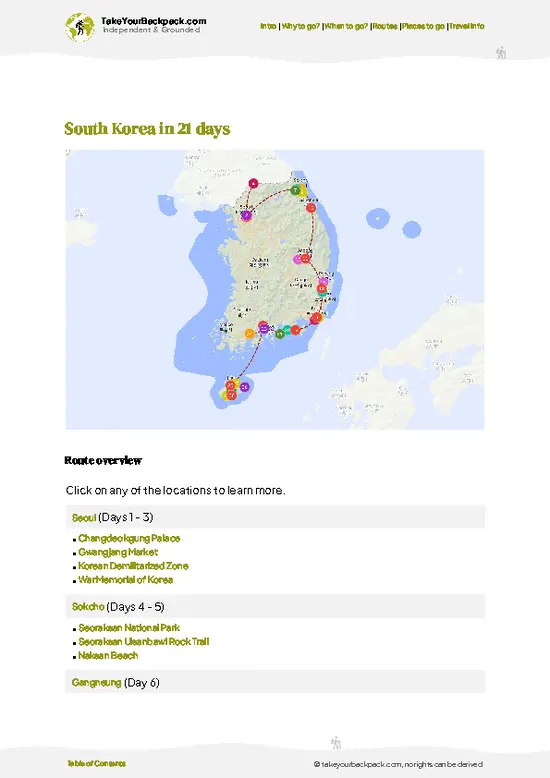
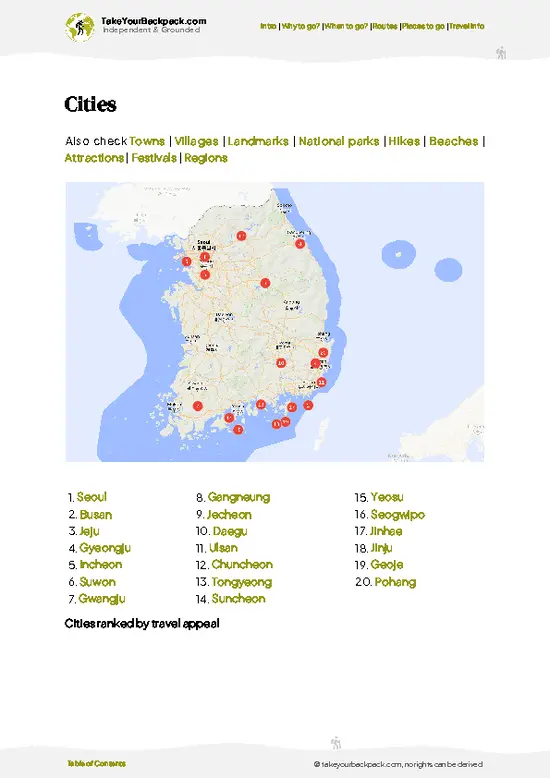
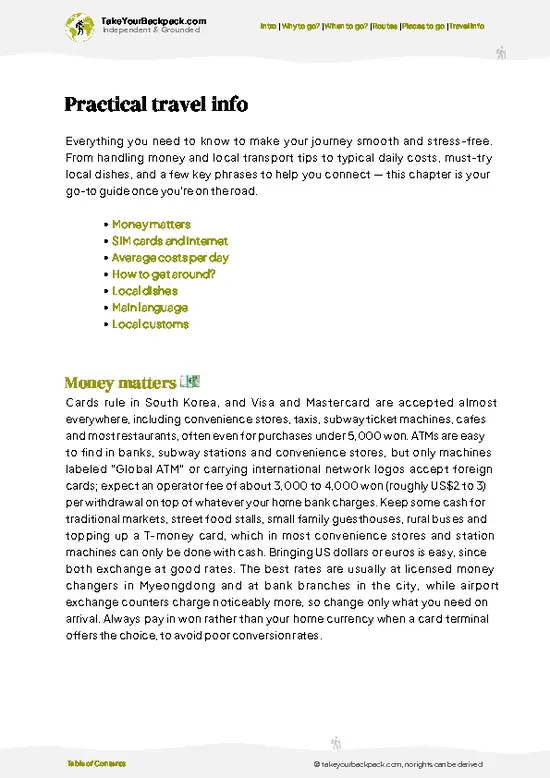
example page 0 from our offline Travel Guide for South Korea
example page 1 from our offline Travel Guide for South Korea
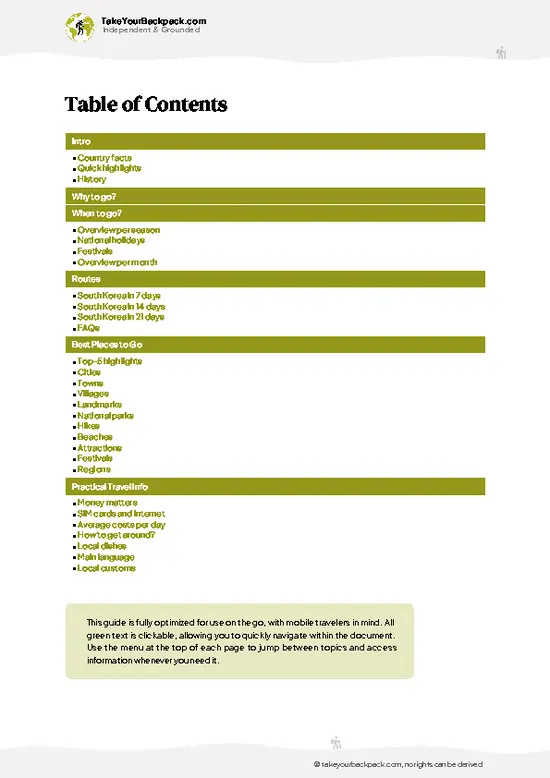
example page 2 from our offline Travel Guide for South Korea
example page 3 from our offline Travel Guide for South Korea
example page 4 from our offline Travel Guide for South Korea
example page 5 from our offline Travel Guide for South Korea
example page 6 from our offline Travel Guide for South Korea
example page 7 from our offline Travel Guide for South Korea
The digital guide (408 pages) contains:
115 highlights, ranked by travel appeal
Optimized 7, 14 & 21-day travel routes
Cities, national parks, landmarks, beaches
How to get around
Offline-friendly for travel without Wi-Fi
👉 Click to see all 30+ guide features

📅 Plan smarter in minutes, not weeks
Month by month travel advice
Festivals & national holidays
Budget expectations

🗺️ Go to the right places, skip the overrated ones
Honest pros & cons of destinations
Top hikes, parks & viewpoints
Lesser-known places most travelers miss
Clear “worth it vs skip it” guidance

🛏️ Travel smoothly without rookie mistakes
Best areas to stay
Transport systems explained simply
Common scams & safety advice
SIM cards, money & practical tips

🌍 Understand the country, not just visit it
Culture & traditions
52 Essential phrases & customs
Festivals worth planning around
Traveler-friendly historical context
Insights that make places more meaningful

📱 Built for real travel conditions
Fully downloadable PDF
Works completely offline
Optimized for phone use
Useful in remote areas & buses
Everything in one place
Save weeks of stressful planning
Get instant access to your full guide. 30‑day money-back guarantee.


By proceeding you agree to our terms.
Sent to your inbox immediately after payment • 100% Secure Checkout
Best Backpacking Travel Advisor 2025 tourism awardBest Backpacking
Travel Advisor
2025
What others say about Take Your Backpack Guides:
⭐⭐⭐⭐⭐
Fantastic, amazing amount of information!
⭐⭐⭐⭐⭐
My goodness this is amazing, it's what I've been looking for hats off too you!
⭐⭐⭐⭐⭐
I think this is absolutely BRILLIANT
⭐⭐⭐⭐
Very complete and informative. It's still missing places, but I gotta to commend you
⭐⭐⭐⭐⭐
This is truly amazing, thank you, can't wait to explore it with my kids!
⭐⭐⭐⭐⭐
Awesome resource, thank you!
⭐⭐⭐⭐⭐
This is amazing! Can't wait to explore the ones I haven't seen
⭐⭐⭐⭐
I love this! Well done, great idea.
⭐⭐⭐⭐⭐
Thanks for taking the time to make this gem!
⭐⭐⭐⭐⭐
This might be the best website I've ever seen.
⭐⭐⭐⭐⭐
Congratulations, and thank you so much for your work; it's incredibly valuable.
⭐⭐⭐⭐
In all seriousness I think you did a great job pointing out the important spots
⭐⭐⭐⭐⭐
10/10 very good
⭐⭐⭐⭐⭐
As someone who's only just starting to visit regularly this is awesome, thank you.
⭐⭐⭐⭐
Thank you very much! I'm going to visit my dad, it's going to be very useful!
⭐⭐⭐⭐⭐
This is really cool! We'll be travelling for the first time and this definitely come in handy.
⭐⭐⭐⭐⭐
You are now our minister of culture, congratulations 👨‍💼
⭐⭐⭐⭐⭐
Just wanted to tell you that this is a pearl! Going to follow your recommendations.
⭐⭐⭐⭐⭐
This is so cool. I'll definitely be using the resource for my travels soon.
⭐⭐⭐⭐⭐
This is very impressive! Good work.
⭐⭐⭐⭐⭐
This is an amazing and informative site. Very well done!

🛏️ Where to stay?Where staying makes the most sense

Incheon’s backpacker sweet spot is the area around Bupyeong and Sinpo-dong. These neighborhoods strike a smart balance between budget and vibe, making them the go-to for solo travelers and those watching their wallets without sacrificing social energy. Bupyeong, with its sprawling underground shopping arcade and lively street food scene, offers a gritty, authentic urban pulse. It’s safe, well-connected by subway, and packed with affordable guesthouses and hostels that cater to the backpacker crowd. You’ll find plenty of opportunities to meet fellow travelers here without the sterile feel of tourist … read more 👉
Incheon’s backpacker sweet spot is the area around Bupyeong and Sinpo-dong. These neighborhoods strike a smart balance between budget and vibe, making them the go-to for solo travelers and those watching their wallets without sacrificing social energy. Bupyeong, with its sprawling underground shopping arcade and lively street food scene, offers a gritty, authentic urban pulse. It’s safe, well-connected by subway, and packed with affordable guesthouses and hostels that cater to the backpacker crowd. You’ll find plenty of opportunities to meet fellow travelers here without the sterile feel of tourist traps.

Sinpo-dong, on the other hand, leans into a more relaxed, artsy atmosphere. It’s where you’ll catch local markets, quirky cafes, and a slower pace that still buzzes with character. Hostels here tend to be smaller and more intimate, perfect if you want a quieter base but still crave social interaction. Compared to the airport-adjacent areas or the business-heavy Songdo district, these neighborhoods offer a more grounded experience. They’re not about luxury or convenience for business travelers; they’re about getting under Incheon’s skin, making connections, and stretching your budget without feeling like you’re missing out on the city’s soul.

🚌 Getting aroundHow to get around Incheon

Incheon moves with a rhythm that’s part clockwork, part improvisation. The city’s pulse is set by its sprawling port and airport, where precision is king, but once you step into neighborhoods or markets, the flow loosens. Here, schedules matter, but so does reading the room—waiting for the right bus or catching a shared taxi when it feels right. Your choices in transit are a dance between saving time, spending less, and grabbing a bit of comfort. Knowing the trade-offs means you’re not just moving through Incheon—you’re mastering it.


  • Airport Railroad Express (AREX): The fastest link between Incheon International Airport and Seoul Station, running from 5:20 AM to 11:40 PM. It costs about 9,500 KRW one-way and cuts travel time to under an hour. It’s smooth and air-conditioned, perfect if
read more 👉
Incheon moves with a rhythm that’s part clockwork, part improvisation. The city’s pulse is set by its sprawling port and airport, where precision is king, but once you step into neighborhoods or markets, the flow loosens. Here, schedules matter, but so does reading the room—waiting for the right bus or catching a shared taxi when it feels right. Your choices in transit are a dance between saving time, spending less, and grabbing a bit of comfort. Knowing the trade-offs means you’re not just moving through Incheon—you’re mastering it.


  • Airport Railroad Express (AREX): The fastest link between Incheon International Airport and Seoul Station, running from 5:20 AM to 11:40 PM. It costs about 9,500 KRW one-way and cuts travel time to under an hour. It’s smooth and air-conditioned, perfect if you want to save time and avoid the hassle of transfers, but it’s pricier than local trains.


  • Incheon Subway Line 1: Runs from 5:30 AM to midnight, with fares starting around 1,250 KRW depending on distance. It’s slower than AREX but much cheaper and reliable, connecting you to key city spots and transfers. Comfort is basic but consistent, and trains come frequently, making it a solid budget choice if you have time to spare.


  • City Buses: Covering nearly every corner of Incheon, buses run roughly from 5 AM to midnight, with fares around 1,200 KRW. They’re slower due to traffic but offer the best value for reaching neighborhoods beyond subway lines. Comfort varies—some buses are newer and air-conditioned, others less so. You’ll need to navigate Korean signage or apps, but the price and reach are unbeatable.


  • Shared Taxis (Jipgae Taxi): These operate on fixed routes and can be flagged down on the street. They cost more than buses (around 2,000-3,000 KRW) but are faster and more direct, especially during off-peak hours. Comfort is higher, and you get a bit of local flavor by sharing rides with residents. They’re a smart middle ground if you want to save time without breaking the bank.


  • Walking: Incheon’s central areas, like Chinatown and Songdo, are surprisingly walkable. Walking costs nothing and lets you soak in the city’s textures—street vendors, architecture, and local life. It’s the slowest option but often the richest in experience, especially when time isn’t tight.

👛 Costs (as of 3 April 2026)Money, prices, and spending tips

Backpacking in Incheon, South Korea, offers a clear trade-off between cost and convenience, with prices that reflect its status as a gateway city near Seoul but still affordable for independent travelers.
  • Dorm Accommodation (High Season): Expect to pay around $20 to $30 per night for a bed in a shared dorm during peak travel months. This price reflects demand spikes around holidays and festivals.
  • Dorm Accommodation (Off-Season): In quieter months, dorm beds drop to about $12 to $18 per night, giving you a solid budget option without sacrificing basic comfort.
  • Meals: Street food and casual eateries will cost you roughly $5 to $10 per meal. If you stick to local favorites like kimbap or tteokbokki, you can keep food expenses low while still enjoying authentic flavors.
  • Local Transport: Single
read more 👉
Backpacking in Incheon, South Korea, offers a clear trade-off between cost and convenience, with prices that reflect its status as a gateway city near Seoul but still affordable for independent travelers.
  • Dorm Accommodation (High Season): Expect to pay around $20 to $30 per night for a bed in a shared dorm during peak travel months. This price reflects demand spikes around holidays and festivals.
  • Dorm Accommodation (Off-Season): In quieter months, dorm beds drop to about $12 to $18 per night, giving you a solid budget option without sacrificing basic comfort.
  • Meals: Street food and casual eateries will cost you roughly $5 to $10 per meal. If you stick to local favorites like kimbap or tteokbokki, you can keep food expenses low while still enjoying authentic flavors.
  • Local Transport: Single bus or subway rides typically cost between $1 and $1.50. This is a reliable way to navigate the city without breaking the bank.
  • City Transport Pass: A daily transport pass, which covers unlimited rides on buses and subways, runs about $4 to $6. This is a smart buy if you plan to move around a lot in a single day.
  • Basic Activities/Entry Fees: Museums, cultural sites, and small attractions usually charge between $3 and $8. Many places offer discounts for students or multi-site passes, so factor that in if you’re planning a cultural deep dive.
  • Miscellaneous Expenses: Budget around $3 to $7 for things like bottled water, snacks, or occasional coffee. These small costs add up but are manageable with a bit of planning.

Incheon’s daily backpacking budget typically falls between $30 and $55, depending on your season and activity level. You’re balancing affordable dorm stays and meals with efficient transport options and modest entry fees, making it a city where smart choices stretch your dollar without sacrificing the experience.


source: visitkorea.or.kr
⚠️ Prices can change and everyone travels differently, so take this as a rough guide. Hope it helps you plan your adventure!

🚌 Day tripsBest day trips from Incheon

Incheon is a fantastic launchpad for day trips that pack a punch without draining your wallet or time. Here’s how to make the most of your base.

**Bukhansan National Park**
Just an hour from Incheon, this national park offers a refreshing escape into nature. The trails vary from easy strolls to challenging scrambles, with breathtaking views of granite peaks and lush forests. It’s a favorite among locals, so you’ll get a taste of authentic Korean outdoor culture. Bring a packed lunch to enjoy at one of the scenic overlooks. A round-trip train ticket will cost around $5, and the best time to visit is during the fall when the foliage is vibrant. First-timers often underestimate the park’s size; plan your route ahead to avoid getting lost in the beauty.


**Suwon Hwaseong Fortress**
About … read more 👉
Incheon is a fantastic launchpad for day trips that pack a punch without draining your wallet or time. Here’s how to make the most of your base.

**Bukhansan National Park**
Just an hour from Incheon, this national park offers a refreshing escape into nature. The trails vary from easy strolls to challenging scrambles, with breathtaking views of granite peaks and lush forests. It’s a favorite among locals, so you’ll get a taste of authentic Korean outdoor culture. Bring a packed lunch to enjoy at one of the scenic overlooks. A round-trip train ticket will cost around $5, and the best time to visit is during the fall when the foliage is vibrant. First-timers often underestimate the park’s size; plan your route ahead to avoid getting lost in the beauty.


**Suwon Hwaseong Fortress**
About 1.5 hours from Incheon, Suwon’s fortress is a UNESCO World Heritage site that tells the story of Korea’s past. You can walk along the fortress walls and explore its impressive gates and watchtowers. The entrance fee is minimal, around $2, and you can easily spend a few hours here. Spring is ideal for cherry blossoms, but avoid weekends if you can; the crowds can be overwhelming. Many first-timers miss the chance to try the local street food just outside the fortress—don’t skip the tteokbokki!


**Incheon’s Chinatown and Songdo**
Stay local with a trip to Incheon’s own Chinatown, just a short subway ride away. Explore vibrant streets filled with shops and eateries, then head to Songdo for its modern architecture and the stunning Central Park. This combo can be done in half a day, costing around $10 for food and transport. The best time to visit is during the evening when the lights come alive. A common mistake is to rush through; take your time to savor the dumplings and stroll through the park.


**Ganghwa Island**
A bit further afield, about 1.5 hours by bus, Ganghwa Island offers a mix of history and nature. Visit ancient dolmens, explore the peaceful countryside, and enjoy the coastal views. Total costs can be around $15, including bus fare and snacks. Spring and fall are perfect for mild weather. First-timers often overlook the local seafood; don’t miss out on trying some fresh catches at a seaside restaurant.
Want to know what more South Korea offers?
The South Korea Travel Guide describes 115 highlights, from cities to national parks, from beaches to hikes

Get the Travel Guide -

🍲 FoodWhat to Eat & Drink

In Incheon, **food** is a vibrant tapestry of flavors that beckons you to dive in. Start with **jjajangmyeon**, a comforting bowl of noodles topped with a savory black bean sauce. It’s a local staple, perfect for a quick meal after a day of exploring. Don’t miss **tangsuyuk**, crispy fried pork or beef in a sweet and sour sauce, often found at bustling street stalls.

The **markets** are where the magic happens. Wander through **Bupyeong Market** and let the aroma of grilled fish and spicy tteokbokki guide you. Street food here is a rite of passage; grab a skewer of **odeng** (fish cake) and enjoy it with a warm broth.

When it comes to **drinks**, try **makgeolli**, a traditional rice wine that’s slightly sweet and effervescent. It’s often served in a bowl, encouraging a communal experience. … read more 👉
In Incheon, **food** is a vibrant tapestry of flavors that beckons you to dive in. Start with **jjajangmyeon**, a comforting bowl of noodles topped with a savory black bean sauce. It’s a local staple, perfect for a quick meal after a day of exploring. Don’t miss **tangsuyuk**, crispy fried pork or beef in a sweet and sour sauce, often found at bustling street stalls.

The **markets** are where the magic happens. Wander through **Bupyeong Market** and let the aroma of grilled fish and spicy tteokbokki guide you. Street food here is a rite of passage; grab a skewer of **odeng** (fish cake) and enjoy it with a warm broth.

When it comes to **drinks**, try **makgeolli**, a traditional rice wine that’s slightly sweet and effervescent. It’s often served in a bowl, encouraging a communal experience. In bars, you’ll find locals enjoying **soju**, a potent spirit that pairs well with nearly everything.

Etiquette matters; always pour drinks for others before filling your own. This simple act fosters connection, making every meal a shared celebration. Embrace the flavors and the camaraderie—this is where Incheon truly shines.

🛡️ SafetyScams, Hazards, and Annoyances

Incheon is generally safe, but like any city, it has its quirks. Stay aware in crowded areas like the airport and popular markets. Pickpocketing isn’t rampant, but it can happen, especially during busy times.

If you’re solo and out at night, stick to well-lit streets and main thoroughfares. The city is friendly, but it’s smart to keep your phone handy for navigation and to avoid looking lost.

Scams are rare, but watch for overly eager vendors or taxi drivers who might try to overcharge. Always agree on a fare before getting in.

Annoyances? Just the usual: occasional language barriers and the odd miscommunication. A smile and a few basic Korean phrases can go a long way. Carry yourself confidently, and you’ll navigate Incheon like a pro.

Other South Korean cities near Incheon

Explore more nearby:

  • Gwangmyeong—Cave attraction, shopping complexes, suburban rail| 20 km away
  • Seoul—Palaces, street markets, urban hiking trails| 33 km away
  • Suwon—Fortress walls, chicken street, traditional markets| 40 km away

💡 Not sure where to go next?
Create a personalized itinerary for South Korea including Incheon and the places that fit your trip.

Generate my itinerary

👉 Discover all cities

Or checkout all South Korea has to offer (think cities, towns, villages, national parks, hikes, beaches, festivals)
Country photo of South Korea

We 💚 feedbackIs it worth it?

Incheon has a pulse that’s both modern and deeply rooted in tradition. The best surprise? Strolling through Chinatown, where the food is a delightful mix of Korean and Chinese flavors—don’t skip the dumplings. Just a heads-up: the subway can be a maze, so download a map before you dive in. Embrace the chaos; it’s part of the charm. You’ll leave with stories and a craving for more. Trust me, it’s worth every moment.

✍️ Help improve this page!
The information on this page is based on in-depth research, insights shared by experienced travelers, and feedback from the local travel community in South Korea. While every effort is made to keep the information accurate and current, conditions can change — so if you spot anything incorrect or outdated, please get in touch.


🙋‍♂️ Give feedback

👋 Meet the founderWho’s Behind Take Your Backpack?

Johan, backpacker and founder of TakeYourBackpackHi, I’m Johan (Netherlands 🇳🇱), the creator of TakeYourBackpack. Over the past decade, I’ve backpacked through 80+ countries across six continents, gaining extensive experience with independent travel, long-term trips, and overland routes.

This site is built on a combination of firsthand travel experience and carefully curated insights from other backpackers. Many guides are based on places I’ve personally visited, while others bring together tips, observations, and practical advice shared by trusted travelers I’ve met along the way.

The goal is to provide realistic, experience-driven guidance — not generic itineraries — so you can explore destinations with better context, clearer expectations, and more confidence.

Get full country guide •
Instant download • 115 highlights • Full Offline guide