×

South Korea🇰🇷 | citiesJecheonMountain lakes, herbal markets, rail bike trails | things to do and best time to go

Explore GwangyangExplore Gimhae

Backpacking in Jecheon
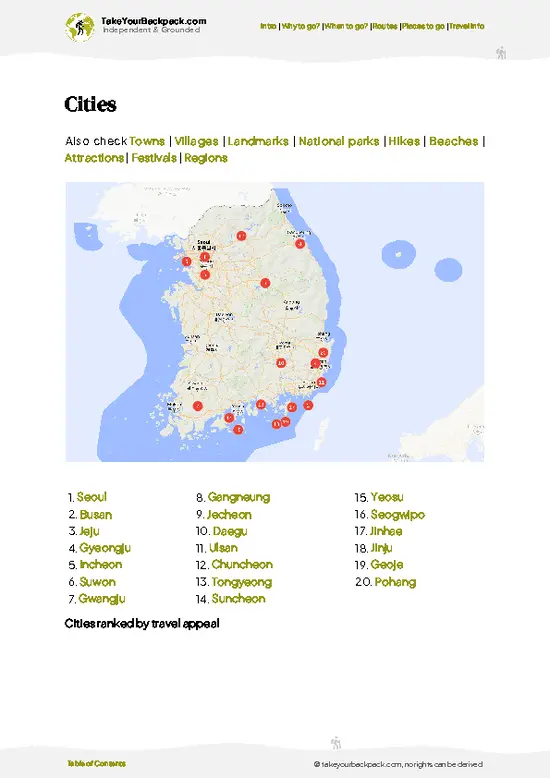
🌟 Highlightcity ranked #9
By Johan Kruseman 🇳🇱 | Updated September 4, 2026

A decade ago Jecheon was the kind of place Seoulites drove through on the way to somewhere “better” – a sleepy rail town with lakes and hot springs mostly serving locals. Today it’s a low-key escape in North Chungcheong, roughly between Seoul and Andong, where backpackers trade big-city buzz for mountains, medicine culture, and lake air. You get Uirimji Reservoir at sunrise, herbal-medicine streets and museums, and easy trail access rather than blockbuster sights or nightlife. It’s cheaper and calmer than Seoul or Daegu, safe, and simple to navigate by bus or on foot, but hostels and backpacker bars are thin, so meeting other travelers takes effort. The payoff is a slower, outdoorsy, very Korean-feeling base that still runs on local rhythms, not tourism.

Discover everything you want to know in the 📖 South Korea Travel Guide.
Loading the map 🌍
CLICK TO FILTER
cities
towns
villages
landmarks
national parks
hikes
beaches
attractions
festivals
regions
SHOW COUNTRY’S BESTSHOW ALL

✨ Why go?
Ranked #9 city in South Korea
Why Jecheon should be on your travel list

Jecheon is a strategic stop for backpackers navigating South Korea. Its basecamp value is undeniable, offering easy access to stunning day trips without the hassle of constant packing. The walkability of the city makes it a breeze to explore local food stalls and cozy hostels that cater to budget travelers. While the nightlife may not rival Seoul, it has a laid-back charm perfect for unwinding after a day of adventure. Plus, with easy onward travel options, you can seamlessly continue your journey. If you’re after a mix of authentic experiences and convenience, Jecheon fits the bill.
Want to include Jecheon in your South Korea route?
Create a personalized South Korea itinerary that includes Jecheon and the places that fit your trip — based on your travel style, budget, and available time. Get your route in seconds.

Generate my trip

💡 HighlightsTop highlights of Jecheon

  • Cheongpung Cultural Heritage Complex (청풍문화재단지) — A compact, well-preserved cluster of relocated traditional buildings, pavilions and small museums sitting by the water; great for getting a feel for Joseon-era architecture without a long drive.
  • Cheongpung Lake (청풍호) — The lake itself is the main show: dramatic river valleys, calm water and plenty of photo spots along the promenade. Good for relaxed walks, sunset views, and boat photos.
  • Cheongpung Cable Car (청풍호반 케이블카) — Short, scenic ride across the lake and up the hillside for panoramic views over Cheongpung and the surrounding mountains — especially lovely in fall.
  • Jecheon Jungang Market / Medicinal Herb Market (제천 중앙시장 · 약초시장) — A bustling traditional market where local food stalls sit beside stalls selling dried herbs and tonic ingredients;
read more 👉
  • Cheongpung Cultural Heritage Complex (청풍문화재단지) — A compact, well-preserved cluster of relocated traditional buildings, pavilions and small museums sitting by the water; great for getting a feel for Joseon-era architecture without a long drive.
  • Cheongpung Lake (청풍호) — The lake itself is the main show: dramatic river valleys, calm water and plenty of photo spots along the promenade. Good for relaxed walks, sunset views, and boat photos.
  • Cheongpung Cable Car (청풍호반 케이블카) — Short, scenic ride across the lake and up the hillside for panoramic views over Cheongpung and the surrounding mountains — especially lovely in fall.
  • Jecheon Jungang Market / Medicinal Herb Market (제천 중앙시장 · 약초시장) — A bustling traditional market where local food stalls sit beside stalls selling dried herbs and tonic ingredients; it’s the best place to taste local eats and see why Jecheon is known for herbal remedies.
  • Jecheon Station (제천역) & Railway Area — The station is a real transport hub with a bit of old-school charm; walk the nearby streets for cafés, train-watching and a slice of local daily life. Handy starting point for exploring the city.
  • Jecheon Hyanggyo (제천향교) — The city’s Confucian school and its small courtyard are quiet and atmospheric; it’s a simple, meaningful stop if you appreciate traditional educational sites and local ritual history.
  • Jecheon Culture & Arts Center (제천문화예술회관) — Small regional arts venue that hosts concerts, local theater and exhibitions — check the schedule and you might catch a concert or a film screening tied to the city’s music-and-film identity.
  • Local Riverside Parks and Bike Paths along the Namhan (남한강 자전거길 인근) — The riverside stretches inside the city are pleasant for biking or a long, flat walk; spot fishermen, cyclists and families and it’s an easy way to enjoy open space without leaving town.
  • Small Temples & Hillside Walks (city-side gems like nearby village temples and local peaks) — Scattered, less-touristed temples and short hiking trails around the city give you peaceful viewpoints over Jecheon; perfect for a quick nature escape without a full-day trek.
  • Jecheon Film & Music Festival venues / Event Spaces — Even outside festival dates these venues and the festival atmosphere are part of the city’s identity; if your visit lines up with JIMFF events you’ll get a real cultural experience of Jecheon.
A few excellent day trips just outside Jecheon: Danyang’s Gosu Cave and Suyanggae Waterfall, Chungju’s Dodamsambong and Chungjuho lakeside, and the trails around Woraksan/Worak area — all are real, visitable and easily doable as day trips from Jecheon.
Spotted a mistake or missing something? Contact us.

Things to do near Jecheon

Ratings based on Tripadvisor reviews. When you book through this link, you support our work at no extra cost to you.

🏘️ NeighborhoodsKey areas and districts to know

Jecheon offers a unique blend of nature and urban life, perfect for backpackers seeking both adventure and relaxation.

**Downtown Jecheon**: This is the heart of the city, buzzing with cafes and shops. It’s walkable and affordable, making it ideal for short stays. The nightlife is lively but not overwhelming, perfect for unwinding after a day of exploration.

**Cheongpung Lake Area**: A bit quieter, this area is all about nature. It’s great for longer stays if you want to hike or kayak. While transport options are limited, the serene vibe makes it worth it.

**Seongdong**: This neighborhood is a mix of local life and tourist spots. It’s budget-friendly and offers easy access to public transport. Perfect for those who want a taste of local culture without sacrificing convenience.

⌛️ 1 daySeeing the highlights in 24 hours

Jecheon, South Korea, is a charming city known for its stunning lakes and vibrant cultural scene. Start your day at the serene Cheongpungho Lake. Rent a bike and pedal along the scenic paths, soaking in the morning calm. This is a perfect way to kick off your adventure, blending light exercise with breathtaking views.

Afterward, head to the Jecheon Traditional Market. Here, you can sample local delicacies like hotteok (sweet pancakes) and explore stalls brimming with fresh produce. This market isn’t on every tourist’s radar, but it’s a slice of authentic local life.

In the afternoon, visit the stunning Deokjusa Temple, nestled in the mountains. The hike up is invigorating, and the temple’s tranquility offers a moment of reflection.

As evening approaches, stroll through the lively downtown … read more 👉
Jecheon, South Korea, is a charming city known for its stunning lakes and vibrant cultural scene. Start your day at the serene Cheongpungho Lake. Rent a bike and pedal along the scenic paths, soaking in the morning calm. This is a perfect way to kick off your adventure, blending light exercise with breathtaking views.

Afterward, head to the Jecheon Traditional Market. Here, you can sample local delicacies like hotteok (sweet pancakes) and explore stalls brimming with fresh produce. This market isn’t on every tourist’s radar, but it’s a slice of authentic local life.

In the afternoon, visit the stunning Deokjusa Temple, nestled in the mountains. The hike up is invigorating, and the temple’s tranquility offers a moment of reflection.

As evening approaches, stroll through the lively downtown area. Grab dinner at a local barbecue joint, where you can grill your own meat at the table. Wrap up your day with a leisurely walk along the riverside, watching the sunset paint the sky. This blend of nature, culture, and cuisine makes Jecheon a rewarding stop.
Turn your Jecheon visit into an South Korea adventure
Build a complete South Korea route with Jecheon, hidden gems, must-see destinations, and realistic travel times included.

Generate my trip

🌤️ When to go?Weather, crowds, and seasonal trade-offs


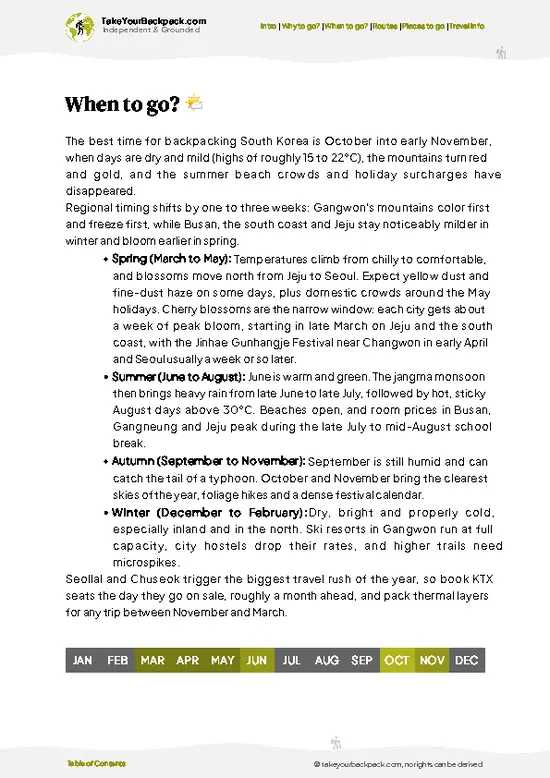
  • Weather: Spring (April to June) and autumn (September to November) offer the most agreeable weather, with mild temperatures and low humidity. Summers can be hot and sticky, often hitting 28-32°C (82-90°F), while winters dip below freezing, around -5 to 2°C (23-36°F).

  • Temperature: Spring and autumn days hover between 15-25°C (59-77°F), perfect for hiking and exploring without overheating or freezing.

  • Daylight Hours: Longer daylight in late spring and early autumn means more time to soak in the scenery—expect around 12-14 hours of light.

  • Crowds: Peak tourist influx aligns with autumn foliage season and spring cherry blossoms, so expect more visitors and higher prices then.

  • Seasonal Activities: Autumn brings vibrant foliage festivals; spring offers flower viewing and mild trekking
read more 👉

  • Weather: Spring (April to June) and autumn (September to November) offer the most agreeable weather, with mild temperatures and low humidity. Summers can be hot and sticky, often hitting 28-32°C (82-90°F), while winters dip below freezing, around -5 to 2°C (23-36°F).

  • Temperature: Spring and autumn days hover between 15-25°C (59-77°F), perfect for hiking and exploring without overheating or freezing.

  • Daylight Hours: Longer daylight in late spring and early autumn means more time to soak in the scenery—expect around 12-14 hours of light.

  • Crowds: Peak tourist influx aligns with autumn foliage season and spring cherry blossoms, so expect more visitors and higher prices then.

  • Seasonal Activities: Autumn brings vibrant foliage festivals; spring offers flower viewing and mild trekking conditions. Winter’s cold limits outdoor options but opens up hot springs and local indoor markets.

  • Price Fluctuations: Accommodation and transport costs spike during peak seasons (spring and autumn). Off-season winter offers bargains but sacrifices outdoor comfort.


Pro-tip: Aim for late April or early October to balance pleasant weather, manageable crowds, and reasonable prices—your sweet spot for a high-value Jecheon trip.


source: climatestotravel.comJANJanuary: fair for travelingFEBFebruary: fair for travelingMARMarch: good for travelingAPRApril: excellent for travelingMAYMay: excellent for travelingJUNJune: highly recommended for travelingJULJuly: fair for travelingAUGAugust: fair for travelingSEPSeptember: highly recommended for travelingOCTOctober: excellent for travelingNOVNovember: highly recommended for travelingDECDecember: fair for traveling
when-to-go

✈️ The backpacker research shortcutSouth Korea Travel Guide

An offline-friendly backpacking guide with optimized travel routes, ranked highlights, transport advice, and the best areas to stay.
example page 0 from our offline Travel Guide for South Korea
example page 1 from our offline Travel Guide for South Korea
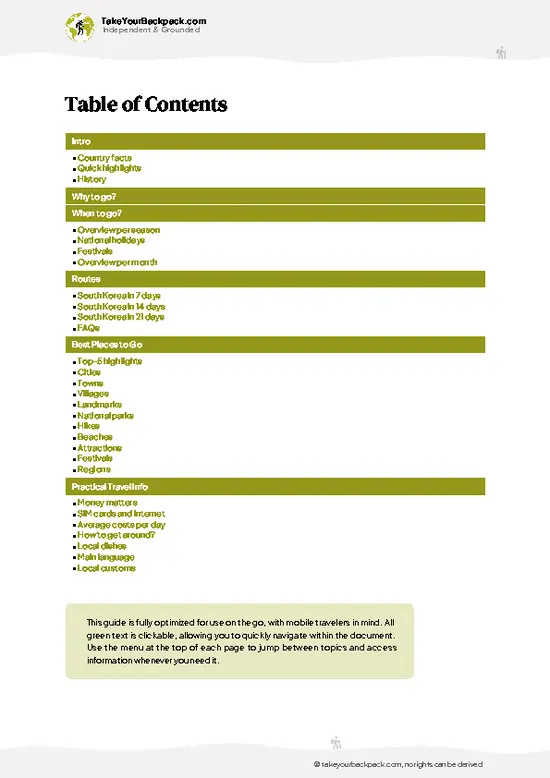
example page 2 from our offline Travel Guide for South Korea
example page 3 from our offline Travel Guide for South Korea
example page 4 from our offline Travel Guide for South Korea
example page 5 from our offline Travel Guide for South Korea
example page 6 from our offline Travel Guide for South Korea
example page 7 from our offline Travel Guide for South Korea
The digital guide (439 pages) contains:
124 highlights, ranked by travel appeal
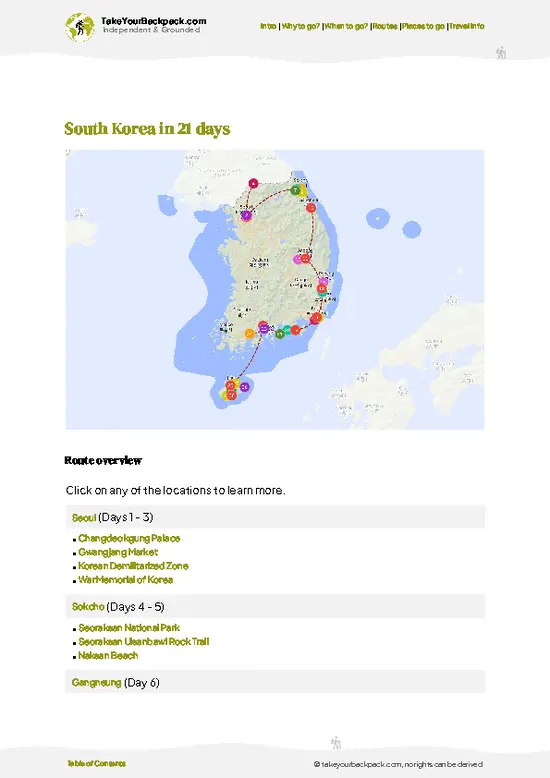
Optimized 7, 14 & 21-day travel routes
Cities, national parks, landmarks, beaches
How to get around
Offline-friendly for travel without Wi-Fi
👉 Click to see all 30+ guide features

📅 Plan smarter in minutes, not weeks
Month by month travel advice
Festivals & national holidays
Budget expectations

🗺️ Go to the right places, skip the overrated ones
Honest pros & cons of destinations
Top hikes, parks & viewpoints
Lesser-known places most travelers miss
Clear “worth it vs skip it” guidance

🛏️ Travel smoothly without rookie mistakes
Best areas to stay
Transport systems explained simply
Common scams & safety advice
SIM cards, money & practical tips

🌍 Understand the country, not just visit it
Culture & traditions
52 Essential phrases & customs
Festivals worth planning around
Traveler-friendly historical context
Insights that make places more meaningful

📱 Built for real travel conditions
Fully downloadable PDF
Works completely offline
Optimized for phone use
Useful in remote areas & buses
Everything in one place
Save weeks of stressful planning
Get instant access to your full guide. 30‑day money-back guarantee.
+ Add another guide for just US$7.80

By proceeding you agree to our terms.
Sent to your inbox immediately after payment • 100% Secure Checkout
Best Backpacking Travel Advisor 2025 tourism awardBest Backpacking
Travel Advisor
2025
What others say about Take Your Backpack Guides:
⭐⭐⭐⭐⭐
Fantastic, amazing amount of information!
⭐⭐⭐⭐⭐
My goodness this is amazing, it's what I've been looking for hats off too you!
⭐⭐⭐⭐⭐
I think this is absolutely BRILLIANT
⭐⭐⭐⭐
Very complete and informative. It's still missing places, but I gotta to commend you
⭐⭐⭐⭐⭐
This is truly amazing, thank you, can't wait to explore it with my kids!
⭐⭐⭐⭐⭐
Awesome resource, thank you!
⭐⭐⭐⭐⭐
This is amazing! Can't wait to explore the ones I haven't seen
⭐⭐⭐⭐
I love this! Well done, great idea.
⭐⭐⭐⭐⭐
Thanks for taking the time to make this gem!
⭐⭐⭐⭐⭐
This might be the best website I've ever seen.
⭐⭐⭐⭐⭐
Congratulations, and thank you so much for your work; it's incredibly valuable.
⭐⭐⭐⭐
In all seriousness I think you did a great job pointing out the important spots
⭐⭐⭐⭐⭐
10/10 very good
⭐⭐⭐⭐⭐
As someone who's only just starting to visit regularly this is awesome, thank you.
⭐⭐⭐⭐
Thank you very much! I'm going to visit my dad, it's going to be very useful!
⭐⭐⭐⭐⭐
This is really cool! We'll be travelling for the first time and this definitely come in handy.
⭐⭐⭐⭐⭐
You are now our minister of culture, congratulations 👨‍💼
⭐⭐⭐⭐⭐
Just wanted to tell you that this is a pearl! Going to follow your recommendations.
⭐⭐⭐⭐⭐
This is so cool. I'll definitely be using the resource for my travels soon.
⭐⭐⭐⭐⭐
This is very impressive! Good work.
⭐⭐⭐⭐⭐
This is an amazing and informative site. Very well done!

🛏️ Where to stay?How to pick the right area

Jecheon’s backpacker sweet spot is the area around the city center, especially near Jecheon Station. This neighborhood nails the balance between safety and social buzz, making it a natural magnet for solo travelers and budget adventurers. It’s compact enough to walk everywhere—markets, eateries, and transport hubs—without wasting time or money on taxis. Hostels here tend to cluster, offering a range of dorm-style options that encourage mingling without sacrificing comfort.

Compared to the quieter, more residential outskirts, the city center pulses with energy after dark, so you’re never stuck … read more 👉
Jecheon’s backpacker sweet spot is the area around the city center, especially near Jecheon Station. This neighborhood nails the balance between safety and social buzz, making it a natural magnet for solo travelers and budget adventurers. It’s compact enough to walk everywhere—markets, eateries, and transport hubs—without wasting time or money on taxis. Hostels here tend to cluster, offering a range of dorm-style options that encourage mingling without sacrificing comfort.

Compared to the quieter, more residential outskirts, the city center pulses with energy after dark, so you’re never stuck solo unless you want to be. It’s also where you’ll find the best value for your money: affordable food stalls and convenience stores keep your budget intact while you soak in local life. Other neighborhoods might offer peace, but they lack the social infrastructure that turns a solo trip into a shared experience. In Jecheon, staying central means you’re plugged into the city’s rhythm, maximizing your time and minimizing hassle.

🚌 Getting aroundTransportation options and practical tips

Jecheon moves at a pace that’s more about rhythm than rush. It’s not a city where you’ll find synchronized clocks dictating every step, but neither is it a free-for-all of chaos. Instead, it’s a blend: buses and trains run on schedules that matter, but the real flow comes from knowing when to step off the beaten path and walk, letting the city’s quieter moments unfold. Time, money, and comfort here form a triangle you navigate with a mix of strategy and instinct. You can save cash by embracing slower, simpler options, or spend a bit more to slice through the city’s pulse with ease. The key is knowing what you’re trading off.


  • Walking: The ultimate budget option and the best way to absorb Jecheon’s character. Most neighborhoods are compact, so you can cover 2-3 kilometers in 30-40 minutes
read more 👉
Jecheon moves at a pace that’s more about rhythm than rush. It’s not a city where you’ll find synchronized clocks dictating every step, but neither is it a free-for-all of chaos. Instead, it’s a blend: buses and trains run on schedules that matter, but the real flow comes from knowing when to step off the beaten path and walk, letting the city’s quieter moments unfold. Time, money, and comfort here form a triangle you navigate with a mix of strategy and instinct. You can save cash by embracing slower, simpler options, or spend a bit more to slice through the city’s pulse with ease. The key is knowing what you’re trading off.


  • Walking: The ultimate budget option and the best way to absorb Jecheon’s character. Most neighborhoods are compact, so you can cover 2-3 kilometers in 30-40 minutes without breaking a sweat. Zero cost, full control, and a direct line to the city’s quieter corners.

  • City Bus: Runs roughly from 5:30 AM to 10:30 PM, with fares around 1,250 KRW. It’s slow but reliable, connecting major districts and the train station. Expect some crowding during rush hours, but it’s a solid balance of cost and coverage.

  • Intercity Bus: For trips beyond Jecheon, these buses depart from the main terminal starting early morning until late evening. Tickets cost between 3,000 and 7,000 KRW depending on distance. Faster than local buses but less frequent, so timing is key.

  • Taxi: Starting fare is about 3,800 KRW, with moderate surcharges at night. Taxis offer door-to-door comfort and speed but can quickly eat into your budget. Best for late-night returns or when you’re hauling gear.

  • Korail Train: Jecheon Station is on the Jungang Line, with trains running from early morning to late night. Prices vary by distance, generally starting around 2,000 KRW for short hops. Trains are faster and more comfortable than buses but require syncing with the schedule.

👛 Costs (as of 4 September 2026)How expensive it really is

Backpacking in Jecheon, South Korea, offers a clear trade-off between spending and comfort, with costs that remain quite reasonable compared to bigger cities in the country.
  • Dorm Accommodation (High Season): Expect to pay around $15 to $25 per night. High season pushes prices up due to demand, especially during local festivals or holidays.
  • Dorm Accommodation (Off-Season): Prices drop to about $10 to $18 per night. Fewer tourists mean better deals, but options might be more limited.
  • Meals: Street food and local eateries will cost you roughly $5 to $10 per day if you stick to simple Korean dishes like bibimbap or kimbap. If you opt for a sit-down restaurant, budget closer to $10 to $15.
  • Local Transport: Jecheon is compact, so short bus rides or taxis typically cost between $1 and $3 per
read more 👉
Backpacking in Jecheon, South Korea, offers a clear trade-off between spending and comfort, with costs that remain quite reasonable compared to bigger cities in the country.
  • Dorm Accommodation (High Season): Expect to pay around $15 to $25 per night. High season pushes prices up due to demand, especially during local festivals or holidays.
  • Dorm Accommodation (Off-Season): Prices drop to about $10 to $18 per night. Fewer tourists mean better deals, but options might be more limited.
  • Meals: Street food and local eateries will cost you roughly $5 to $10 per day if you stick to simple Korean dishes like bibimbap or kimbap. If you opt for a sit-down restaurant, budget closer to $10 to $15.
  • Local Transport: Jecheon is compact, so short bus rides or taxis typically cost between $1 and $3 per trip. Walking is also a solid option for many spots.
  • City Transport Pass: A daily transport pass isn’t common here, but if you plan multiple bus rides, expect to spend around $3 to $5 per day on transport.
  • Basic Activities/Entry Fees: Most local attractions, like museums or parks, charge modest fees ranging from $2 to $7. Nature spots around Jecheon often have free or very low-cost access.
  • Miscellaneous Expenses: This covers essentials like bottled water, snacks, or occasional coffee, averaging about $3 to $7 daily.

In total, a backpacker in Jecheon can expect to spend between $25 and $50 per day, depending on season and personal comfort choices. This range balances saving money with enough comfort to enjoy the city’s unique offerings without feeling pinched.


source: english.visitkorea.or.kr
⚠️ Prices can change and everyone travels differently, so take this as a rough guide. Hope it helps you plan your adventure!

🚌 Day tripsShort trips worth adding

Jecheon is a fantastic launchpad for day trips that pack a punch without draining your wallet or time. Here are some standout options that will elevate your experience.

**Sangdangsan Mountain**
Just a 30-minute bus ride from Jecheon, Sangdangsan offers a refreshing hike with panoramic views that make the climb worthwhile. The trail is well-marked, and you’ll find locals enjoying the outdoors, which adds to the charm. Bring a packed lunch to savor at the summit. The best time to visit is during the fall when the foliage bursts into color. A common mistake? Underestimating the weather—bring layers, as it can get chilly at the top.


**Cheongpungho Lake**
About 40 minutes away, Cheongpungho Lake is a serene escape. Rent a bike and pedal along the lakeside paths, or simply relax with a … read more 👉
Jecheon is a fantastic launchpad for day trips that pack a punch without draining your wallet or time. Here are some standout options that will elevate your experience.

**Sangdangsan Mountain**
Just a 30-minute bus ride from Jecheon, Sangdangsan offers a refreshing hike with panoramic views that make the climb worthwhile. The trail is well-marked, and you’ll find locals enjoying the outdoors, which adds to the charm. Bring a packed lunch to savor at the summit. The best time to visit is during the fall when the foliage bursts into color. A common mistake? Underestimating the weather—bring layers, as it can get chilly at the top.


**Cheongpungho Lake**
About 40 minutes away, Cheongpungho Lake is a serene escape. Rent a bike and pedal along the lakeside paths, or simply relax with a coffee at one of the lakeside cafes. The area is particularly stunning in spring when cherry blossoms bloom. Expect to spend around $10 for bike rental and snacks. First-timers often overlook the small trails leading to hidden viewpoints—don’t miss them!


**Bonghwangsan Mountain**
A little over an hour from Jecheon, Bonghwangsan is less crowded but equally rewarding. The hike is moderate, and the summit offers a peaceful retreat. Bring your camera; the views are Instagram-worthy. The best time to go is early morning to catch the sunrise. Many hikers forget to pack enough water, so fill up before you head out.


**Danyang**
Just under an hour away, Danyang is famous for its stunning cliffs and the picturesque Namhan River. Take a boat tour or explore the local markets for some delicious street food. Budget around $15 for transport and snacks. The summer months are ideal, but be prepared for crowds. A common pitfall is skipping the local eateries—don’t settle for convenience store snacks!
👉 Explore Danyang
Want to know what more South Korea offers?
The South Korea Travel Guide describes 124 highlights, from cities to national parks, from beaches to hikes

Get the Travel Guide -

🍲 FoodLocal Flavors for Backpackers

In Jecheon, **local cuisine** is a feast for the senses. Dive into **dakgalbi**, a spicy stir-fried chicken dish that sizzles on the grill, filling the air with mouthwatering aromas. Don’t miss **makgeolli**, a traditional rice wine, often enjoyed in casual settings with friends.

Backpackers flock to **street food stalls** and bustling markets, where you can grab **tteokbokki** (spicy rice cakes) or **hotteok** (sweet pancakes) while mingling with locals.

Eating customs here are relaxed; sharing is common, and it’s polite to pour drinks for others first. Embrace the communal vibe, and you’ll find that every bite and sip is a step deeper into Jecheon’s heart.

🛡️ SafetyScams, Hazards, and Annoyances

Jecheon is generally safe for backpackers, but staying aware enhances your experience. Stick to well-lit areas at night, especially around the bus terminal and parks. Solo travelers should trust their instincts; if something feels off, it probably is.

While scams are rare, be cautious of overly friendly locals offering unsolicited help, as they might expect a tip. Everyday annoyances include language barriers, so learning a few basic Korean phrases can go a long way. Carry yourself confidently, and you’ll navigate the city like a pro.

FAQTraveler FAQ

2 to 3 days are sufficient to explore Jecheon. This allows time to visit key attractions like Uirimji Reservoir and Cheongpung Cultural Heritage Complex. You can also enjoy local hiking trails and traditional markets within this timeframe.
Yes, Jecheon is safe for solo backpackers. The city has low crime rates and a friendly local population. Basic precautions like avoiding isolated areas at night are recommended, as in any small city.
Jecheon is known for its natural scenery and cultural heritage. It is famous for the Uirimji Reservoir, one of Korea's oldest reservoirs, and the annual Jecheon International Music & Film Festival. The city is also recognized for its medicinal herb markets and nearby national parks.
⚠️ Things can change over time, so always validate details locally before you go.

Other South Korean cities near Jecheon

Explore more nearby:

  • Danyang—limestone caves, river cliffs, cable car views| 18 km away
  • Wonju—Mountain biking, Hanji paper workshops, riverside trails| 33 km away
  • Yeongju—Confucian academy, apple orchards, forested hills| 51 km away

💡 Not sure where to go next?
Create a personalized itinerary for South Korea including Jecheon and the places that fit your trip.

Generate my itinerary

👉 Discover all cities

Or checkout all South Korea has to offer (think cities, towns, villages, national parks, hikes, beaches, festivals)
Country photo of South Korea

We 💚 feedbackParting advice and final tips

Jecheon has this chill vibe that sneaks up on you. The lakeside views? Pure magic, especially at sunset. Don’t miss the local jjimjilbang; it’s a cozy surprise. Just be ready for the crowds on weekends—plan your visit wisely, and you’ll soak in the real charm.

✍️ Help improve this page!
The information on this page is based on in-depth research, insights shared by experienced travelers, and feedback from the local travel community in South Korea. While every effort is made to keep the information accurate and current, conditions can change — so if you spot anything incorrect or outdated, please get in touch.


🙋‍♂️ Give feedback

👋 Meet the founderWho’s Behind Take Your Backpack?

Johan, backpacker and founder of TakeYourBackpackHi, I’m Johan (Netherlands 🇳🇱), the creator of TakeYourBackpack. Over the past decade, I’ve backpacked through 80+ countries across six continents, gaining extensive experience with independent travel, long-term trips, and overland routes.

This site is built on a combination of firsthand travel experience and carefully curated insights from other backpackers. Many guides are based on places I’ve personally visited, while others bring together tips, observations, and practical advice shared by trusted travelers I’ve met along the way.

The goal is to provide realistic, experience-driven guidance — not generic itineraries — so you can explore destinations with better context, clearer expectations, and more confidence.

Get full country guide •
Instant download • 124 highlights • Full Offline guide