×

South Korea🇰🇷 | citiesUlsanWhale museum, shipbuilding docks, bamboo groves | things to do and best time to go

Explore PohangExplore Daegu

Backpacking in Ulsan
👌 Worth visitingcity ranked #8
By Johan Kruseman 🇳🇱 | Updated June 4, 2026

Old Ulsan was pure industry: shipyards, smokestacks, salarymen, and not much reason for a backpacker to linger. Today, it’s still Hyundai’s company town at heart, but the edges have softened into beaches, riverside parks, and a low-key food scene. Wedged on Korea’s southeast coast between Busan and Gyeongju, Ulsan is easy to reach yet rarely anyone’s first stop. That’s the trade: fewer hostels and less nightlife buzz, but also fewer tour groups and cheaper meals. You get whale history at Jangsaengpo, coastal walks at Daewangam Park, and big-city safety with almost zero hassle. It’s not as pretty as Gyeongju or as electric as Busan, but if you like seeing how modern Korea actually runs, Ulsan feels real, functional, and quietly interesting.

Discover everything you want to know in the 📖 South Korea Travel Guide.
Loading the map 🌍
CLICK TO FILTER
cities
towns
villages
landmarks
national parks
hikes
beaches
attractions
festivals
regions
SHOW COUNTRY’S BESTSHOW ALL

✨ Why go?
Ranked #8 city in South Korea
The unique appeal for travelers

Ulsan is a strategic basecamp for backpackers navigating South Korea. It offers a mix of affordable hostels and a vibrant food scene that keeps your budget in check while satisfying your cravings. The city is walkable, making it easy to explore local culture without the hassle of transport. When night falls, the nightlife buzzes, providing a lively atmosphere to unwind. Plus, Ulsan’s location means easy onward travel to nearby attractions, allowing you to maximize your time. If you’re after a blend of comfort and adventure, Ulsan is more than just a stop; it’s a smart choice in your journey.
Want to include Ulsan in your South Korea route?
Create a personalized South Korea itinerary that includes Ulsan and the places that fit your trip — based on your travel style, budget, and available time. Get your route in seconds.

Generate my trip

💡 HighlightsTop highlights of Ulsan

  1. Daewangam Park — A windswept coastal park with a pine-canopied cliff walk, a footbridge to Daewangam Island, weird volcanic rock formations and a lighthouse. Great for sunset, sea air and a quick nature escape inside the city limits.
  2. Jangsaengpo Whale Museum & Whale Cultural Village — The best place in Korea to learn about Ulsan’s whaling past and its modern shift to whale conservation; the harborfront village, outdoor sculptures and seasonal whale-watching cruises make a visit tactile and memorable.
  3. Bangudae Petroglyphs — Ancient rock carvings of whales and other animals on the Daegok riverside (Ulju area). This rare prehistoric site connects Ulsan’s coastal communities to millennia of marine culture — there’s a small visitor setup and replicas if river levels prevent direct access.
read more 👉
  1. Daewangam Park — A windswept coastal park with a pine-canopied cliff walk, a footbridge to Daewangam Island, weird volcanic rock formations and a lighthouse. Great for sunset, sea air and a quick nature escape inside the city limits.
  2. Jangsaengpo Whale Museum & Whale Cultural Village — The best place in Korea to learn about Ulsan’s whaling past and its modern shift to whale conservation; the harborfront village, outdoor sculptures and seasonal whale-watching cruises make a visit tactile and memorable.
  3. Bangudae Petroglyphs — Ancient rock carvings of whales and other animals on the Daegok riverside (Ulju area). This rare prehistoric site connects Ulsan’s coastal communities to millennia of marine culture — there’s a small visitor setup and replicas if river levels prevent direct access.
  4. Taehwagang River Grand Park & Bamboo Grove — A long riverside park with one of Korea’s most impressive urban bamboo forests, boardwalks and sculptures. It’s surprisingly peaceful for being in the city and excellent for biking, a picnic, or a slow afternoon stroll.
  5. Ulsan Grand Park — Ulsan’s biggest green lung: lake, trails, botanical areas, a small animal zone and rentable bikes. It’s where locals hang out on weekends and a good place to see everyday city life away from the factories.
  6. Ganjeolgot Cape — Tiny cape famous for being one of the first places in Korea to catch sunrise each morning. There’s a photogenic lighthouse, a “first sunrise” culture and a giant mailbox/statue where couples and travelers leave notes — simple but a real local ritual.
  7. Hyundai Motor Ulsan Plant (factory tour) — A unique industrial tourism experience: guided tours show car production at massive scale and illustrate how Ulsan’s modern identity was built around heavy industry. Tours require booking, but the observatory areas and visitor centers are worth it even if you don’t join a full tour.
  8. Ulsan Museum — Compact, well-curated museum that traces the area from prehistoric settlement through the whale-hunting era to the industrial boom. Good contextual grounding before you explore the rest of the city.
  9. Ulsan Museum of Art (UMoA) — A contemporary art space that programs local and national exhibitions, often in interesting temporary shows. It’s a good stop for a rainy day and to see Ulsan’s modern cultural side beyond industry and nature.
  10. Munsu Sports Complex & Munsu Park (Big Bird Stadium) — The distinctive “Big Bird” stadium and the surrounding riverside park/lighted fountains make for enjoyable evening walks; it’s also a local hub for sports, events and nighttime city views.
A few excellent day-trip options just outside Ulsan: the historical wonders of Gyeongju (Bulguksa, tumuli fields, Cheomseongdae), the traditional Yangdong Folk Village, and nearby Tongdosa Temple — all easily reachable from Ulsan for a full day out.
Spotted a mistake or missing something? Contact us.

Things to do near Ulsan

Ratings based on Tripadvisor reviews. When you book through this link, you support our work at no extra cost to you.

🏘️ NeighborhoodsNeighborhood guide to Ulsan

Ulsan offers a unique blend of urban energy and coastal charm, making it a fascinating stop for backpackers. Here’s how the neighborhoods stack up:

Downtown Ulsan: The heart of the city, perfect for first-timers. It’s bustling with shops and eateries, and you can easily walk to attractions. Affordable accommodations abound, and the nightlife is lively without being overwhelming. Great for short stays.

Taehwa River Park: A serene escape within the city. Ideal for those who prefer a quieter vibe. The park is perfect for leisurely strolls or picnics. While nightlife is minimal, it’s close to public transport, making it easy to explore further afield. Suitable for longer stays.

Jinha Beach: A coastal haven. If you’re into sun and surf, this is your spot. Accommodations can be pricier, but the … read more 👉
Ulsan offers a unique blend of urban energy and coastal charm, making it a fascinating stop for backpackers. Here’s how the neighborhoods stack up:

Downtown Ulsan: The heart of the city, perfect for first-timers. It’s bustling with shops and eateries, and you can easily walk to attractions. Affordable accommodations abound, and the nightlife is lively without being overwhelming. Great for short stays.

Taehwa River Park: A serene escape within the city. Ideal for those who prefer a quieter vibe. The park is perfect for leisurely strolls or picnics. While nightlife is minimal, it’s close to public transport, making it easy to explore further afield. Suitable for longer stays.

Jinha Beach: A coastal haven. If you’re into sun and surf, this is your spot. Accommodations can be pricier, but the beach vibe is worth it. Nightlife is relaxed, with beach bars and cafes. Best for those looking to unwind after a day of exploring.

⌛️ 1 daySeeing the highlights in 24 hours

Ulsan, South Korea, is a city where industry meets nature, offering a unique blend of urban energy and coastal beauty. Start your day in the bustling neighborhood of Samsan-dong, where you can grab a hearty breakfast at a local café. Try some hotteok, a sweet pancake filled with brown sugar and nuts, to fuel your adventures.

In the morning, head to the Ulsan Grand Park. This expansive green space is perfect for a leisurely stroll or a bike ride. The park’s serene lakes and vibrant flower gardens provide a refreshing escape from the city’s hustle.

After lunch at a nearby seafood market, where you can savor fresh sashimi, make your way to the coastal area of Daewangam Park. Here, you’ll find stunning sea views and the iconic Daewangam Rock, a spot often overlooked by tourists but cherished … read more 👉
Ulsan, South Korea, is a city where industry meets nature, offering a unique blend of urban energy and coastal beauty. Start your day in the bustling neighborhood of Samsan-dong, where you can grab a hearty breakfast at a local café. Try some hotteok, a sweet pancake filled with brown sugar and nuts, to fuel your adventures.

In the morning, head to the Ulsan Grand Park. This expansive green space is perfect for a leisurely stroll or a bike ride. The park’s serene lakes and vibrant flower gardens provide a refreshing escape from the city’s hustle.

After lunch at a nearby seafood market, where you can savor fresh sashimi, make your way to the coastal area of Daewangam Park. Here, you’ll find stunning sea views and the iconic Daewangam Rock, a spot often overlooked by tourists but cherished by locals.

As evening approaches, explore the lively atmosphere of the Jinha Beach area. Enjoy dinner at a seaside restaurant, where you can indulge in grilled fish while watching the sunset. This day in Ulsan offers a rich tapestry of experiences, balancing comfort and adventure without the rush.
Turn your Ulsan visit into an South Korea adventure
Build a complete South Korea route with Ulsan, hidden gems, must-see destinations, and realistic travel times included.

Generate my trip

🌤️ When to go?When to go for the best experience


  • Weather: Spring (April to June) and autumn (September to November) offer the most agreeable weather in Ulsan. Expect mild temperatures and low humidity, avoiding the sweltering heat and heavy rains of summer or the bitter cold of winter.

  • Temperature: Spring highs hover around 15-22°C (59-72°F), while autumn sees 14-20°C (57-68°F). Winters dip below freezing, often around -2 to 5°C (28-41°F), which can be harsh for backpackers.

  • Daylight Hours: Spring and autumn provide balanced daylight, roughly 12-14 hours, enough to maximize exploration without rushing or losing light early.

  • Crowds: Summer attracts domestic tourists escaping the city, making popular spots busier. Off-peak seasons like late autumn and early spring see fewer visitors, giving you breathing room.

  • Seasonal Activities:
read more 👉

  • Weather: Spring (April to June) and autumn (September to November) offer the most agreeable weather in Ulsan. Expect mild temperatures and low humidity, avoiding the sweltering heat and heavy rains of summer or the bitter cold of winter.

  • Temperature: Spring highs hover around 15-22°C (59-72°F), while autumn sees 14-20°C (57-68°F). Winters dip below freezing, often around -2 to 5°C (28-41°F), which can be harsh for backpackers.

  • Daylight Hours: Spring and autumn provide balanced daylight, roughly 12-14 hours, enough to maximize exploration without rushing or losing light early.

  • Crowds: Summer attracts domestic tourists escaping the city, making popular spots busier. Off-peak seasons like late autumn and early spring see fewer visitors, giving you breathing room.

  • Seasonal Activities: Cherry blossoms bloom in April, while autumn paints the city in rich reds and golds—both prime for photography and outdoor events. Winter festivals exist but come with cold trade-offs.

  • Price Fluctuations: Accommodation and transport costs spike in summer and during local holidays. Shoulder seasons offer better deals, balancing comfort and budget.


Pro-tip: Aim for late April or early October to hit the sweet spot of weather, daylight, and crowd size—your backpacking experience will feel like a well-played strategy, not a gamble.


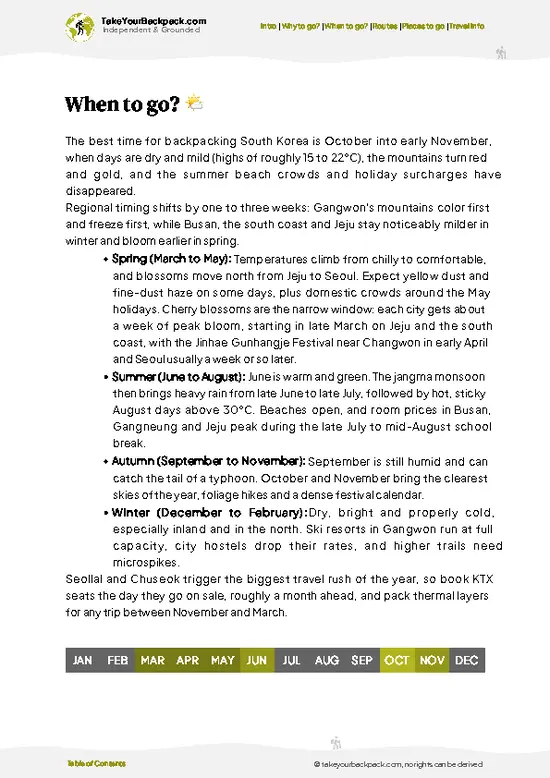
source: climatestotravel.comJANJanuary: fair for travelingFEBFebruary: fair for travelingMARMarch: good for travelingAPRApril: excellent for travelingMAYMay: excellent for travelingJUNJune: highly recommended for travelingJULJuly: fair for travelingAUGAugust: fair for travelingSEPSeptember: excellent for travelingOCTOctober: excellent for travelingNOVNovember: highly recommended for travelingDECDecember: fair for traveling
when-to-go

✈️ The backpacker research shortcutSouth Korea Travel Guide

An offline-friendly backpacking guide with optimized travel routes, ranked highlights, transport advice, and the best areas to stay.
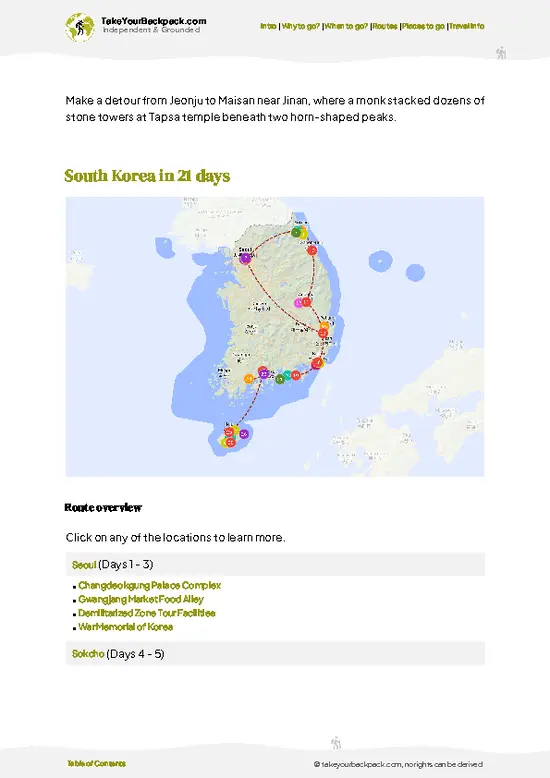
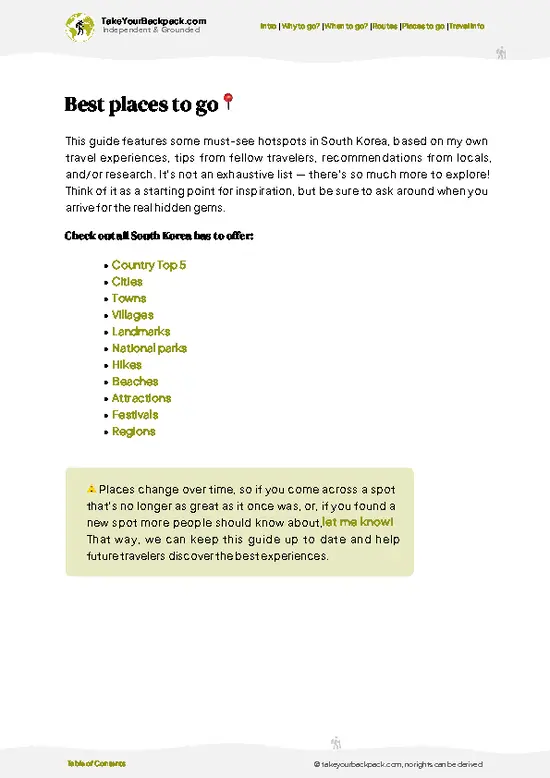
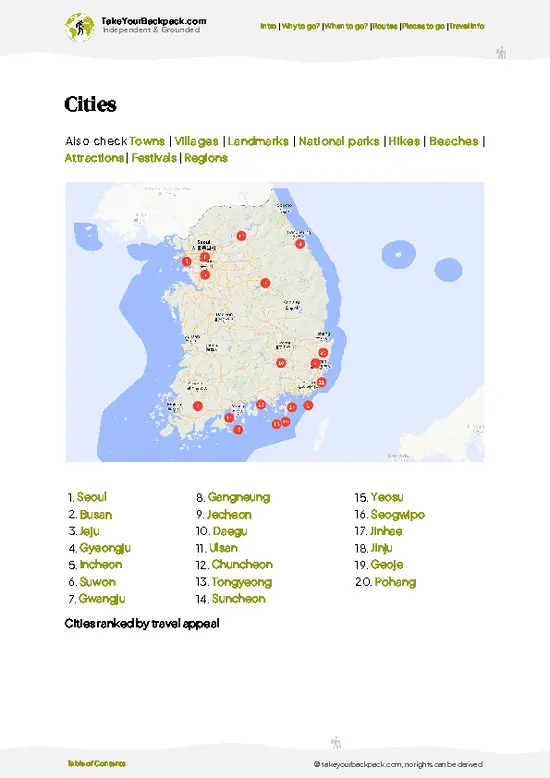
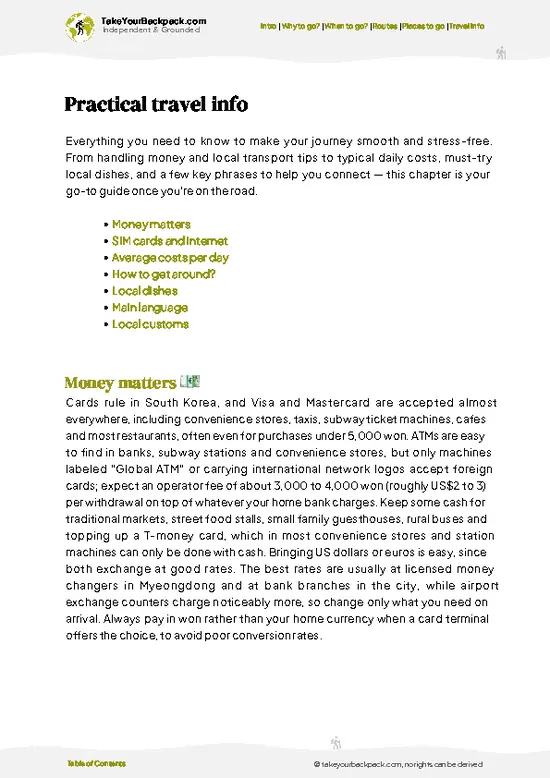
example page 0 from our offline Travel Guide for South Koreaexample page 1 from our offline Travel Guide for South Koreaexample page 2 from our offline Travel Guide for South Koreaexample page 3 from our offline Travel Guide for South Koreaexample page 4 from our offline Travel Guide for South Koreaexample page 5 from our offline Travel Guide for South Koreaexample page 6 from our offline Travel Guide for South Koreaexample page 7 from our offline Travel Guide for South Korea
The digital guide (408 pages) contains:
115 highlights, ranked by travel appeal
Optimized 7, 14 & 21-day travel routes
Cities, national parks, landmarks, beaches
How to get around
Offline-friendly for travel without Wi-Fi
👉 Click to see all 30+ guide features

📅 Plan smarter in minutes, not weeks
Month by month travel advice
Festivals & national holidays
Budget expectations

🗺️ Go to the right places, skip the overrated ones
Honest pros & cons of destinations
Top hikes, parks & viewpoints
Lesser-known places most travelers miss
Clear “worth it vs skip it” guidance

🛏️ Travel smoothly without rookie mistakes
Best areas to stay
Transport systems explained simply
Common scams & safety advice
SIM cards, money & practical tips

🌍 Understand the country, not just visit it
Culture & traditions
52 Essential phrases & customs
Festivals worth planning around
Traveler-friendly historical context
Insights that make places more meaningful

📱 Built for real travel conditions
Fully downloadable PDF
Works completely offline
Optimized for phone use
Useful in remote areas & buses
Everything in one place
Save weeks of stressful planning
Get instant access to your full guide. 30‑day money-back guarantee.


By proceeding you agree to our terms.
Sent to your inbox immediately after payment • 100% Secure Checkout
Best Backpacking Travel Advisor 2025 tourism awardBest Backpacking
Travel Advisor
2025
What others say about Take Your Backpack Guides:
⭐⭐⭐⭐⭐
Fantastic, amazing amount of information!
⭐⭐⭐⭐⭐
My goodness this is amazing, it's what I've been looking for hats off too you!
⭐⭐⭐⭐⭐
I think this is absolutely BRILLIANT
⭐⭐⭐⭐
Very complete and informative. It's still missing places, but I gotta to commend you
⭐⭐⭐⭐⭐
This is truly amazing, thank you, can't wait to explore it with my kids!
⭐⭐⭐⭐⭐
Awesome resource, thank you!
⭐⭐⭐⭐⭐
This is amazing! Can't wait to explore the ones I haven't seen
⭐⭐⭐⭐
I love this! Well done, great idea.
⭐⭐⭐⭐⭐
Thanks for taking the time to make this gem!
⭐⭐⭐⭐⭐
This might be the best website I've ever seen.
⭐⭐⭐⭐⭐
Congratulations, and thank you so much for your work; it's incredibly valuable.
⭐⭐⭐⭐
In all seriousness I think you did a great job pointing out the important spots
⭐⭐⭐⭐⭐
10/10 very good
⭐⭐⭐⭐⭐
As someone who's only just starting to visit regularly this is awesome, thank you.
⭐⭐⭐⭐
Thank you very much! I'm going to visit my dad, it's going to be very useful!
⭐⭐⭐⭐⭐
This is really cool! We'll be travelling for the first time and this definitely come in handy.
⭐⭐⭐⭐⭐
You are now our minister of culture, congratulations 👨‍💼
⭐⭐⭐⭐⭐
Just wanted to tell you that this is a pearl! Going to follow your recommendations.
⭐⭐⭐⭐⭐
This is so cool. I'll definitely be using the resource for my travels soon.
⭐⭐⭐⭐⭐
This is very impressive! Good work.
⭐⭐⭐⭐⭐
This is an amazing and informative site. Very well done!

🛏️ Where to stay?How to pick the right area

Ulsan’s backpacker sweet spot is the Nam-gu district, especially around Samsan-dong. This area nails the balance between safety, social buzz, and budget options. It’s where you find a cluster of hostels and guesthouses catering to solo travelers and those who want to stretch their won without sacrificing comfort. The vibe here is low-key but lively enough to meet fellow backpackers and locals alike, with plenty of cafes, casual eateries, and convenience stores within walking distance.

Compared to other parts of Ulsan, like the industrial-heavy Jung-gu or the more residential Buk-gu, Nam-gu offers … read more 👉
Ulsan’s backpacker sweet spot is the Nam-gu district, especially around Samsan-dong. This area nails the balance between safety, social buzz, and budget options. It’s where you find a cluster of hostels and guesthouses catering to solo travelers and those who want to stretch their won without sacrificing comfort. The vibe here is low-key but lively enough to meet fellow backpackers and locals alike, with plenty of cafes, casual eateries, and convenience stores within walking distance.

Compared to other parts of Ulsan, like the industrial-heavy Jung-gu or the more residential Buk-gu, Nam-gu offers a more approachable, human scale. Jung-gu’s business focus means fewer social spots and a more sterile feel, while Buk-gu spreads out with fewer budget stays and less nightlife. Nam-gu’s advantage is its compactness and accessibility—public transit is straightforward, so you can easily explore the city’s highlights without long commutes.

Choosing Nam-gu means trading a bit of luxury for connection and convenience. You’re not in a tourist bubble, but you’re not isolated either. It’s the kind of place where you can feel like you’re part of the city’s rhythm without breaking the bank or losing your peace of mind.

🚌 Getting aroundHow to get from A to B

Ulsan moves with a rhythm that’s part industrial precision, part laid-back coastal town. The city’s pulse is set by its massive shipyards and factories, where schedules are tight and efficiency rules. But step away from the steel and concrete, and you’ll find a more relaxed tempo, where locals navigate the streets with a casual ease that can feel like a dance between order and spontaneity. For a budget traveler, understanding this flow means knowing when to lean into the city’s structure and when to embrace its more fluid side.


  • City Buses: The backbone of Ulsan’s public transit, these buses run from around 5:30 AM to 11 PM, with fares typically under 1,500 KRW. They’re slow but reliable, threading through industrial zones and residential neighborhoods alike. Expect basic comfort and frequent
read more 👉
Ulsan moves with a rhythm that’s part industrial precision, part laid-back coastal town. The city’s pulse is set by its massive shipyards and factories, where schedules are tight and efficiency rules. But step away from the steel and concrete, and you’ll find a more relaxed tempo, where locals navigate the streets with a casual ease that can feel like a dance between order and spontaneity. For a budget traveler, understanding this flow means knowing when to lean into the city’s structure and when to embrace its more fluid side.


  • City Buses: The backbone of Ulsan’s public transit, these buses run from around 5:30 AM to 11 PM, with fares typically under 1,500 KRW. They’re slow but reliable, threading through industrial zones and residential neighborhoods alike. Expect basic comfort and frequent stops, perfect for stretching your legs and soaking in local life without breaking the bank.


  • Subway (Ulsan Line): Limited but efficient, the subway operates roughly from 6 AM to midnight. It’s faster than buses and offers a smoother ride, but coverage is sparse compared to bigger cities. Tickets hover around 1,300 KRW. Ideal if you’re hopping between key districts and want to save time without splurging on taxis.


  • Walking: Ulsan’s city center and coastal areas are surprisingly walkable. Walking costs nothing and lets you absorb the city’s textures—salt air, factory whistles, street food aromas—at your own pace. It’s the ultimate comfort trade-off: zero money, zero speed, but maximum immersion.


  • Shared Taxis: More expensive than buses but cheaper than private taxis, shared taxis fill gaps in the transit map. They run on flexible schedules, often waiting to fill seats before departing. Expect to pay around 3,000 to 5,000 KRW. They offer a middle ground—faster and more comfortable than buses, but less predictable.


  • Private Taxis: The fastest and most comfortable option, private taxis are available 24/7 but come at a premium—starting fares around 3,800 KRW plus distance charges. For budget travelers, they’re best reserved for late-night returns or when time is tight and you want to avoid the city’s industrial maze.

👛 Costs (as of 5 April 2026)Money, prices, and spending tips

Backpacking in Ulsan, South Korea, offers a practical balance between cost and comfort, with clear trade-offs depending on your choices.
  • Dorm Accommodation (High Season): Expect to pay around $15 to $25 per night for a bed in a shared dormitory during peak travel months. These places are basic but clean, often with communal kitchens and Wi-Fi.
  • Dorm Accommodation (Off-Season): Prices drop to about $10 to $18 per night when fewer tourists are around. You might find quieter hostels with more space to stretch out, but some amenities could be limited.
  • Meals: Street food and local eateries will run you roughly $5 to $10 per meal. Korean staples like bibimbap or kimbap are filling and affordable. If you opt for convenience stores or quick snacks, you can keep costs even lower, but restaurant meals
read more 👉
Backpacking in Ulsan, South Korea, offers a practical balance between cost and comfort, with clear trade-offs depending on your choices.
  • Dorm Accommodation (High Season): Expect to pay around $15 to $25 per night for a bed in a shared dormitory during peak travel months. These places are basic but clean, often with communal kitchens and Wi-Fi.
  • Dorm Accommodation (Off-Season): Prices drop to about $10 to $18 per night when fewer tourists are around. You might find quieter hostels with more space to stretch out, but some amenities could be limited.
  • Meals: Street food and local eateries will run you roughly $5 to $10 per meal. Korean staples like bibimbap or kimbap are filling and affordable. If you opt for convenience stores or quick snacks, you can keep costs even lower, but restaurant meals will push the budget higher.
  • Local Transport: Single bus or subway rides cost about $1 to $1.50. Ulsan’s public transport is efficient, so hopping on and off is easy and budget-friendly for getting around the city.
  • City Transport Pass: A day pass for unlimited rides is around $4 to $6. This is a smart buy if you plan multiple trips in a day, saving both time and money.
  • Basic Activities/Entry Fees: Many cultural sites and parks charge entry fees between $2 and $7. Museums and traditional villages tend to be on the lower end, while special exhibitions or guided tours can push the price up.
  • Miscellaneous Expenses: Budget about $3 to $7 daily for essentials like bottled water, occasional coffee, or small souvenirs. These add up but remain manageable with mindful spending.

In total, a backpacker in Ulsan can expect to spend between $30 and $55 per day, depending on season and lifestyle choices. This range reflects a clear trade-off: you can save by sticking to off-season dorms and street food, or spend more for convenience and comfort without breaking the bank. Understanding these numbers lets you tailor your trip to what matters most—whether that’s stretching your budget or maximizing ease.


source: visitkorea.or.kr
⚠️ Prices can change and everyone travels differently, so take this as a rough guide. Hope it helps you plan your adventure!

🚌 Day tripsEasy escapes and nearby places

Ulsan is a fantastic launchpad for day trips that blend culture, nature, and adventure. Here’s how to make the most of your time.

**Gyeongju**
Just a 30-minute bus ride from Ulsan, Gyeongju is a treasure trove of ancient history. Explore the sprawling Bulguksa Temple and the serene Seokguram Grotto, both UNESCO World Heritage Sites. You can easily spend a day wandering through the ancient tombs and the picturesque Anapji Pond. Budget around 10,000 KRW for transport and entrance fees. Spring and fall are ideal for mild weather and fewer crowds. A common mistake? Skipping the local street food—don’t miss the hotteok (sweet pancakes) from vendors.
👉 Explore Gyeongju

**Busan**
About an hour away, Busan offers a vibrant coastal vibe. Hit the famous Haeundae Beach or explore the colorful … read more 👉
Ulsan is a fantastic launchpad for day trips that blend culture, nature, and adventure. Here’s how to make the most of your time.

**Gyeongju**
Just a 30-minute bus ride from Ulsan, Gyeongju is a treasure trove of ancient history. Explore the sprawling Bulguksa Temple and the serene Seokguram Grotto, both UNESCO World Heritage Sites. You can easily spend a day wandering through the ancient tombs and the picturesque Anapji Pond. Budget around 10,000 KRW for transport and entrance fees. Spring and fall are ideal for mild weather and fewer crowds. A common mistake? Skipping the local street food—don’t miss the hotteok (sweet pancakes) from vendors.
👉 Explore Gyeongju

**Busan**
About an hour away, Busan offers a vibrant coastal vibe. Hit the famous Haeundae Beach or explore the colorful Gamcheon Culture Village. The Jagalchi Fish Market is a must for seafood lovers. Expect to spend around 15,000 KRW for transport and a meal. Summer is bustling, but spring and autumn provide a more relaxed atmosphere. First-timers often underestimate the time needed to enjoy the beach—plan to linger!
👉 Explore Busan

**Taean National Park**
Roughly two hours from Ulsan, Taean National Park is perfect for nature enthusiasts. Hike the coastal trails and enjoy stunning views of the sea and islands. The park is especially beautiful in autumn when the foliage bursts into color. Budget about 20,000 KRW for transport and park entrance. A common pitfall? Not checking the tide schedule—some trails are only accessible at low tide.
Want to know what more South Korea offers?
The South Korea Travel Guide describes 115 highlights, from cities to national parks, from beaches to hikes

Get the Travel Guide -

🍲 FoodEating & Drinking in Ulsan

In Ulsan, **food** is a vibrant tapestry of flavors. Dive into **sannakji**, tender octopus served still wriggling, or savor **bulgogi**, marinated beef grilled to perfection. Street vendors line the bustling markets, offering **tteokbokki**, spicy rice cakes that pack a punch.

Backpackers often gather in casual eateries, where sharing is the norm. Don’t miss the **makgeolli**, a traditional rice wine, best enjoyed with friends.

Etiquette matters here; always pour for others first and accept with both hands. This isn’t just a meal; it’s a communal experience, a chance to connect over sizzling grills and laughter. Embrace the local vibe, and you’ll leave with a full belly and a happy heart.

🛡️ SafetySafety Tips and Common Scams in Ulsan

Ulsan is generally safe, but a few areas deserve your attention. Stick to well-lit streets at night, especially around the waterfront and downtown. Solo travelers should stay aware of their surroundings; it’s easy to get lost in the bustling markets.

While scams are rare, be cautious of overly friendly locals offering unsolicited help. They might expect something in return. Everyday annoyances include language barriers, so a translation app can be a lifesaver. Carry yourself confidently, and you’ll navigate Ulsan like a pro.

Other South Korean cities near Ulsan

Explore more nearby:

  • Gyeongju—Royal tombs, ancient observatory, Buddhist relics| 36 km away
  • Busan—Haeundae beach, seafood markets, hillside villages| 48 km away
  • Gimhae—Royal tombs, archaeological sites, Gimhae airport| 53 km away

💡 Not sure where to go next?
Create a personalized itinerary for South Korea including Ulsan and the places that fit your trip.

Generate my itinerary

👉 Discover all cities

Or checkout all South Korea has to offer (think cities, towns, villages, national parks, hikes, beaches, festivals)
Country photo of South Korea

We 💚 feedbackKey takeaways before you go

Ulsan has a raw, industrial vibe that’s surprisingly charming. Don’t miss the sunrise at Daewangam Park; it’s a breathtaking surprise. Just be ready for the humidity—it can be intense. Embrace it; the city’s energy is worth every drop.

✍️ Help improve this page!
The information on this page is based on in-depth research, insights shared by experienced travelers, and feedback from the local travel community in South Korea. While every effort is made to keep the information accurate and current, conditions can change — so if you spot anything incorrect or outdated, please get in touch.


🙋‍♂️ Give feedback

👋 Meet the founderWho’s Behind Take Your Backpack?

Johan, backpacker and founder of TakeYourBackpackHi, I’m Johan (Netherlands 🇳🇱), the creator of TakeYourBackpack. Over the past decade, I’ve backpacked through 80+ countries across six continents, gaining extensive experience with independent travel, long-term trips, and overland routes.

This site is built on a combination of firsthand travel experience and carefully curated insights from other backpackers. Many guides are based on places I’ve personally visited, while others bring together tips, observations, and practical advice shared by trusted travelers I’ve met along the way.

The goal is to provide realistic, experience-driven guidance — not generic itineraries — so you can explore destinations with better context, clearer expectations, and more confidence.

Get full country guide •
Instant download • 115 highlights • Full Offline guide