×

South Sudan🇸🇸 | landmarksJohn Garang MausoleumGarang’s grave, Juba pilgrimage site, Martyrs’ Day, 2005 peace deal | things to do and best time to go

Explore Sudd WetlandsExplore South Sudan National Museum

Backpacking in John Garang Mausoleum
👍 Recommendedunique site ranked #3
By Johan Kruseman 🇳🇱 | Updated October 22, 2026

The man buried here served as First Vice President of Sudan for only 21 days before his helicopter went down in July 2005. John Garang Mausoleum stands in Juba, the capital of South Sudan, and it is the burial place of the SPLM/A leader who led the south through two decades of war. Be honest with yourself about the visit: it is a short stop, not a half-day attraction. Crowds are rarely an issue outside the annual July commemoration, and there is little to buy or do beyond the site itself. What makes it worth the trip is context. Standing at the grave of the man behind the 2005 peace deal explains the country’s politics better than any museum label. Photography near government-linked sites in Juba can draw questions from guards, so keep your camera low until you are sure it is welcome. History-minded travelers will get the most from it. If you want scenery or leisure, skip it.

Discover everything you want to know in the 📖 South Sudan Travel Guide.
Safety warning

The current risk level for South Sudan is high. Check the advice before going.


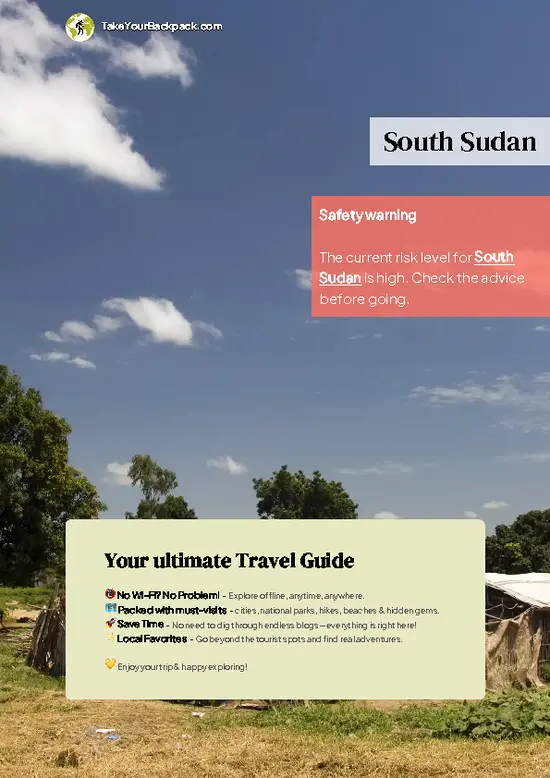
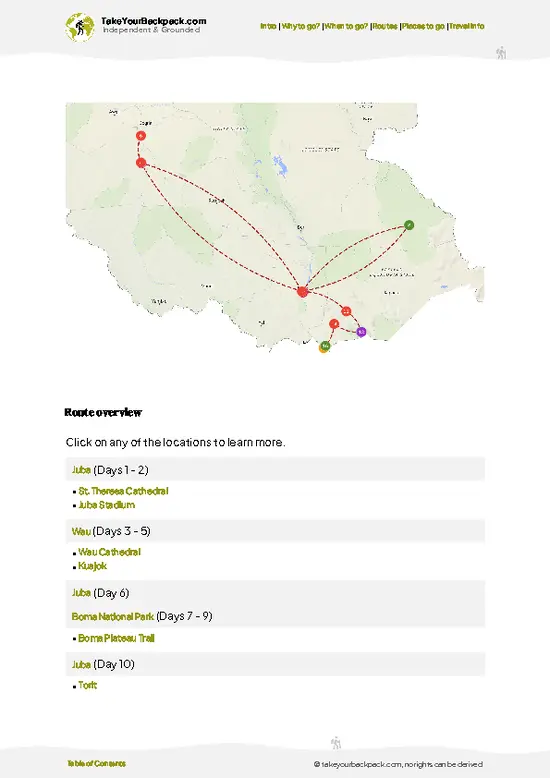
example page 0 from our offline Travel Guide for South Sudan
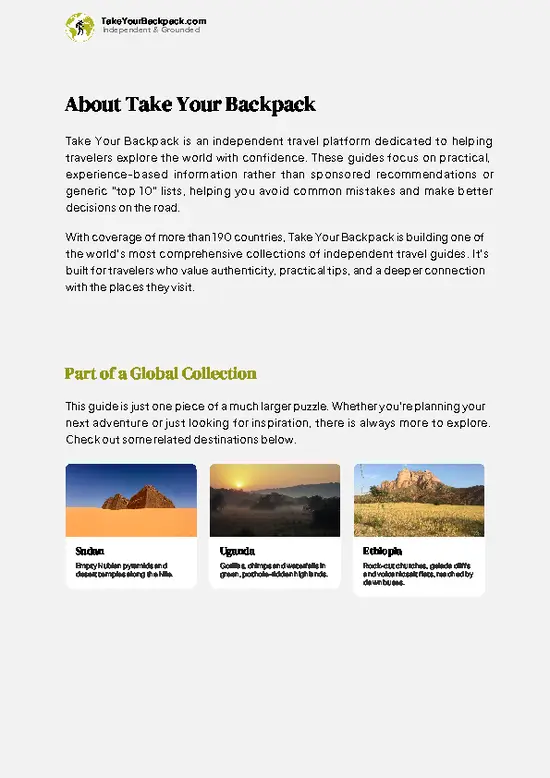
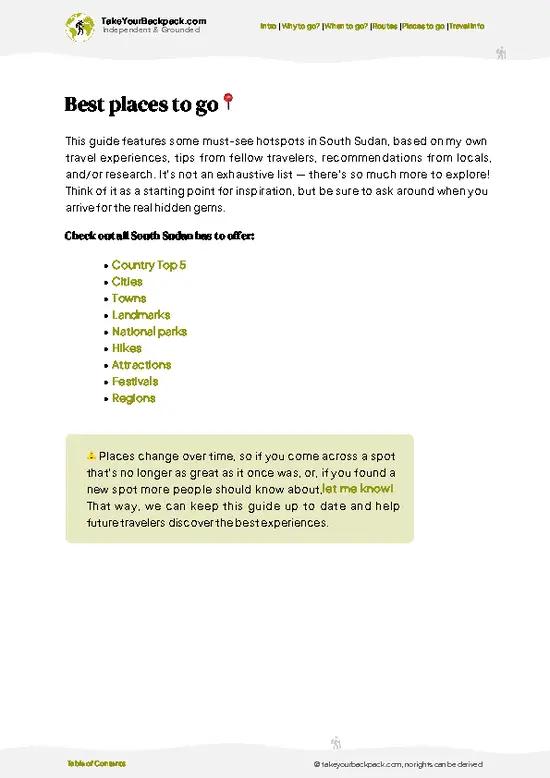
example page 1 from our offline Travel Guide for South Sudan
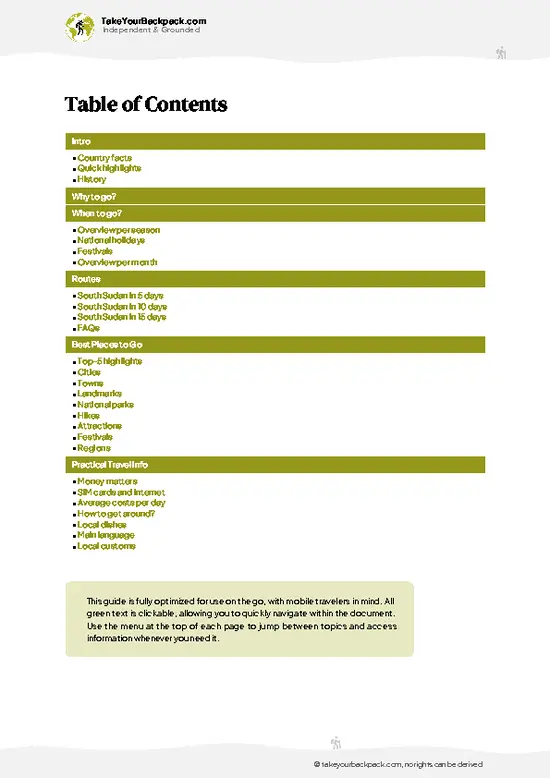
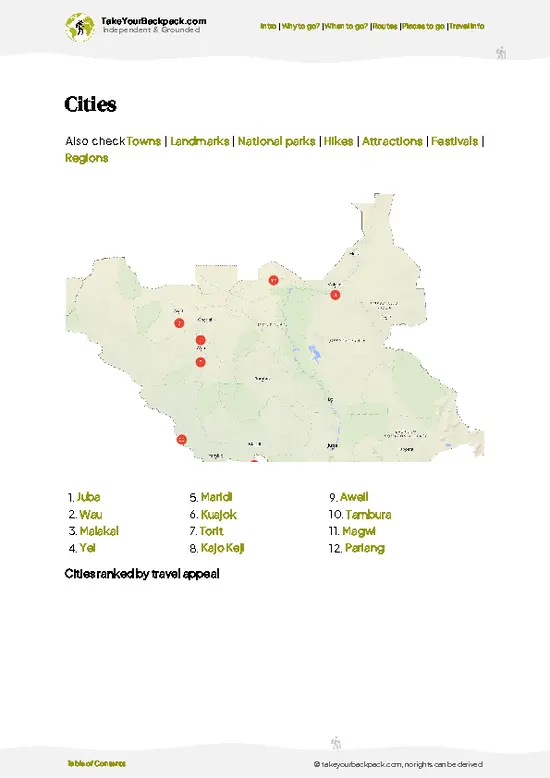
example page 2 from our offline Travel Guide for South Sudan
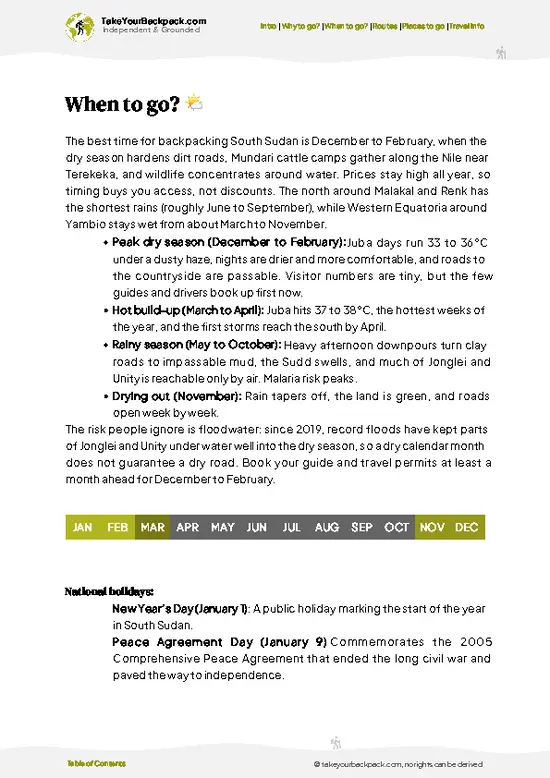
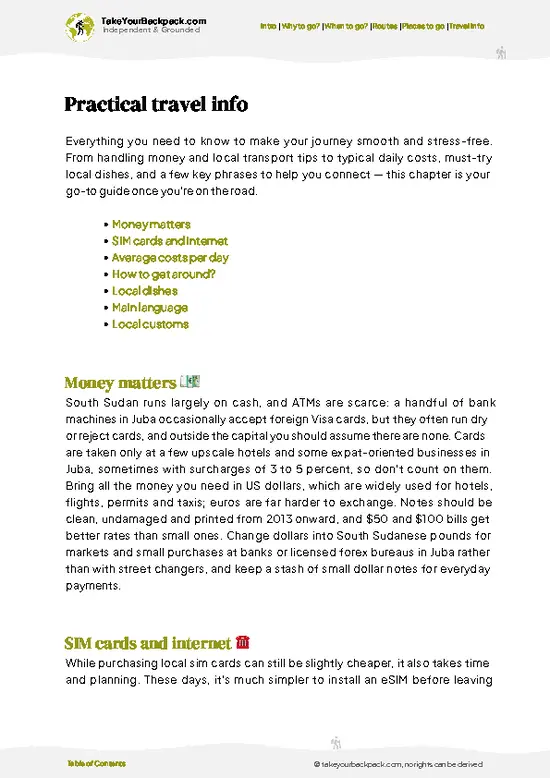
example page 3 from our offline Travel Guide for South Sudan
example page 4 from our offline Travel Guide for South Sudan
example page 5 from our offline Travel Guide for South Sudan
example page 6 from our offline Travel Guide for South Sudan
example page 7 from our offline Travel Guide for South Sudan
Loading the map 🌍
CLICK TO FILTER
cities
towns
landmarks
national parks
hikes
attractions
festivals
regions
SHOW COUNTRY’S BESTSHOW ALL

✨ Why go?
Ranked #3 unique site in South Sudan
What makes this unique site worth visiting

John Garang Mausoleum is the clearest place in Juba to understand how South Sudan came to exist. Garang founded the SPLM/A in 1983, signed the Comprehensive Peace Agreement in January 2005, and died months later, six years before the country’s independence on July 9, 2011. Locals still speak of him with first-name familiarity, and conversations at the site can turn into the best history lesson you will get here. A visit costs little, since the real investment is simply getting to Juba. That matters because Juba is the gateway to the rest of the country, so the mausoleum fits into a day of walking the capital rather than demanding its own trip. Pair it with the Nile waterfront and the stalls of Konyokonyo Market for a full picture of the city. If your dates allow, aim for July 30, when the … read more 👉
John Garang Mausoleum is the clearest place in Juba to understand how South Sudan came to exist. Garang founded the SPLM/A in 1983, signed the Comprehensive Peace Agreement in January 2005, and died months later, six years before the country’s independence on July 9, 2011. Locals still speak of him with first-name familiarity, and conversations at the site can turn into the best history lesson you will get here. A visit costs little, since the real investment is simply getting to Juba. That matters because Juba is the gateway to the rest of the country, so the mausoleum fits into a day of walking the capital rather than demanding its own trip. Pair it with the Nile waterfront and the stalls of Konyokonyo Market for a full picture of the city. If your dates allow, aim for July 30, when the country marks Martyrs’ Day and the grounds fill with ceremony, uniforms, and speeches. On any other day the place is quiet, which suits a thoughtful, unhurried visit.

💡 HighlightsPlaces and moments you shouldn't skip

  1. The Garang Tomb: This is what you came for. The grave of Dr. John Garang de Mabior marks the end of the liberation leader’s story, and standing there makes the 21 days of his vice presidency feel painfully short.
  2. The Mausoleum Grounds: The compound gives you a calm, open space to sit and watch how locals behave. Many arrive in their best clothes and stand in silence, which tells you how much the man still means.
  3. Martyrs’ Day on July 30: The anniversary of Garang’s death is the one date when the site becomes a national gathering. Expect speeches, soldiers in dress uniform, and heavier security.
  4. Nyakuron Cultural Centre: This is Juba’s main venue for music, dance, and theater, and it is a good place to hear the culture behind the politics. Check what is on during your stay.
  5. Konyokonyo Market: The
… read more 👉
  1. The Garang Tomb: This is what you came for. The grave of Dr. John Garang de Mabior marks the end of the liberation leader’s story, and standing there makes the 21 days of his vice presidency feel painfully short.
  2. The Mausoleum Grounds: The compound gives you a calm, open space to sit and watch how locals behave. Many arrive in their best clothes and stand in silence, which tells you how much the man still means.
  3. Martyrs’ Day on July 30: The anniversary of Garang’s death is the one date when the site becomes a national gathering. Expect speeches, soldiers in dress uniform, and heavier security.
  4. Nyakuron Cultural Centre: This is Juba’s main venue for music, dance, and theater, and it is a good place to hear the culture behind the politics. Check what is on during your stay.
  5. Konyokonyo Market: The city’s biggest market is loud, crowded, and full of Nile fish, spices, tailors, and phone repairers. Go with small bills and keep your valuables close.
  6. The Nile at Juba Bridge: The White Nile runs wide and brown here, and the bridge is the classic view of the river that links Juba to the north. Watch for any restrictions on photographing the bridge itself.
  7. Jebel Kujur: This rocky hill rises above the city and gives you a sense of Juba’s layout, with the river and rooftops spread out below. Go with a local guide, as access can depend on conditions on the day.
John Garang Mausoleum should come first, because everything else in Juba makes more sense once you have stood at the grave of the man whose decisions shaped the country.
Spotted a mistake or missing something? Contact us.

🌤️ When to go?Best time to visit John Garang Mausoleum

  • Dry Season (November to March): Roads around Juba are passable, skies are mostly clear, and days run 32 to 38°C (90 to 100°F) with nights near 20 to 23°C (68 to 73°F). Daylight stays close to twelve hours. This is when official events and diplomatic visits cluster, and flights and rooms cost the most.
  • Early Rains (April to June): Afternoon downpours begin, highs ease to 30 to 34°C (86 to 93°F), and the grounds turn green. Dirt lanes near the site get muddy, but visitors are few and rooms soften in price.
  • Peak Wet Season (July to October): Humid, overcast, 27 to 31°C (81 to 88°F), with heavy storms that can flood access roads and delay flights. Prices dip slightly, though few travelers come.
  • Anniversary Period (late July): The anniversary of John Garang’s death on 30 July draws ceremonies and
… read more 👉
  • Dry Season (November to March): Roads around Juba are passable, skies are mostly clear, and days run 32 to 38°C (90 to 100°F) with nights near 20 to 23°C (68 to 73°F). Daylight stays close to twelve hours. This is when official events and diplomatic visits cluster, and flights and rooms cost the most.
  • Early Rains (April to June): Afternoon downpours begin, highs ease to 30 to 34°C (86 to 93°F), and the grounds turn green. Dirt lanes near the site get muddy, but visitors are few and rooms soften in price.
  • Peak Wet Season (July to October): Humid, overcast, 27 to 31°C (81 to 88°F), with heavy storms that can flood access roads and delay flights. Prices dip slightly, though few travelers come.
  • Anniversary Period (late July): The anniversary of John Garang’s death on 30 July draws ceremonies and security closures, so check access beforehand.
Plan your visit for a dry morning, because noon heat on the open grounds is punishing.


source: climatestotravel.comJANJanuary: excellent for travelingFEBFebruary: excellent for travelingMARMarch: fair for travelingAPRApril: fair for travelingMAYMay: fair for travelingJUNJune: below average for travelingJULJuly: below average for travelingAUGAugust: below average for travelingSEPSeptember: below average for travelingOCTOctober: below average for travelingNOVNovember: highly recommended for travelingDECDecember: excellent for traveling
when-to-go

✈️ The backpacker research shortcutSouth Sudan Travel Guide

An offline-friendly backpacking guide with optimized travel routes, ranked highlights, transport advice, and the best areas to stay.
example page 0 from our offline Travel Guide for South Sudan
example page 1 from our offline Travel Guide for South Sudan
example page 2 from our offline Travel Guide for South Sudan
example page 3 from our offline Travel Guide for South Sudan
example page 4 from our offline Travel Guide for South Sudan
example page 5 from our offline Travel Guide for South Sudan
example page 6 from our offline Travel Guide for South Sudan
example page 7 from our offline Travel Guide for South Sudan
The digital guide (242 pages) contains:
✅ 57 highlights, ranked by travel appeal
✅ Optimized 5, 10 & 15-day travel routes
✅ Cities, national parks, landmarks, beaches
✅ How to get around
✅ Offline-friendly for travel without Wi-Fi
👉 Click to see all 30+ guide features

📅 Plan smarter in minutes, not weeks
✅ Month by month travel advice
✅ Festivals & national holidays
✅ Budget expectations

🗺️ Go to the right places, skip the overrated ones
✅ Honest pros & cons of destinations
✅ Top hikes, parks & viewpoints
✅ Lesser-known places most travelers miss
✅ Clear “worth it vs skip it” guidance

🛏️ Travel smoothly without rookie mistakes
✅ Best areas to stay
✅ Transport systems explained simply
✅ Common scams & safety advice
✅ SIM cards, money & practical tips

🌍 Understand the country, not just visit it
✅ Culture & traditions
✅ 52 Essential phrases & customs
✅ Festivals worth planning around
✅ Traveler-friendly historical context
✅ Insights that make places more meaningful

📱 Built for real travel conditions
✅ Fully downloadable PDF
✅ Works completely offline
✅ Optimized for phone use
✅ Useful in remote areas & buses
✅ Everything in one place
Stop searching, start planning
Get instant access to your full guide. 30‑day money-back guarantee.
+ Add another guide for just

By proceeding you agree to our terms.
Sent to your inbox immediately after payment • 100% Secure Checkout
Best Backpacking Travel Advisor 2025 tourism awardBest Backpacking
Travel Advisor
2025
What others say about Take Your Backpack Guides:
⭐⭐⭐⭐⭐
Fantastic, amazing amount of information!
⭐⭐⭐⭐⭐
My goodness this is amazing, it's what I've been looking for hats off too you!
⭐⭐⭐⭐⭐
I think this is absolutely BRILLIANT
⭐⭐⭐⭐
Very complete and informative. It's still missing places, but I gotta to commend you
⭐⭐⭐⭐⭐
This is truly amazing, thank you, can't wait to explore it with my kids!
⭐⭐⭐⭐⭐
Awesome resource, thank you!
⭐⭐⭐⭐⭐
This is amazing! Can't wait to explore the ones I haven't seen
⭐⭐⭐⭐
I love this! Well done, great idea.
⭐⭐⭐⭐⭐
Thanks for taking the time to make this gem!
⭐⭐⭐⭐⭐
This might be the best website I've ever seen.
⭐⭐⭐⭐⭐
Congratulations, and thank you so much for your work; it's incredibly valuable.
⭐⭐⭐⭐
In all seriousness I think you did a great job pointing out the important spots
⭐⭐⭐⭐⭐
10/10 very good
⭐⭐⭐⭐⭐
As someone who's only just starting to visit regularly this is awesome, thank you.
⭐⭐⭐⭐
Thank you very much! I'm going to visit my dad, it's going to be very useful!
⭐⭐⭐⭐⭐
This is really cool! We'll be travelling for the first time and this definitely come in handy.
⭐⭐⭐⭐⭐
You are now our minister of culture, congratulations 👨‍💼
⭐⭐⭐⭐⭐
Just wanted to tell you that this is a pearl! Going to follow your recommendations.
⭐⭐⭐⭐⭐
This is so cool. I'll definitely be using the resource for my travels soon.
⭐⭐⭐⭐⭐
This is very impressive! Good work.
⭐⭐⭐⭐⭐
This is an amazing and informative site. Very well done!

🛏️ Where to stay?Choosing the right base

Central Juba, especially the districts around Hai Jalaba and the Tongping and Juba Town areas, is the most practical base for reaching John Garang Mausoleum, which sits a short ride from the center. These neighborhoods hold the city’s guesthouses, restaurants, money changers and boda-boda stands, so you can get anywhere without a long haul.
Hai Jalaba and the Juba Town side near the Nile suit solo travelers best. Walkable stretches, riverside terraces and a steady flow of aid workers, journalists and overland travelers make it easy to find company and swap current advice on road conditions and … read more 👉
Central Juba, especially the districts around Hai Jalaba and the Tongping and Juba Town areas, is the most practical base for reaching John Garang Mausoleum, which sits a short ride from the center. These neighborhoods hold the city’s guesthouses, restaurants, money changers and boda-boda stands, so you can get anywhere without a long haul.
Hai Jalaba and the Juba Town side near the Nile suit solo travelers best. Walkable stretches, riverside terraces and a steady flow of aid workers, journalists and overland travelers make it easy to find company and swap current advice on road conditions and permits. Expect compounds with walls, guards and generators, which is the norm here and a good sign for safety.
Tongping, close to the airport, works if you arrive late or leave early. It is quieter and more spread out, so you will rely on taxis or motorbikes in the evening.
Book ahead in the dry season, as space is limited and rooms fill with workers. Dorm beds are rare, so private rooms in guesthouses and camp-style compounds are the realistic budget choice. Choose a place with a reliable security gate, and arrange transport after dark through your host rather than flagging a ride.

👛 Costs (as of 22 October 2026)How expensive it really is

A day at John Garang Mausoleum and around Juba comes to roughly US$97 for a budget traveler, driven mostly by lodging and transport. Juba is among the most expensive cities in Africa for its standard of services, and cash in US dollars is widely used alongside the local pound.
CategoryBudget RangeLocal Reality
EntryUS$0 to 5Access is usually free or by small donation, but you may need to register with guards and ask before photographing.
Accommodation (high season)US$50 to 70Simple guesthouse or camp room with a fan or air conditioning. Cheaper rooms are rare. Low season may drop by US$10 to 20.
Local transportUS$5 to 15Boda-boda rides across town cost a few dollars each. Hired car with driver is US$30 to 50 per day if you prefer.
FoodUS$12 to 20Local plates of beans, fish or goat with flatbread
… read more 👉
A day at John Garang Mausoleum and around Juba comes to roughly US$97 for a budget traveler, driven mostly by lodging and transport. Juba is among the most expensive cities in Africa for its standard of services, and cash in US dollars is widely used alongside the local pound.
CategoryBudget RangeLocal Reality
EntryUS$0 to 5Access is usually free or by small donation, but you may need to register with guards and ask before photographing.
Accommodation (high season)US$50 to 70Simple guesthouse or camp room with a fan or air conditioning. Cheaper rooms are rare. Low season may drop by US$10 to 20.
Local transportUS$5 to 15Boda-boda rides across town cost a few dollars each. Hired car with driver is US$30 to 50 per day if you prefer.
FoodUS$12 to 20Local plates of beans, fish or goat with flatbread run US$4 to 8. Restaurant meals for foreigners cost US$10 to 20.
Water and extrasUS$3 to 5Bottled water and a SIM or data top-up add up quickly in the heat.
Total Daily BudgetUS$97Based on high-season lodging and mid-range use of motorbike taxis.
⚠️ Prices can change and everyone travels differently, so take this as a rough guide. Hope it helps you plan your adventure!

FAQCommon questions from travelers

John Garang Mausoleum is the burial site of Dr. John Garang de Mabior, the SPLM/A leader who died in a helicopter crash in 2005, set in Juba near the Nile. The tomb and its memorial grounds are a national landmark and a central stop for those learning about South Sudan’s independence struggle. Entry is typically free or by small donation, and guards may ask you to register.
John Garang Mausoleum takes about 30 to 60 minutes to see, since the grounds are compact and the main interest is the tomb and the memorial setting. Add another hour if you need to arrange permission or wait for a guide. Most travelers fit it into a half-day of sightseeing in Juba, combined with the nearby Nile riverfront.
Reaching John Garang Mausoleum means getting to Juba first, usually by flight into Juba International Airport from Nairobi, Addis Ababa, Entebbe or Kampala, with flights taking roughly 1.5 to 3 hours. From central Juba it is a short boda-boda or taxi ride, usually 10 to 20 minutes and US$3 to 10 depending on bargaining. Overland routes from Uganda via Nimule take around 4 to 6 hours by bus or shared car to Juba.
⚠️ Things can change over time, so always validate details locally before you go.

Other South Sudanese landmarks near John Garang Mausoleum

Explore more nearby:

  • Mount Kinyeti—3,187 m summit, Imatong cloud forest, high moorland, Gilo foothills| 177 km away
  • Jonglei Canal—Unfinished Nile channel, rusting excavator, spoil banks, herder crossings| 367 km away
  • Sudd Wetlands—Shoebill habitat, papyrus channels, floating islands, Dinka and Nuer camps| 404 km away

💡 Not sure where to go next?
Create a personalized itinerary for South Sudan including John Garang Mausoleum and the places that fit your trip.

Generate my itinerary

👉 Discover all landmarks

Or checkout all South Sudan has to offer (think cities, towns, villages, national parks, hikes, beaches, festivals)
Country photo of South Sudan

We 💚 feedbackIs it worth it?

John Garang Mausoleum is easy to treat as a quick photo stop, but the detail worth noticing is how Juba residents behave at the grave. They lower their voices, dress carefully, and often stay longer than you expect. I would follow their lead, ask before pointing a camera, and bring a copy of your travel permit.

✍️ Help improve this page!
The information on this page is based on in-depth research, insights shared by experienced travelers, and feedback from the local travel community in South Sudan. While every effort is made to keep the information accurate and current, conditions can change — so if you spot anything incorrect or outdated, please get in touch.


🙋‍♂️ Give feedback

👋 Meet the founderWho’s Behind Take Your Backpack?

Johan, backpacker and founder of TakeYourBackpackHi, I’m Johan (Netherlands 🇳🇱), the creator of TakeYourBackpack. Over the past 3 decades, I’ve backpacked through 90+ countries across six continents, gaining extensive experience with independent travel, long-term trips, and overland routes.

This site is built on a combination of firsthand travel experience and carefully curated insights from other backpackers. Many guides are based on places I’ve personally visited, while others bring together tips, observations, and practical advice shared by trusted travelers I’ve met along the way.

The goal is to provide realistic, experience-driven guidance — not generic itineraries — so you can explore destinations with better context, clearer expectations, and more confidence.