×

South Sudan🇸🇸 | landmarksJonglei Canalunfinished waterway, Nile tributaries, remote engineering site | things to do and best time to go

Explore LafonExplore Mount Kinyeti

Backpacking in Jonglei Canal
👌 Worth visitingunique site ranked #4
By Johan Kruseman 🇳🇱 | Updated September 3, 2026

Forget the fantasy of the Jonglei Canal as some lost Amazonian waterway, shrouded in mist and Instagrammable mystery. The reality? This is a colossal, half-finished scar slicing through the Sudd wetlands of eastern South Sudan, about as far from a tourist circus as you can get. The canal was meant to tame the Nile, but what you’ll find is a raw, haunting monument to ambition, conflict, and the stubborn pulse of nature. Don’t expect crowds—most days, you’ll have the place to yourself, save for the odd fisherman or herder. Getting here is a logistical gauntlet, and costs can stack up fast, especially if you’re hiring local guides or arranging transport from Bor. But if you want a photo that tells a story—mud, machinery, and the wild, endless green—this is it. The vibe is eerie, almost post-apocalyptic, but the sheer scale and the tangled history make it unforgettable for those who crave the real, unvarnished world.

Discover everything you want to know in the 📖 South Sudan Travel Guide.
Safety warning

The current risk level for South Sudan is high. Check the advice before going.


Get your South Sudan guide
68 ranked highlights, routes & tips, works offline (270 pages)
Loading the map 🌍
CLICK TO FILTER
cities
towns
landmarks
national parks
hikes
attractions
festivals
regions
SHOW COUNTRY’S BESTSHOW ALL

✨ Why go?
Ranked #4 unique site in South Sudan
Reasons people choose to visit here

The Jonglei Canal in South Sudan isn’t your typical backpacker stop. It’s not plastered all over Instagram, and that’s part of its charm. Yes, it’s a crowded place, especially during peak seasons, but the real magic lies in its raw, unfiltered beauty. This canal was an ambitious project meant to connect the Nile and the Sobat River, and while it’s not fully operational, the remnants tell a story of human ambition and struggle.

The cost to visit is minimal, especially when you consider the cultural richness surrounding it. You’ll find local communities that are often overlooked, offering a glimpse into daily life that’s far more rewarding than any staged photo op.

Incorporating Jonglei into your route is easy. It fits naturally into a broader journey through South Sudan, allowing you to … read more 👉
The Jonglei Canal in South Sudan isn’t your typical backpacker stop. It’s not plastered all over Instagram, and that’s part of its charm. Yes, it’s a crowded place, especially during peak seasons, but the real magic lies in its raw, unfiltered beauty. This canal was an ambitious project meant to connect the Nile and the Sobat River, and while it’s not fully operational, the remnants tell a story of human ambition and struggle.

The cost to visit is minimal, especially when you consider the cultural richness surrounding it. You’ll find local communities that are often overlooked, offering a glimpse into daily life that’s far more rewarding than any staged photo op.

Incorporating Jonglei into your route is easy. It fits naturally into a broader journey through South Sudan, allowing you to explore other authentic experiences like the vibrant markets of Juba or the stunning landscapes of the Sudd wetlands.

So, if you’re ready to trade the polished for the profound, make time for Jonglei. It’s a reminder that sometimes, the journey is about the stories you collect along the way.
Want to include Jonglei Canal in your South Sudan route?
Create a personalized South Sudan itinerary that includes Jonglei Canal and the places that fit your trip — based on your travel style, budget, and available time. Get your route in seconds.

Generate my trip

💡 HighlightsDon't-miss highlights and experiences

  • Abandoned earthworks and machinery — Walk along the half-dug channel and you’ll see long, ghostly cuts in the floodplain and rusting equipment left when work stopped in the late 1970s/early 1980s. It’s eerie, obvious evidence of a massive engineering idea that never finished — great for photography and thinking about human ambition vs. nature.
  • The Sudd wetlands themselves — The canal was planned to bypass this enormous swamp, and seeing the Sudd up close explains why: seasonal floods, dense floating vegetation and a maze of channels that make it one of the largest freshwater wetlands on Earth. It’s slow, watery wilderness unlike any river valley you’ve seen.
  • Spectacular birdlife (including shoebills) — The marshes are a magnet for birds: herons, egrets, papyrus warblers and, if you’re
read more 👉
  • Abandoned earthworks and machinery — Walk along the half-dug channel and you’ll see long, ghostly cuts in the floodplain and rusting equipment left when work stopped in the late 1970s/early 1980s. It’s eerie, obvious evidence of a massive engineering idea that never finished — great for photography and thinking about human ambition vs. nature.
  • The Sudd wetlands themselves — The canal was planned to bypass this enormous swamp, and seeing the Sudd up close explains why: seasonal floods, dense floating vegetation and a maze of channels that make it one of the largest freshwater wetlands on Earth. It’s slow, watery wilderness unlike any river valley you’ve seen.
  • Spectacular birdlife (including shoebills) — The marshes are a magnet for birds: herons, egrets, papyrus warblers and, if you’re lucky, the mysterious shoebill. For birders, the concentration and behavior of waterbirds here is the main draw.
  • Hippos, crocodiles and river fauna — Expect to see big Nile life: hippo pods bellowing at dusk, crocodiles sunning on banks and a rich fishery that local people depend on. Wildlife encounters here feel raw and very close to the water.
  • Local riverine culture — Dinka and Nuer communities live, herd and fish around the canal and Sudd. Observing (or carefully visiting with a local guide) cattle camps, seasonal migrations and traditional dugout canoes gives real insight into how people adapt to a watery landscape.
  • The story of a stalled megaproject — Jonglei is as much a historical and political site as a natural one: the canal project tells a compact story about colonial-era planning, Cold War-era development, Sudanese civil war and Nile-water geopolitics. It’s a living case study in development trade-offs.
  • Light, reflections and sunsets — Simple but honest: wide, flat water and papyrus reedbeds make for unforgettable skies. Golden-hour reflections across the marsh are perfect for low-budget landscape photography or just sitting quietly with a thermos.
Spotted a mistake or missing something? Contact us.

🌤️ When to go?Seasonal considerations and timing


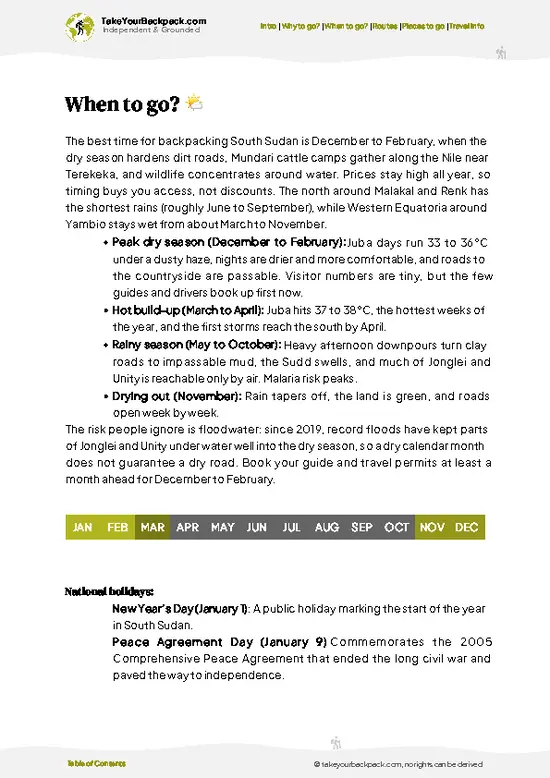
  • Weather: The Jonglei Canal area is brutally hot and humid for much of the year. The dry season, from November to February, offers the most bearable conditions with daytime highs around 30°C (86°F). The wet season, from May to October, brings relentless rains that can turn the terrain into a muddy nightmare, often making travel impossible.

  • Temperature: Expect scorching days in the wet season, often pushing 35°C (95°F) or more, with nights barely cooling below 25°C (77°F). The dry season is your best bet for tolerable heat and less oppressive humidity.

  • Daylight Hours: Daylight is fairly consistent year-round, roughly 12 hours daily. Early mornings and late afternoons are your prime windows for exploration before the heat peaks.

  • Crowds: Don’t expect crowds here—this isn’t a tourist hotspot.
read more 👉

  • Weather: The Jonglei Canal area is brutally hot and humid for much of the year. The dry season, from November to February, offers the most bearable conditions with daytime highs around 30°C (86°F). The wet season, from May to October, brings relentless rains that can turn the terrain into a muddy nightmare, often making travel impossible.

  • Temperature: Expect scorching days in the wet season, often pushing 35°C (95°F) or more, with nights barely cooling below 25°C (77°F). The dry season is your best bet for tolerable heat and less oppressive humidity.

  • Daylight Hours: Daylight is fairly consistent year-round, roughly 12 hours daily. Early mornings and late afternoons are your prime windows for exploration before the heat peaks.

  • Crowds: Don’t expect crowds here—this isn’t a tourist hotspot. The few visitors you’ll encounter mostly come during the dry season when access is feasible.

  • Seasonal Activities: Wildlife viewing peaks during the dry months when animals congregate near water sources. The wet season floods the landscape, transforming it but limiting access and activities.

  • Price Fluctuations: Costs don’t swing wildly since tourism is minimal. However, logistics and transport can become pricier and more complicated during the wet season due to poor road conditions.


Pro-tip: Aim for late dry season—February to early March—when the heat is manageable, wildlife is active, and the landscape hasn’t yet been battered by rains.


source: climatestotravel.comJANJanuary: highly recommended for travelingFEBFebruary: excellent for travelingMARMarch: highly recommended for travelingAPRApril: fair for travelingMAYMay: below average for travelingJUNJune: below average for travelingJULJuly: below average for travelingAUGAugust: below average for travelingSEPSeptember: below average for travelingOCTOctober: below average for travelingNOVNovember: good for travelingDECDecember: highly recommended for traveling
when-to-go

✈️ The backpacker research shortcutSouth Sudan Travel Guide

An offline-friendly backpacking guide with optimized travel routes, ranked highlights, transport advice, and the best areas to stay.
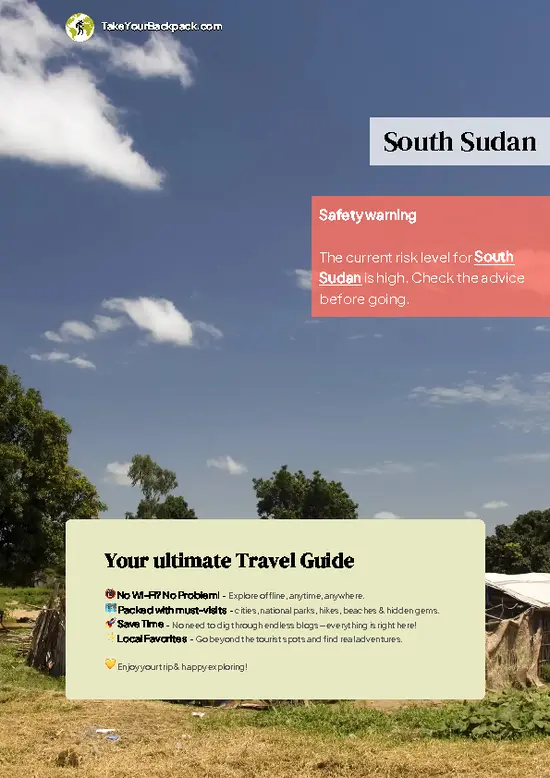
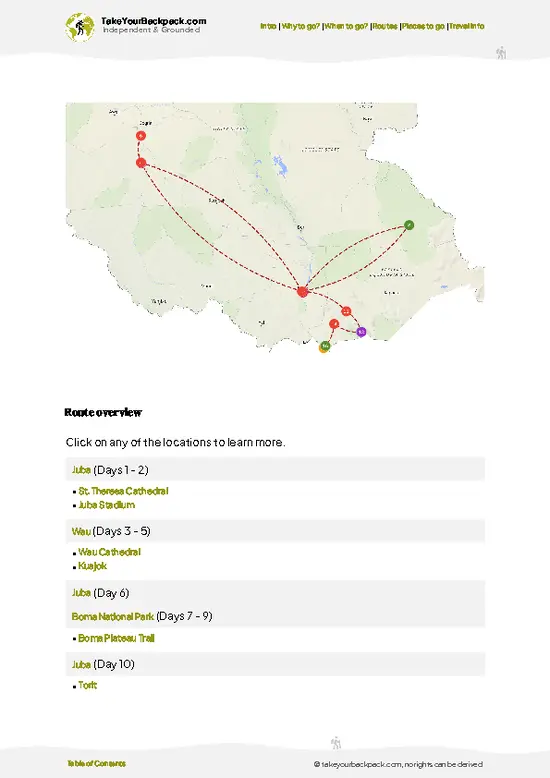
example page 0 from our offline Travel Guide for South Sudan
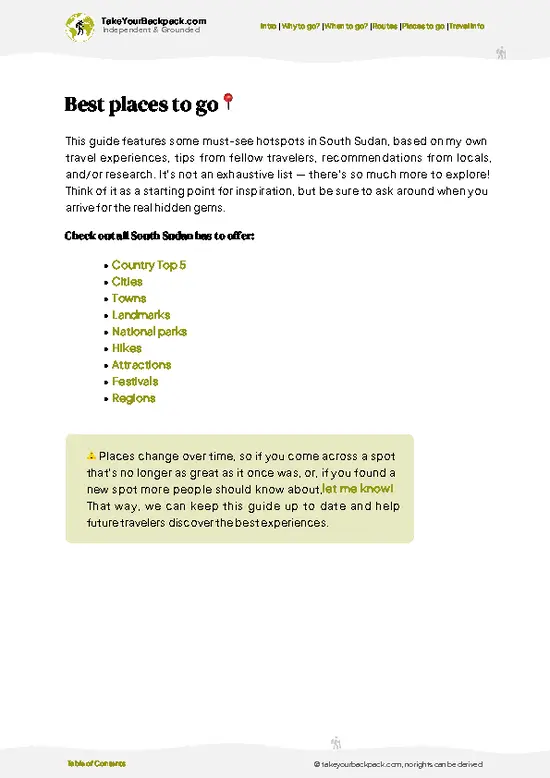
example page 1 from our offline Travel Guide for South Sudan
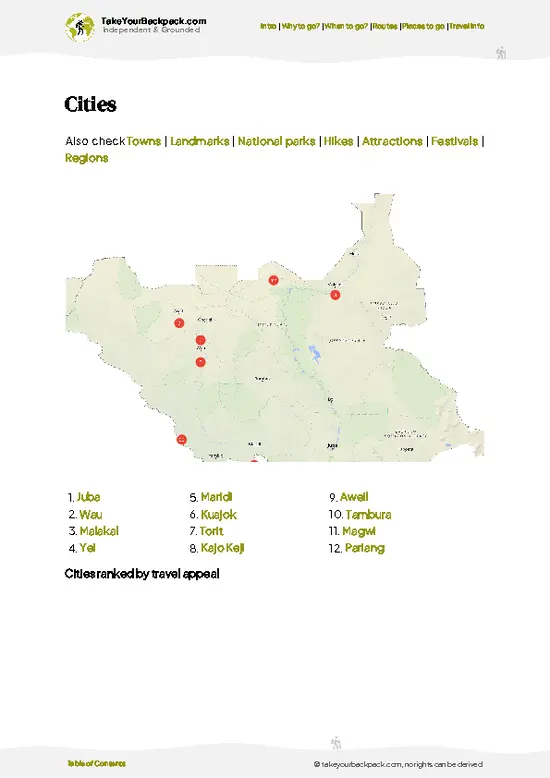
example page 2 from our offline Travel Guide for South Sudan
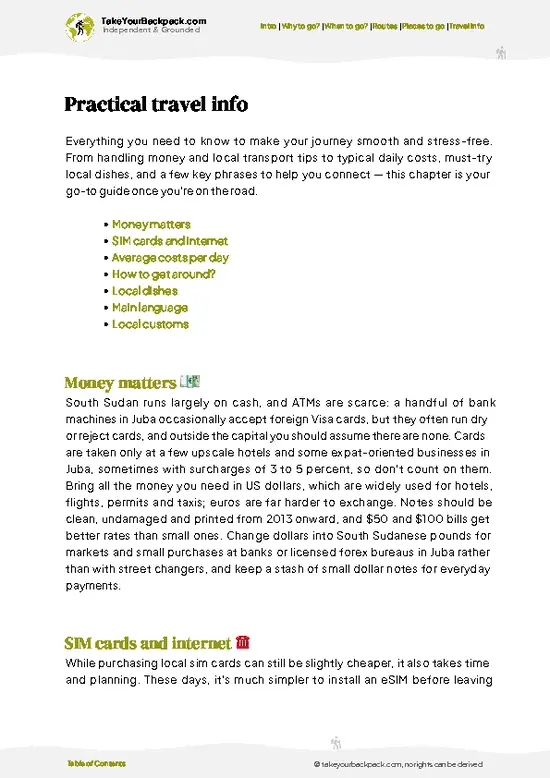
example page 3 from our offline Travel Guide for South Sudan
example page 4 from our offline Travel Guide for South Sudan
example page 5 from our offline Travel Guide for South Sudan
example page 6 from our offline Travel Guide for South Sudan
example page 7 from our offline Travel Guide for South Sudan
The digital guide (270 pages) contains:
68 highlights, ranked by travel appeal
Optimized 5, 10 & 15-day travel routes
Cities, national parks, landmarks, beaches
How to get around
Offline-friendly for travel without Wi-Fi
👉 Click to see all 30+ guide features

📅 Plan smarter in minutes, not weeks
Month by month travel advice
Festivals & national holidays
Budget expectations

🗺️ Go to the right places, skip the overrated ones
Honest pros & cons of destinations
Top hikes, parks & viewpoints
Lesser-known places most travelers miss
Clear “worth it vs skip it” guidance

🛏️ Travel smoothly without rookie mistakes
Best areas to stay
Transport systems explained simply
Common scams & safety advice
SIM cards, money & practical tips

🌍 Understand the country, not just visit it
Culture & traditions
52 Essential phrases & customs
Festivals worth planning around
Traveler-friendly historical context
Insights that make places more meaningful

📱 Built for real travel conditions
Fully downloadable PDF
Works completely offline
Optimized for phone use
Useful in remote areas & buses
Everything in one place
Save weeks of stressful planning
Get instant access to your full guide. 30‑day money-back guarantee.
+ Add another guide for just US$7.80

By proceeding you agree to our terms.
Sent to your inbox immediately after payment • 100% Secure Checkout
Best Backpacking Travel Advisor 2025 tourism awardBest Backpacking
Travel Advisor
2025
What others say about Take Your Backpack Guides:
⭐⭐⭐⭐⭐
Fantastic, amazing amount of information!
⭐⭐⭐⭐⭐
My goodness this is amazing, it's what I've been looking for hats off too you!
⭐⭐⭐⭐⭐
I think this is absolutely BRILLIANT
⭐⭐⭐⭐
Very complete and informative. It's still missing places, but I gotta to commend you
⭐⭐⭐⭐⭐
This is truly amazing, thank you, can't wait to explore it with my kids!
⭐⭐⭐⭐⭐
Awesome resource, thank you!
⭐⭐⭐⭐⭐
This is amazing! Can't wait to explore the ones I haven't seen
⭐⭐⭐⭐
I love this! Well done, great idea.
⭐⭐⭐⭐⭐
Thanks for taking the time to make this gem!
⭐⭐⭐⭐⭐
This might be the best website I've ever seen.
⭐⭐⭐⭐⭐
Congratulations, and thank you so much for your work; it's incredibly valuable.
⭐⭐⭐⭐
In all seriousness I think you did a great job pointing out the important spots
⭐⭐⭐⭐⭐
10/10 very good
⭐⭐⭐⭐⭐
As someone who's only just starting to visit regularly this is awesome, thank you.
⭐⭐⭐⭐
Thank you very much! I'm going to visit my dad, it's going to be very useful!
⭐⭐⭐⭐⭐
This is really cool! We'll be travelling for the first time and this definitely come in handy.
⭐⭐⭐⭐⭐
You are now our minister of culture, congratulations 👨‍💼
⭐⭐⭐⭐⭐
Just wanted to tell you that this is a pearl! Going to follow your recommendations.
⭐⭐⭐⭐⭐
This is so cool. I'll definitely be using the resource for my travels soon.
⭐⭐⭐⭐⭐
This is very impressive! Good work.
⭐⭐⭐⭐⭐
This is an amazing and informative site. Very well done!

🛏️ Where to stay?How to pick the right area

Staying near the Jonglei Canal in South Sudan isn’t about luxury; it’s about immersing yourself in a raw, unfiltered experience. The area around Bor is your best bet. It’s a hub for travelers looking to connect with locals and other backpackers.

Expect a mix of basic guesthouses and communal spaces. These spots are often bustling with stories and laughter, making it easy to strike up conversations. Safety is a priority here, especially in the more frequented areas. Stick to places where locals gather; they’re usually the most secure and welcoming.

Another option is to venture towards the canal … read more 👉
Staying near the Jonglei Canal in South Sudan isn’t about luxury; it’s about immersing yourself in a raw, unfiltered experience. The area around Bor is your best bet. It’s a hub for travelers looking to connect with locals and other backpackers.

Expect a mix of basic guesthouses and communal spaces. These spots are often bustling with stories and laughter, making it easy to strike up conversations. Safety is a priority here, especially in the more frequented areas. Stick to places where locals gather; they’re usually the most secure and welcoming.

Another option is to venture towards the canal itself. While accommodations are sparse, you might find a few campsites or makeshift lodges run by locals. This is where the real magic happens. You’ll witness the daily life of the communities that rely on the canal, and you’ll get a front-row seat to the stunning landscapes that surround it.

Don’t expect five-star amenities. Instead, embrace the simplicity. The camaraderie among fellow travelers and the authenticity of the experience will make every moment worthwhile. This is where you’ll find the heart of South Sudan.

👛 Costs (as of 3 September 2026)How expensive it really is

Visiting the Jonglei Canal in South Sudan isn’t just about the destination; it’s about navigating the realities of travel in a complex region. Here’s what you can expect in terms of costs:
  • Transportation: Expect to pay between $100 and $300 for flights into South Sudan, depending on your departure point. Once in the country, local transport options like taxis or hired vehicles can range from $50 to $150 per day. Roads can be rough, so factor in extra time and potential delays.
  • Accommodation: Lodging options vary widely. Budget travelers might find dormitory beds for around $20 per night, while mid-range hotels can cost between $50 and $100. Luxury accommodations, though limited, can go up to $200 or more. Always check for security and amenities.
  • Food: Meals can be quite affordable. Street food
read more 👉
Visiting the Jonglei Canal in South Sudan isn’t just about the destination; it’s about navigating the realities of travel in a complex region. Here’s what you can expect in terms of costs:
  • Transportation: Expect to pay between $100 and $300 for flights into South Sudan, depending on your departure point. Once in the country, local transport options like taxis or hired vehicles can range from $50 to $150 per day. Roads can be rough, so factor in extra time and potential delays.
  • Accommodation: Lodging options vary widely. Budget travelers might find dormitory beds for around $20 per night, while mid-range hotels can cost between $50 and $100. Luxury accommodations, though limited, can go up to $200 or more. Always check for security and amenities.
  • Food: Meals can be quite affordable. Street food might cost you around $2 to $5, while dining in a local restaurant can range from $10 to $30. If you’re in a hotel, expect to pay more, around $15 to $50 for a meal, especially if it’s international cuisine.
  • Guided Tours: If you want to explore the canal and surrounding areas, hiring a local guide is essential. Prices typically range from $50 to $150 for a day, depending on the length and complexity of the tour. This investment can enhance your experience significantly.
  • Permits and Fees: Depending on your itinerary, you may need permits for certain areas. These can cost anywhere from $10 to $100. Always check in advance to avoid surprises.

The Jonglei Canal is a unique experience, but it comes with its own set of challenges and costs. Be prepared, stay informed, and you’ll find the real magic in the journey.
⚠️ Prices can change and everyone travels differently, so take this as a rough guide. Hope it helps you plan your adventure!

FAQFrequently asked questions about Jonglei Canal

Jonglei Canal is an unfinished canal project in South Sudan intended to divert water from the Sudd wetlands to increase water flow in the White Nile. Construction began in 1978 but was halted due to civil conflict, leaving it incomplete and largely abandoned.
Visiting Jonglei Canal typically requires at least 2 to 3 days, considering travel time and the remote location. The area is difficult to access and requires careful planning for transport and accommodation.
To get to Jonglei Canal, you generally need to travel to Juba, South Sudan's capital, then arrange for a 4x4 vehicle or local transport to the canal site, which is about 200 kilometers northeast of Juba. Due to poor infrastructure and security concerns, hiring a local guide or joining an organized tour is advisable.
⚠️ Things can change over time, so always validate details locally before you go.

Other South Sudanese landmarks near Jonglei Canal

Explore more nearby:

  • Sudd Wetlands—floating vegetation, seasonal floodplain, bird migration| 82 km away
  • Tomb of John Garang—national memorial, political history, Juba landmark| 367 km away
  • Mount Kinyeti—Imatong Mountains, highest peak, montane forest| 495 km away

💡 Not sure where to go next?
Create a personalized itinerary for South Sudan including Jonglei Canal and the places that fit your trip.

Generate my itinerary

👉 Discover all landmarks

Or checkout all South Sudan has to offer (think cities, towns, villages, national parks, hikes, beaches, festivals)
Country photo of South Sudan

We 💚 feedbackSumming up the experience

The Jonglei Canal isn’t for the faint-hearted. Expect crowds and a hefty price tag for the experience. But here’s the kicker: the real magic lies in the raw beauty of the landscape and the warmth of the local communities. You’ll find moments that Instagram can’t capture—like sharing a laugh with fishermen or watching the sunset paint the water gold. Just be prepared for the unexpected; things can change quickly here. Embrace it, and you’ll leave with stories that matter.

✍️ Help improve this page!
The information on this page is based on in-depth research, insights shared by experienced travelers, and feedback from the local travel community in South Sudan. While every effort is made to keep the information accurate and current, conditions can change — so if you spot anything incorrect or outdated, please get in touch.


🙋‍♂️ Give feedback

👋 Meet the founderWho’s Behind Take Your Backpack?

Johan, backpacker and founder of TakeYourBackpackHi, I’m Johan (Netherlands 🇳🇱), the creator of TakeYourBackpack. Over the past decade, I’ve backpacked through 80+ countries across six continents, gaining extensive experience with independent travel, long-term trips, and overland routes.

This site is built on a combination of firsthand travel experience and carefully curated insights from other backpackers. Many guides are based on places I’ve personally visited, while others bring together tips, observations, and practical advice shared by trusted travelers I’ve met along the way.

The goal is to provide realistic, experience-driven guidance — not generic itineraries — so you can explore destinations with better context, clearer expectations, and more confidence.

Get full country guide •
Instant download • 68 highlights • Full Offline guide