×

South Sudan🇸🇸 | best landmarksDiscover the 4 Best landmarks Across South Sudan

In South Sudan, unique sites are defined by their rich cultural, historical, and natural significance. From ancient archaeological wonders to vibrant local markets, each location offers a distinct experience that varies dramatically across the country. For backpackers, understanding these differences is crucial; the scale and accessibility of sites can shape your journey. For instance, the bustling capital, Juba, contrasts sharply with the remote beauty of the Sudd wetlands. Seasonal factors also play a role—some sites are best visited during the dry season for easier travel. Choosing wisely impacts your vibe, budget, and cultural immersion, ensuring your independent travel experience is both rewarding and safe.

By Johan Kruseman 🇳🇱 | Updated September 4, 2026
Explore the best national parks in South Sudan

Why go?Key Factors That Shape the Experience

Unique sites in South Sudan matter because they encapsulate a rich tapestry of cultural and historical significance that sets the country apart from its neighbors. The Nile River, for instance, is not just a waterway; it’s a lifeblood that has shaped civilizations for millennia. The cultural diversity here, with over 60 ethnic groups, offers travelers a chance to engage with traditions that are often overlooked in more commercialized destinations.

However, South Sudan is not without its challenges. Accessibility can be a significant barrier. Many sites are remote, requiring careful planning and sometimes arduous travel. This trade-off means that while you may spend more time getting to a location, the reward is a deeper, more immersive experience that few have the opportunity to enjoy.

read more 👉
Unique sites in South Sudan matter because they encapsulate a rich tapestry of cultural and historical significance that sets the country apart from its neighbors. The Nile River, for instance, is not just a waterway; it’s a lifeblood that has shaped civilizations for millennia. The cultural diversity here, with over 60 ethnic groups, offers travelers a chance to engage with traditions that are often overlooked in more commercialized destinations.

However, South Sudan is not without its challenges. Accessibility can be a significant barrier. Many sites are remote, requiring careful planning and sometimes arduous travel. This trade-off means that while you may spend more time getting to a location, the reward is a deeper, more immersive experience that few have the opportunity to enjoy.

The climate also plays a role; the rainy season can limit access to certain areas, making timing crucial for those looking to explore. Infrastructural limitations mean that travelers should be prepared for basic accommodations and services, which can enhance the authenticity of the experience but may not suit everyone’s comfort level.

Ultimately, the unique sites in South Sudan offer a chance to connect with a land rich in heritage and natural beauty, but they demand a willingness to embrace the complexities of travel in a developing nation.
Behind the Scenes of Selection
The list of best unique sites in South Sudan is created based on history or culture, wow factor, atmosphere, quirks, and memorability. If you feel a unique site is missing in this list, please let us know.

When to go?Seasonal Guide to Visiting

Visibility and Preservation Conditions

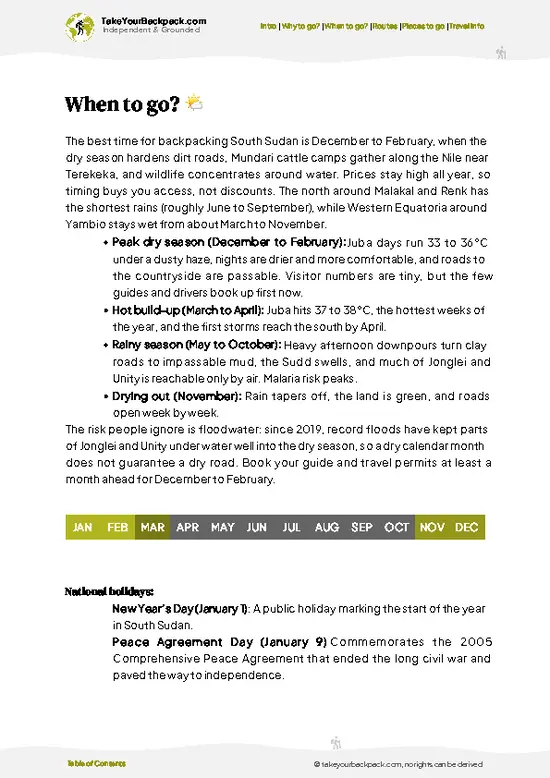
South Sudan’s unique sites are best appreciated during the dry season, typically from November to April. This period offers clearer skies and more stable weather, enhancing visibility for exploration. The wet season, from May to October, brings heavy rains that can obscure access and visibility, making some sites challenging to reach.

Optimal Months to Visit

The months of December to February are particularly favorable. Temperatures are cooler, and the landscape is vibrant after the rains, providing a striking backdrop for exploration. This is when wildlife is also more active, adding to the experience.

Shoulder Seasons and Trade-offs

Visiting during the shoulder months of late October and early November can yield lower costs and fewer crowds. … read more 👉

Visibility and Preservation Conditions

South Sudan’s unique sites are best appreciated during the dry season, typically from November to April. This period offers clearer skies and more stable weather, enhancing visibility for exploration. The wet season, from May to October, brings heavy rains that can obscure access and visibility, making some sites challenging to reach.

Optimal Months to Visit

The months of December to February are particularly favorable. Temperatures are cooler, and the landscape is vibrant after the rains, providing a striking backdrop for exploration. This is when wildlife is also more active, adding to the experience.

Shoulder Seasons and Trade-offs

Visiting during the shoulder months of late October and early November can yield lower costs and fewer crowds. However, travelers should be prepared for unpredictable weather, as the transition from wet to dry can still bring sporadic rains.

Peak Periods and Constraints

Peak travel times coincide with the dry season, leading to higher costs and more tourists. While this may enhance the social experience, it can detract from the solitude that many seek in South Sudan’s unique sites. Planning around these peak periods can preserve both budget and energy for the moments that truly matter.

unique site hoppingOptimizing Your Multi-Stop Itinerary

General Routing Logic

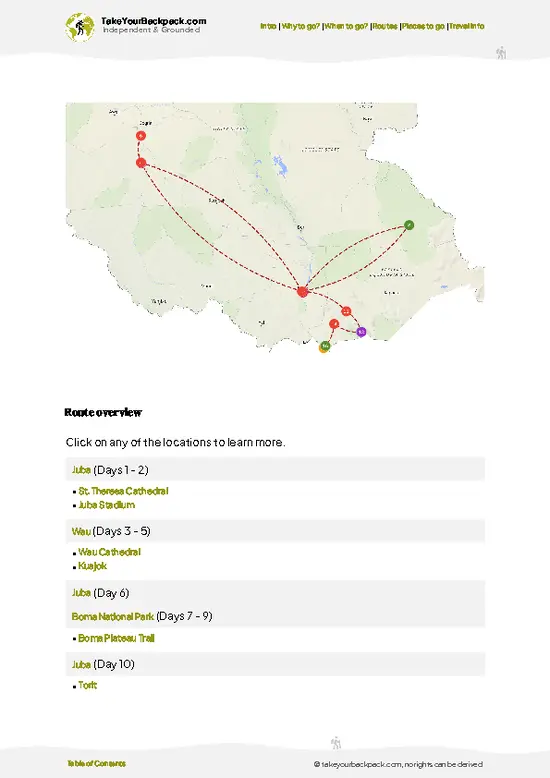
Traveling through South Sudan requires a strategic approach. Focus on regional clusters to minimize travel time and maximize experiences. Start in Juba, the capital, where you can access key sites like the South Sudan National Museum. From there, head north to Bor and then to Malakal. This route allows for a natural progression through the country’s cultural and historical heart.

Typical Time Needed

Plan for at least half a day at each major site. This pacing allows for exploration without feeling rushed. If visiting multiple sites in one day, be prepared for long travel times between them. Flexibility is crucial; road conditions can vary dramatically.

Common Planning Mistakes

Many travelers underestimate the distances and overestimate the ease of travel. Avoid cramming … read more 👉

General Routing Logic

Traveling through South Sudan requires a strategic approach. Focus on regional clusters to minimize travel time and maximize experiences. Start in Juba, the capital, where you can access key sites like the South Sudan National Museum. From there, head north to Bor and then to Malakal. This route allows for a natural progression through the country’s cultural and historical heart.

Typical Time Needed

Plan for at least half a day at each major site. This pacing allows for exploration without feeling rushed. If visiting multiple sites in one day, be prepared for long travel times between them. Flexibility is crucial; road conditions can vary dramatically.

Common Planning Mistakes

Many travelers underestimate the distances and overestimate the ease of travel. Avoid cramming too many stops into a short timeframe. This leads to fatigue and missed opportunities for deeper engagement with local cultures.

Trade-offs and Constraints

Consider the balance between speed and depth. Rushing through sites may save time but sacrifices meaningful experiences. Budget constraints can also dictate comfort levels; opting for local accommodations can enhance cultural immersion but may lack certain amenities. Prioritize what matters most to ensure a rewarding journey.

The ListThe Best landmarks of South Sudan

1 Sudd Wetlands

floating vegetation, seasonal floodplain, bird migration

Navigate a vast, ever-changing wetland where shifting islands and abundant wildlife create a landscape that challenges orientation and rewards patience.

2 Mount Kinyeti

Imatong Mountains, highest peak, montane forest

Ascend through dense forest and open ridges to reach South Sudan’s highest summit, where rare plants and sweeping views reward the effort.

3 Tomb of John Garang

national memorial, political history, Juba landmark

Reflect at a site central to South Sudan’s identity, where the legacy of a pivotal leader shapes the atmosphere and draws visitors year-round.

4 Jonglei Canal

unfinished waterway, Nile tributaries, remote engineering site

Trace the path of an ambitious canal project through isolated floodplains, where shifting water levels reveal the scale of human intervention.

Loading the map 🌍

Expert viewInsights from Locals and Experts

Significance
South Sudan is a canvas of raw beauty and cultural depth. The unique sites here are not just places to tick off a list; they’re experiences that connect you to the heart of a nation still finding its footing. You’ll encounter ancient traditions, vibrant communities, and landscapes that tell stories of resilience. Prioritize sites that resonate with your interests—be it wildlife, culture, or history. But remember, the journey is as important as the destination.

Access Constraints
Getting around South Sudan isn’t a walk in the park. Infrastructure is still developing, and many areas are remote. Expect travel times to be longer than anticipated. Roads can be rough, and flights may be limited. This means you’ll want to plan your itinerary carefully. Aim for three to five unique … read more 👉
Significance
South Sudan is a canvas of raw beauty and cultural depth. The unique sites here are not just places to tick off a list; they’re experiences that connect you to the heart of a nation still finding its footing. You’ll encounter ancient traditions, vibrant communities, and landscapes that tell stories of resilience. Prioritize sites that resonate with your interests—be it wildlife, culture, or history. But remember, the journey is as important as the destination.

Access Constraints
Getting around South Sudan isn’t a walk in the park. Infrastructure is still developing, and many areas are remote. Expect travel times to be longer than anticipated. Roads can be rough, and flights may be limited. This means you’ll want to plan your itinerary carefully. Aim for three to five unique sites, depending on your stamina and how much time you have. Each site deserves your attention, so don’t overstuff your schedule.

Crowd Patterns
Tourism in South Sudan is still in its infancy, which means you won’t be battling hordes of tourists. However, this also means that services can be inconsistent. Some sites may have limited facilities, so be prepared. Visit during the dry season for better access, but keep in mind that even then, some areas may be less accessible. Early mornings are your best bet for fewer crowds and cooler temperatures, especially if you’re planning to explore outdoor sites.

Combining Sites
When planning your visit, think strategically about how to combine sites. Some locations are closer together, while others require significant travel time. For instance, if you’re drawn to wildlife, consider sites that offer both safari experiences and cultural interactions. This way, you maximize your time and budget. Factor in rest days; you’ll need them to recharge after long travel days.

Safety & Cultural Considerations
Safety is paramount. While many areas are safe for travelers, always stay informed about local conditions. Engage with local guides who can provide insights and ensure you’re respecting cultural norms. South Sudan is rich in traditions, and understanding these will enhance your experience. Dress modestly and be mindful of local customs, especially in rural areas.

Time, Budget, and Effort
Expect to invest a fair amount of time and energy. A week is a good starting point, but two weeks will allow you to dive deeper. Budget for flexibility; unexpected costs can arise, especially for transportation. Local guides can be invaluable, but they come at a price. Allocate funds for both planned activities and spontaneous opportunities that may arise.

Final Thoughts
The beauty of South Sudan lies in its unpredictability. Embrace the journey, and don’t rush through it. Each unique site has its own story, and the connections you make will be what you remember most. Prioritize quality over quantity, and you’ll leave with a richer understanding of this remarkable country.

✈️ The backpacker research shortcutSouth Sudan Travel Guide

An offline-friendly backpacking guide with optimized travel routes, ranked highlights, transport advice, and the best areas to stay.
example page 0 from our offline Travel Guide for South Sudan
example page 1 from our offline Travel Guide for South Sudan
example page 2 from our offline Travel Guide for South Sudan
example page 3 from our offline Travel Guide for South Sudan
example page 4 from our offline Travel Guide for South Sudan
example page 5 from our offline Travel Guide for South Sudan
example page 6 from our offline Travel Guide for South Sudan
example page 7 from our offline Travel Guide for South Sudan
The digital guide (270 pages) contains:
68 highlights, ranked by travel appeal
Optimized 5, 10 & 15-day travel routes
Cities, national parks, landmarks, beaches
How to get around
Offline-friendly for travel without Wi-Fi
👉 Click to see all 30+ guide features

📅 Plan smarter in minutes, not weeks
Month by month travel advice
Festivals & national holidays
Budget expectations

🗺️ Go to the right places, skip the overrated ones
Honest pros & cons of destinations
Top hikes, parks & viewpoints
Lesser-known places most travelers miss
Clear “worth it vs skip it” guidance

🛏️ Travel smoothly without rookie mistakes
Best areas to stay
Transport systems explained simply
Common scams & safety advice
SIM cards, money & practical tips

🌍 Understand the country, not just visit it
Culture & traditions
52 Essential phrases & customs
Festivals worth planning around
Traveler-friendly historical context
Insights that make places more meaningful

📱 Built for real travel conditions
Fully downloadable PDF
Works completely offline
Optimized for phone use
Useful in remote areas & buses
Everything in one place
Save weeks of stressful planning
Get instant access to your full guide. 30‑day money-back guarantee.
+ Add another guide for just US$7.80

By proceeding you agree to our terms.
Sent to your inbox immediately after payment • 100% Secure Checkout
Best Backpacking Travel Advisor 2025 tourism awardBest Backpacking
Travel Advisor
2025
What others say about Take Your Backpack Guides:
⭐⭐⭐⭐⭐
Fantastic, amazing amount of information!
⭐⭐⭐⭐⭐
My goodness this is amazing, it's what I've been looking for hats off too you!
⭐⭐⭐⭐⭐
I think this is absolutely BRILLIANT
⭐⭐⭐⭐
Very complete and informative. It's still missing places, but I gotta to commend you
⭐⭐⭐⭐⭐
This is truly amazing, thank you, can't wait to explore it with my kids!
⭐⭐⭐⭐⭐
Awesome resource, thank you!
⭐⭐⭐⭐⭐
This is amazing! Can't wait to explore the ones I haven't seen
⭐⭐⭐⭐
I love this! Well done, great idea.
⭐⭐⭐⭐⭐
Thanks for taking the time to make this gem!
⭐⭐⭐⭐⭐
This might be the best website I've ever seen.
⭐⭐⭐⭐⭐
Congratulations, and thank you so much for your work; it's incredibly valuable.
⭐⭐⭐⭐
In all seriousness I think you did a great job pointing out the important spots
⭐⭐⭐⭐⭐
10/10 very good
⭐⭐⭐⭐⭐
As someone who's only just starting to visit regularly this is awesome, thank you.
⭐⭐⭐⭐
Thank you very much! I'm going to visit my dad, it's going to be very useful!
⭐⭐⭐⭐⭐
This is really cool! We'll be travelling for the first time and this definitely come in handy.
⭐⭐⭐⭐⭐
You are now our minister of culture, congratulations 👨‍💼
⭐⭐⭐⭐⭐
Just wanted to tell you that this is a pearl! Going to follow your recommendations.
⭐⭐⭐⭐⭐
This is so cool. I'll definitely be using the resource for my travels soon.
⭐⭐⭐⭐⭐
This is very impressive! Good work.
⭐⭐⭐⭐⭐
This is an amazing and informative site. Very well done!

🛏️ Where to stay?Best Places to Stay in South Sudan

There are very few formal hostels in South Sudan; budget options are mostly basic guesthouses and small hotels concentrated in Juba with sporadic lodgings in regional centers like Malakal, Wau and Bentiu.
In Juba the most choices cluster in the Central Business District / Kator (closest to restaurants, government offices and NGO hubs but busier and subject to checkpoints), Gudele (near the airport and NGO compounds, quieter and often relatively secure but with fewer amenities) and the riverfront/Jebel areas (more scenic and quiet evenings but limited budget availability).
Outside the capital expect very basic facilities, intermittent water and power, strict security procedures and limited … read more 👉
There are very few formal hostels in South Sudan; budget options are mostly basic guesthouses and small hotels concentrated in Juba with sporadic lodgings in regional centers like Malakal, Wau and Bentiu.
In Juba the most choices cluster in the Central Business District / Kator (closest to restaurants, government offices and NGO hubs but busier and subject to checkpoints), Gudele (near the airport and NGO compounds, quieter and often relatively secure but with fewer amenities) and the riverfront/Jebel areas (more scenic and quiet evenings but limited budget availability).
Outside the capital expect very basic facilities, intermittent water and power, strict security procedures and limited nightlife, so arrive in daylight, carry cash, pack basic bedding and insect protection, and plan to use guesthouses that cater to foreigners rather than relying on backpacker-style hostels.

If you enjoy meeting fellow travelers, consider choosing hostels with high ratings for atmosphere. On the other hand, if you prefer having your own space, a hotel might be a better option.

South SudanExplore South Sudan

👋 Meet the founderWho’s Behind Take Your Backpack?

Johan, backpacker and founder of TakeYourBackpackHi, I’m Johan (Netherlands 🇳🇱), the creator of TakeYourBackpack. Over the past decade, I’ve backpacked through 80+ countries across six continents, gaining extensive experience with independent travel, long-term trips, and overland routes.

This site is built on a combination of firsthand travel experience and carefully curated insights from other backpackers. Many guides are based on places I’ve personally visited, while others bring together tips, observations, and practical advice shared by trusted travelers I’ve met along the way.

The goal is to provide realistic, experience-driven guidance — not generic itineraries — so you can explore destinations with better context, clearer expectations, and more confidence.

Get full country guide •
Instant download • 68 highlights • Full Offline guide