×

South Sudan🇸🇸 | landmarksMount KinyetiImatong Mountains, highest peak, montane forest | things to do and best time to go

Explore Jonglei CanalExplore Sudd Wetlands

Backpacking in Mount Kinyeti
🌟 Highlightunique site ranked #2
By Johan Kruseman 🇳🇱 | Updated September 3, 2026

Here’s what nobody tells you until you’re sweating on the trail: Mount Kinyeti’s biggest gift is its solitude. You don’t have to elbow through selfie sticks or queue for a sunrise shot—because you’ll probably be the only foreigner for miles. Mount Kinyeti rises in the Imatong Mountains, tucked into South Sudan’s southeastern corner near the border with Uganda. Forget the Instagram fantasy of a perfectly manicured summit with a cappuccino kiosk. This is raw, wild Africa—lush montane forests, clouds snagging on the ridgeline, and a soundtrack of birds you won’t hear anywhere else. The climb is tough, the logistics are tougher, and you’ll pay more for guides and permits than you’d expect for a place with zero infrastructure. But the payoff? You get a summit that feels like the edge of the world, with views that belong to you alone. There’s no tourist gloss here—just real adventure, and a story nobody else at the hostel can top.

Discover everything you want to know in the 📖 South Sudan Travel Guide.
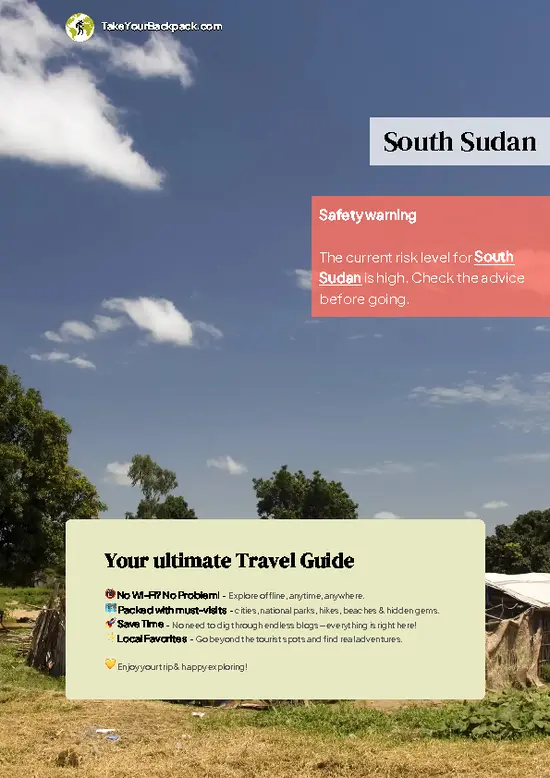
Safety warning

The current risk level for South Sudan is high. Check the advice before going.


Get your South Sudan guide
68 ranked highlights, routes & tips, works offline (270 pages)
Loading the map 🌍
CLICK TO FILTER
cities
towns
landmarks
national parks
hikes
attractions
festivals
regions
SHOW COUNTRY’S BESTSHOW ALL

✨ Why go?
Ranked #2 unique site in South Sudan
The unique appeal for travelers

Mount Kinyeti isn’t just another peak; it’s a raw experience that cuts through the Instagram gloss. Sure, you’ll face crowds—but they’re mostly locals, not tourists, which adds to the authenticity. The cost? Minimal. You can trek here on a shoestring budget, and the rewards are immense.

Standing at 3,187 meters, Kinyeti is the highest point in South Sudan, offering views that stretch for miles. The effort to reach the summit is real, but every step is a lesson in resilience and beauty. You’ll navigate through lush landscapes and encounter friendly villagers who share stories that no guidebook can capture.

This isn’t a standalone trek; it fits perfectly into a broader route through the Imatong Mountains. Pair it with visits to nearby waterfalls and cultural sites for a well-rounded adventure. … read more 👉
Mount Kinyeti isn’t just another peak; it’s a raw experience that cuts through the Instagram gloss. Sure, you’ll face crowds—but they’re mostly locals, not tourists, which adds to the authenticity. The cost? Minimal. You can trek here on a shoestring budget, and the rewards are immense.

Standing at 3,187 meters, Kinyeti is the highest point in South Sudan, offering views that stretch for miles. The effort to reach the summit is real, but every step is a lesson in resilience and beauty. You’ll navigate through lush landscapes and encounter friendly villagers who share stories that no guidebook can capture.

This isn’t a standalone trek; it fits perfectly into a broader route through the Imatong Mountains. Pair it with visits to nearby waterfalls and cultural sites for a well-rounded adventure. The uniqueness of Kinyeti lies in its untouched nature and the sense of discovery that comes with it.

So, if you’re looking for a place that’s not just a checkmark on your list but a transformative journey, Mount Kinyeti is your ticket. Embrace the challenge, and you’ll walk away with more than just a photo; you’ll gain a piece of South Sudan’s soul.
Want to include Mount Kinyeti in your South Sudan route?
Create a personalized South Sudan itinerary that includes Mount Kinyeti and the places that fit your trip — based on your travel style, budget, and available time. Get your route in seconds.

Generate my trip

💡 HighlightsThe experiences that define the visit

  • The summit of Mount Kinyeti — The highest point in South Sudan, the summit gives wide, jaw-dropping panoramas over the Imatong range and the surrounding plains; sunrise from up here is the reward after steep, gritty hiking.
  • Montane cloud forest — Dense, moss-draped Afromontane forest clings to the slopes, with a cool, humid microclimate and layers of ferns, orchids and epiphytes that feel completely different from the lowland bush.
  • Unique high-altitude flora — The mountain supports unusual montane plant communities and seasonal wildflower displays; botanists keep coming back because you can find species and growth-forms rare elsewhere in the country.
  • Birding and small-wildlife hotspots — The elevation and forest pockets attract montane and migratory birds, plus a range of amphibians and
read more 👉
  • The summit of Mount Kinyeti — The highest point in South Sudan, the summit gives wide, jaw-dropping panoramas over the Imatong range and the surrounding plains; sunrise from up here is the reward after steep, gritty hiking.
  • Montane cloud forest — Dense, moss-draped Afromontane forest clings to the slopes, with a cool, humid microclimate and layers of ferns, orchids and epiphytes that feel completely different from the lowland bush.
  • Unique high-altitude flora — The mountain supports unusual montane plant communities and seasonal wildflower displays; botanists keep coming back because you can find species and growth-forms rare elsewhere in the country.
  • Birding and small-wildlife hotspots — The elevation and forest pockets attract montane and migratory birds, plus a range of amphibians and insects you’re unlikely to encounter on the plains — great for patient watchers and photographers.
  • Streams and waterfalls — Clear mountain streams carve the valleys and form small cascades and pools—perfect spots to rest, cool off and soak in the lush scenery between climbs.
  • Ridge walks and scrambling routes — The ridgelines offer varied hiking: exposed scrambles, narrow grassy crests and long contouring trails that make for memorable ridge-days and dramatic views into adjoining valleys.
  • Local villages and cultural contact — The footpaths link to nearby communities where local guides and herders can share knowledge of trails, traditional land use and stories about the mountain—you’ll get better navigation and a richer trip by going with locals.
Spotted a mistake or missing something? Contact us.

🌤️ When to go?Best time to visit Mount Kinyeti


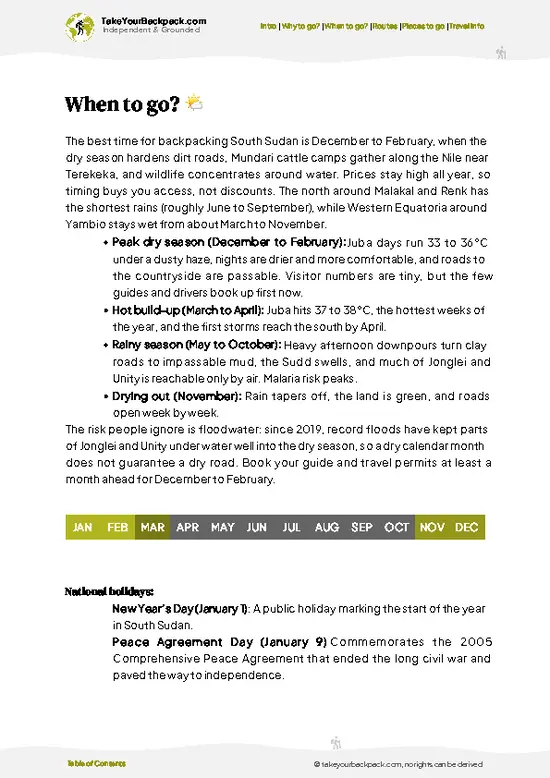
  • Weather: The dry season from November to February is your best bet. Rain is minimal, making trails safer and views clearer. The wet season (May to October) turns paths into mud traps and clouds often smother the summit.

  • Temperature: Expect highs around 25-30°C (77-86°F) during the day in the dry months, dropping to a chilly 10-15°C (50-59°F) at night. The wet season is warmer but stickier, with humidity that can sap your energy fast.

  • Daylight Hours: Daylight stays fairly consistent year-round, roughly 11 to 12 hours. Start early to maximize your hiking window and avoid afternoon heat or sudden storms.

  • Crowds: Mount Kinyeti isn’t a tourist hotspot, so crowds are rare anytime. You’ll mostly share the trail with local guides and a handful of fellow adventurers, even in peak season.

read more 👉

  • Weather: The dry season from November to February is your best bet. Rain is minimal, making trails safer and views clearer. The wet season (May to October) turns paths into mud traps and clouds often smother the summit.

  • Temperature: Expect highs around 25-30°C (77-86°F) during the day in the dry months, dropping to a chilly 10-15°C (50-59°F) at night. The wet season is warmer but stickier, with humidity that can sap your energy fast.

  • Daylight Hours: Daylight stays fairly consistent year-round, roughly 11 to 12 hours. Start early to maximize your hiking window and avoid afternoon heat or sudden storms.

  • Crowds: Mount Kinyeti isn’t a tourist hotspot, so crowds are rare anytime. You’ll mostly share the trail with local guides and a handful of fellow adventurers, even in peak season.

  • Seasonal Activities: Dry months offer the chance to spot rare birds and wildlife active in the cooler, drier air. Wet season’s lush greenery is tempting but comes with leeches and slippery slopes.

  • Price Fluctuations: Costs for guides and local services rise slightly in the dry season due to demand but remain reasonable compared to more commercialized peaks worldwide.


Pro-tip: Aim for late November or early December—dry enough for a clean climb, before the peak season price bump and crowds start creeping in.


source: climatestotravel.comJANJanuary: excellent for travelingFEBFebruary: excellent for travelingMARMarch: good for travelingAPRApril: good for travelingMAYMay: fair for travelingJUNJune: fair for travelingJULJuly: below average for travelingAUGAugust: below average for travelingSEPSeptember: fair for travelingOCTOctober: fair for travelingNOVNovember: highly recommended for travelingDECDecember: highly recommended for traveling
when-to-go

✈️ The backpacker research shortcutSouth Sudan Travel Guide

An offline-friendly backpacking guide with optimized travel routes, ranked highlights, transport advice, and the best areas to stay.
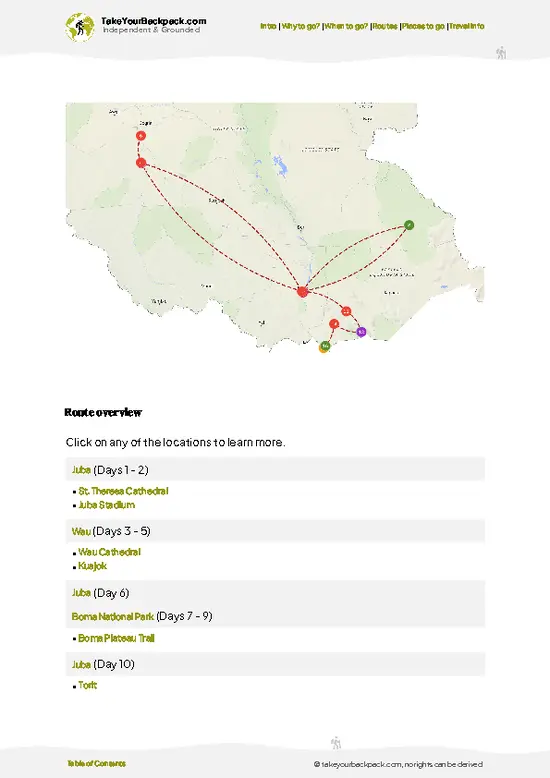
example page 0 from our offline Travel Guide for South Sudan
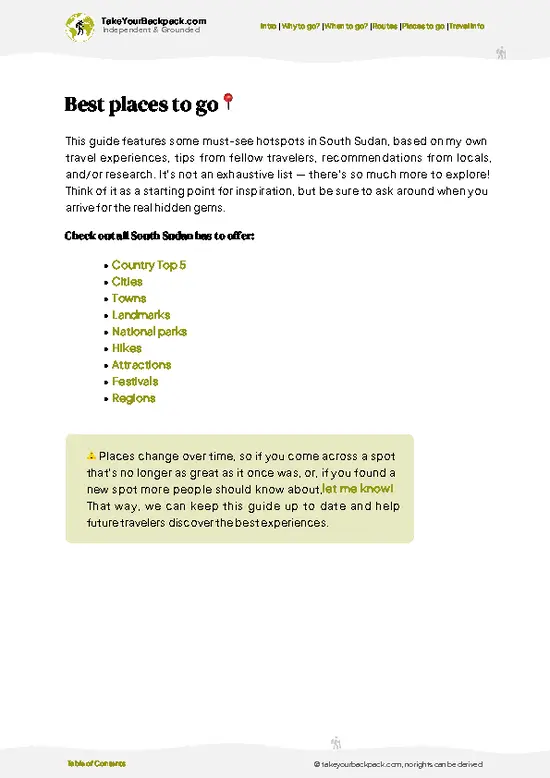
example page 1 from our offline Travel Guide for South Sudan
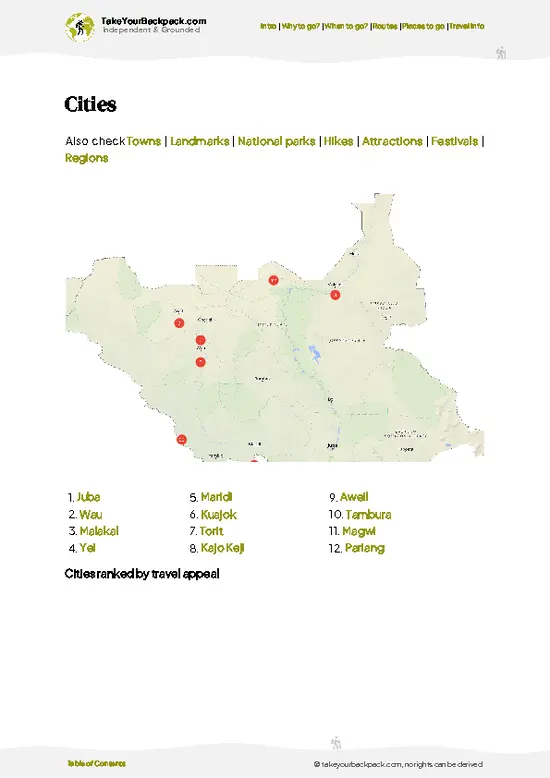
example page 2 from our offline Travel Guide for South Sudan
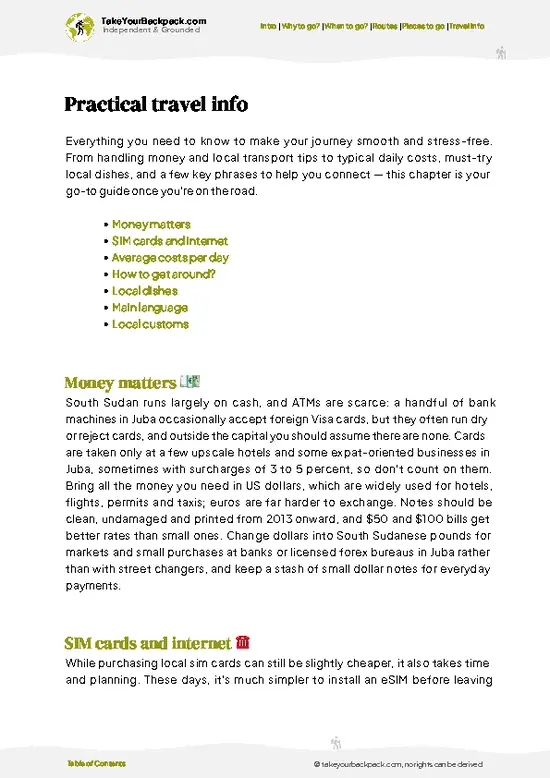
example page 3 from our offline Travel Guide for South Sudan
example page 4 from our offline Travel Guide for South Sudan
example page 5 from our offline Travel Guide for South Sudan
example page 6 from our offline Travel Guide for South Sudan
example page 7 from our offline Travel Guide for South Sudan
The digital guide (270 pages) contains:
68 highlights, ranked by travel appeal
Optimized 5, 10 & 15-day travel routes
Cities, national parks, landmarks, beaches
How to get around
Offline-friendly for travel without Wi-Fi
👉 Click to see all 30+ guide features

📅 Plan smarter in minutes, not weeks
Month by month travel advice
Festivals & national holidays
Budget expectations

🗺️ Go to the right places, skip the overrated ones
Honest pros & cons of destinations
Top hikes, parks & viewpoints
Lesser-known places most travelers miss
Clear “worth it vs skip it” guidance

🛏️ Travel smoothly without rookie mistakes
Best areas to stay
Transport systems explained simply
Common scams & safety advice
SIM cards, money & practical tips

🌍 Understand the country, not just visit it
Culture & traditions
52 Essential phrases & customs
Festivals worth planning around
Traveler-friendly historical context
Insights that make places more meaningful

📱 Built for real travel conditions
Fully downloadable PDF
Works completely offline
Optimized for phone use
Useful in remote areas & buses
Everything in one place
Save weeks of stressful planning
Get instant access to your full guide. 30‑day money-back guarantee.
+ Add another guide for just US$7.80

By proceeding you agree to our terms.
Sent to your inbox immediately after payment • 100% Secure Checkout
Best Backpacking Travel Advisor 2025 tourism awardBest Backpacking
Travel Advisor
2025
What others say about Take Your Backpack Guides:
⭐⭐⭐⭐⭐
Fantastic, amazing amount of information!
⭐⭐⭐⭐⭐
My goodness this is amazing, it's what I've been looking for hats off too you!
⭐⭐⭐⭐⭐
I think this is absolutely BRILLIANT
⭐⭐⭐⭐
Very complete and informative. It's still missing places, but I gotta to commend you
⭐⭐⭐⭐⭐
This is truly amazing, thank you, can't wait to explore it with my kids!
⭐⭐⭐⭐⭐
Awesome resource, thank you!
⭐⭐⭐⭐⭐
This is amazing! Can't wait to explore the ones I haven't seen
⭐⭐⭐⭐
I love this! Well done, great idea.
⭐⭐⭐⭐⭐
Thanks for taking the time to make this gem!
⭐⭐⭐⭐⭐
This might be the best website I've ever seen.
⭐⭐⭐⭐⭐
Congratulations, and thank you so much for your work; it's incredibly valuable.
⭐⭐⭐⭐
In all seriousness I think you did a great job pointing out the important spots
⭐⭐⭐⭐⭐
10/10 very good
⭐⭐⭐⭐⭐
As someone who's only just starting to visit regularly this is awesome, thank you.
⭐⭐⭐⭐
Thank you very much! I'm going to visit my dad, it's going to be very useful!
⭐⭐⭐⭐⭐
This is really cool! We'll be travelling for the first time and this definitely come in handy.
⭐⭐⭐⭐⭐
You are now our minister of culture, congratulations 👨‍💼
⭐⭐⭐⭐⭐
Just wanted to tell you that this is a pearl! Going to follow your recommendations.
⭐⭐⭐⭐⭐
This is so cool. I'll definitely be using the resource for my travels soon.
⭐⭐⭐⭐⭐
This is very impressive! Good work.
⭐⭐⭐⭐⭐
This is an amazing and informative site. Very well done!

🛏️ Where to stay?Best areas to stay in South Sudan

Mount Kinyeti is a breathtaking sight, but let’s cut through the Instagram filters. The reality? It’s remote, and the infrastructure is still catching up. You won’t find luxury here, but that’s part of the charm.

For backpackers, the best areas to stay are around the town of Yei and the nearby village of Kinyeti. Yei has a few budget-friendly guesthouses where you can mingle with locals and fellow travelers. It’s a hub for those heading to the mountain, so expect a mix of adventure seekers and community vibe. The hospitality is genuine, and you’ll find a few spots where you can grab a local meal … read more 👉
Mount Kinyeti is a breathtaking sight, but let’s cut through the Instagram filters. The reality? It’s remote, and the infrastructure is still catching up. You won’t find luxury here, but that’s part of the charm.

For backpackers, the best areas to stay are around the town of Yei and the nearby village of Kinyeti. Yei has a few budget-friendly guesthouses where you can mingle with locals and fellow travelers. It’s a hub for those heading to the mountain, so expect a mix of adventure seekers and community vibe. The hospitality is genuine, and you’ll find a few spots where you can grab a local meal and share stories over a cold drink.

Kinyeti itself is quieter, with basic accommodations that offer a more immersive experience. Staying here puts you right at the foot of the mountain, making early morning hikes a breeze. The locals are friendly, and you might even get invited to join in on traditional gatherings.

Safety is a priority, so stick to well-trodden paths and stay aware of your surroundings. The crowds? They’re manageable, especially if you visit during the shoulder seasons. Embrace the simplicity, connect with the people, and let the raw beauty of Kinyeti do the rest.

👛 Costs (as of 3 September 2026)Money, prices, and spending tips

Visiting Mount Kinyeti in South Sudan isn’t just about the breathtaking views; it’s also about navigating the costs that come with this remote adventure. Here’s a breakdown of what you can expect to spend.
  • Transportation: Getting to Mount Kinyeti can be a challenge. Flights to Juba, the capital, typically range from €600 to €1,200 ($650 to $1,300) depending on your starting point. From Juba, you’ll need to arrange a 4x4 vehicle to the base, which can cost around €100 to €200 ($110 to $220) for a round trip. Be prepared for rough roads and potential delays.
  • Accommodation: Options near Mount Kinyeti are limited. Basic lodges or guesthouses in the area can cost between €20 to €50 ($22 to $55) per night. If you’re looking for something more comfortable, expect to pay up to €100 ($110) for better
read more 👉
Visiting Mount Kinyeti in South Sudan isn’t just about the breathtaking views; it’s also about navigating the costs that come with this remote adventure. Here’s a breakdown of what you can expect to spend.
  • Transportation: Getting to Mount Kinyeti can be a challenge. Flights to Juba, the capital, typically range from €600 to €1,200 ($650 to $1,300) depending on your starting point. From Juba, you’ll need to arrange a 4x4 vehicle to the base, which can cost around €100 to €200 ($110 to $220) for a round trip. Be prepared for rough roads and potential delays.
  • Accommodation: Options near Mount Kinyeti are limited. Basic lodges or guesthouses in the area can cost between €20 to €50 ($22 to $55) per night. If you’re looking for something more comfortable, expect to pay up to €100 ($110) for better amenities. Booking in advance is wise, as availability can fluctuate.
  • Guides and Permits: Hiring a local guide is essential for safety and navigation. Guide fees typically range from €30 to €70 ($33 to $77) per day. Additionally, you may need a permit to hike, which can cost around €10 to €20 ($11 to $22). Always check the latest requirements before you go.
  • Food and Water: Meals can be basic and range from €5 to €15 ($5.50 to $16.50) per meal at local eateries. Stocking up on water and snacks is crucial, especially for the hike. Budget around €10 ($11) per day for supplies.
  • Miscellaneous: Factor in extra costs for things like tips, souvenirs, or unexpected expenses. A buffer of €50 to €100 ($55 to $110) is a good idea to cover these.

In total, a trip to Mount Kinyeti can set you back anywhere from €800 to €1,500 ($880 to $1,650) depending on your choices and travel style. It’s not a cheap destination, but the experience of standing at South Sudan’s highest peak is a unique reward that few get to claim.
⚠️ Prices can change and everyone travels differently, so take this as a rough guide. Hope it helps you plan your adventure!

FAQCommon questions from travelers

Mount Kinyeti is the highest peak in South Sudan, standing at 3,187 meters (10,456 feet) in the Imatong Mountains. It is known for its unique biodiversity and challenging hiking terrain.
Visiting Mount Kinyeti typically requires 2 to 3 days, including travel time and hiking. Most backpackers allocate at least one full day for the ascent and descent to fully experience the area.
To get to Mount Kinyeti, you first need to reach Torit, the nearest town, which is accessible by road from Juba, the capital of South Sudan. From Torit, local guides and 4x4 vehicles are necessary to reach the base of the mountain due to rough terrain.
⚠️ Things can change over time, so always validate details locally before you go.

Other South Sudanese landmarks near Mount Kinyeti

Explore more nearby:

  • Tomb of John Garang—national memorial, political history, Juba landmark| 177 km away
  • Jonglei Canal—unfinished waterway, Nile tributaries, remote engineering site| 495 km away
  • Sudd Wetlands—floating vegetation, seasonal floodplain, bird migration| 549 km away

💡 Not sure where to go next?
Create a personalized itinerary for South Sudan including Mount Kinyeti and the places that fit your trip.

Generate my itinerary

👉 Discover all landmarks

Or checkout all South Sudan has to offer (think cities, towns, villages, national parks, hikes, beaches, festivals)
Country photo of South Sudan

We 💚 feedbackWhat to keep in mind

Mount Kinyeti isn’t for the faint-hearted. The trek can be grueling, and the crowds? Well, they’re more like a trickle. But that’s the beauty of it. You’ll find yourself in a raw, untouched landscape where the air is thick with the scent of earth and adventure. The best surprise? The locals. Their warmth and stories will stick with you long after you leave. Just be ready for the unpredictable weather; it can change on a dime. Pack wisely, and embrace the journey.

✍️ Help improve this page!
The information on this page is based on in-depth research, insights shared by experienced travelers, and feedback from the local travel community in South Sudan. While every effort is made to keep the information accurate and current, conditions can change — so if you spot anything incorrect or outdated, please get in touch.


🙋‍♂️ Give feedback

👋 Meet the founderWho’s Behind Take Your Backpack?

Johan, backpacker and founder of TakeYourBackpackHi, I’m Johan (Netherlands 🇳🇱), the creator of TakeYourBackpack. Over the past decade, I’ve backpacked through 80+ countries across six continents, gaining extensive experience with independent travel, long-term trips, and overland routes.

This site is built on a combination of firsthand travel experience and carefully curated insights from other backpackers. Many guides are based on places I’ve personally visited, while others bring together tips, observations, and practical advice shared by trusted travelers I’ve met along the way.

The goal is to provide realistic, experience-driven guidance — not generic itineraries — so you can explore destinations with better context, clearer expectations, and more confidence.

Get full country guide •
Instant download • 68 highlights • Full Offline guide